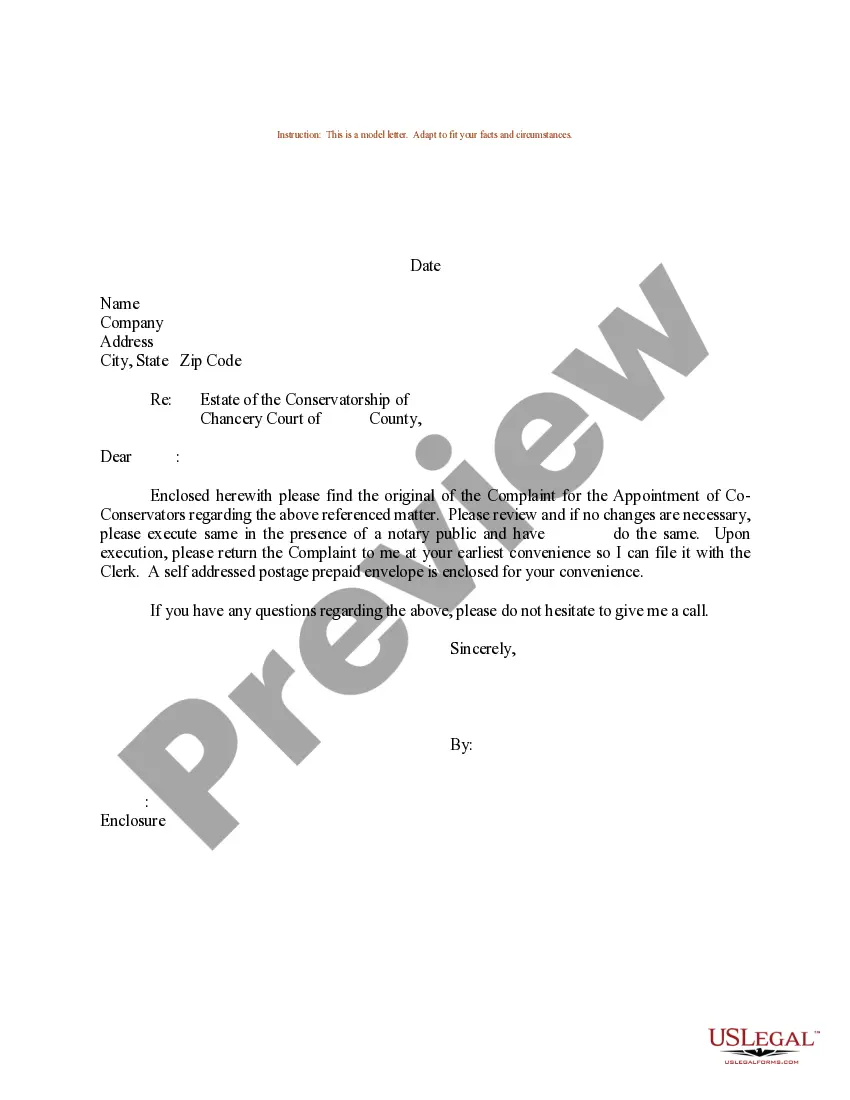
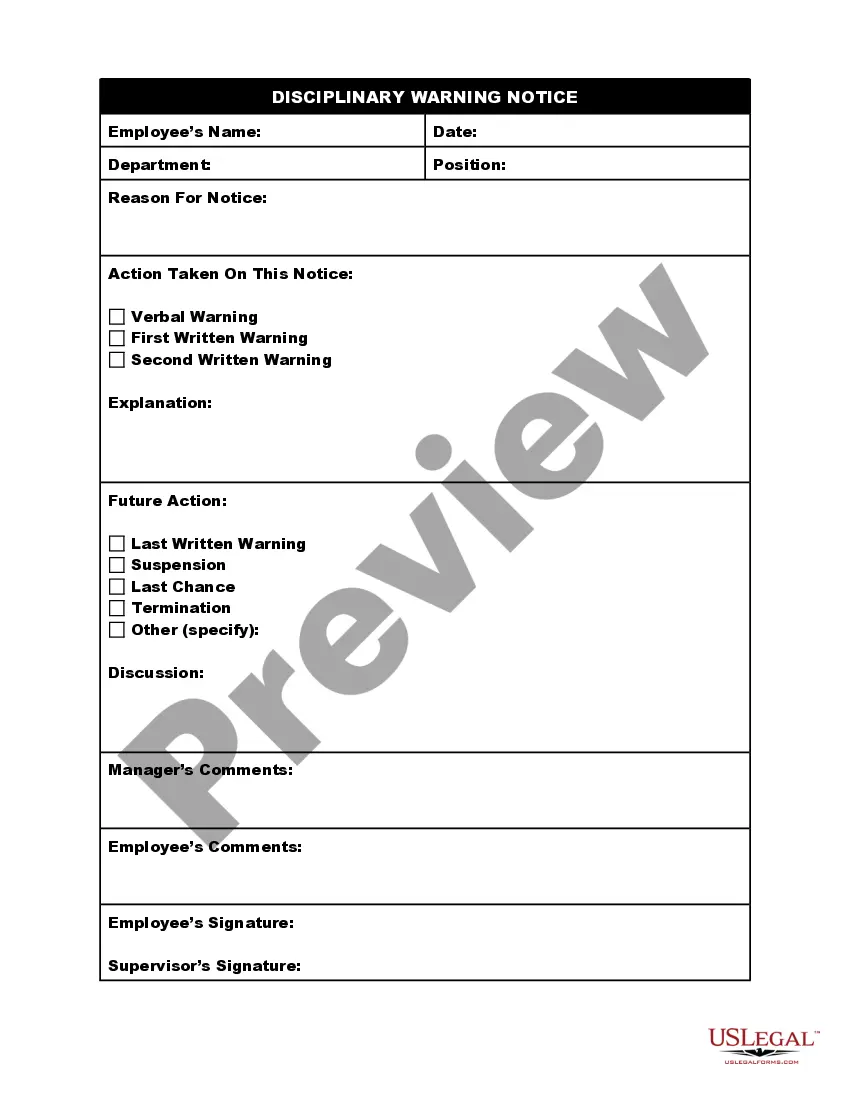
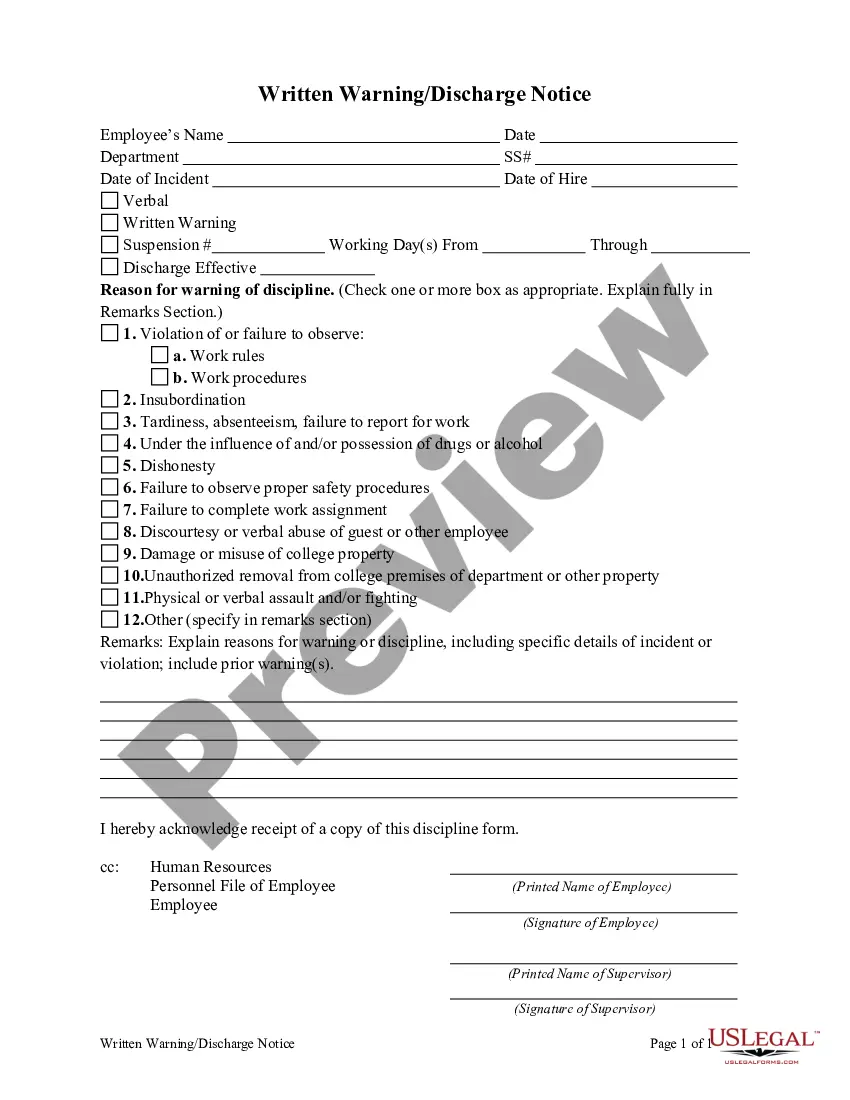
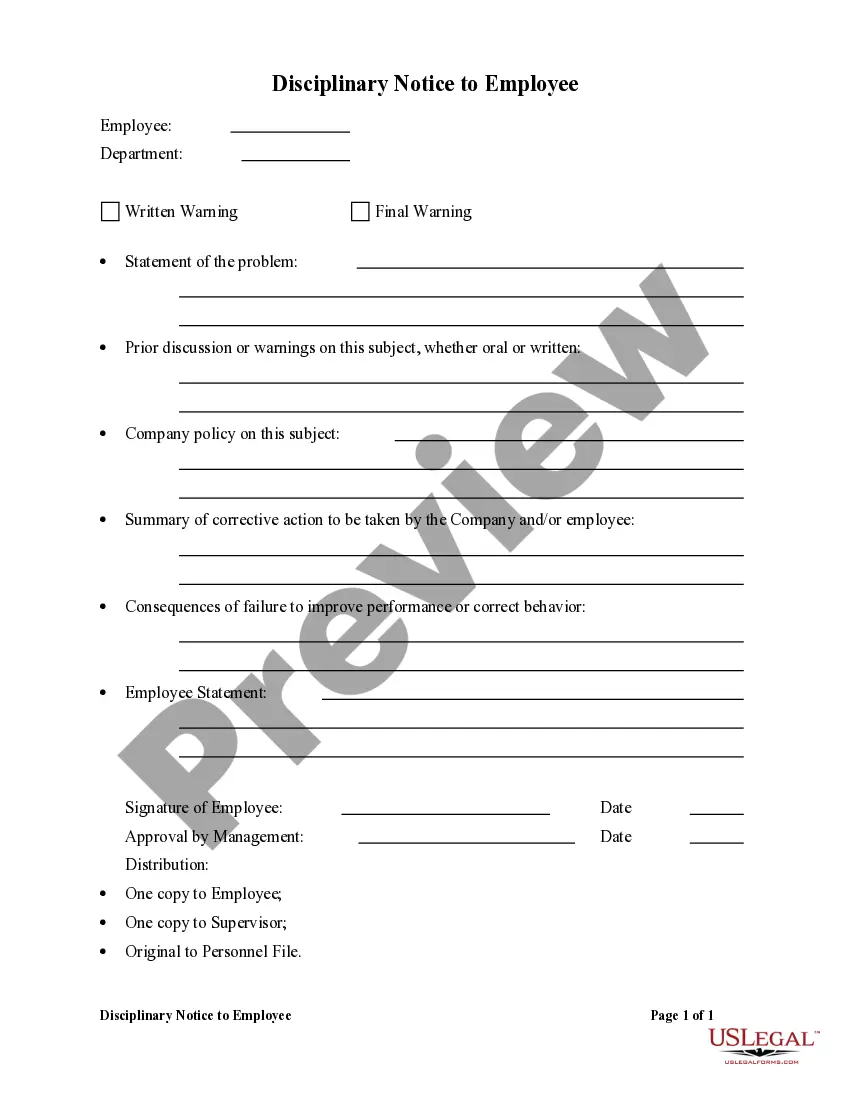
Arizona Disciplinary Warning Notice
Description
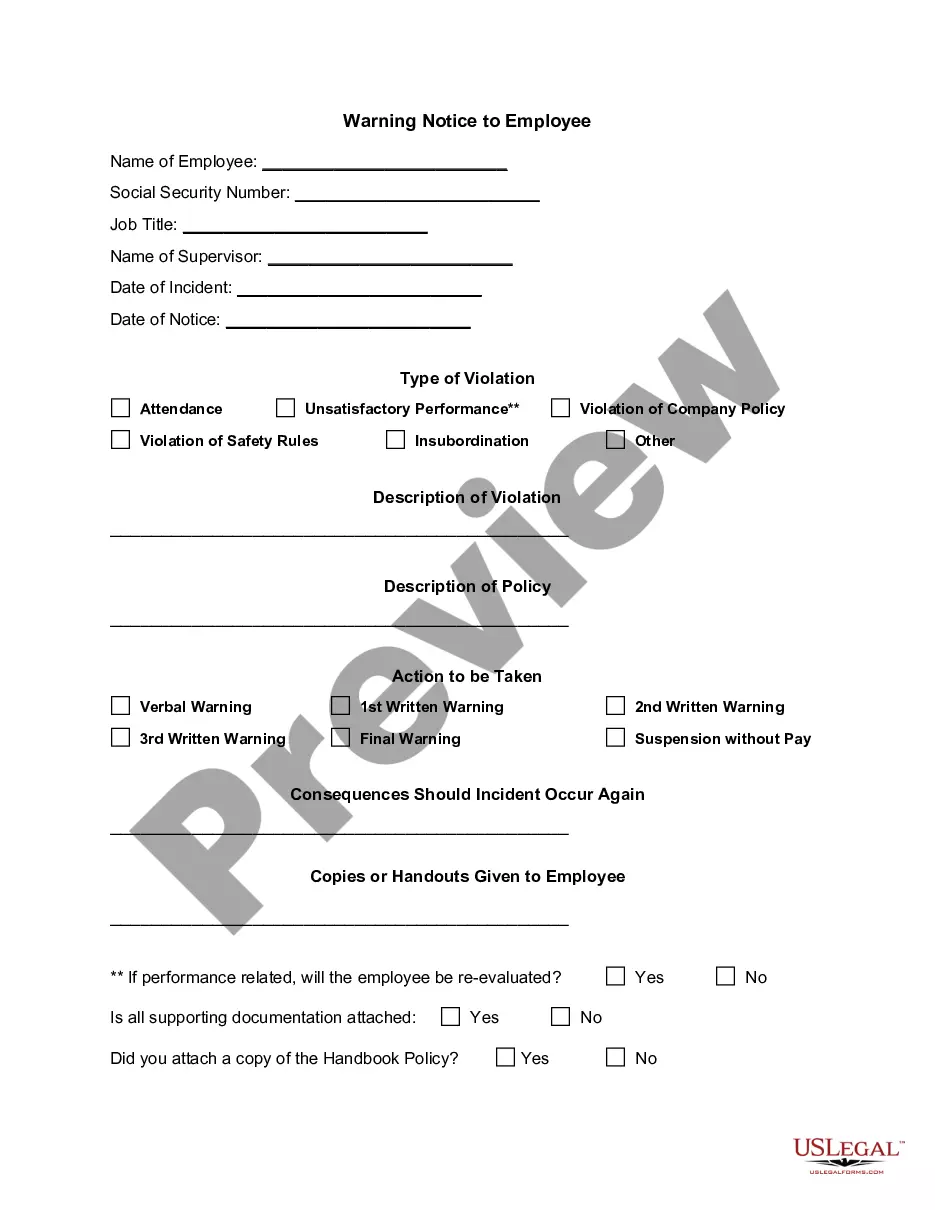
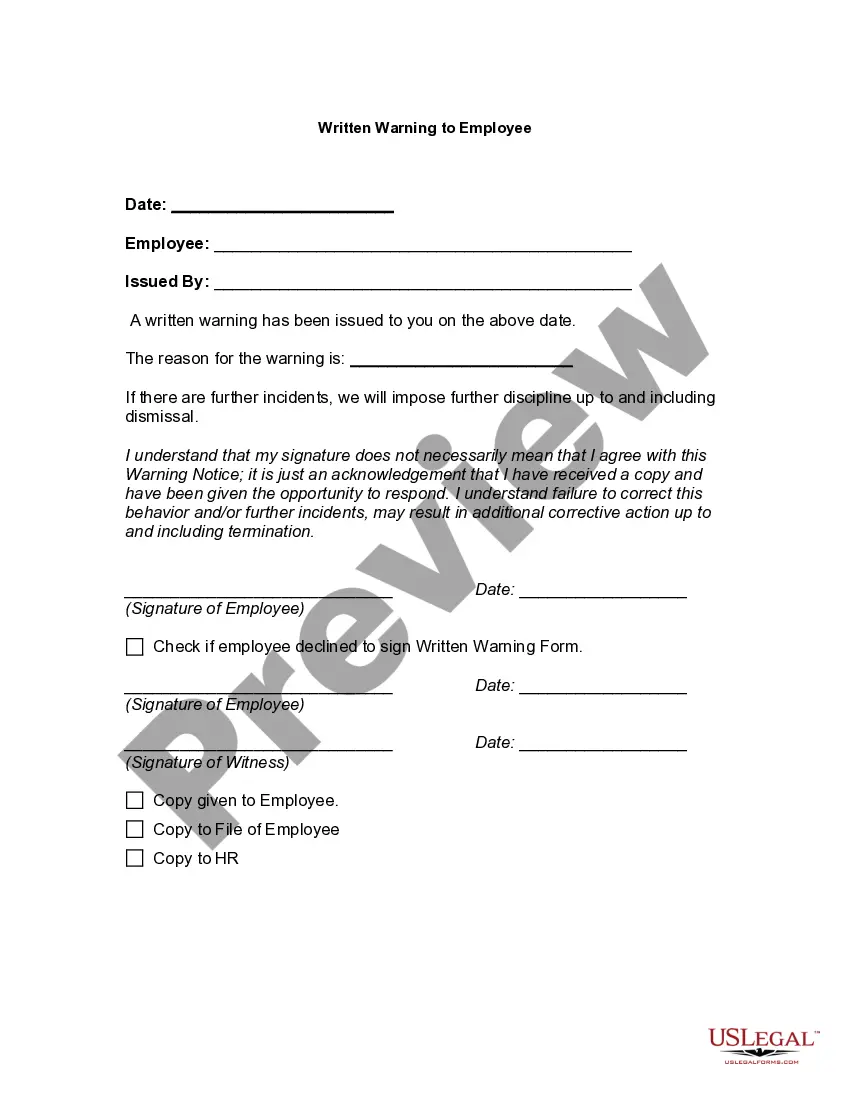
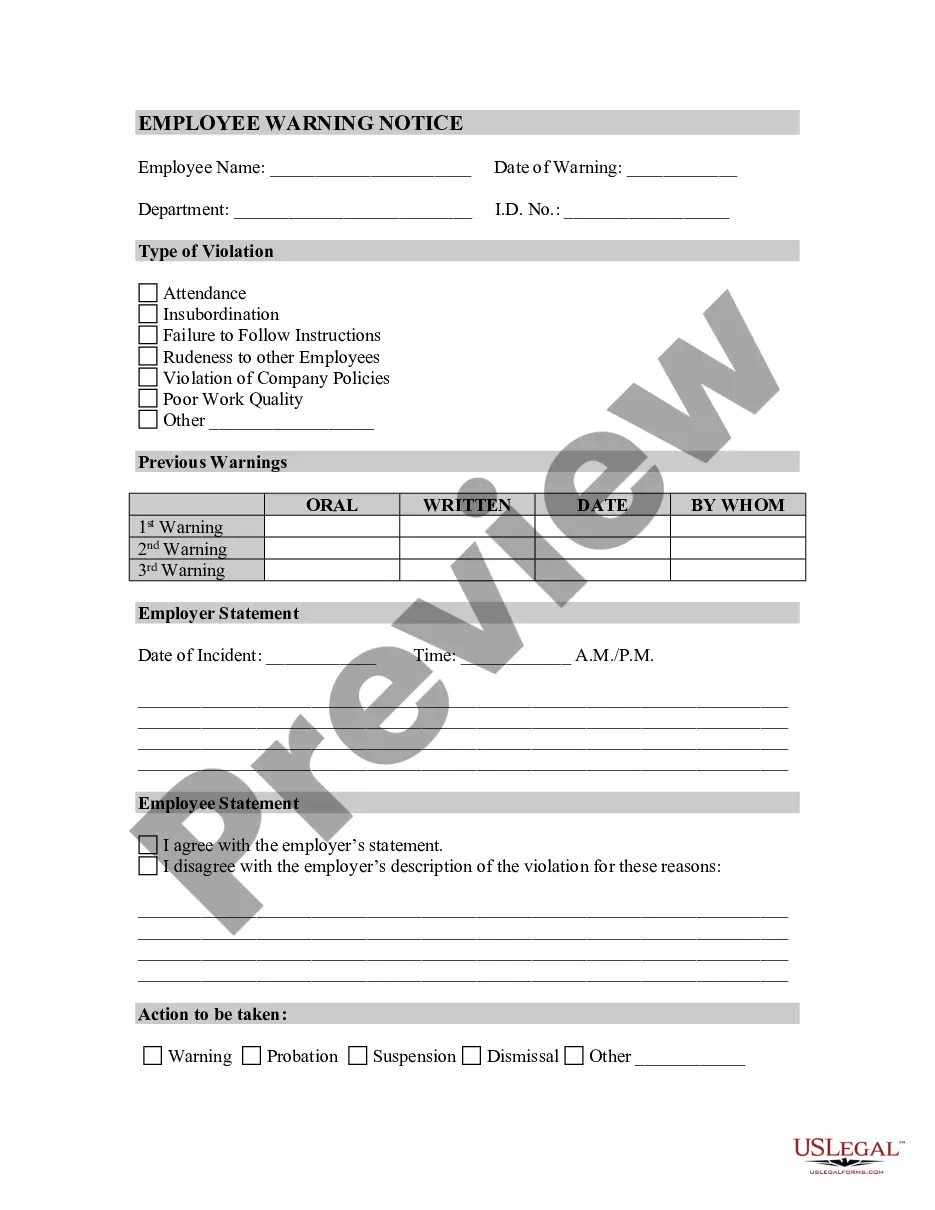
Get your form ready online
Our built-in tools help you complete, sign, share, and store your documents in one place.
Make edits, fill in missing information, and update formatting in US Legal Forms—just like you would in MS Word.
Download a copy, print it, send it by email, or mail it via USPS—whatever works best for your next step.
Sign and collect signatures with our SignNow integration. Send to multiple recipients, set reminders, and more. Go Premium to unlock E-Sign.
If this form requires notarization, complete it online through a secure video call—no need to meet a notary in person or wait for an appointment.
We protect your documents and personal data by following strict security and privacy standards.

Make edits, fill in missing information, and update formatting in US Legal Forms—just like you would in MS Word.

Download a copy, print it, send it by email, or mail it via USPS—whatever works best for your next step.

Sign and collect signatures with our SignNow integration. Send to multiple recipients, set reminders, and more. Go Premium to unlock E-Sign.

If this form requires notarization, complete it online through a secure video call—no need to meet a notary in person or wait for an appointment.

We protect your documents and personal data by following strict security and privacy standards.
Looking for another form?








How to fill out Disciplinary Warning Notice?
If you are looking to fully access, download, or create legitimate document templates, utilize US Legal Forms, the largest selection of legal forms available online.
Employ the site’s straightforward and user-friendly search function to find the documents you require.
Various templates for commercial and personal purposes are categorized by types and states, or by keywords.
Step 4. Once you have found the form you need, select the Buy now button. Choose your preferred pricing plan and enter your details to register for an account.
Step 5. Complete the transaction. You can use your credit card or PayPal account to finalize the purchase.
- Utilize US Legal Forms to quickly access the Arizona Disciplinary Warning Notice.
- If you are already a US Legal Forms user, sign in to your account and click the Download button to retrieve the Arizona Disciplinary Warning Notice.
- You can also access templates you have previously obtained in the My documents section of your account.
- If you are using US Legal Forms for the first time, follow the steps below.
- Step 1. Ensure you have selected the form for the correct city/state.
- Step 2. Use the Preview option to review the content of the form. Don’t forget to read the summary.
- Step 3. If you are not satisfied with the form, utilize the Search field at the top of the screen to find other versions of the legal form template.
Form popularity
FAQ
An employee can appeal against a final return warning and the employer can hold an enquiry if the employer believes that it is only through hearing evidence that the outcome can be determined. Written warnings will remain valid for 3 to 6 months. Final written warnings will remain valid for 12 months.
A verbal warning typically comes before a written warning since a write-up at work tends to be more serious. If the same issue happens again after the verbal warning or the employee doesn't improve, you might issue a written warning. However, you can skip the verbal warning, especially for a serious issue.
Generally, if an employee maintains an acceptable level of behavior for 12 months or more, many employers agree that older disciplinary warnings normally no longer influence future employment decisions.
Letters of warning remain in the employee's official personnel folder (OPF) and/or electronic official personnel folder (eOPF) for a period of two calendar years unless otherwise resolved or cited in subsequent disciplinary action.
Reasons to Skip Progressive Discipline:Serious insubordination, such as refusal to carry out job duties.Fighting or assault.Theft.Dishonesty, especially over recordkeeping.Intentional destruction of property.Use of drugs or alcohol while working.Sexual misconduct.Criminal activity at work.More items...?
Generally, if an employee maintains an acceptable level of behavior for 12 months or more, many employers agree that older disciplinary warnings normally no longer influence future employment decisions.
Typically, an informal verbal warning is often nothing more than a quiet chat between the employee and their line manager in an attempt to quickly and amicably resolve a relatively minor issue of misconduct or unsatisfactory performance, without recourse to formal disciplinary proceedings.
So most written warnings have a six-month validity period and most final written warnings have a twelve-month one.
Verbal warnings do not have to be documented. Managers should always document a verbal warning in some manner, such as in a manager's log or e-mailing themselves the specifics about the verbal warning.
Verbal warnings are used to let employees know that they need to improve within a certain amount of time or they might face termination. If there are no changes, then the employer could give them a written warning stating that if the employee doesn't take action, then they could be fired.