Arizona Domain Name License Agreement
Description
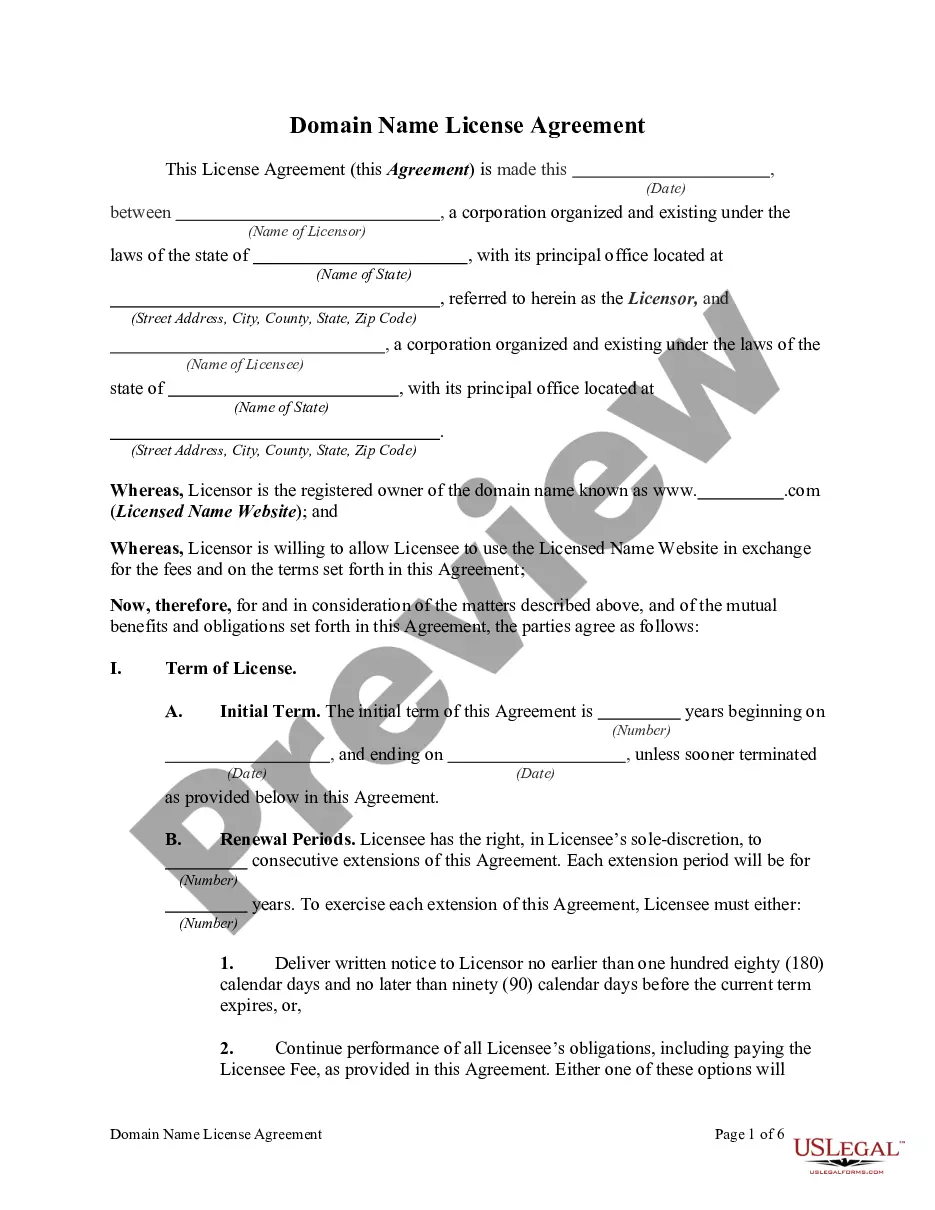
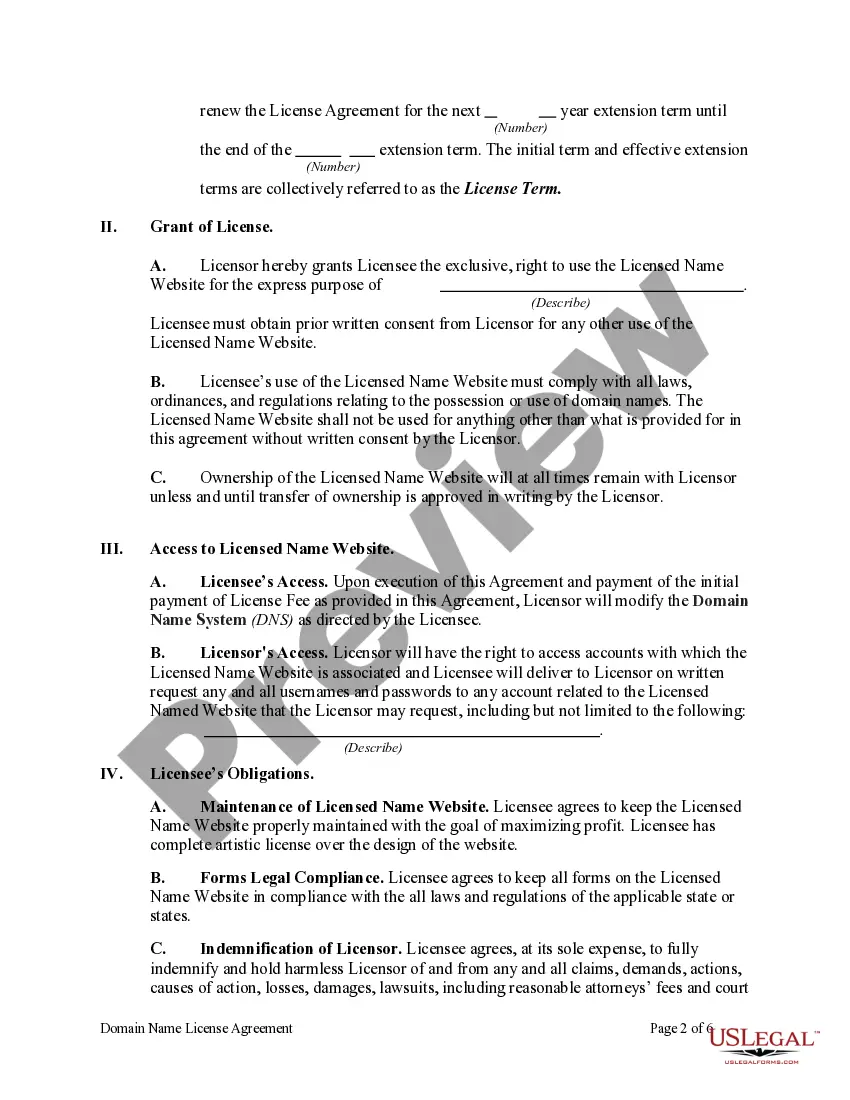
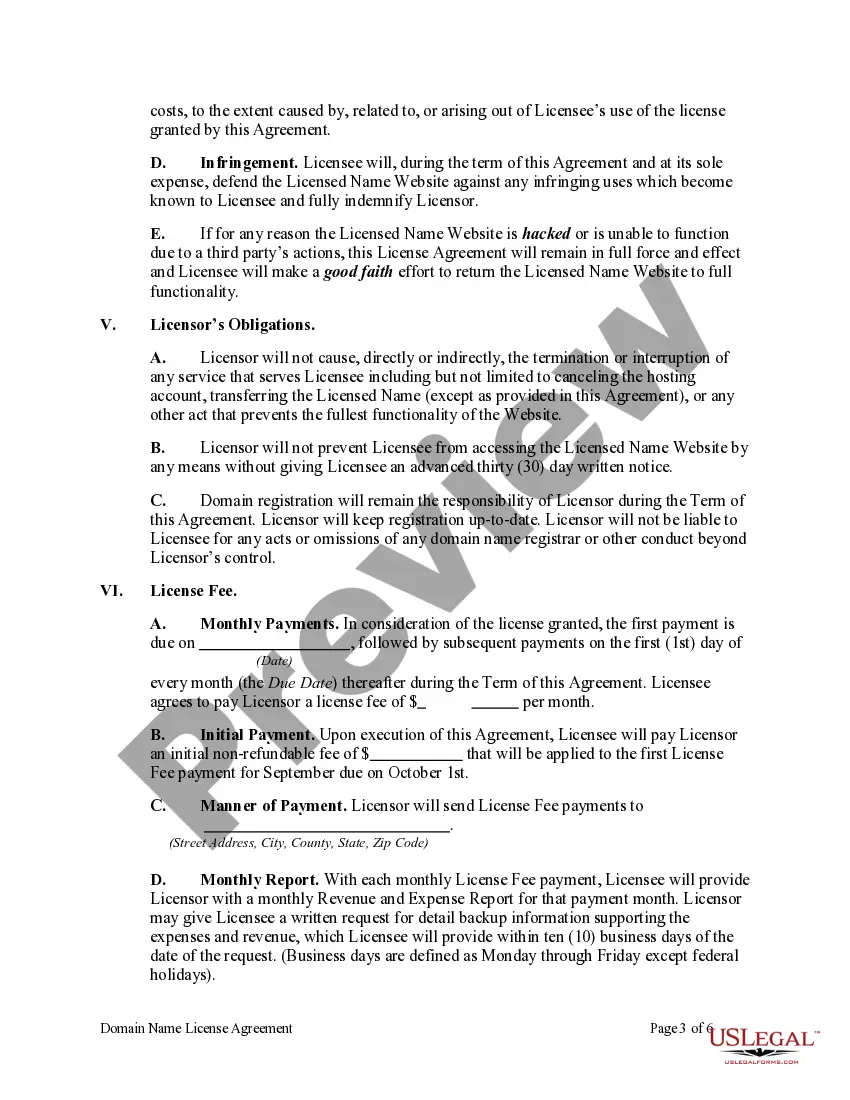
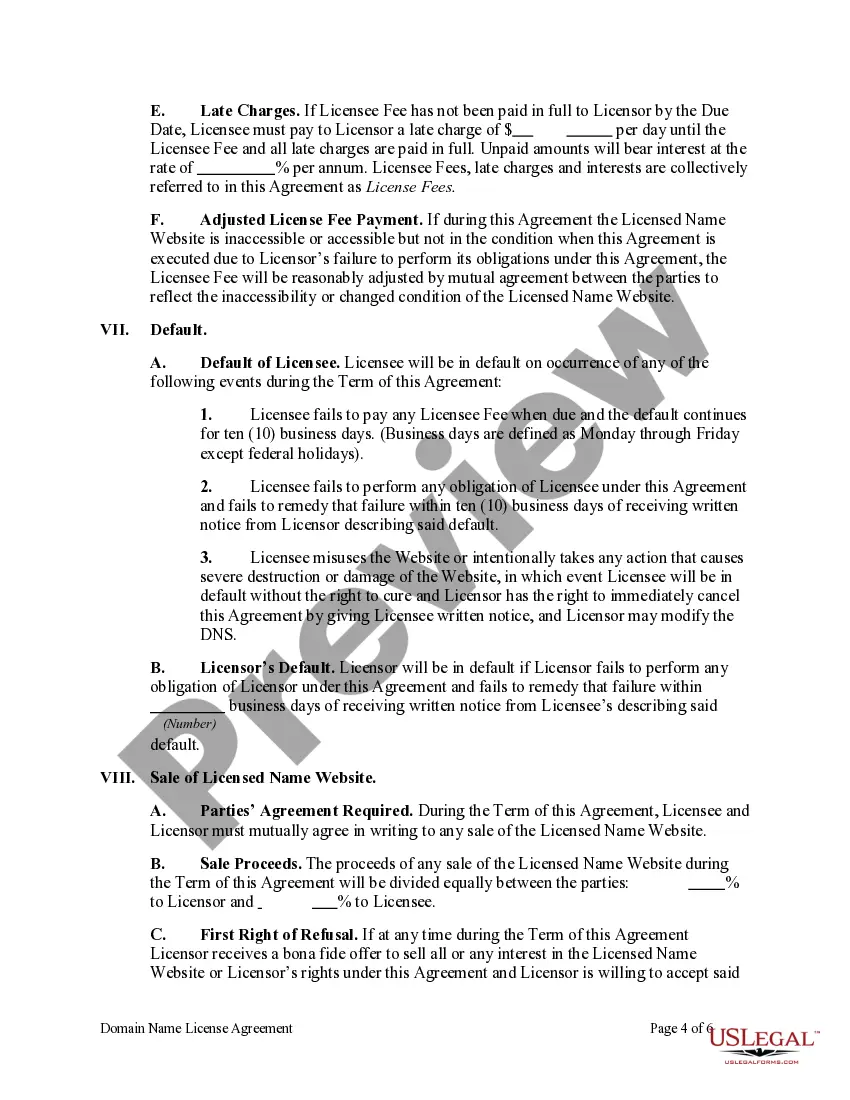
Get your form ready online
Our built-in tools help you complete, sign, share, and store your documents in one place.
Make edits, fill in missing information, and update formatting in US Legal Forms—just like you would in MS Word.
Download a copy, print it, send it by email, or mail it via USPS—whatever works best for your next step.
Sign and collect signatures with our SignNow integration. Send to multiple recipients, set reminders, and more. Go Premium to unlock E-Sign.
If this form requires notarization, complete it online through a secure video call—no need to meet a notary in person or wait for an appointment.
We protect your documents and personal data by following strict security and privacy standards.

Make edits, fill in missing information, and update formatting in US Legal Forms—just like you would in MS Word.

Download a copy, print it, send it by email, or mail it via USPS—whatever works best for your next step.

Sign and collect signatures with our SignNow integration. Send to multiple recipients, set reminders, and more. Go Premium to unlock E-Sign.

If this form requires notarization, complete it online through a secure video call—no need to meet a notary in person or wait for an appointment.

We protect your documents and personal data by following strict security and privacy standards.
Looking for another form?
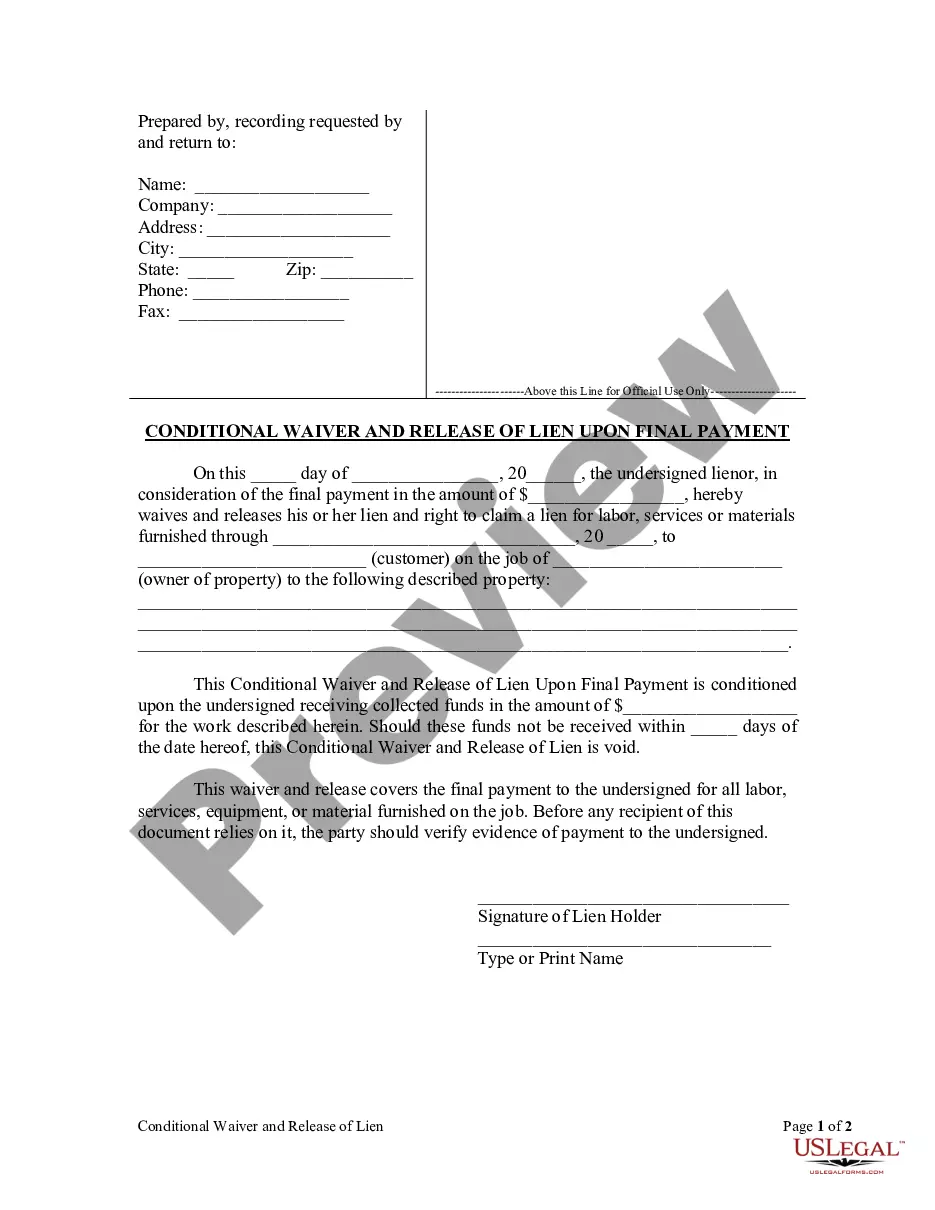
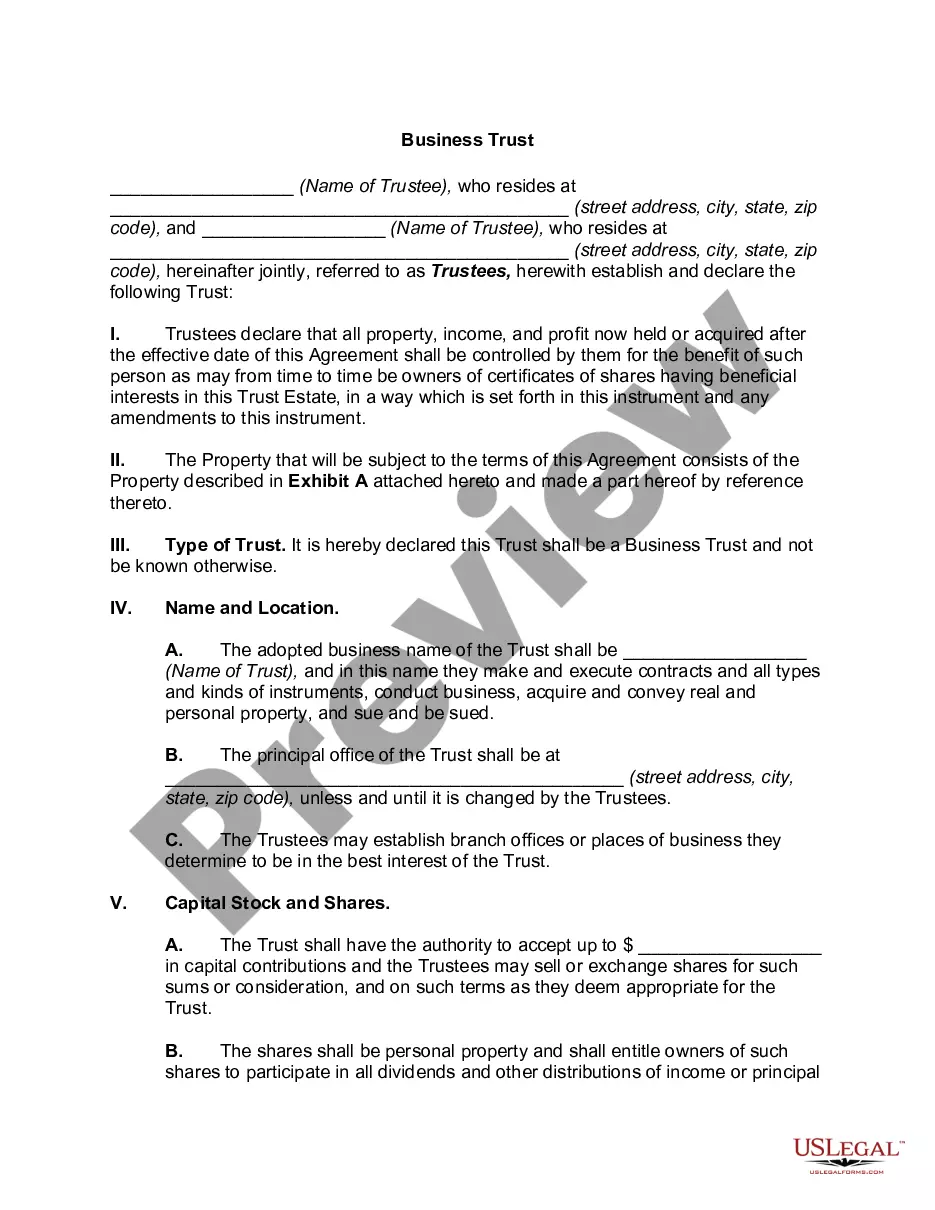

How to fill out Domain Name License Agreement?
Selecting the appropriate legal document template can be challenging.
Of course, there are numerous templates accessible online, but how do you locate the legal form you need? Utilize the US Legal Forms site.
The platform offers thousands of templates, such as the Arizona Domain Name License Agreement, that can be utilized for business and personal needs.
- All of the forms are reviewed by professionals and comply with federal and state regulations.
- Once you are logged in, click the Download button to obtain the Arizona Domain Name License Agreement.
- Use your account to browse through the legal documents you have previously purchased.
- Access the My documents tab in your account to retrieve an additional copy of the document you need.
- If you are a new user of US Legal Forms, here are simple instructions you can follow.
- First, ensure you have selected the correct form for your region/area. You can review the form using the Preview button.
Form popularity
FAQ
First, make it relevant to your brand to establish a clear connection. Second, choose a name that is easy to spell and pronounce, as this aids in recall. Finally, ensure it is unique to stand out in a crowded marketplace, which is particularly important in the context of an Arizona Domain Name License Agreement.
Practitioners and licensing executives often refer to three basic types of voluntary licenses: non-exclusive, sole, and exclusive. A non-exclusive licence allows the licensor to retain the right to use the licensed property and the right to grant additional licenses to third parties.
The licensing agreement should explain what the licensee can do with the license. It should say whether the license is exclusive or not. It should also discuss whether the licensor gets to use the license or cedes all rights to the licensee.
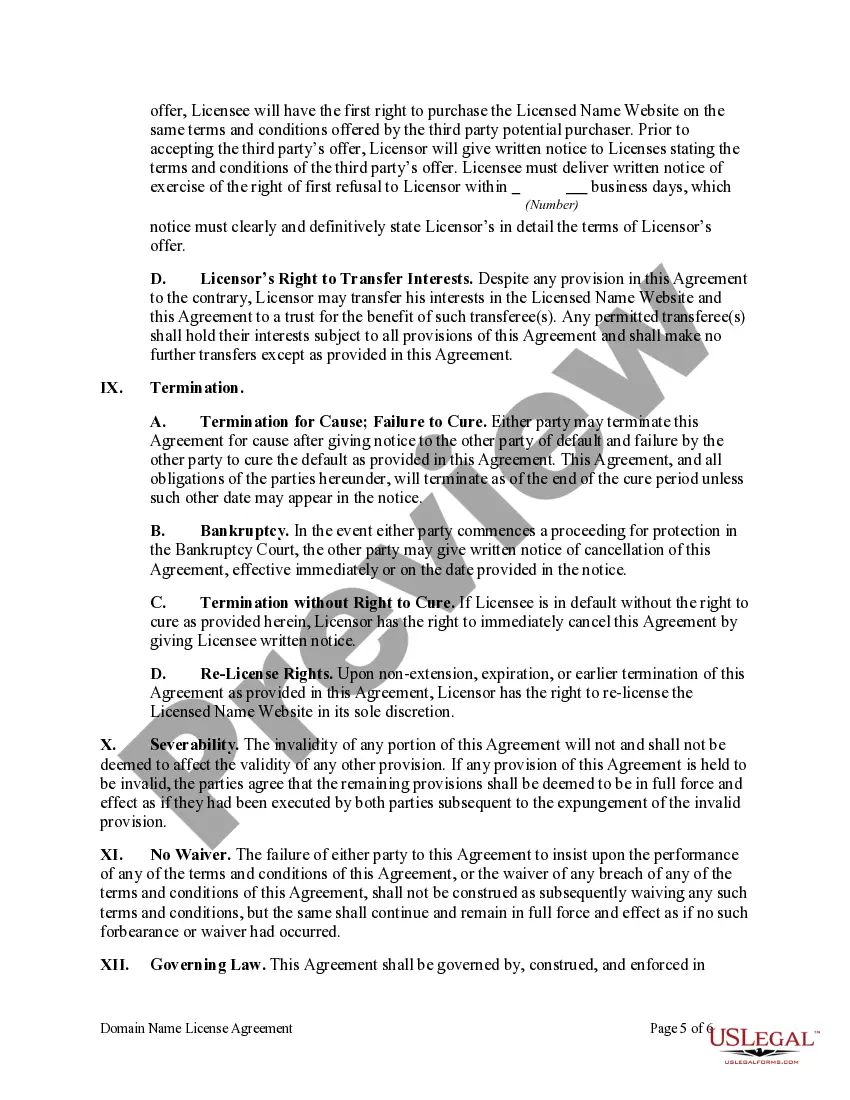
Licensing a domain name requires a license agreement and can be grouped into two distinct categories, based on the importance of the domain names and the manner in which the trademarks are exploited.
Public-domain-equivalent license are licenses that grant public-domain-like rights and/or act as waivers. They are used to make copyrighted works usable by anyone without conditions, while avoiding the complexities of attribution or license compatibility that occur with other licenses.
Types of licensing agreement The unique feature of this type of agreement is that even the licensor is excluded to use or exploit the licensed property during the term of the agreement. Copyright, trademark and patent licenses are the best examples of an exclusive license agreement.
Yes, domain names can also be registered and protected as trademarks or service marks at the national and international levels, provided that the domain names do satisfy all conditions to be duly registered and protected like the trademark and service marks.
Anyone can buy a domain name. To do so, you visit a domain name registrar, such as A2, GoDaddy, or Namecheap, key in the domain you want to buy, and pay a fee. You can't buy just any domain, of courseonly one that isn't already registered by another person or business and that bears a valid domain suffix.
Domain Names are used for different purposes, including application-specific naming, addressing, and in various networking contexts to establish: Simple identification of hostnames and hosts. Hostnames appear as an element in Uniform Resource Locators (URLs) for Internet resources, such as web sites.
A domain license is a license that is given for a domain (@example.com) instead of for an individual user (user@example.com). Domain licenses (also called volume licenses) allow your organization to purchase licenses for all your users.