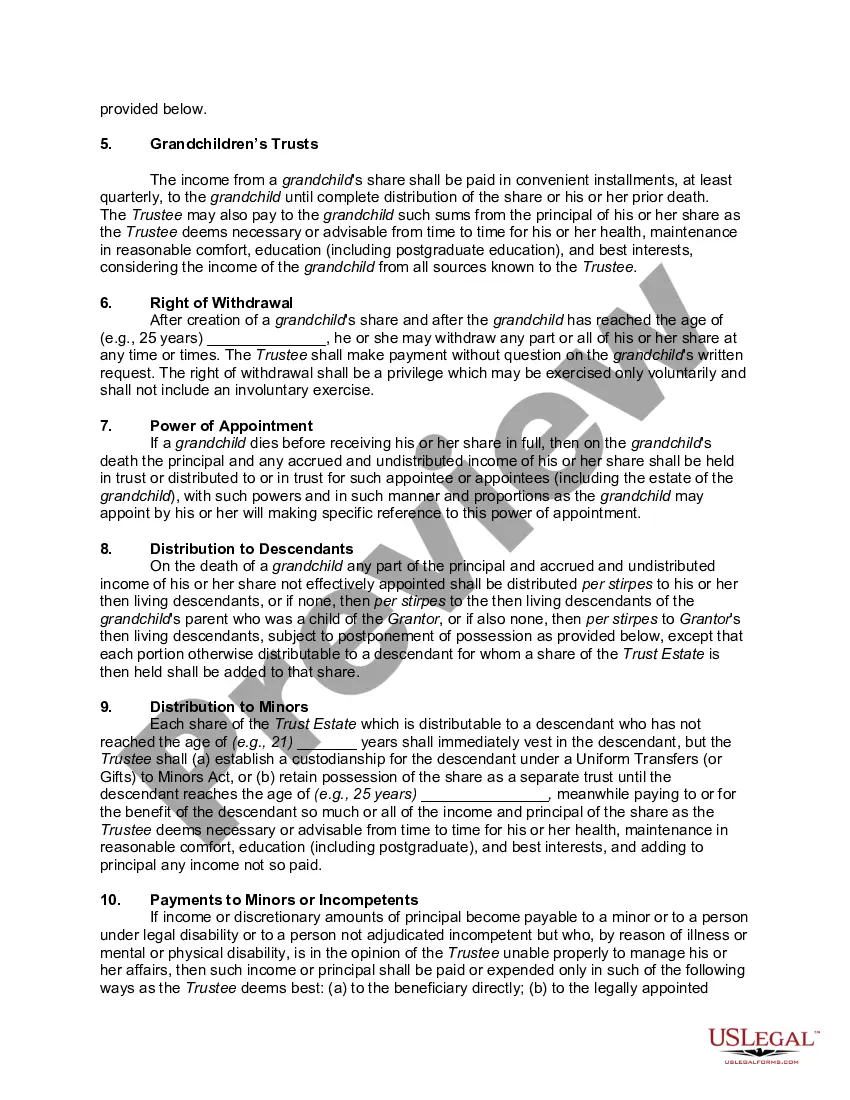
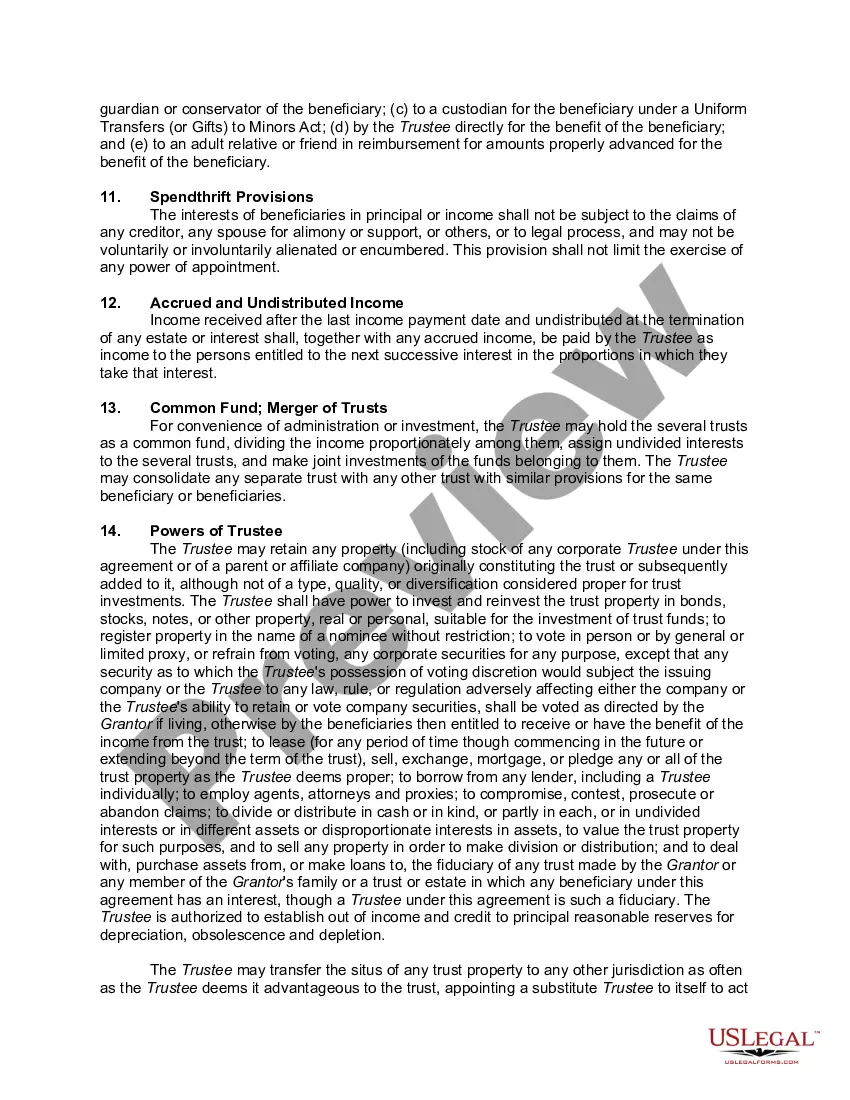
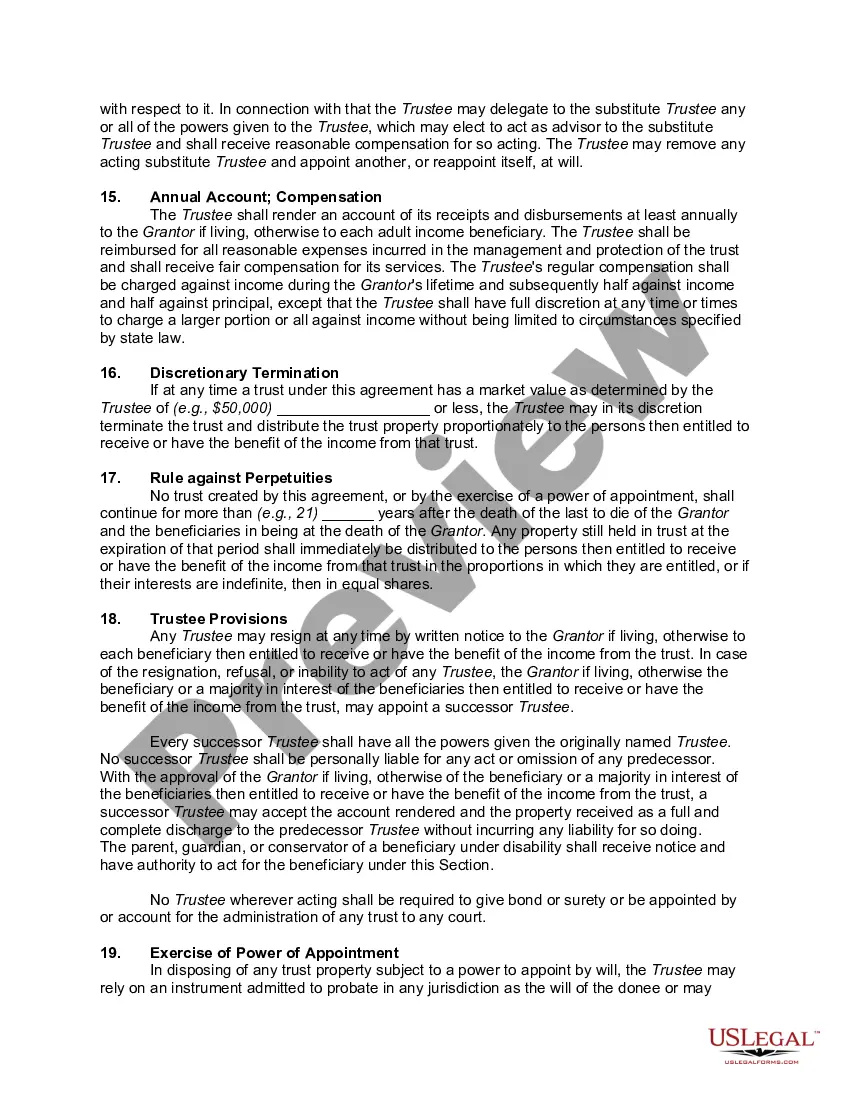
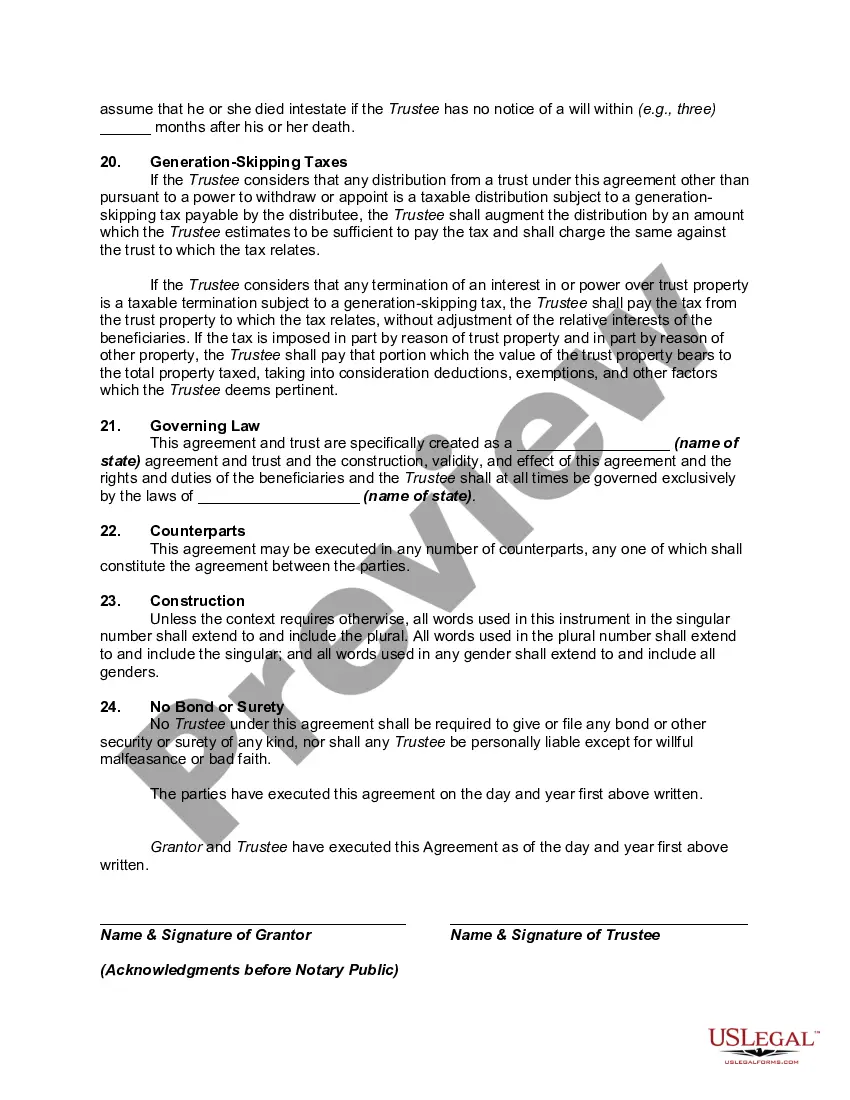
A Trust is an entity which owns assets for the benefit of a third person (beneficiary). Trusts can be revocable or irrevocable. An irrevocable trust is an arrangement in which the grantor departs with ownership and control of property. Usually this involves a gift of the property to the trust. The trust then stands as a separate taxable entity and pays tax on its accumulated income. Trusts typically receive a deduction for income that is distributed on a current basis. Because the grantor must permanently depart with the ownership and control of the property being transferred to an irrevocable trust, such a device has limited appeal to most taxpayers.
Arizona Irrevocable Trust Agreement for Benefit of Trustor's Children and Grandchildren
Instant download
Description
Free preview


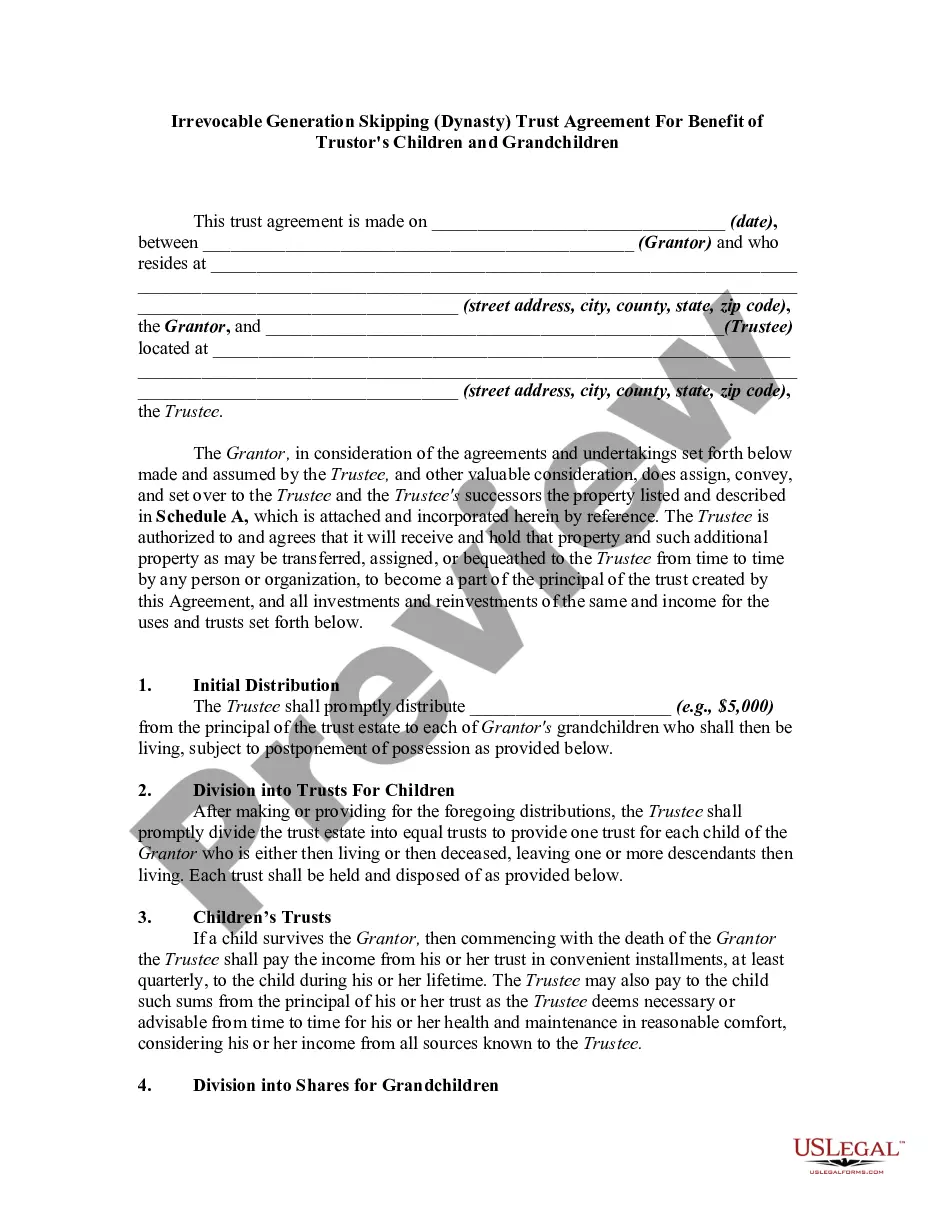
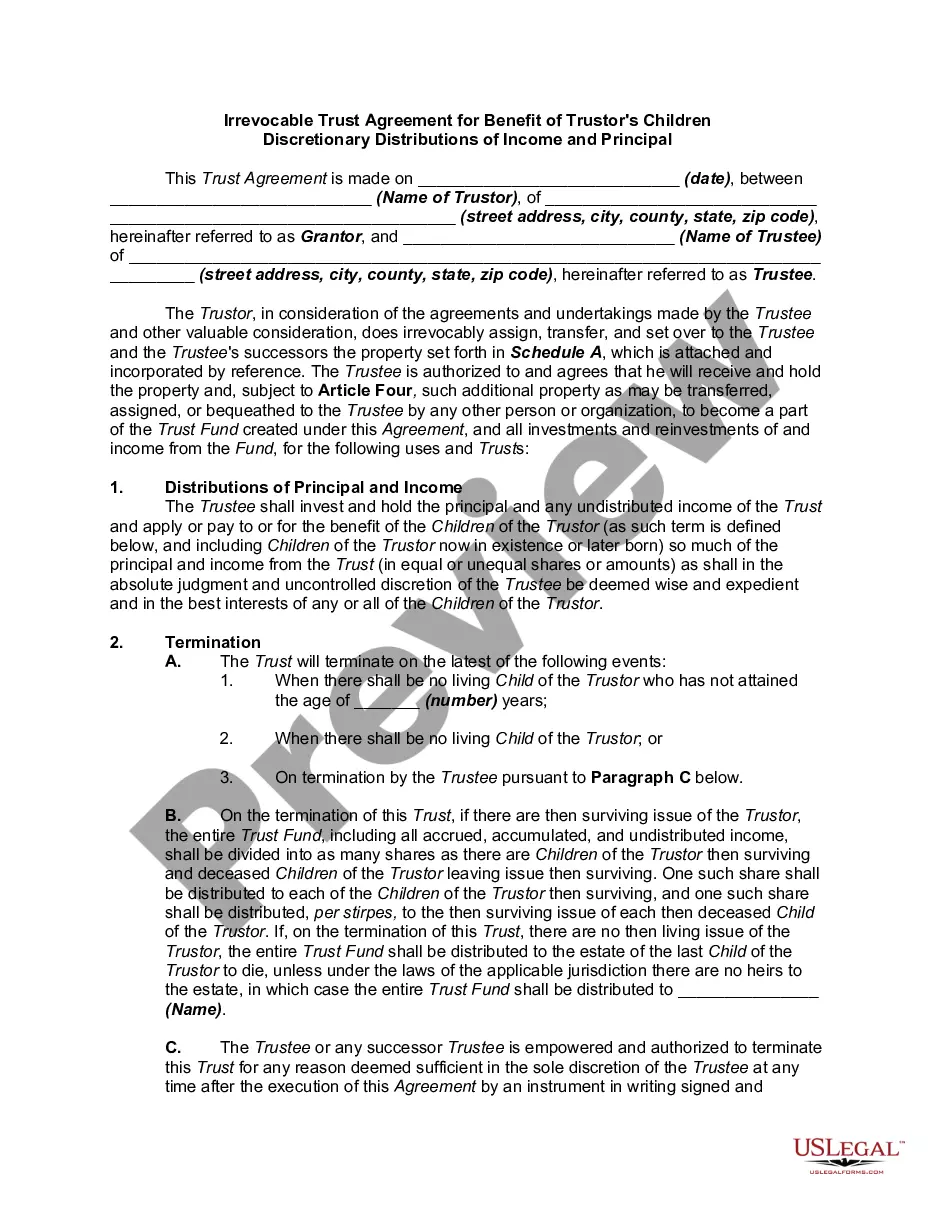
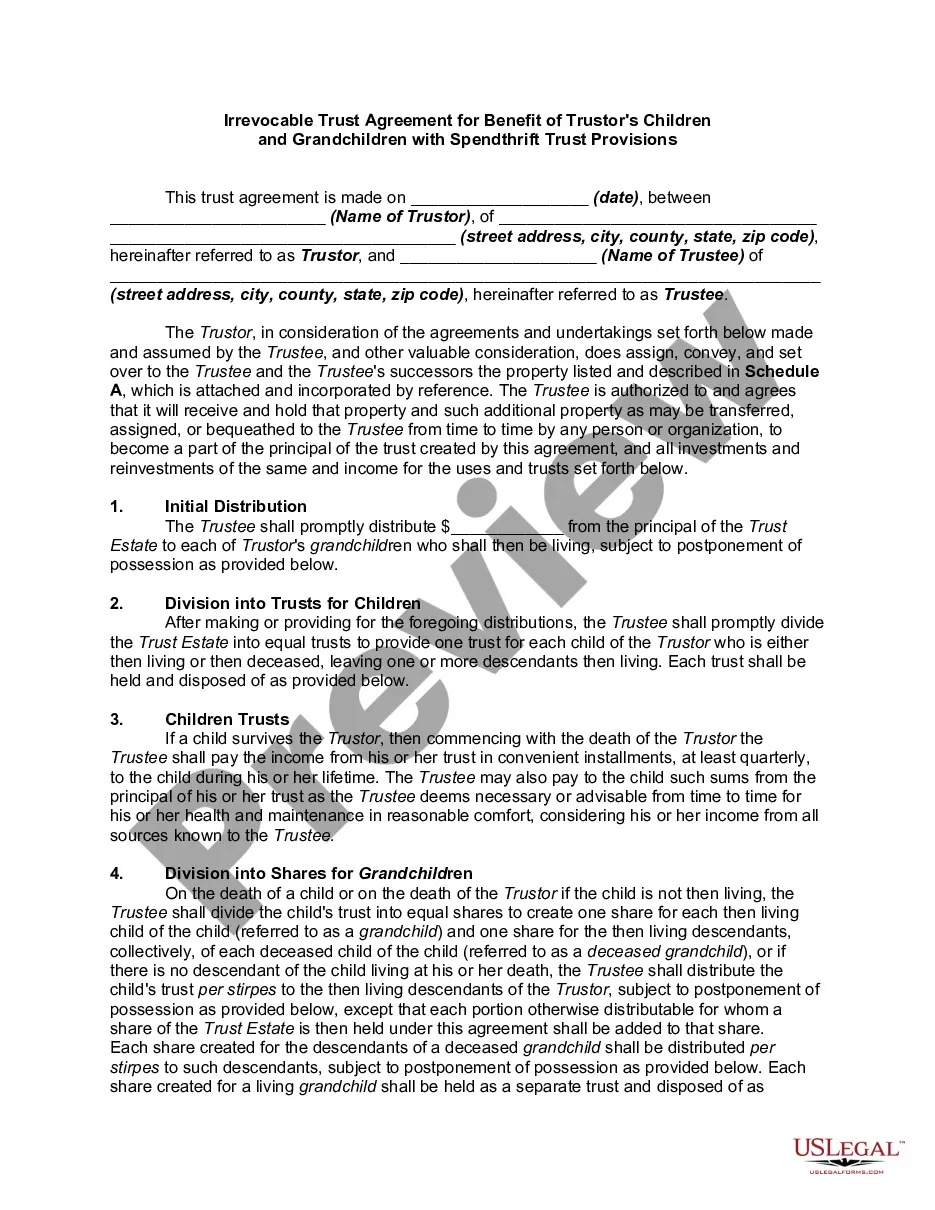
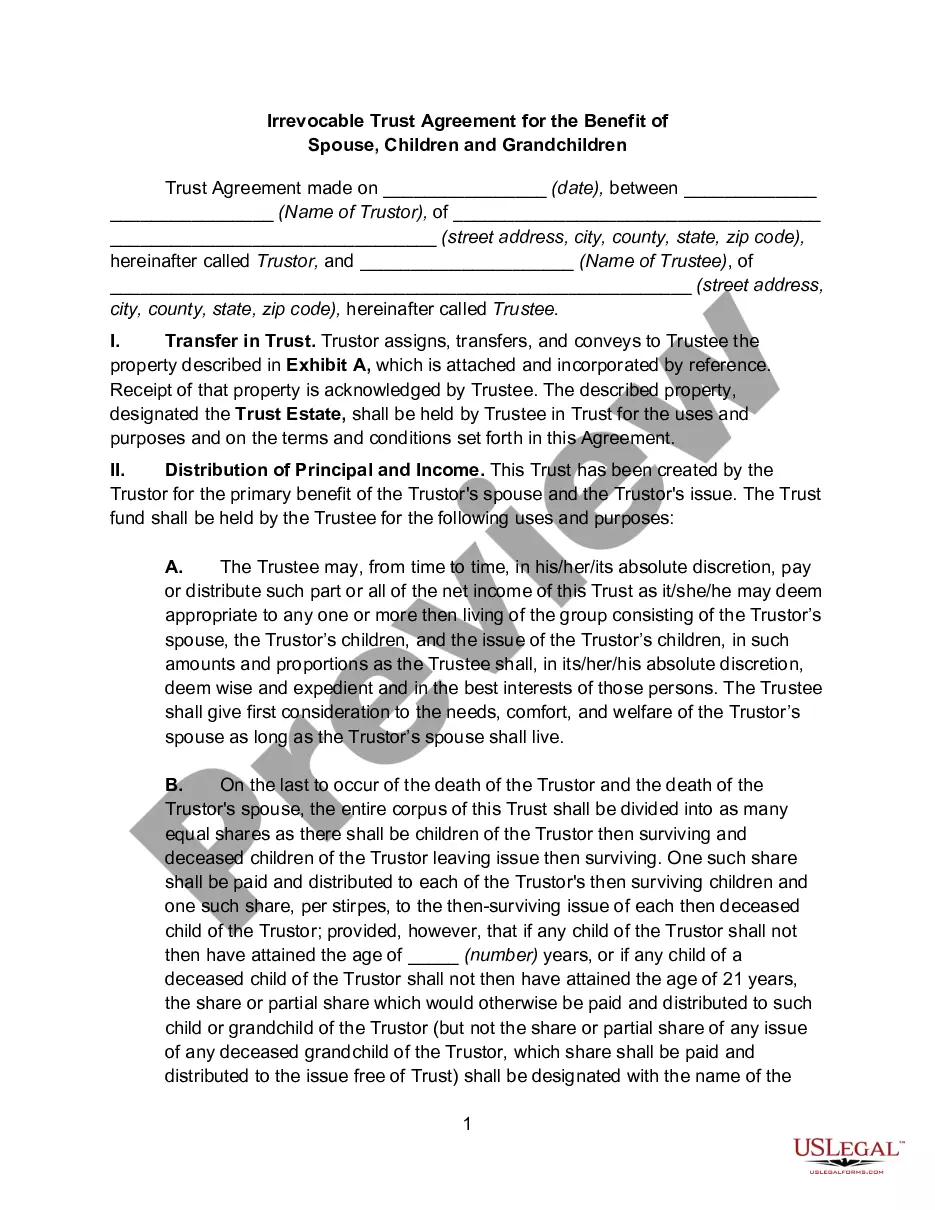





How to fill out Irrevocable Trust Agreement For Benefit Of Trustor's Children And Grandchildren?
US Legal Forms - one of the largest collections of legal documents in the United States - provides a range of legal template options for you to download or print.
By utilizing the website, you will have access to thousands of forms for business and personal uses, organized by categories, states, or keywords.
You can find the most recent editions of documents like the Arizona Irrevocable Trust Agreement for the Benefit of Trustor's Children and Grandchildren in just a few minutes.
Examine the form description to confirm that you have selected the right document.
If the form does not meet your needs, use the Search bar at the top of the screen to find one that does.
- If you already possess a subscription, sign in and download the Arizona Irrevocable Trust Agreement for the Benefit of Trustor's Children and Grandchildren from the US Legal Forms collection.
- The Download button will be visible on each form you view.
- You can access all previously obtained forms in the My documents section of your account.
- If you're using US Legal Forms for the first time, here are simple steps to assist you in getting started.
- Ensure you have selected the correct form for your city/state.
- Click the Preview button to review the content of the form.
Form popularity
FAQ
Once you move your asset into an irrevocable trust, it's protected from creditors and court judgments. An irrevocable trust can also protect beneficiaries with special needs, making them eligible for government benefits, unlike if they inherited properties outright.
Individual trusts for each grandchild. Most grandparents choose to put equal amounts of money into each grandchild's individual trust. The trustee can then decide when and how much money to distribute to each grandchild from their individual trust based on the standards written into the trust.
Most living trusts automatically become irrevocable upon the grantor's death, so if you were included as a beneficiary of a trust when the grantor died, you will remain a beneficiary of the trust. One of the main exceptions to this rule is where a trust is invalidated through a trust contest.
7 Tips on How to Leave Your Inheritance to Your GrandchildrenGift Your Money.Create a trust for your grandchildrens' inheritance, not a will.Decide on a family pot trust or individual trusts.Don't (or do) set age provisions on your trust.Consider implementing a Spendthrift ProvisionMore items...?
Trusts can be especially beneficial for minor children, as they allow more control of the assets, even after your death. By setting up a trust, you can state how you want the money you leave to your grandchildren to be managed, the circumstances under which it can be distributed, and when it should be withheld.
But assets in an irrevocable trust generally don't get a step up in basis. Instead, the grantor's taxable gains are passed on to heirs when the assets are sold. Revocable trusts, like assets held outside a trust, do get a step up in basis so that any gains are based on the asset's value when the grantor dies.
Trusts can have more than one beneficiary and they commonly do. In cases of multiple beneficiaries, the beneficiaries may hold concurrent interests or successive interests.
While there's no limit to how many trustees one trust can have, it might be beneficial to keep the number low. Here are a few reasons why: Potential disagreements among trustees. The more trustees you name, the greater the chance they'll have different ideas about how your trust should be managed.
The downside to irrevocable trusts is that you can't change them. And you can't act as your own trustee either. Once the trust is set up and the assets are transferred, you no longer have control over them.
An irrevocable trust is a trust that can't be amended or modified. However, like any other trust an irrevocable trust can have multiple beneficiaries. The Internal Revenue Service allows irrevocable trusts to be created as grantor, simple or complex trusts.