Arizona Apt or Residential Lease
Overview of this form
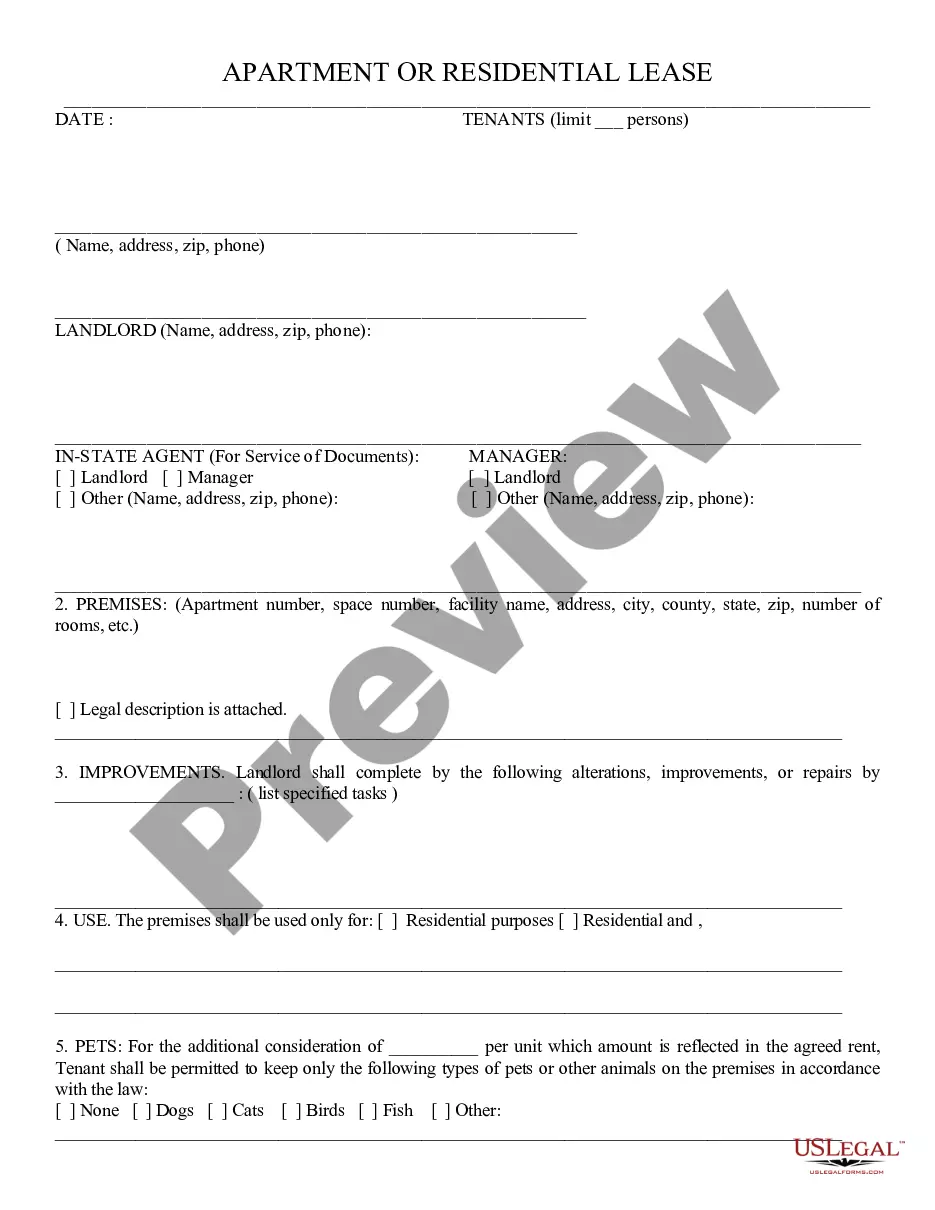
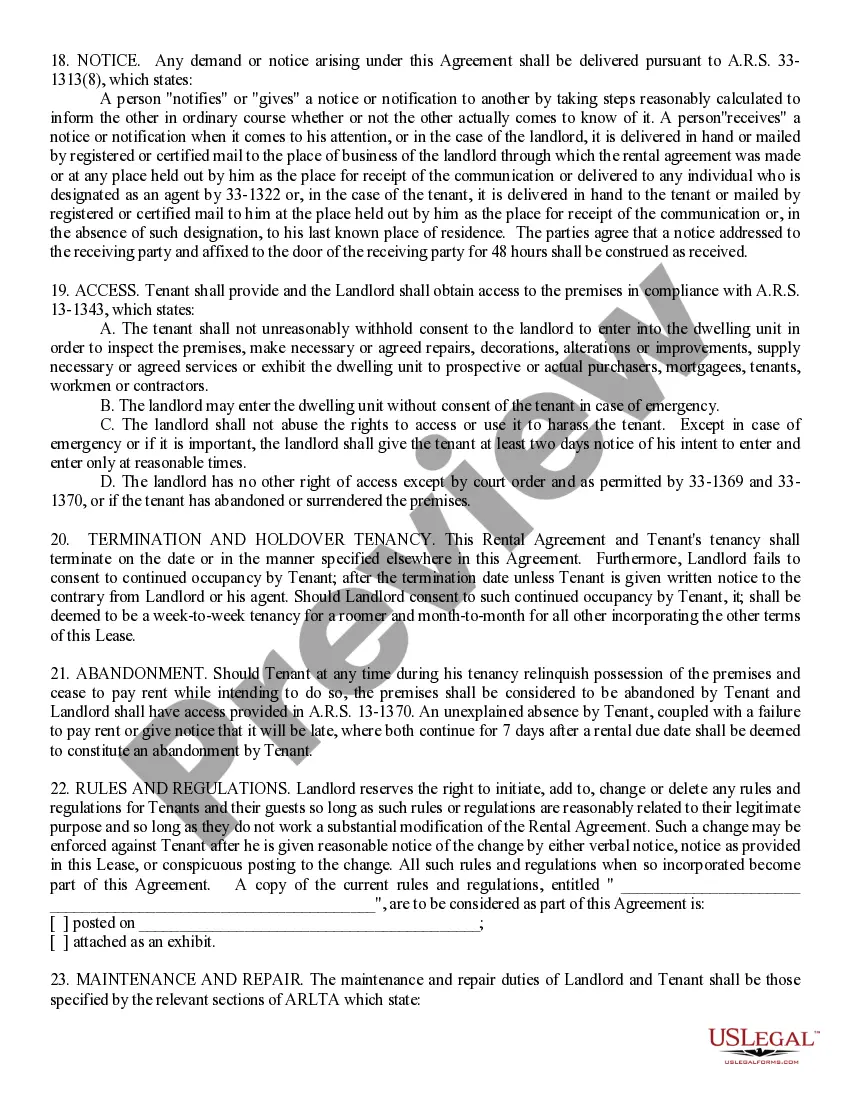
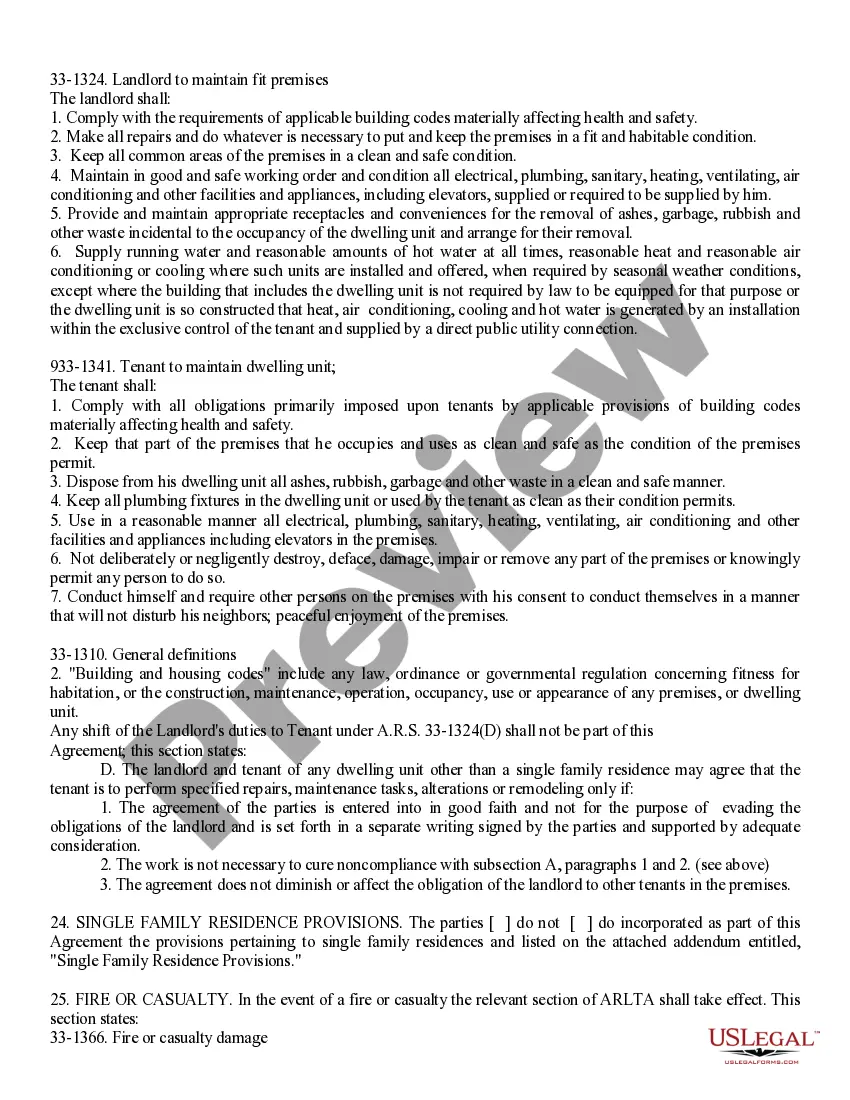
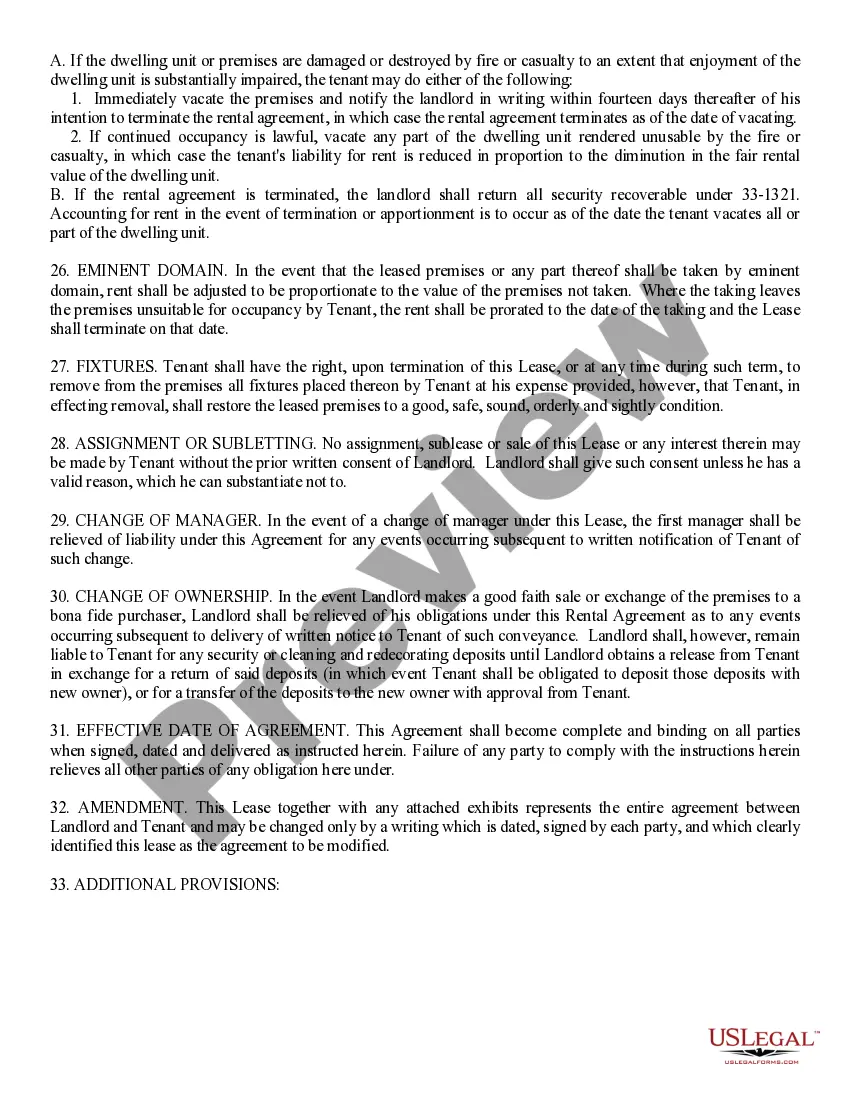
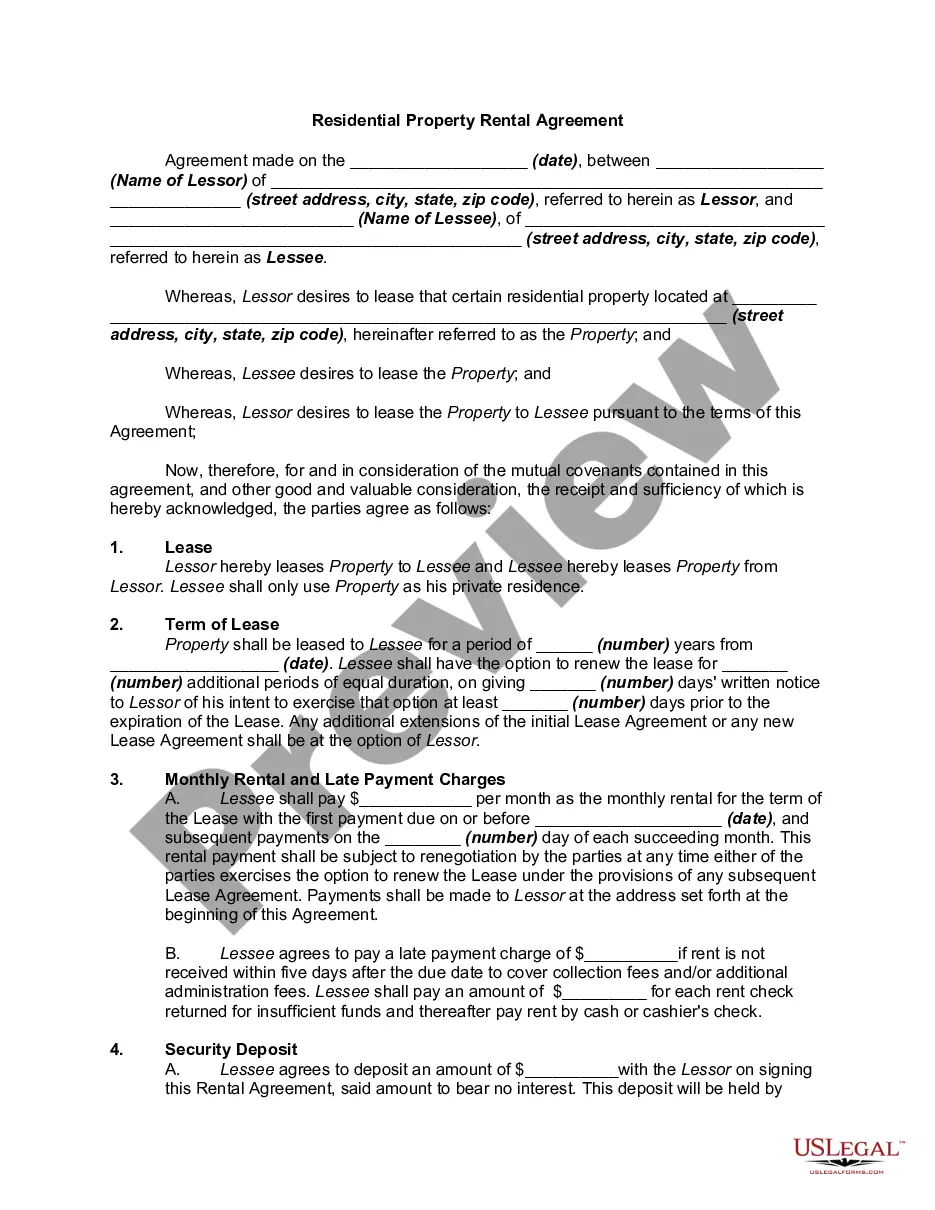
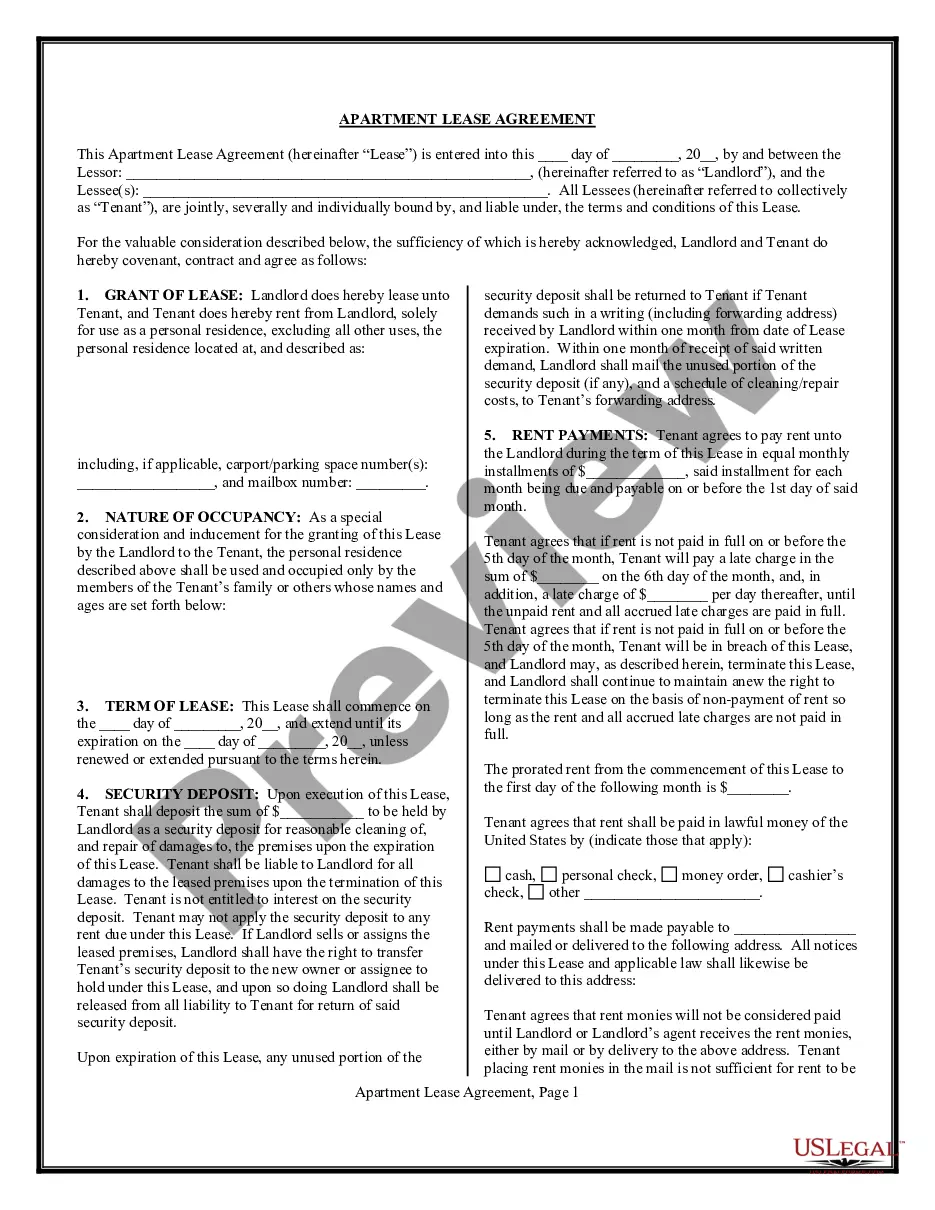
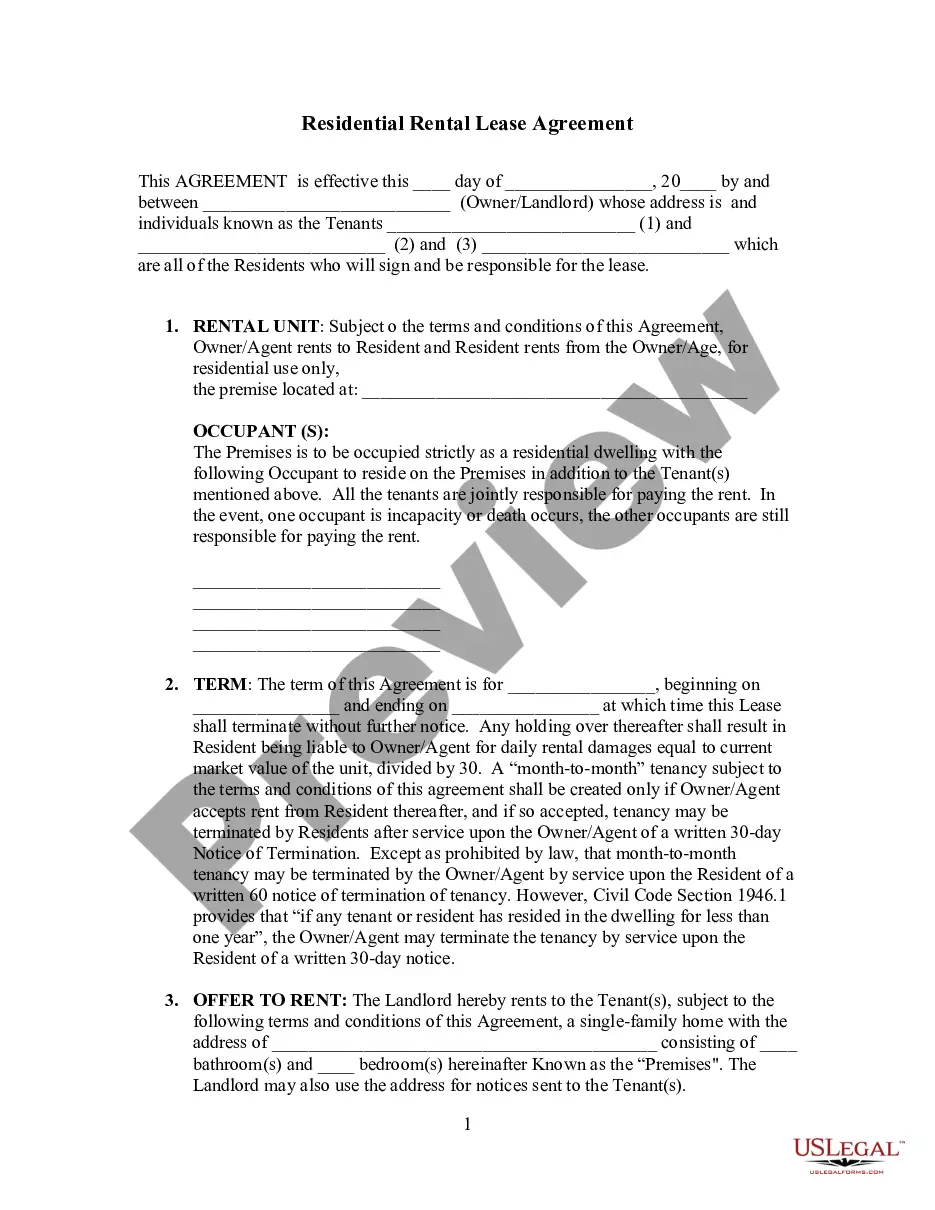
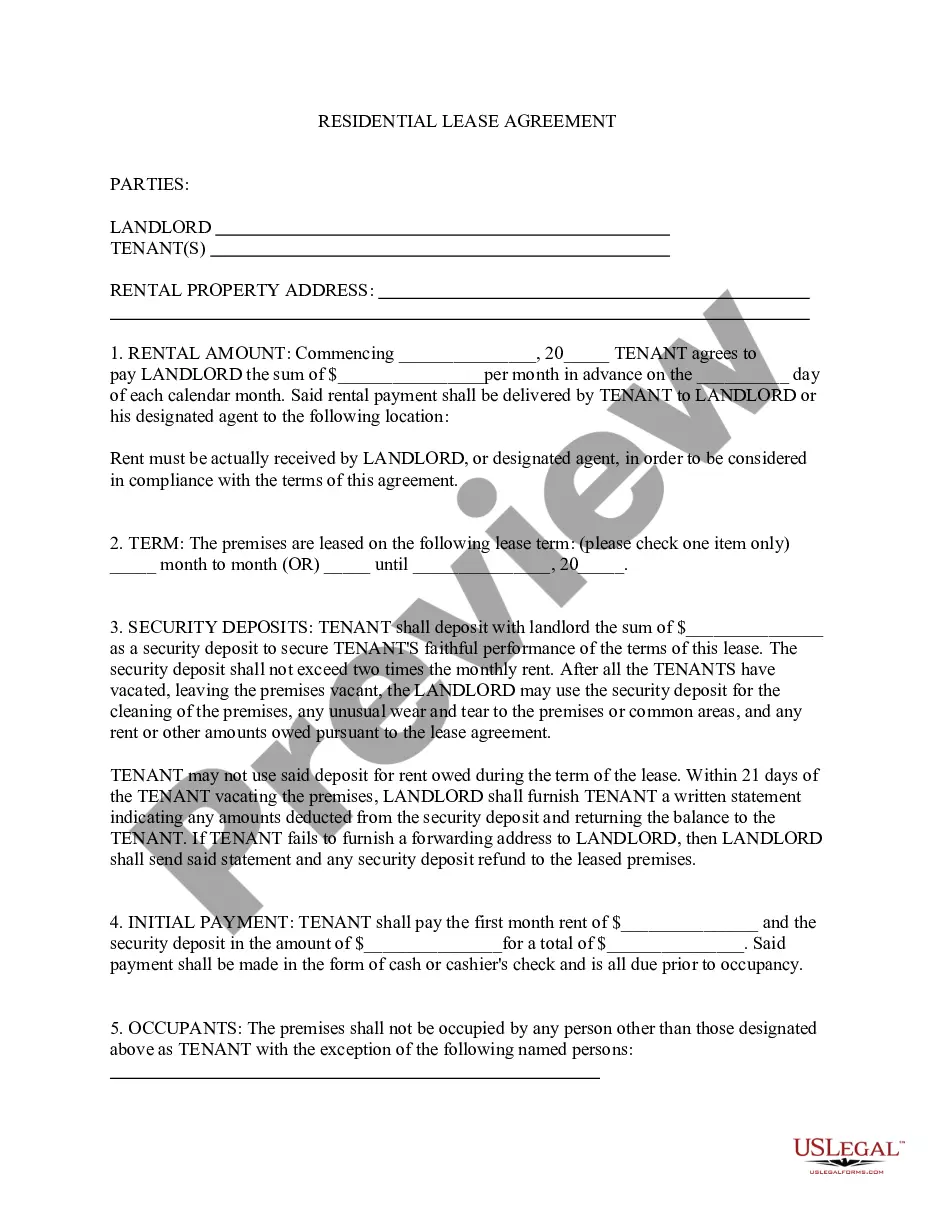
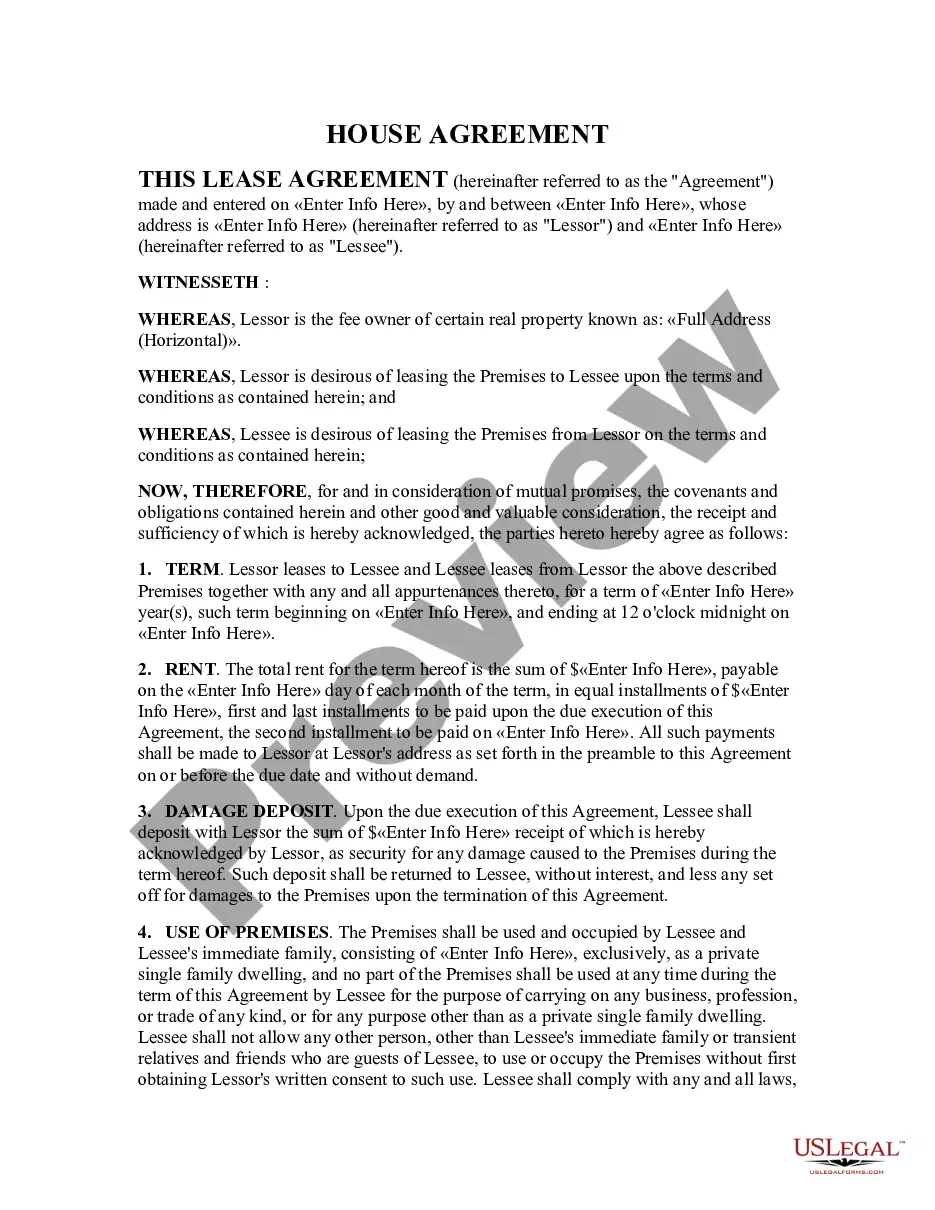
The Apartment or Residential Lease is a legal document that outlines the terms of renting a residential property, such as an apartment or house. It specifies essential details like rental amounts, lease duration, tenant responsibilities, and property conditions. Unlike generic rental agreements, this form is tailored for specific residential environments, ensuring compliance with local laws and standards.
Main sections of this form
- Identification of tenants and landlord including contact information
- Description of the leased premises and any included furniture or appliances
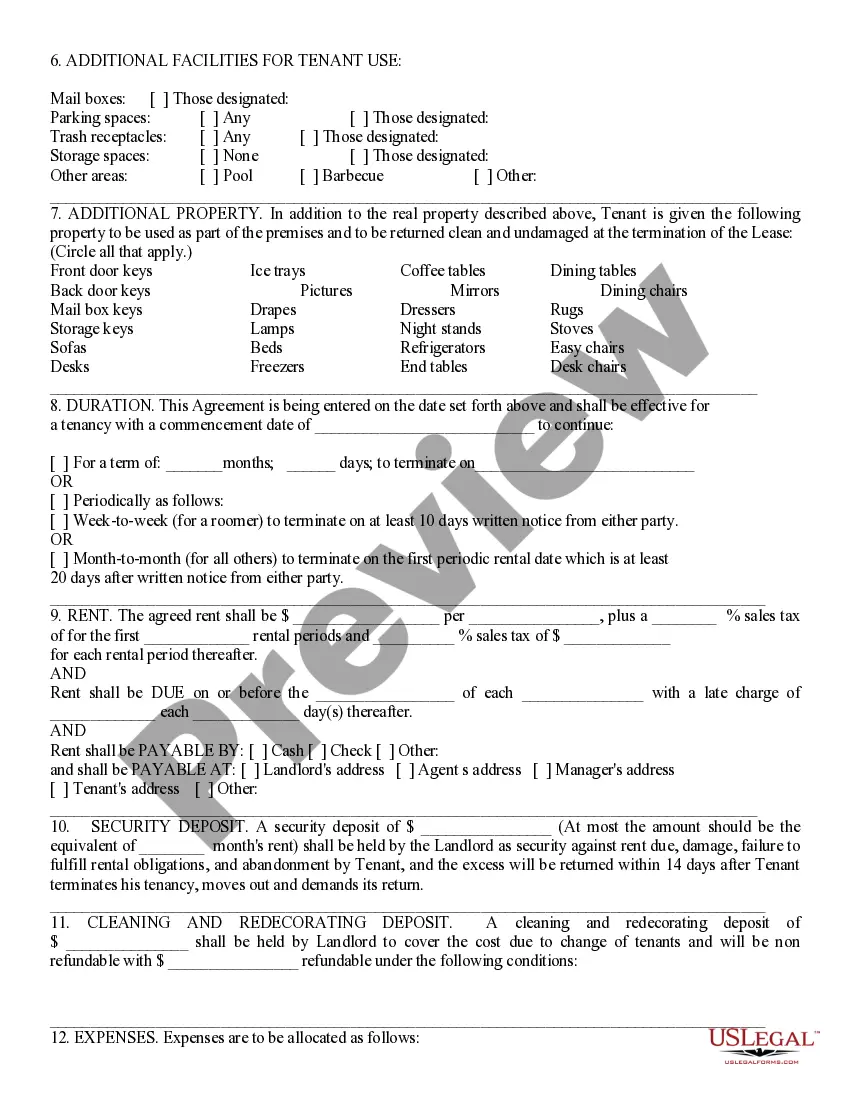
- Details on rent payment, security deposits, and applicable taxes
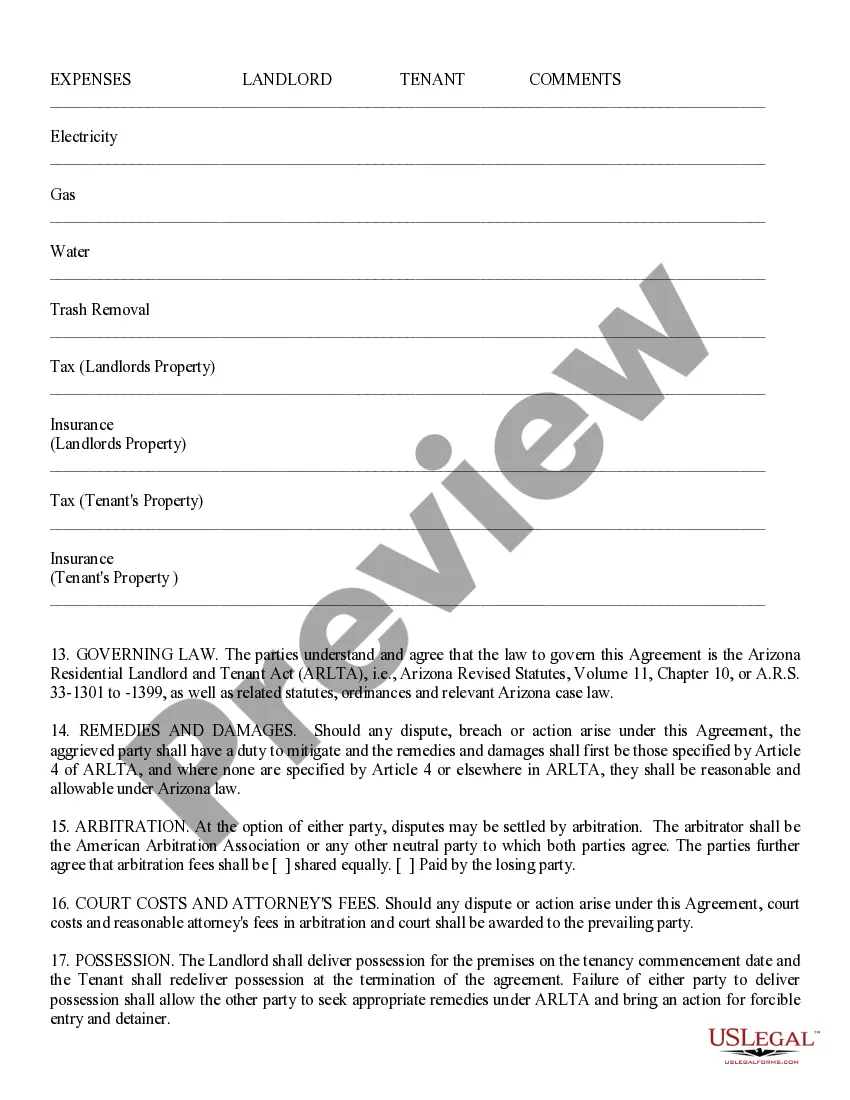
- Terms regarding pets, maintenance responsibilities, and access to the property
- Legal remedies for breach of contract and arbitration procedures
When to use this form
This form should be used when a landlord and tenant enter into a binding agreement for renting a residential property. It is essential for establishing clear expectations regarding rent, property conditions, duration of tenancy, and the rights and responsibilities of both parties.
Who this form is for
This form is intended for:
- Landlords who wish to clearly define the terms of tenancy
- Tenants looking to understand their rights and obligations when renting
- Property managers responsible for overseeing rental agreements
Steps to complete this form
- Identify the parties involved by entering the names and contact details of the landlord and tenants.
- Specify the premises by providing the apartment number, address, and description of the property.
- Indicate the duration of the lease and the total rent amount, including due dates and payment methods.
- Outline any additional terms such as pet policies, maintenance responsibilities, and termination conditions.
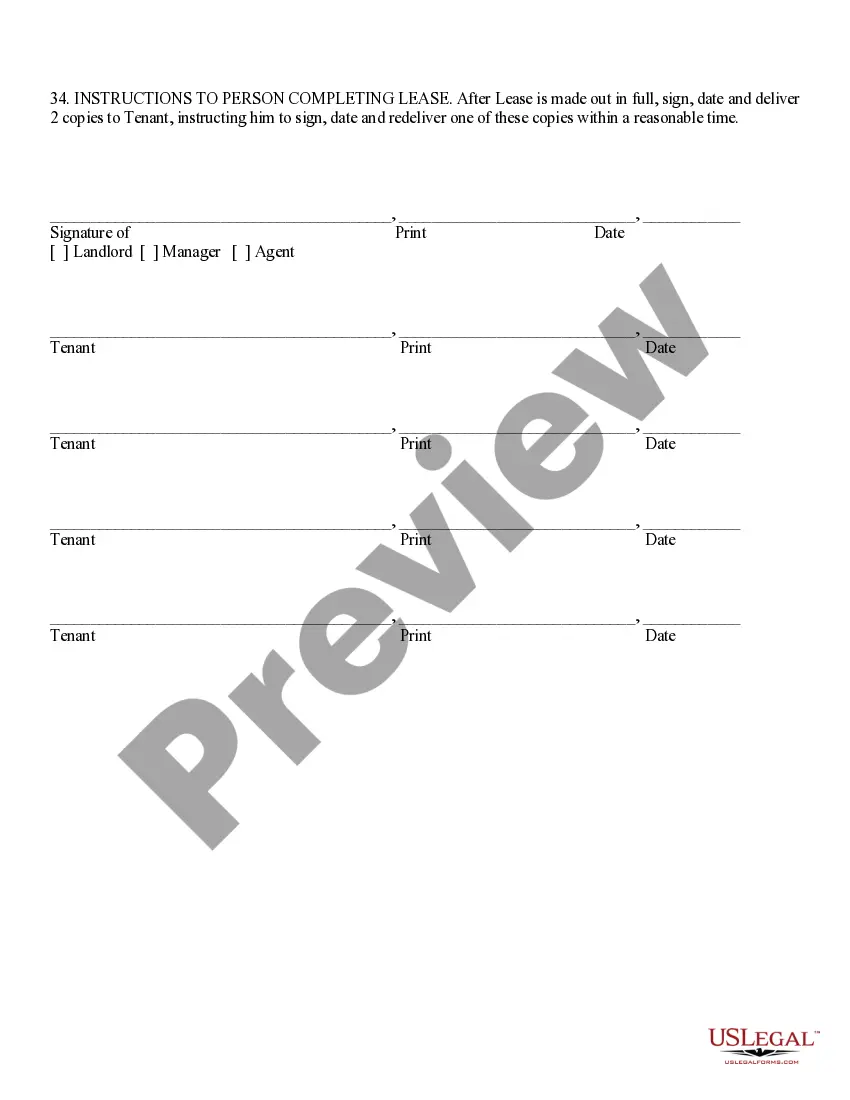
- Ensure all parties sign and date the lease, and provide copies as necessary.
Notarization requirements for this form
This form does not typically require notarization to be legally valid. However, some jurisdictions or document types may still require it. US Legal Forms provides secure online notarization powered by Notarize, available 24/7 for added convenience.
Get your form ready online
Our built-in tools help you complete, sign, share, and store your documents in one place.
Make edits, fill in missing information, and update formatting in US Legal Forms—just like you would in MS Word.
Download a copy, print it, send it by email, or mail it via USPS—whatever works best for your next step.
Sign and collect signatures with our SignNow integration. Send to multiple recipients, set reminders, and more. Go Premium to unlock E-Sign.
If this form requires notarization, complete it online through a secure video call—no need to meet a notary in person or wait for an appointment.
We protect your documents and personal data by following strict security and privacy standards.

Make edits, fill in missing information, and update formatting in US Legal Forms—just like you would in MS Word.

Download a copy, print it, send it by email, or mail it via USPS—whatever works best for your next step.

Sign and collect signatures with our SignNow integration. Send to multiple recipients, set reminders, and more. Go Premium to unlock E-Sign.

If this form requires notarization, complete it online through a secure video call—no need to meet a notary in person or wait for an appointment.

We protect your documents and personal data by following strict security and privacy standards.
Common mistakes to avoid
- Failing to include all tenant names, which can lead to disputes later.
- Not specifying the maintenance responsibilities of both landlord and tenant.
- Neglecting to outline the terms surrounding pet ownership clearly.
- Entering incorrect rental amounts or payment due dates that can cause confusion.
Benefits of completing this form online
- Convenience of filling out and downloading from anywhere at any time.
- Editability allows for easy customization to meet specific needs.
- Access to legal validity as the forms are drafted by licensed professionals.
What to keep in mind
- The Apartment or Residential Lease is crucial for outlining tenant-landlord relationships.
- It ensures clarity on important issues like rent, responsibilities, and legal rights.
- Using a legally compliant form helps prevent misunderstandings and disputes.
Looking for another form?
Form popularity
FAQ
Currently, there are no indications that the rental tax in Arizona will be eliminated. Local governments rely on these tax revenues for services, and changes in taxation can often be complex. As a landlord or tenant participating in an Arizona Apt or Residential Lease, it's advisable to stay updated on any legislative changes regarding taxes to plan accordingly.
Arizona does not impose a limit on how much rent can be increased; however, landlords must provide proper notification per the lease agreement. It’s crucial to understand how these increases are managed within your Arizona Apt or Residential Lease to avoid disputes in the future. Staying informed about rental laws will help you prepare for any changes.
In Arizona, landlords must provide notice to tenants before they can move out, with the duration depending on the reason for eviction. Typically, a 5-day notice is required for non-payment of rent, while a 30-day notice applies for non-renewal of lease agreements. Knowing these timelines is vital for both parties involved in an Arizona Apt or Residential Lease.
Yes, Arizona imposes a transaction privilege tax on rental income, which applies to residential leases. This tax rate varies by locality, so it’s essential to check with local authorities. By understanding these taxes, landlords and tenants can better navigate financial responsibilities associated with their Arizona Apt or Residential Lease.
To rent in Arizona, individuals typically must provide proof of income, valid identification, and rental history. Most landlords will also conduct a background check to assess creditworthiness. Ensuring you meet these basic criteria will smooth the process of entering into an Arizona Apt or Residential Lease.
In Arizona, the maximum lease deposit allowed for a residential lease is generally equal to one and one-half times the monthly rent. This cap ensures that tenants do not face excessive financial burden upfront. Remember, it is important to document all deposits received and communicate clearly with your landlord about the terms of the Arizona Apt or Residential Lease.
To get approved for an apartment in Arizona, you generally need to fill out a rental application and submit personal information, including your income and rental history. Landlords will conduct background and credit checks during this process. By presenting yourself confidently and demonstrating your reliability, you enhance your chances of securing that desired Arizona Apt or Residential Lease.
In Arizona, leases do not need to be notarized to be legally binding, but having a notarized document can provide additional security. A notarized lease helps confirm the identities of both parties and can be beneficial in disputes. When you enter into an Arizona Apt or Residential Lease, consider documenting everything clearly for peace of mind.
In Arizona, most landlords look for tenants whose monthly income is at least three times the rent amount. For example, if your rent is $1,500, you should earn around $4,500 per month. This guideline helps ensure that tenants can afford their Arizona Apt or Residential Lease while maintaining their financial stability.
To rent a house in Arizona, you typically need to provide proof of income, identification, and a good credit history. Landlords may also require references or a rental history to assess your suitability. Having all necessary documents ready makes the process of securing an Arizona Apt or Residential Lease much smoother for both you and the landlord.