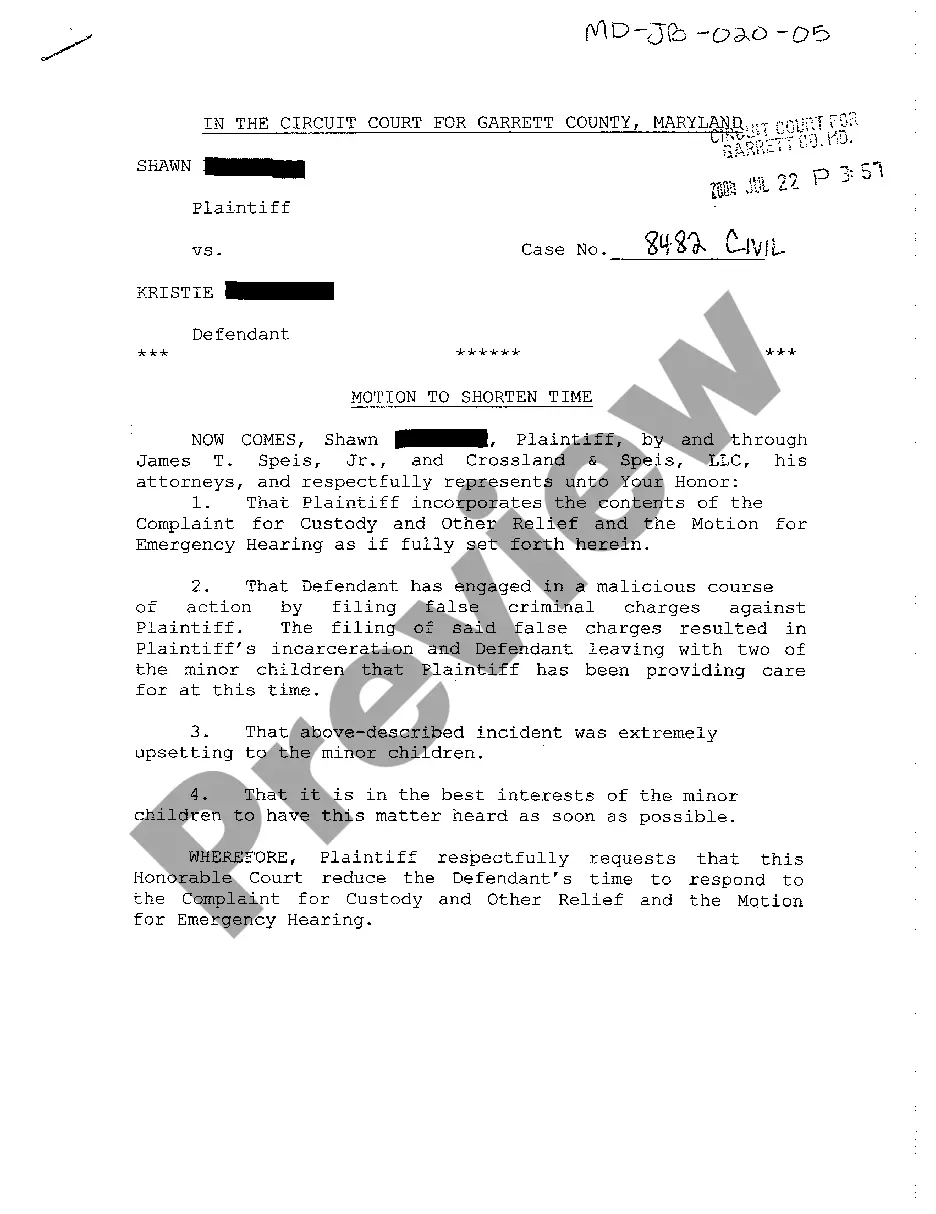
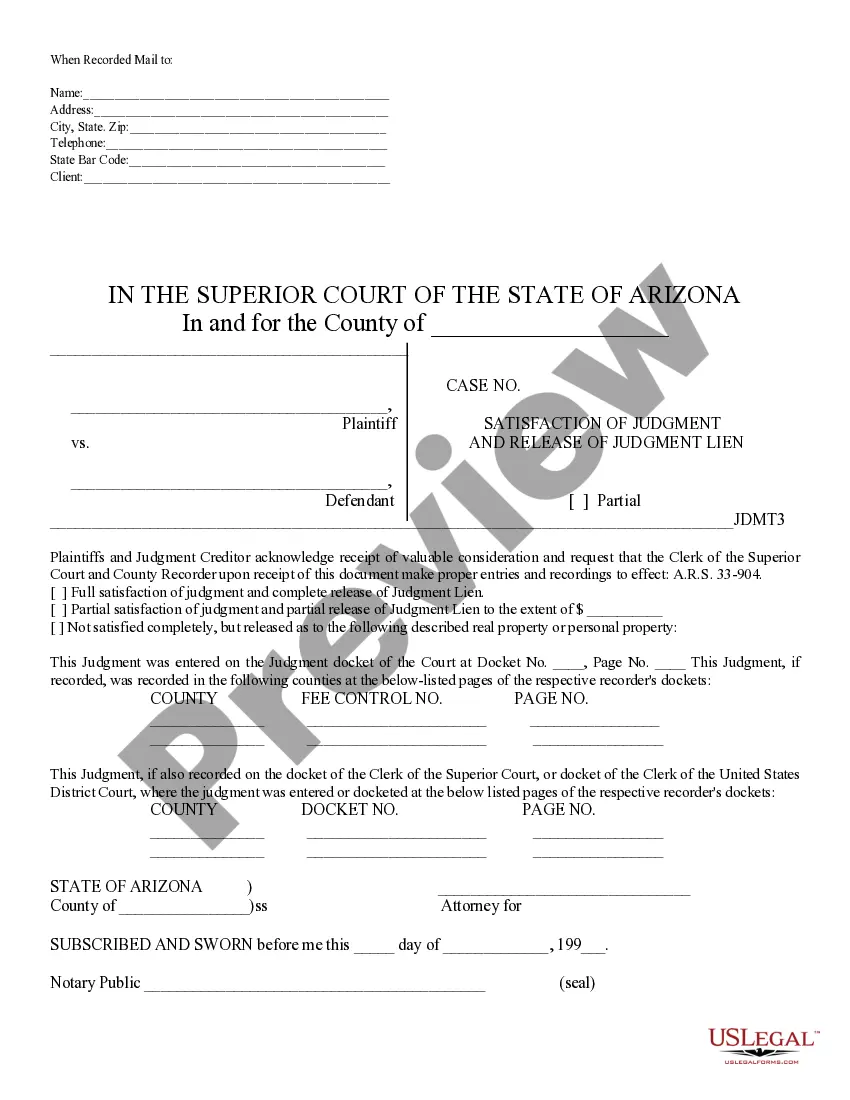
Arizona Satisfaction of Judgment and Release of Judgment Lien
What is this form?
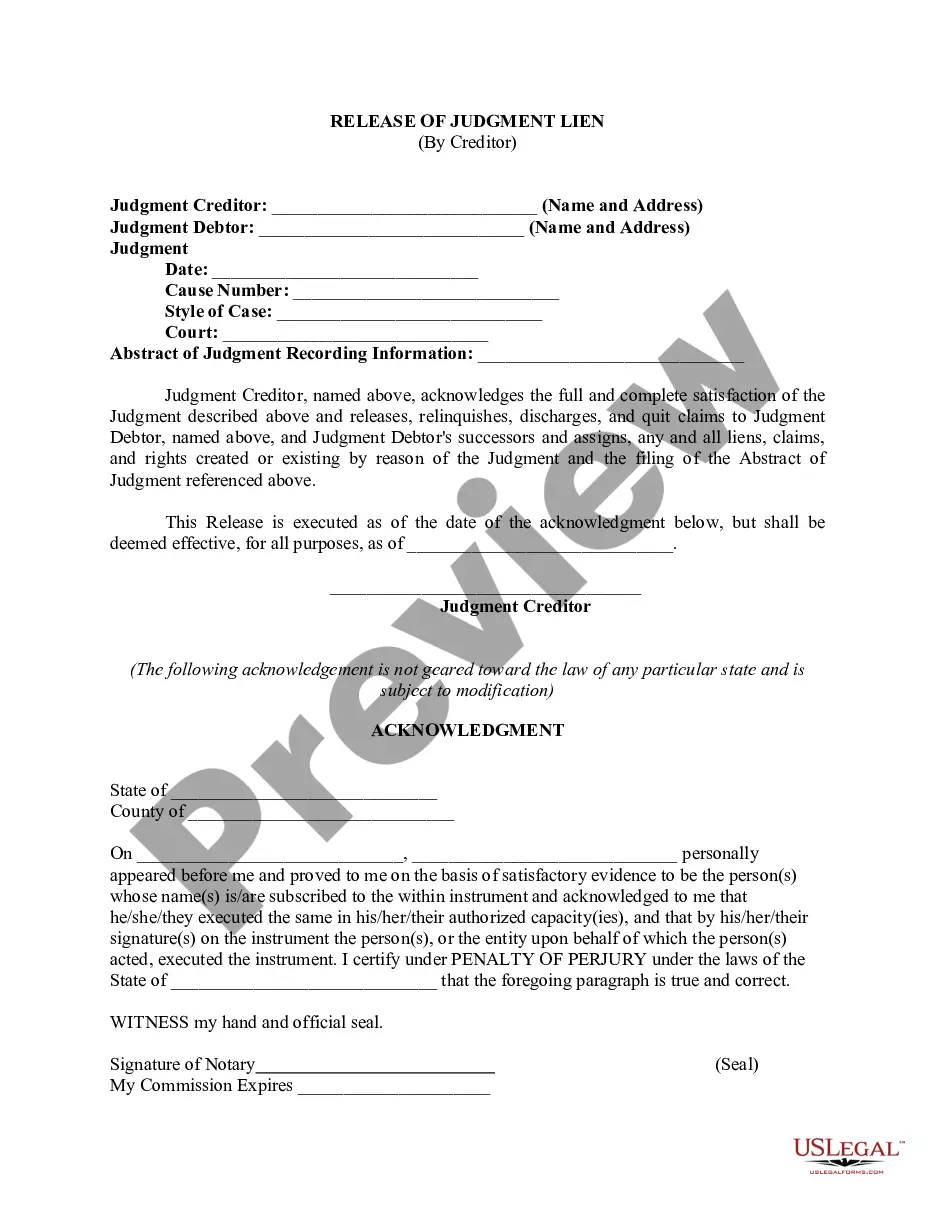
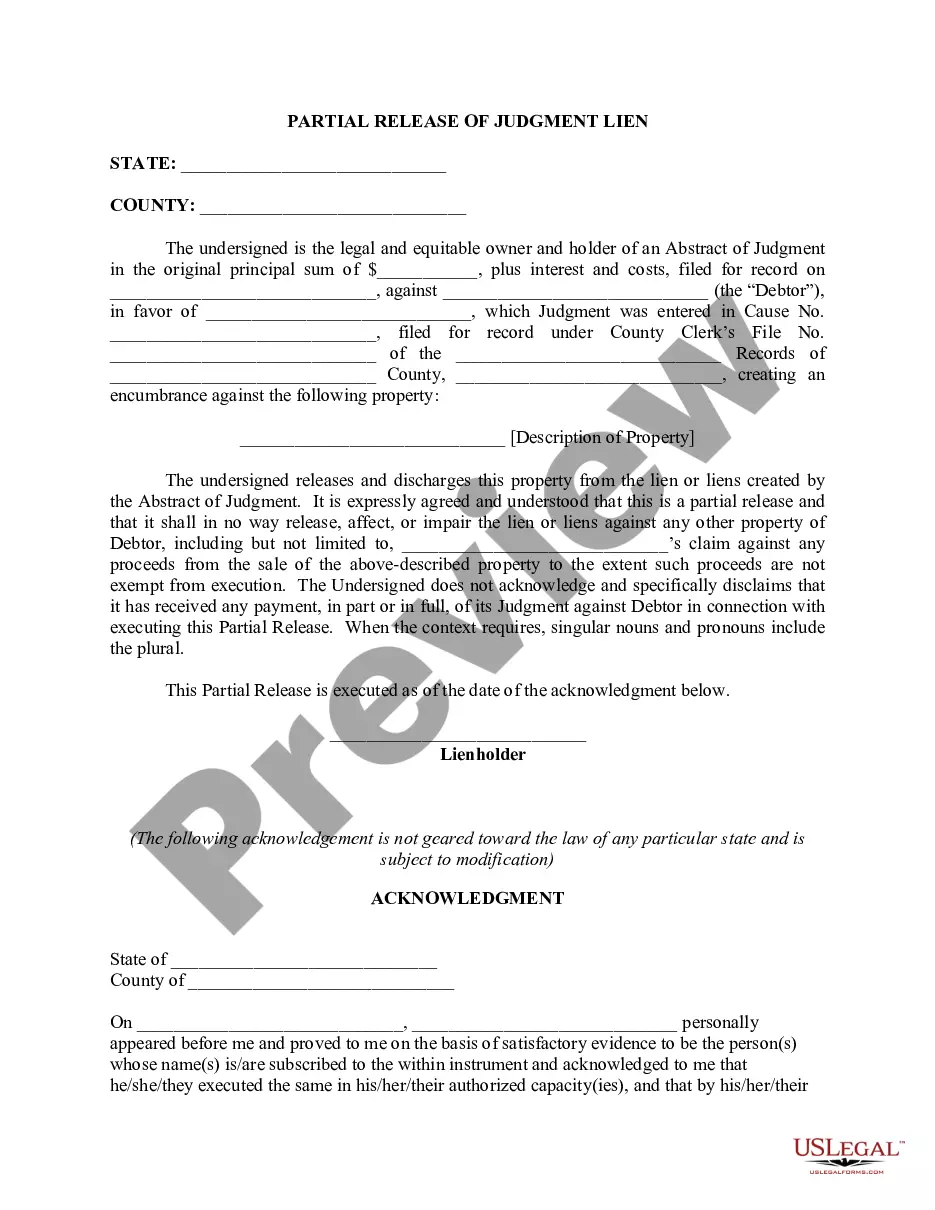
The Satisfaction of Judgment and Release of Judgment Lien is a legal document used to indicate that a previously rendered judgment against a defendant has been satisfied or paid. This form is essential for releasing any liens against the defendant's property, allowing for clear title and ownership. Unlike other legal forms, this form specifically addresses the resolution of judgments and the removal of associated liens.
Key components of this form
- Identification of the court and county where the judgment was recorded
- Full satisfaction of judgment and total release of judgment lien
- Partial satisfaction of judgment and associated request for lien release
- Specification of real property or personal property affected by the judgment
- Judgment docket number and page number for court records
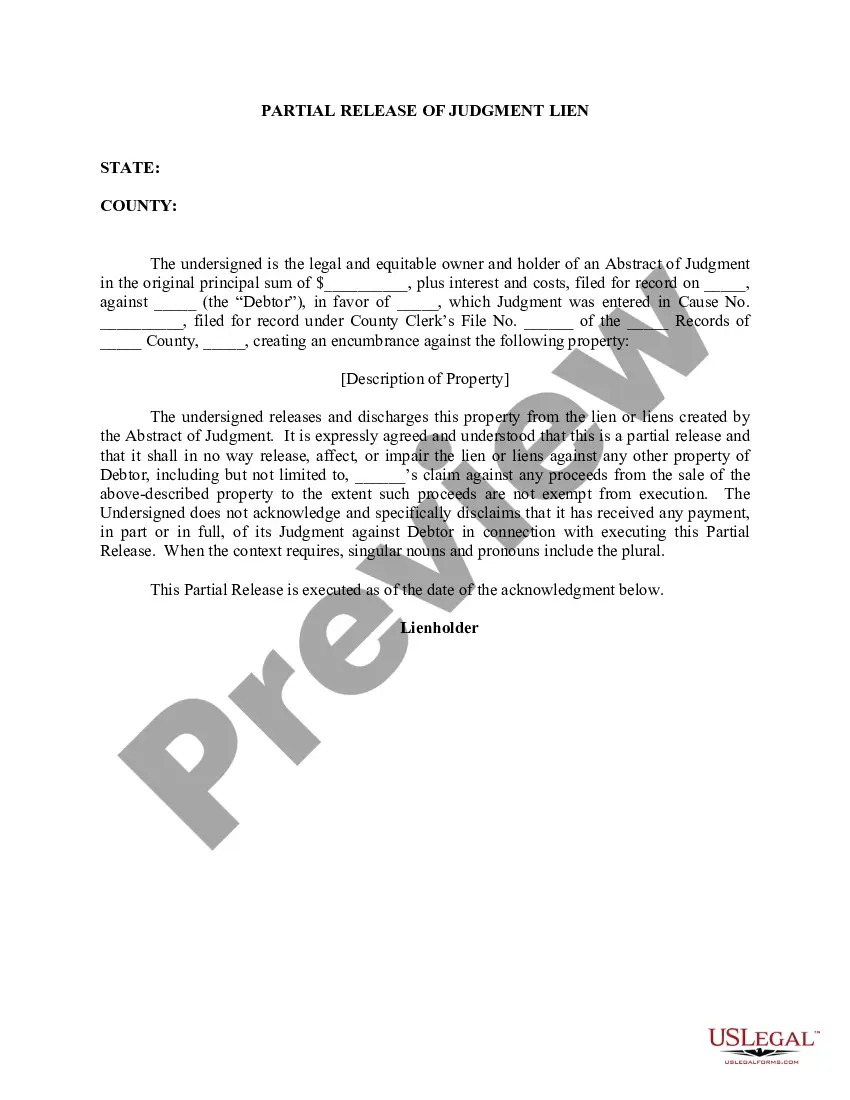
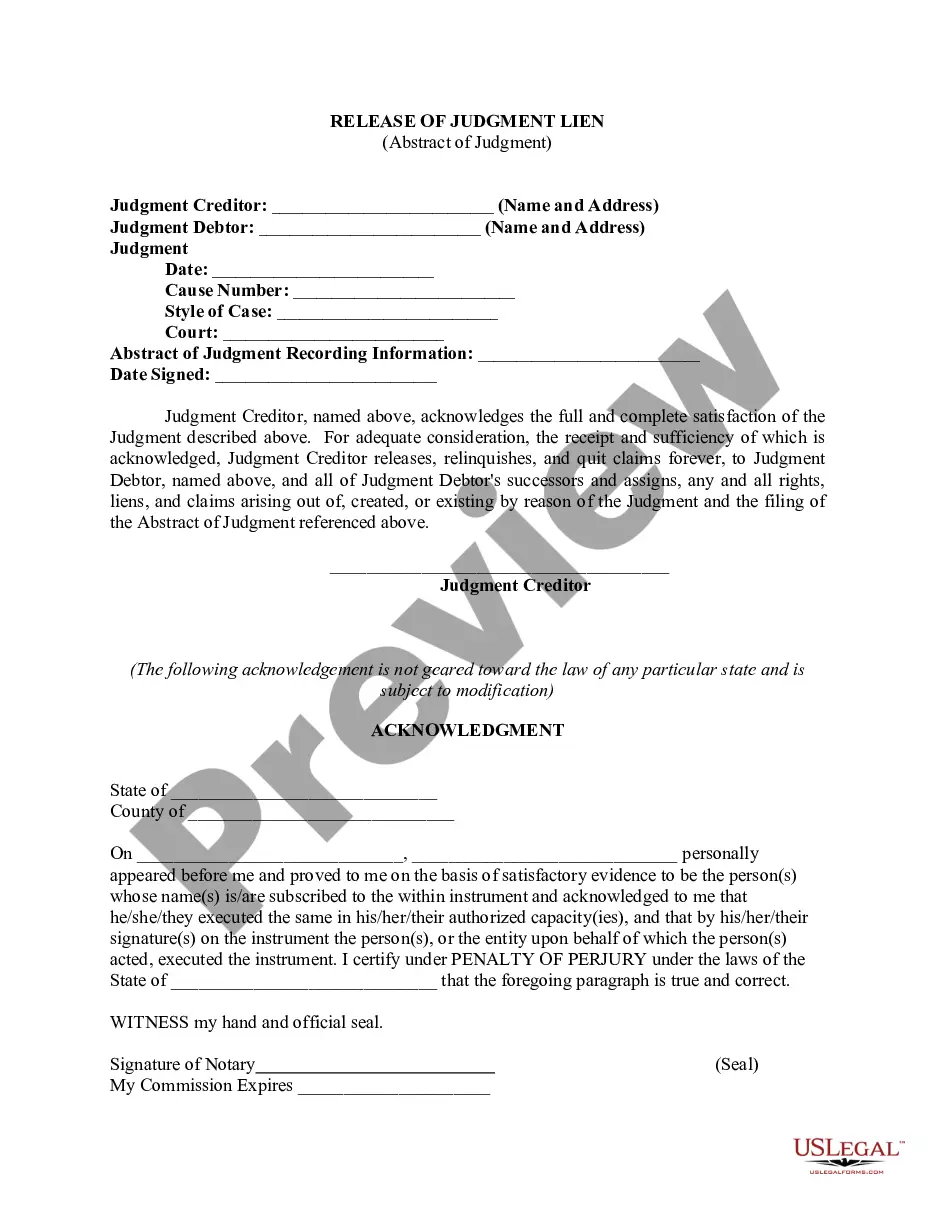

When to use this form
This form is needed when a defendant has fulfilled the obligations of a court judgment, either by paying the full amount or reaching a settlement. Using this form helps to update public records to reflect that the judgment has been satisfied and any liens have been removed. It is particularly important when attempting to sell or refinance property that was subject to a lien from the judgment.
Who this form is for
- Defendants who have paid a judgment in full or settled the terms
- Individuals or entities seeking to clear a lien from their title
- Real estate professionals handling property transactions affected by a judgment
How to prepare this document
- Identify the court and county where the original judgment was recorded.
- Specify whether the judgment is fully satisfied or only partially satisfied.
- Provide details of any real or personal property affected by the judgment.
- Fill in the judgment docket number and page number as indicated on the court documents.
- Sign and date the form to verify its accuracy and validity.
Does this document require notarization?
This form does not typically require notarization unless specified by local law. Users should check with their local jurisdiction to confirm any additional requirements.
Get your form ready online
Our built-in tools help you complete, sign, share, and store your documents in one place.
Make edits, fill in missing information, and update formatting in US Legal Forms—just like you would in MS Word.
Download a copy, print it, send it by email, or mail it via USPS—whatever works best for your next step.
Sign and collect signatures with our SignNow integration. Send to multiple recipients, set reminders, and more. Go Premium to unlock E-Sign.
If this form requires notarization, complete it online through a secure video call—no need to meet a notary in person or wait for an appointment.
We protect your documents and personal data by following strict security and privacy standards.

Make edits, fill in missing information, and update formatting in US Legal Forms—just like you would in MS Word.

Download a copy, print it, send it by email, or mail it via USPS—whatever works best for your next step.

Sign and collect signatures with our SignNow integration. Send to multiple recipients, set reminders, and more. Go Premium to unlock E-Sign.

If this form requires notarization, complete it online through a secure video call—no need to meet a notary in person or wait for an appointment.

We protect your documents and personal data by following strict security and privacy standards.
Common mistakes to avoid
- Not including the correct docket number or page number.
- Filling out the form incorrectly or omitting required fields.
- Failing to sign or date the form before submission.
- Not submitting the form to the correct court or county recorder.
Advantages of online completion
- Convenience of downloading the form instantly in Word or Rich Text format.
- Ability to edit the form to suit specific needs before printing.
- Access to attorney-drafted templates, ensuring compliance with legal standards.
- No need to make trips to a law office or court to obtain the form.
What to keep in mind
- The Satisfaction of Judgment and Release of Judgment Lien is essential for officially documenting the fulfillment of a court judgment.
- Using this form helps in removing any associated liens, ensuring clear property titles.
- It is a straightforward process that requires key identification details and proper submission to local authorities.
Looking for another form?
Form popularity
FAQ
Filing a judgment lien in Arizona involves recording the judgment with the county recorder's office where the debtor owns property. You will need to complete a form that includes details of the judgment, such as the case number and the amount owed. After recording the lien, it will attach to any real property the debtor owns in that county. This process plays a crucial role in the Arizona Satisfaction of Judgment and Release of Judgment Lien.
To vacate a judgment in Arizona, you must file a motion with the court that issued the judgment. This process requires presenting a valid reason for why the judgment should be set aside, such as new evidence or improper service. Once the motion is filed, the court will schedule a hearing where you can explain your case. Successfully vacating a judgment may lead to an Arizona Satisfaction of Judgment and Release of Judgment Lien.
In Arizona, a default judgment is entered when a defendant fails to respond to a lawsuit within the specified timeframe. This judgment allows the plaintiff to seek recovery without further litigation. If a default judgment is granted, it can lead to the collection of debts through mechanisms like the Arizona Satisfaction of Judgment and Release of Judgment Lien. Consult uslegalforms for guidance on managing default judgments effectively.
Liens in Arizona are valid for five years unless renewed. If a lien is not renewed within this timeframe, it can become unenforceable, allowing the debtor to reclaim their property. Therefore, it is essential to keep track of renewal opportunities to maintain lien rights. To simplify your legal management of liens, uslegalforms offers resources that cater to your needs.
Yes, judgments do expire in Arizona after a five-year term unless they are renewed. Failure to renew means that creditors lose their right to collect the debt associated with that judgment. Staying attentive to this timeline is crucial for action plans regarding debt recovery. uslegalforms can help you understand the renewal process and keep your judgments active.
In Arizona, a creditor can seize various types of personal property to satisfy a judgment. This includes bank accounts, vehicles, and other assets owned by the debtor. However, certain exemptions apply, such as personal items necessary for living or tools required for one’s trade. For complete guidance on personal property seizure, consider the resources offered by uslegalforms.
Renewing a judgment lien in Arizona involves filing the necessary paperwork with the court to extend the lien's validity. You must present evidence that the underlying judgment remains valid and enforceable. This proactive approach ensures that your rights as a creditor are safeguarded under the Arizona Satisfaction of Judgment and Release of Judgment Lien laws. uslegalforms can provide templates and guidance for this renewal process.
A lien in Arizona typically lasts for five years, similar to a judgment. This duration can be extended by renewing the lien before its expiration. It is essential to keep track of this timeframe to maintain your rights to collect debts secured by the lien. If you need assistance with liens and judgments, uslegalforms offers convenient resources for all your legal needs.
In Arizona, a judgment is valid for five years from the date it was entered. If the judgment is not renewed within this period, it will expire, and the creditor may lose the ability to enforce it. This five-year timeframe is crucial for creditors seeking recovery under the Arizona Satisfaction of Judgment and Release of Judgment Lien process. Consider using uslegalforms to ensure your judgments are properly handled.
To renew a judgment in Arizona, you must file a motion to renew the judgment with the court where the original judgment was entered. This motion needs to demonstrate that the creditor is still entitled to collect the debt. The renewal extends the life of the Arizona judgment, allowing for continued collection efforts. Utilizing the services of uslegalforms can help you navigate this process smoothly.