Arizona Parenting Plan
About this form
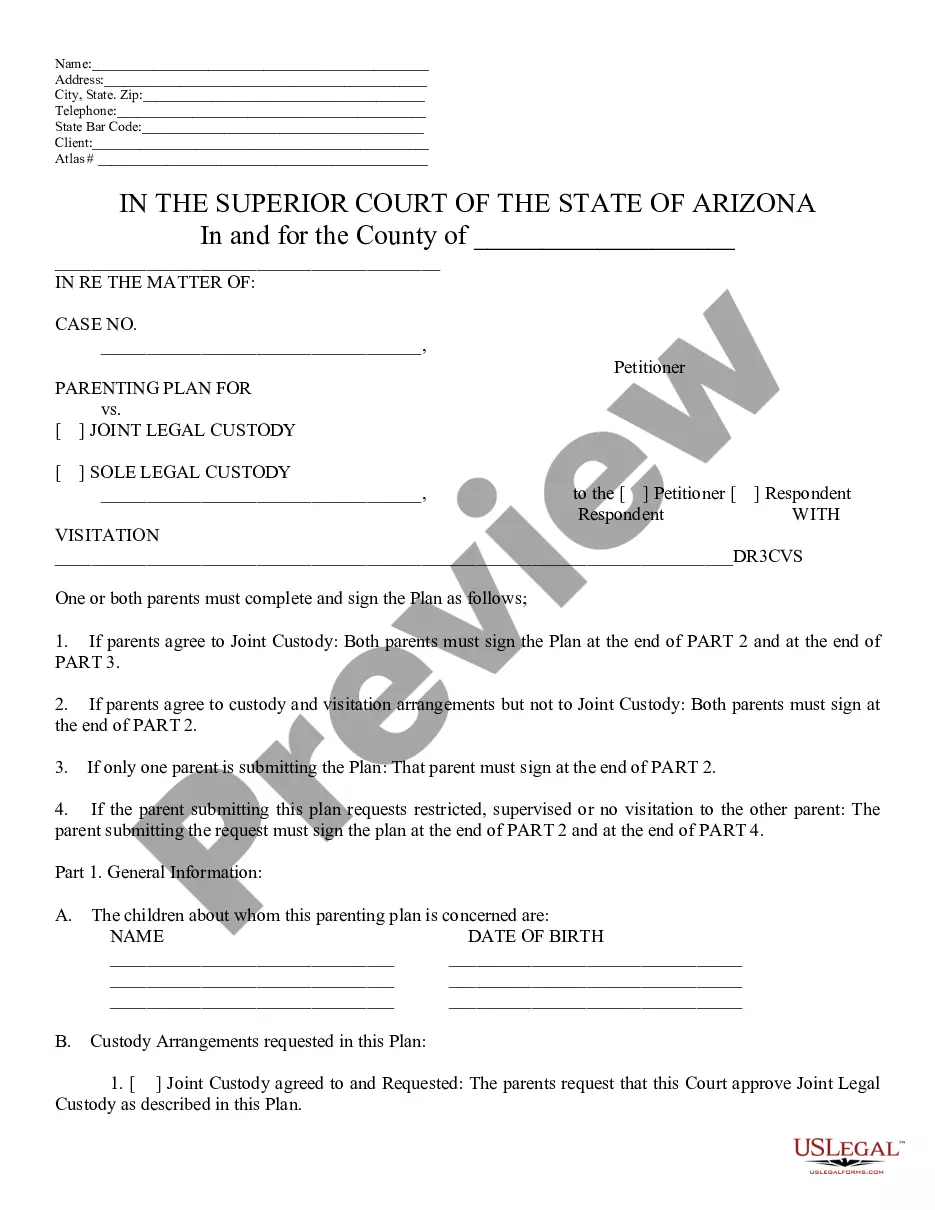
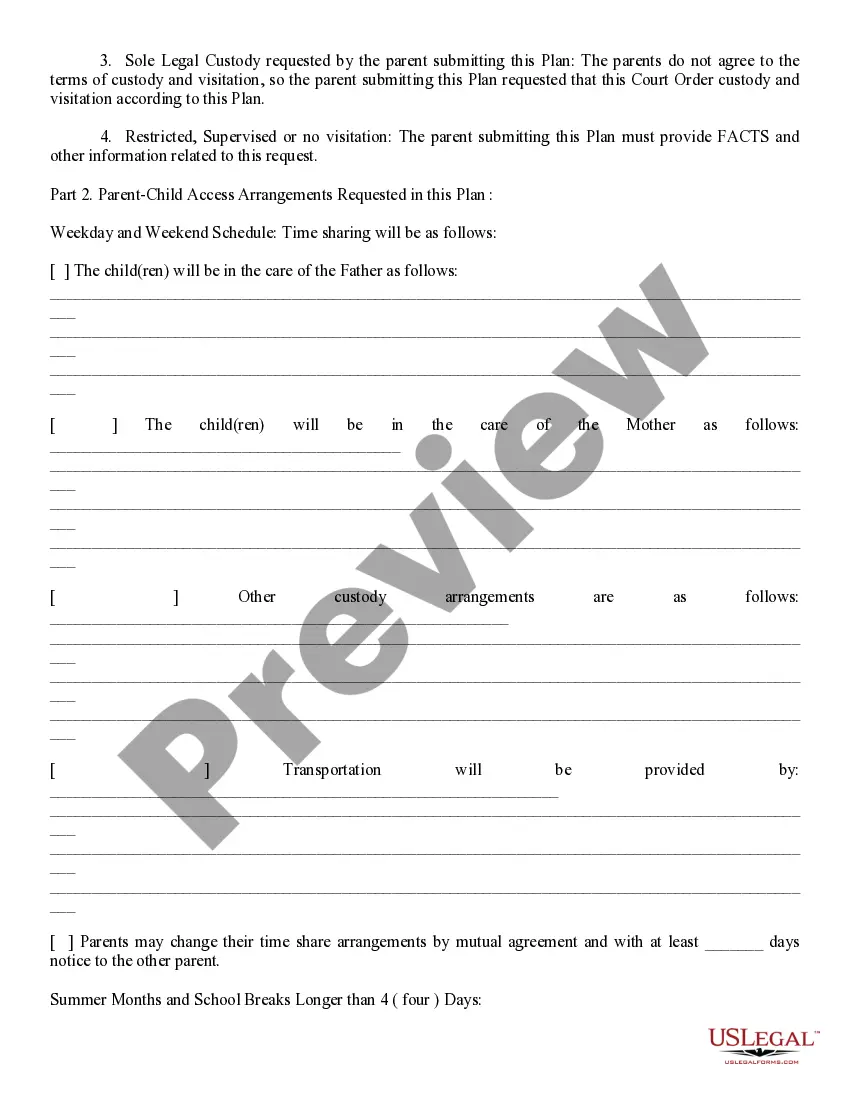
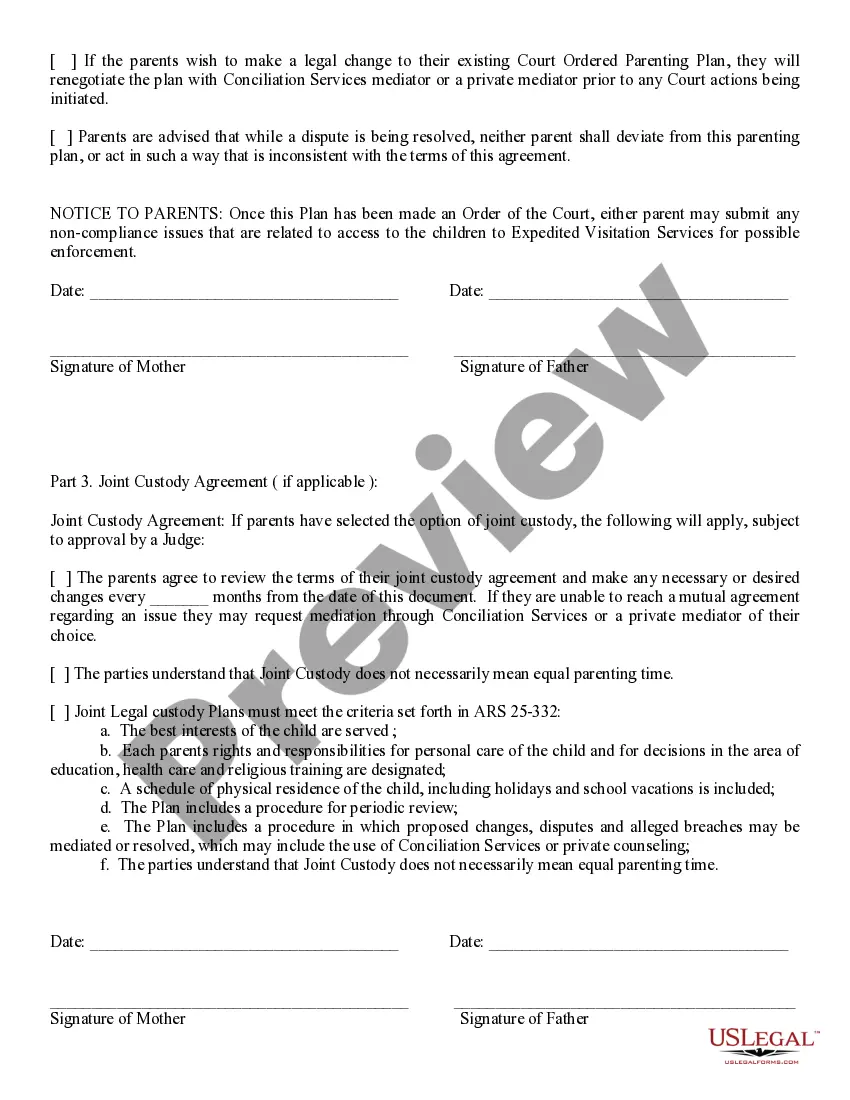
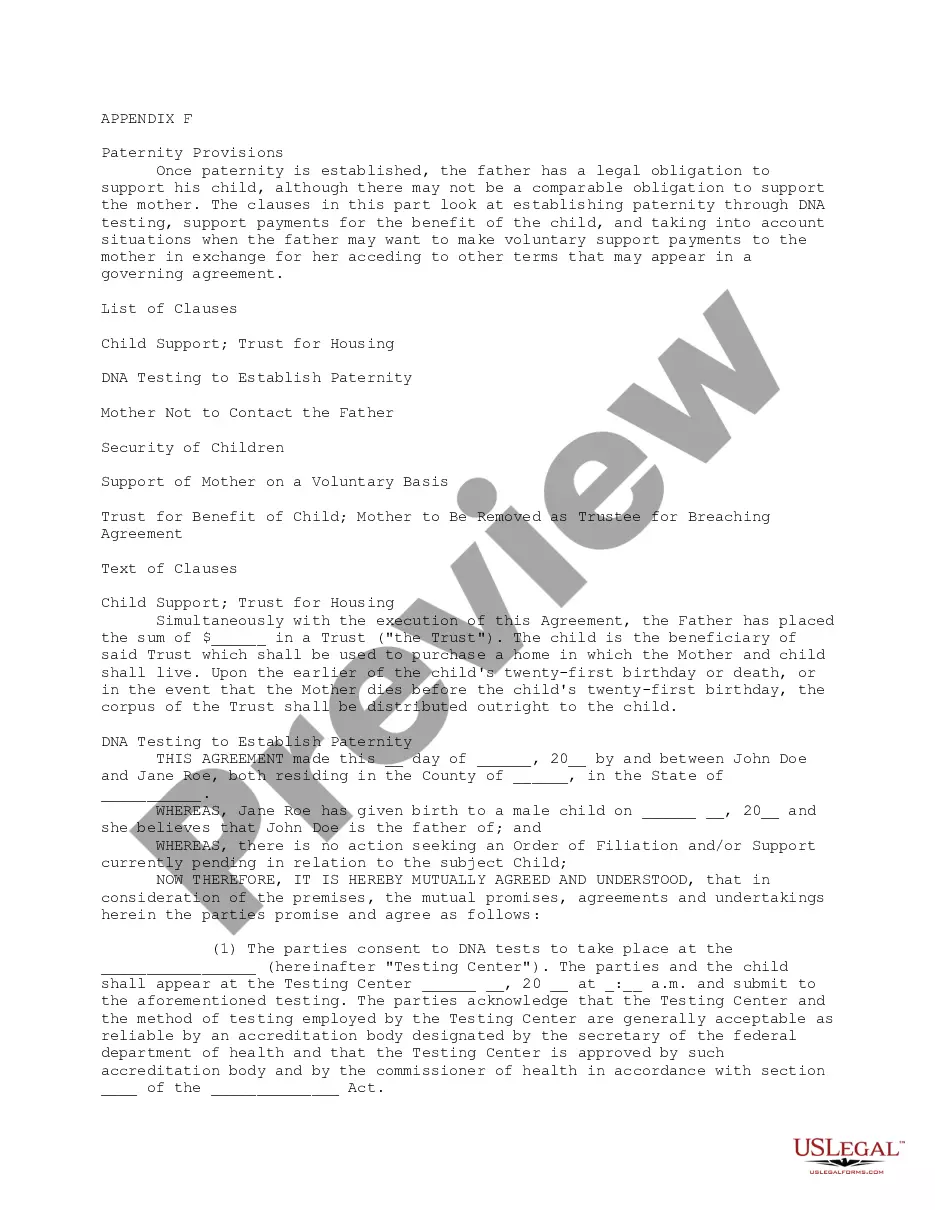
The Parenting Plan is a legal document that outlines custody and visitation arrangements for children following a divorce or separation. This form serves as a comprehensive guide for parents to define how they will share parenting responsibilities, including daily care, education, and visitation schedules. Unlike other custody forms, this plan specifically emphasizes cooperation between parents and can be adjusted based on their mutual agreement.
Key components of this form
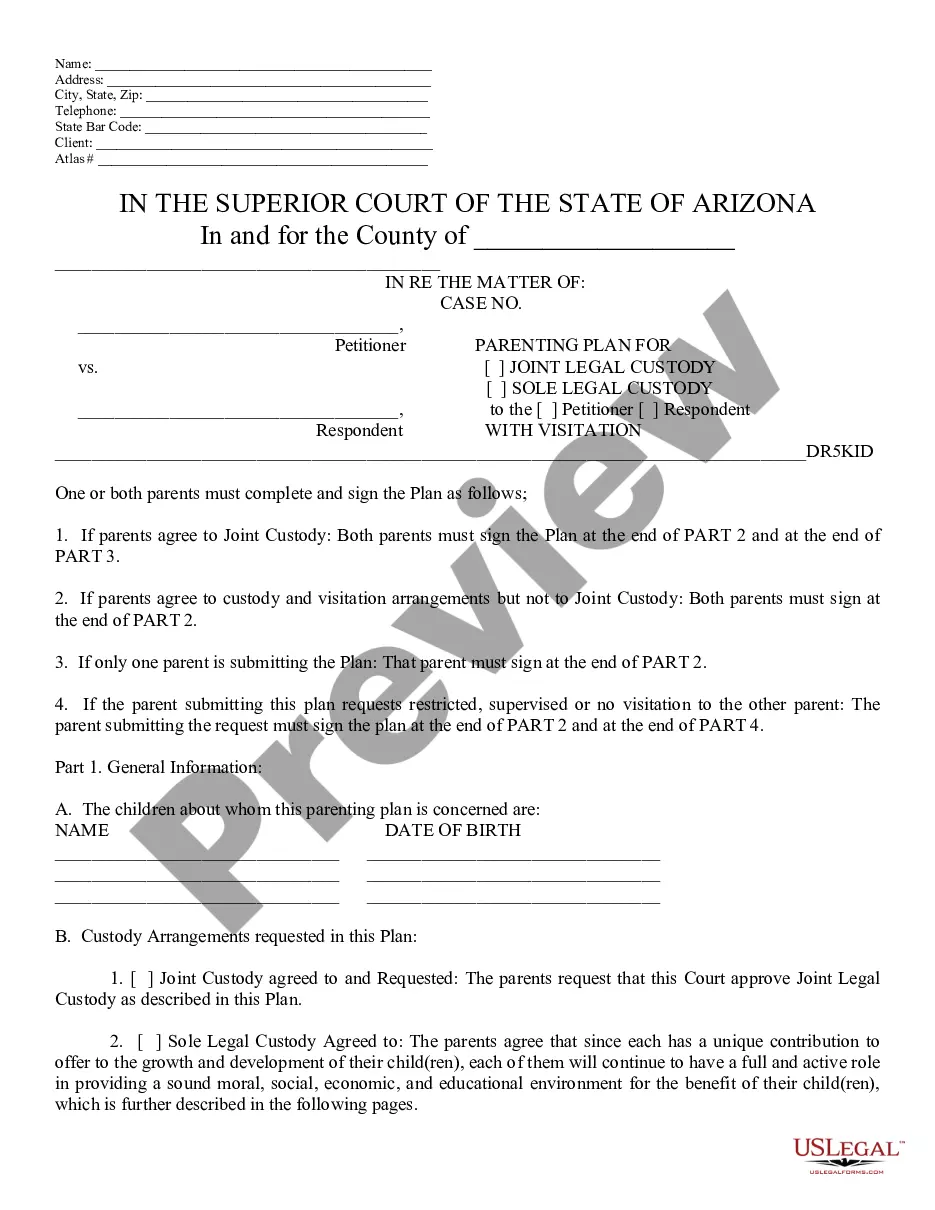
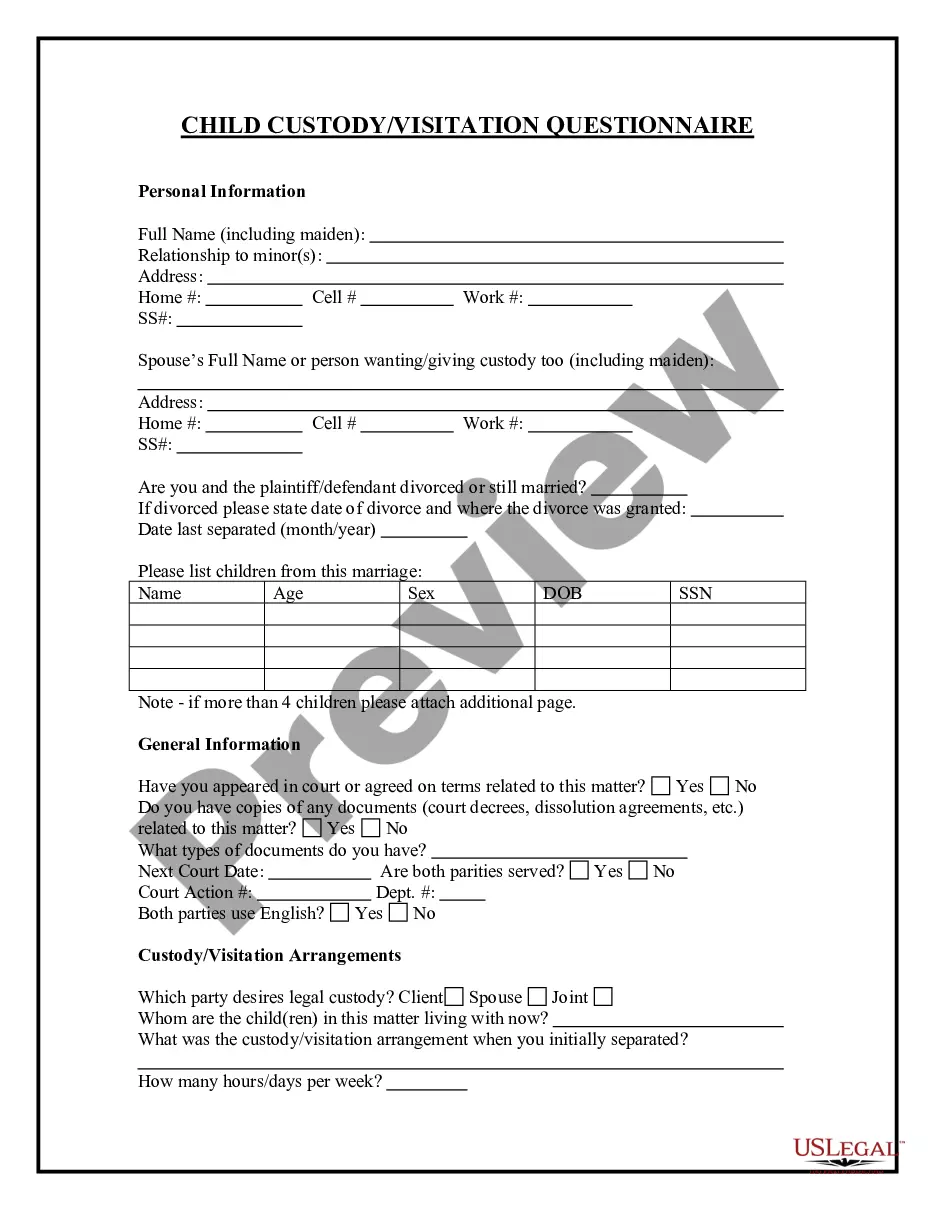
- General information about the children and parents involved.
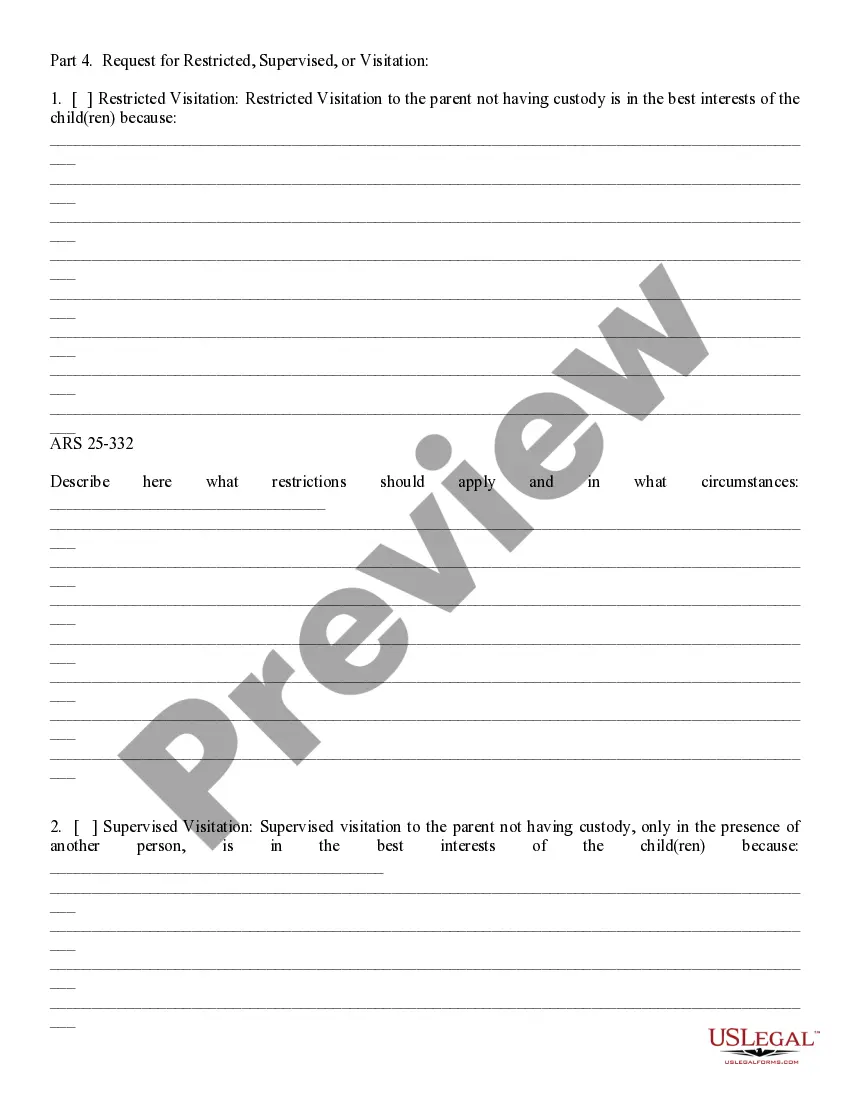
- Details on custody arrangements, including joint or sole custody options.
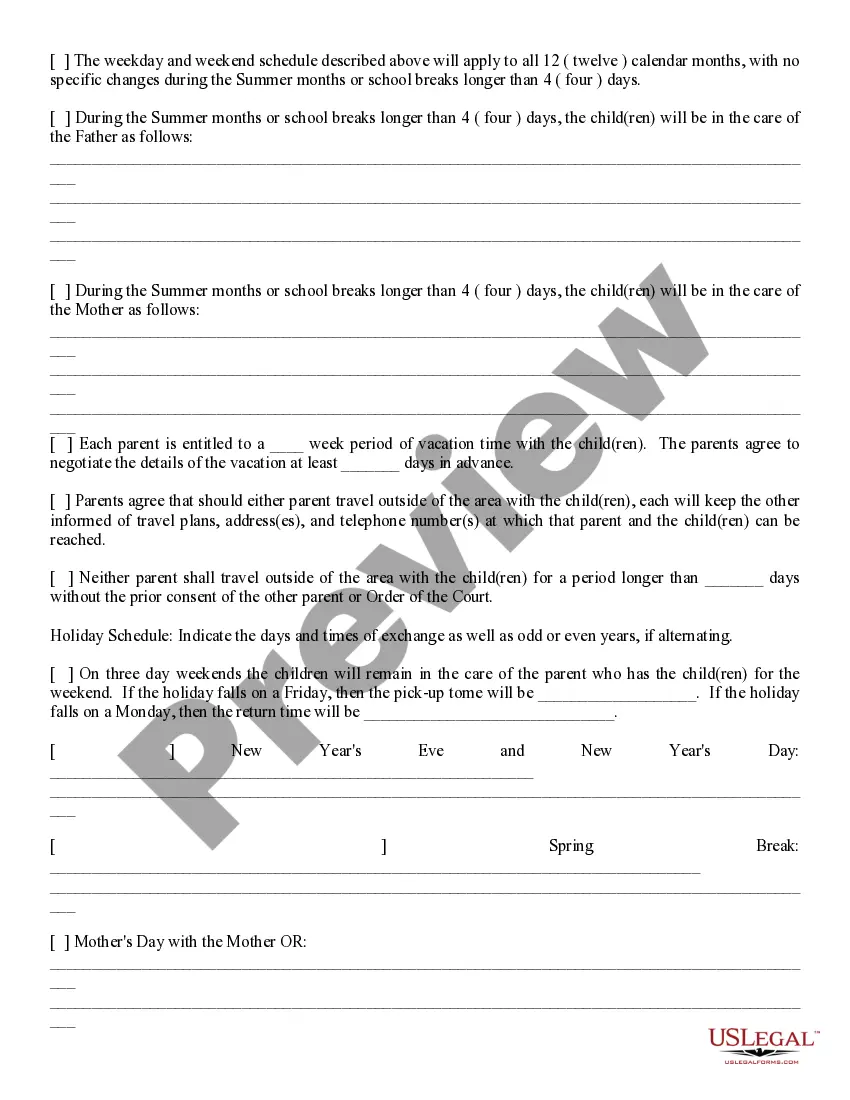
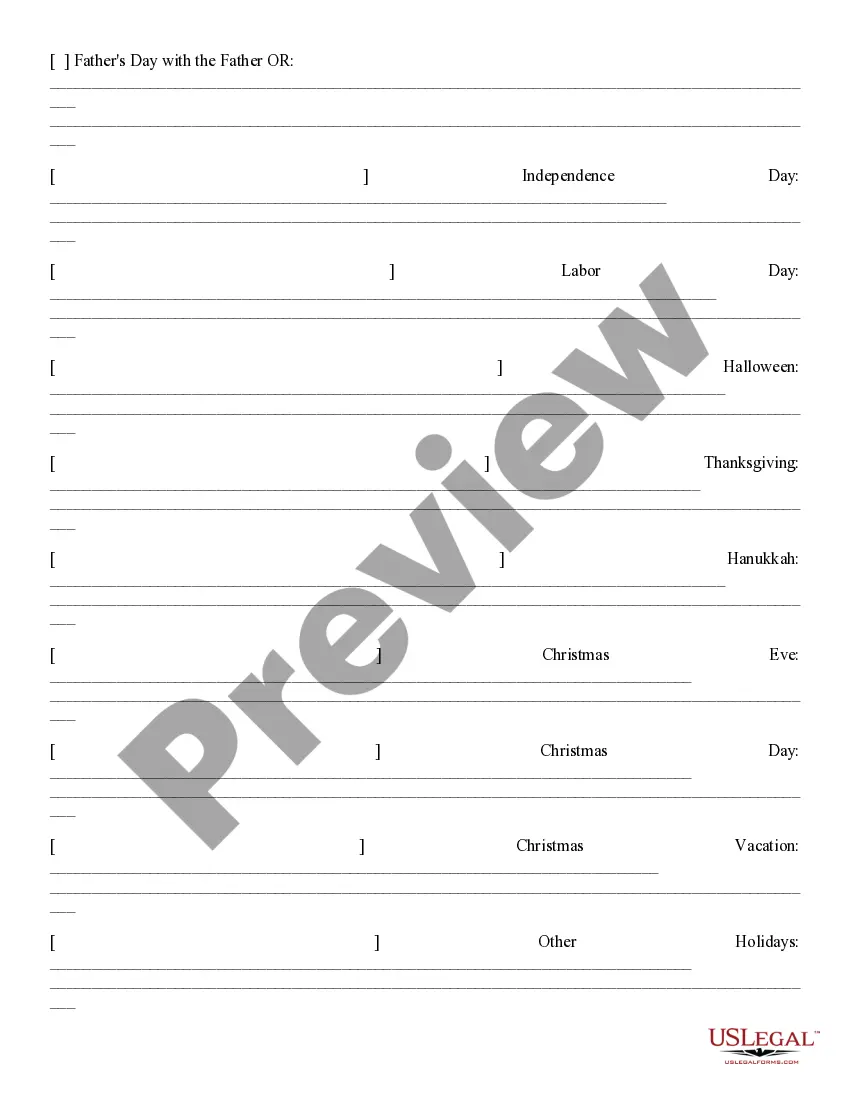
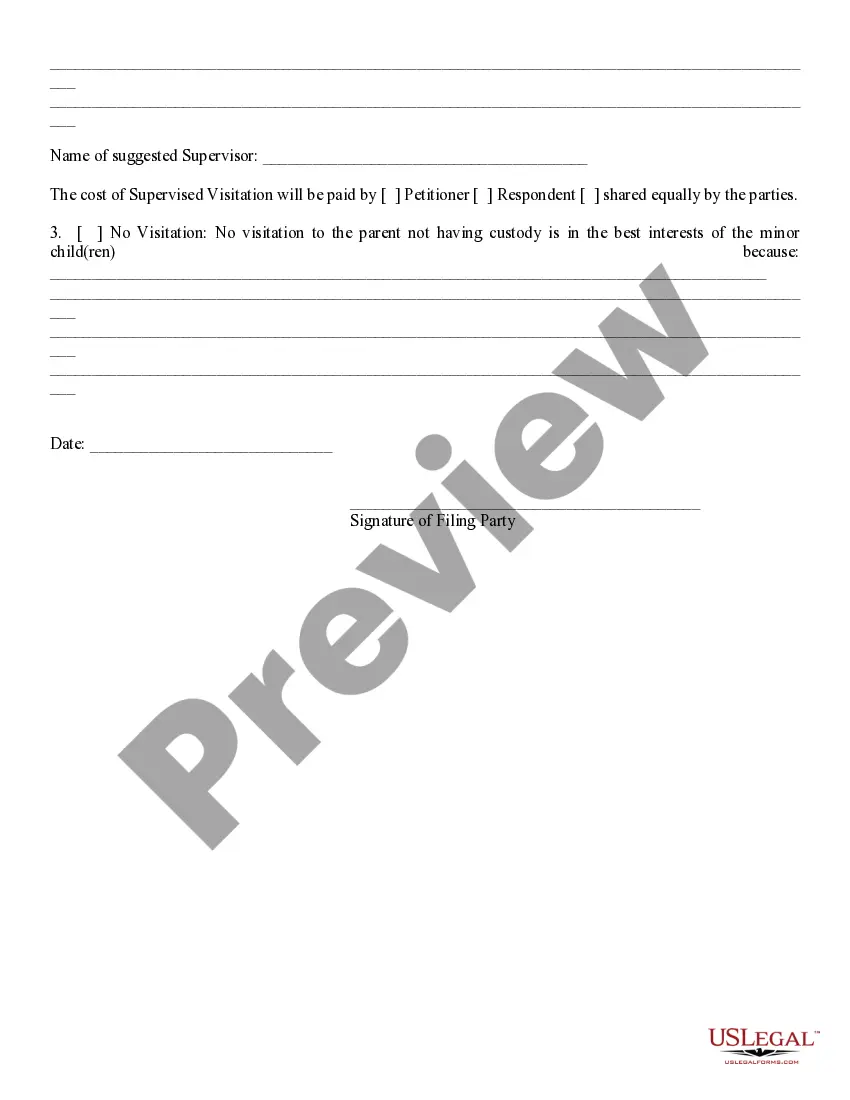
- Specific visitation schedules for weekdays, weekends, holidays, and school breaks.
- Transportation responsibilities and how changes can be made.
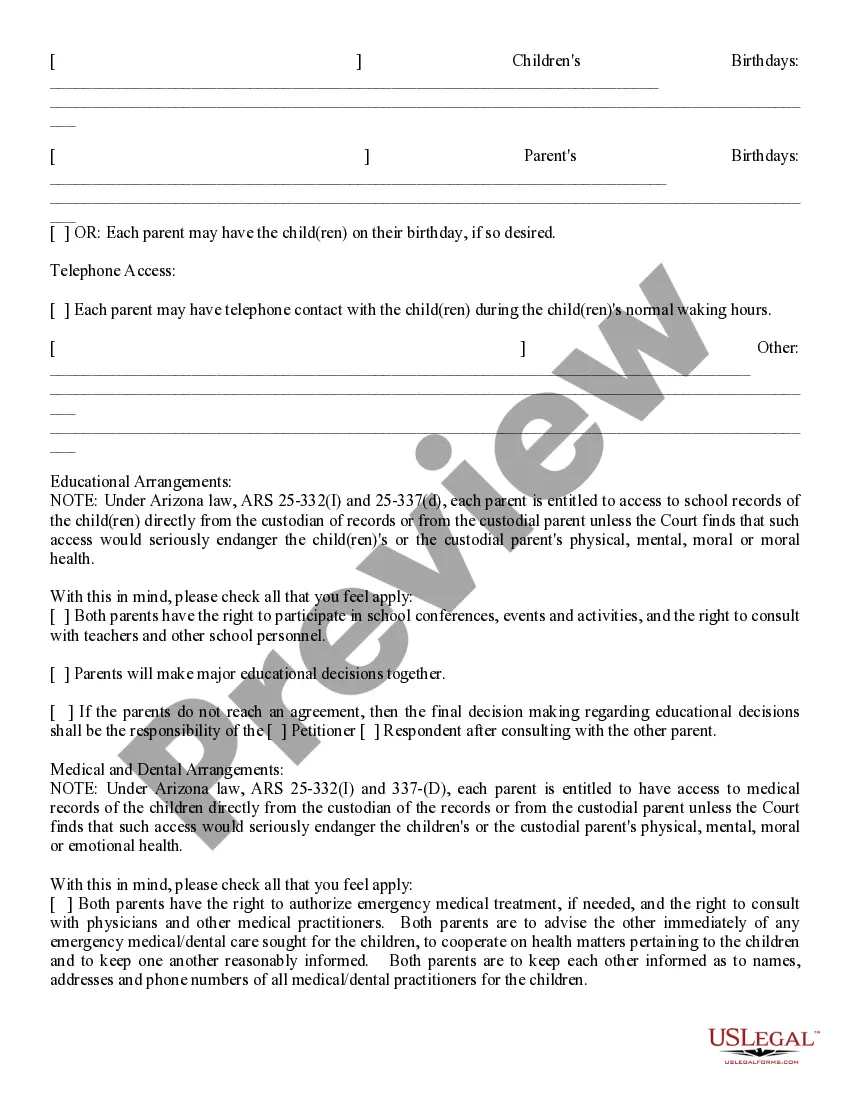
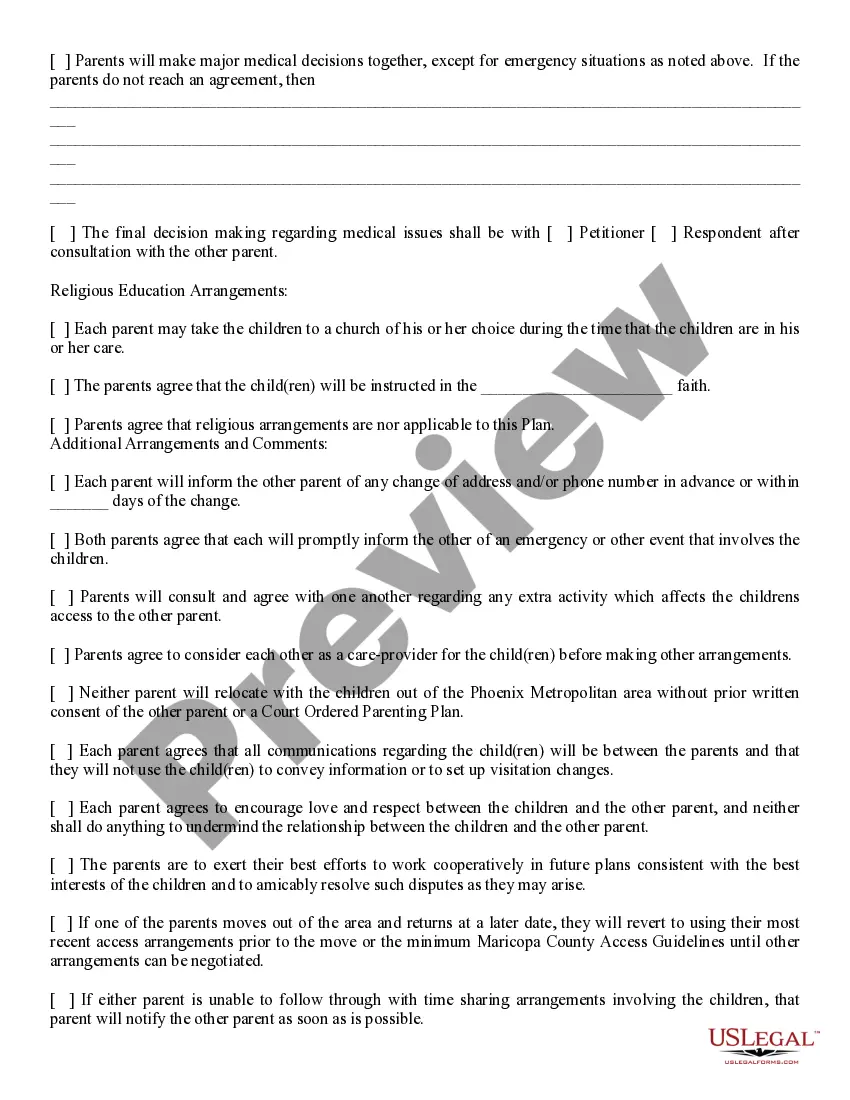
- Educational and medical arrangements, outlining rights to access records.
- Provisions for communication between parents and conflict resolution methods.
Situations where this form applies
This form should be used during divorce or separation proceedings when parents need to establish legal custody and visitation rights for their children. It is also suitable in cases where parents wish to formalize verbal agreements or modify existing arrangements after significant changes in circumstances.
Who should use this form
This form is intended for parents undergoing a divorce or separation and who share children together. It is also appropriate for individuals seeking to clarify or enforce existing custody agreements in a court setting.
Steps to complete this form
- Enter the names and contact information of both parents along with the children's details.
- Decide on custody arrangements and specify whether you are applying for joint or sole custody.
- Outline the visitation schedule, including specifics for weekdays, weekends, and holidays.
- Agree on transportation arrangements and the process for modifying these agreements if necessary.
- Include educational and medical decision-making information, detailing both parentsâ rights.
- Both parents should sign the document to acknowledge and accept the terms laid out in the plan.
Is notarization required?
This form does not typically require notarization unless specified by local law.
Get your form ready online
Our built-in tools help you complete, sign, share, and store your documents in one place.
Make edits, fill in missing information, and update formatting in US Legal Forms—just like you would in MS Word.
Download a copy, print it, send it by email, or mail it via USPS—whatever works best for your next step.
Sign and collect signatures with our SignNow integration. Send to multiple recipients, set reminders, and more. Go Premium to unlock E-Sign.
If this form requires notarization, complete it online through a secure video call—no need to meet a notary in person or wait for an appointment.
We protect your documents and personal data by following strict security and privacy standards.

Make edits, fill in missing information, and update formatting in US Legal Forms—just like you would in MS Word.

Download a copy, print it, send it by email, or mail it via USPS—whatever works best for your next step.

Sign and collect signatures with our SignNow integration. Send to multiple recipients, set reminders, and more. Go Premium to unlock E-Sign.

If this form requires notarization, complete it online through a secure video call—no need to meet a notary in person or wait for an appointment.

We protect your documents and personal data by following strict security and privacy standards.
Common mistakes
- Failing to include all required details about the children and parents.
- Not specifying the visitation schedule clearly, leading to potential misunderstandings.
- Overlooking joint decision-making responsibilities for education and health care.
- Not signing the form or ensuring both parents acknowledge the agreement.
Benefits of completing this form online
- Convenient access to customizable templates available for immediate download.
- Easy filling and editing options to tailor the agreement to specific needs.
- Assurance that the forms are prepared by licensed attorneys, providing legal reliability.
- Time-saving as users can complete the document from home without the need for appointments.
Legal use & context
- The Parenting Plan becomes a legally binding document once approved by the court.
- Changes to the Parenting Plan must go through appropriate legal channels if there are disputes.
- It is crucial that both parents comply with the terms set within the agreement to avoid potential legal issues.
Key takeaways
- The Parenting Plan is essential for establishing custody and visitation arrangements.
- Clear and detailed agreements help reduce conflicts and promote cooperation between parents.
- Using this form online offers convenience and legal assurance through professional templates.
Looking for another form?


Form popularity
FAQ
The Arizona Parenting Plan is a legal document that outlines how custody and visitation will work after a divorce or separation. It serves as a comprehensive guide for parents to share daily care, education, and visitation schedules, emphasizing cooperation. It is used during divorce or separation to establish rights and responsibilities and can be adjusted by mutual agreement.
In Arizona, the parenting plan outlines custody arrangements (joint or sole) and a detailed visitation schedule for weekdays, weekends, holidays, and school breaks. It also covers transportation responsibilities, how changes are made, and rights to access education and medical records. Additionally, it provides guidance on parent communication and conflict resolution during divorce or separation.
A 60/40 split refers to roughly 60% of parenting time with one parent and 40% with the other. The Arizona Parenting Plan would spell out exact days, overnights, and holiday schedules to reflect this ratio, including how transitions occur and how school calendars are handled. The plan aims to balance time while prioritizing the child's needs.
The Arizona Parenting Plan does not assign custody by gender; it allows for joint or sole custody and specifies each parent's rights to participate in major decisions and to access the child's education and medical records. The form helps formalize these rights within a mutually agreed schedule, suitable for divorce or separation proceedings.
The 70/30 split assigns about 70% of parenting time to one parent and 30% to the other. The Arizona Parenting Plan would detail the specific days, weekends, holidays, and school breaks to implement this ratio, along with transportation and communication provisions to support consistent parenting. It would also specify how changes are made and how holidays are allocated.
It is tailored for Arizona family law proceedings and emphasizes cooperation. The form guides couples to specify custody options (joint or sole), exact visitation schedules, transportation responsibilities, and access to educational and medical records, with built-in provisions for communication and conflict resolution—features designed for Arizona's legal context.