Arizona Adversary Proceeding Cover Sheet
What is this form?
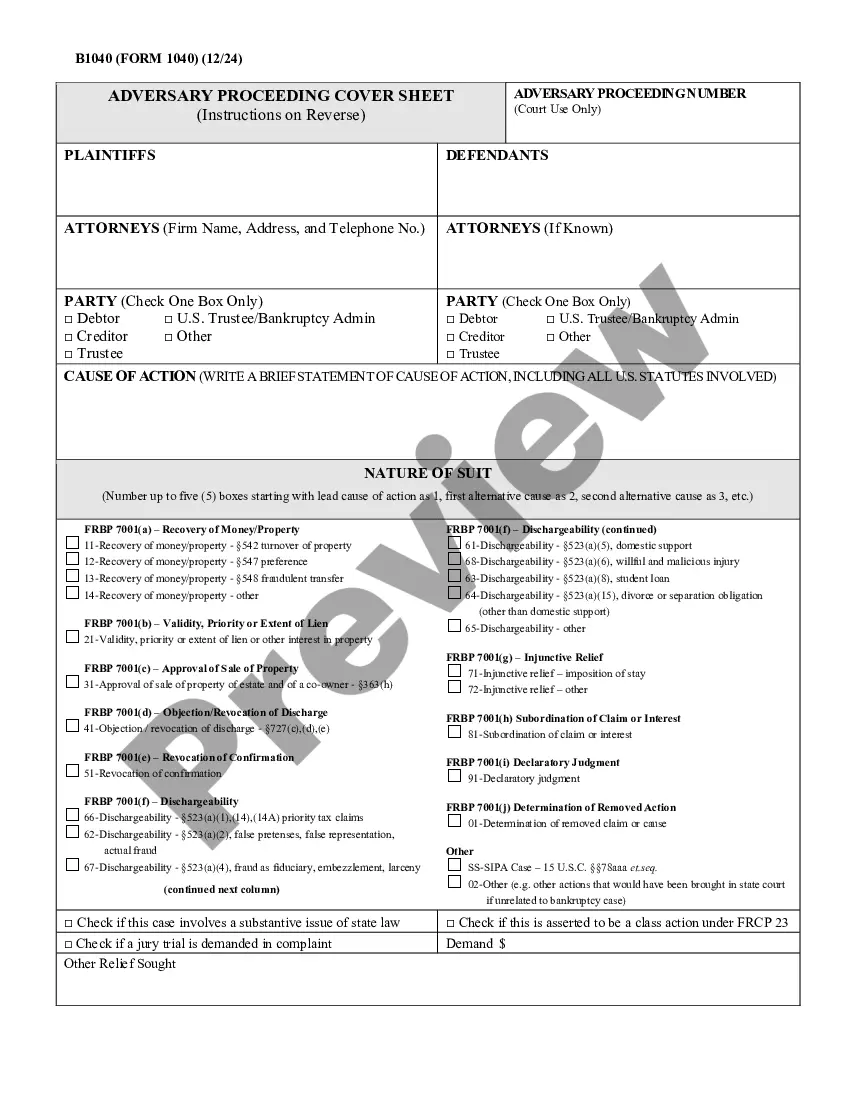
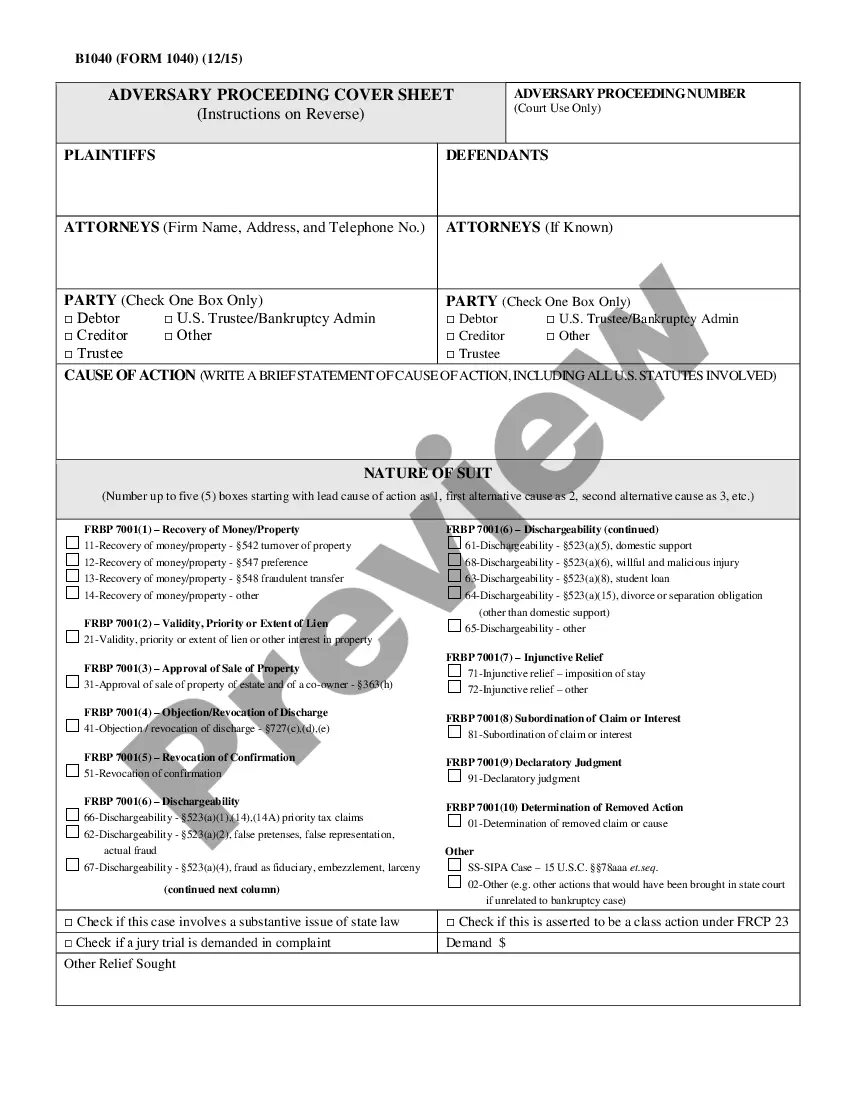
The Adversary Proceeding Cover Sheet is a legal document used in bankruptcy cases to summarize essential information about an adversary proceeding. This form is unique as it provides a structured layout for indicating parties involved, the nature of the suit, and related bankruptcy details, distinguishing it from other general legal forms. It helps the court process adversary proceedings efficiently by collecting crucial data at the outset.
Key parts of this document
- Adversary proceeding number: For court use only.
- Names of plaintiffs and defendants: As they appear on the complaint.
- Attorneys' contact information: Include the name, address, and phone number.
- Party designation: Check appropriate boxes for plaintiffs and defendants.
- Brief statement of cause of action: Summarize the legal issue.
- Nature of suit: Indicate the categories relevant to the adversary proceeding.
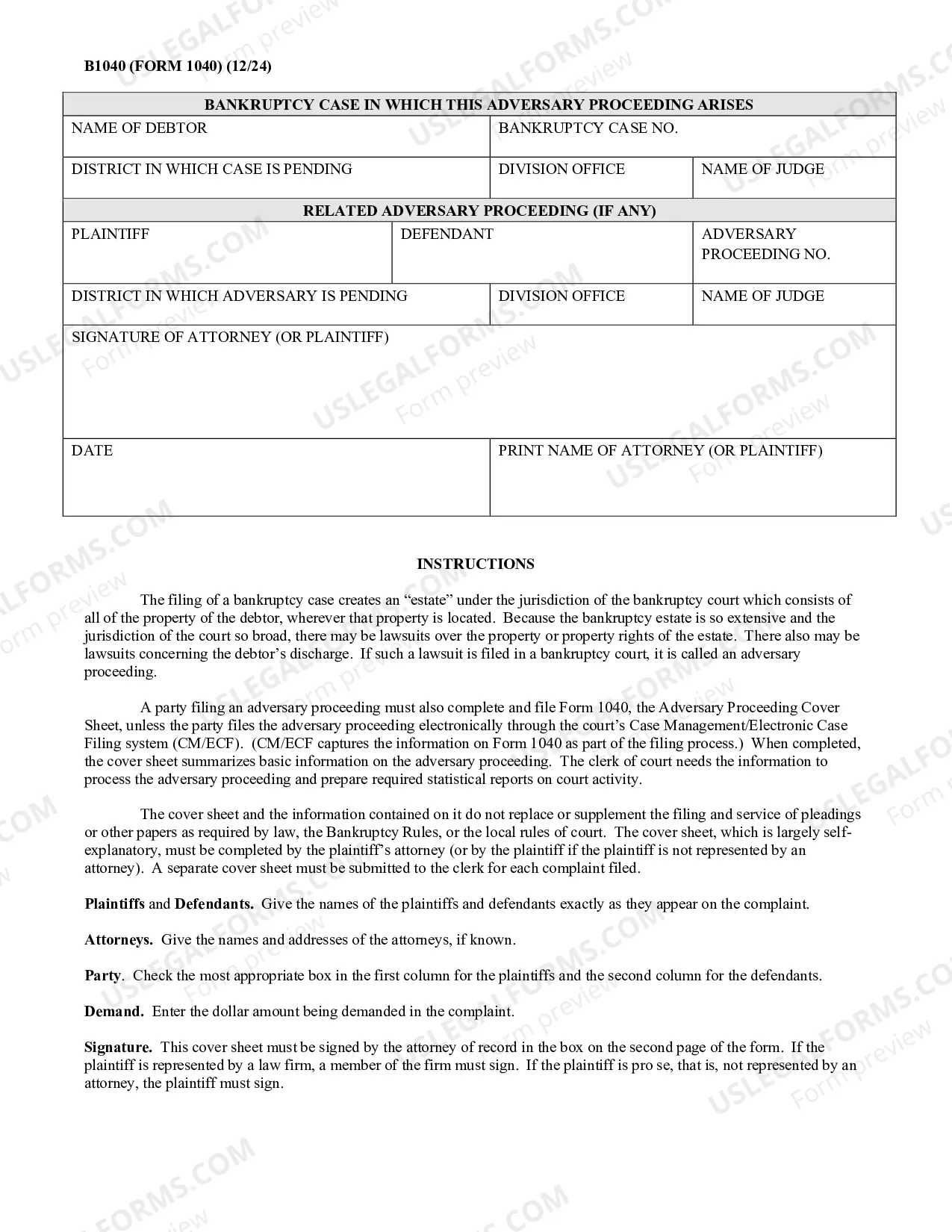
- Bankruptcy case details: Include debtor name and bankruptcy case number.
When this form is needed
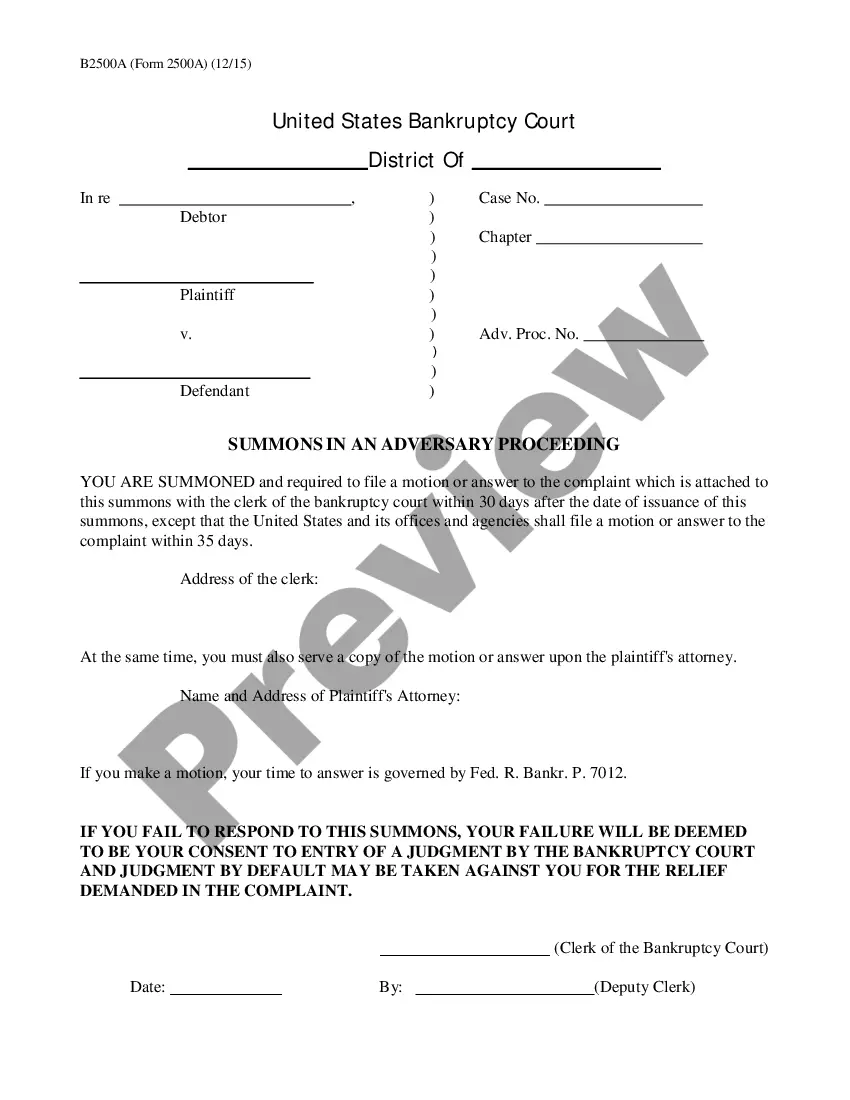
The Adversary Proceeding Cover Sheet should be used when initiating an adversary proceeding in bankruptcy court. This occurs in situations where disputes arise regarding a debtorâs property, discharge, or other aspects of bankruptcy cases. It is also necessary when different parties contest claims related to the bankruptcy estate.
Who needs this form
- Bankruptcy plaintiffs, including creditors and debtors, initiating an adversary proceeding.
- Attorneys representing parties involved in the adversary proceeding.
- Individuals filing a complaint pro se (without an attorney).
Completing this form step by step
- Identify the parties involved: Enter the names of plaintiffs and defendants.
- Provide attorneys' information: If known, include firm name and contact details.
- Specify the party category: Check one box per column for plaintiffs and defendants.
- Summarize the cause of action: Write a brief statement outlining the issues at hand.
- Select the nature of suit: Check up to five relevant boxes that describe the proceeding.
- Complete bankruptcy details: Fill in the debtor's name and case number accurately.
Notarization requirements for this form
Notarization is not commonly needed for this form. However, certain documents or local rules may make it necessary. Our notarization service, powered by Notarize, allows you to finalize it securely online anytime, day or night.
Get your form ready online
Our built-in tools help you complete, sign, share, and store your documents in one place.
Make edits, fill in missing information, and update formatting in US Legal Forms—just like you would in MS Word.
Download a copy, print it, send it by email, or mail it via USPS—whatever works best for your next step.
Sign and collect signatures with our SignNow integration. Send to multiple recipients, set reminders, and more. Go Premium to unlock E-Sign.
If this form requires notarization, complete it online through a secure video call—no need to meet a notary in person or wait for an appointment.
We protect your documents and personal data by following strict security and privacy standards.

Make edits, fill in missing information, and update formatting in US Legal Forms—just like you would in MS Word.

Download a copy, print it, send it by email, or mail it via USPS—whatever works best for your next step.

Sign and collect signatures with our SignNow integration. Send to multiple recipients, set reminders, and more. Go Premium to unlock E-Sign.

If this form requires notarization, complete it online through a secure video call—no need to meet a notary in person or wait for an appointment.

We protect your documents and personal data by following strict security and privacy standards.
Common mistakes
- Failing to sign the cover sheet where required.
- Incorrectly identifying the parties involved in the proceeding.
- Omitting the bankruptcy case number or debtor name.
- Not summarizing the cause of action clearly.
- Using outdated versions of the cover sheet.
Why use this form online
- Convenient access to the latest version of the form.
- Editability allows for quick updates and corrections.
- Structured layout aids in ensuring completed forms meet legal standards.
- Secure download ensures sensitive information is handled properly.
Legal use & context
- Form must be filed with all adversary proceedings initiated in bankruptcy court.
- It serves to inform the court about the essential facets of the case upon filing.
- Failure to use this form can delay proceedings or lead to dismissal of cases.
Looking for another form?


Form popularity
FAQ
An "Adversary Proceeding" in bankruptcy court has the same meaning as a lawsuit in other courts. This means that one or more "plaintiff(s)" file a "complaint" against one or more "defendant(s)." In many situations an adversary proceeding is required if a plaintiff wants to obtain a particular type of relief.
In bankruptcy court disputed matters are either classified as ?contested matters? or ?adversary proceedings?. A contested matter commonly arises in disputed motions. Whereas adversary proceedings largely track traditional civil litigation (i.e., Complaint, Answer, Trial).
An adversary proceeding in bankruptcy is a separate lawsuit filed within the bankruptcy case. Like most lawsuits, it starts when someone (the creditor, the bankruptcy trustee, or you) files a complaint. Many bankruptcies go through to completion and discharge without any adversary proceedings.
An "Adversary Proceeding" in bankruptcy court has the same meaning as a lawsuit in other courts. This means that one or more "plaintiff(s)" file a "complaint" against one or more "defendant(s)." In many situations an adversary proceeding is required if a plaintiff wants to obtain a particular type of relief.
For example, they might want to object to a discharge, get an injunction, obtain a ruling on whether a debt can be discharged, or pursue money from a party not in the bankruptcy proceeding. A party involved in a bankruptcy case can start an adversary proceeding by filing a complaint.
When an Adversary Proceeding Might Happen. Many adversary proceedings arise from alleged fraud by a debtor. If it appears that a debtor has committed fraud or violated a court order, the trustee or creditors might file an objection to the debtor's discharge.
Form B104 is requested in court in order to file an adversary proceeding. It must be completed by the plaintiff or his attorney.