Arizona Letter from Tenant to Landlord responding to Notice to Terminate for Noncompliance - Noncompliant condition caused by Landlord's own deliberate or negligent act
What this document covers
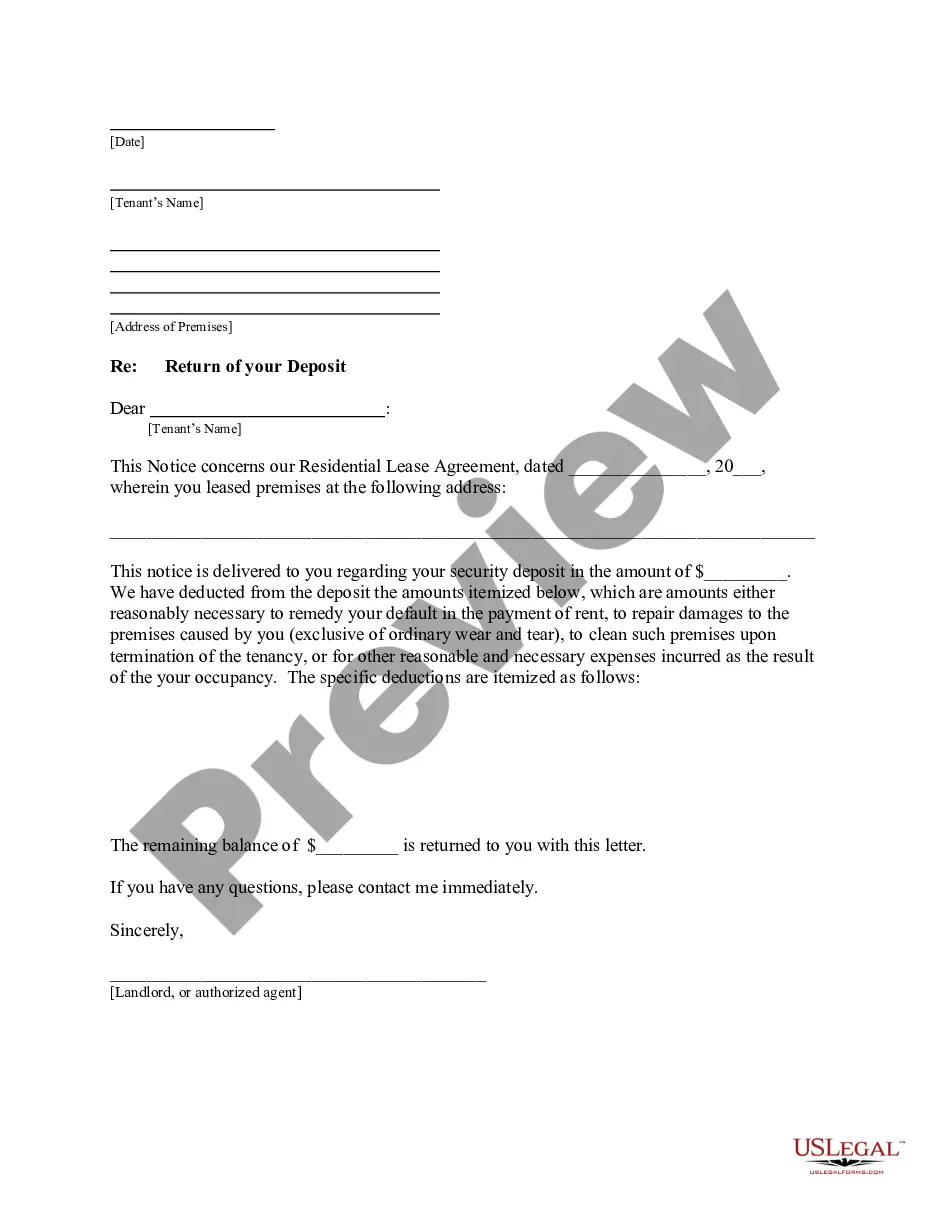
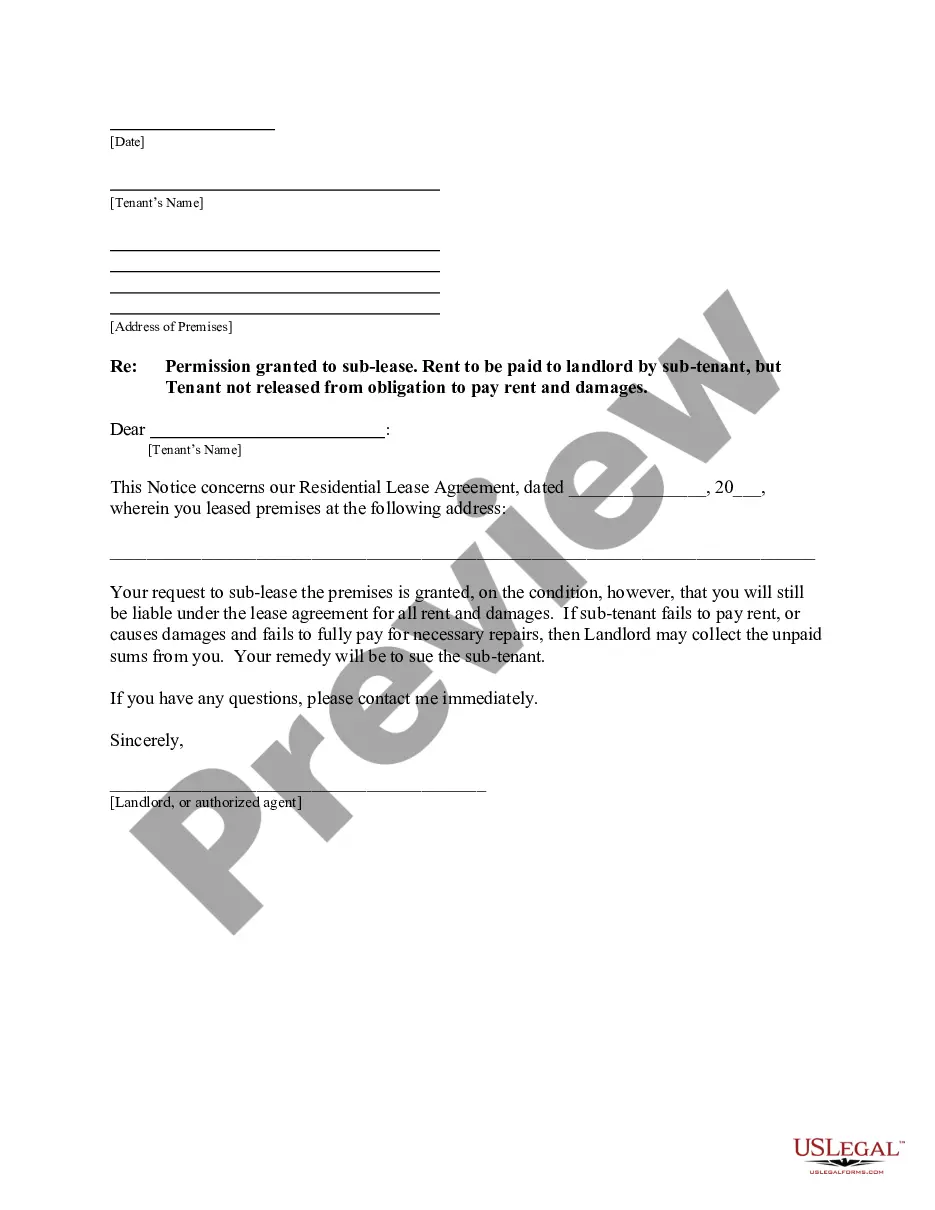
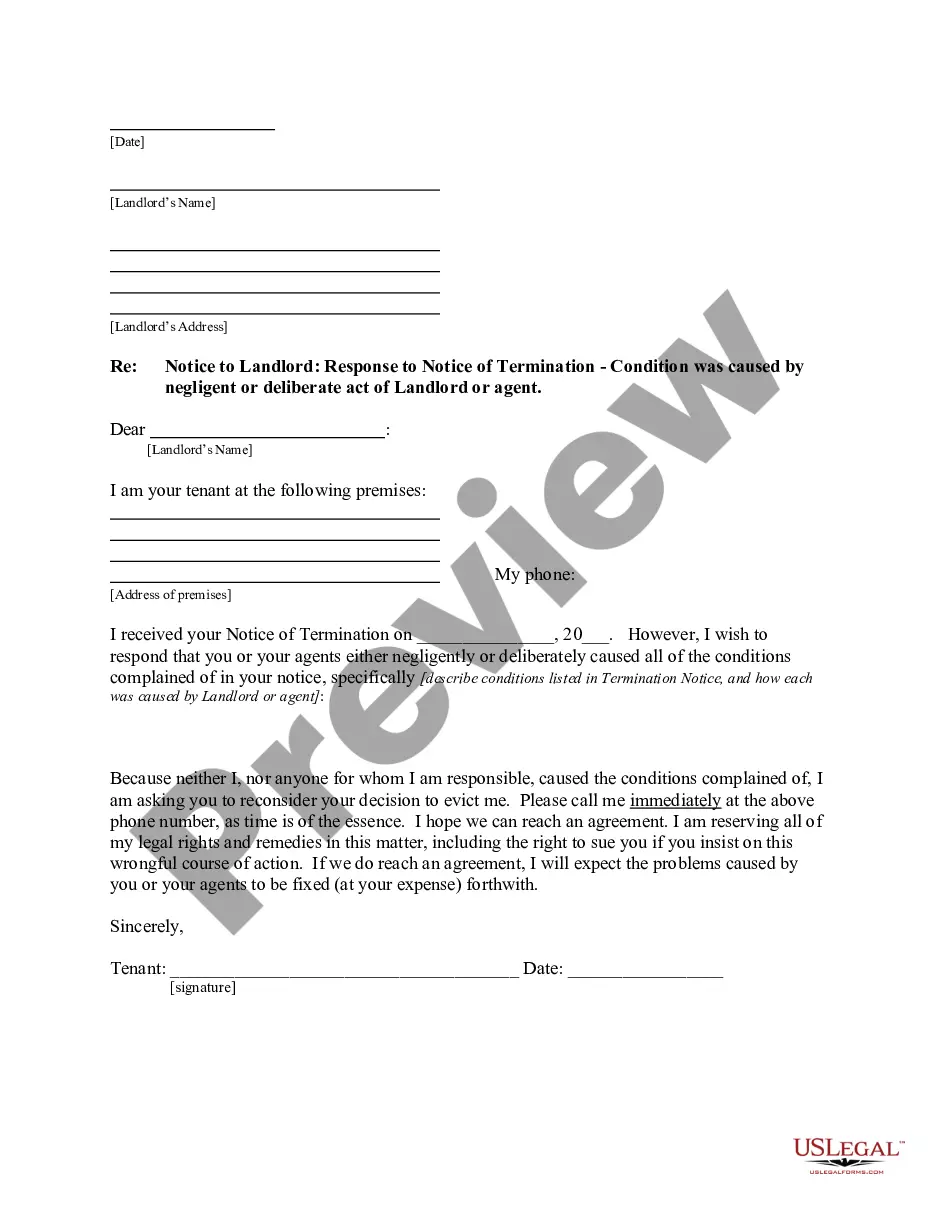
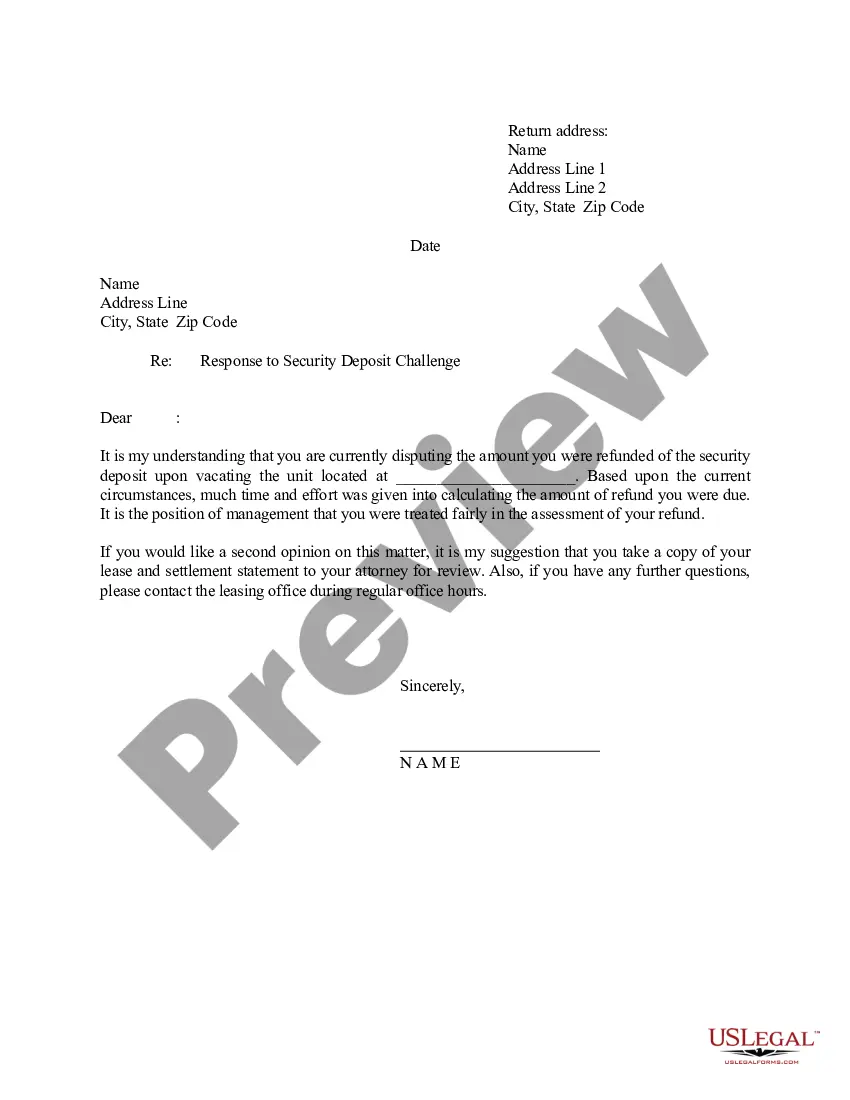
This Letter from Tenant to Landlord responding to Notice to Terminate for Noncompliance is a crucial legal document that allows a tenant to formally address an eviction notice given by their landlord. Unlike other eviction response forms, this letter specifically asserts that the reasons for eviction result from the landlord's own actions or negligence. It seeks to halt the eviction process while requesting necessary repairs to the rental property.
Key parts of this document
- Tenant identification: Name and address of the tenant.
- Landlord identification: Name and address of the landlord.
- Notice acknowledgment: Reference to the eviction notice received from the landlord.
- Cause of noncompliance: Statement explaining how the landlord's actions led to the eviction notice.
- Request for action: Demand for repairs and cessation of eviction process.
- Reservation of rights: Assertion that the tenant reserves legal rights under applicable laws.


When this form is needed
This form is commonly used when a tenant receives a notice to terminate their lease due to noncompliant conditions. It is appropriate for situations where those conditions are attributed to the landlord's negligence or deliberate actions. Using this letter helps the tenant protect their rights while ensuring that necessary repairs are addressed promptly.
Who needs this form
The following individuals should consider using this form:
- Tenants who have received an eviction notice due to noncompliance.
- Individuals who believe the grounds for eviction are directly caused by the landlord's actions.
- Those seeking to request repairs while contesting the eviction process.
Instructions for completing this form
Follow these steps to complete the form:
- Identify yourself by entering your full name and address at the top of the letter.
- Provide the landlord's name and address as specified in the eviction notice.
- Clearly acknowledge the receipt of the eviction notice, including the date it was received.
- Explain the noncompliance issue, citing the landlord's actions that led to the notice.
- Make your request for repairs and indicate that you want the eviction halted.
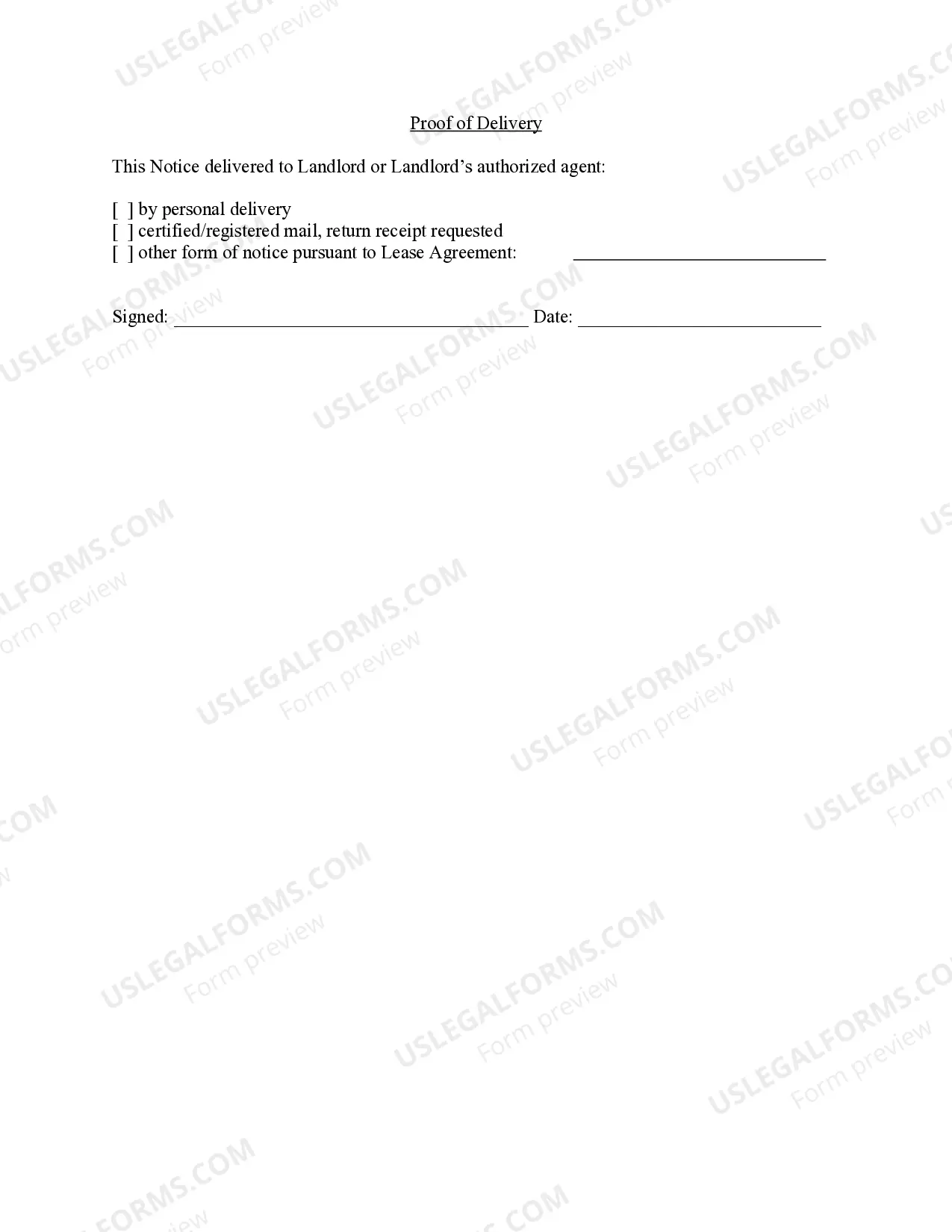
- Sign and date the letter, and include proof of delivery details at the bottom.
Notarization guidance
This form does not typically require notarization unless specified by local law. However, achieving a notarized document can enhance its credibility in legal matters.
Get your form ready online
Our built-in tools help you complete, sign, share, and store your documents in one place.
Make edits, fill in missing information, and update formatting in US Legal Forms—just like you would in MS Word.
Download a copy, print it, send it by email, or mail it via USPS—whatever works best for your next step.
Sign and collect signatures with our SignNow integration. Send to multiple recipients, set reminders, and more. Go Premium to unlock E-Sign.
If this form requires notarization, complete it online through a secure video call—no need to meet a notary in person or wait for an appointment.
We protect your documents and personal data by following strict security and privacy standards.

Make edits, fill in missing information, and update formatting in US Legal Forms—just like you would in MS Word.

Download a copy, print it, send it by email, or mail it via USPS—whatever works best for your next step.

Sign and collect signatures with our SignNow integration. Send to multiple recipients, set reminders, and more. Go Premium to unlock E-Sign.

If this form requires notarization, complete it online through a secure video call—no need to meet a notary in person or wait for an appointment.

We protect your documents and personal data by following strict security and privacy standards.
Mistakes to watch out for
- Failing to provide complete and accurate information about the landlord.
- Not including a clear explanation of how the landlord's actions caused the eviction.
- Neglecting to sign and date the letter, making it ineffective.
- Sending the letter without proper proof of delivery.
Why use this form online
- Convenience: Easily create a customizable and downloadable letter.
- Editability: Modify the form as needed to fit your unique situation.
- Reliability: Use a professionally drafted letter to ensure legal compliance.
Main things to remember
- This letter serves as a formal response to a landlord's eviction notice based on noncompliance.
- It is essential for tenants to assert that the eviction is unjust due to the landlord's actions.
- Proper completion and delivery of this form can help protect tenant rights and seek repairs.
Looking for another form?
Form popularity
FAQ
The Tenant Act in Arizona outlines the rights and responsibilities of tenants and landlords. This act aims to clarify rental agreements, establish proper procedures for eviction, and ensure habitability standards are met. Familiarizing yourself with this legislation is crucial for understanding your rights as a tenant. When faced with issues, you can effectively communicate your stance using an Arizona Letter from Tenant to Landlord responding to Notice to Terminate for Noncompliance - Noncompliant condition caused by Landlord's own deliberate or negligent act.
Uninhabitable living situations in Arizona include severe issues like lack of heat or plumbing, mold infestations, or unsafe structural conditions. These situations violate the implied warranty of habitability, obligating landlords to maintain safe and livable environments. If you find yourself in such conditions, it's vital to communicate your concerns to your landlord promptly. Utilize an Arizona Letter from Tenant to Landlord responding to Notice to Terminate for Noncompliance - Noncompliant condition caused by Landlord's own deliberate or negligent act to ensure proper documentation.
Yes, tenants can sue their apartment complex for unsafe living conditions in Arizona if the landlord fails to address serious safety and health issues. However, it's essential to document all interactions and your grievances thoroughly. Legal proceedings can be complex, and having a clear communication record can strengthen your case. Writing an Arizona Letter from Tenant to Landlord responding to Notice to Terminate for Noncompliance - Noncompliant condition caused by Landlord's own deliberate or negligent act could help document these issues effectively.
The Tenant Protection Act in Arizona aims to safeguard renters against unfair eviction practices. This legislation requires landlords to establish valid reasons for eviction and provides tenants with avenues for contesting their evictions. Understanding this act is essential for tenants feeling vulnerable to unjust actions from their landlords. If you encounter such a situation, consider an Arizona Letter from Tenant to Landlord responding to Notice to Terminate for Noncompliance - Noncompliant condition caused by Landlord's own deliberate or negligent act, reinforcing your rights.
Recent updates in Arizona's rent laws include provisions for more transparency in rental agreements and stricter regulations surrounding evictions. The laws aim to protect tenants from unjust evictions and ensure that rental agreements clearly outline lease terms. As a tenant, staying informed about these changes can empower you to understand your rights. In cases of disputes, an Arizona Letter from Tenant to Landlord responding to Notice to Terminate for Noncompliance - Noncompliant condition caused by Landlord's own deliberate or negligent act can be a valuable tool.
In Arizona, landlords cannot retaliate against tenants for exercising their legal rights, such as reporting unsafe conditions. Additionally, they cannot lock out tenants or seize their property without a court order. It's crucial for landlords to adhere to lease agreements and state laws, ensuring they do not violate tenants' rights. If issues arise, tenants should document concerns and consider formal communication through an Arizona Letter from Tenant to Landlord responding to Notice to Terminate for Noncompliance - Noncompliant condition caused by Landlord's own deliberate or negligent act.
Section 33-1324-a of the Arizona Residential Landlord and Tenant Act addresses tenants' rights concerning habitability issues. It requires landlords to maintain rental properties in a condition fit for human occupancy. If a tenant encounters serious health and safety violations due to the landlord's negligence, they may use this section as a basis for their defense. Crafted responses like an Arizona Letter from Tenant to Landlord responding to Notice to Terminate for Noncompliance - Noncompliant condition caused by Landlord's own deliberate or negligent act can effectively convey these concerns.
In Arizona, a landlord typically must provide at least 30 days' written notice to terminate a rental agreement. However, if the tenant has violated the lease agreement, the notice period may be shorter, depending on the severity of the issue. It's important to review your lease and local laws to understand what applies to your specific situation. If you're facing a termination notice, consider drafting an Arizona Letter from Tenant to Landlord responding to Notice to Terminate for Noncompliance - Noncompliant condition caused by Landlord's own deliberate or negligent act.
Yes, a landlord can terminate a lease in Arizona under specific circumstances. If a tenant violates the lease terms or if there are noncompliant conditions, landlords may send a notice to terminate. However, if the issue stems from a noncompliant condition caused by the landlord's deliberate or negligent act, the tenant may respond with an Arizona Letter from Tenant to Landlord responding to Notice to Terminate for Noncompliance, which can legally protect them from abrupt lease termination. Understanding these rights can ensure fair treatment for both parties.
Arizona Revised Statute 33-1361 outlines the responsibilities of landlords regarding tenant rental agreements. This statute emphasizes that landlords must maintain habitable living conditions, ensuring that properties meet health and safety standards. If a landlord fails to meet these standards and a tenant issues an Arizona Letter from Tenant to Landlord responding to Notice to Terminate for Noncompliance - Noncompliant condition caused by Landlord's own deliberate or negligent act, it serves as a formal notification of the landlord's noncompliance and the need for rectification.