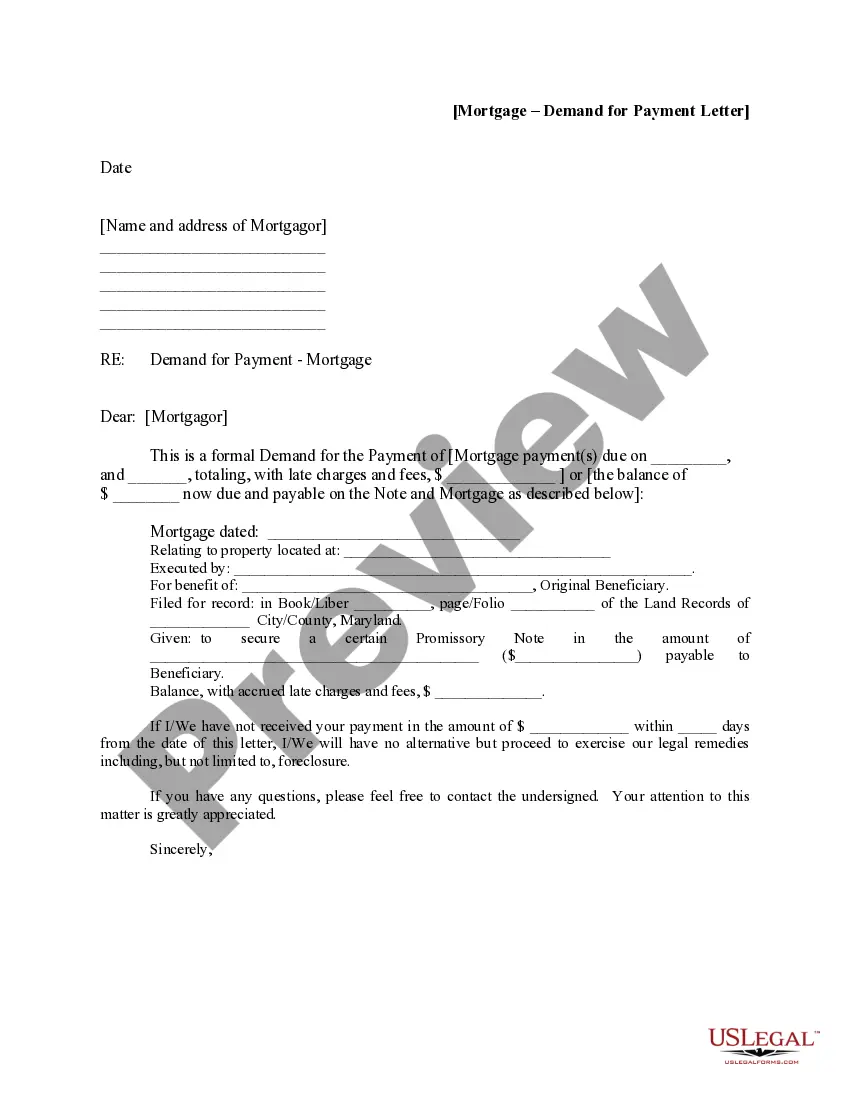
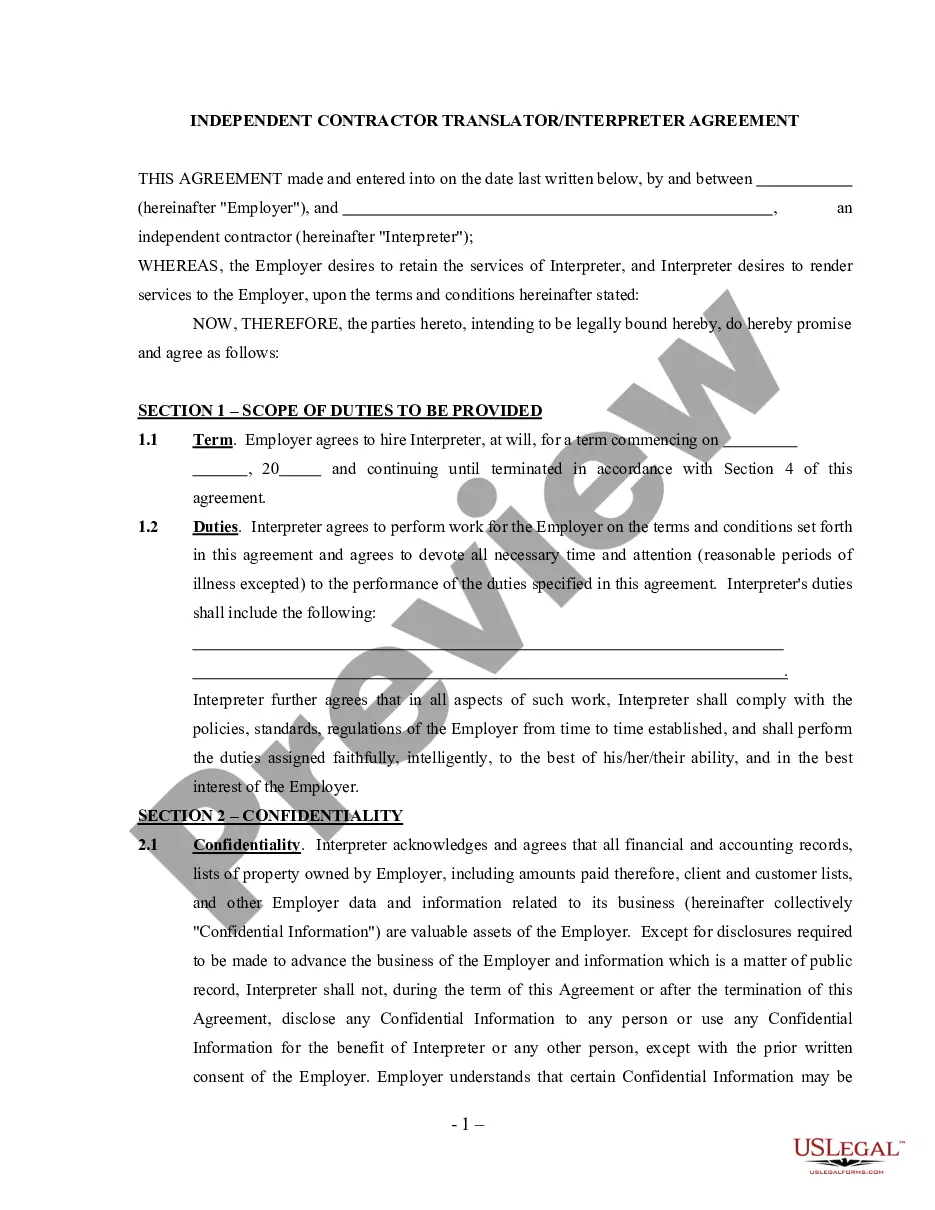
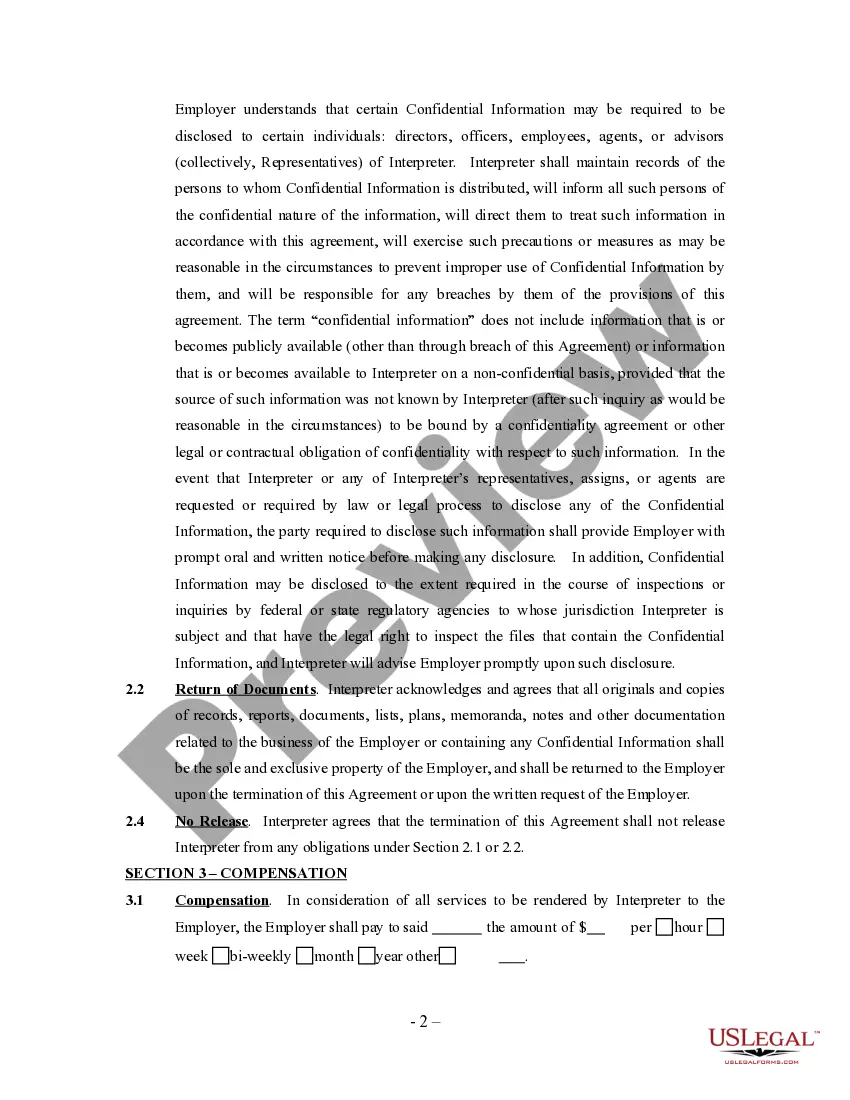
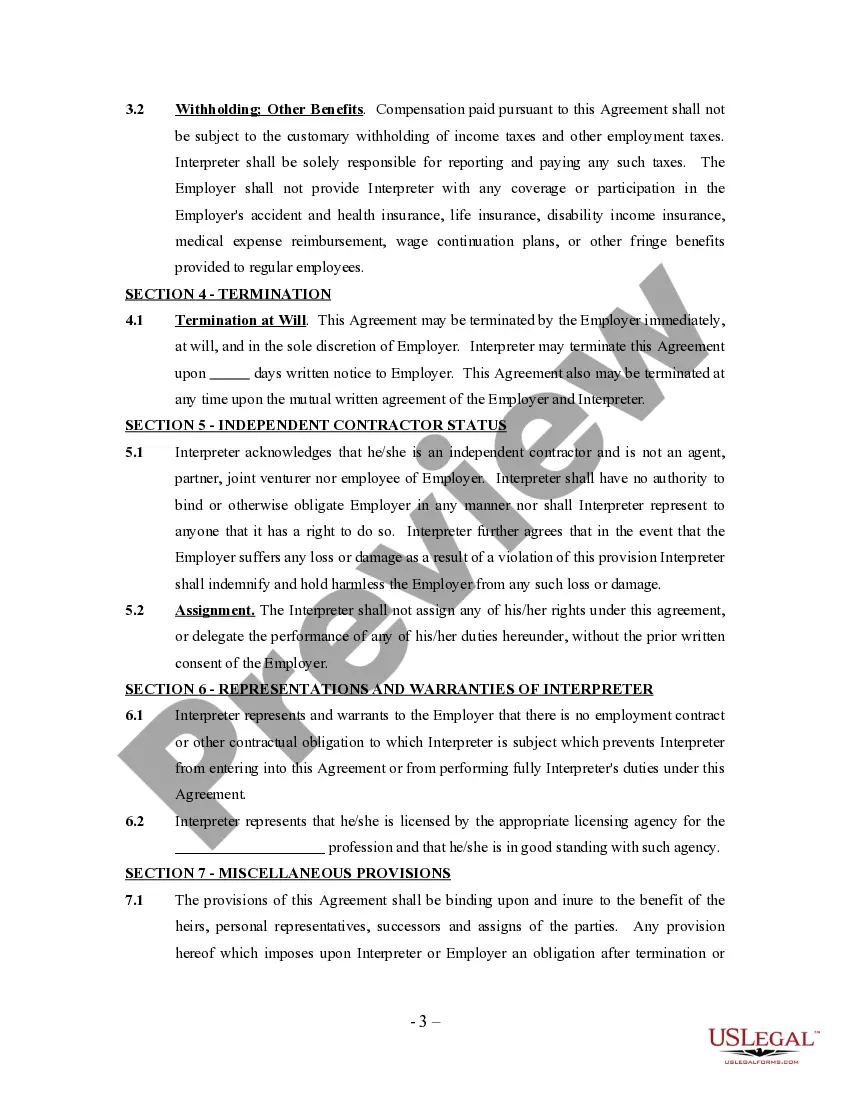
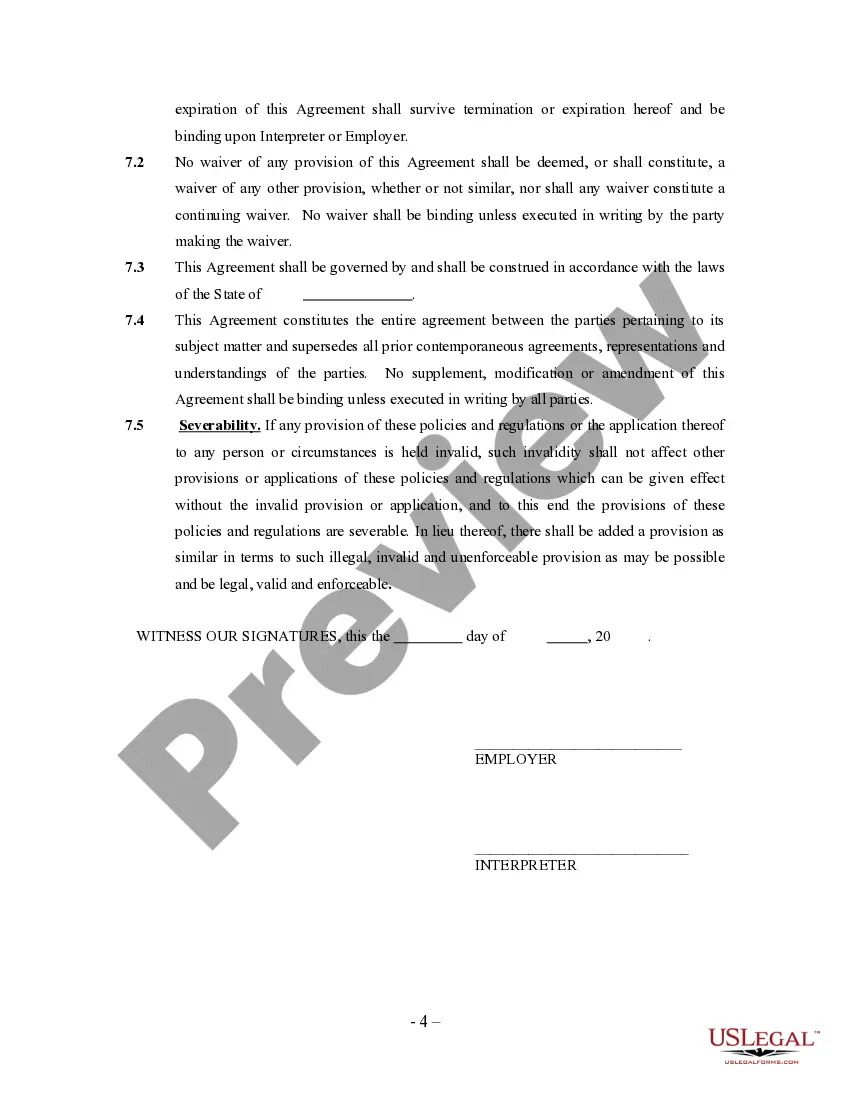
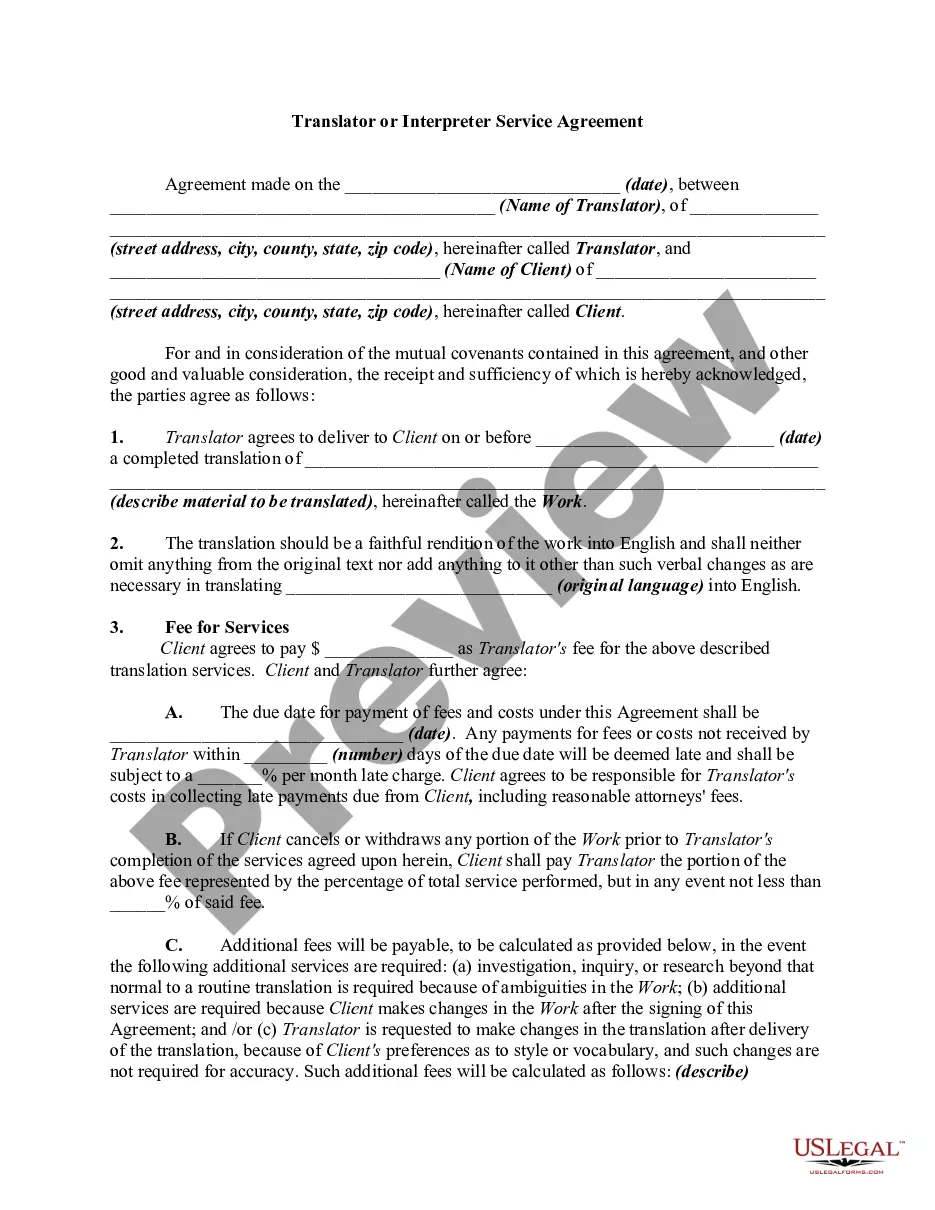
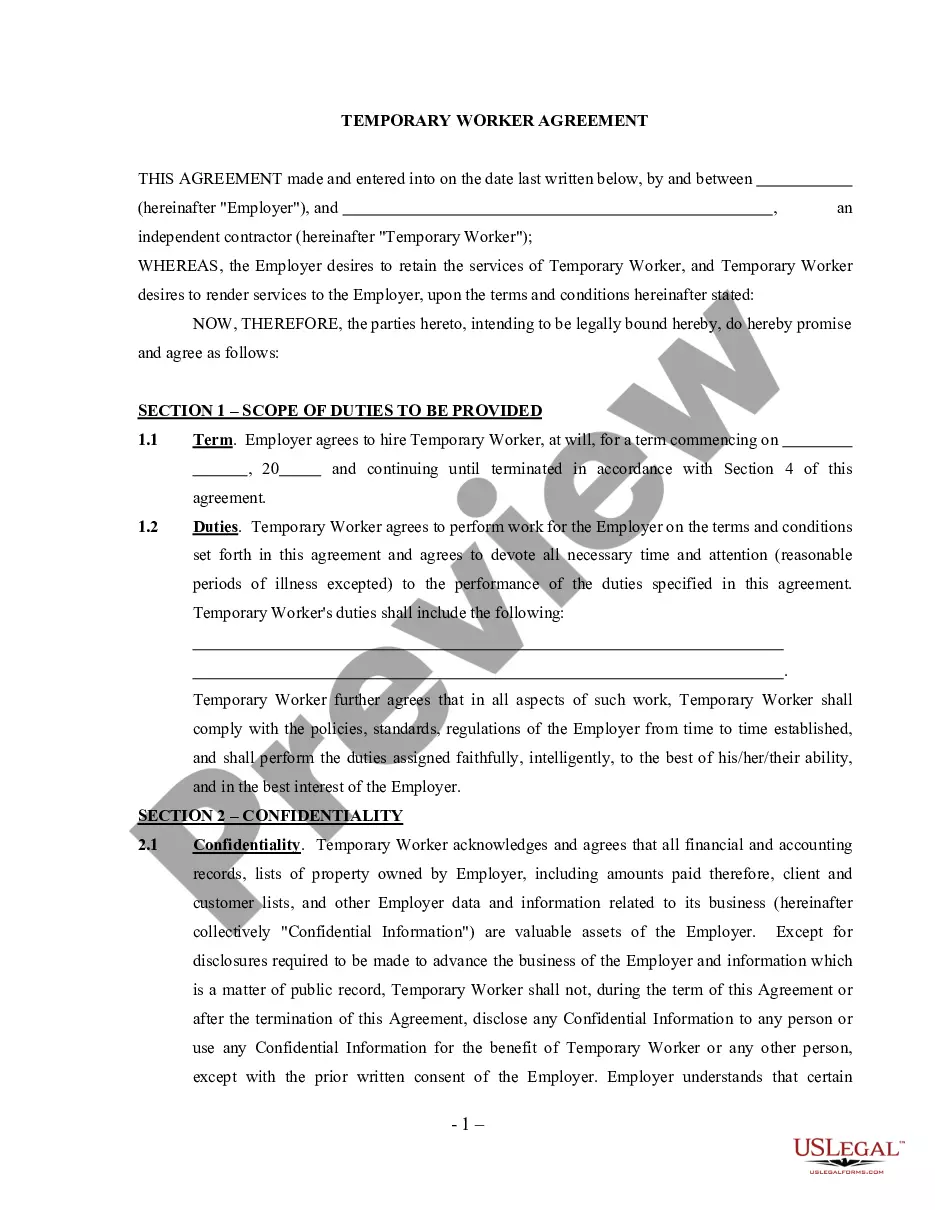
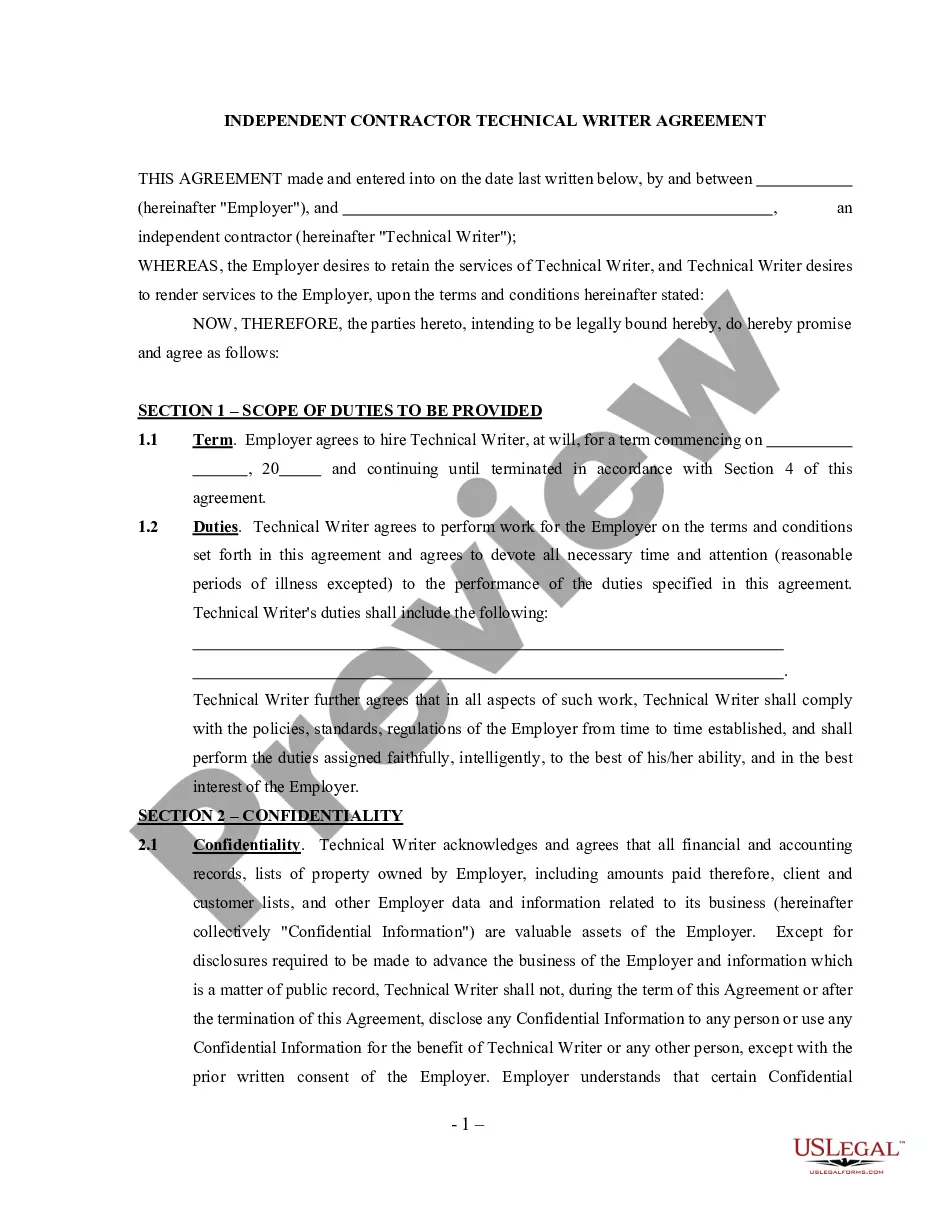
Employer hires an interpreter as an independent contractor to perform interpreter or translating services as specified in the contract. Contract includes confidentiality clause.
Arkansas Translator And Interpreter Agreement - Self-Employed Independent Contractor
State:
Multi-State
Control #:
US-INDC-199
Format:
Word;
Rich Text
Instant download
Description
Free preview
Get your form ready online
Our built-in tools help you complete, sign, share, and store your documents in one place.
Built-in online Word editor
Make edits, fill in missing information, and update formatting in US Legal Forms—just like you would in MS Word.
Export easily
Download a copy, print it, send it by email, or mail it via USPS—whatever works best for your next step.
E-sign your document
Sign and collect signatures with our SignNow integration. Send to multiple recipients, set reminders, and more. Go Premium to unlock E-Sign.
Notarize online 24/7
If this form requires notarization, complete it online through a secure video call—no need to meet a notary in person or wait for an appointment.
Store your document securely
We protect your documents and personal data by following strict security and privacy standards.

Make edits, fill in missing information, and update formatting in US Legal Forms—just like you would in MS Word.

Download a copy, print it, send it by email, or mail it via USPS—whatever works best for your next step.

Sign and collect signatures with our SignNow integration. Send to multiple recipients, set reminders, and more. Go Premium to unlock E-Sign.

If this form requires notarization, complete it online through a secure video call—no need to meet a notary in person or wait for an appointment.

We protect your documents and personal data by following strict security and privacy standards.
Looking for another form?




How to fill out Translator And Interpreter Agreement - Self-Employed Independent Contractor?
US Legal Forms - one of the largest repositories of legal documents in the United States - offers a variety of legal form templates that you can download or print. By using the website, you can access thousands of forms for business and personal purposes, organized by categories, states, or keywords. You can find the latest forms such as the Arkansas Translator And Interpreter Agreement - Self-Employed Independent Contractor in just minutes.
If you already have a subscription, Log In and download the Arkansas Translator And Interpreter Agreement - Self-Employed Independent Contractor from the US Legal Forms collection. The Download button will be visible on each form you view. You have access to all previously acquired forms in the My documents section of your account.
If you are using US Legal Forms for the first time, here are simple steps to help you get started: Ensure you have selected the correct form for your city/state. Click the Preview button to review the form’s content. Read the form description to confirm that you have chosen the right form. If the form does not meet your needs, use the Search field at the top of the screen to find one that does. If you are satisfied with the form, validate your selection by clicking the Purchase now button. Then, choose the payment plan you prefer and provide your credentials to create an account. Process the transaction. Use your credit card or PayPal account to complete the transaction. Select the format and download the form to your device. Make edits. Fill out, modify, print, and sign the downloaded Arkansas Translator And Interpreter Agreement - Self-Employed Independent Contractor.
- Every template you added to your account has no expiration date and belongs to you forever.
- So, if you wish to download or print another copy, simply go to the My documents section and click on the form you need.
- Access the Arkansas Translator And Interpreter Agreement - Self-Employed Independent Contractor with US Legal Forms, one of the largest collections of legal document templates.
- Utilize a vast number of professional and state-specific templates that meet your business or personal requirements.
- Explore the extensive library and find the forms you need for various purposes.
- Enjoy the convenience of having legal forms at your fingertips.
Form popularity
FAQ
Yes, having a contract is essential for an independent contractor. An Arkansas Translator And Interpreter Agreement - Self-Employed Independent Contractor outlines your responsibilities, payment terms, and the scope of work. This document protects both you and your clients, ensuring clarity and reducing potential disputes. Utilizing a platform like uslegalforms can help you easily create a tailored agreement that meets your specific needs.
Yes, many translators operate as self-employed independent contractors. The Arkansas Translator and Interpreter Agreement - Self-Employed Independent Contractor provides a solid framework for these professionals to manage their business effectively. This self-employed status allows translators to choose their projects and work arrangements, offering greater independence and potential for growth.
Billing insurance for interpreter services involves submitting claims that detail the services provided. You'll need to document the session using the Arkansas Translator and Interpreter Agreement - Self-Employed Independent Contractor as a reference. Ensure you include necessary codes and descriptions to accurately represent your work, and check that your services are covered under the client's insurance policy.
Yes, an interpreter can work as an independent contractor. According to the Arkansas Translator and Interpreter Agreement - Self-Employed Independent Contractor, interpreters typically operate their own businesses and provide services on a freelance basis. This arrangement allows them flexibility in choosing clients and managing their schedules while complying with relevant regulations.
Many freelance journalists, musicians, translators and other workers in California can operate as independent contractors under a new law signed by Gov. Gavin Newsom on Sept. 4.
The main pieces of employment legislation, chief among which are the Labour Relations Act 66 of 1995 (LRA) the Basic Conditions of Employment Act 75 of 1997 (BCEA) and the Employment Equity Act 55 of 1998 (EEA), apply to employees and not independent contractors.
Fact #1: A large percentage of all interpreters and translators are independent contractors. There are many reasons that language professionals choose to work as independent contractors. Many prefer the flexibility of making their own schedule and being able to choose their assignments.
The law does not require you to complete a contract with your self-employed or freelance workers - a verbal contract can exist even when there is nothing in writing.
Becoming an independent contractor is one of the many ways to be classified as self-employed. By definition, an independent contractor provides work or services on a contractual basis, whereas, self-employment is simply the act of earning money without operating within an employee-employer relationship.
Interpreters and translators in California have been granted an exemption from AB 5. It's been almost 9 months since the controversial AB 5 bill went into effect, which reclassified independent interpreters and translators in California as employees, and no longer as independent contractors.