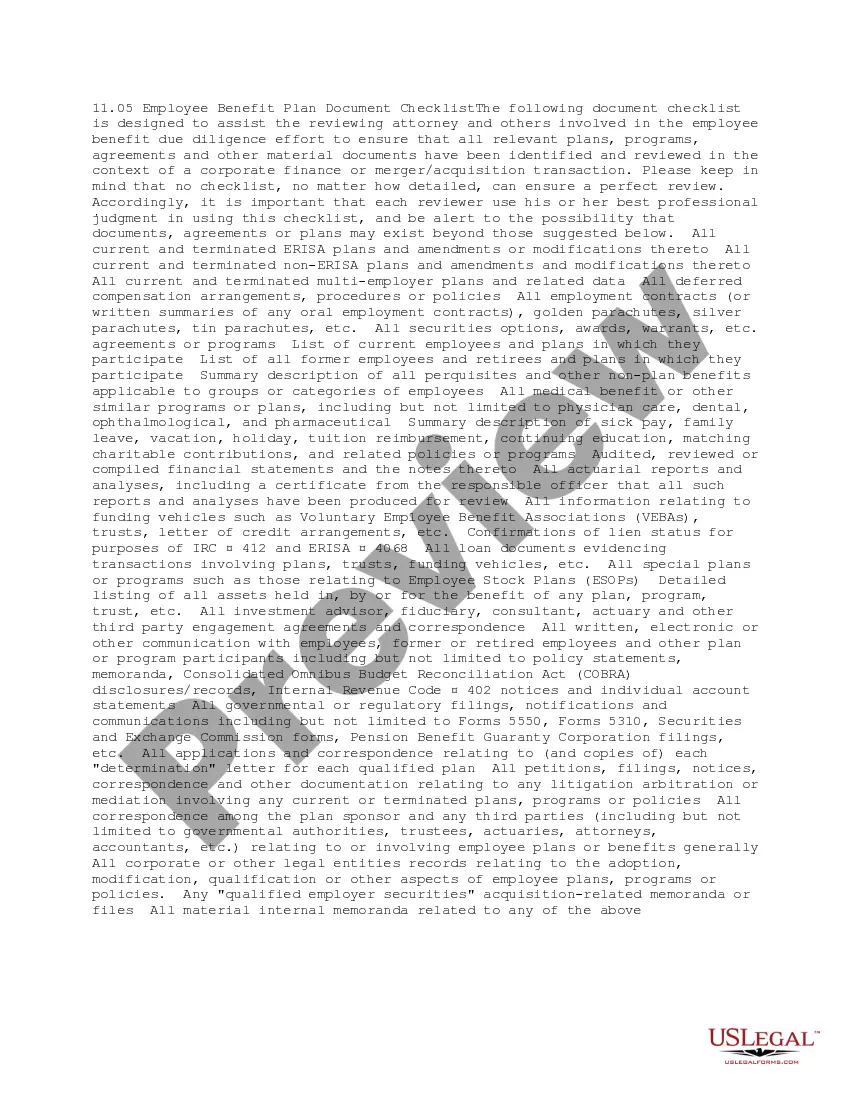
Arkansas Employee Benefit Plan Document Checklist
Description
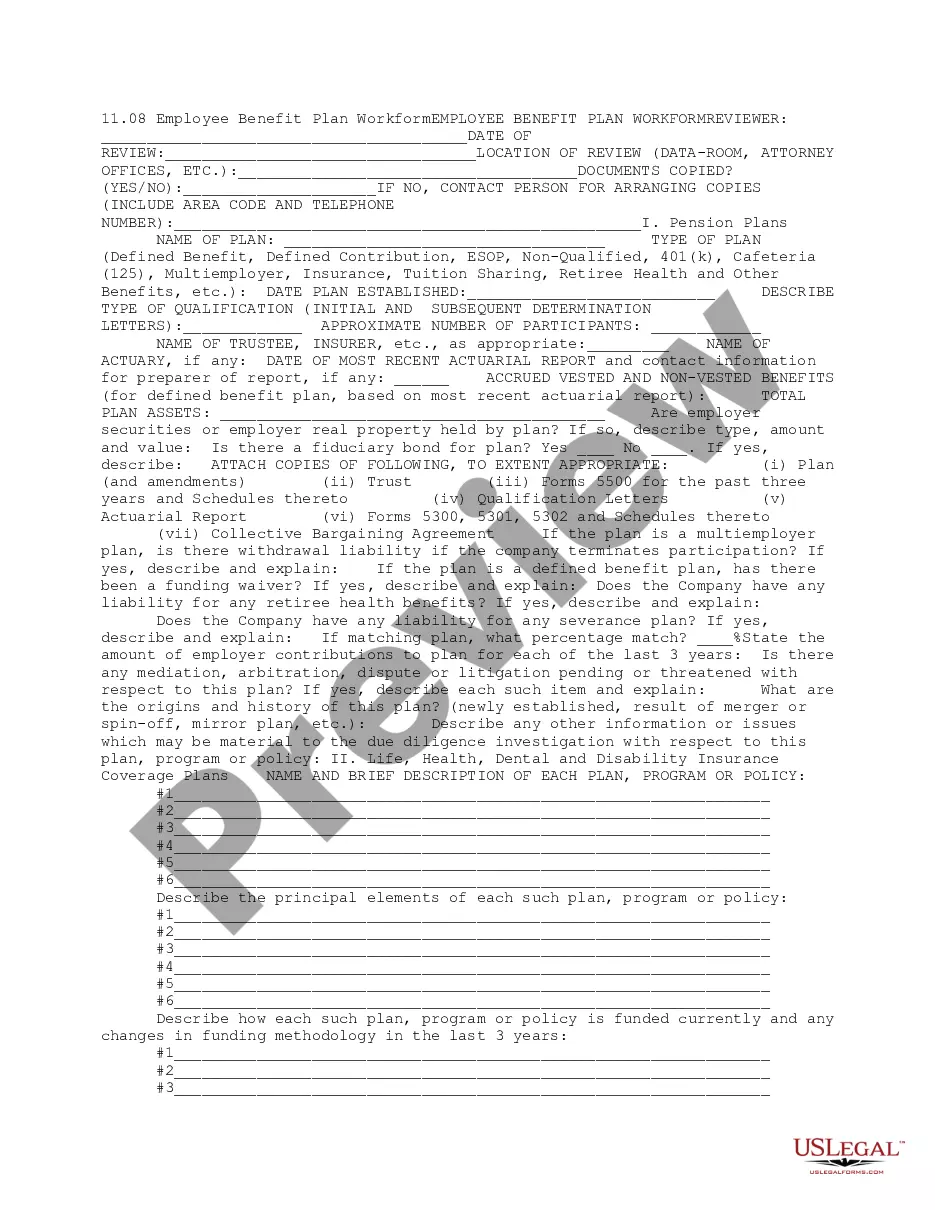
Get your form ready online
Our built-in tools help you complete, sign, share, and store your documents in one place.
Make edits, fill in missing information, and update formatting in US Legal Forms—just like you would in MS Word.
Download a copy, print it, send it by email, or mail it via USPS—whatever works best for your next step.
Sign and collect signatures with our SignNow integration. Send to multiple recipients, set reminders, and more. Go Premium to unlock E-Sign.
If this form requires notarization, complete it online through a secure video call—no need to meet a notary in person or wait for an appointment.
We protect your documents and personal data by following strict security and privacy standards.

Make edits, fill in missing information, and update formatting in US Legal Forms—just like you would in MS Word.

Download a copy, print it, send it by email, or mail it via USPS—whatever works best for your next step.

Sign and collect signatures with our SignNow integration. Send to multiple recipients, set reminders, and more. Go Premium to unlock E-Sign.

If this form requires notarization, complete it online through a secure video call—no need to meet a notary in person or wait for an appointment.

We protect your documents and personal data by following strict security and privacy standards.
Looking for another form?


How to fill out Employee Benefit Plan Document Checklist?
If you wish to finish, retrieve, or print authentic document templates, utilize US Legal Forms, the largest selection of authentic forms available online.
Take advantage of the site's straightforward and user-friendly search to find the documents you need.
Many templates for business and personal purposes are organized by categories and states, or keywords.
Step 3. If you are not satisfied with the form, use the Search field at the top of the screen to find alternative versions of the legal form template.
Step 4. Once you have located the form you need, click the Download Now button. Choose the pricing plan you prefer and provide your information to register for an account.
- Use US Legal Forms to obtain the Arkansas Employee Benefit Plan Document Checklist with just a few clicks.
- If you are already a US Legal Forms user, sign in to your account and click the Download button to access the Arkansas Employee Benefit Plan Document Checklist.
- You can also access forms you have previously obtained in the My documents section of your account.
- If this is your first time using US Legal Forms, follow the steps outlined below.
- Step 1. Ensure you have selected the form for the correct city/state.
- Step 2. Utilize the Preview option to review the form's content. Don't forget to read the description.
Form popularity
FAQ
Legally required benefits. The grouping includes Social Security, Medicare, federal and state unemployment insurance, and workers' compensation.
Mandatory Benefits a Company Must Legally Provide Full-time Employees. Vacation, health insurance, long-term disability coverage, tuition reimbursement, and retirement savings plans are just a few of the many benefits employers may offer employees.
Legally Required Benefits: Those Benefits which are required by law, which must be provided by the employer to their employees are called legally required benefits. Social Security Benefit, Workmen compensation insurance, health insurance, medical leave, maternity leave etc. are some legally required benefits.
You Probably Need More FriendsHere's How To Make ThemAim To Provide Value To All Employees.Offer Employee Ownership Opportunities.Provide Remote Work Benefits.Add Inclusion And Equity Efforts.Consider Soft Benefits.Offer Free Healthcare.Let Employees Choose.Conduct A Cost/Benefit Analysis.
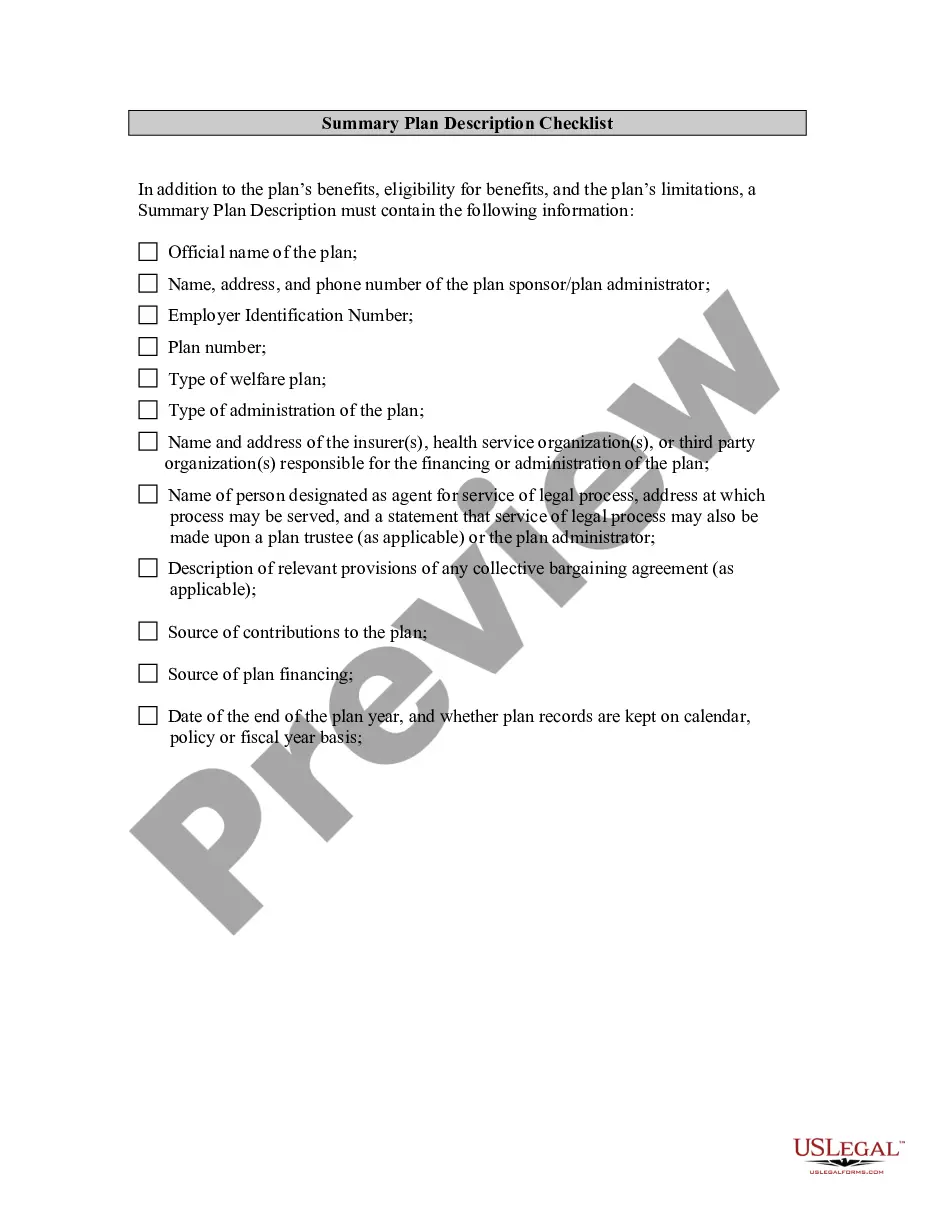
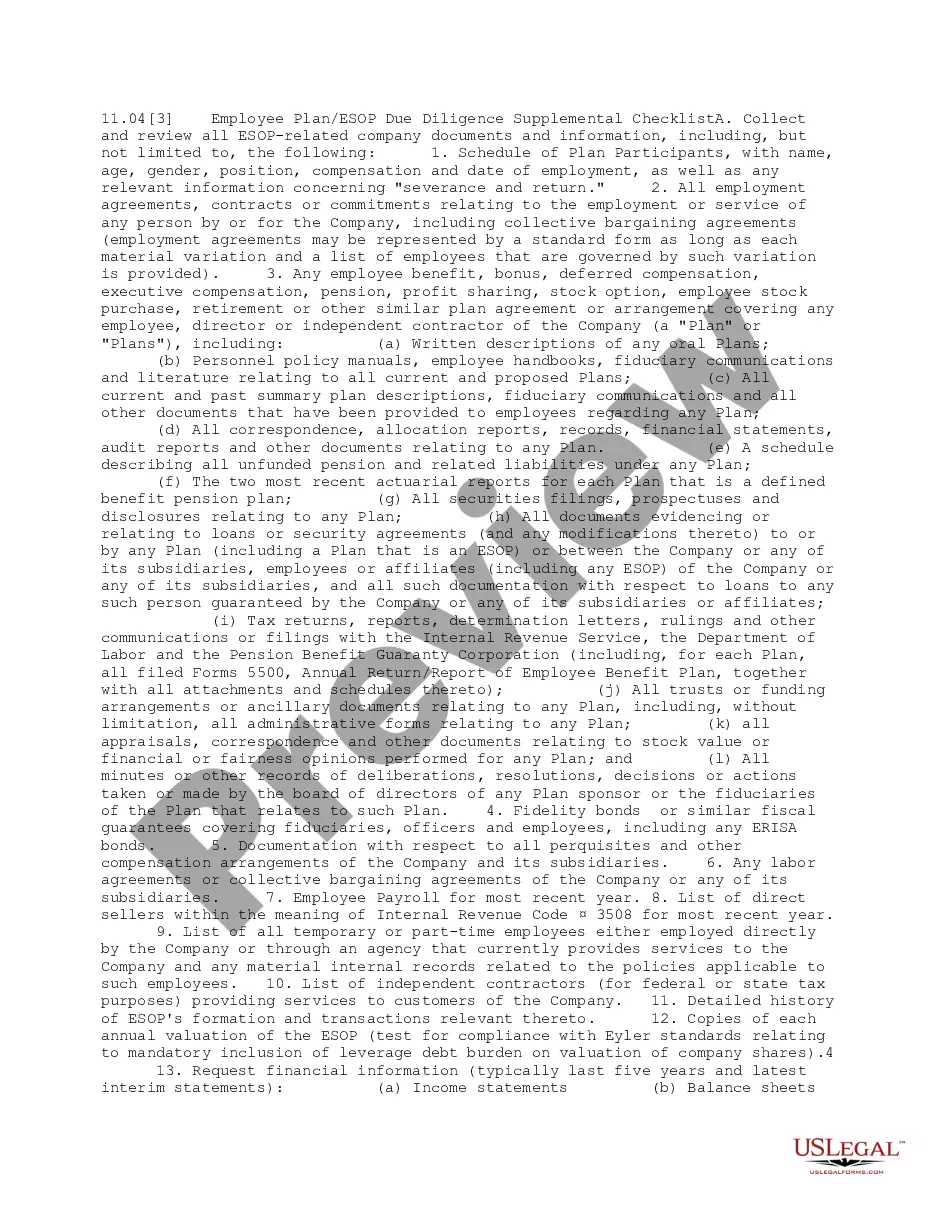
The SPD must include many specified items, such as plan-identifying and eligibility information, a description of plan benefits and circumstances causing loss or denial of benefits, benefit claim procedures, and a statement of participants' ERISA rights.
What types of employee benefits are considered an industry standard?Health insurance. Health insurance is one of the most popular employee benefits offered by employers.Family and medical leave (FMLA)Disability insurance.Retirement savings.Life insurance.Paid time off (PTO)
The most common types of employee benefits offered today are:Medical insurance.Life insurance.Disability insurance.Retirement contributions and pension plans.
Traditionally, most benefits used to fall under one of the four major types of employee benefits, namely: medical insurance, life insurance, retirement plans, and disability insurance.
It includes salaries, wages and social security contribution (i.e. health insurance), paid leaves, profit sharing and bonus and non-monetary benefits like car, free medical facilities, free or subsidized goods, free or subsidized lunch, etc.