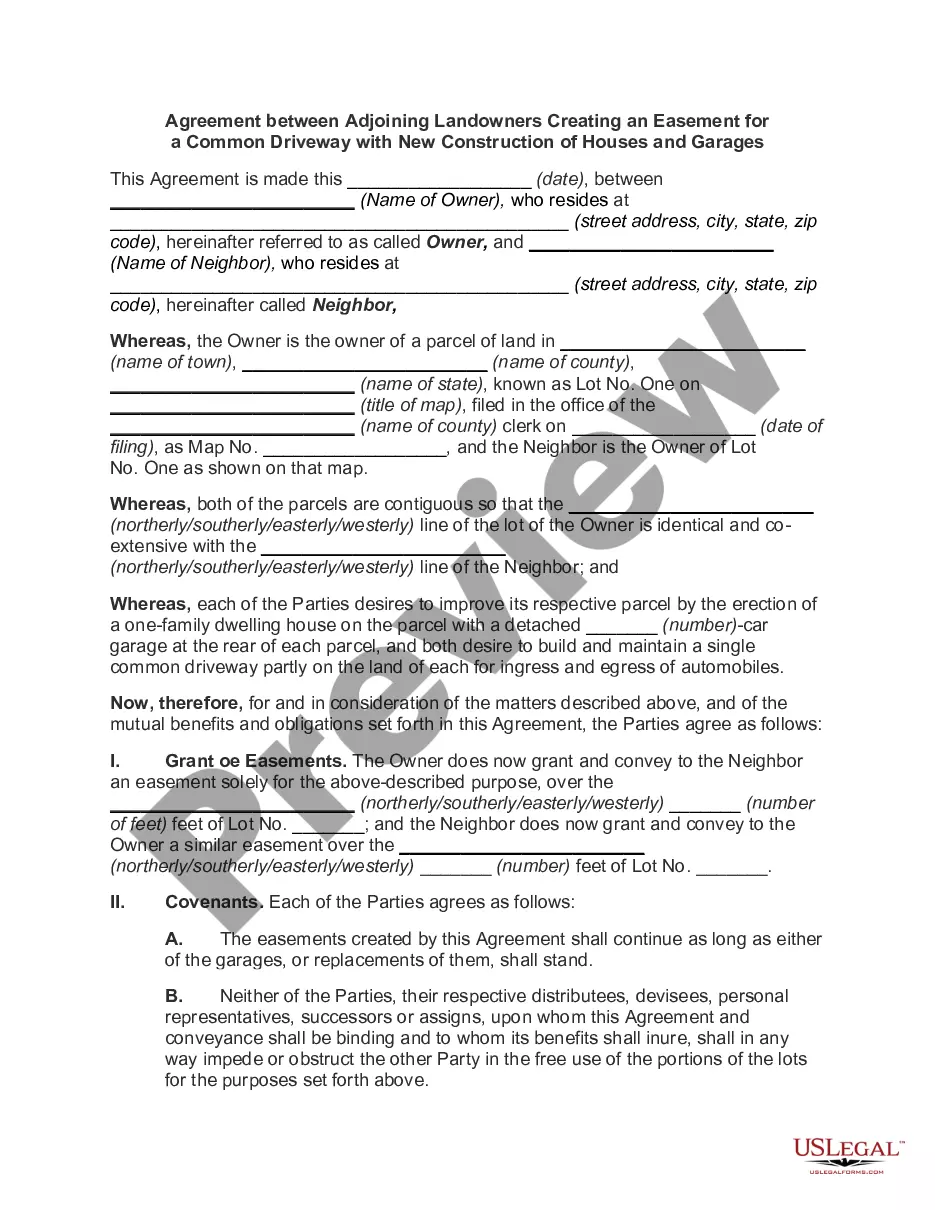
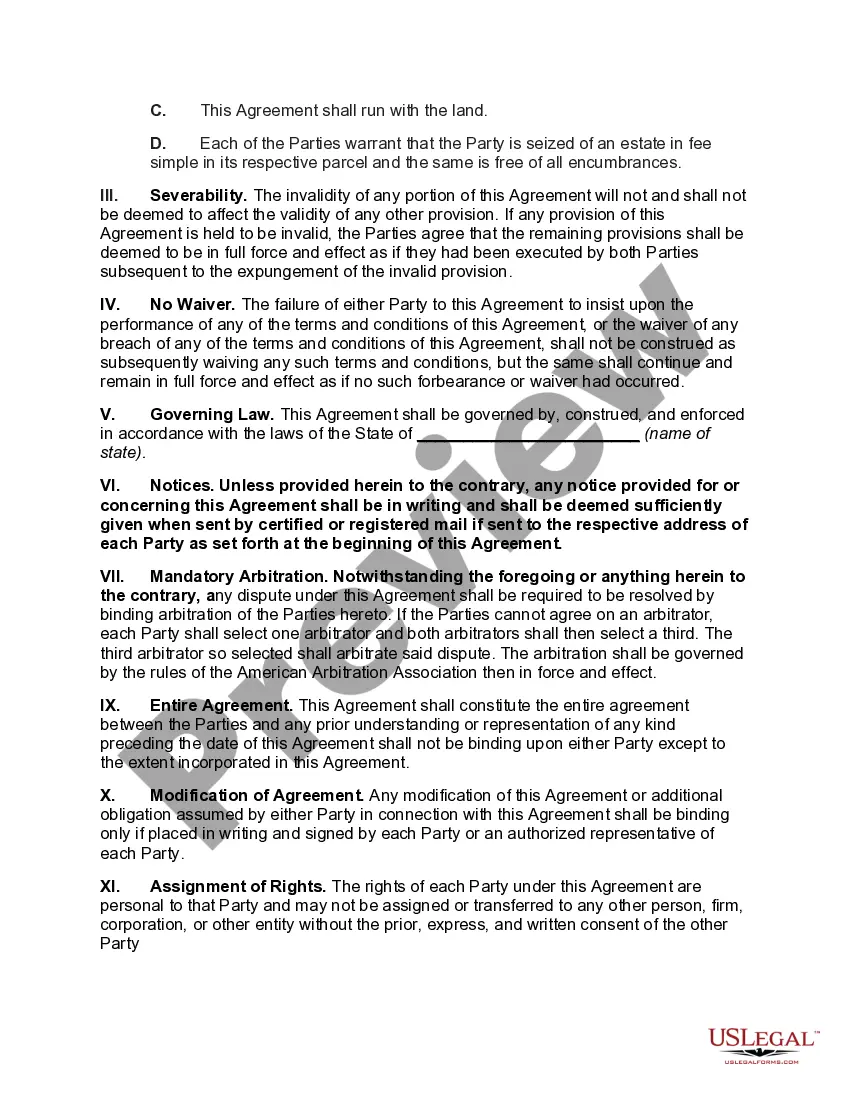
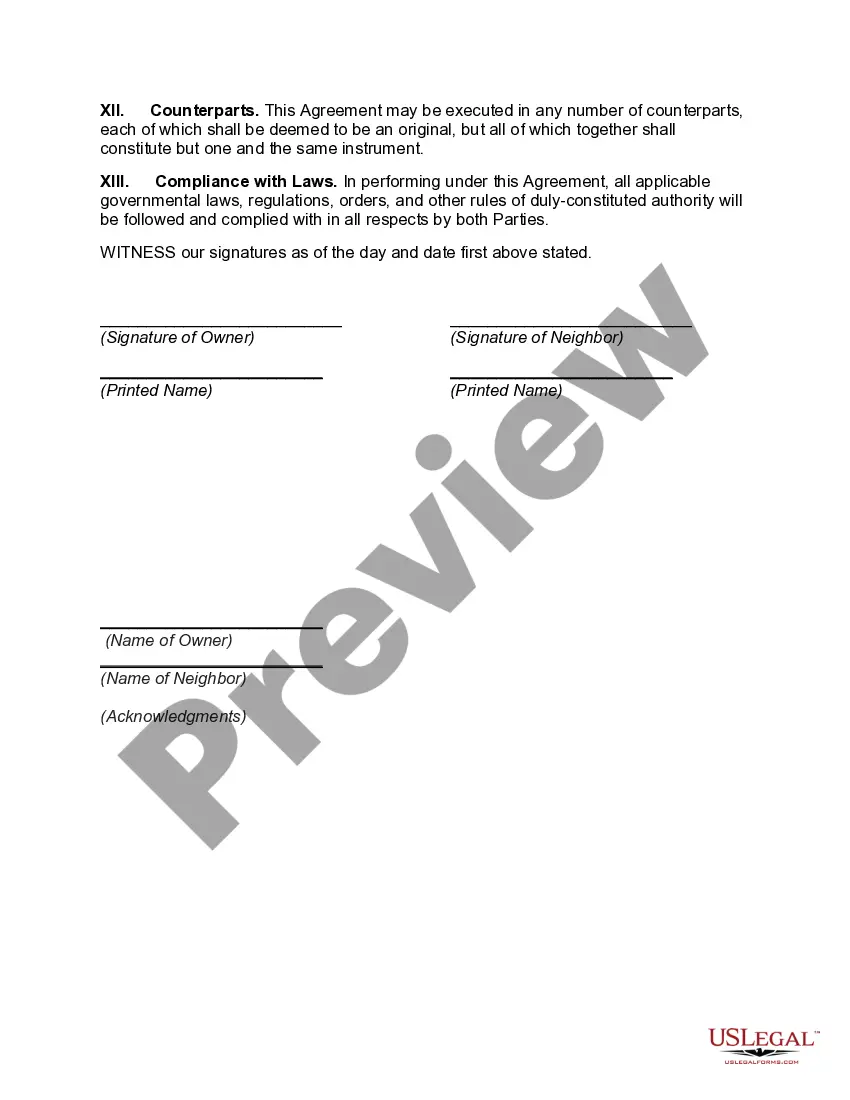
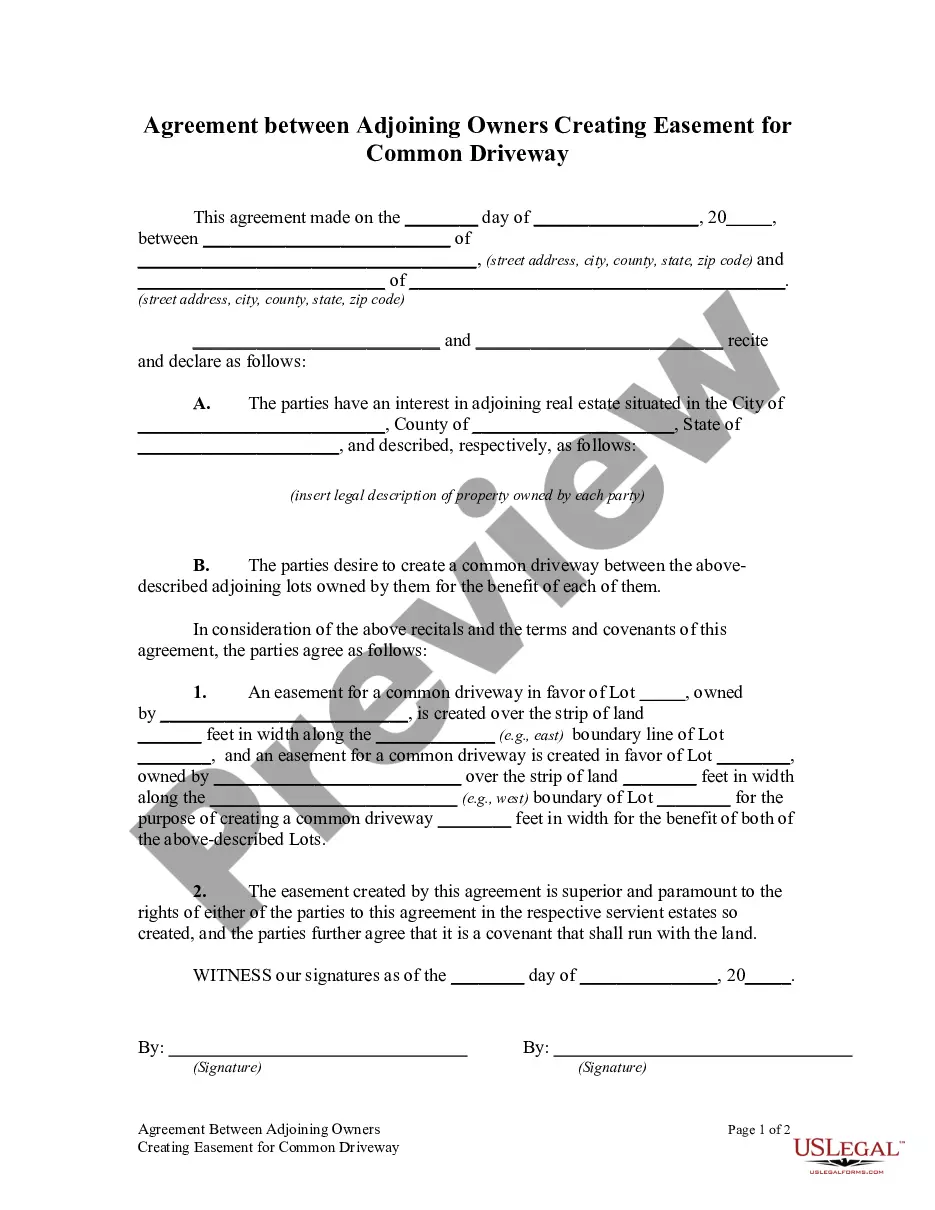
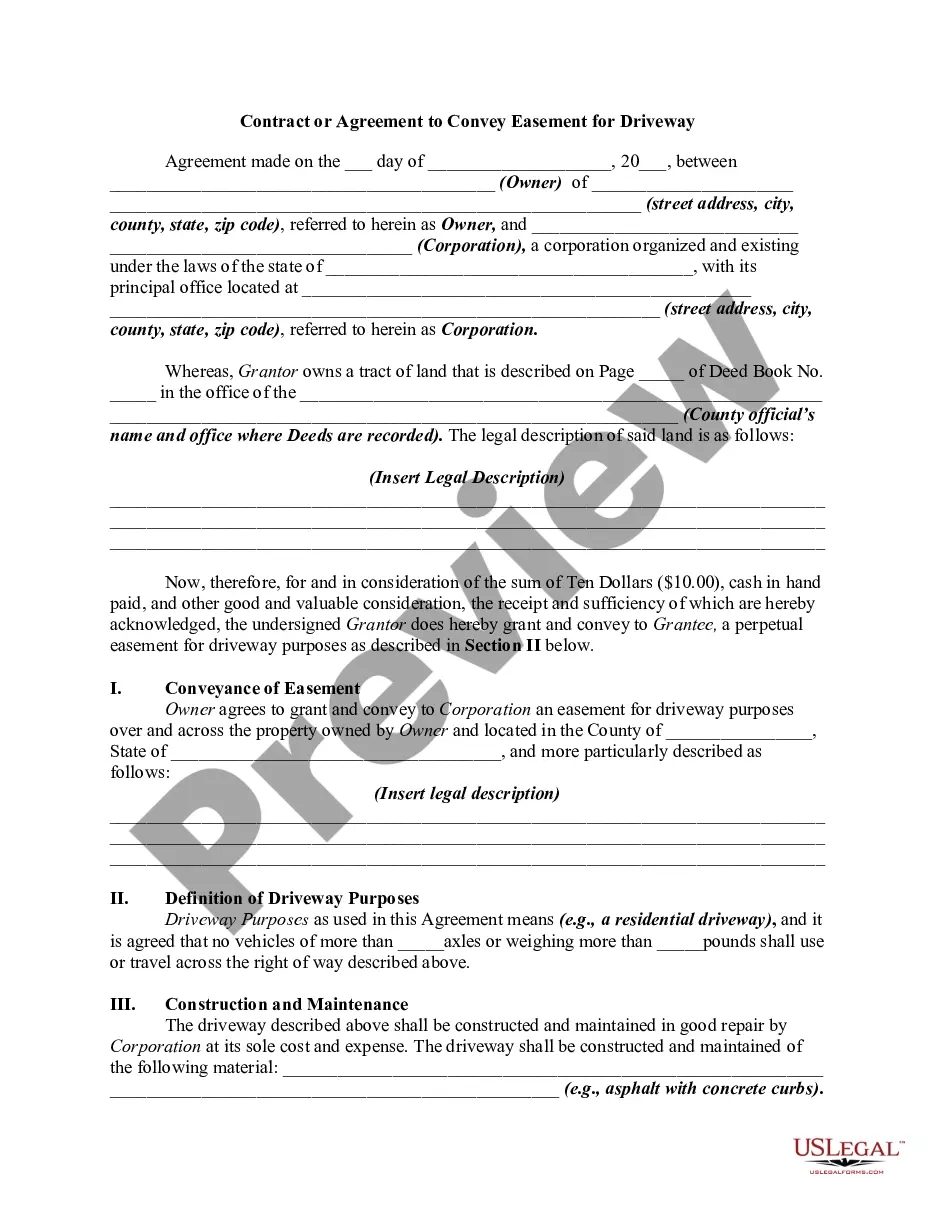
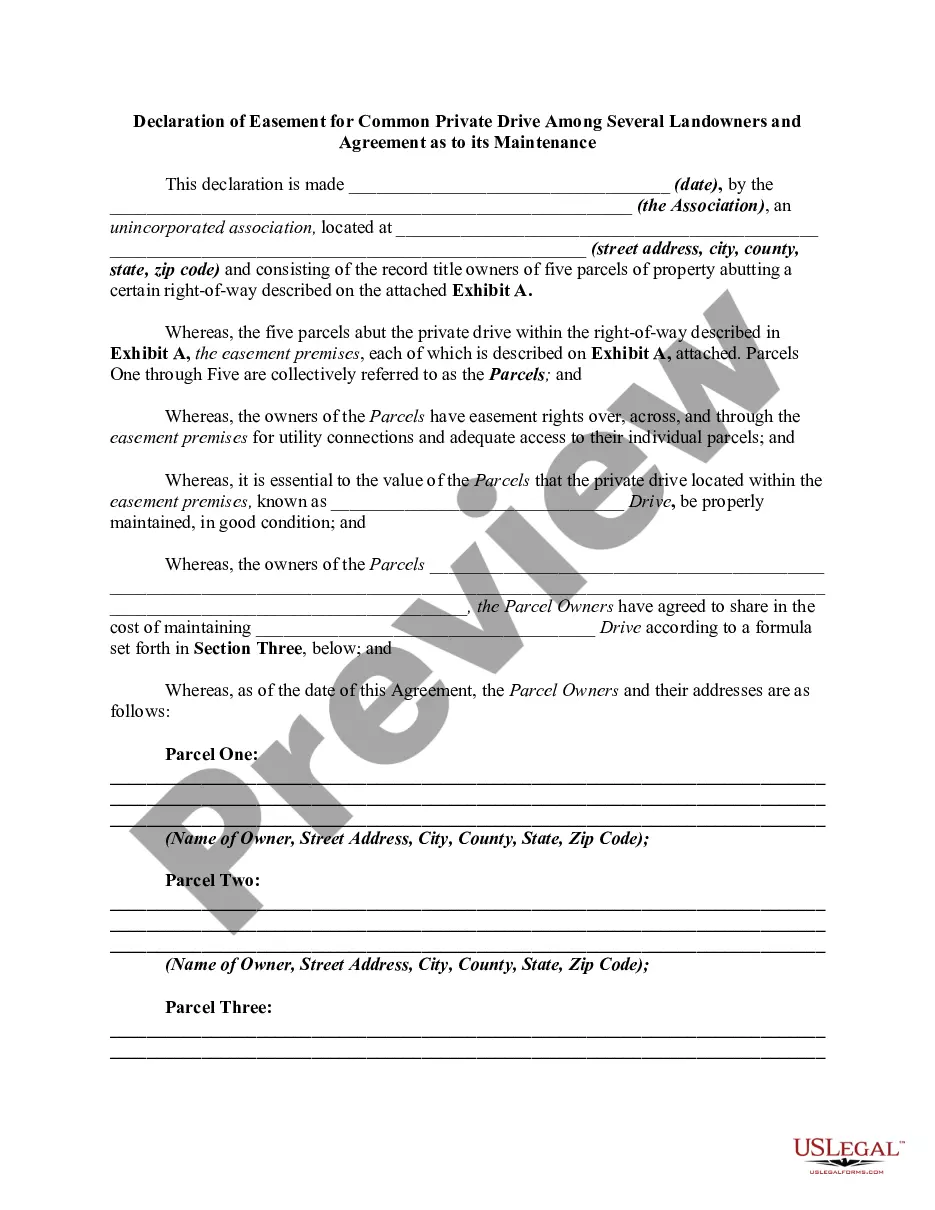
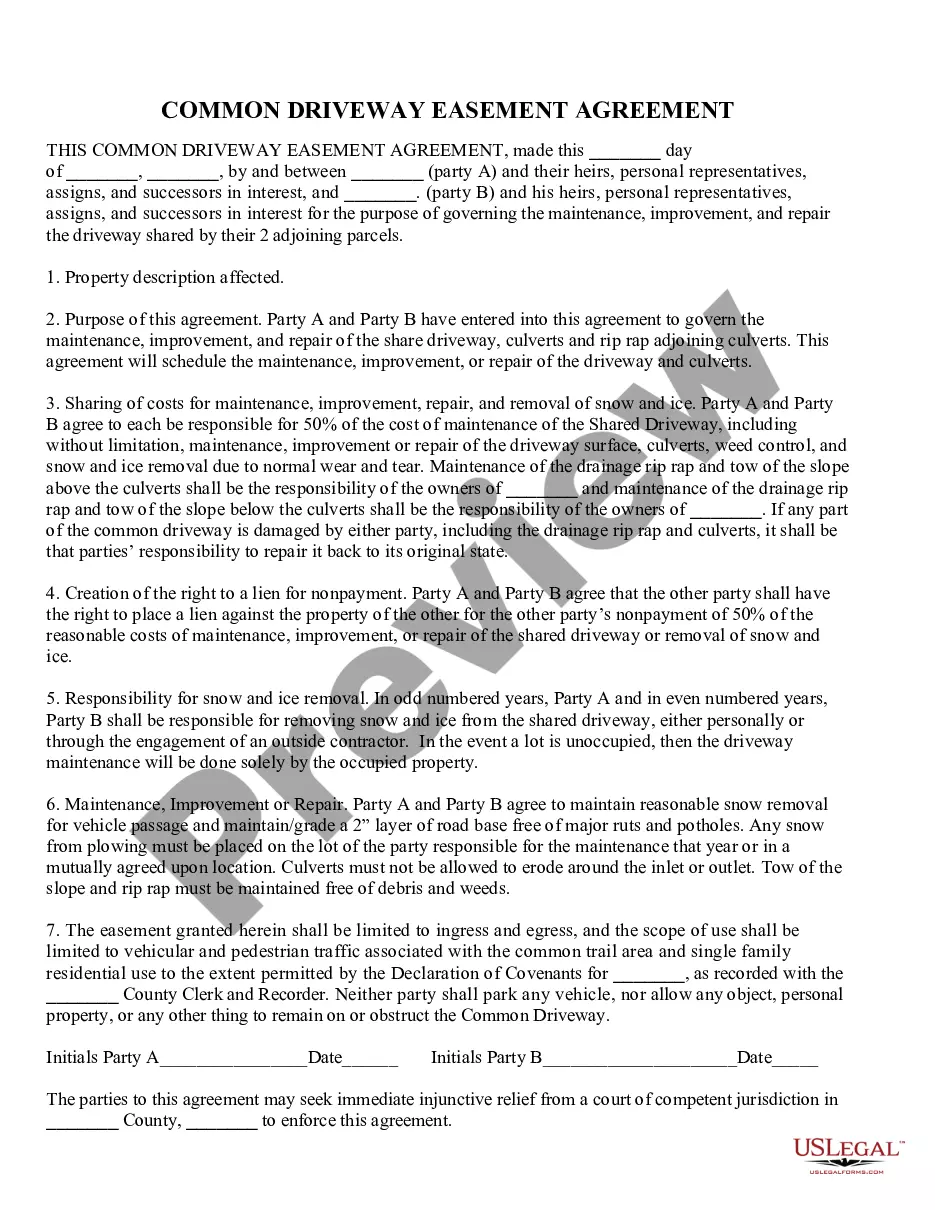
Arkansas Agreement between Adjoining Landowners Creating an Easement for a Common Driveway with New Construction of Houses and Garages
State:
Multi-State
Control #:
US-1340998A-BG
Format:
Word;
Rich Text
Instant download
Description
The term “easement” has been variously defined as a privilege which the owner of one tenement has a right to enjoy over the tenement of another, a right which one person has to use the land of another for a specific purpose not inconsistent with the owner's rights, or as a servitude imposed as a burden on land. One of the distinguishing characteristics of an easement is the absence of all right to participate in the profits of the soil charged with it. An easement has also been defined as a privilege without profit, which the owner of one tenement has a right to enjoy in respect of that tenement, in or over the tenement of another person, by reason of which the latter is obliged to suffer or refrain from doing something on his or her own tenement for the advantage of the former. It is a charge or burden on one estate, the servient, for the benefit of another, the dominant.
Free preview