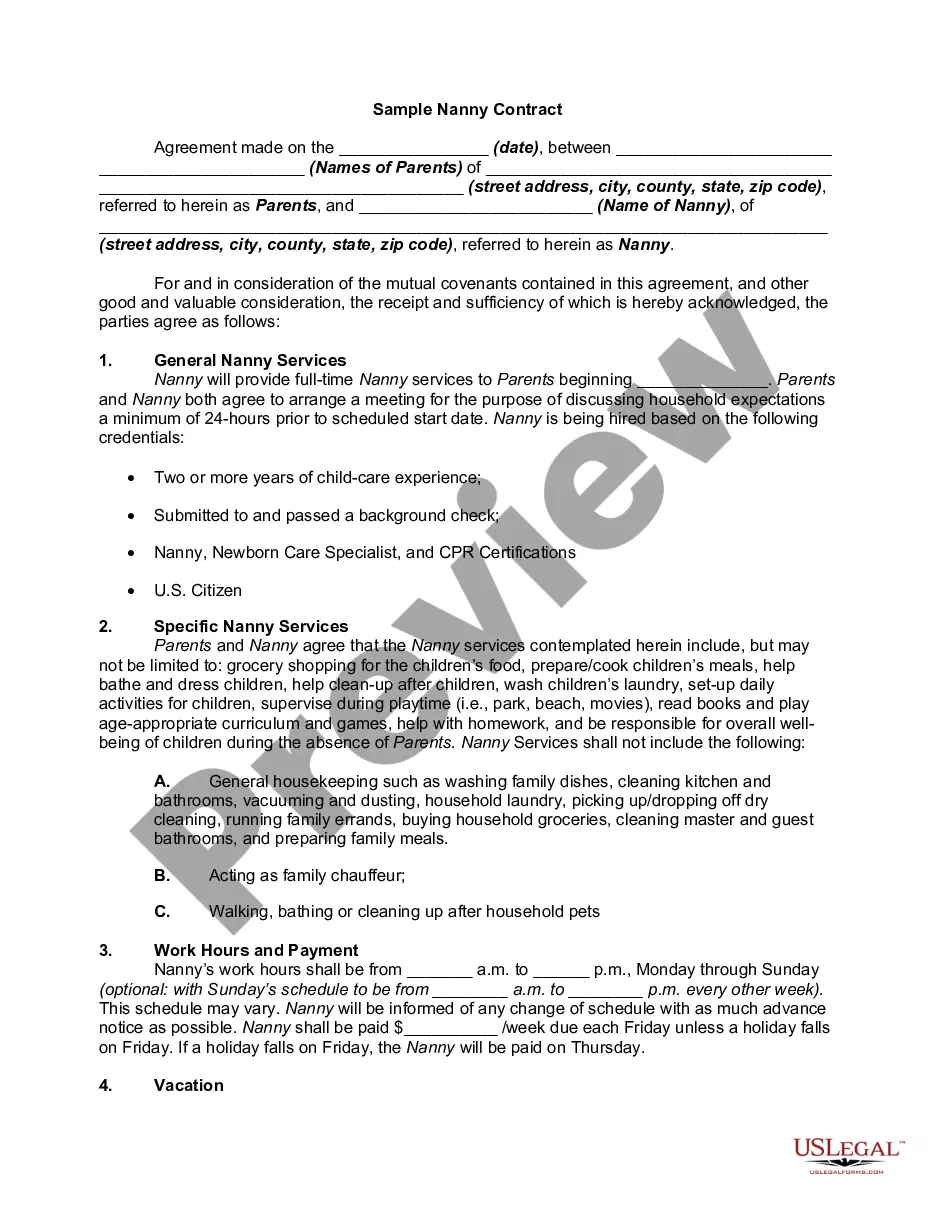
Arkansas International Nonexclusive Distributorship Agreement between United States Manufacturer and Foreign Distributor
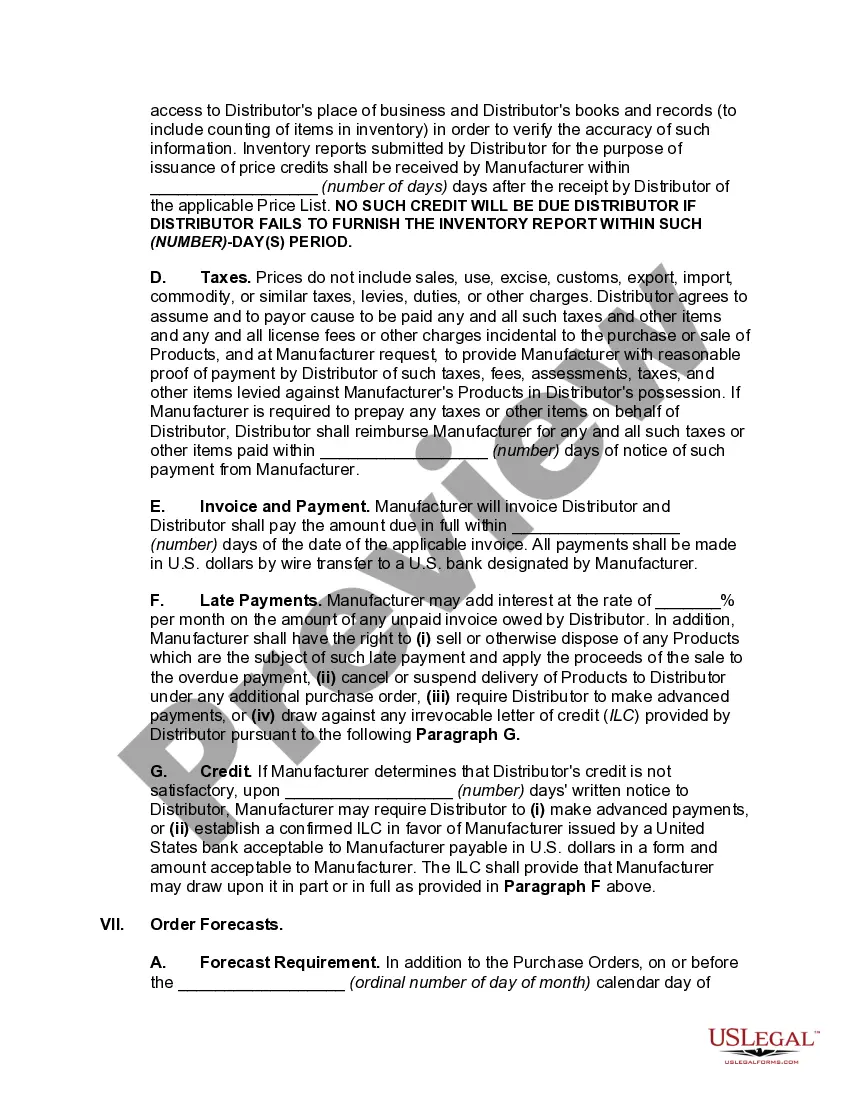
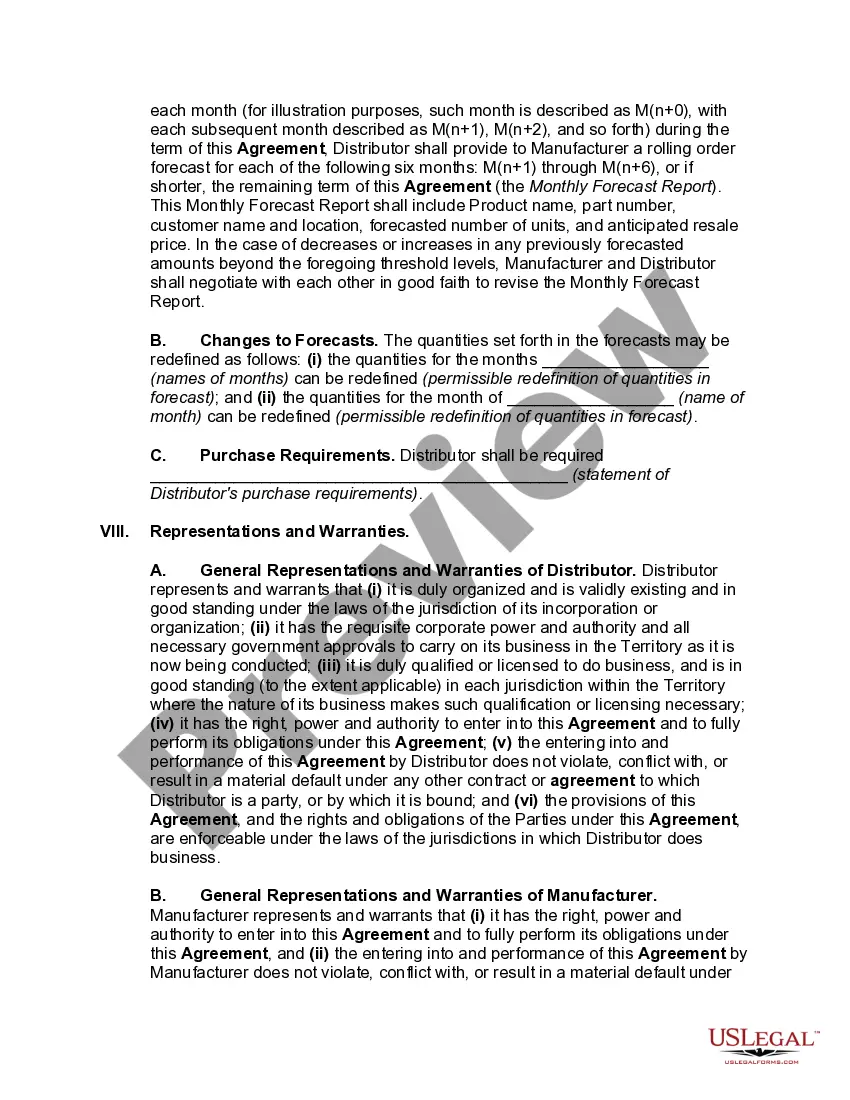
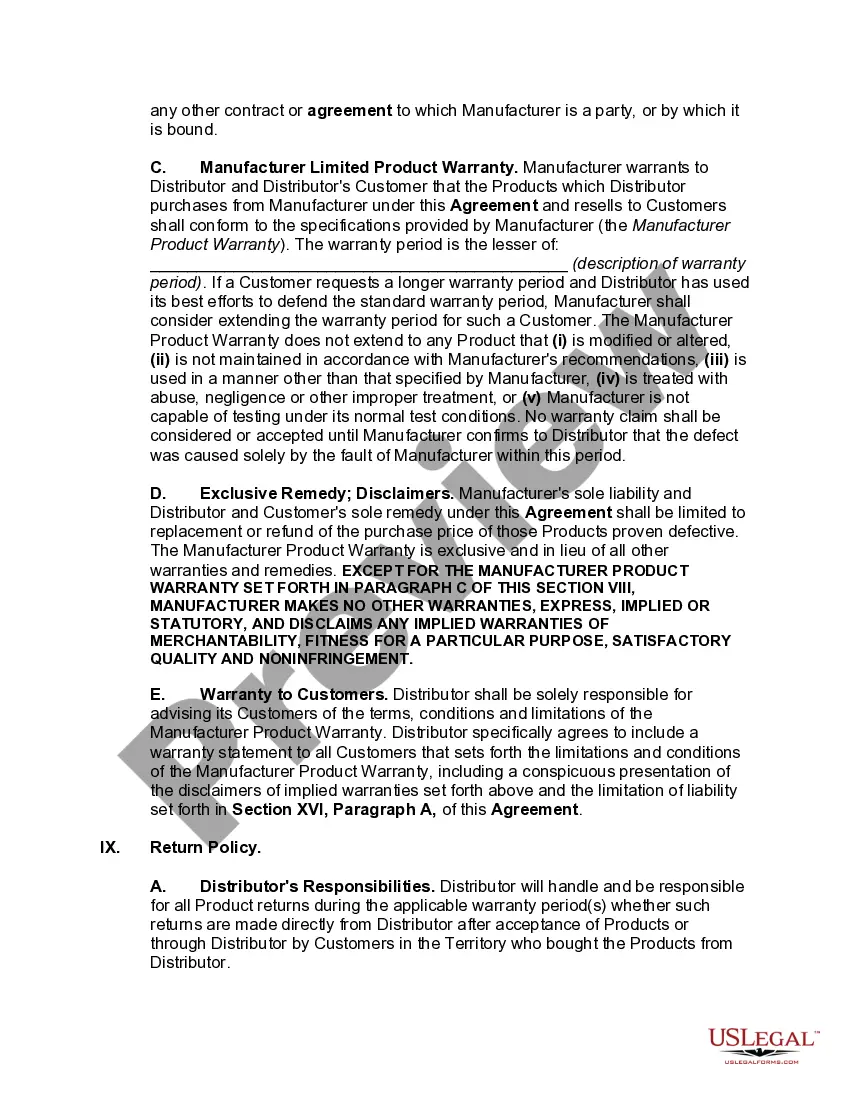
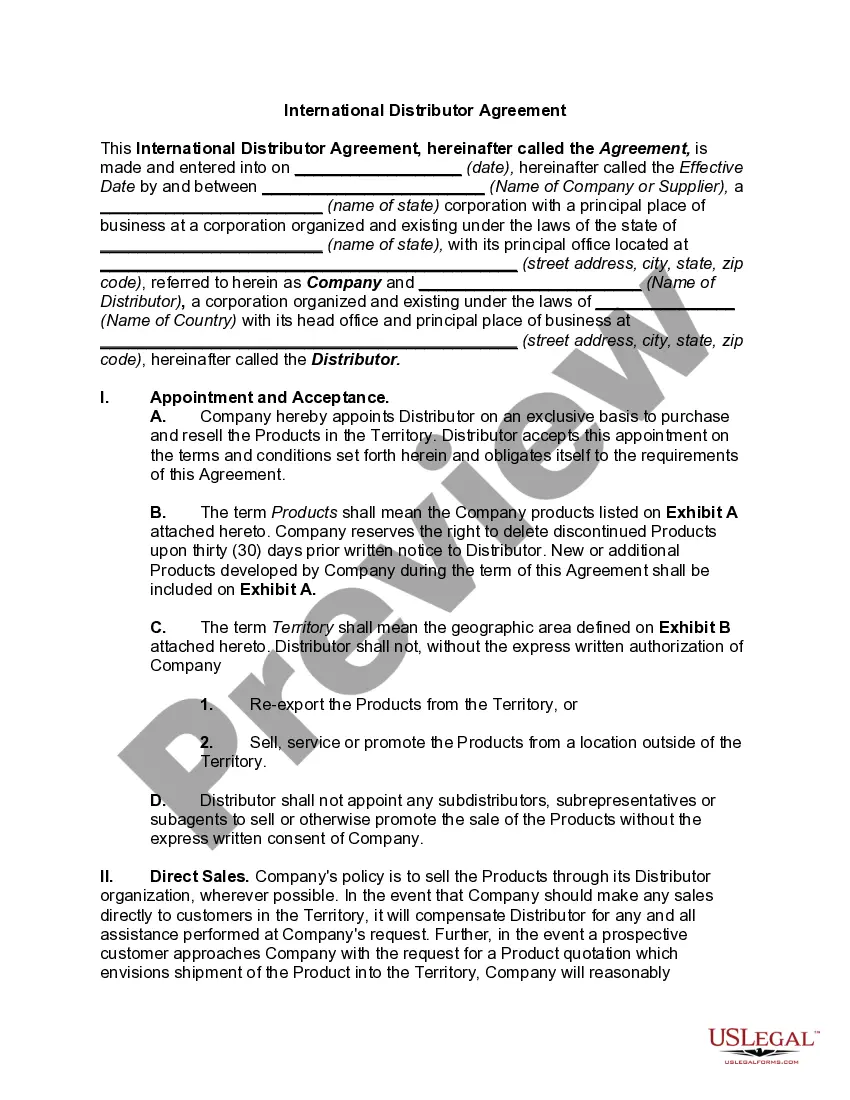
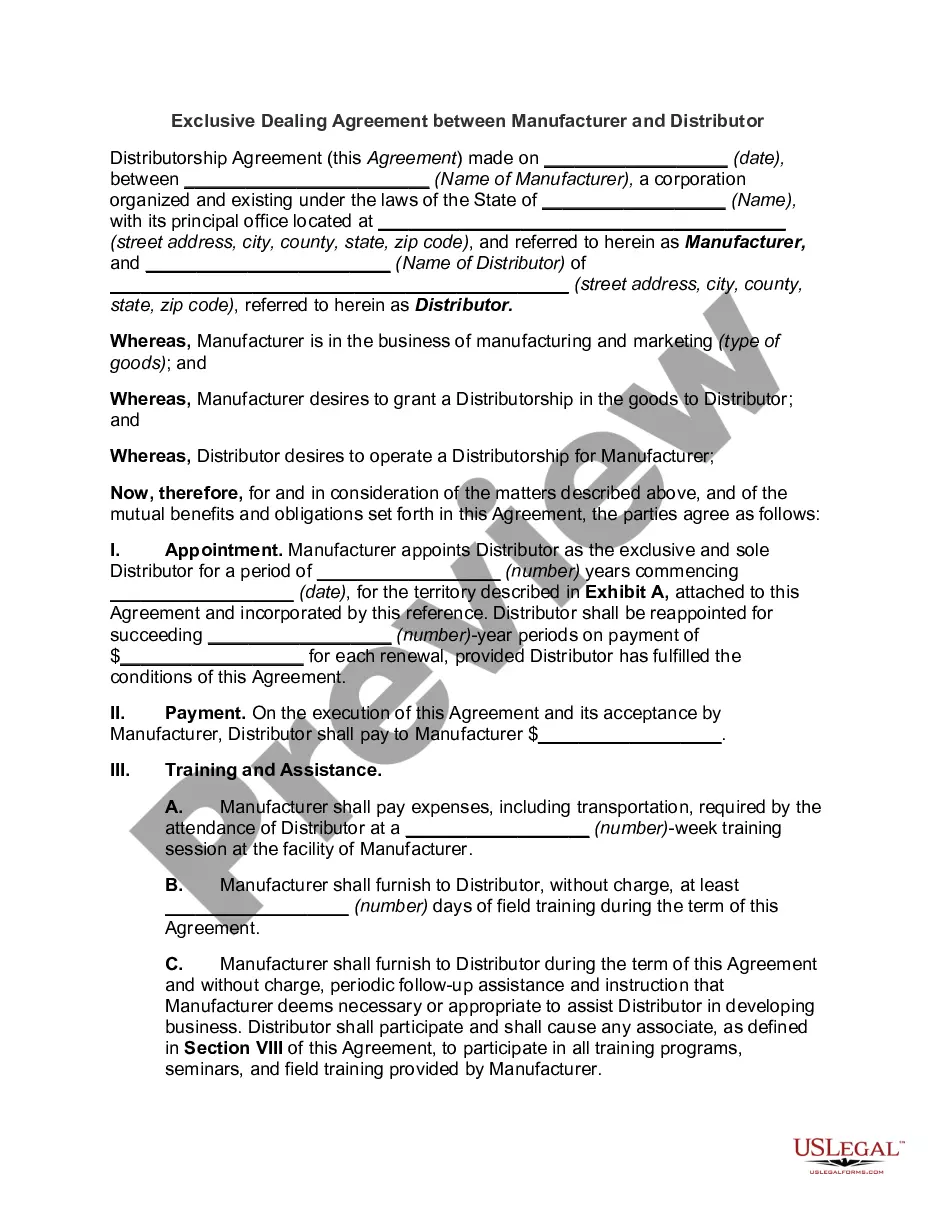
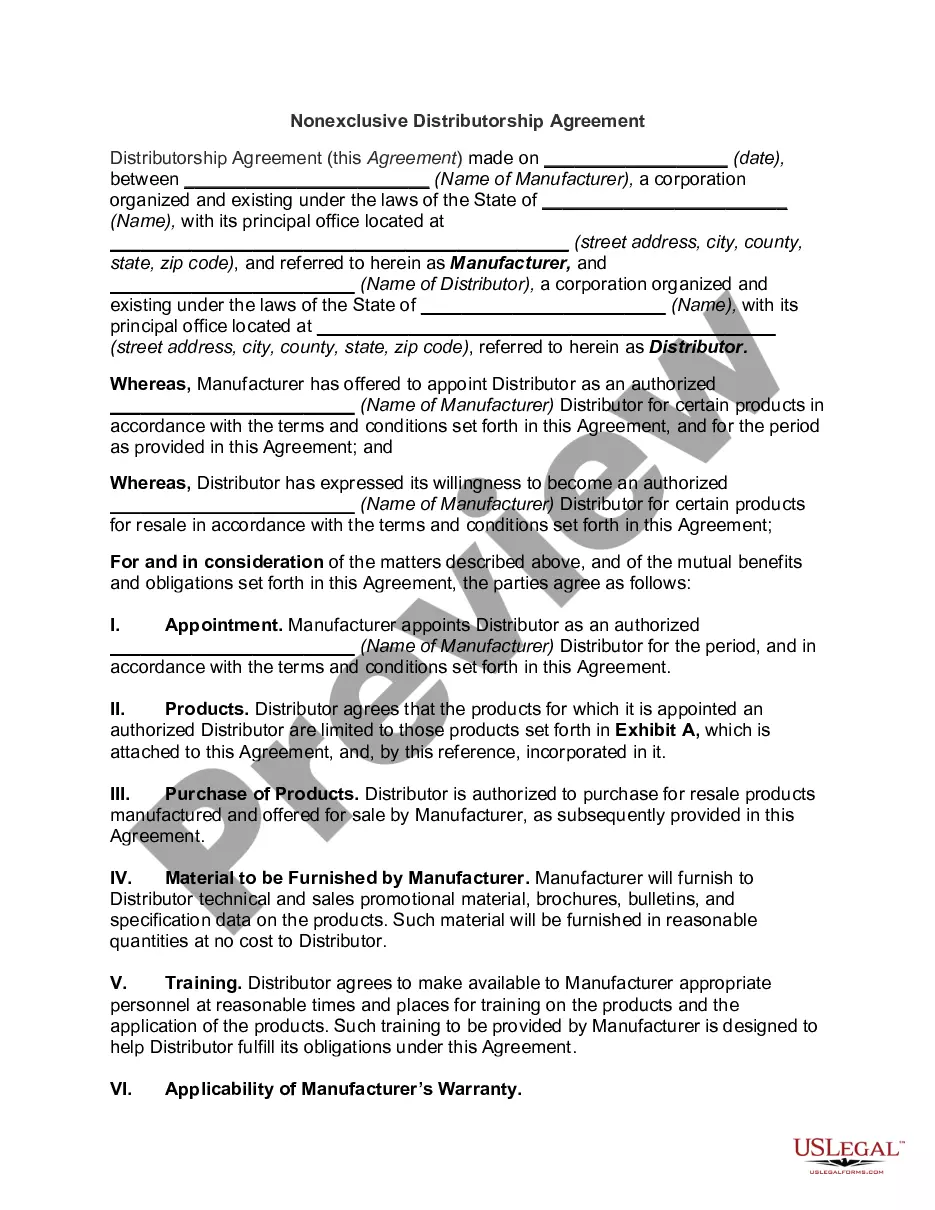
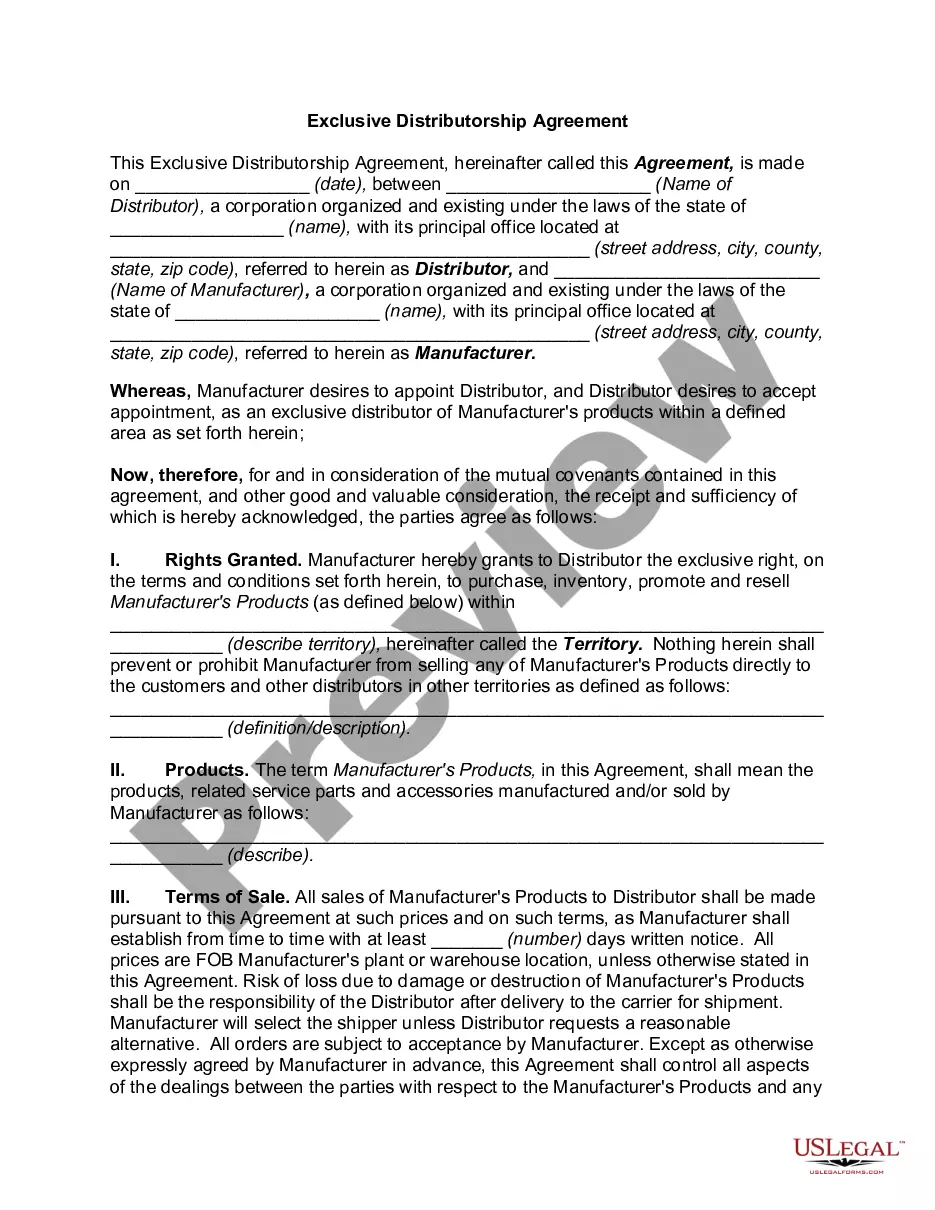
Description
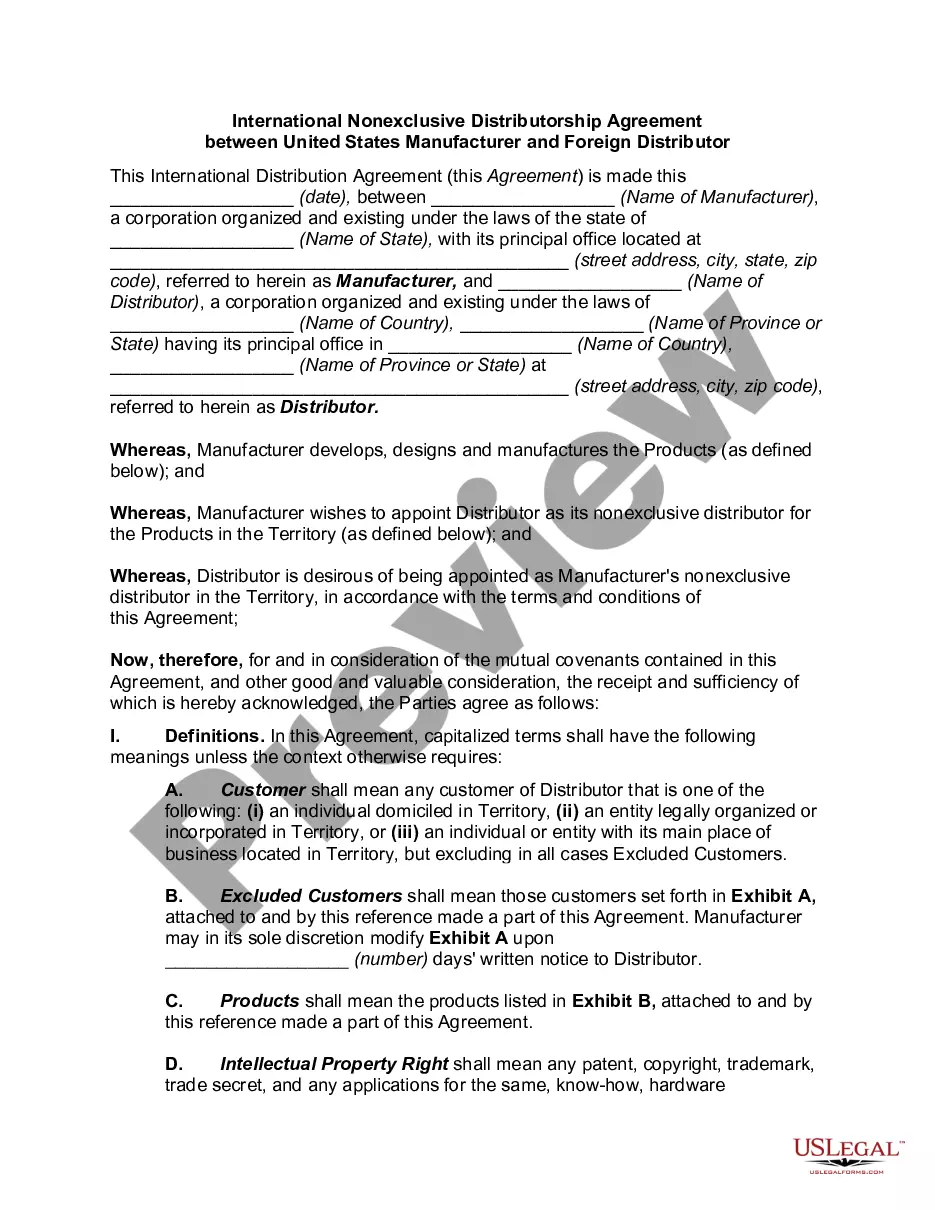
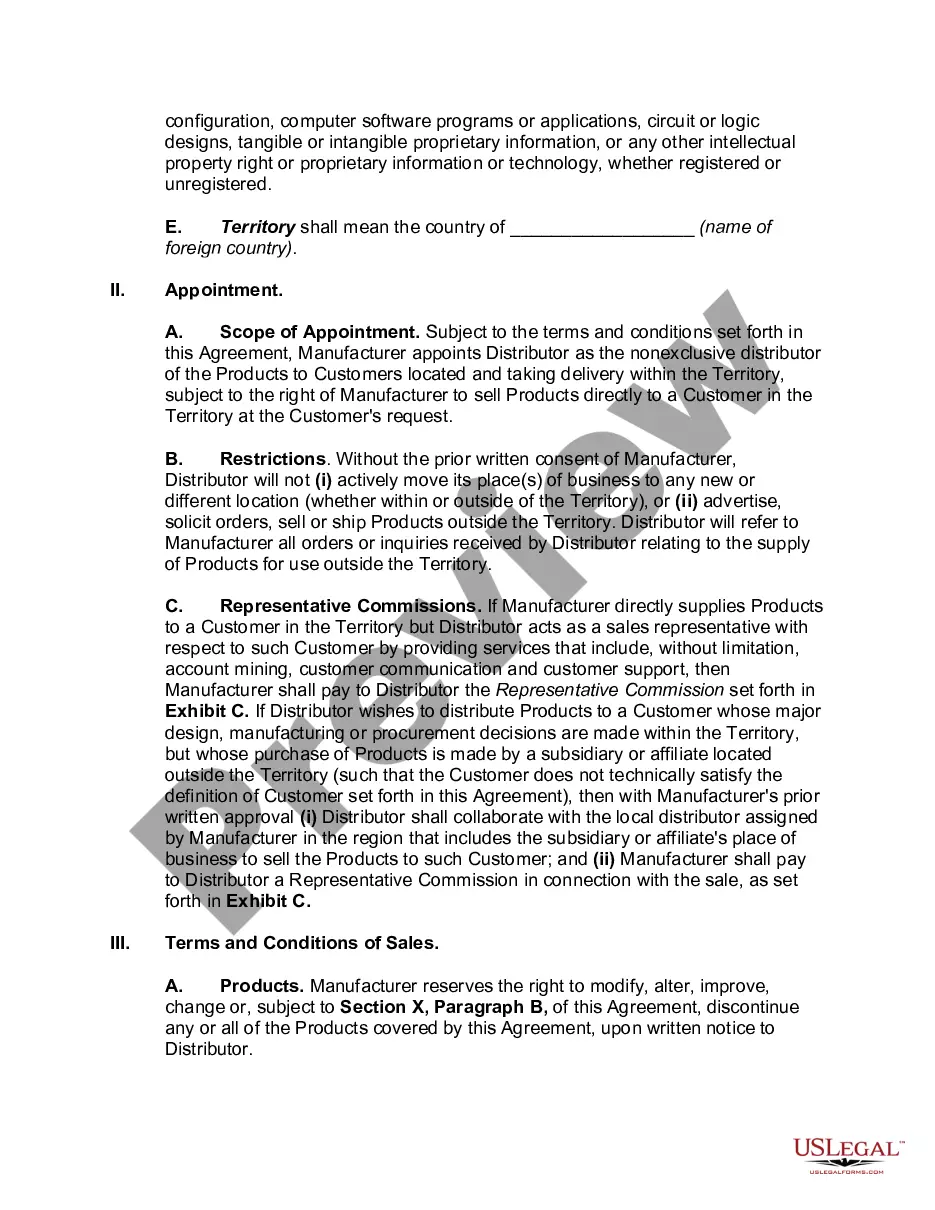
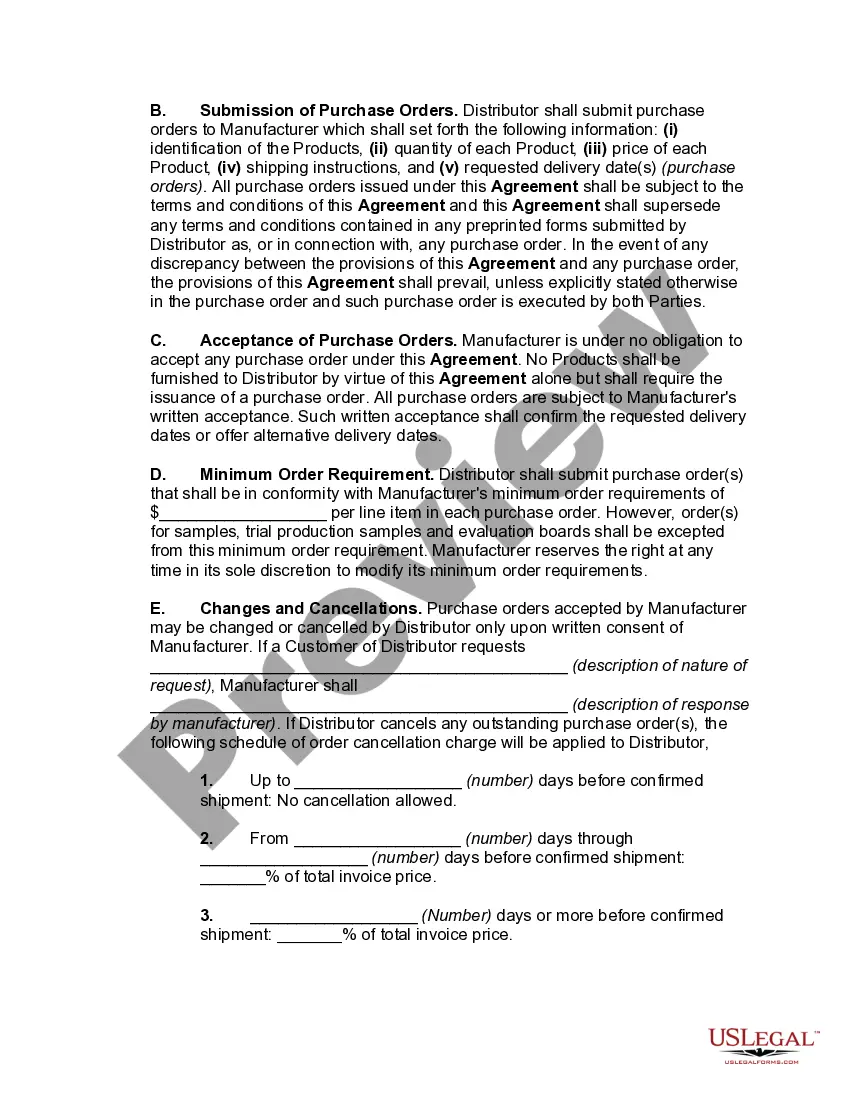


Get your form ready online
Our built-in tools help you complete, sign, share, and store your documents in one place.
Make edits, fill in missing information, and update formatting in US Legal Forms—just like you would in MS Word.
Download a copy, print it, send it by email, or mail it via USPS—whatever works best for your next step.
Sign and collect signatures with our SignNow integration. Send to multiple recipients, set reminders, and more. Go Premium to unlock E-Sign.
If this form requires notarization, complete it online through a secure video call—no need to meet a notary in person or wait for an appointment.
We protect your documents and personal data by following strict security and privacy standards.

Make edits, fill in missing information, and update formatting in US Legal Forms—just like you would in MS Word.

Download a copy, print it, send it by email, or mail it via USPS—whatever works best for your next step.

Sign and collect signatures with our SignNow integration. Send to multiple recipients, set reminders, and more. Go Premium to unlock E-Sign.

If this form requires notarization, complete it online through a secure video call—no need to meet a notary in person or wait for an appointment.

We protect your documents and personal data by following strict security and privacy standards.
Looking for another form?




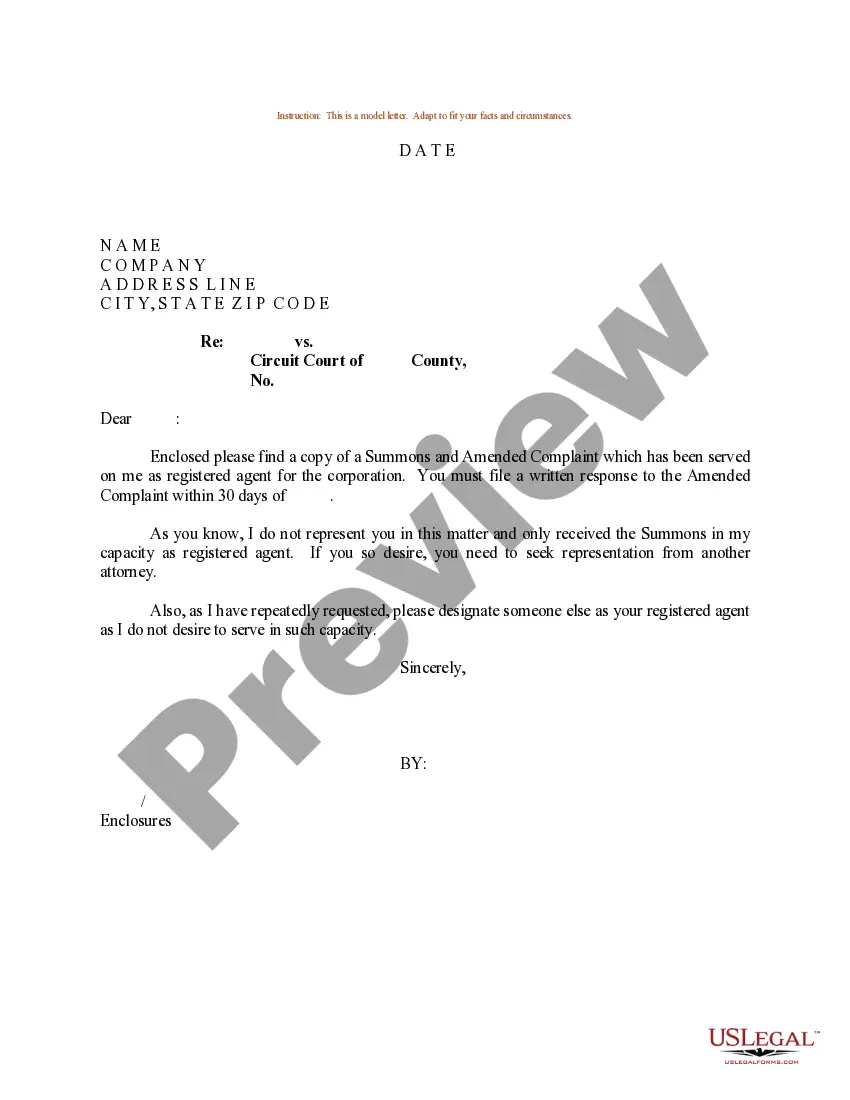

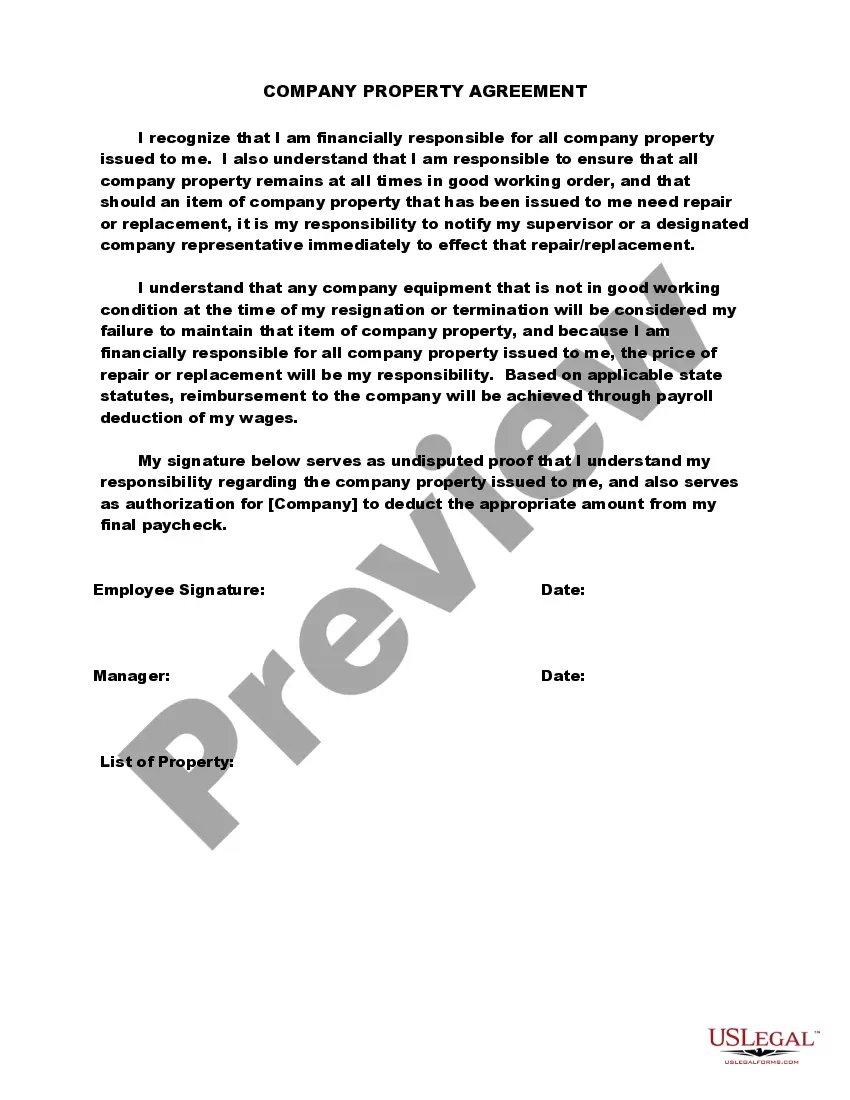


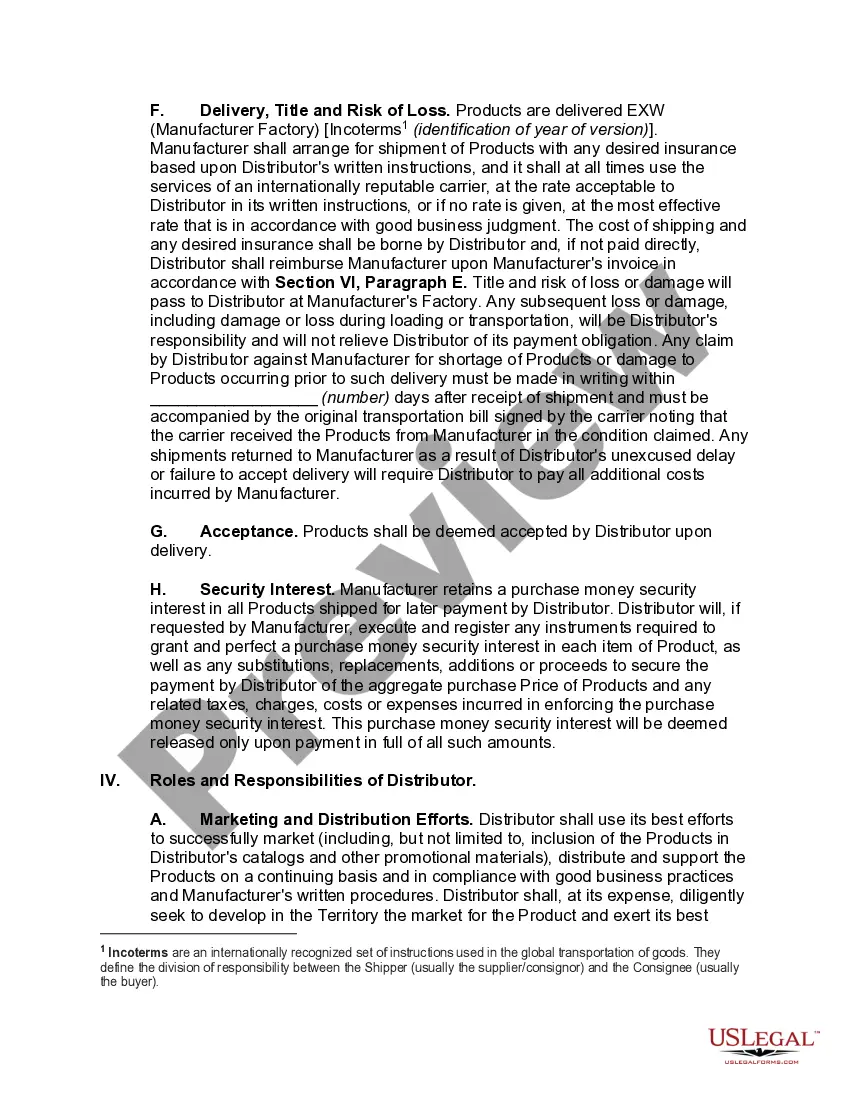
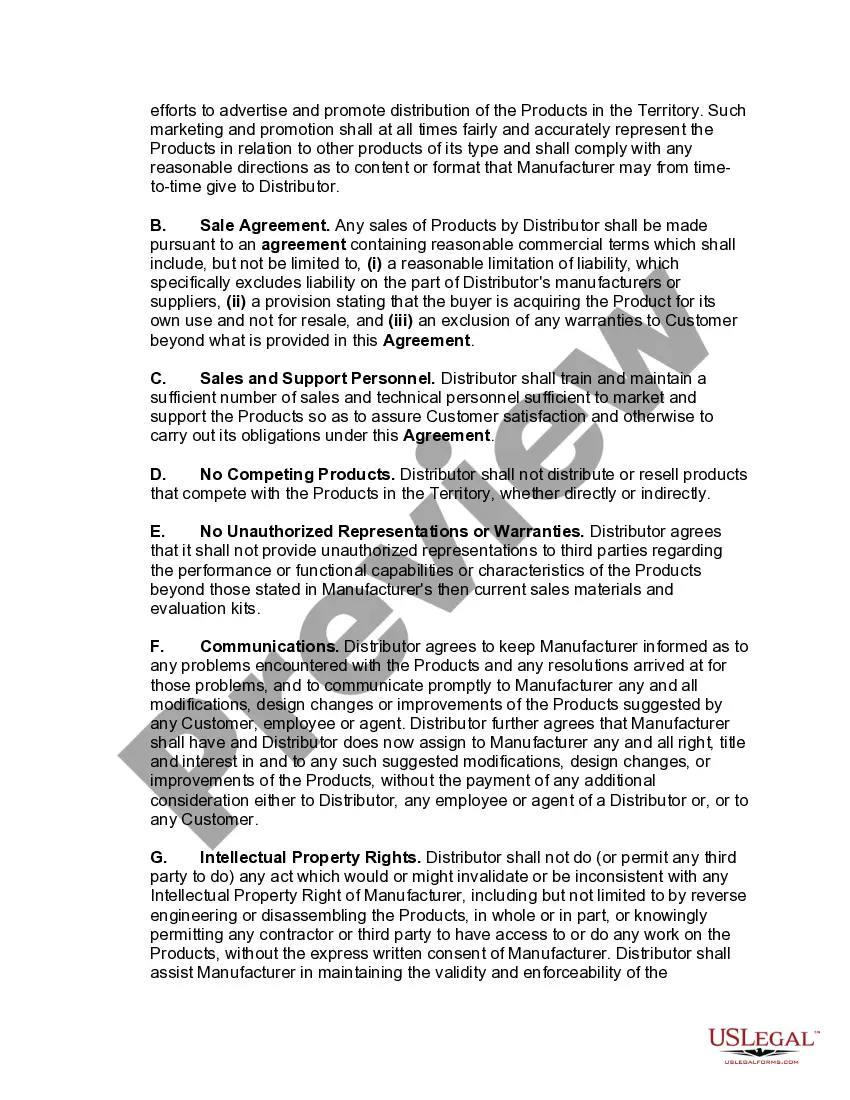
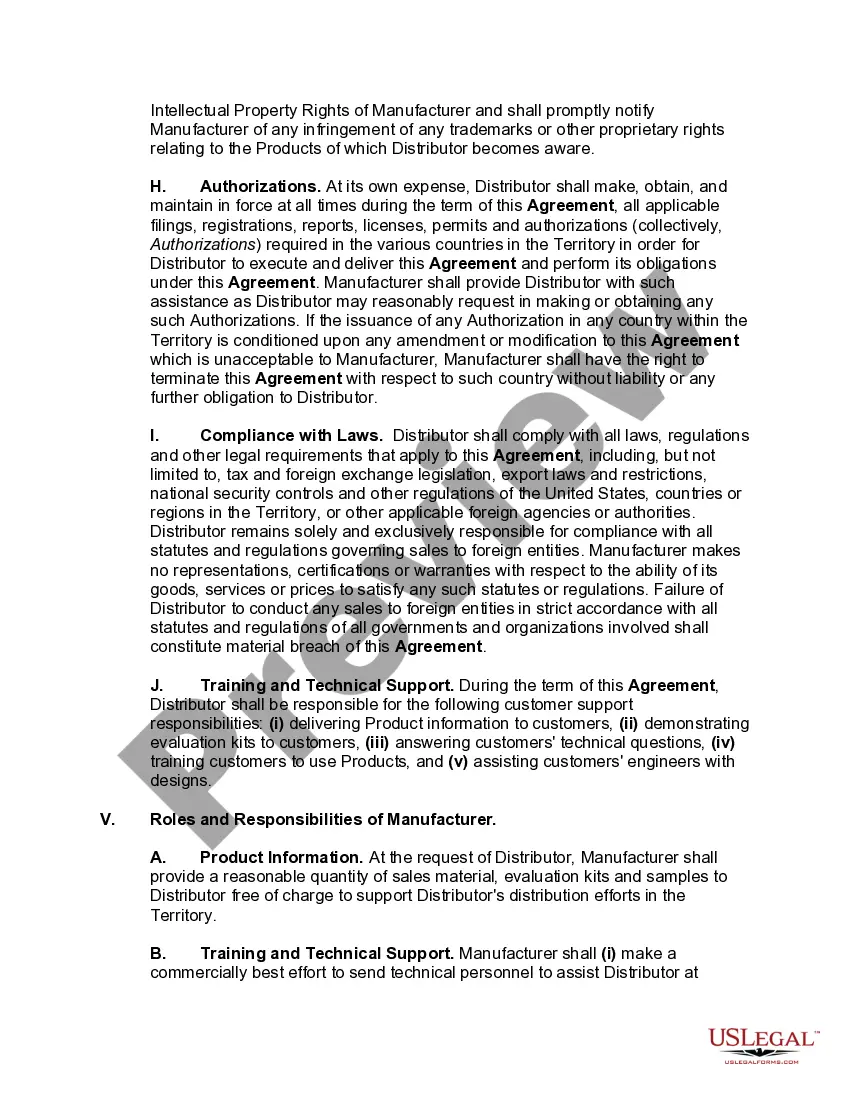
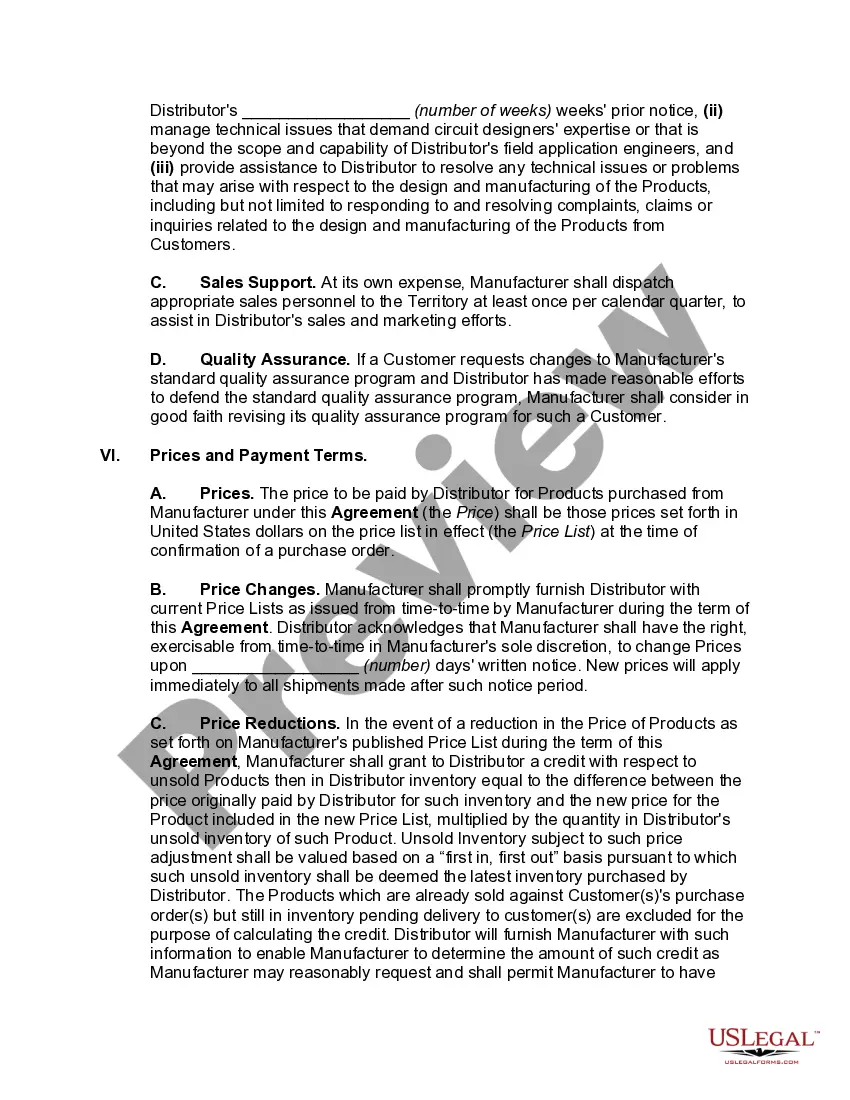
How to fill out International Nonexclusive Distributorship Agreement Between United States Manufacturer And Foreign Distributor?
If you desire to obtain, download, or create valid document templates, utilize US Legal Forms, the largest collection of legal forms available online.
Make use of the site’s straightforward and user-friendly search feature to find the documents you need.
An array of templates for business and personal purposes are organized by categories and states, or keywords.
Step 3. If you are not satisfied with the document, use the Search field at the top of the screen to find alternate versions of the legal document template.
Step 4. Once you have found the form you want, click the Get now button. Select the pricing plan you prefer and enter your credentials to register for an account.
- Utilize US Legal Forms to locate the Arkansas International Nonexclusive Distributorship Agreement between United States Manufacturer and Foreign Distributor with just a few clicks.
- If you are already a US Legal Forms user, Log In to your account and click the Download button to obtain the Arkansas International Nonexclusive Distributorship Agreement between United States Manufacturer and Foreign Distributor.
- You can also access forms you previously acquired in the My documents tab of your account.
- If you are using US Legal Forms for the first time, follow the steps below.
- Step 1. Ensure you have selected the form for your relevant city/state.
- Step 2. Use the Preview option to review the form’s content. Don’t forget to read the description.
Form popularity
FAQ
Most U.S. courts interpreting the CISG say, "no." These courts have held that the CISG does not apply to distribution agreements because they merely "create a framework for the future sale of goods".
A distributor agreement, also known as a distribution agreement, is a contract between channel partners that stipulates the responsibilities of both parties.
Products: The agreement should specify what products, product lines, or brands are included under the agreement. The agreement should also address whether and to what extent any new brands developed or acquired by the supplier would be included, or specifically, excluded from the agreement.
Parts of a Distribution AgreementNames and addresses of both parties.Sale terms and conditions.Contract effective dates.Marketing and intellectual property rights.Defects and returns provisions.Severance terms.Returned goods credits and costs.Exclusivity from competing products.More items...
Distribution agreements define the terms and conditions under which a distributor may sell products provided by a supplier. Such an agreement may be for a limited term, and be further restricted by territory and distribution channel.
An international distribution agreement is essentially a contract that creates a framework for a business relationship between global parties. To ensure effective and efficient transactions, an international distribution agreement should be comprehensive.
An agency distribution agreement creates a fiduciary relationship between the agent and the manufacturer, allowing the agent to create legal relationships between the manufacturer and its customers.
A distributorship agreement is a document that creates a relationship of distributorship between a manufacturer and a distributor. The agreement confers on the distributor the right to supply the manufacturer's goods within a region or regions.
An example of a distributor is a person who sells Tupperware home products. An example of a distributor is the part in a gas lawnmower that controls the flow of electrical currents to spark plugs. One that markets or sells merchandise, especially a wholesaler.
What Constitutes the Dealership Agreements?Purpose of the agreement.Tenure of the Agreement.The obligation of the parties, which may include.The procedure of supply and return of goods.Promotion and training.Invoices and the mode of payment.Any restrictions upon the parties.Termination of the dealership.More items...