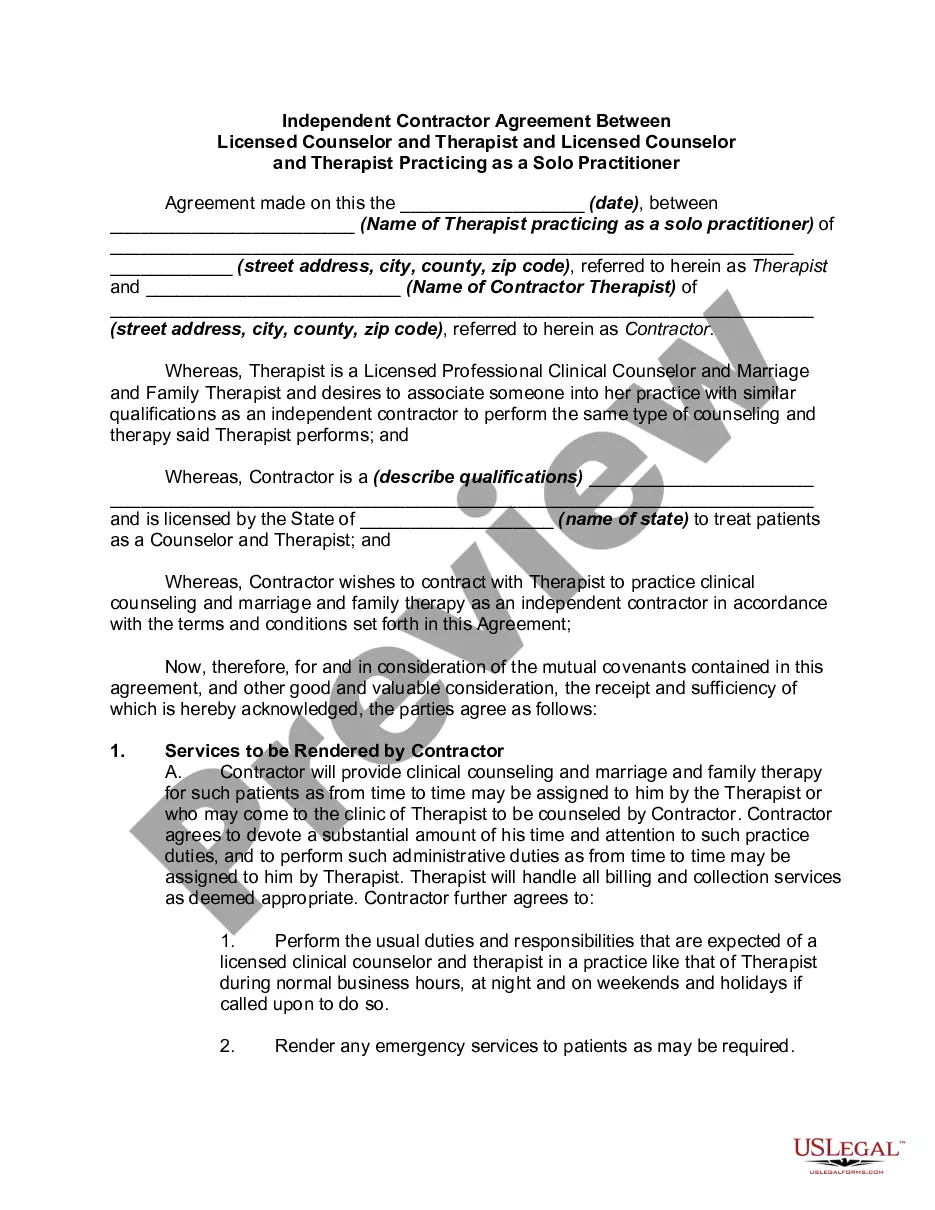
Arkansas Independent Contractor Agreement Between Licensed Counselor and Therapist and Licensed Counselor and Therapist Practicing as a Solo Practitioner

State:
Multi-State
Control #:
US-02565BG
Format:
Word; 
Rich Text
Instant download

Description

An independent contractor is a person or business who performs services for another person pursuant to an agreement and who is not subject to the other's control, or right to control, the manner and means of performing the services. The exact nature of the independent contractor's relationship with the hiring party is important since an independent contractor pays his/her own Social Security, income taxes without payroll deduction, has no retirement or health plan rights, and often is not entitled to worker's compensation coverage. The traditional tests to determine whether a worker is an employee or independent contractor involve the concept of control. The Internal Revenue Service (IRS) developed 20 factors used to determine whether a worker is an independent contractor under the common law. A "yes" answer to any of these questions would be evidence of an employer-employee relationship.

" Does the principal provide instructions to the worker about when, where, and how he or she is to perform the work?


" Does the principal provide training to the worker?

" Are the services provided by the worker integrated into the principal's business operations?

" Must the services be rendered personally by the worker?

" Does the principal hire, supervise and pay assistants to the worker?

" Is there a continuing relationship between the principal and the worker?

" Does the principal set the work hours and schedule?

" Does the worker devote substantially full time to the business of the principal?

" Is the work performed on the principal's premises?

" Is the worker required to perform the services in an order or sequence set by the principal?

" Is the worker required to submit oral or written reports to the principal?

" Is the worker paid by the hour, week, or month?

" Does the principal have the right to discharge the worker at will?

" Can the worker terminate his or her relationship with the principal any time he or she wishes without incurring liability to the principal?

" Does the principal pay the business or traveling expenses of the worker?

A "yes" answer to any of these questions would be evidence of an independent contractor relationship.


" Does the worker furnish significant tools, materials and equipment?

" Does the worker have a significant investment in facilities?

" Can the worker realize a profit or loss as a result of his or her services?

" Does the worker provide services for more than one firm at a time?

" Does the worker make his or her services available to the general public?
Free preview
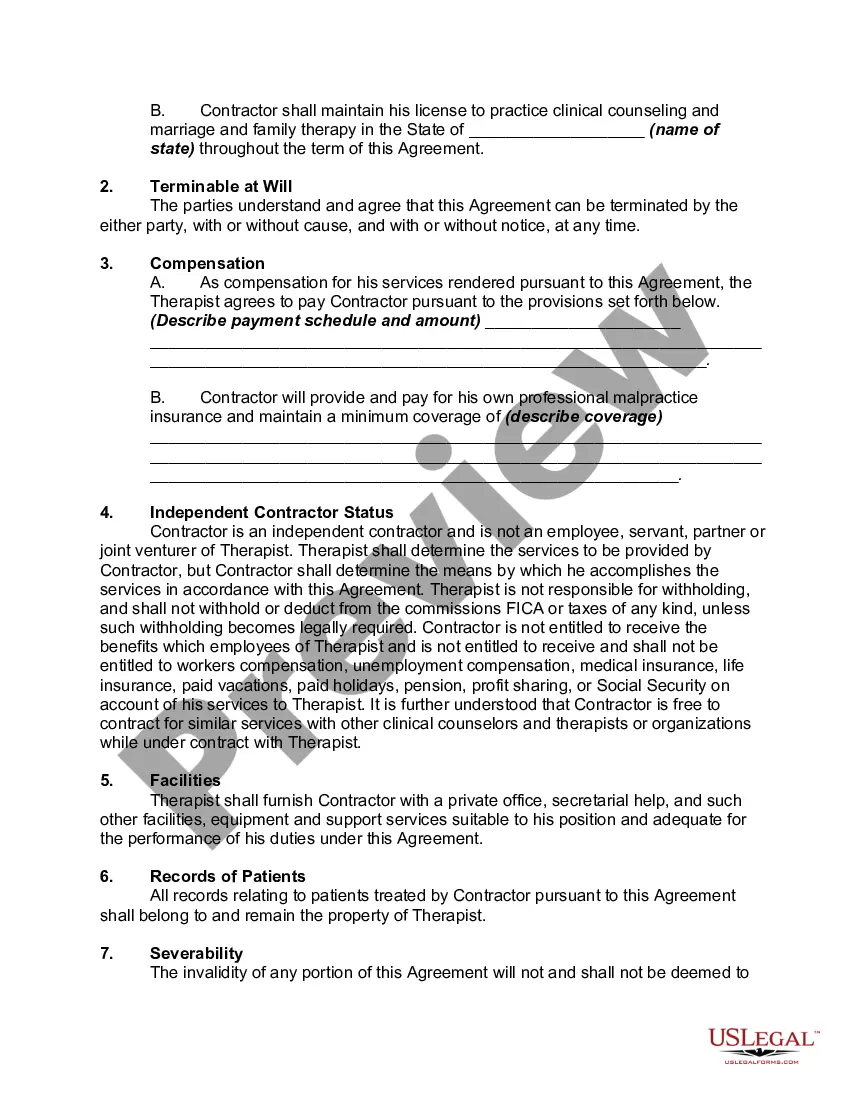
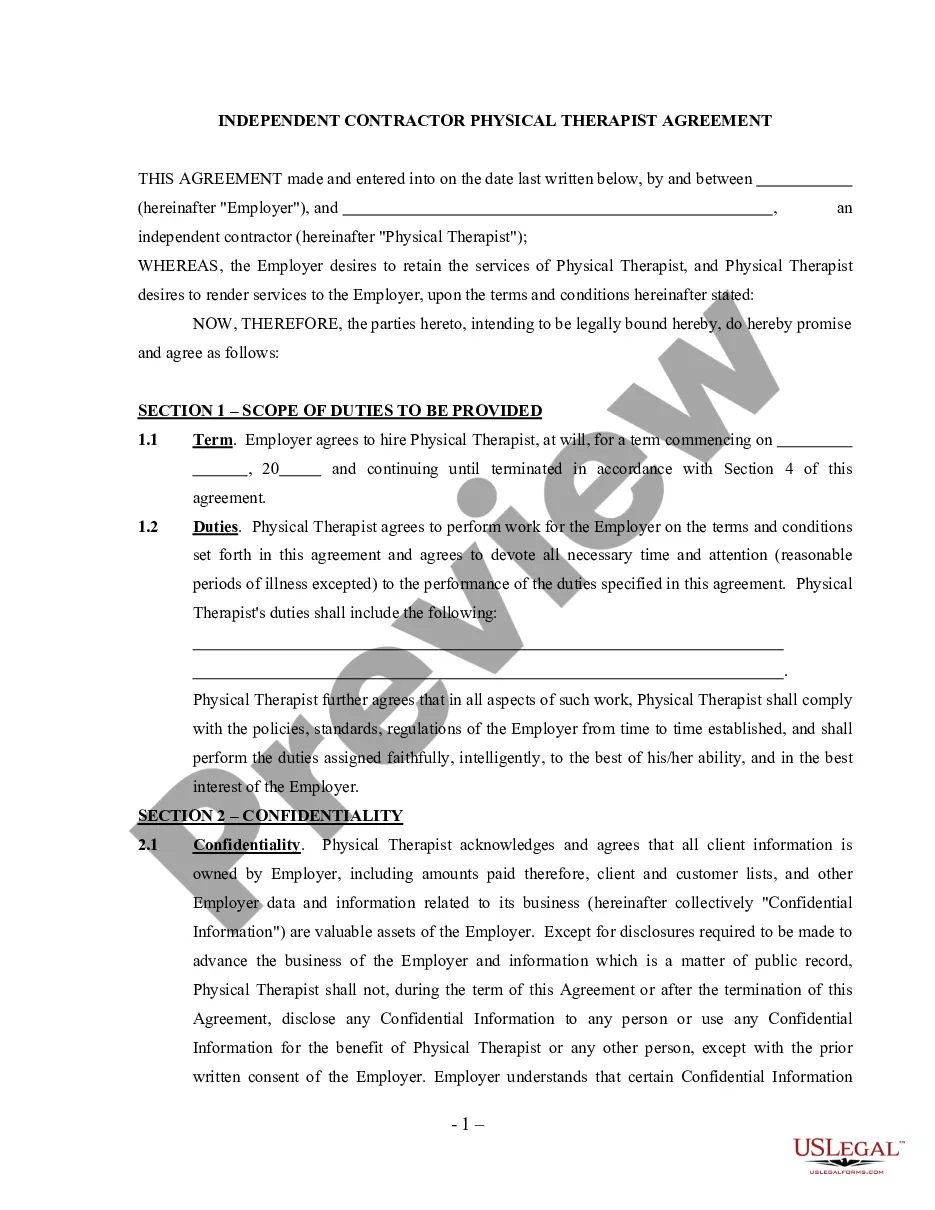
  • Preview Independent Contractor Agreement Between Licensed Counselor and Therapist and Licensed Counselor and Therapist Practicing as a Solo Practitioner
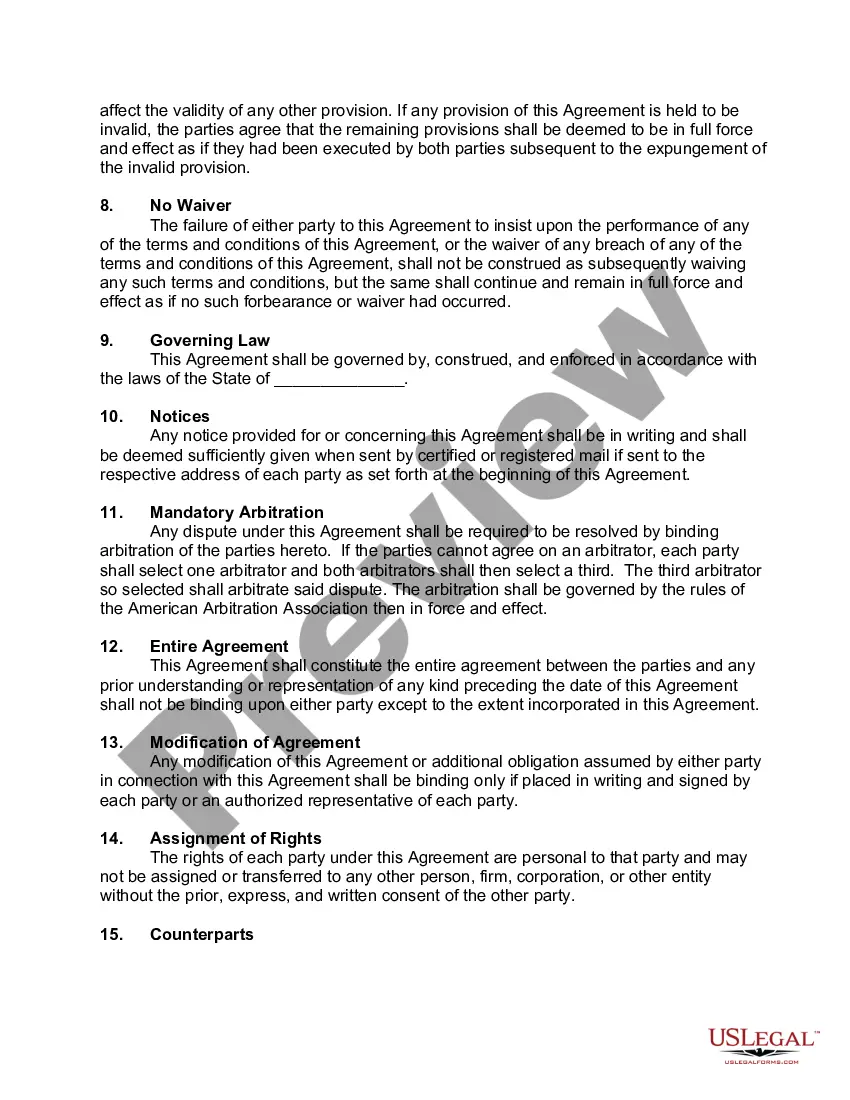
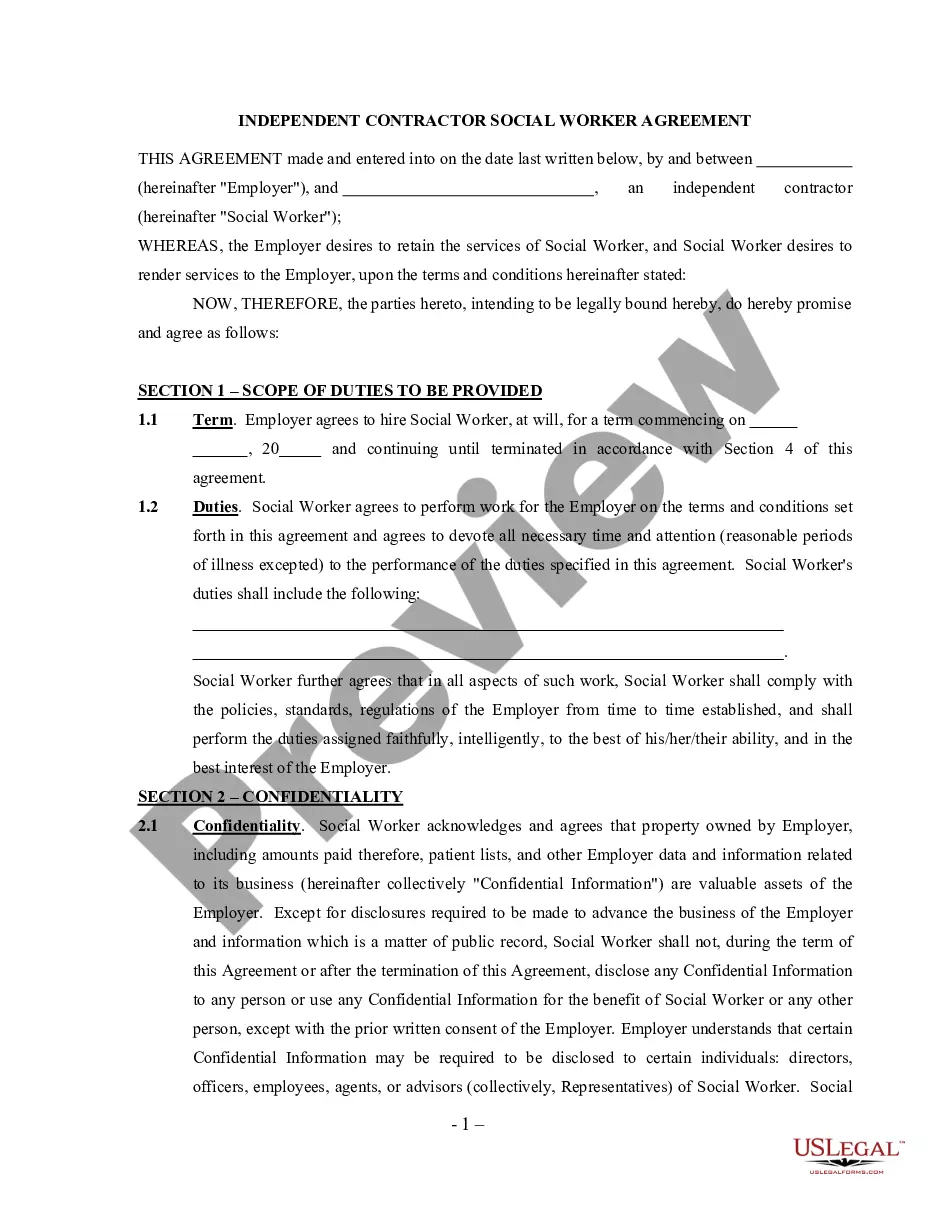
  • Preview Independent Contractor Agreement Between Licensed Counselor and Therapist and Licensed Counselor and Therapist Practicing as a Solo Practitioner
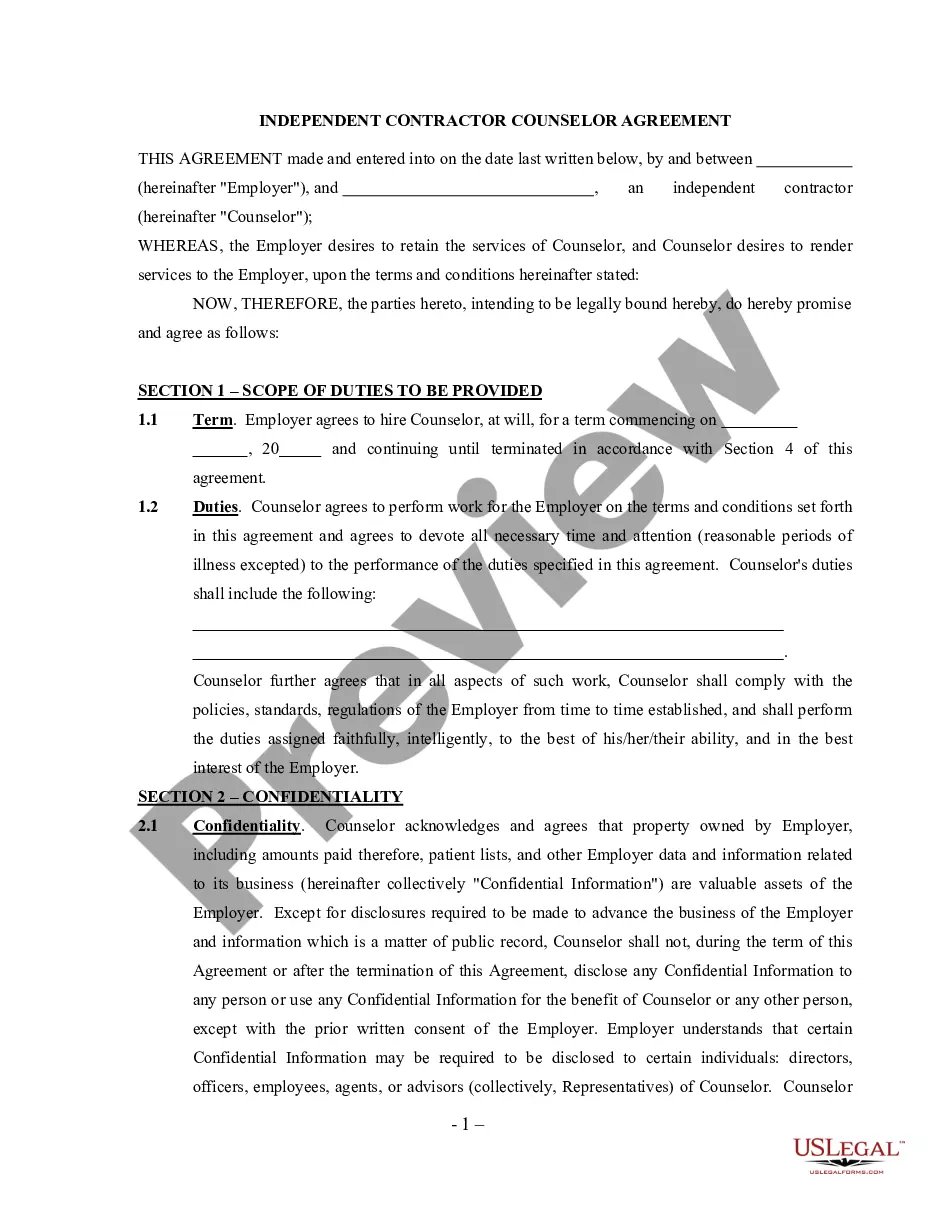
  • Preview Independent Contractor Agreement Between Licensed Counselor and Therapist and Licensed Counselor and Therapist Practicing as a Solo Practitioner
  • Preview Independent Contractor Agreement Between Licensed Counselor and Therapist and Licensed Counselor and Therapist Practicing as a Solo Practitioner

How to fill out Independent Contractor Agreement Between Licensed Counselor And Therapist And Licensed Counselor And Therapist Practicing As A Solo Practitioner?

If you want to retrieve, download, or create legal document templates, utilize US Legal Forms, the largest collection of legal forms available online.

Take advantage of the site's straightforward and user-friendly search to locate the documents you require.

Various templates for business and personal use are organized by categories and states, or keywords.

Step 4. Once you have found the form you need, select the Acquire Now option. Choose your preferred pricing plan and enter your details to register for an account.

Step 5. Proceed with the payment. You can use your credit card or PayPal account to complete the transaction.

  1. Use US Legal Forms to obtain the Arkansas Independent Contractor Agreement Between Licensed Counselor and Therapist and Licensed Counselor and Therapist Practicing as a Solo Practitioner in just a few clicks.
  2. If you are already a US Legal Forms user, Log In to your account and click the Download option to locate the Arkansas Independent Contractor Agreement Between Licensed Counselor and Therapist and Licensed Counselor and Therapist Practicing as a Solo Practitioner.
  3. You can also access forms you have previously downloaded in the My documents tab of your account.
  4. If you are using US Legal Forms for the first time, follow the instructions below.
  5. Step 1. Ensure you have selected the form for your specific city/state.
  6. Step 2. Utilize the Review option to check the form's content. Don't forget to read the description.
  7. Step 3. If you are dissatisfied with the form, use the Lookup field at the top of the screen to find other variations of the legal document template.

Form popularity

FAQ

PLLC stands for Professional Limited Liability Company. This structure is popular among therapists because it offers liability protection while allowing them to operate as individual professionals. By establishing a PLLC, you can protect your personal assets from potential business debts and lawsuits. Additionally, using an Arkansas Independent Contractor Agreement Between Licensed Counselor and Therapist and Licensed Counselor and Therapist Practicing as a Solo Practitioner can clarify the contractual obligations within the PLLC, ensuring a solid foundation for your practice.

When considering the best business structure for a therapist, many professionals find that forming a Professional Limited Liability Company (PLLC) offers strong legal protection and flexibility. A PLLC allows therapists to separate their personal assets from their business liabilities, minimizing risks. Moreover, an Arkansas Independent Contractor Agreement Between Licensed Counselor and Therapist and Licensed Counselor and Therapist Practicing as a Solo Practitioner can clearly outline terms between parties, further safeguarding interests. Ultimately, the decision should align with your specific business goals.

Yes, you can operate a private practice with a Licensed Professional Counselor (LPC). It is essential to establish clear agreements, such as the Arkansas Independent Contractor Agreement Between Licensed Counselor and Therapist and Licensed Counselor and Therapist Practicing as a Solo Practitioner. This type of agreement clarifies the roles and responsibilities, ensuring a smooth operation while providing quality therapy services to clients.

Yes, you can own a therapy practice without being a therapist. However, you must ensure compliance with state regulations. For instance, using an Arkansas Independent Contractor Agreement Between Licensed Counselor and Therapist and Licensed Counselor and Therapist Practicing as a Solo Practitioner can help structure your practice legally. This agreement protects both the business owner and the therapists working under the practice.

While both a licensed therapist and a licensed counselor are trained professionals, the terminology often reflects differing areas of specialization. Licensed therapists typically have a broader range of therapeutic training and may engage in varied therapeutic techniques. In relation to the Arkansas Independent Contractor Agreement Between Licensed Counselor and Therapist and Licensed Counselor and Therapist Practicing as a Solo Practitioner, knowing these distinctions helps clients select the right professional for their care needs.

Counselors may refer to themselves as therapists, depending on their level of training and the regulations in their state. However, it’s essential for them to adhere to any licensure designations that apply to their practice. This distinction is relevant when forming an Arkansas Independent Contractor Agreement Between Licensed Counselor and Therapist and Licensed Counselor and Therapist Practicing as a Solo Practitioner, as clarity in titles helps protect the integrity of mental health practices.

The terms licensed counselor and licensed therapist often overlap but can refer to different scopes of practice. A licensed counselor generally focuses on guiding individuals through specific issues, using talk therapy techniques, while an independently licensed therapist may utilize a wider range of therapeutic methods. When you enter into an Arkansas Independent Contractor Agreement Between Licensed Counselor and Therapist and Licensed Counselor and Therapist Practicing as a Solo Practitioner, understanding these nuances can help you choose the right professional for your needs.

PLLC stands for Professional Limited Liability Company, a business structure that offers legal protection and tax benefits to licensed professionals. For therapists, forming a PLLC can help limit personal liability while allowing them to operate their practice effectively. In the context of the Arkansas Independent Contractor Agreement Between Licensed Counselor and Therapist and Licensed Counselor and Therapist Practicing as a Solo Practitioner, establishing a PLLC can enhance a therapist's professional credibility and stability.

An independently licensed therapist is a mental health professional who has secured a full license to practice therapy independently, without supervision. This means they have met all educational and training requirements and have passed a licensing examination. For those working under an Arkansas Independent Contractor Agreement Between Licensed Counselor and Therapist and Licensed Counselor and Therapist Practicing as a Solo Practitioner, being independently licensed is fundamental for providing autonomous, high-quality therapy.

A licensed therapist has completed the necessary educational, training, and examination requirements to obtain a professional license, allowing them to practice independently. In contrast, a non-licensed therapist typically lacks formal certification or is still completing their training. When entering into an Arkansas Independent Contractor Agreement Between Licensed Counselor and Therapist and Licensed Counselor and Therapist Practicing as a Solo Practitioner, choosing a licensed therapist is essential for ensuring quality care and legal compliance.

Trusted and secure by over 3 million people of the world’s leading companies

Arkansas Independent Contractor Agreement Between Licensed Counselor and Therapist and Licensed Counselor and Therapist Practicing as a Solo Practitioner