Arkansas Beneficiary or Transfer on Death Deed or TOD - Husband and Wife or Two Individuals to Husband and Wife or Two Individuals
Overview of this form
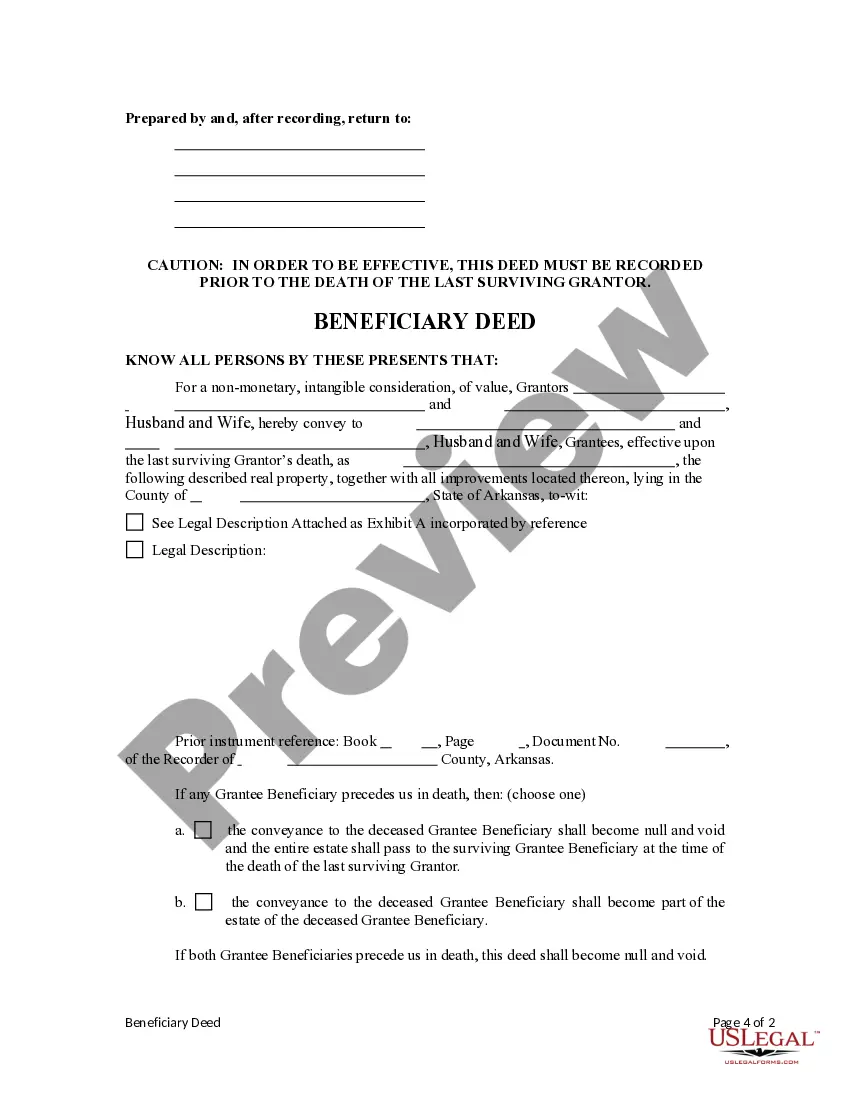
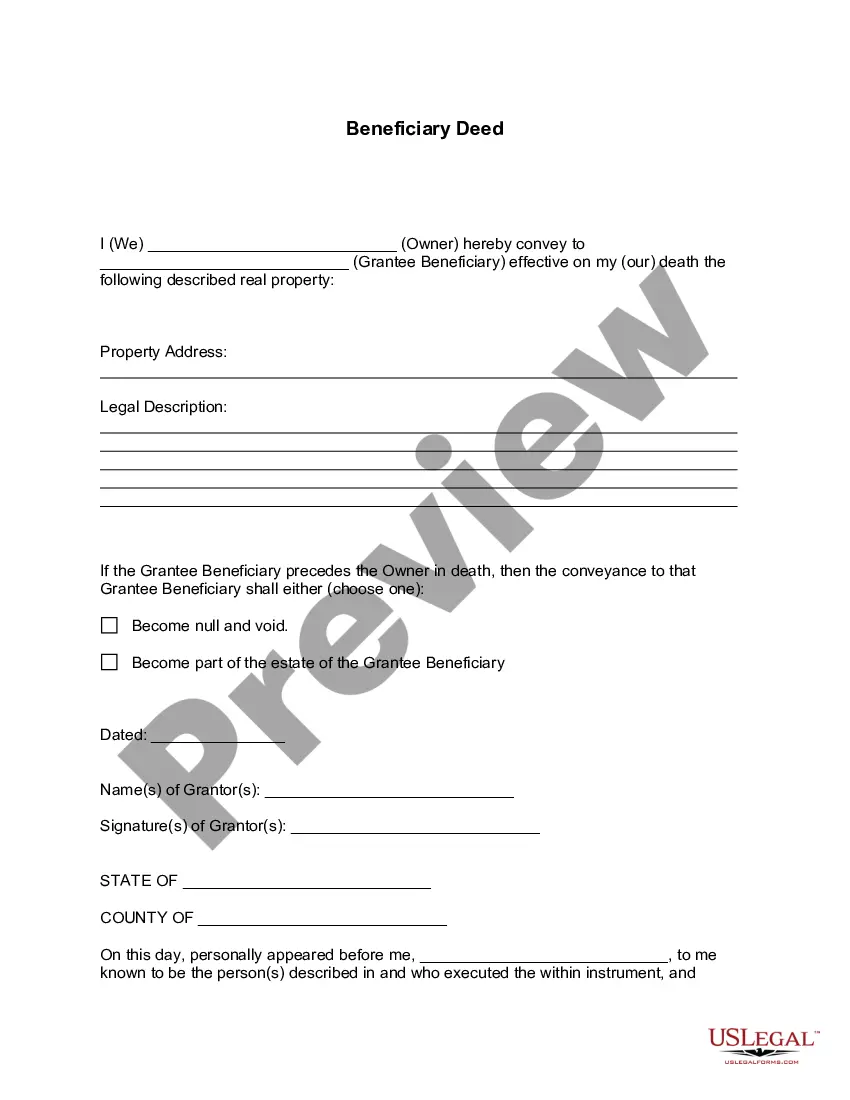
This form is a Transfer on Death Deed (TOD) or Beneficiary Deed specifically designed for use by two individuals or a husband and wife. The form allows you to designate beneficiaries who will inherit the property upon the death of the grantors while avoiding probate. Unlike traditional deeds, this deed remains revocable until death, which provides flexibility for the grantors. If one of the designated beneficiaries does not survive the grantors, their interest will pass according to specific stipulations outlined in the form.
Key parts of this document
- Identification of the grantors (owners of the property).
- Designation of beneficiaries who will inherit the property.
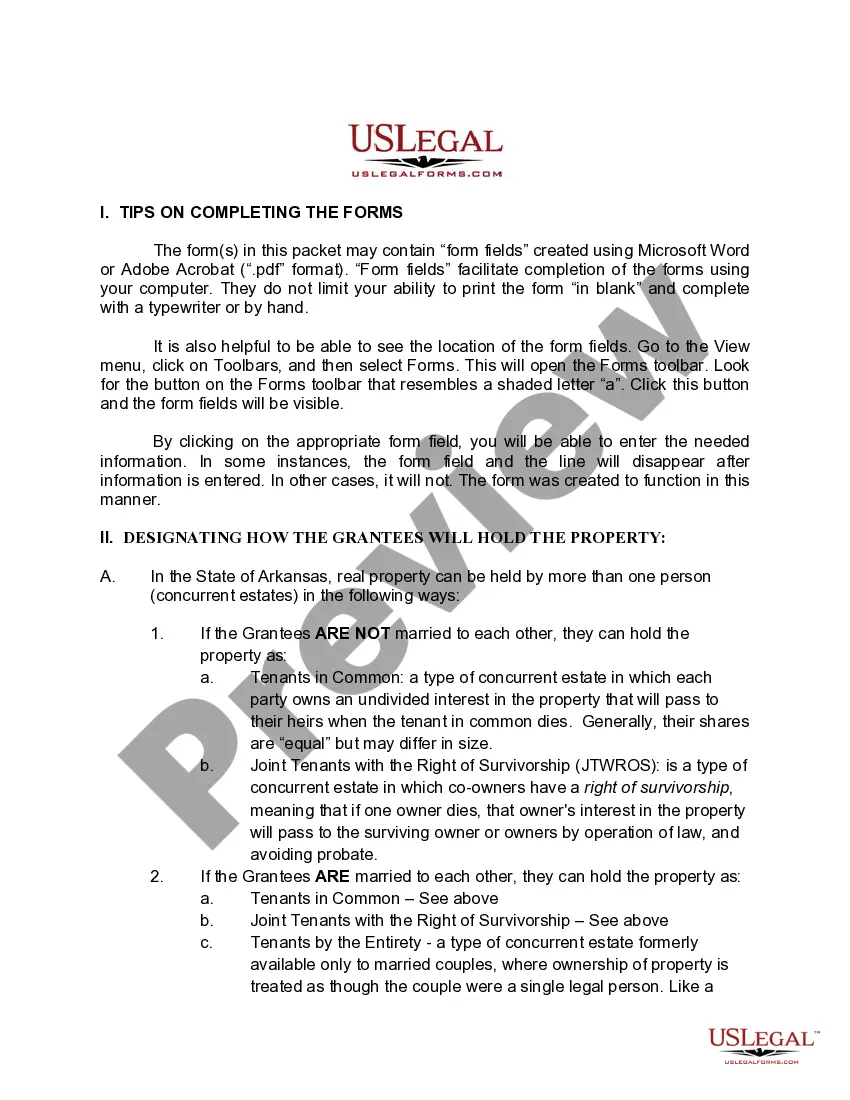
- Specification of how the property will be held (e.g., as tenants in common or joint tenants with right of survivorship).
- Revocation clause allowing grantors to revoke the deed before death.
- Legal compliance with state statutory laws.



When this form is needed
This form should be used when two individuals, such as spouses or partners, wish to designate a specific person or persons to inherit their property upon their deaths. It is particularly useful for avoiding probate and ensuring a smooth transfer of property ownership to the designated beneficiaries.
Who this form is for
- Couples who want to transfer their property to specified beneficiaries without probate.
- Individuals who co-own property and want to ensure that it passes to surviving co-owners or chosen heirs.
- Property owners seeking a revocable option for estate planning.
- Those looking to simplify the inheritance process for their heirs.
Instructions for completing this form
- Identify the grantors: List the full names of the individuals or couple who own the property.
- Specify the property: Clearly indicate the legal description of the property being deeded.
- Designate the beneficiaries: Enter the names of the beneficiaries who will inherit the property.
- Select how the property will be held: Choose whether the property will be held as tenants in common or joint tenants with right of survivorship.
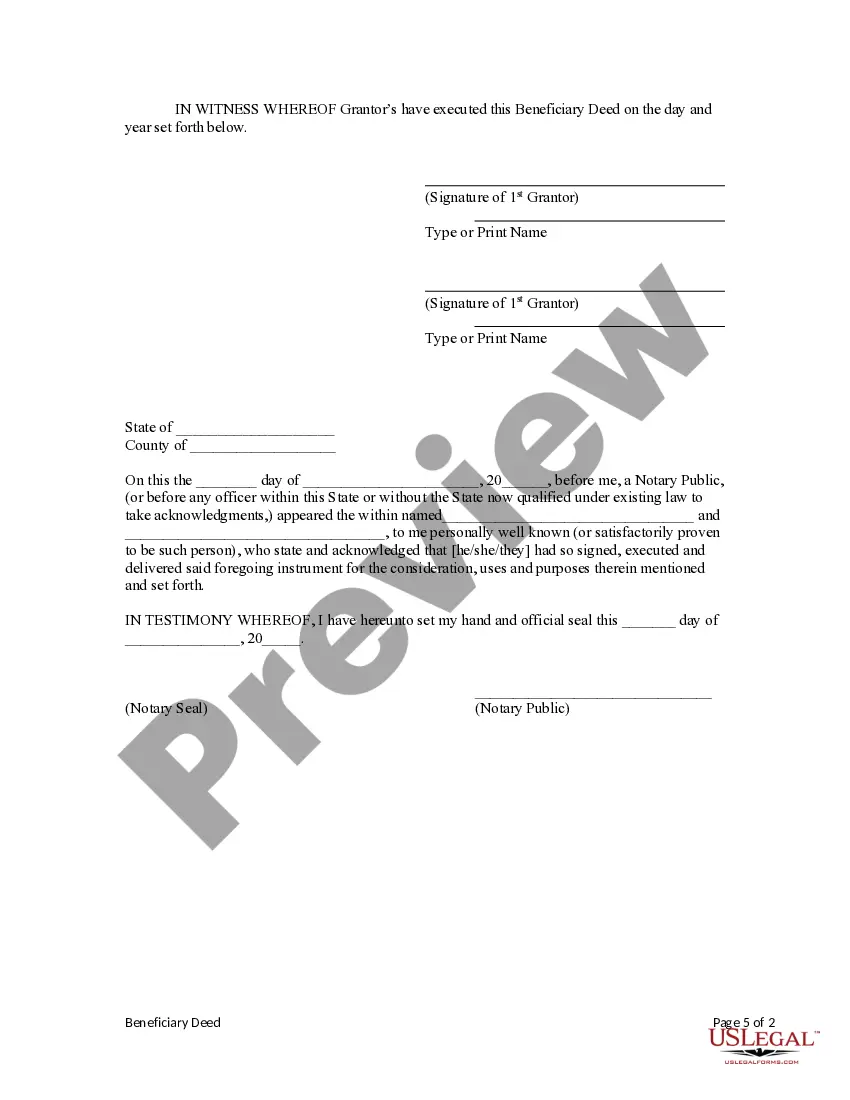
- Sign and date the form: Ensure that the grantors sign the deed in the presence of a notary if required.
Does this form need to be notarized?
This form typically does not require notarization unless specified by local law. However, having it notarized can help ensure that the document is legally recognized and may protect against future challenges to the deed.
Get your form ready online
Our built-in tools help you complete, sign, share, and store your documents in one place.
Make edits, fill in missing information, and update formatting in US Legal Forms—just like you would in MS Word.
Download a copy, print it, send it by email, or mail it via USPS—whatever works best for your next step.
Sign and collect signatures with our SignNow integration. Send to multiple recipients, set reminders, and more. Go Premium to unlock E-Sign.
If this form requires notarization, complete it online through a secure video call—no need to meet a notary in person or wait for an appointment.
We protect your documents and personal data by following strict security and privacy standards.

Make edits, fill in missing information, and update formatting in US Legal Forms—just like you would in MS Word.

Download a copy, print it, send it by email, or mail it via USPS—whatever works best for your next step.

Sign and collect signatures with our SignNow integration. Send to multiple recipients, set reminders, and more. Go Premium to unlock E-Sign.

If this form requires notarization, complete it online through a secure video call—no need to meet a notary in person or wait for an appointment.

We protect your documents and personal data by following strict security and privacy standards.
Typical mistakes to avoid
- Failing to clearly identify the property can lead to confusion during probate.
- Not specifying how the beneficiaries will hold the property, which could cause disputes later.
- Neglecting to provide accurate names and contact details of beneficiaries.
- Forgetting to sign the document or have it properly notarized if required.
Benefits of using this form online
- Convenience: Access the form anytime and complete it at your own pace.
- Editability: Easily fill in the required fields using a computer for clarity.
- Accessibility: Downloadable formats ensure that you have a copy at your fingertips.
Looking for another form?
Form popularity
FAQ
While beneficial, a beneficiary deed does come with some downsides, such as the potential for disputes among beneficiaries if not well-defined. Additionally, this deed can be violated or challenged if the property owner removes or alters beneficiaries without proper documentation. Considering the advantages of an Arkansas Beneficiary or Transfer on Death Deed or TOD - Husband and Wife or Two Individuals to Husband and Wife or Two Individuals can help you weigh these factors appropriately.
Yes, Arkansas permits the use of Transfer on Death Deeds, providing a straightforward way to transfer property upon death without the need for probate. This legal option ensures that your designated beneficiaries receive the property directly, making the process less burdensome. You can easily access templates for an Arkansas Beneficiary or Transfer on Death Deed or TOD - Husband and Wife or Two Individuals to Husband and Wife or Two Individuals through platforms like US Legal Forms.
Yes, there can be downsides to being a beneficiary. For instance, if the estate incurs debts or expenses, beneficiaries might have to address these before receiving property. It's essential to understand the implications of being named on an Arkansas Beneficiary or Transfer on Death Deed or TOD - Husband and Wife or Two Individuals to Husband and Wife or Two Individuals, as it can affect your financial situation in unexpected ways.
A beneficiary deed is generally considered a good idea for individuals looking to simplify the transfer of property upon death. It allows you to keep control of your property during your lifetime and ensures a smooth transfer without probate. Utilizing an Arkansas Beneficiary or Transfer on Death Deed or TOD - Husband and Wife or Two Individuals to Husband and Wife or Two Individuals can provide peace of mind for you and your loved ones.
Yes, you can name multiple beneficiaries on a Transfer on Death Deed in Arkansas. This allows you to designate several individuals as heirs who will receive the property upon your death. It is important to specify how the property should be divided among these individuals under the Arkansas Beneficiary or Transfer on Death Deed or TOD - Husband and Wife or Two Individuals to Husband and Wife or Two Individuals to avoid any confusion later.
The best deed to avoid probate in Arkansas is typically the Transfer on Death Deed, also known as a beneficiary deed. This deed allows you to transfer property directly to your beneficiaries without going through probate, ensuring a smoother transition. By choosing an Arkansas Beneficiary or Transfer on Death Deed or TOD - Husband and Wife or Two Individuals to Husband and Wife or Two Individuals, you can effectively bypass this often lengthy legal process.
A beneficiary deed itself does not directly avoid capital gains tax; however, it can help with tax implications upon transferring property. When a property is transferred through an Arkansas Beneficiary or Transfer on Death Deed or TOD - Husband and Wife or Two Individuals to Husband and Wife or Two Individuals, the property receives a stepped-up basis, which may reduce capital gains taxes for the inheritors. Always consult a tax professional for specific advice related to your situation.
To create a beneficiary deed in Arkansas, you need to prepare a legal document that designates beneficiaries for your property upon your death. It requires specific language and must be recorded with the county clerk where the property is located. Using a platform like US Legal Forms can simplify this process as they provide templates tailored for Arkansas Beneficiary or Transfer on Death Deed or TOD - Husband and Wife or Two Individuals to Husband and Wife or Two Individuals.
Yes, you can designate two beneficiaries on an Arkansas Beneficiary or Transfer on Death Deed or TOD - Husband and Wife or Two Individuals to Husband and Wife or Two Individuals. This feature allows you the flexibility to share your property after your passing, ensuring a smooth transfer according to your wishes. Utilizing tools such as USLegalForms can help you properly prepare these documents.
In Arkansas, you do not necessarily need a lawyer to create an Arkansas Beneficiary or Transfer on Death Deed or TOD - Husband and Wife or Two Individuals to Husband and Wife or Two Individuals. However, consulting with a legal professional can provide peace of mind and ensure that all paperwork is correct. Additionally, a lawyer can offer personalized guidance that is beneficial in navigating any complicated scenarios.