Alabama Employment At Will Policy
Description
Get your form ready online
Our built-in tools help you complete, sign, share, and store your documents in one place.
Make edits, fill in missing information, and update formatting in US Legal Forms—just like you would in MS Word.
Download a copy, print it, send it by email, or mail it via USPS—whatever works best for your next step.
Sign and collect signatures with our SignNow integration. Send to multiple recipients, set reminders, and more. Go Premium to unlock E-Sign.
If this form requires notarization, complete it online through a secure video call—no need to meet a notary in person or wait for an appointment.
We protect your documents and personal data by following strict security and privacy standards.

Make edits, fill in missing information, and update formatting in US Legal Forms—just like you would in MS Word.

Download a copy, print it, send it by email, or mail it via USPS—whatever works best for your next step.

Sign and collect signatures with our SignNow integration. Send to multiple recipients, set reminders, and more. Go Premium to unlock E-Sign.

If this form requires notarization, complete it online through a secure video call—no need to meet a notary in person or wait for an appointment.

We protect your documents and personal data by following strict security and privacy standards.
Looking for another form?
How to fill out Employment At Will Policy?
It's feasible to spend hours online looking for the legal document format that fulfills the state and federal requirements you need.
US Legal Forms provides thousands of legal templates that have been assessed by experts.
You can download or print the Alabama Employment At Will Policy from my service.
If available, use the Preview button to review the template as well.
- If you already have a US Legal Forms account, you can Log In and then click the Obtain button.
- After that, you can complete, modify, print, or sign the Alabama Employment At Will Policy.
- Each legal document you purchase is yours indefinitely.
- To acquire another copy of the purchased form, visit the My documents section and click the relevant button.
- If you're using the US Legal Forms website for the first time, follow the simple steps outlined below.
- First, ensure that you have selected the correct format for the county/town of your choice.
- Check the form description to confirm you have chosen the right form.
Form popularity
FAQ
The exception to the employment-at-will doctrine highlighted on platforms like Quizlet often refers to the public policy exception, similar to other sources. This exception asserts that employees cannot be terminated for reasons that contravene legal standards or public interest. Engaging with educational tools helps clarify these concepts and strengthen understanding of the Alabama Employment At Will Policy. For more detailed resources, consider using legal forms specifically tailored to navigate employment laws and their exceptions.
In addition to public policy and implied contract exceptions, the Alabama Employment At Will Policy is subject to legal standards like discrimination laws. Employees cannot be terminated based on race, gender, age, or other protected characteristics under federal and state laws. Employers must stay informed about these exceptions to avoid legal repercussions. Resources from platforms like US Legal Forms can provide valuable information on managing employment relationships effectively while adhering to these standards.
Common law rule exceptions to the Alabama Employment At Will Policy include the implied contract exception and the covenant of good faith and fair dealing. Under the implied contract exception, employees may have rights that arise from verbal promises or company policies suggesting job security. Additionally, the covenant of good faith and fair dealing means that terminations should not be retaliatory or malicious. Understanding these exceptions can help protect both employees and employers in the workplace.
To terminate an employee in Alabama, you should follow the guidelines of the Alabama Employment At Will Policy. It’s vital to document performance-related issues and communicate these to the employee prior to termination. While it’s generally straightforward, employers must ensure that the reasons for termination do not violate any legal protections. Utilizing resources like US Legal Forms can help ensure you follow proper protocols and maintain compliance with applicable laws during the termination process.
One notable exception to the Alabama Employment At Will Policy is the public policy exception. This concept protects employees from termination for reasons that violate state or federal laws, such as refusing to engage in illegal activities. Understanding this exception is essential for both employees and employers to navigate the legal landscape of employment in Alabama. It ensures that employees can uphold their rights without fear of losing their jobs due to unethical practices.
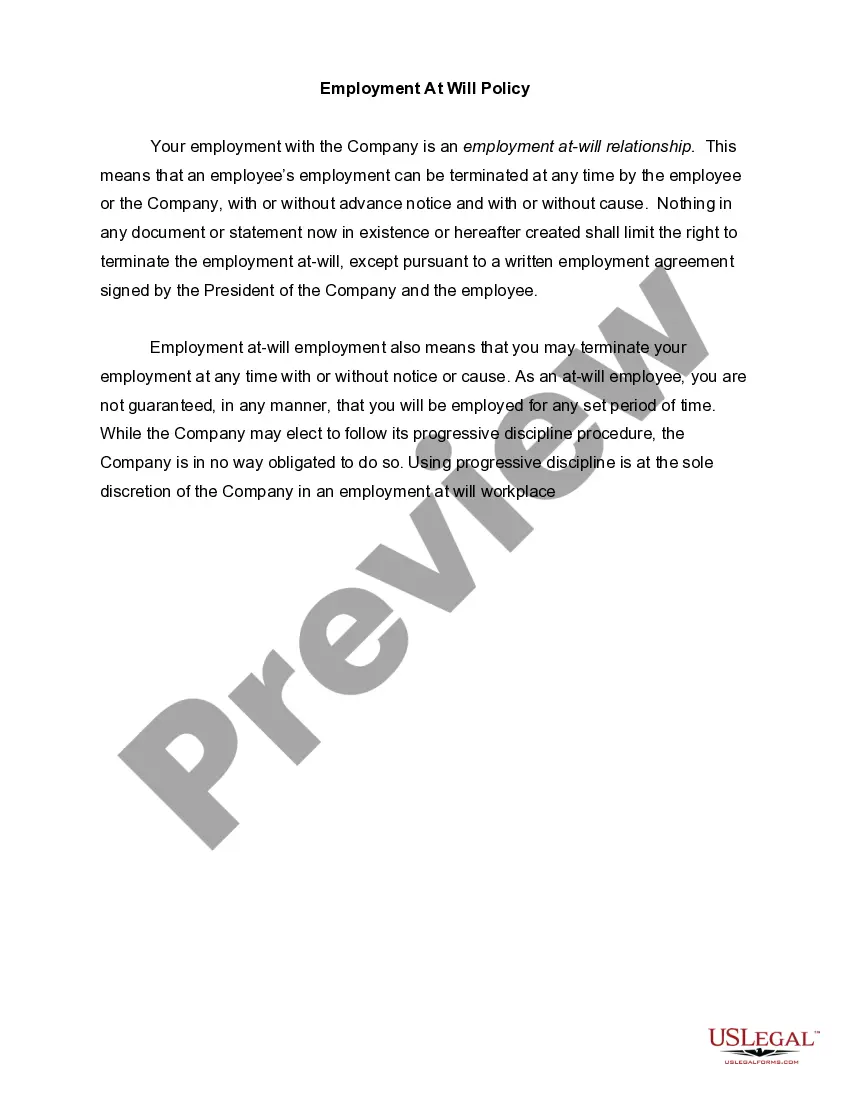
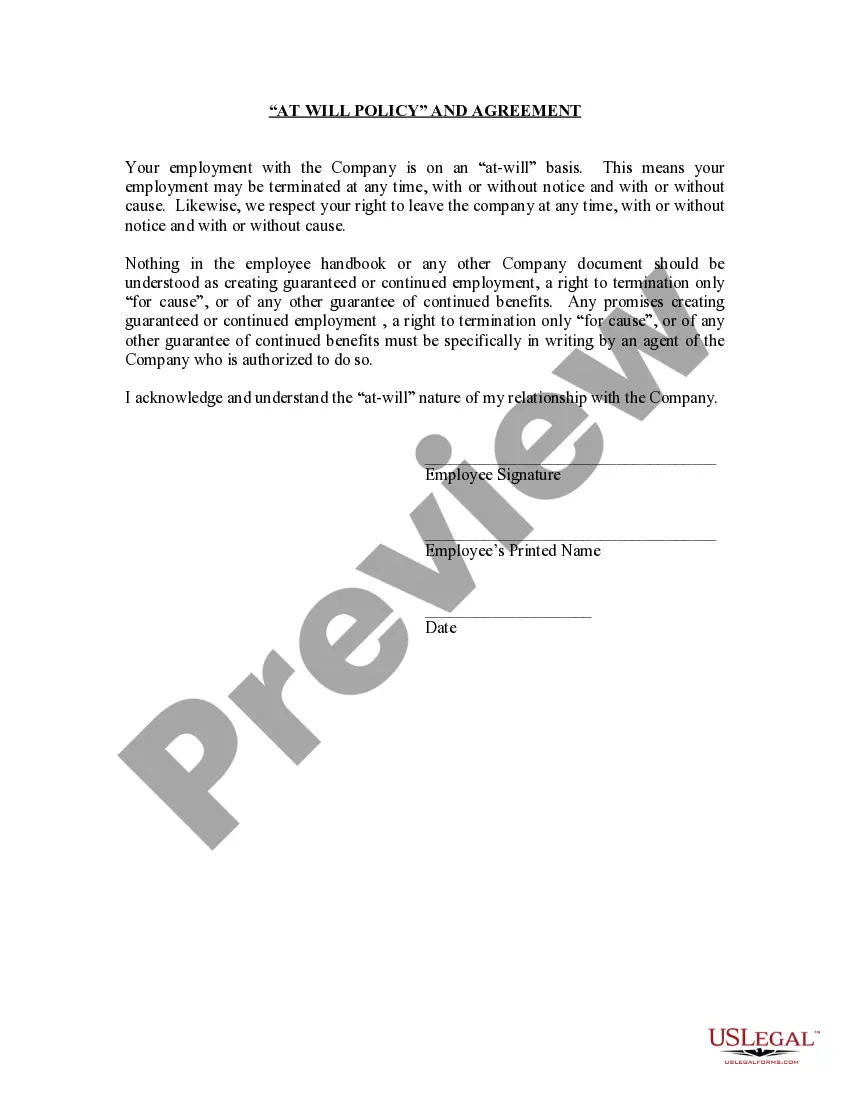
An at-will employment policy template provides a structured format for employers to create their own Alabama Employment At Will Policy. This template typically includes sections on the nature of at-will employment, the rights of both the employer and the employee, and any legal disclaimers. By using a reliable template, businesses can save time and ensure compliance with Alabama laws. US Legal Forms offers customizable templates that help you draft a policy tailored to your company's needs.
An example of an Alabama Employment At Will Policy includes a statement that outlines both the employer's and employee's rights. This policy may state that either party can terminate the employment relationship at any time for any legal reason. It can also clarify that the employer will not retaliate against employees who report violations or complaints. This ensures transparency and fosters trust between the employer and employees.
While it's not legally required to give two weeks' notice in Alabama, it is often recommended as a professional courtesy. Providing notice can help preserve relationships and ensure a smoother transition for both you and your employer. Keep in mind that the Alabama Employment At Will Policy does not mandate a formal resignation process, but best practices suggest giving notice when possible.
Yes, you can quit without giving notice in Alabama, as the unemployment rules generally allow for this. However, quitting without notice may have consequences, particularly if it impacts your relationship with your employer. It’s good practice to weigh the decision carefully and consider how it aligns with the Alabama Employment At Will Policy before making a move.
The three major exceptions to the employment at will doctrine include public policy, implied contracts, and covenants of good faith. Under the Alabama Employment At Will Policy, these exceptions protect employees who are terminated for reasons that violate public policy or when there’s an implied contract. Recognizing these exceptions is crucial, especially if you face unwanted job loss.