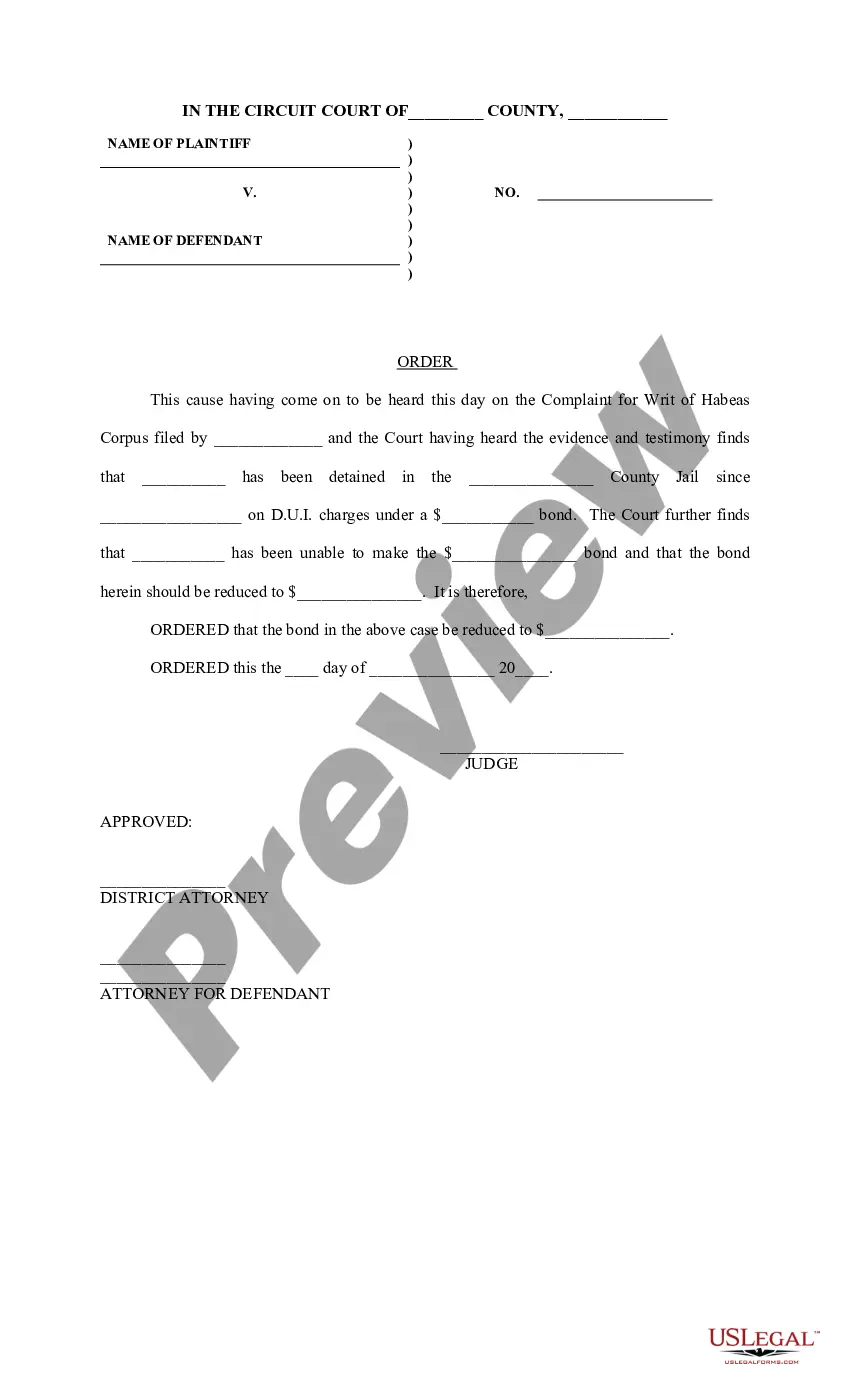
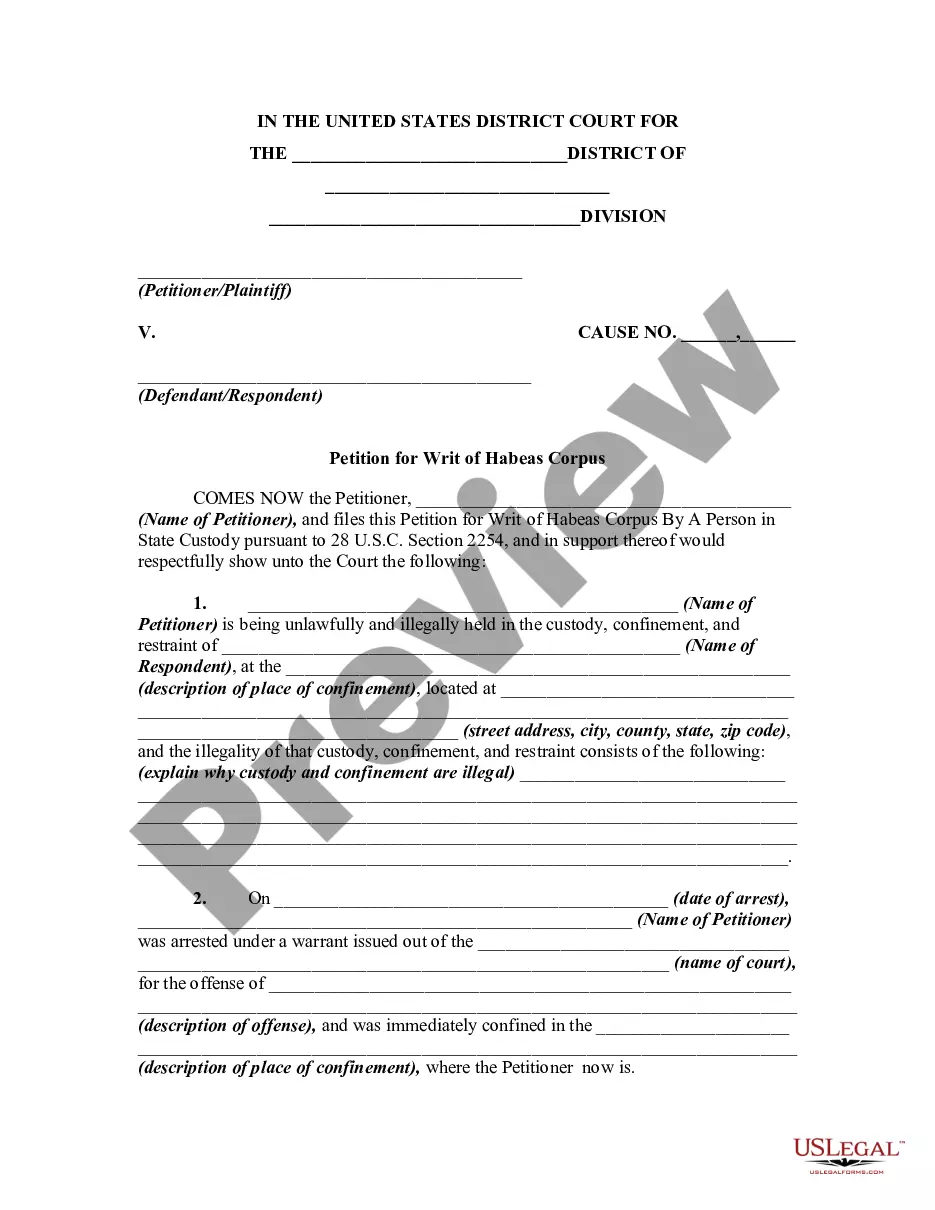
Alabama Complaint for Writ of Habeas Corpus
Description

Get your form ready online
Our built-in tools help you complete, sign, share, and store your documents in one place.
Make edits, fill in missing information, and update formatting in US Legal Forms—just like you would in MS Word.
Download a copy, print it, send it by email, or mail it via USPS—whatever works best for your next step.
Sign and collect signatures with our SignNow integration. Send to multiple recipients, set reminders, and more. Go Premium to unlock E-Sign.
If this form requires notarization, complete it online through a secure video call—no need to meet a notary in person or wait for an appointment.
We protect your documents and personal data by following strict security and privacy standards.

Make edits, fill in missing information, and update formatting in US Legal Forms—just like you would in MS Word.

Download a copy, print it, send it by email, or mail it via USPS—whatever works best for your next step.

Sign and collect signatures with our SignNow integration. Send to multiple recipients, set reminders, and more. Go Premium to unlock E-Sign.

If this form requires notarization, complete it online through a secure video call—no need to meet a notary in person or wait for an appointment.

We protect your documents and personal data by following strict security and privacy standards.
Looking for another form?
How to fill out Complaint For Writ Of Habeas Corpus?
Have you ever been in a situation where you require documentation for both professional or personal purposes nearly every day? There are numerous legal document templates available online, but finding ones you can trust is not straightforward. US Legal Forms offers a multitude of form templates, including the Alabama Complaint for Writ of Habeas Corpus, designed to comply with federal and state regulations.
If you are already familiar with the US Legal Forms website and possess an account, simply Log In. After that, you can download the Alabama Complaint for Writ of Habeas Corpus template.
If you do not have an account and wish to begin using US Legal Forms, follow these steps: Find the form you need and ensure it corresponds to the correct state/region. Use the Preview feature to review the form. Check the summary to confirm you have selected the correct form. If the form does not meet your requirements, utilize the Search field to locate the form that suits your needs. If you find the appropriate form, click on Get now. Select the pricing plan you desire, fill in the required information to create your account, and pay for your order using PayPal or credit card. Choose a convenient document format and download your copy.
- Access all the document templates you have purchased in the My documents menu.
- You can obtain another copy of the Alabama Complaint for Writ of Habeas Corpus at any time, if needed.
- Simply select the necessary form to download or print the template.
- Utilize US Legal Forms, the largest collection of legal forms, to save time and avoid errors.
- The service offers professionally crafted legal document templates for a variety of purposes.
- Create an account on US Legal Forms and start simplifying your life.
Form popularity
FAQ
The court must rule on a petition for writ of habeas corpus within 60 days after the petition is filed. (B) If the court fails to rule on the petition within 60 days of its filing, the petitioner may file a notice and request for ruling.
conviction habeas corpus petition challenges a criminal conviction or sentence because it is illegal or unconstitutional. In Alabama, Rule 32 of the Alabama Rules of Criminal Procedure governs state postconviction challenges to a conviction or sentence.
For example, if an individual was convicted on the basis that their skin color matched that of the perpetrator ing to eyewitnesses, but there is no other evidence against them, then the individual can appeal for habeas corpus in order to be freed from imprisonment.
What is a Rule 32 petition? A ?Rule 32 petition? is a petition that people can file to challenge their conviction in court where they were convicted. It's called a ?Rule 32 petition? because it's filed under Rule 32 of the Alabama Rules of Criminal Procedure.
The ?Great Writ? of habeas corpus is a fundamental right in the Constitution that protects against unlawful and indefinite imprisonment. Translated from Latin it means ?show me the body.? Habeas corpus has historically been an important instrument to safeguard individual freedom against arbitrary executive power.
Common arguments for granting a habeas corpus petition include: You had incompetent legal counsel or a competent attorney was not provided. ... You were convicted under an unconstitutional law; You were convicted under a law that has since been changed, so what you did is no longer considered a crime;
