Alabama Motion for Extension of Time
About this form
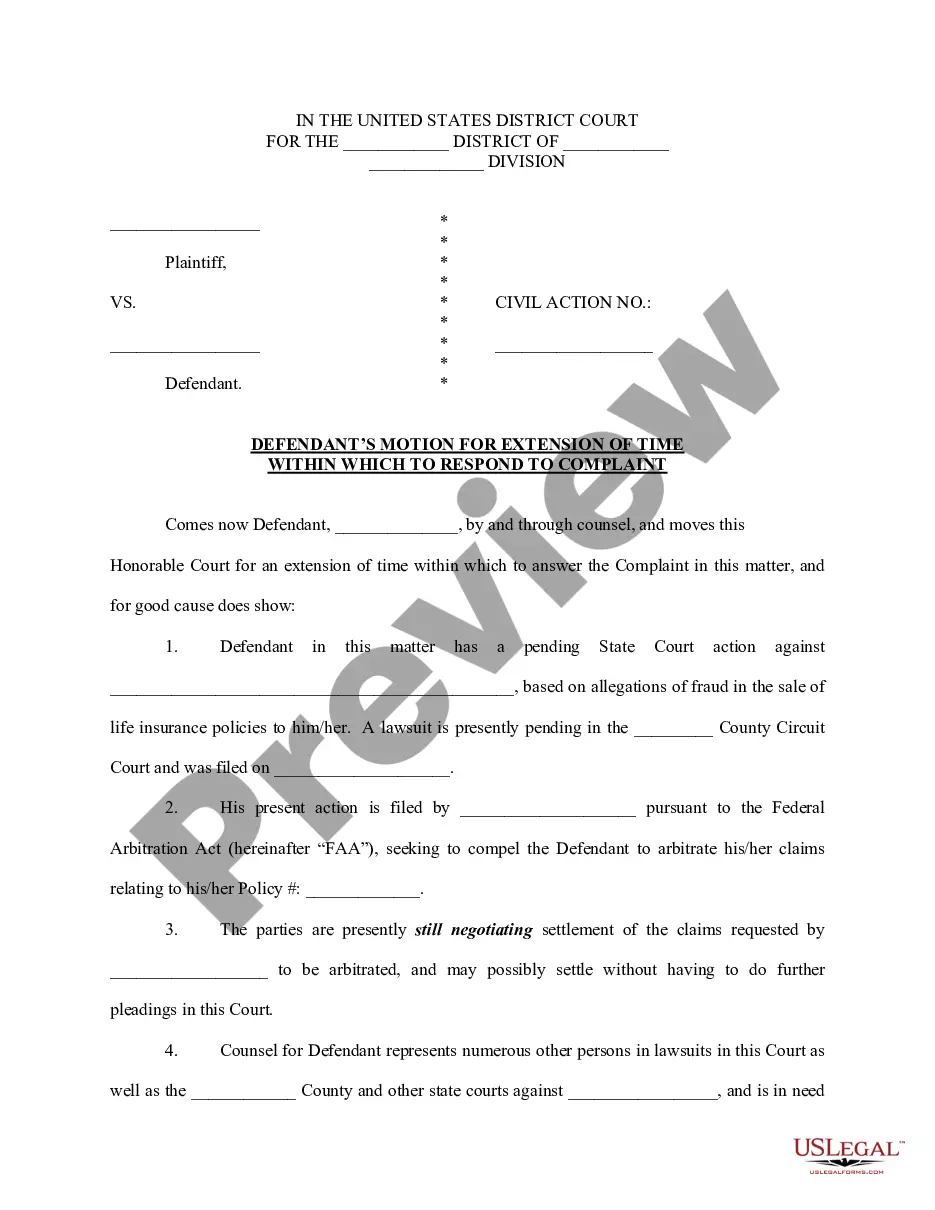
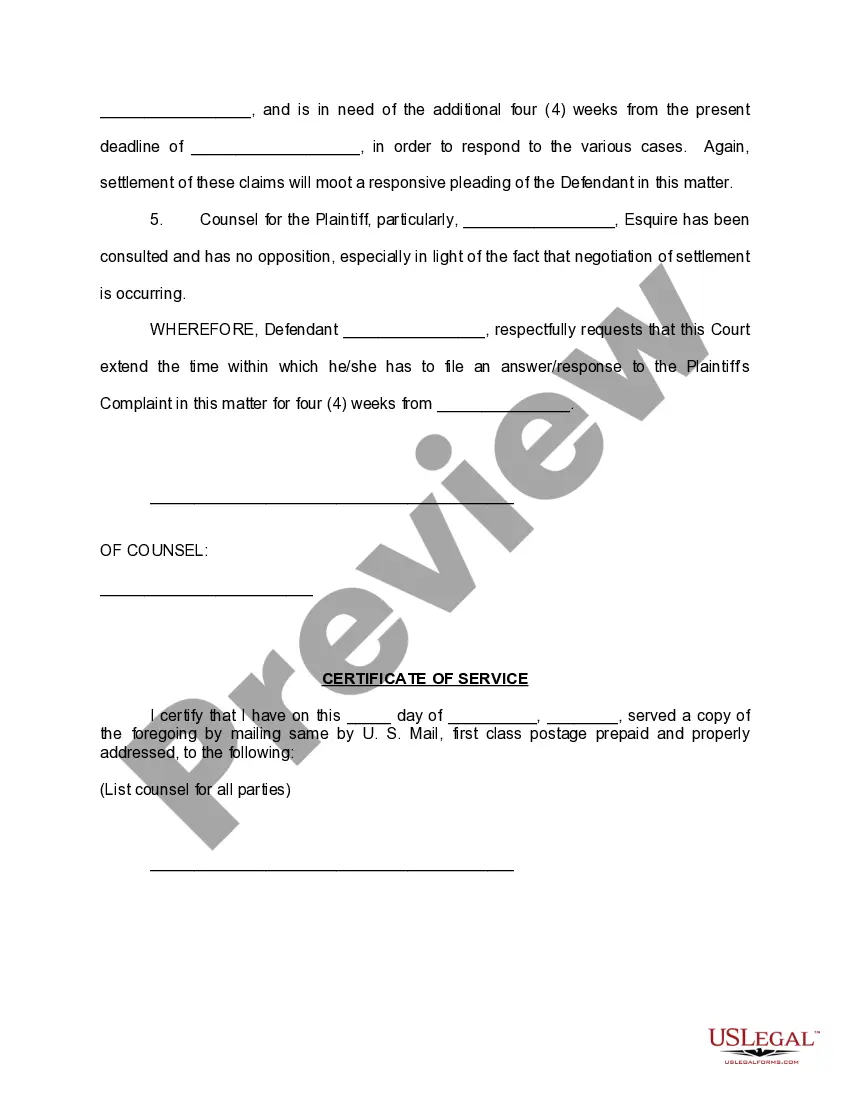
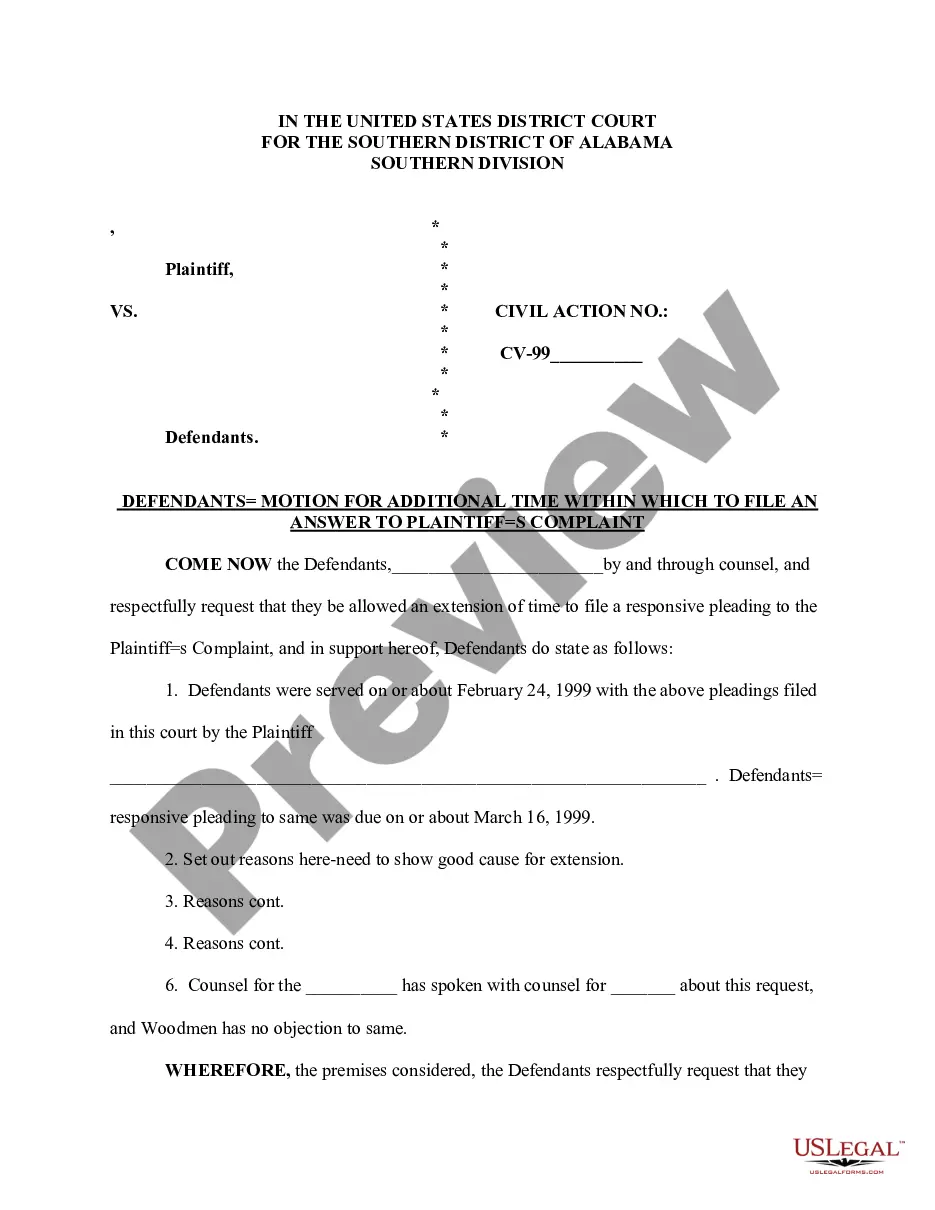
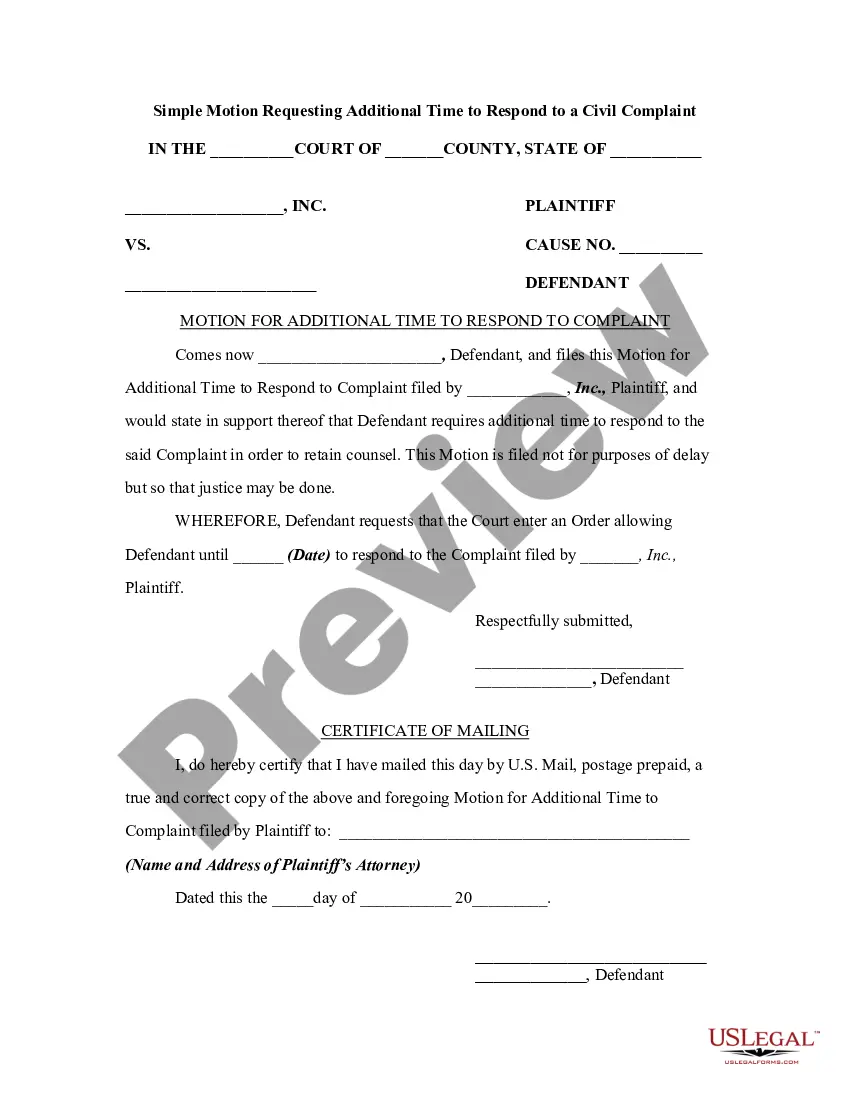
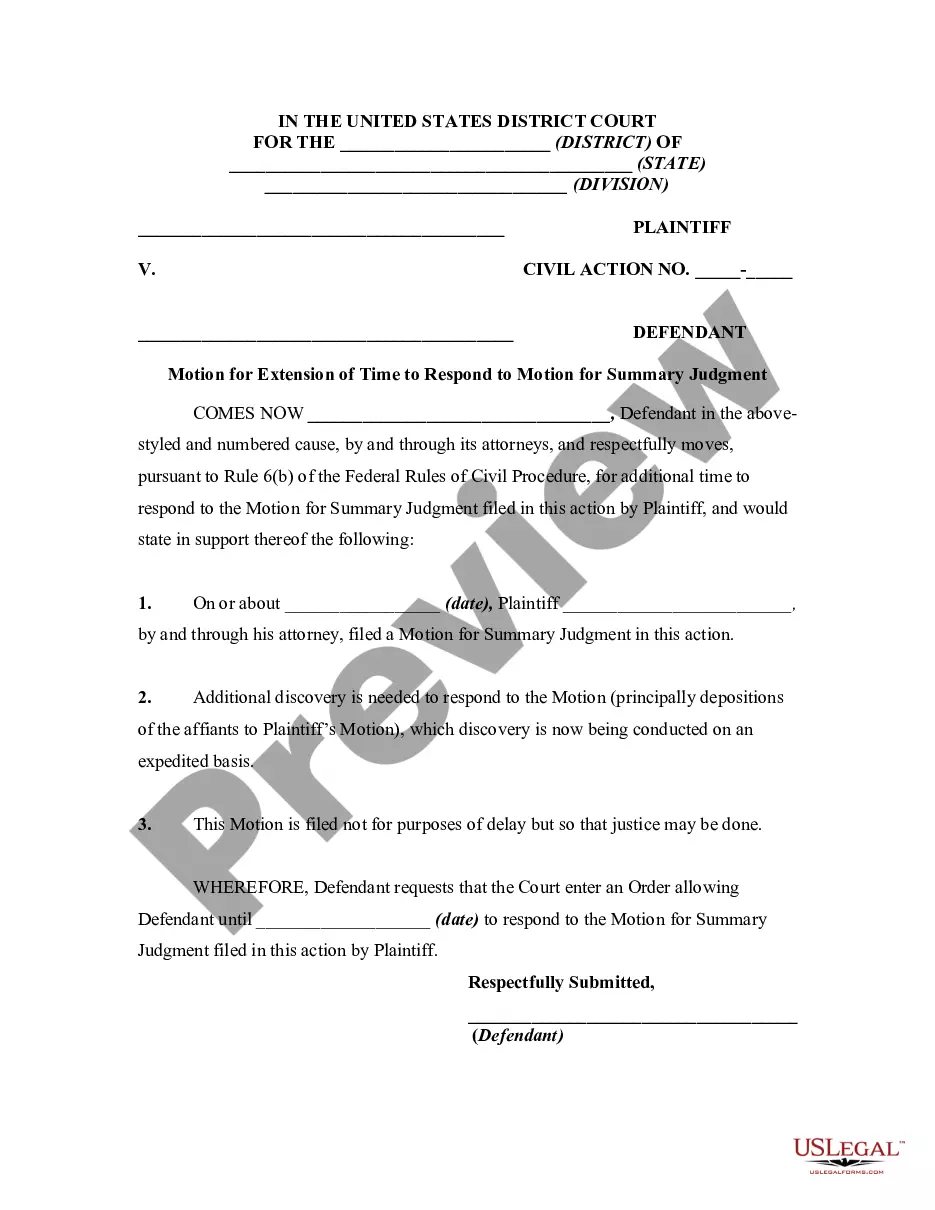
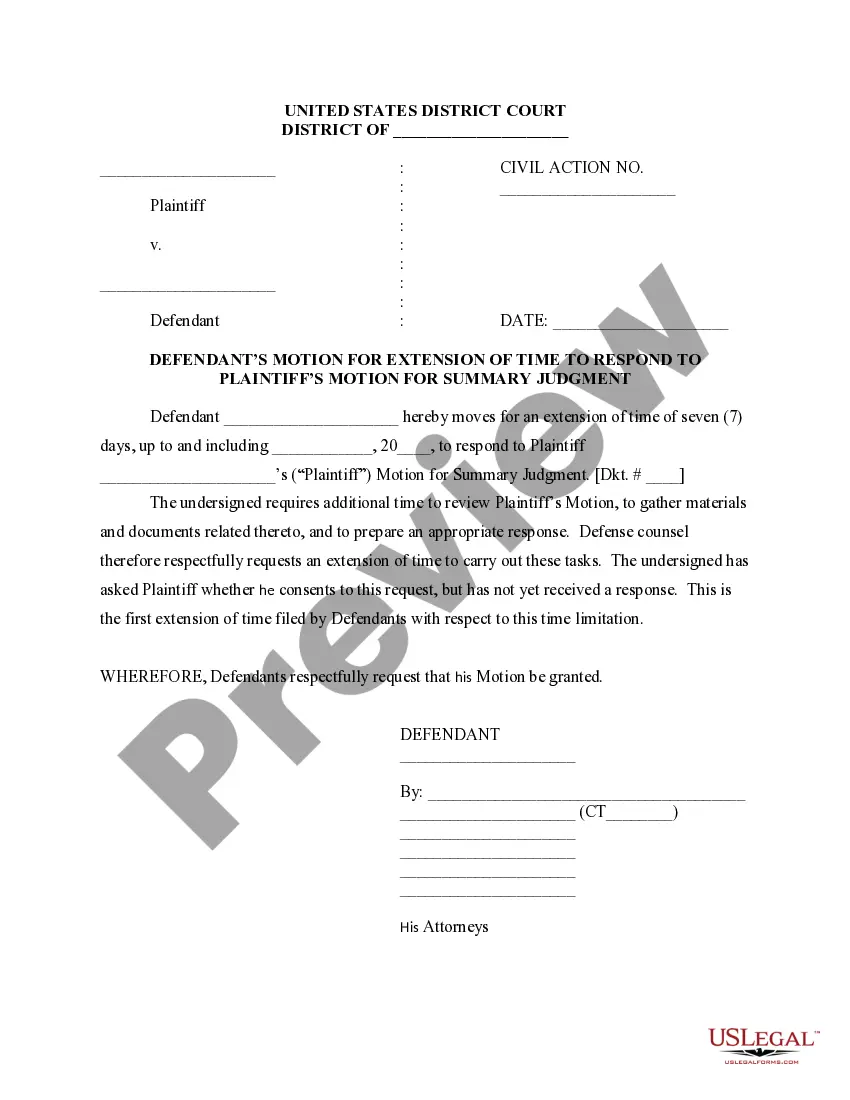
The Motion for Extension of Time is a legal document filed by a defendant in a civil case to request additional time to respond to a complaint. This form allows the defendant to formally ask the court for an extension, providing reasons justifying the need for more time. Unlike other motions, this specific motion focuses solely on the timeframe to file a response rather than addressing the merits of the case itself.
Form components explained
- Case caption: Includes the court name, plaintiff and defendant details, and civil action number.
- Defendant's information: Sections to specify the defendant's name and attorneys.
- Reasons for extension: Clear statements outlining why additional time is necessary.
- Proposed new deadline: Indication of the requested extension period and new deadline.
- Certification of service: A section confirming that all involved parties have been notified of the motion.
When to use this form
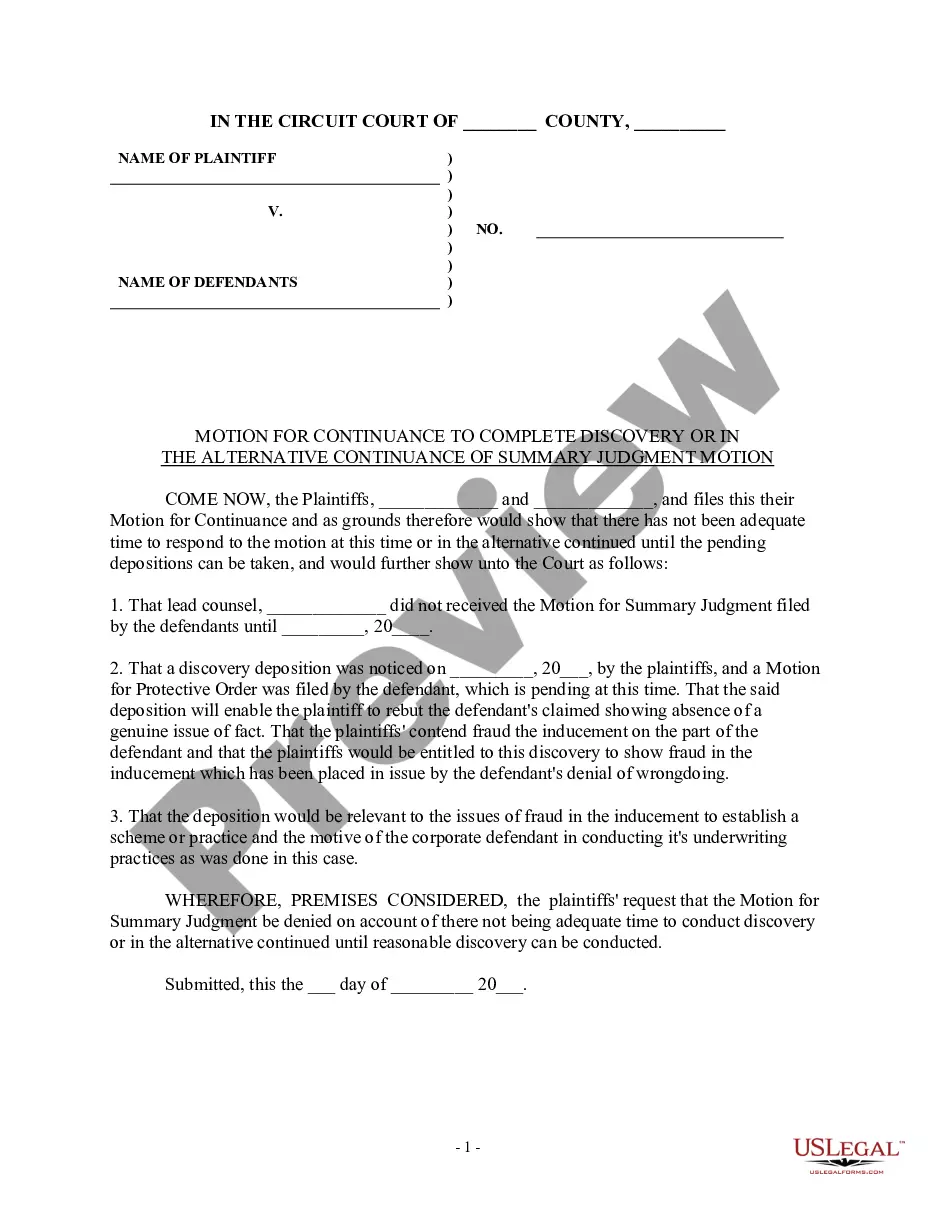
This form should be used when a defendant realizes that more time is needed to adequately prepare a response to a complaint filed against them in court. Situations such as ongoing settlement negotiations, concurrent legal matters, or the requirement of additional time to gather necessary evidence may justify filing this motion.
Intended users of this form
- Defendants in civil lawsuits who need extra time to respond to the complaint.
- Attorneys representing defendants in cases where extensions are necessary for proper legal representation.
- Individuals navigating legal proceedings who wish to ensure they comply with court deadlines while managing multiple legal matters.
Instructions for completing this form
- Identify the court and jurisdiction: Fill in the district and division in which the case is being heard.
- Complete the case caption: Provide the names of the plaintiff and defendant, as well as the civil action number.
- Articulate reasons for extending the deadline: Clearly describe the justification for needing more time, citing any relevant ongoing cases or negotiations.
- Propose a new deadline: Specify the additional time requested and the new deadline for filing a response.
- Obtain signatures: Ensure that all required parties, such as attorneys for both sides, sign the motion.
Does this document require notarization?
This form does not typically require notarization unless specified by local law. However, it is advisable to check with your jurisdictionâs requirements to ensure compliance.
Get your form ready online
Our built-in tools help you complete, sign, share, and store your documents in one place.
Make edits, fill in missing information, and update formatting in US Legal Forms—just like you would in MS Word.
Download a copy, print it, send it by email, or mail it via USPS—whatever works best for your next step.
Sign and collect signatures with our SignNow integration. Send to multiple recipients, set reminders, and more. Go Premium to unlock E-Sign.
If this form requires notarization, complete it online through a secure video call—no need to meet a notary in person or wait for an appointment.
We protect your documents and personal data by following strict security and privacy standards.

Make edits, fill in missing information, and update formatting in US Legal Forms—just like you would in MS Word.

Download a copy, print it, send it by email, or mail it via USPS—whatever works best for your next step.

Sign and collect signatures with our SignNow integration. Send to multiple recipients, set reminders, and more. Go Premium to unlock E-Sign.

If this form requires notarization, complete it online through a secure video call—no need to meet a notary in person or wait for an appointment.

We protect your documents and personal data by following strict security and privacy standards.
Avoid these common issues
- Failing to specify the exact reasons for needing more time.
- Not consulting with the plaintiffâs counsel for their position on the extension.
- Missing the original deadline before filing the motion.
- Omitting required signatures or certifications.
Why complete this form online
- Convenience: Easily download and complete the form at your own pace.
- Editability: Fill in the form electronically, reducing errors and improving clarity.
- Reliability: Access forms that comply with current legal standards, reviewed by licensed attorneys.
Legal use & context
- The motion is a formal request recognized by courts, and if granted, it provides the necessary additional time for defendants to prepare their responses.
- It is crucial for maintaining smooth legal proceedings and potentially avoiding default judgments.
- Failure to file a timely response can result in adverse legal consequences, including loss of legal rights.
What to keep in mind
- The Motion for Extension of Time requests additional time to respond to a complaint.
- It is essential to file this motion before the original response deadline.
- Understanding the specific requirements of your jurisdiction is important for proper submission.
Looking for another form?


Form popularity
FAQ
The Alabama Motion for Extension of Time is a legal document filed by a defendant in a civil case to request additional time to respond to a complaint. It is used when more time is needed to prepare a response, such as during ongoing settlement negotiations, concurrent legal matters, or the need to gather evidence.
A motion to extend time is a request filed with the court asking for more days to file a response or meet a deadline. For the Alabama Motion for Extension of Time, the form provides the case caption, defendant's information, reasons for extension, a proposed new deadline, and a certification of service.
The case caption should include the court name, the plaintiff, and the defendant names, plus the civil action number. The form also provides sections for the defendant's information and the attorneys. These elements help identify the case and ensure the motion is properly filed.
The certification of service ensures all parties are notified of the motion; the signing party is typically the defendant or their attorney, who attests under the court's rules that service has been completed. Follow local rules to meet service timing requirements.
File when a defendant realizes more time is needed to adequately prepare a response to the complaint. The form is intended for situations like ongoing settlement negotiations, concurrent legal matters, or the time needed to collect evidence, and it requires reasons and a proposed new deadline.
This form is tailored to Alabama civil procedure and focuses specifically on extending the deadline to respond to a complaint. It includes unique components listed in the form, such as the case caption, defendant's information, reasons for extension, proposed new deadline, and a certification of service.