Alabama Order for Wage Withholding
What this document covers
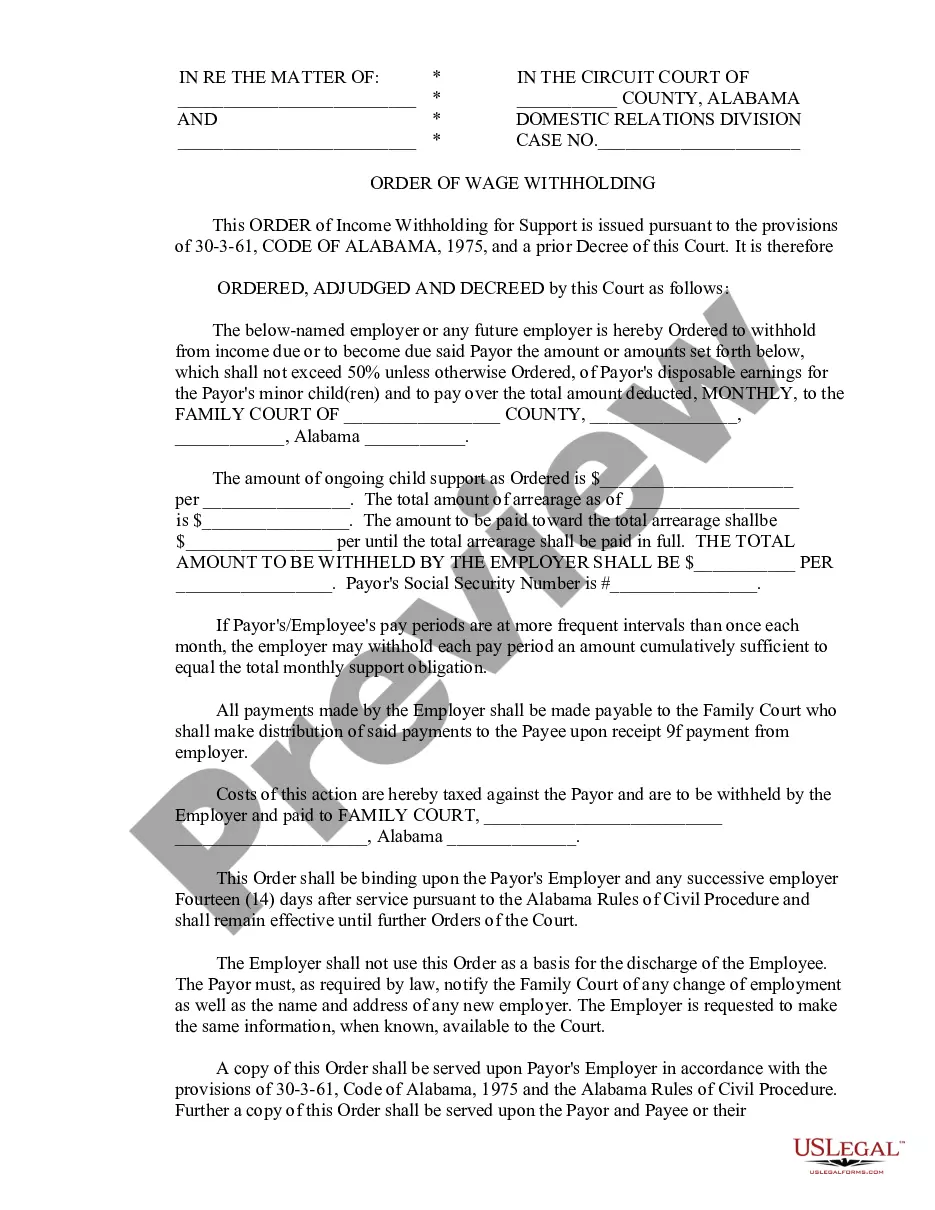
The Order for Wage Withholding is a legal document issued by the Circuit Court to facilitate the payment of child support from the wages of an individual obligated to pay support. This order allows employers to deduct a specified amount directly from the employee's earnings to ensure timely and consistent payments for child support, distinguishing it from regular payment agreements or arrangements.
Key components of this form
- Employer details: Identifies the employer responsible for withholding payments.
- Payor information: Contains the employee's name and Social Security number.
- Child support amounts: Specifies the ongoing child support obligations and any arrearages owed.
- Withholding instructions: Provides clear directives on how much to withhold and the payment schedule to the Family Court.
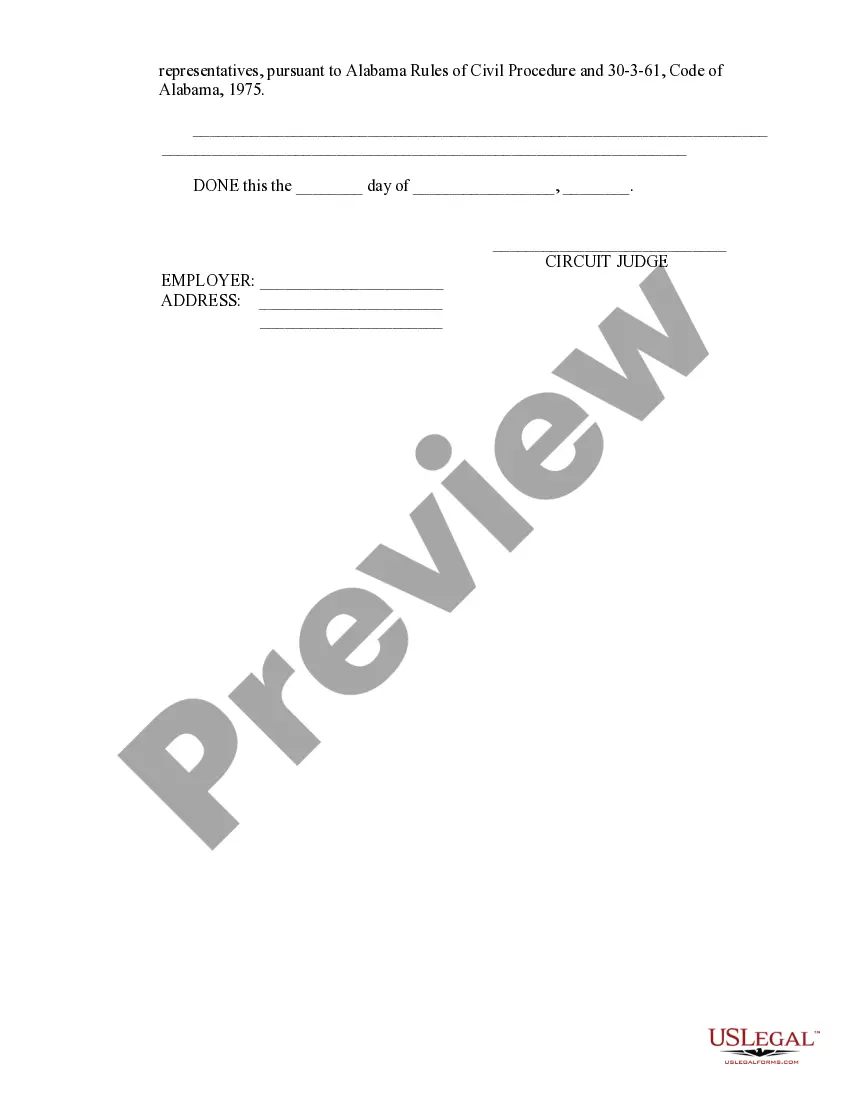
- Duration of the order: States that the order remains effective until further notice from the court.
When this form is needed
This form should be used when a court has determined that a parent is obligated to pay child support and needs to ensure that these payments are deducted directly from their wages. It is often utilized when there are concerns about timely payments or when an individual has fallen behind on their child support obligations.
Who needs this form
This form is intended for:
- Parents who are required by a court to pay child support.
- Employers who must comply with court orders to withhold wages for child support payments.
- Family law attorneys representing clients in child support cases.
How to complete this form
- Identify the payor: Enter the full name and Social Security number of the person obligated to pay child support.
- Specify the employer: Fill in the employer's name and address who will carry out the withholding.
- Detail support amounts: Enter the ongoing child support amount and any accumulated arrearages.
- Outline payment schedule: Indicate how often the employer should withhold payments (e.g., monthly, biweekly).
- Provide court information: Include the Family Court's name and address for where payments are to be sent.
Does this document require notarization?
This form does not typically require notarization unless specified by local law. It is advisable to check any specific local jurisdiction requirements to ensure compliance.
Get your form ready online
Our built-in tools help you complete, sign, share, and store your documents in one place.
Make edits, fill in missing information, and update formatting in US Legal Forms—just like you would in MS Word.
Download a copy, print it, send it by email, or mail it via USPS—whatever works best for your next step.
Sign and collect signatures with our SignNow integration. Send to multiple recipients, set reminders, and more. Go Premium to unlock E-Sign.
If this form requires notarization, complete it online through a secure video call—no need to meet a notary in person or wait for an appointment.
We protect your documents and personal data by following strict security and privacy standards.

Make edits, fill in missing information, and update formatting in US Legal Forms—just like you would in MS Word.

Download a copy, print it, send it by email, or mail it via USPS—whatever works best for your next step.

Sign and collect signatures with our SignNow integration. Send to multiple recipients, set reminders, and more. Go Premium to unlock E-Sign.

If this form requires notarization, complete it online through a secure video call—no need to meet a notary in person or wait for an appointment.

We protect your documents and personal data by following strict security and privacy standards.
Avoid these common issues
- Neglecting to include all necessary payor and employer details.
- Incorrectly calculating the total support amount or arrears.
- Failing to indicate the right payment frequency.
- Not submitting the order to the employer as required by law.
Why complete this form online
- Quick access to accurately drafted legal language by licensed attorneys.
- Easy to fill out and download, streamlining the legal process.
- Convenient storage and retrieval of documents for future needs.
Key takeaways
- The Order for Wage Withholding is crucial for ensuring child support payments are made directly from wages.
- Completing this form accurately is essential to avoid delays or legal issues.
- Always check for specific state regulations or requirements when using this form.
Looking for another form?
Form popularity
FAQ
The Alabama Order for Wage Withholding is a circuit court order directing an employer to deduct child support from an employee’s wages. It names the employer and payor, specifies the amount or schedule to withhold, and remains in effect until the court issues a new directive. It ensures timely, regular child support payments and differs from voluntary payment plans.
A withholding order is a court-issued directive that requires an employer to withhold a portion of an employee’s wages for child support as ordered by the court. The Alabama Order for Wage Withholding is a specific type issued by the Circuit Court and includes employer details, payor information, withholding amount, and the duration of the order.
This form directs withholding for child support and does not replace standard tax withholding. Federal and state income tax, Social Security, and Medicare withholdings remain governed by regular payroll rules. Employers must comply with the wage withholding order while continuing their standard tax withholding per applicable law.
Tax withholding in Alabama follows standard payroll rules and is separate from this child support order. The Alabama Order for Wage Withholding instructs the employer to withhold child support as ordered by the Circuit Court, while Alabama tax withholding remains governed by state payroll guidelines. Refer to Alabama Department of Revenue guidance for specifics.
The employer is required to withhold the amount specified in the Alabama Order for Wage Withholding from the employee’s wages. The payor is the parent obligated to pay child support, and the court order directs how and when the withholding occurs to remit payments.
This order is issued by the Alabama Circuit Court to enforce child support, includes explicit employer and payor details, provides specific withholding instructions and payment schedule, and remains in effect until the court issues a new directive—unlike a generic wage withholding notice.