Alabama Non Party Subpoena Form
Understanding this form
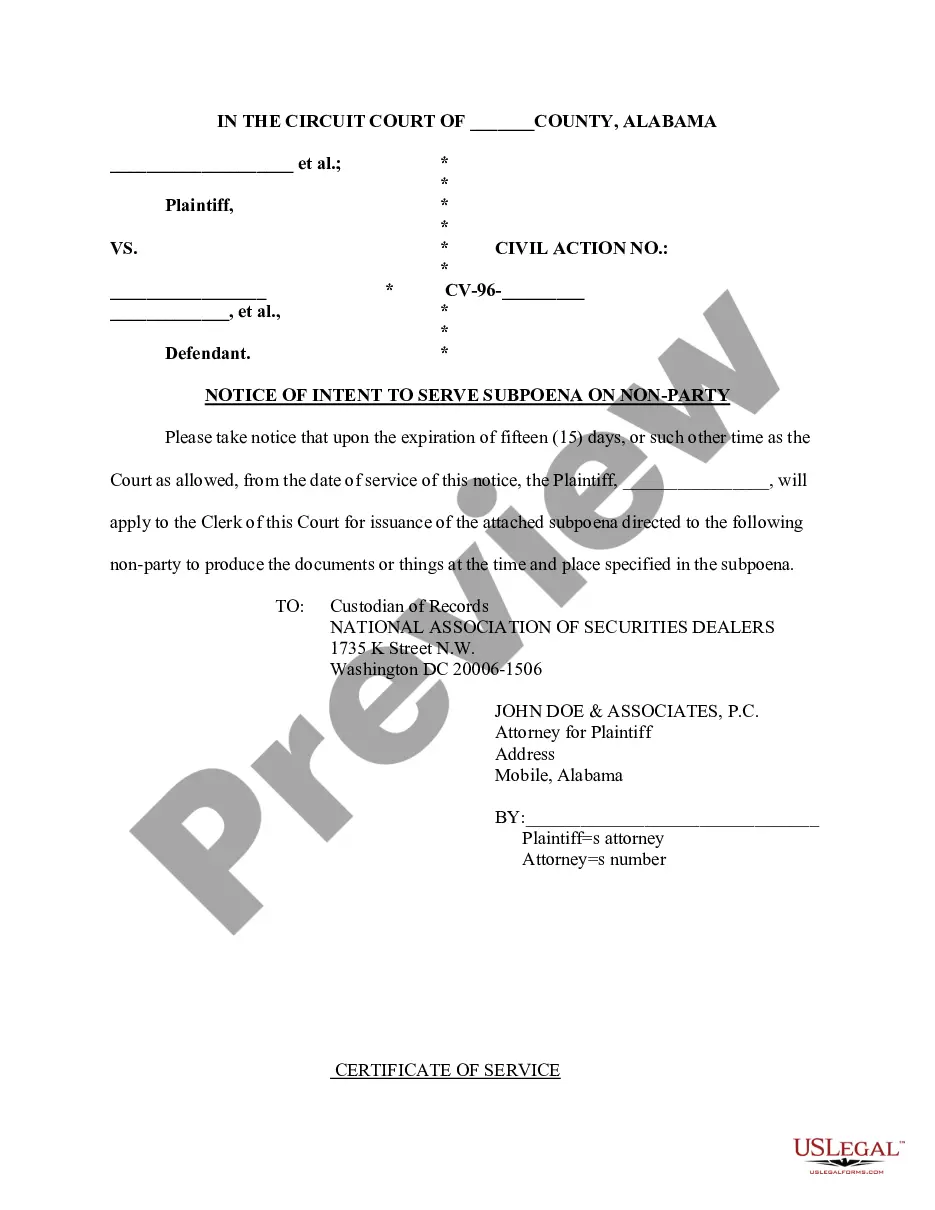
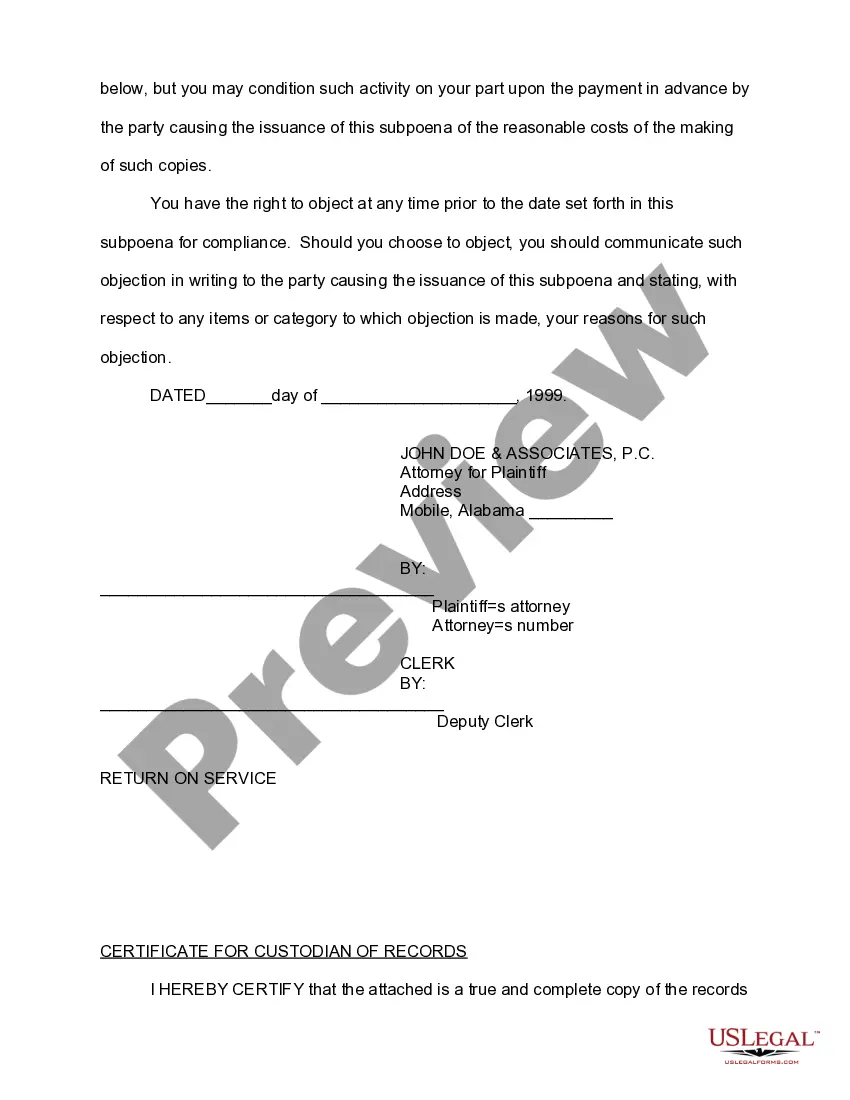
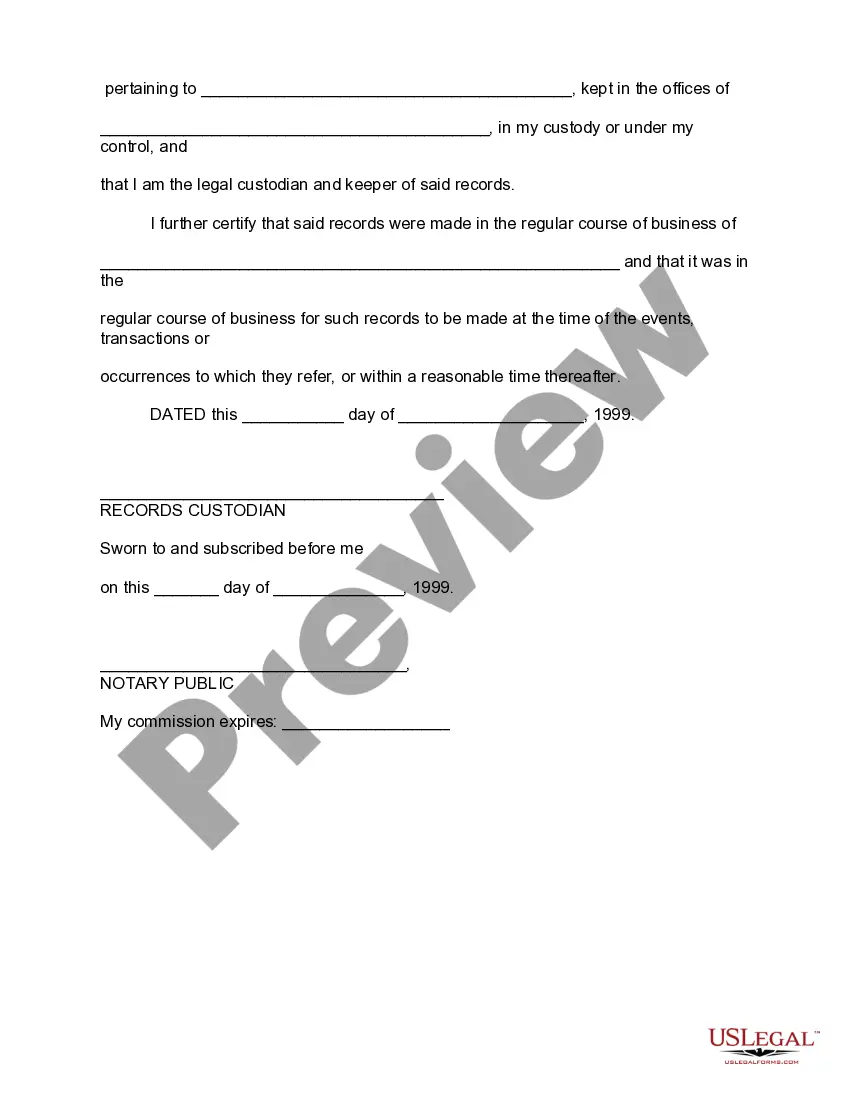
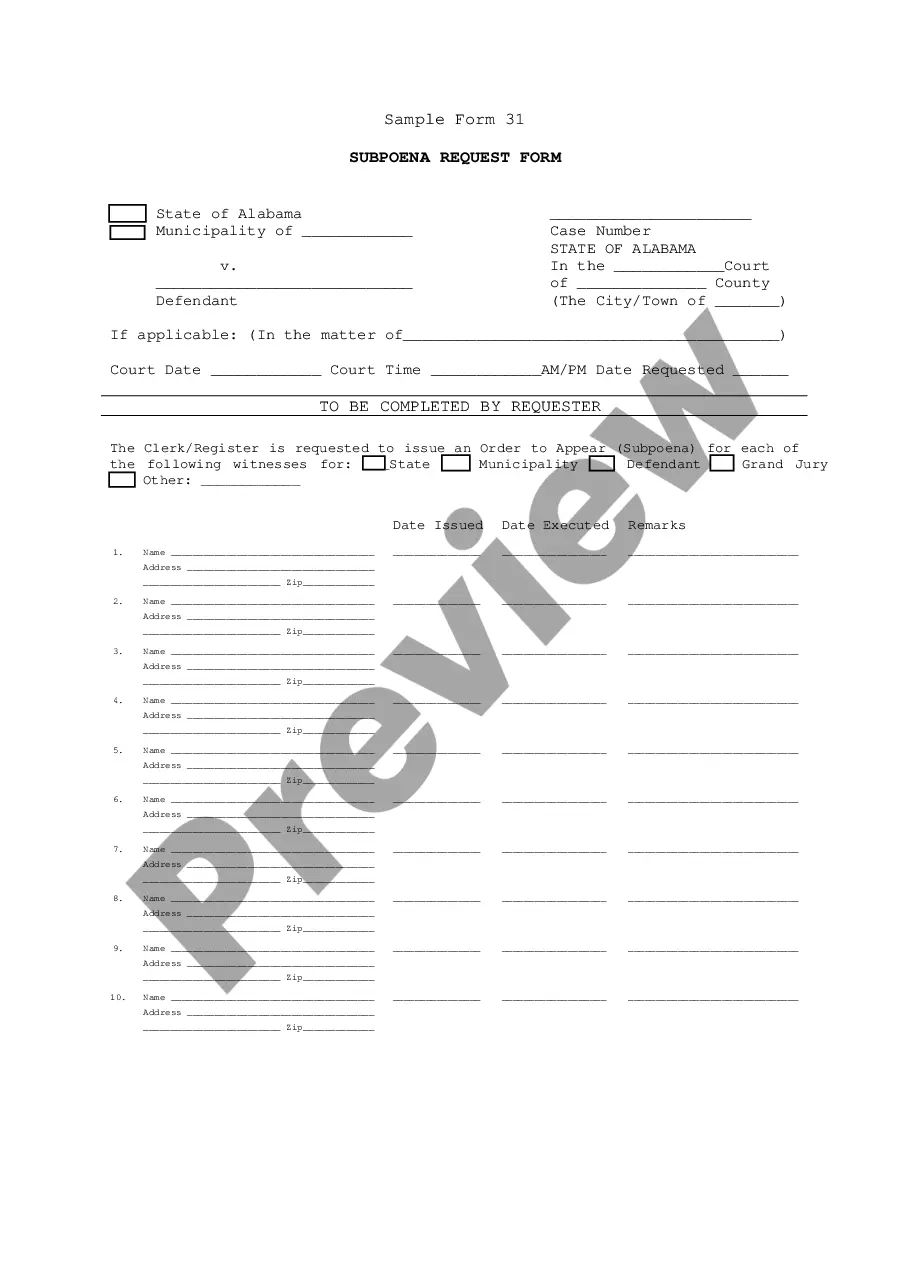
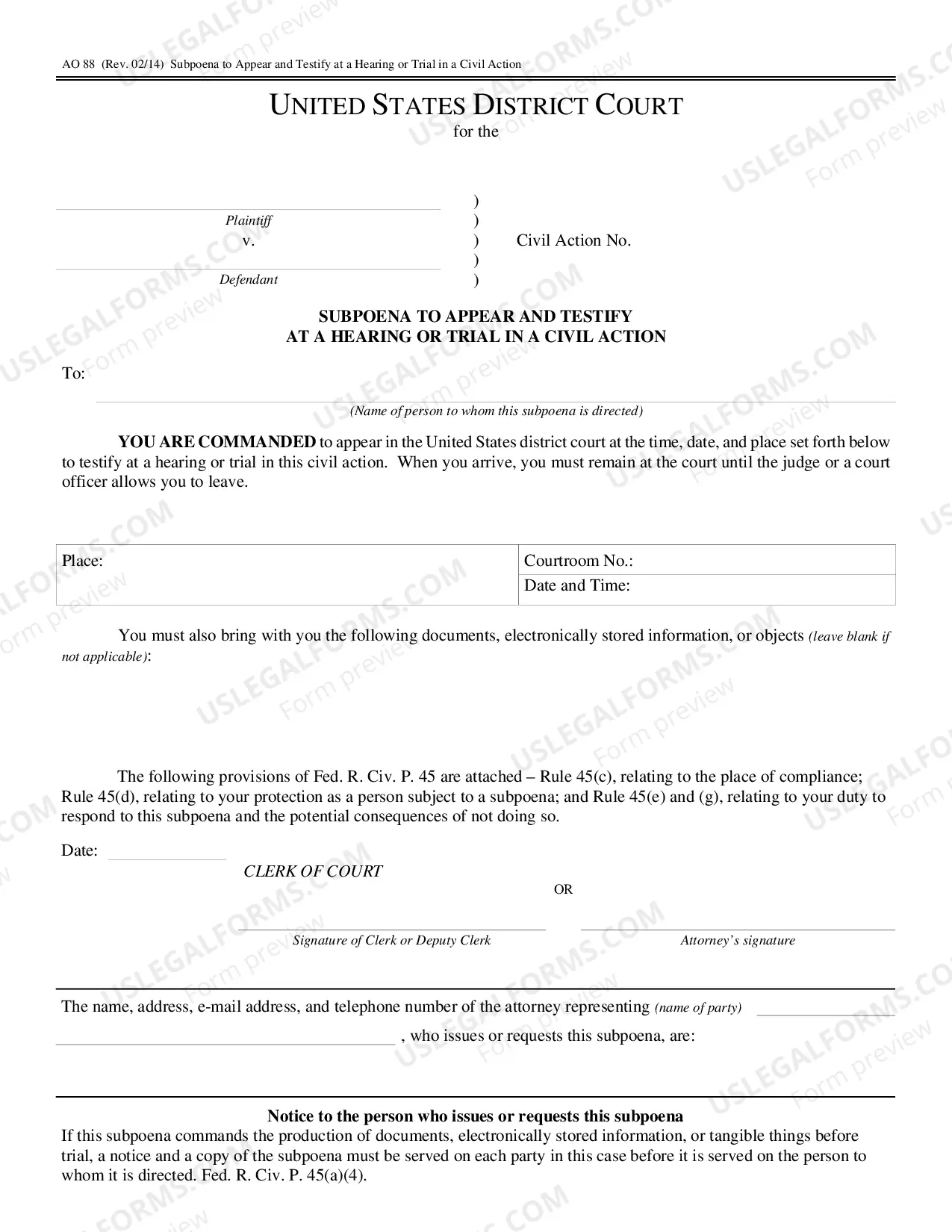
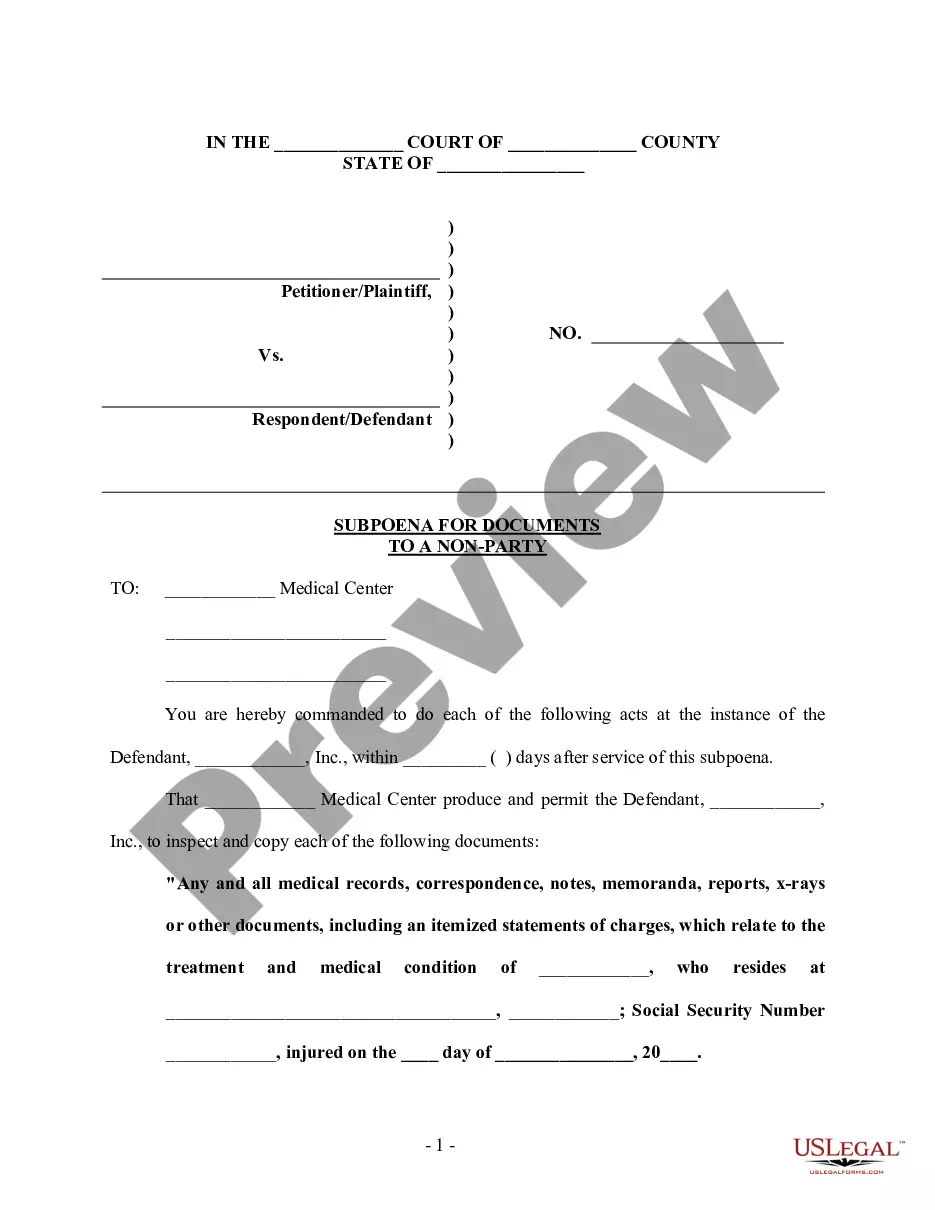
The Non Party Subpoena Form is a legal document that notifies a court and relevant parties that a subpoena will be served on a non-party. This subpoena requests the production of specific documents or items relevant to a case. Unlike other subpoenas, which may target parties involved in the litigation, this form directs attention to those who are not part of the lawsuit but may possess important information or evidence.
What’s included in this form
- Notice of intent to serve a subpoena on a non-party.
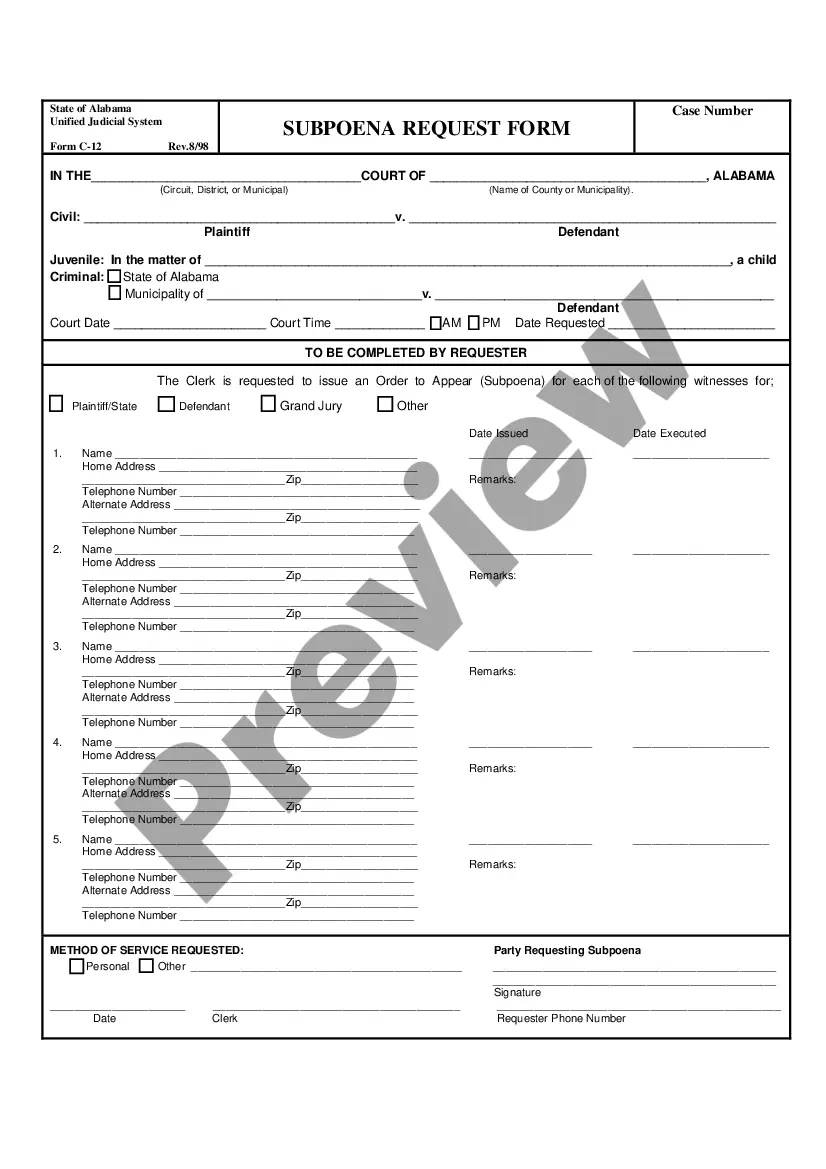
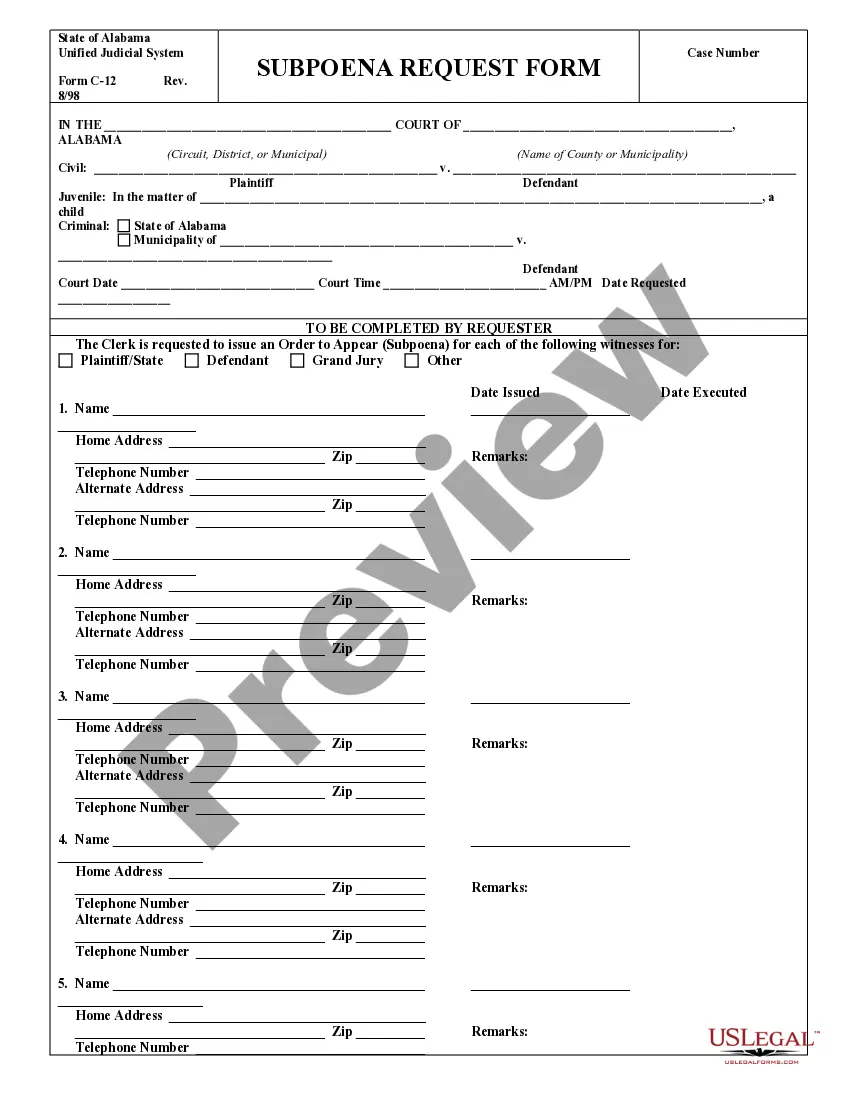
- Civil action identification, including names of the plaintiff and defendant.
- Details of the non-party, including name and address.
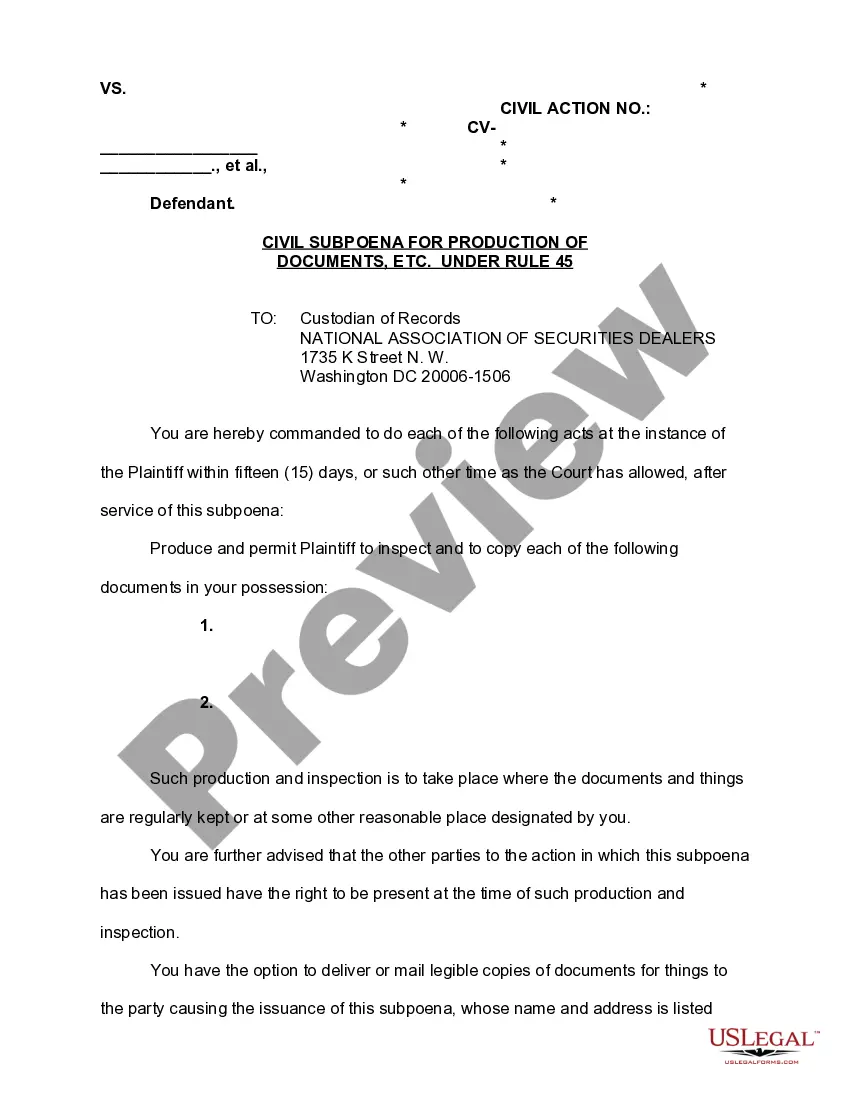
- A section for the description of documents or items required.
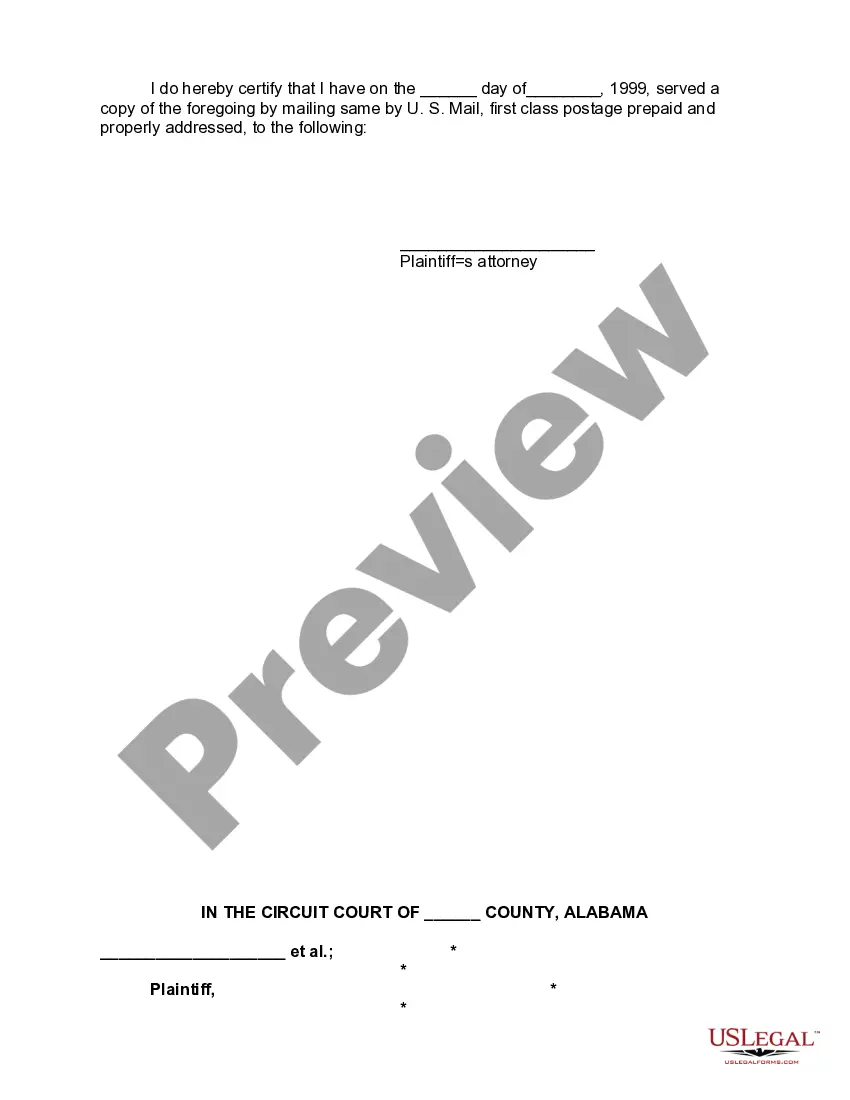
- Certificate of service to confirm delivery of the notice.
- Space for signatures of the attorney and other parties involved.
When this form is needed
This form should be used when a party in a legal case needs to obtain documents or evidence from someone who is not directly involved in the case. This situation often arises when there are third parties whose records could contain vital information that supports the claims or defenses of the involved parties. Using this form ensures that the non-party is formally notified and legally obligated to produce the requested items.
Intended users of this form
- Attorneys representing a plaintiff in a civil case.
- Legal professionals needing evidence from non-parties.
- Plaintiffs seeking documents that may help their case.
- Defendants wanting to examine evidence held by third parties.
Instructions for completing this form
- Identify the names of the parties involved in the case at the beginning of the form.
- Fill in the civil action number assigned by the court for reference.
- Provide the name and address of the non-party from whom documents will be requested.
- List the specific documents or items that are to be produced by the non-party.
- Sign and date the form, indicating the attorneyâs name and contact details.
Does this document require notarization?
This form does not typically require notarization unless specified by local law. However, having it notarized may add an extra layer of authenticity and trust in the documents being produced in a legal setting.
Get your form ready online
Our built-in tools help you complete, sign, share, and store your documents in one place.
Make edits, fill in missing information, and update formatting in US Legal Forms—just like you would in MS Word.
Download a copy, print it, send it by email, or mail it via USPS—whatever works best for your next step.
Sign and collect signatures with our SignNow integration. Send to multiple recipients, set reminders, and more. Go Premium to unlock E-Sign.
If this form requires notarization, complete it online through a secure video call—no need to meet a notary in person or wait for an appointment.
We protect your documents and personal data by following strict security and privacy standards.

Make edits, fill in missing information, and update formatting in US Legal Forms—just like you would in MS Word.

Download a copy, print it, send it by email, or mail it via USPS—whatever works best for your next step.

Sign and collect signatures with our SignNow integration. Send to multiple recipients, set reminders, and more. Go Premium to unlock E-Sign.

If this form requires notarization, complete it online through a secure video call—no need to meet a notary in person or wait for an appointment.

We protect your documents and personal data by following strict security and privacy standards.
Avoid these common issues
- Failing to properly identify the non-party's name or address.
- Not including specific details about the documents requested.
- Overlooking the certificate of service section, which confirms the notice was delivered.
- Not adhering to the required time frames specified in the form.
Why use this form online
- Convenience of instant download and access to legal forms.
- Editable templates that allow for easy customization.
- Reliability from forms drafted by licensed attorneys to meet legal standards.
Legal use & context
- The Non Party Subpoena Form is used in civil proceedings to compel a non-party to provide relevant documents.
- Failure to comply with a subpoena can lead to legal consequences for the non-party.
- This form must be handled in accordance with local court rules to maintain its enforceability.
Main things to remember
- The Non Party Subpoena Form is essential for obtaining documents from non-parties in a lawsuit.
- Careful completion of the form, including accurate details and timely service, is critical for its effectiveness.
- Understanding local jurisdiction requirements is necessary for proper legal procedures.
Looking for another form?
Form popularity
FAQ
The Alabama Non Party Subpoena Form is a civil-procedure document used to notify a court and the involved parties that a subpoena will be served on someone not a party to the case. It helps request specific documents or items relevant to the case and records the notice, the case identities, and who will enforce the service.
By including a 'Notice of intent to serve a subpoena on a non-party' along with the civil action identification. The form also records the non-party’s name and address and provides a description of the required documents, ensuring the court and all parties understand who will be served and what is requested.
The form requires the non-party’s name and address in the non-party details section. It also includes space to describe the documents or items sought and to record the civil action’s plaintiff and defendant names, so all parties understand who is involved and what is being requested.
The certificate of service confirms that the notice has been delivered to the non-party and, when applicable, to other parties or the court. It verifies service occurred and provides space for signatures to attest to the attorney and party involvement.
Designed for attorneys or legal professionals, it is suitable for plaintiffs seeking documents from non-parties and for defendants wanting to review evidence held by third parties. It supports civil actions by formalizing notice and helping collect material from someone not directly part of the case.
This form is specifically oriented toward subpoenas directed at non-parties, rather than parties to the case. It includes a dedicated 'Notice of intent to serve a subpoena on a non-party,' a non-party details section, a clear description of requested documents, a certificate of service, and signature blocks—features not required for standard party subpoenas.