Alabama Grant Deed from Individual to Individual
Overview of this form
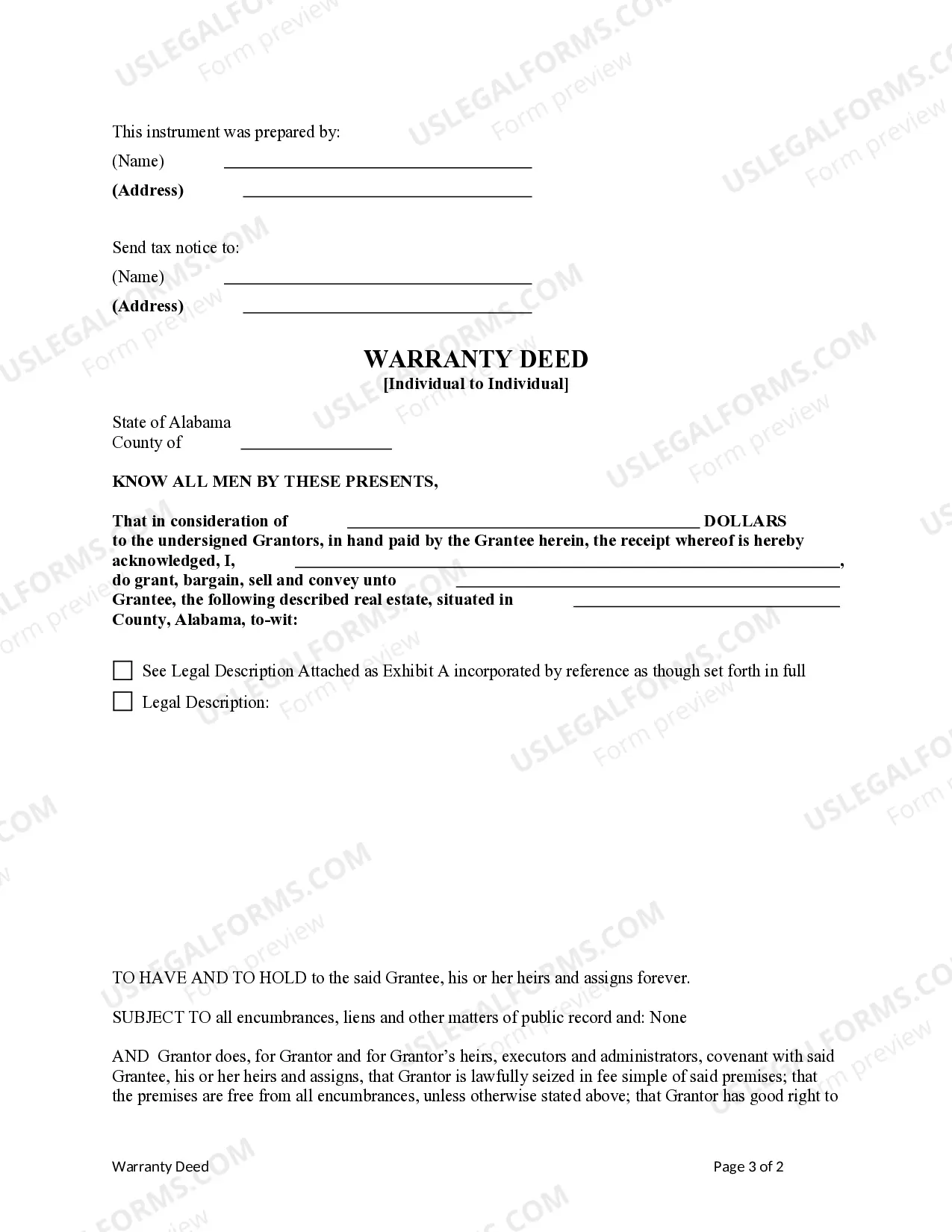
The Grant Deed from Individual to Individual is a legal document used to transfer property ownership from one individual (the Grantor) to another (the Grantee). This form serves a specific purpose by clearly defining the conveyance of real estate, distinguishing it from other deeds, such as quitclaim deeds, which may not guarantee clear title. This deed complies with state laws, ensuring its validity and enforceability.
Form components explained
- Identification of the Grantor and Grantee.
- Description of the property being transferred.
- Statement of the Grantor's intention to convey the property.
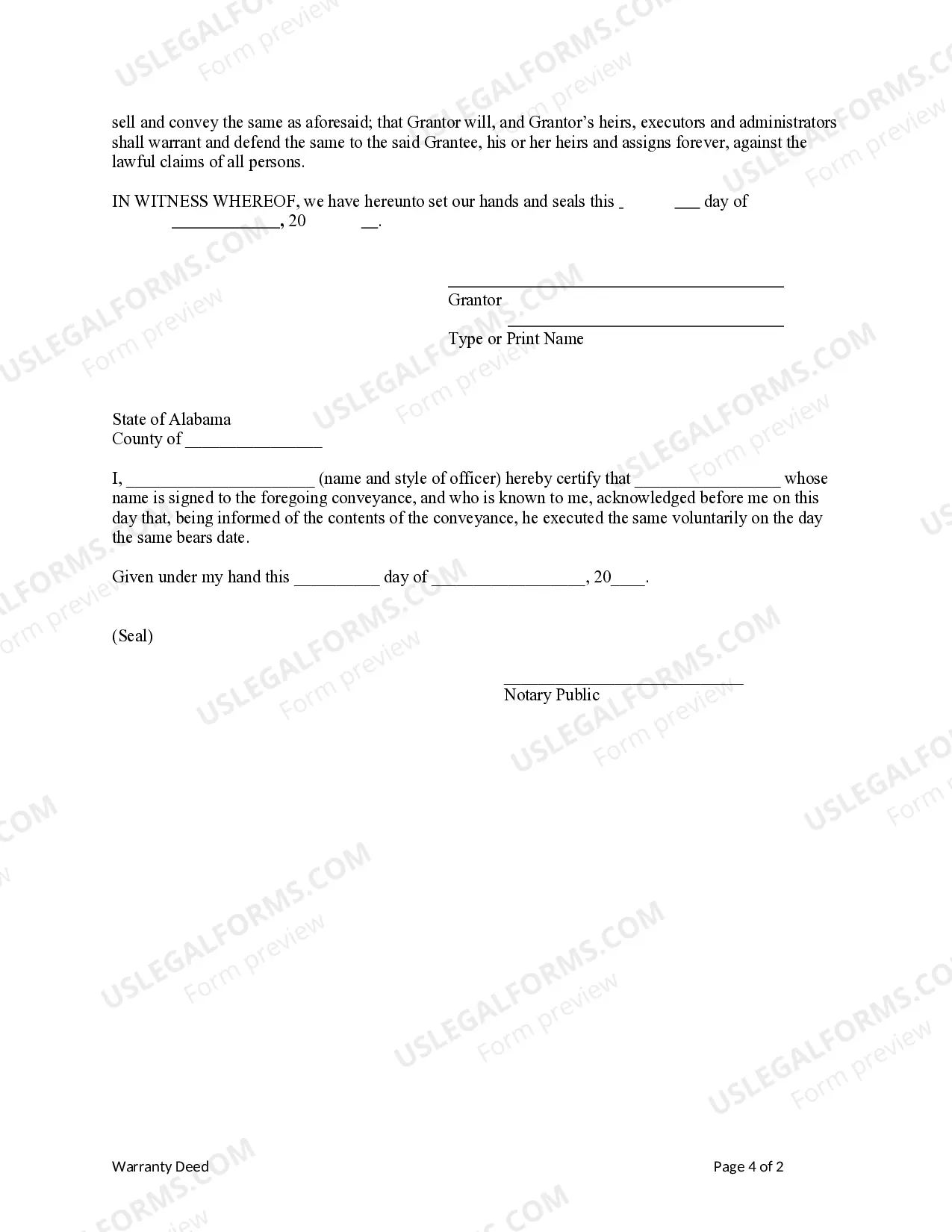
- Signatures of the Grantor and Grantee.
- Notarization area for a public notary, if required.





When to use this form
This form should be used in situations where an individual wishes to sell or gift property to another individual. It is typically used during real estate transactions, estate planning, or when transferring property ownership within a family or between friends.
Who should use this form
This form is intended for:
- Individuals selling or transferring property to another individual.
- Individuals involved in real estate transactions who prefer to handle the paperwork themselves.
- Friends or family members transferring property between one another.
Steps to complete this form
- Identify the parties involved: the Grantor and Grantee.
- Specify the property being transferred using its full legal description.
- Enter the date of the transaction.
- Have the Grantor sign the form in the presence of a notary, if required.
- Provide a space for the signature of the Grantee.
Notarization guidance
Notarization is required for this form to take effect. Our online notarization service, powered by Notarize, lets you verify and sign documents remotely through an encrypted video session, available 24/7.
Get your form ready online
Our built-in tools help you complete, sign, share, and store your documents in one place.
Make edits, fill in missing information, and update formatting in US Legal Forms—just like you would in MS Word.
Download a copy, print it, send it by email, or mail it via USPS—whatever works best for your next step.
Sign and collect signatures with our SignNow integration. Send to multiple recipients, set reminders, and more. Go Premium to unlock E-Sign.
If this form requires notarization, complete it online through a secure video call—no need to meet a notary in person or wait for an appointment.
We protect your documents and personal data by following strict security and privacy standards.

Make edits, fill in missing information, and update formatting in US Legal Forms—just like you would in MS Word.

Download a copy, print it, send it by email, or mail it via USPS—whatever works best for your next step.

Sign and collect signatures with our SignNow integration. Send to multiple recipients, set reminders, and more. Go Premium to unlock E-Sign.

If this form requires notarization, complete it online through a secure video call—no need to meet a notary in person or wait for an appointment.

We protect your documents and personal data by following strict security and privacy standards.
Avoid these common issues
- Failing to accurately describe the property can lead to disputes.
- Omitting signatures from either party may invalidate the deed.
- Not having the deed notarized when required by law.
Advantages of online completion
- Easy access and instant download of the form.
- Editability allows you to easily input your information.
- Compliance with state laws ensures the form's legality.
Key takeaways
- The Grant Deed effectively transfers property ownership while providing assurances about the title.
- Accurate completion of the form is crucial to avoid legal complications.
- Notarization is required for the deed to be legally binding.
- Understanding state-specific requirements is important when using legal forms.
Looking for another form?


Form popularity
FAQ
Find the most recent deed to the property. Create the new deed. Sign and notarize the deed. Record the signed, notarized original deed with the Office of the Judge of Probate.
Locate the deed that's in trust. Use the proper deed. Check with your title insurance company and lender. Prepare a new deed. Sign in the presence of a notary. Record the deed in the county clerk's office.
Retrieve your original deed. Get the appropriate deed form. Draft the deed. Sign the deed before a notary. Record the deed with the county recorder. Obtain the new original deed.
A quitclaim deed can be used to transfer property from a trust, but a Special Warranty Deed seems to be a more common way to do this.
The only way to forcibly change the ownership status is through a legal action and the resultant court order. However, if an owner chooses to be removed from the deed, it is simply a matter of preparing a new deed transferring that owner's interest in the property.
A deed, of course, is a legal document representing property ownership. But you might be wondering if an owner can transfer a deed to another person without a real estate lawyer. The answer is yes. Parties to a transaction are always free to prepare their own deeds.
Adding someone to your house deed requires the filing of a legal form known as a quitclaim deed. When executed and notarized, the quitclaim deed legally overrides the current deed to your home. By filing the quitclaim deed, you can add someone to the title of your home, in effect transferring a share of ownership.
Quit Claim Deeds in Alabama So not only is the grantor not guaranteeing that there are no liens or encumbrances on the property, they aren't even guaranteeing they own the property. Our local property deed attorneys are currently charging $250 to prepare your quit claim deed for you to record yourself.
A grant deed is the instrument used to transfer title to an interest in real property from one owner to someone else.A deed of trust is the security instrument given to a lender to secure a loan or other obligation. Bare naked title is deeded to the trustee, who holds the power of sale or the power to re-convey.