Alabama Order - Forfeiture of Assets
What is this form?
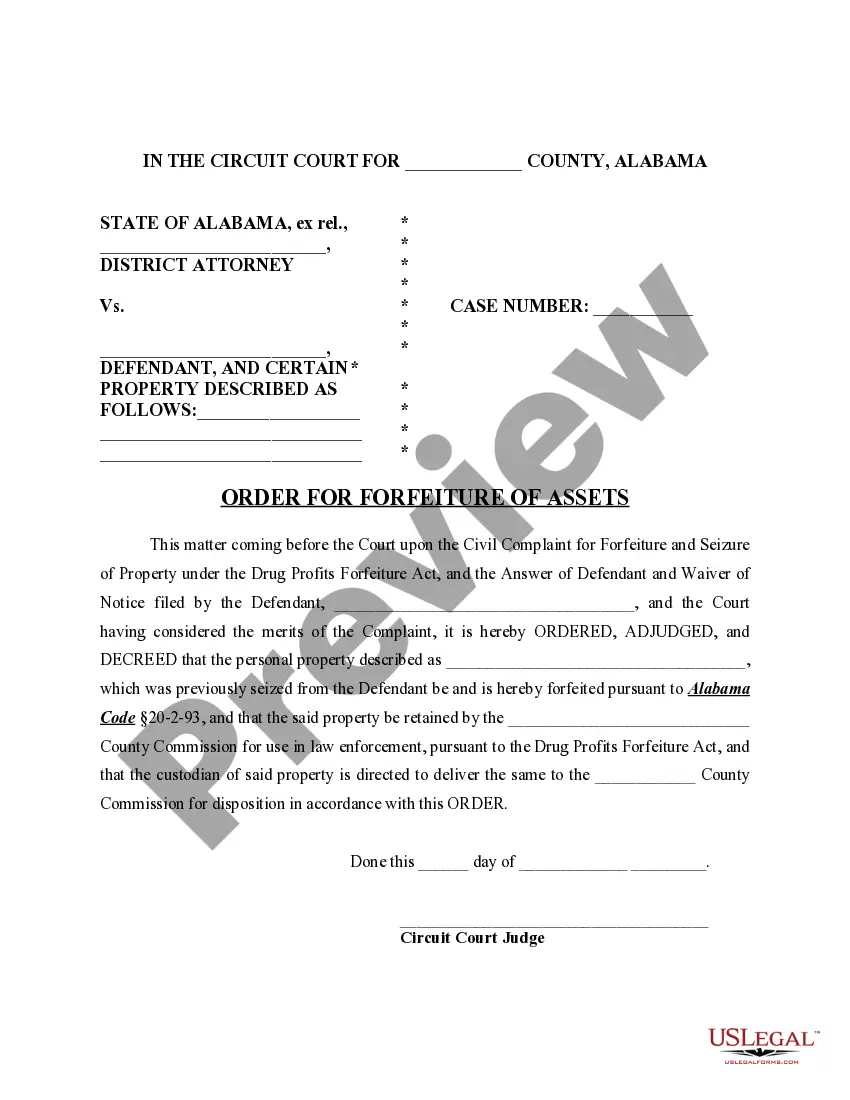
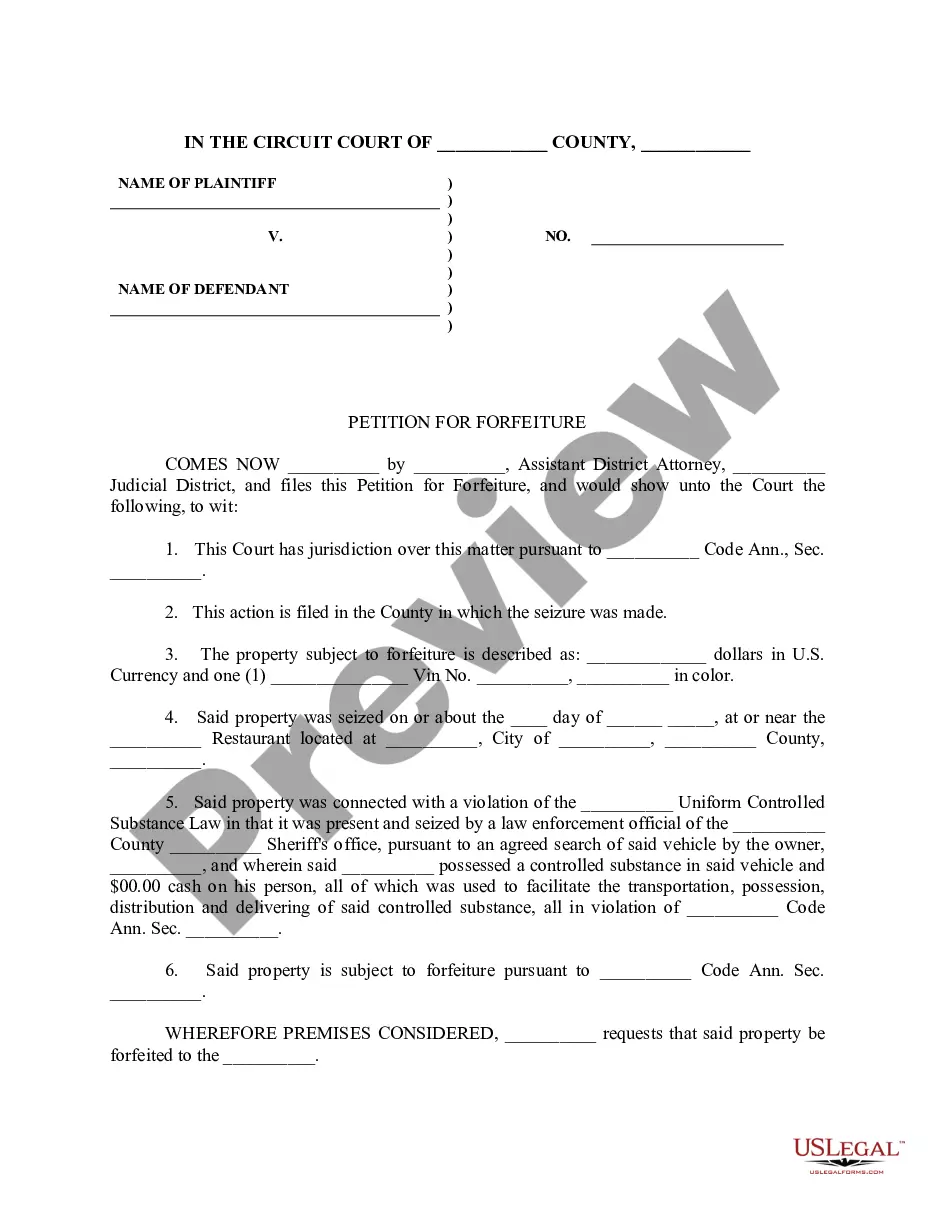
The Order for Forfeiture of Assets is a legal document used in Alabama when the court determines that personal property seized from a defendant should be permanently forfeited. This form outlines the court's decree regarding the forfeiture and facilitates the transfer of property to the designated law enforcement authority. It is essential for ensuring that the forfeiture process is legally recognized and complies with state laws.
Main sections of this form
- Caption section identifying the parties involved and the case number.
- Statement of the courtâs order regarding forfeiture of specific assets.
- Description of the seized property to be forfeited.
- Legal basis for the forfeiture under Alabama law.
- Directions for the disposition of the forfeited property.
- Signature line for the Circuit Court Judge.
When to use this form
You should use the Order for Forfeiture of Assets in situations where a court has awarded forfeiture of assets previously seized from a defendant, often in connection with drug-related offenses. This form is crucial when the court has confirmed the legal basis for forfeiture and requires formal documentation to finalize the process.
Intended users of this form
- District attorneys handling cases involving asset forfeiture.
- Law enforcement agencies that require a legal document to retain seized property.
- Court clerks involved in documenting court orders related to forfeiture.
Completing this form step by step
- Identify the parties involved by entering the names of the district attorney and defendant.
- Provide the case number associated with the forfeiture proceedings.
- Clearly describe the property to be forfeited.
- Enter the date when the courtâs order is finalized.
- Ensure the signature line is completed by the presiding Circuit Court Judge.
Notarization guidance
This form does not typically require notarization unless specified by local law.
Get your form ready online
Our built-in tools help you complete, sign, share, and store your documents in one place.
Make edits, fill in missing information, and update formatting in US Legal Forms—just like you would in MS Word.
Download a copy, print it, send it by email, or mail it via USPS—whatever works best for your next step.
Sign and collect signatures with our SignNow integration. Send to multiple recipients, set reminders, and more. Go Premium to unlock E-Sign.
If this form requires notarization, complete it online through a secure video call—no need to meet a notary in person or wait for an appointment.
We protect your documents and personal data by following strict security and privacy standards.

Make edits, fill in missing information, and update formatting in US Legal Forms—just like you would in MS Word.

Download a copy, print it, send it by email, or mail it via USPS—whatever works best for your next step.

Sign and collect signatures with our SignNow integration. Send to multiple recipients, set reminders, and more. Go Premium to unlock E-Sign.

If this form requires notarization, complete it online through a secure video call—no need to meet a notary in person or wait for an appointment.

We protect your documents and personal data by following strict security and privacy standards.
Mistakes to watch out for
- Neglecting to include a complete description of the seized property.
- Failing to enter the correct case number which may lead to legal issues.
- Not verifying that the order has been signed by the judge.
Advantages of online completion
- Convenience of downloading the form in compatible formats such as Word and WordPerfect.
- Editability allows for personalization and accurate completion.
- Secure access to attorney-drafted documents ensures reliability.
Looking for another form?
Form popularity
FAQ
When a decree of divorce is granted on the ground of the irretrievable break-down of a marriage the court may make an order that the patrimonial benefits of the marriage be forfeited by one party in favour of the other, either wholly or in part, if the court, having regard to the duration of the marriage, the
The term money judgment is used to describe a particular kind of directly forfeitable property. It is a short-hand way of describing the defendant's continuing obligation to forfeit the money derived from or used to commit his criminal offense whether he has retained the actual dollars in his possession or not.
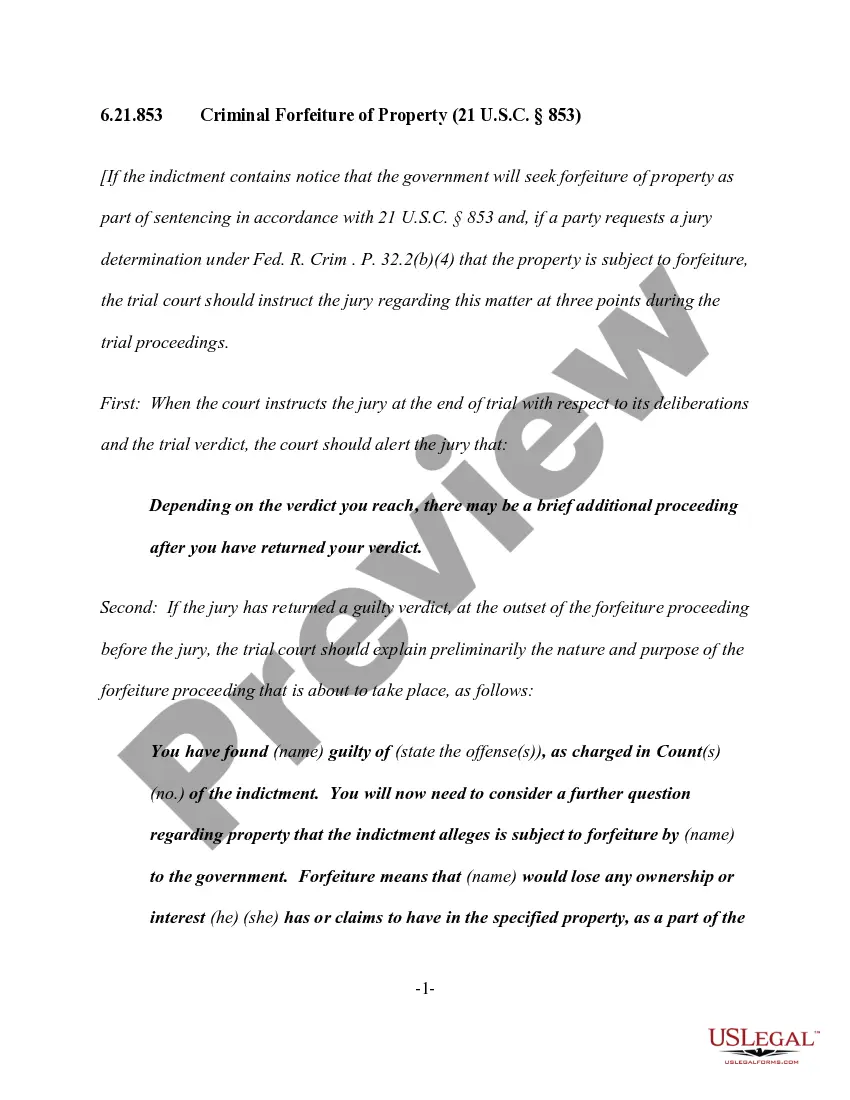
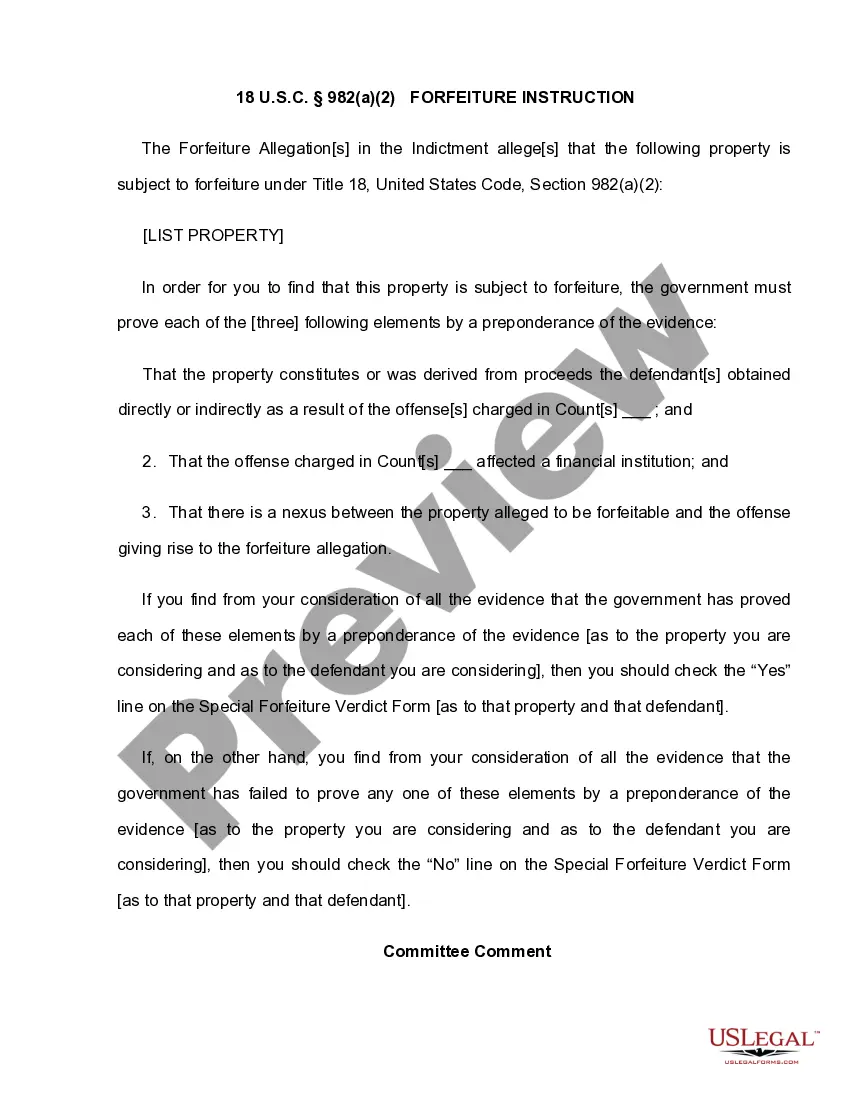
Criminal forfeiture is an action brought as a part of the criminal prosecution of a defendant.If the jury finds the property forfeitable, the court issues an order of forfeiture.
Forfeiture takes two distinct forms -- criminal and civil. Nearly all contemporary forfeiture involves the civil variety. Criminal forfeiture operates as punishment for a crime. It, therefore, requires a conviction, following which the state takes the assets in question from the criminal.
United States. There are two types of forfeiture (confiscation) cases, criminal and civil.
Civil forfeiture allows police to seize and then keep or sell any property they allege is involved in a crime. Owners need not ever be arrested or convicted of a crime for their cash, cars, or even real estate to be taken away permanently by the government.
Seizure is the act of taking property.Forfeiture occurs when your rights to the seized property are permanently lost through a court order or judgment. Forfeiture occurs after seizure, and seizure does not always end in forfeiture. In our example, the seizure takes place when Officer Potts takes the money from Steve.
Forfeiture refers to a loss of any property, money, or assets without consideration or compensation in return. A forfeiture generally occurs due to default in complying with repayment obligations under a contract. It can also be used as a penalty for an illegal way of conducting business.