Alabama Proof of Will - Non-Self-Proving
What is this form?
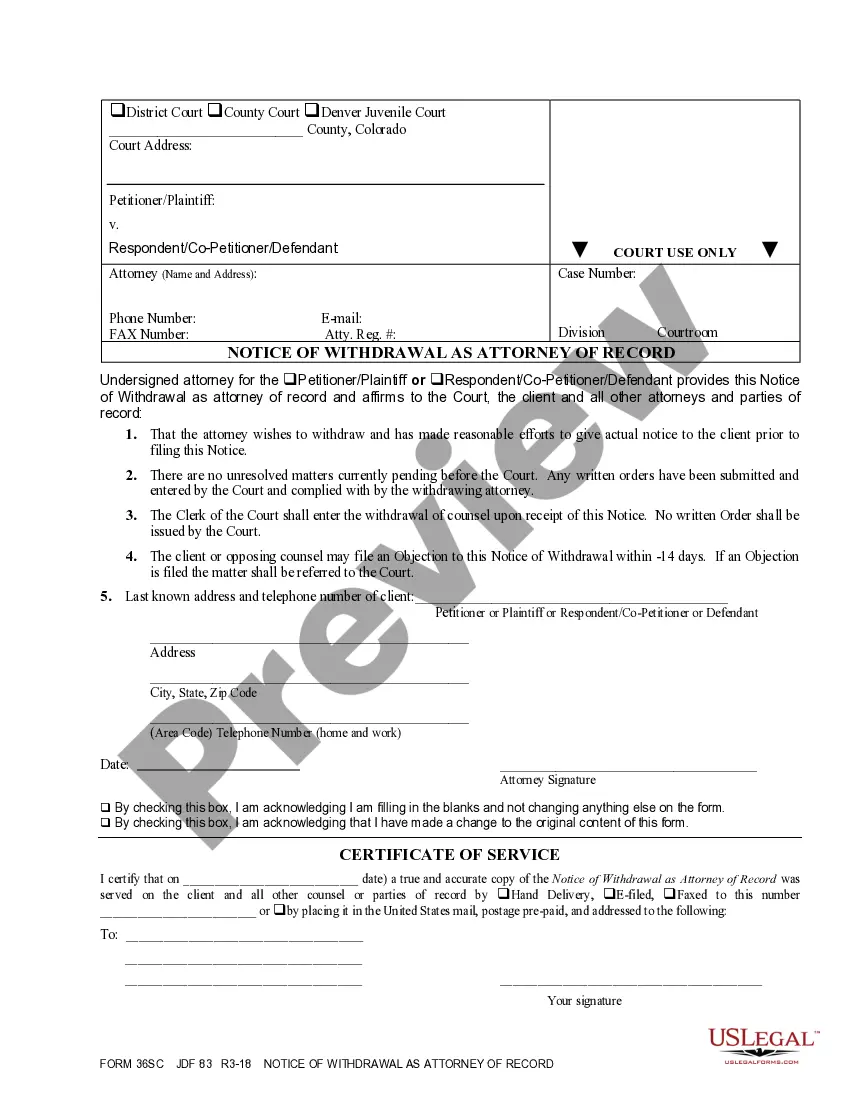
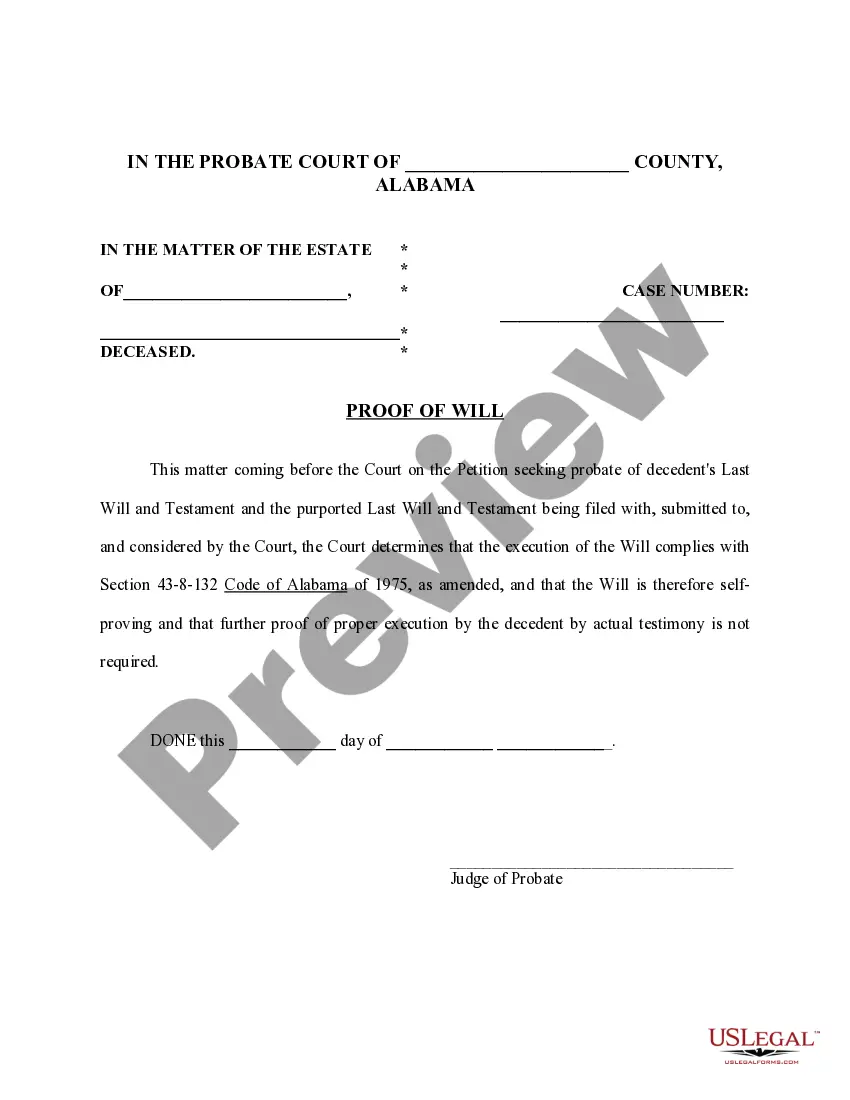
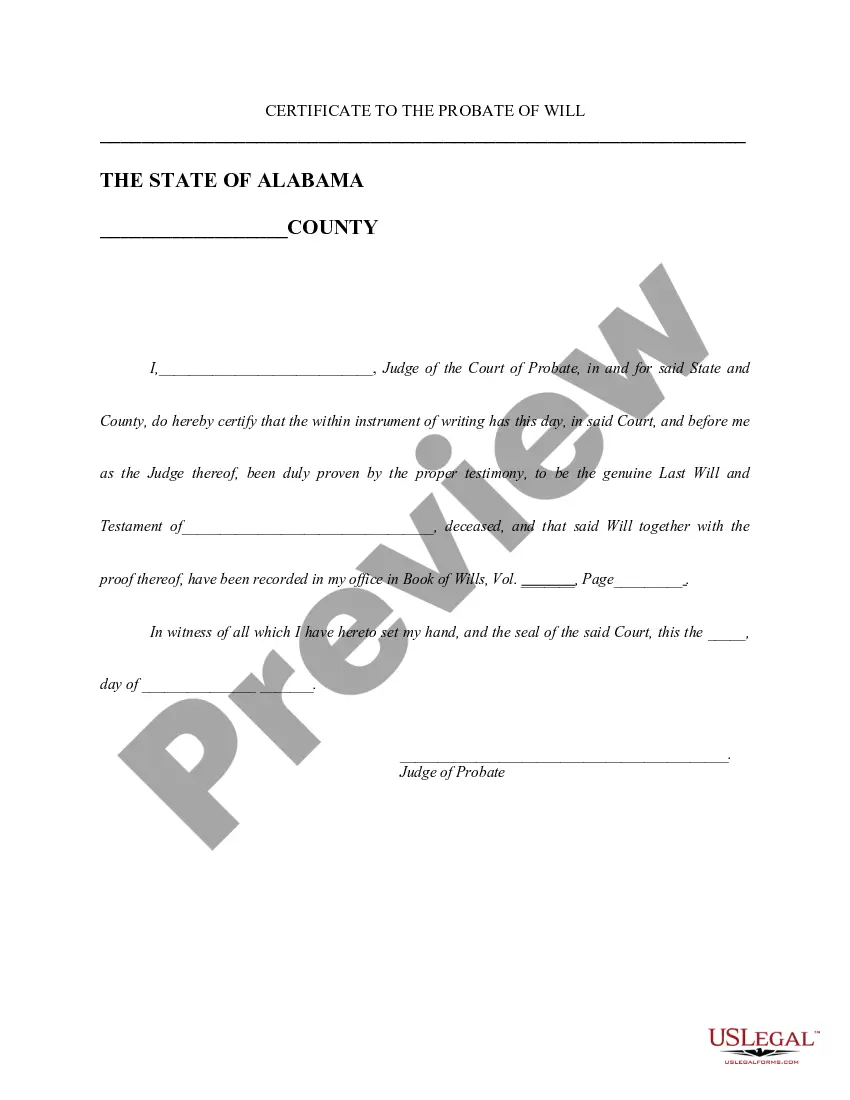
The Proof of Will - Non-Self-Proving form is used in situations where a court determines that a will was not properly executed under Alabama law, specifically Section 43-8-132 of the Code of Alabama of 1975. Unlike a self-proving will, this form requires testimony to validate the execution of the will. It's essential for establishing any legal claims regarding the decedent's Last Will and Testament when the usual verification process is not possible.
Form components explained
- Identification of the probate court and county.
- Details about the decedent and their estate.
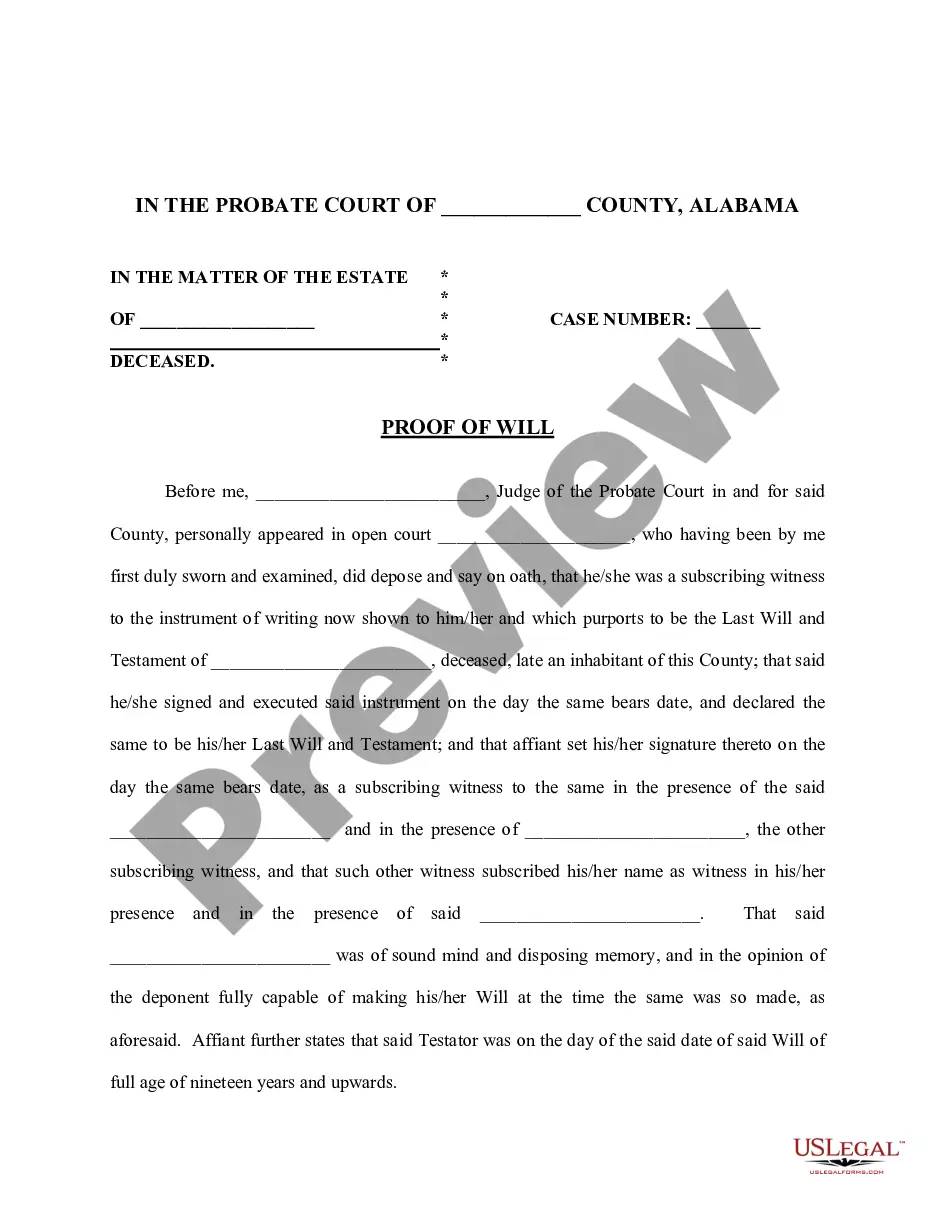
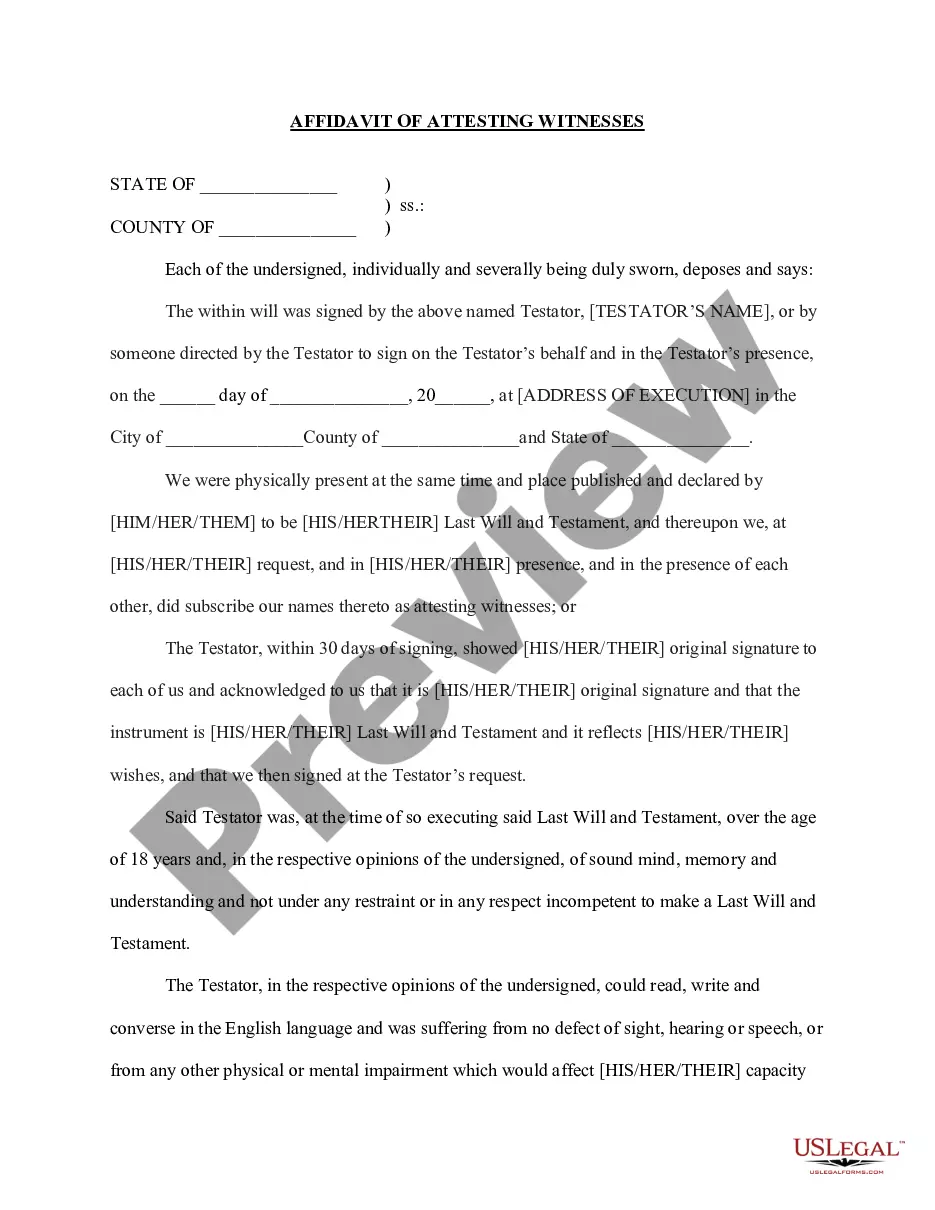
- Personal testimony from a subscribing witness who confirms the legitimacy of the will.
- Statement on the mental capacity of the testator at the time of signing.
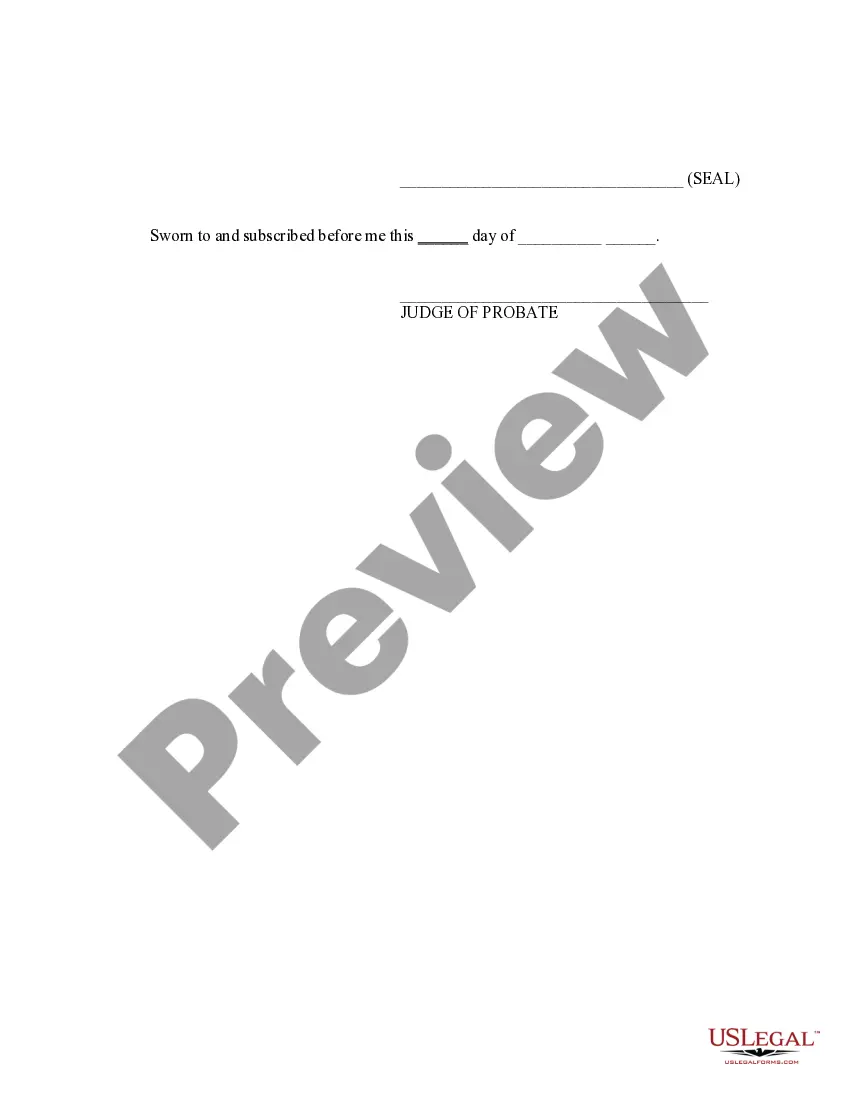
- Signature of the judge of probate, along with the official seal.

When this form is needed
This form is necessary when the court has deemed that a decedent's will does not meet the requirements of a self-proving will. If there are challenges regarding the will's authenticity or the testator's mental capacity, this form provides the necessary proof through witness testimony. It's often used in contested probate cases where the validity of the will must be firmly established in court.
Who this form is for
- Executors or administrators of an estate in Alabama.
- Subscribing witnesses of a decedent's will.
- Individuals involved in probate proceedings where the validity of a will is in question.
- Heirs or beneficiaries seeking to enforce a non-self-proving will.
Completing this form step by step
- Identify the probate court and county where the estate is being probated.
- Fill in the details of the decedent, including their full name and case number.
- Have a subscribing witness appear in court, ready to provide testimony about the signing of the will.
- Ensure the witness verifies the testator's mental capacity and age at the time of signing.
- Obtain the judge's signature and seal to finalize the document.
Does this document require notarization?
To make this form legally binding, it must be notarized. Our online notarization service, powered by Notarize, lets you verify and sign documents remotely through an encrypted video session.
Get your form ready online
Our built-in tools help you complete, sign, share, and store your documents in one place.
Make edits, fill in missing information, and update formatting in US Legal Forms—just like you would in MS Word.
Download a copy, print it, send it by email, or mail it via USPS—whatever works best for your next step.
Sign and collect signatures with our SignNow integration. Send to multiple recipients, set reminders, and more. Go Premium to unlock E-Sign.
If this form requires notarization, complete it online through a secure video call—no need to meet a notary in person or wait for an appointment.
We protect your documents and personal data by following strict security and privacy standards.

Make edits, fill in missing information, and update formatting in US Legal Forms—just like you would in MS Word.

Download a copy, print it, send it by email, or mail it via USPS—whatever works best for your next step.

Sign and collect signatures with our SignNow integration. Send to multiple recipients, set reminders, and more. Go Premium to unlock E-Sign.

If this form requires notarization, complete it online through a secure video call—no need to meet a notary in person or wait for an appointment.

We protect your documents and personal data by following strict security and privacy standards.
Mistakes to watch out for
- Failing to properly identify the probate court and county.
- Not having the subscribing witness present during the court hearing.
- Incorrectly filling in the decedent's information, such as name or case number.
- Neglecting to ensure the witness provides clear and accurate testimony.
Benefits of using this form online
- Convenient access to legally vetted templates.
- Easy to download and complete on your schedule.
- Editability allows for personalization and accuracy before submission.
- Reduces the complexity of legal proceedings by providing a clear format.
Looking for another form?
Form popularity
FAQ
No, in Alabama, you do not need to notarize your will to make it legal. However, Alabama allows you to make your will "self-proving" and you'll need to go to a notary if you want to do that. A self-proving will speeds up probate because the court can accept the will without contacting the witnesses who signed it.
A self-proving will is one that comes with a sworn statement from the testator, who acknowledges that the document is his last will and testament and that he or she is 18 years of age or older, of sound mind, and that he or she is executing the will voluntarily.
It must be in writing. Generally, of course, wills are composed on a computer and printed out. The person who made it must have signed and dated it. A will must be signed and dated by the person who made it. Two adult witnesses must have signed it. Witnesses are crucial.
It must be in writing. Generally, of course, wills are composed on a computer and printed out. The person who made it must have signed and dated it. A will must be signed and dated by the person who made it. Two adult witnesses must have signed it. Witnesses are crucial.
Alabama does not recognize oral (nuncupative) wills. Also, unlike some other states, Alabama does not permit handwritten and unwitnessed (holographic) wills, based on the legal requirement that all wills in Alabama be signed and witnessed by two people to be a valid will.
Signature: The will must be signed by the testator or by another person in the testator's name, under his direction and in his presence. Witnesses: At least two witnesses must sign an Alabama Last Will in order for it to be valid. Writing: An Alabama will must be written in order to be valid.
A Last Will and Testament is a legal document that provides for the distribution of a person's assets at death. Assuming that probate is necessary and that no alternatives to probate are available, all wills must be admitted to probate before they are considered to be effective.
A last will and testament in Alabama must be in writing and signed by the testator (the person writing the will), or at the testator's direction and in his or her presence. The will also has to be witnessed and signed by at least two people.
A last will and testament in Alabama must be in writing and signed by the testator (the person writing the will), or at the testator's direction and in his or her presence. The will also has to be witnessed and signed by at least two people.