Alaska Release of Easement
Overview of this form
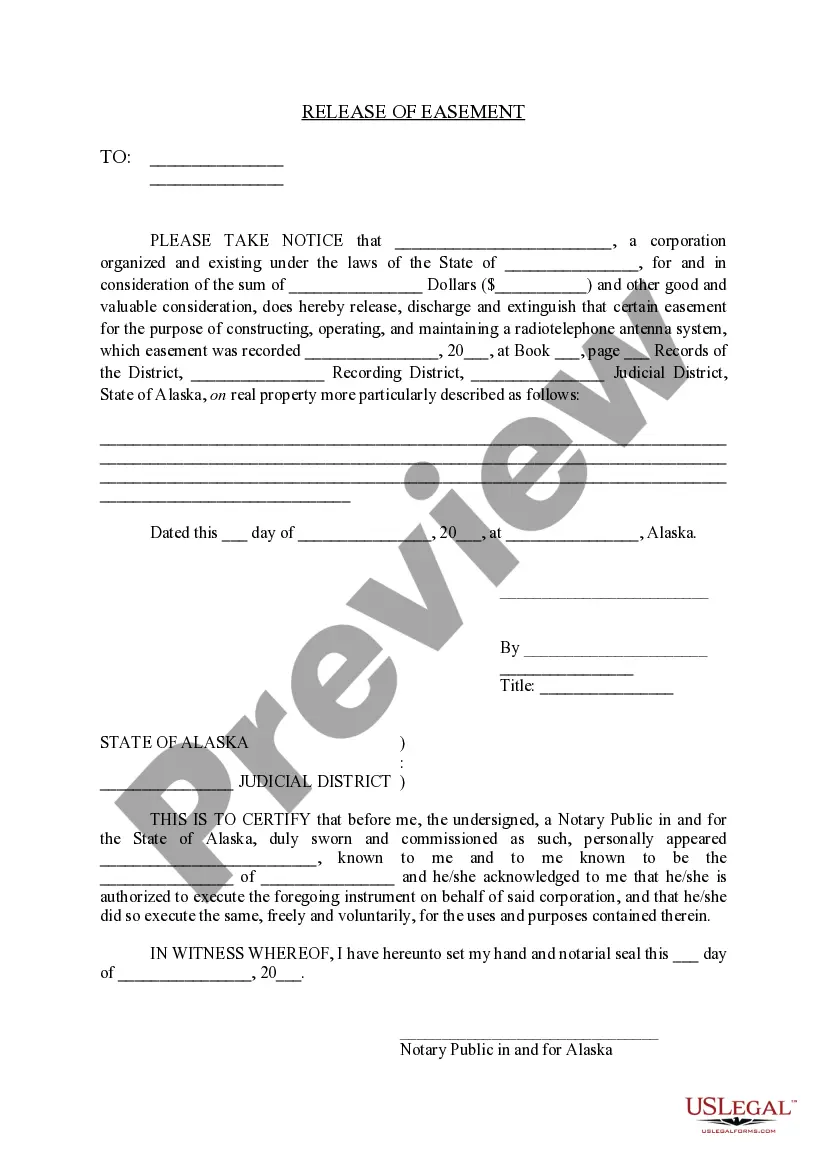
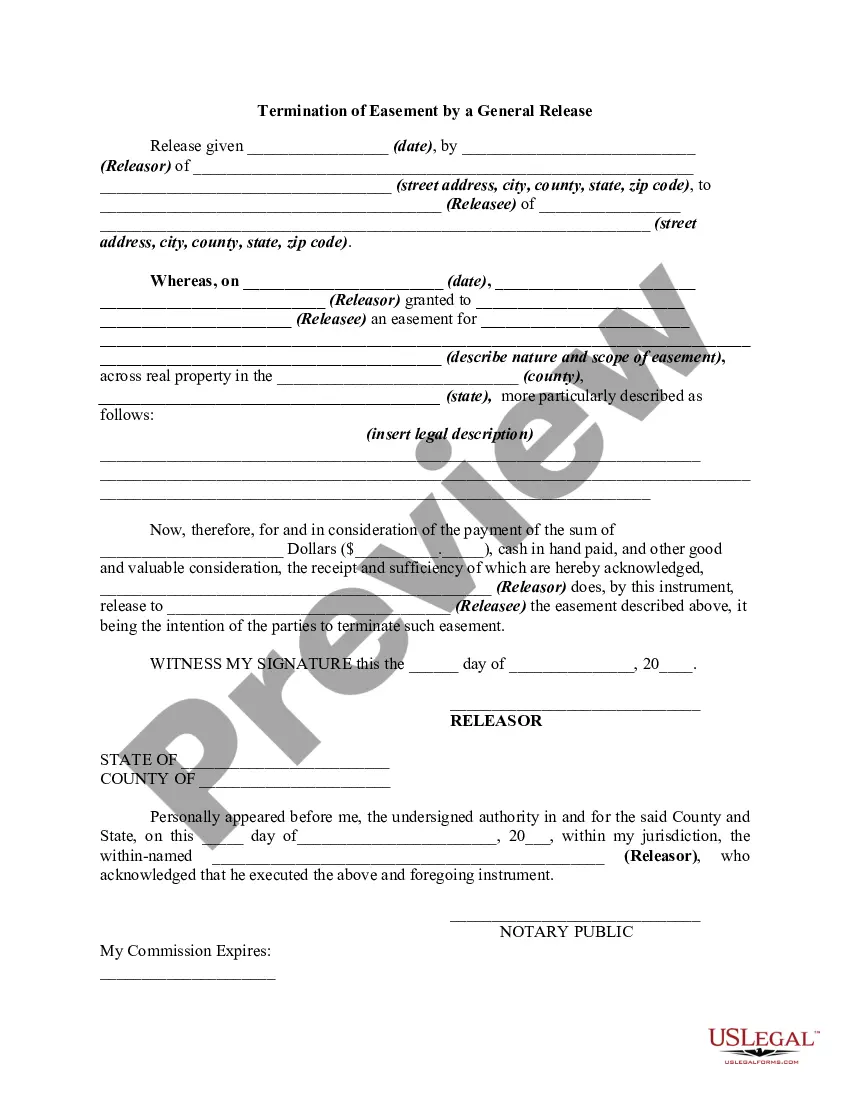
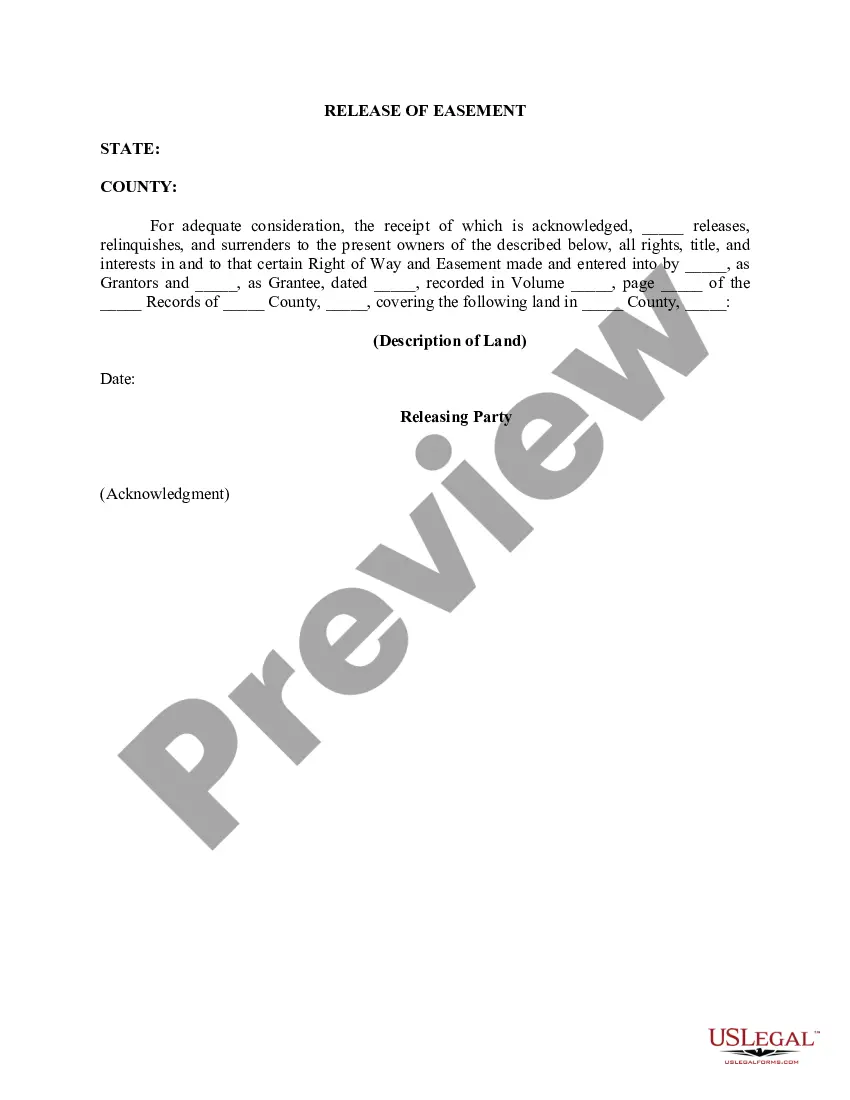
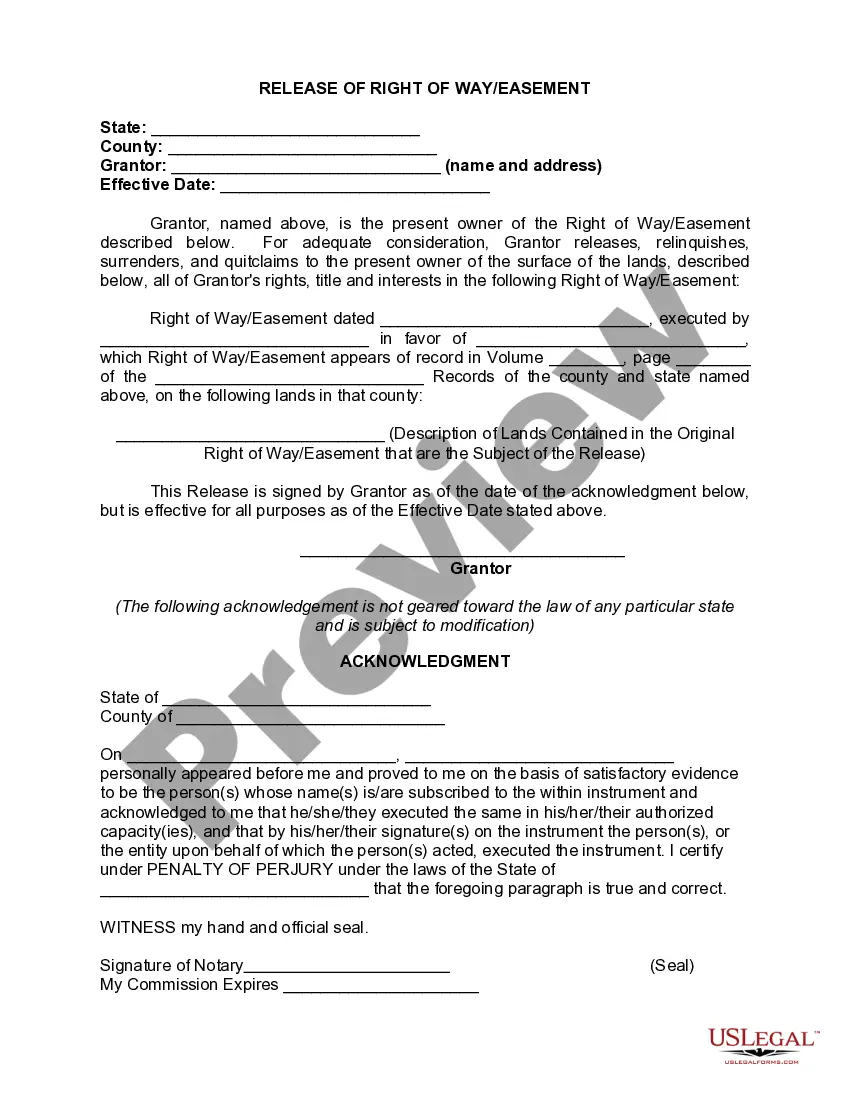
The Release of Easement form is a legal document used to terminate an existing easement that allows for the construction, operation, and maintenance of a radiotelephone antenna system. This form is essential in ensuring that the rights associated with the easement are formally relinquished, distinguishing it from similar forms that may modify but do not completely dissolve an easement agreement.
What’s included in this form
- Identification of parties involved in the easement release.
- Details of the easement being released, including location and original recording information.
- Financial compensation provided for the release of the easement.
- Signatures of authorized representatives and a notary public certification.
When to use this document
This form should be used when a corporation or property owner wishes to formally relinquish their rights under an easement specifically for a radiotelephone antenna system. It is applicable in situations where the easement is no longer needed due to changes in technology, construction plans, or changes in property use.
Who can use this document
- Corporations or LLCs that hold a recorded easement related to a radiotelephone antenna system.
- Property owners seeking to terminate easement rights for redevelopment or other purposes.
- Legal professionals assisting clients in managing easement agreements.
Completing this form step by step
- Identify the parties involved by filling in the names and addresses of the releasing corporation and the easement holder.
- Provide the consideration amount being exchanged for the easement release.
- Specify the details of the recorded easement, including the recording date and location.
- Complete the signatures with the name and title of the authorized representative of the corporation.
- Ensure the form is notarized by a licensed notary public to confirm the authenticity of the signatures.
Does this document require notarization?
Yes, this form must be notarized to be legally valid. US Legal Forms provides integrated online notarization services, allowing you to securely notarize the document via video call, at your convenience.
Get your form ready online
Our built-in tools help you complete, sign, share, and store your documents in one place.
Make edits, fill in missing information, and update formatting in US Legal Forms—just like you would in MS Word.
Download a copy, print it, send it by email, or mail it via USPS—whatever works best for your next step.
Sign and collect signatures with our SignNow integration. Send to multiple recipients, set reminders, and more. Go Premium to unlock E-Sign.
If this form requires notarization, complete it online through a secure video call—no need to meet a notary in person or wait for an appointment.
We protect your documents and personal data by following strict security and privacy standards.

Make edits, fill in missing information, and update formatting in US Legal Forms—just like you would in MS Word.

Download a copy, print it, send it by email, or mail it via USPS—whatever works best for your next step.

Sign and collect signatures with our SignNow integration. Send to multiple recipients, set reminders, and more. Go Premium to unlock E-Sign.

If this form requires notarization, complete it online through a secure video call—no need to meet a notary in person or wait for an appointment.

We protect your documents and personal data by following strict security and privacy standards.
Avoid these common issues
- Failing to accurately identify the parties involved in the easement agreement.
- Neglecting to include the correct details of the recorded easement.
- Omitting the notarization step, which can invalidate the form.
Benefits of using this form online
- Easy access to a professionally drafted document.
- Editable templates allow for customization to meet specific needs.
- Convenient downloading options for immediate use.
Looking for another form?
Form popularity
FAQ
You can expressly terminate an easement just like you can expressly create one. The dominant owner can release the easement by deed, thereby extinguishing it. Or the dominant owner can transfer the easement by deed to the servient owner.
So, having an easement on a property may have a permanent outcome on the property with rights of the home owner. But not all easements are bad.If you live in a rural area, you run into bad easement issues more often, typically where the easement was created by a parcel owner next to your land.
An easement gives a person the legal right to go through another person's land, as long as the usage is consistent with the specified easement restrictions. Although an easement grants a possessory interest in the land for a specific purpose, the landowner retains the title to the property.
An easement is extinguished when the dominant owner releases it, expressly or impliedly, to the servient owner. Such release can be made only in the circumstances and to the extent in and to which the dominant owner can alienate the dominant heritage.A, without the consent of B and C, release the easement.
Benefits the owner of adjacent land. The easement is thus appurtenant to the holder's land. The benefited land is called the dominant tenementThe land that benefits from an easement., and the burdened landthat is, the land subject to the easementis called the servient tenement.
Under the merger doctrine, an easement will terminate when the dominant and servient estates become vested in one person. To satisfy this, there must be a complete unity of the dominant and servient estates, meaning that one person or entity owns the entire plot of land.
Courts generally assume easements are created to last forever unless otherwise indicated in the document creating the easement. Despite this, an individual granting an easement should avoid any potential problems by expressly providing that the easement is permanent.
Easements generally survive conveyances and can only be terminated by completion, destruction, or expiration. So, having an easement on a property may have a permanent outcome on the property with rights of the home owner. But not all easements are bad.
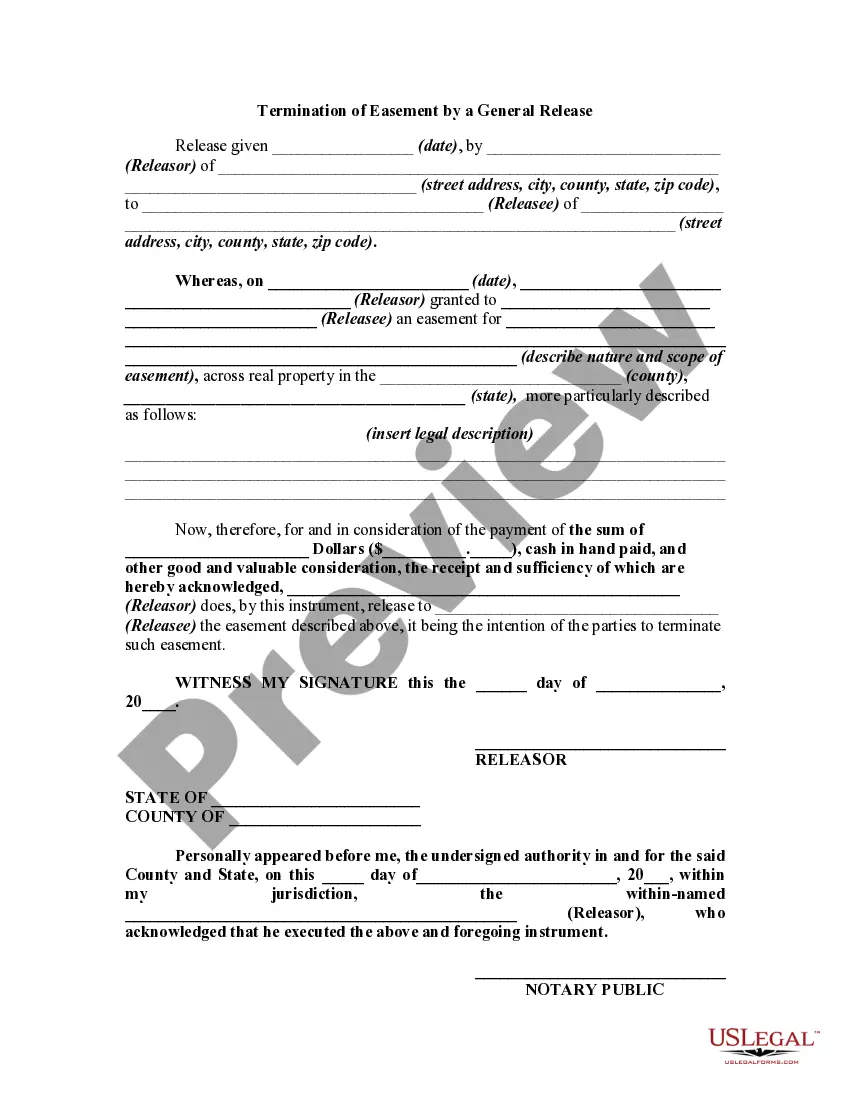
You can terminate an easement by release. A release is a surrender of a right or interest, such as an easement. Only the person holding the right can release it, such as the owner of the dominant estate in an easement appurtenant or the holder of an easement in gross.