This 5 Day Notice to Tenant of Termination for Non-payment of Utilities Residential - Landlord to Tenant form is for use by Landlord in order to terminate a Lease when the Tenant has had one or more utilities cut off due to Tenant's failure to pay utility bills. This is a 5 day notice, with Tenant allowed 3 days to have the service reconnected, and pay all costs thereof. If Tenant fails in this, then he must vacate by the 5th day.
Alaska 5 Day Notice to Tenant of Default for Nonpayment of Utilities - Residential from Landlord to Tenant
State:
Alaska
Control #:
AK-1212LT
Format:
Word;
Rich Text
Instant download
Description
Free preview
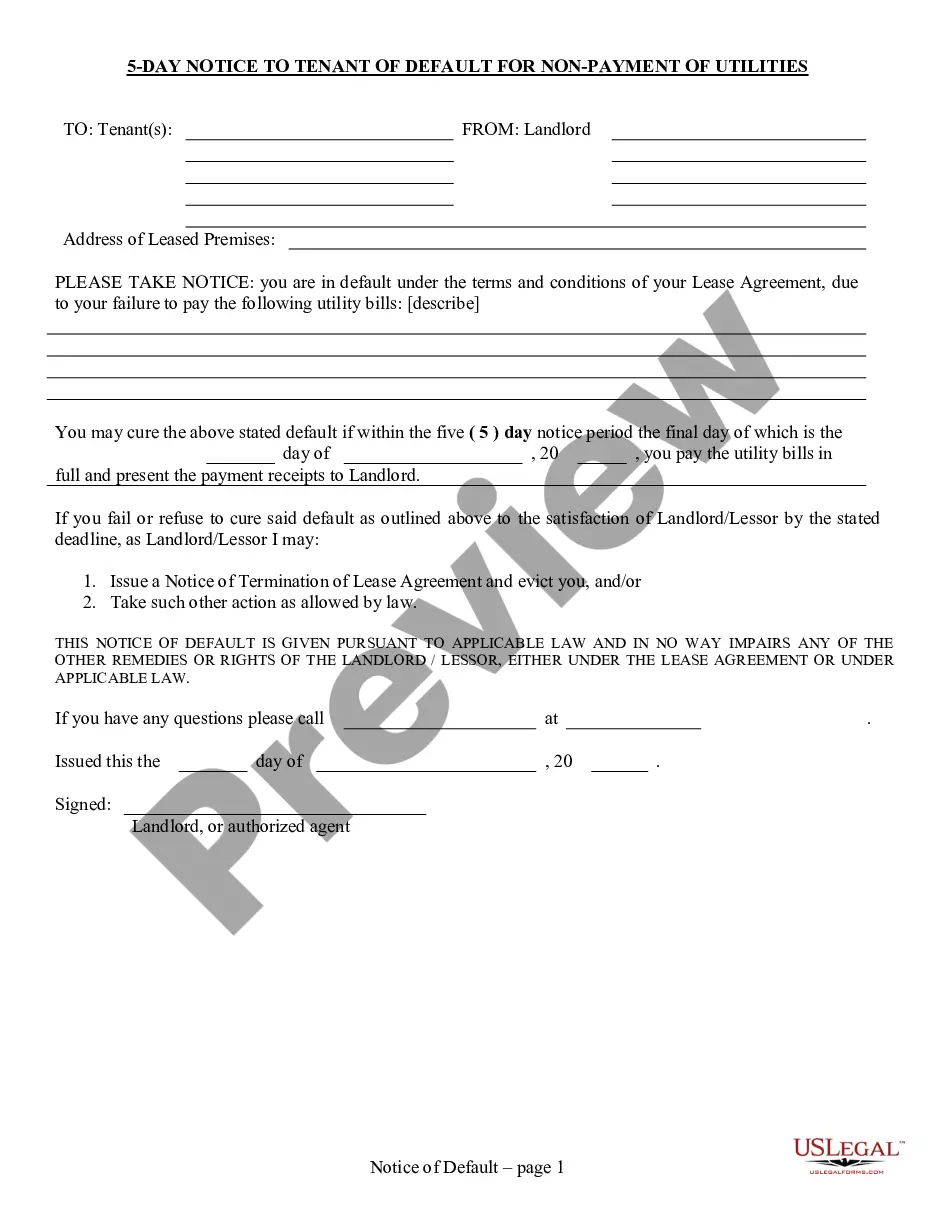
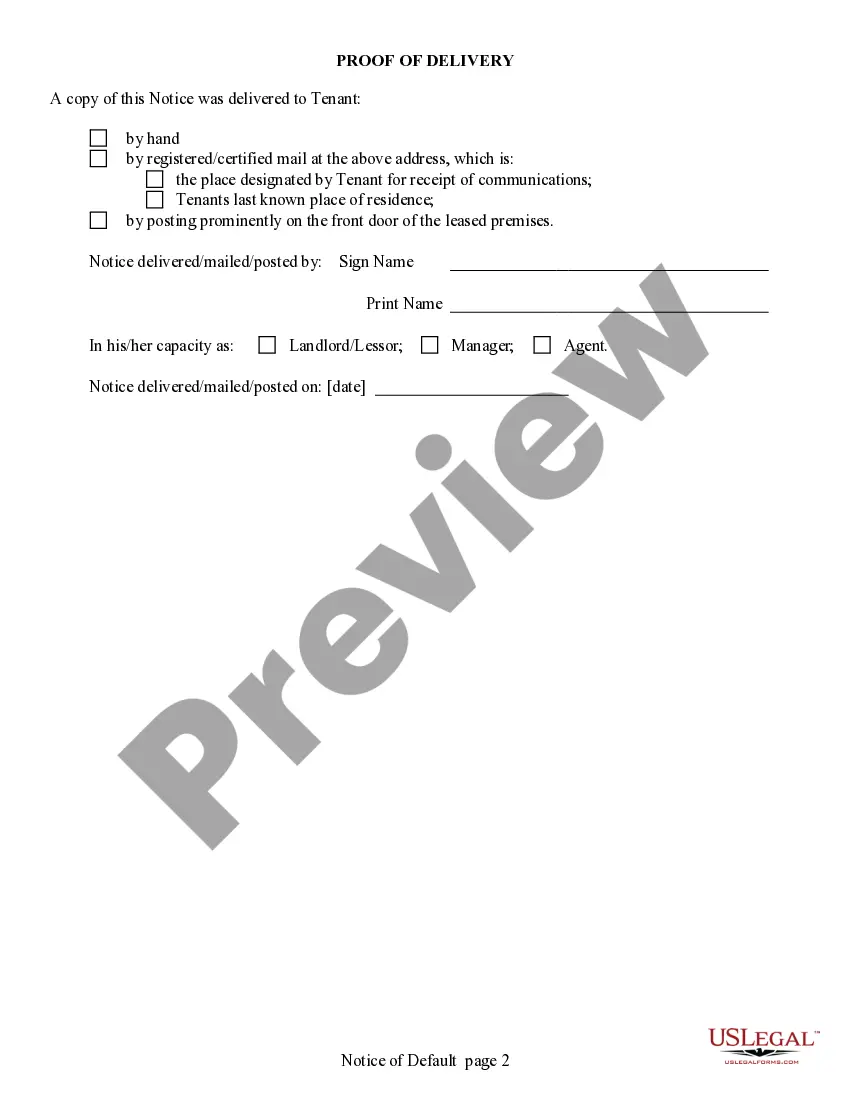

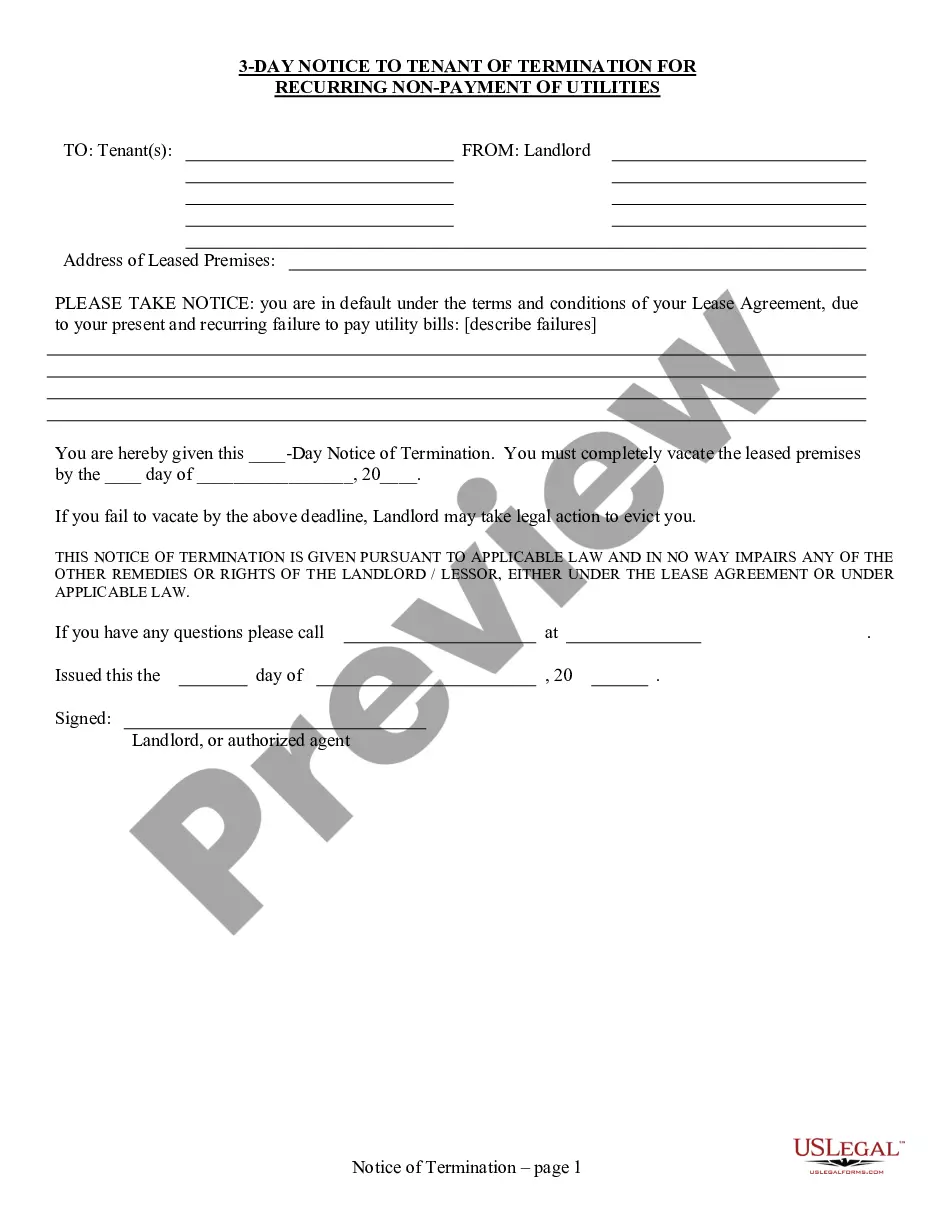


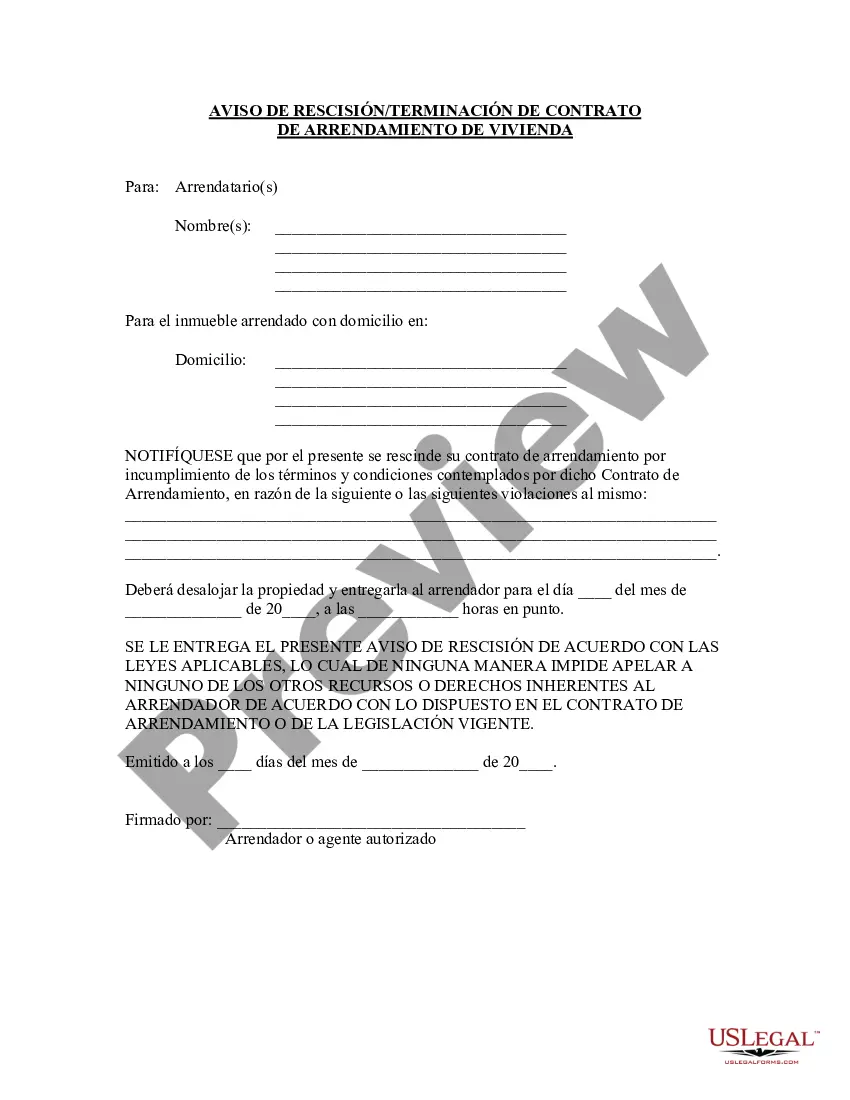
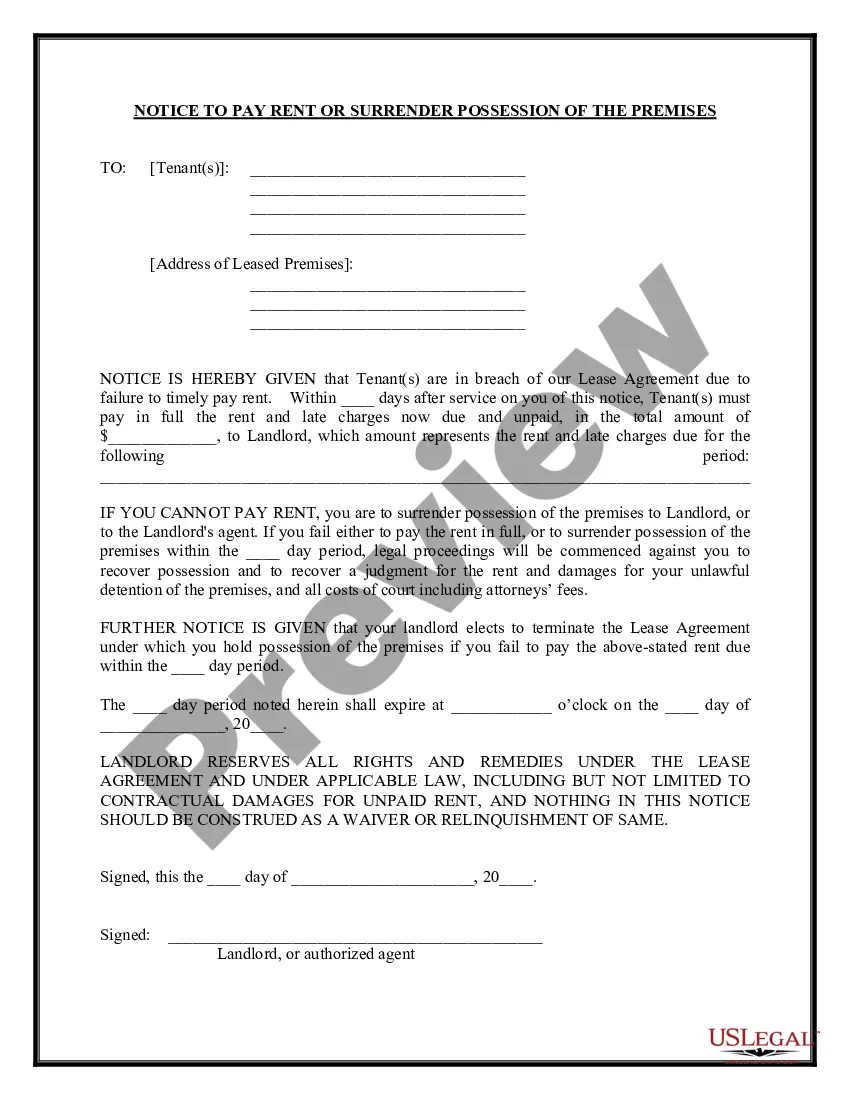
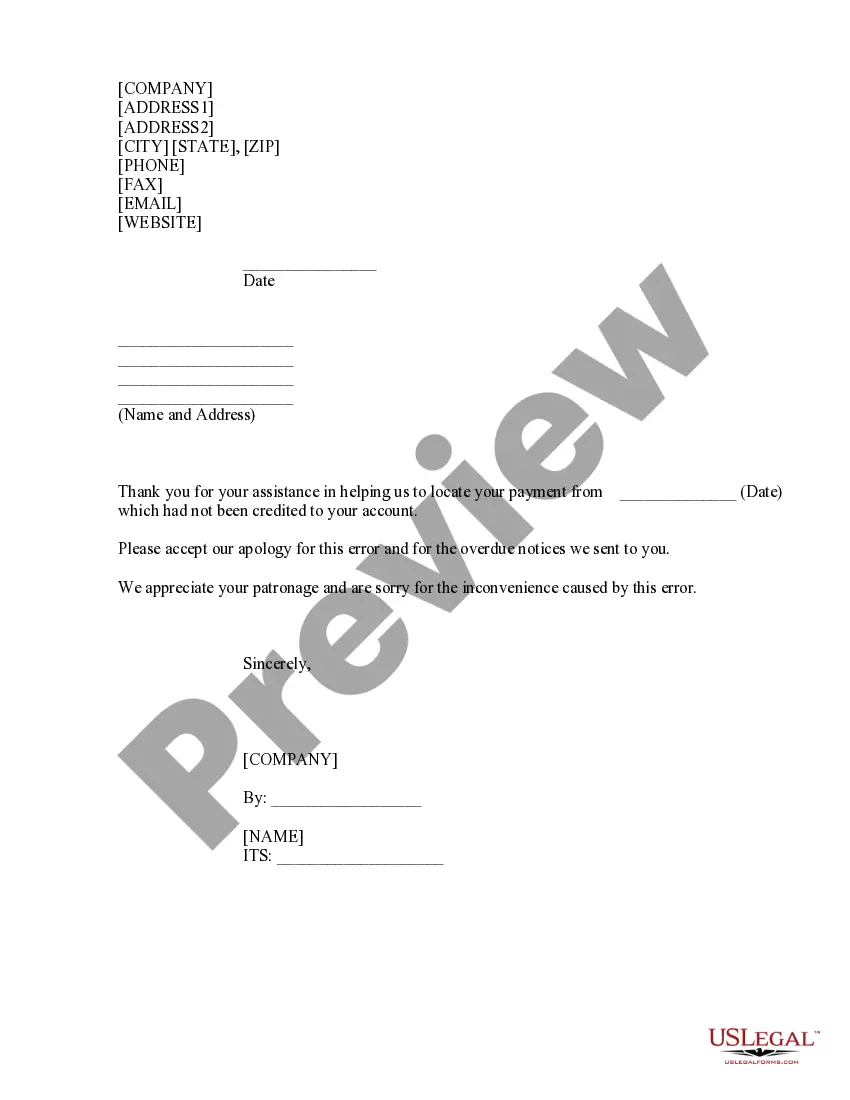

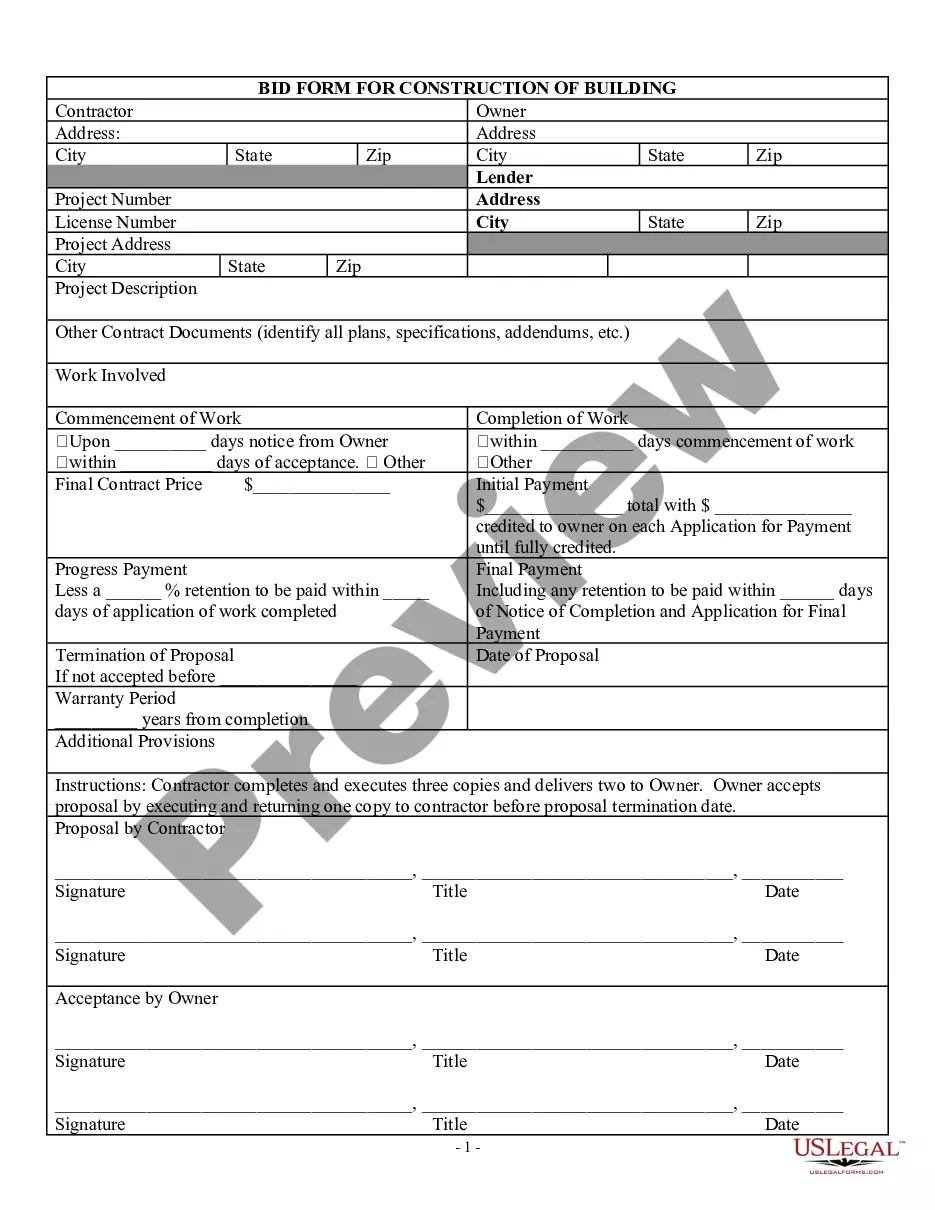
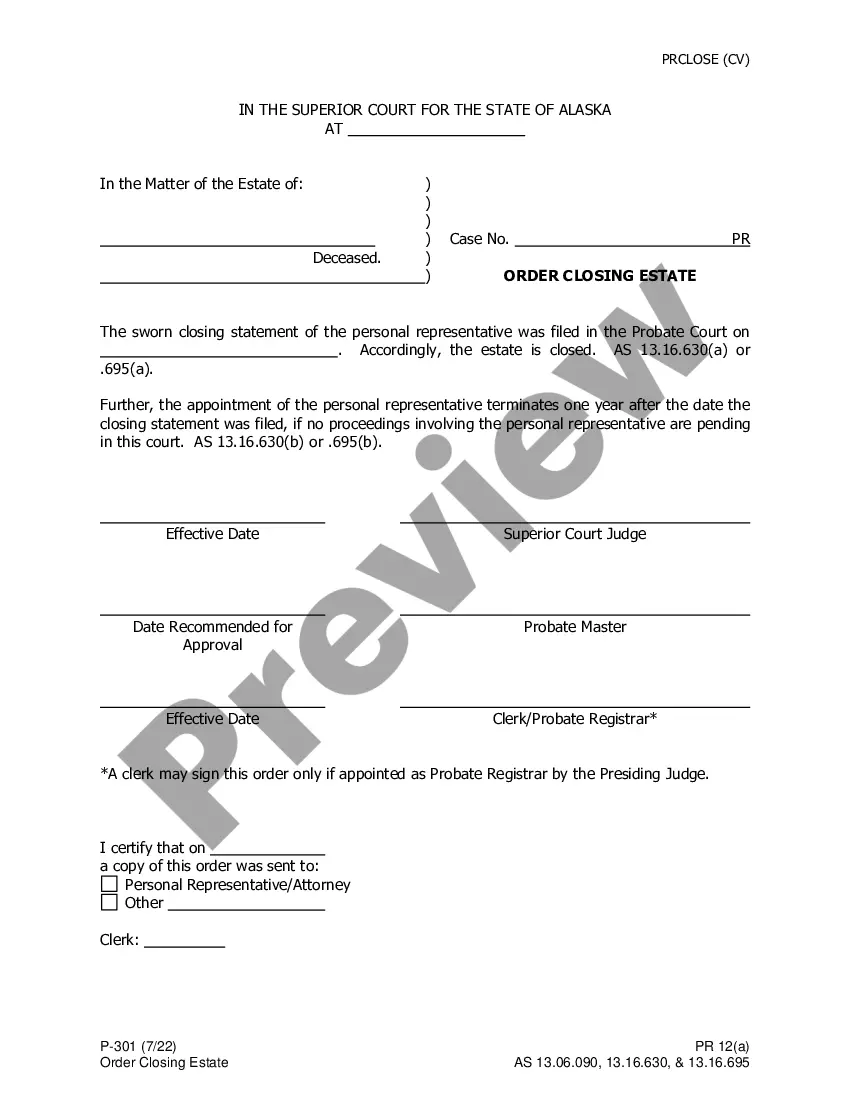
How to fill out Alaska 5 Day Notice To Tenant Of Default For Nonpayment Of Utilities - Residential From Landlord To Tenant?
Using Alaska 5 Day Notice to Tenant of Default for Nonpayment of Utilities - Residential from Landlord to Tenant examples created by skilled attorneys helps you avoid complications when preparing documents.
Simply obtain the template from our site, complete it, and seek legal advice to confirm it. This approach can save you significantly more time and expenses than trying to find a legal expert to generate a document from scratch according to your specifications.
If you have already purchased a US Legal Forms subscription, just sign in to your account and navigate back to the form page. Locate the Download button near the templates you are reviewing.
Once you have completed all the above steps, you will be able to fill out, print, and sign the Alaska 5 Day Notice to Tenant of Default for Nonpayment of Utilities - Residential from Landlord to Tenant example. Remember to verify all entered information for accuracy before submitting or sending it out. Minimize the time spent on document preparation with US Legal Forms!
- After downloading a template, you will find all your saved samples in the My documents section.
- If you don’t have a subscription, there’s no need for concern. Just follow the steps below to register for an online account, obtain, and fill out your Alaska 5 Day Notice to Tenant of Default for Nonpayment of Utilities - Residential from Landlord to Tenant template.
- Verify and ensure you are downloading the appropriate state-specific form.
- Utilize the Preview function and read the description (if provided) to confirm if you need this particular document, and if necessary, click Buy Now.
- Search for another template using the Search field if required.
- Choose a subscription plan that fits your needs.
- Proceed with your credit card or PayPal.
Form popularity
FAQ
If the tenant refuses, you are permitted to send them a notice to agree or quit the property. The tenant refusing you access constitutes a breach in the lease agreement, so they could be evicted if they continue to deny access.
Tell Them The Problem & Consequences. Explain the reason that you want the tenant to go. Offer Them a Way Out. Let the tenant know that you are willing to give them a lump sum of cash in agreement for leaving the property. The Release.
A landlord cannot legally evict you without a court order, whether or not you have a lease.) How long does it take for a landlord to evict a tenant? A landlord can evict a tenant only by going through a formal eviction proceeding, which can take a few weeks from start to finish.
The court holds an eviction hearing within 15 days after the case is filed in court and at least 2 days after the summons is served on the tenant. At this hearing, the judge decides who gets possession of the property.
If you're an assured tenant or a protected tenant Your landlord will have to give you notice if they want you to leave. They have to give the reasons why they want to evict you - for example, if you have rent arrears or you've damaged the property. Your landlord will have to go to court and get a court order.
It says landlords should fix major problems within two weeks if they pose a threat to a tenant's health and security, such as a broken boiler in the depths of winter.
If the tenant refuses, you are permitted to send them a notice to agree or quit the property. The tenant refusing you access constitutes a breach in the lease agreement, so they could be evicted if they continue to deny access.
Your landlord has to keep your home in a good condition and do repairs if you need them. They can't make you leave your home just for asking for repairs to be done - your landlord has to follow a proper eviction process if they want you to leave.
Duty of Repairs and Maintenance Also, once the tenant moves in, a landlord is required to make repairs and conduct maintenance to keep the rental property in a habitable condition. A habitable property is one that is free from infestation, has adequate heating, water, and electricity, and is structurally sound.