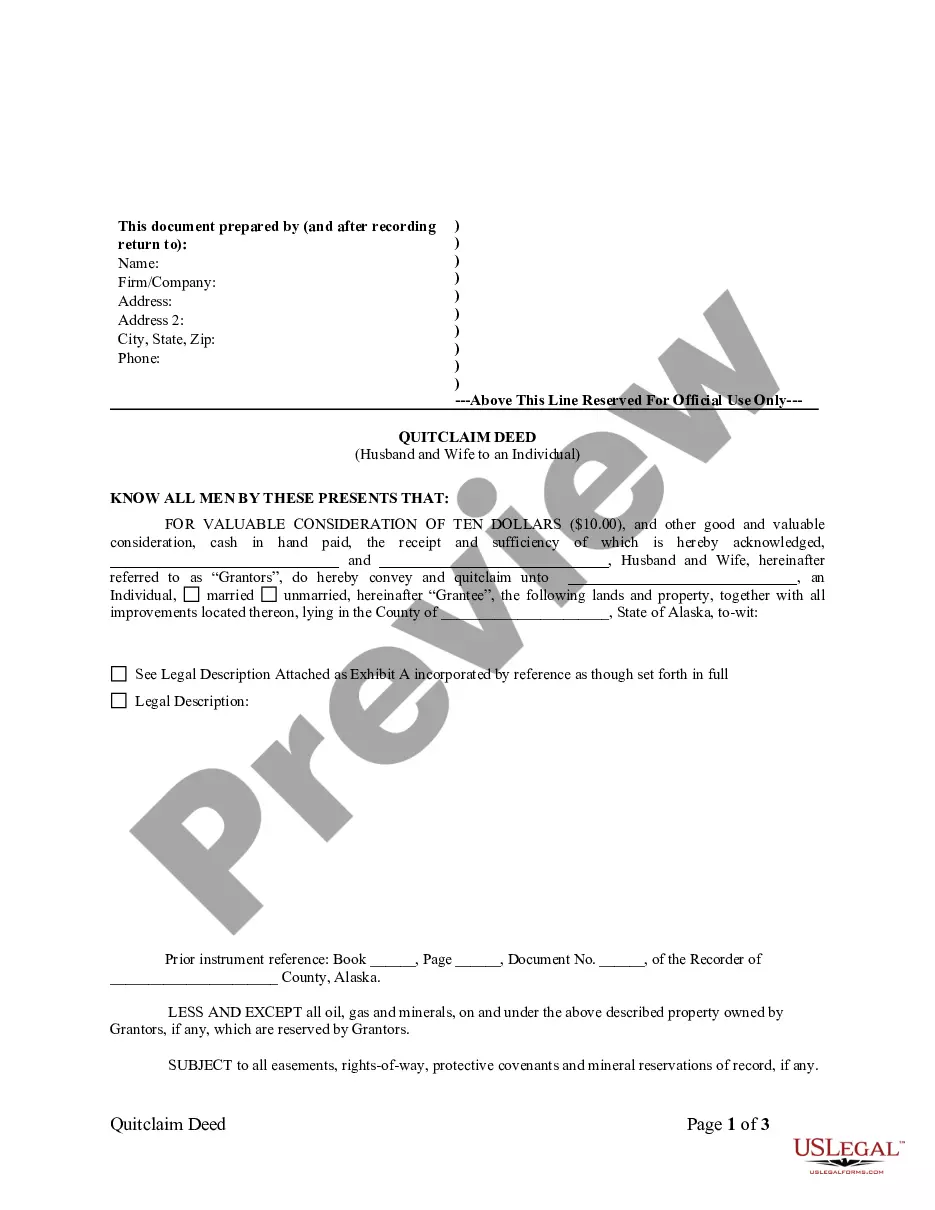
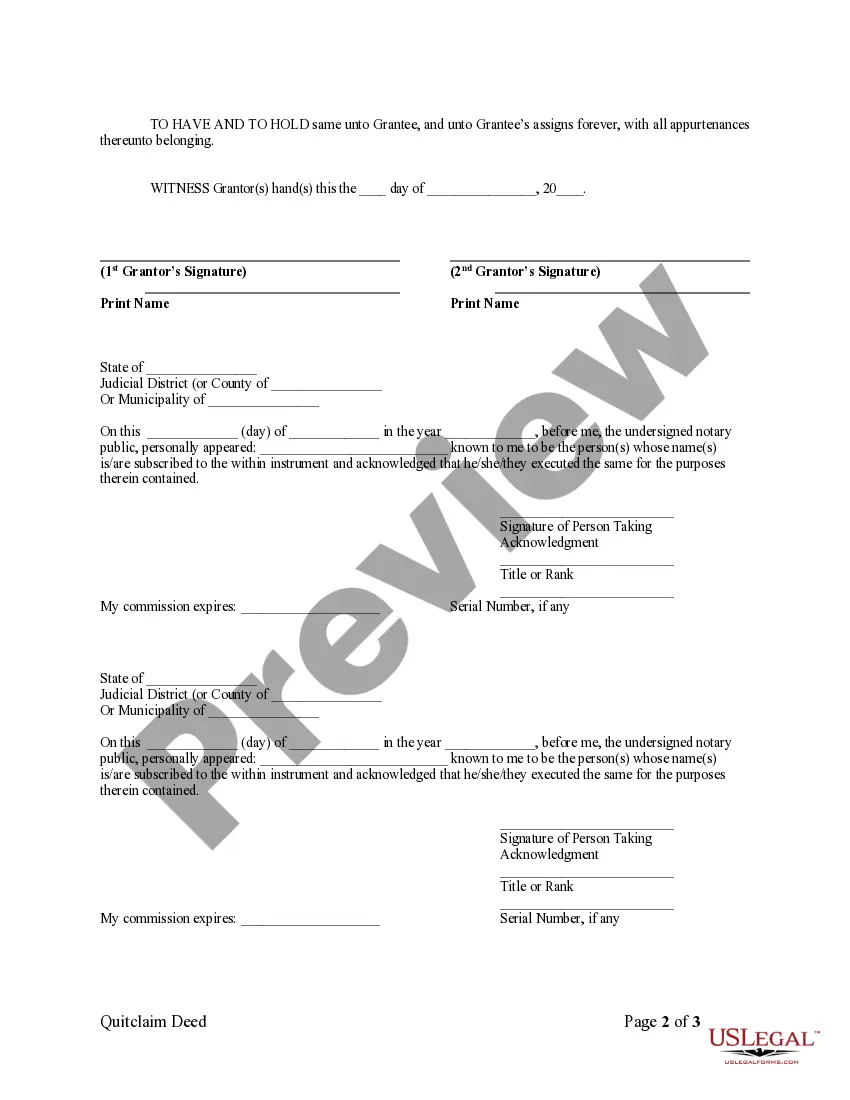
This Quitclaim Deed is used where the Grantors are husband and wife and the Grantee is an individual. Grantors convey and quitclaim the described property to Grantee less and except all oil, gas and minerals, on and under the property owned by Grantors, if any, which are reserved by Grantor. This deed complies with all state statutory laws.
Alaska Quitclaim Deed from Husband and Wife to an Individual
Category:
State:
Alaska
Control #:
AK-018-77
Format:
Word;
Rich Text
Instant download
Description
Free preview

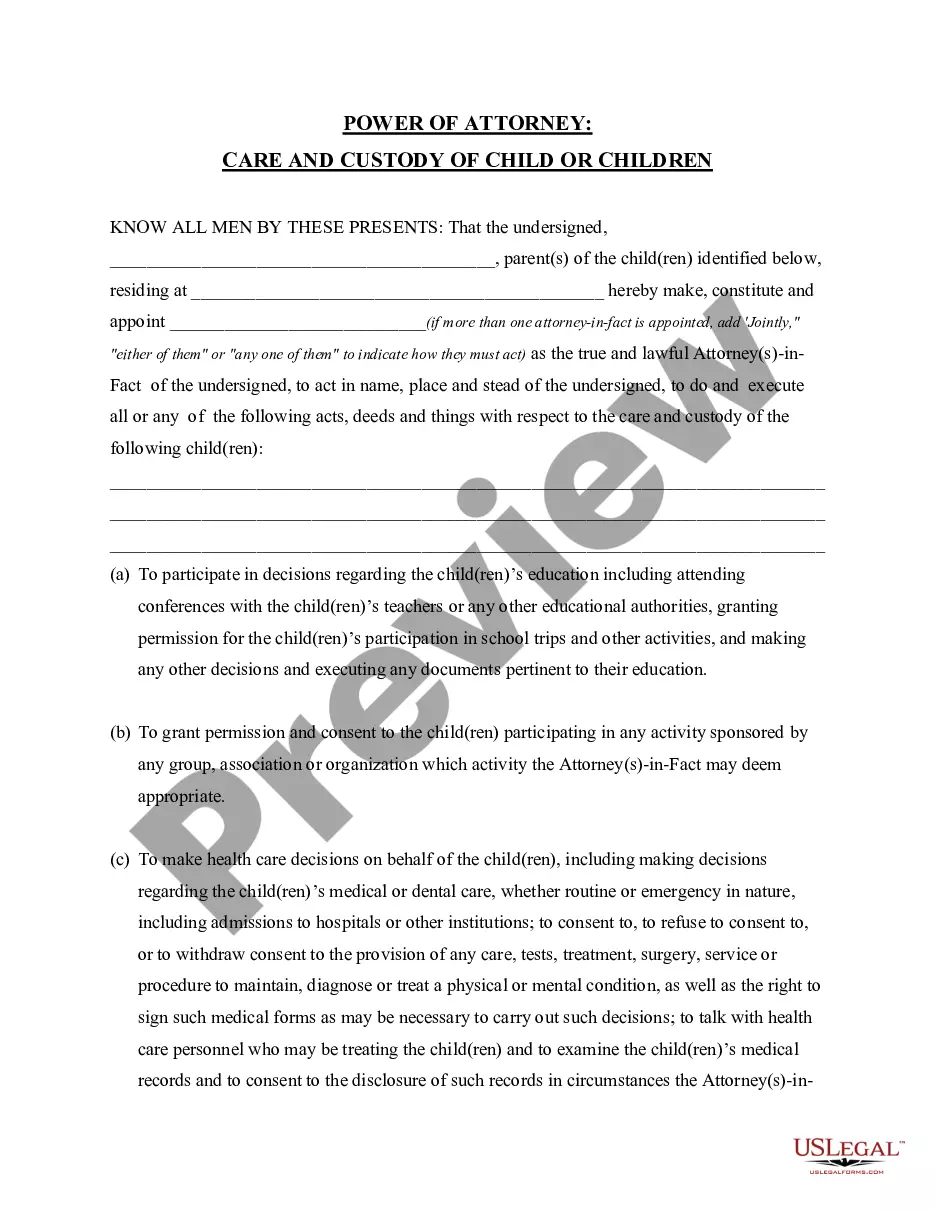
How to fill out Alaska Quitclaim Deed From Husband And Wife To An Individual?
Employing Alaska Quitclaim Deed from Spouses to an Individual templates crafted by expert attorneys allows you to steer clear of complications when completing paperwork.
Simply download the form from our site, fill it in, and have a lawyer verify it.
By doing this, you can save significantly more time and expenses than seeking a legal professional to create a document from scratch tailored to your requirements.
Use the Preview feature and review the description (if available) to determine if you need this particular sample, and if so, simply click Buy Now.
- If you’ve already purchased a US Legal Forms subscription, just Log In to your account and go back to the sample page.
- Locate the Download button next to the templates you are reviewing.
- After downloading a document, all your saved samples can be found in the My documents tab.
- If you don’t have a subscription, it's not a major issue.
- Just follow the steps below to register for your account online, obtain, and complete your Alaska Quitclaim Deed from Spouses to an Individual template.
- Re-verify that you are downloading the correct state-specific form.
Form popularity
FAQ
No law forbids adding someone to your mortgaged home's deed or in signing your home over to others through one. Mortgage lenders understand deeds, though, and use loan due-on-sale clauses to prevent unauthorized property sales or transfers.
Two of the most common ways to transfer property in a divorce are through an interspousal transfer deed or quitclaim deed. When spouses own property together, but then one spouse executes an interspousal transfer or a quitclaim deed, this is known as transmutation.
But you might be wondering if an owner can transfer a deed to another person without a real estate lawyer. The answer is yes. Parties to a transaction are always free to prepare their own deeds.A quitclaim deed, for example, is far simpler than a warranty deed.
You usually do this by filing a quitclaim deed, in which your ex-spouse gives up all rights to the property. Your ex should sign the quitclaim deed in front of a notary. One this document is notarized, you file it with the county. This publicly removes the former partner's name from the property deed and the mortgage.
A quitclaim deed is a deed (proof of ownership) that is passed from a grantor (the existing property owner) to a grantee (the new property owner) that does not have a warranty.A quitclaim deed has no guarantees for the grantor or grantee.
Fill out the quit claim deed form, which can be obtained online, or write your own using the form as a guide. The person giving up the interest in the property is the grantor, and the person receiving the interest is the grantee.
It is possible to be named on the title deed of a home without being on the mortgage. However, doing so assumes risks of ownership because the title is not free and clear of liens and possible other encumbrances.If a mortgage exists, it's best to work with the lender to make sure everyone on the title is protected.
In California, all property bought during the marriage with income that was earned during the marriage is deemed "community property." The law implies that both spouses own this property equally, regardless of which name is on the title deed.
One of the simplest ways to add your wife to the home title is by using an interspousal deed. You can transfer the property from your sole and separate property to mutual tenancy, such as joint tenants with right of survivorship, with your wife.