Wyoming Mineral Deed - Individual to Individual - Grantors acting by and through Attorney in Fact
What is this form?
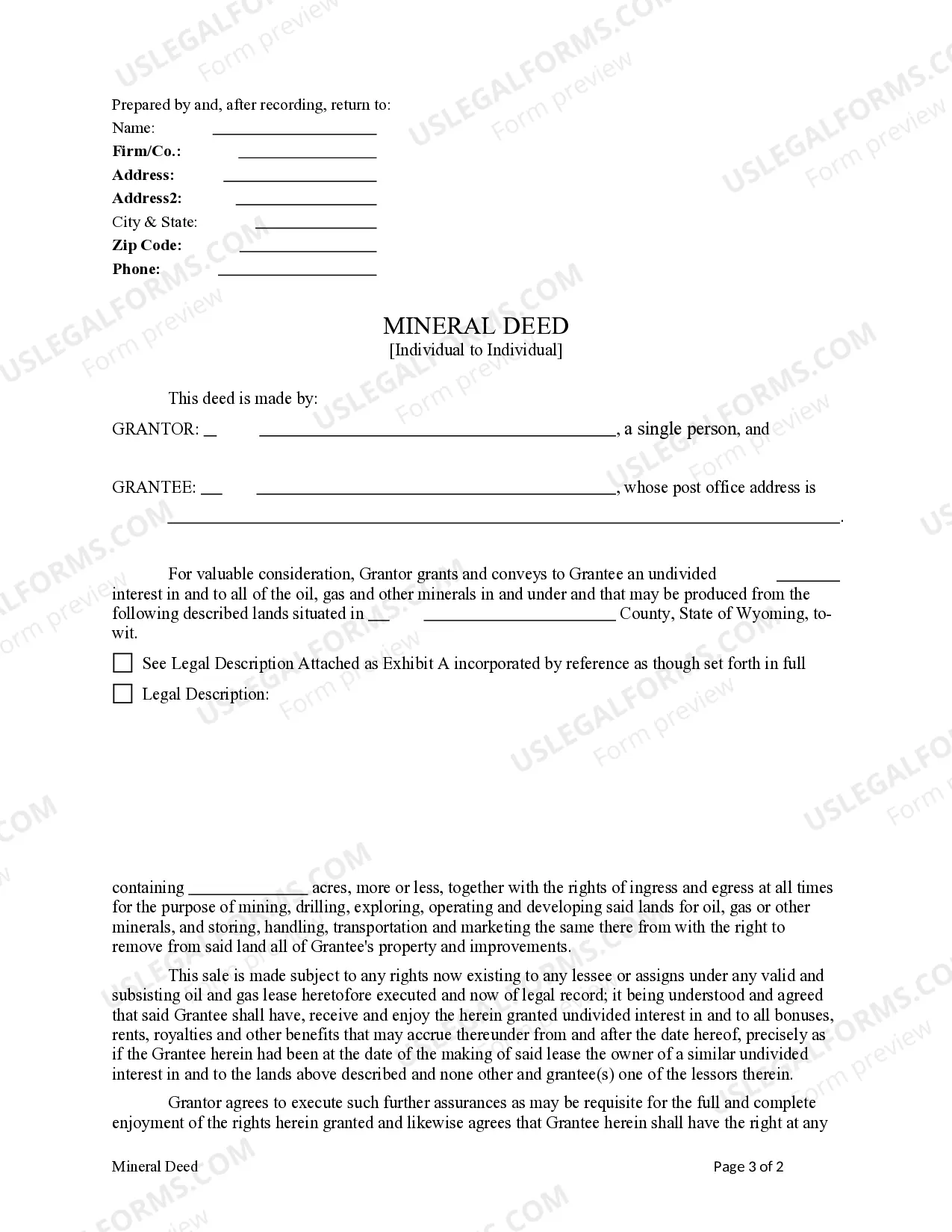
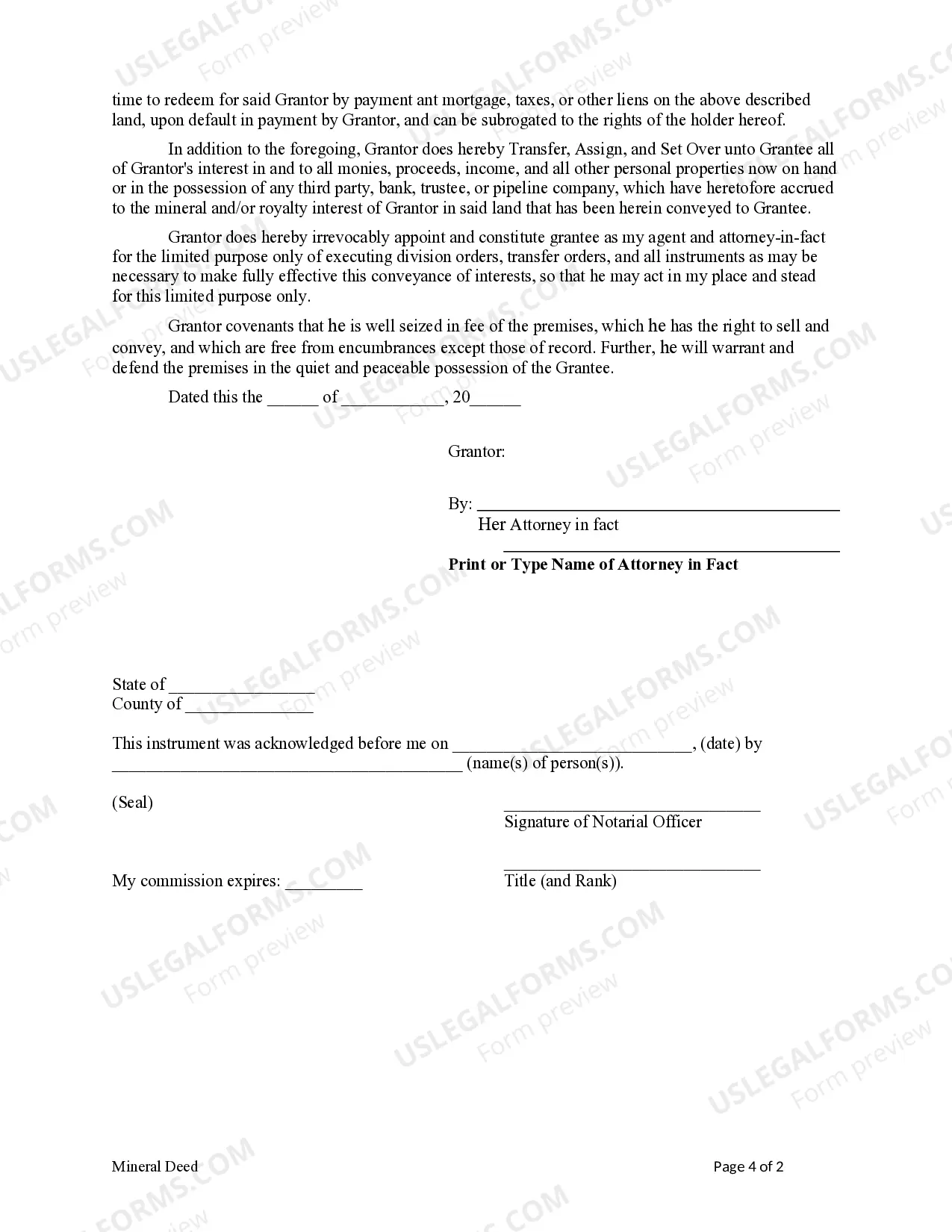
The Mineral Deed is a legal document that facilitates the transfer of mineral rights from one individual (the Grantor) to another individual (the Grantee). In this case, the Grantor is represented by an attorney in fact, ensuring that the transfer can take place even if the Grantor is unable to sign the deed personally. This form is essential for anyone looking to legally convey their mineral interests while complying with state laws.
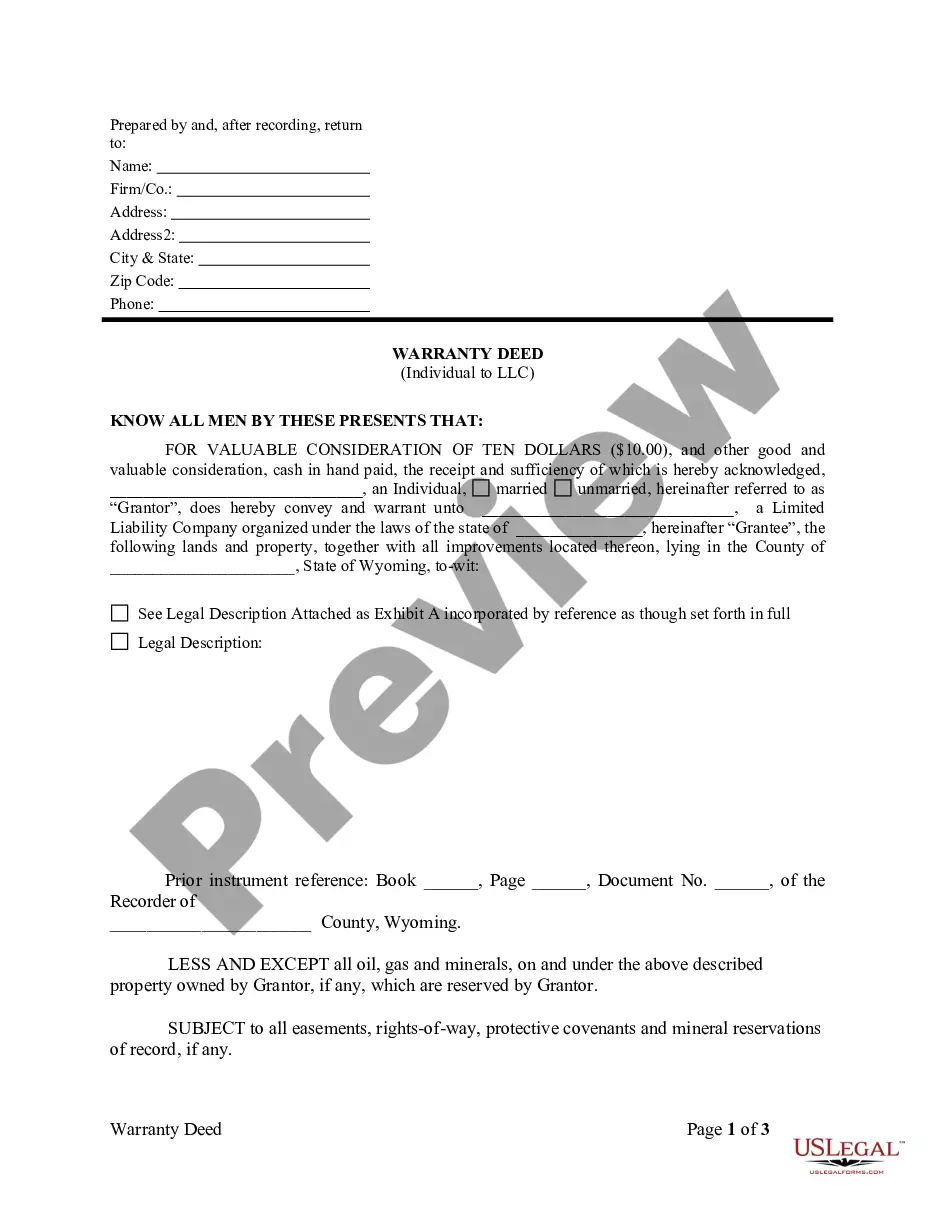
Form components explained
- Grantor and Grantee Information: Sections for naming both parties involved in the transaction.
- Property Description: Clear details of the property being transferred, including legal descriptions.
- Appointment Clause: A section that designates the Grantee as the attorney-in-fact for specific purposes.
- Transfer of Interests: Clauses detailing the rights and interests being conveyed.
- Signature and Date: Fields for the Grantor's signature and the date of execution.

When this form is needed
This form is typically used when an individual wishes to convey their mineral rights to another individual and is unable to do so directly due to disability, unavailability, or other reasons. It ensures the transfer of rights while complying with state regulations, making it particularly useful in real estate transactions concerning oil, gas, or other mineral interests.
Who should use this form
- Individuals who own mineral rights and wish to transfer them to another person.
- Grantors who need to execute the transfer through an attorney in fact.
- Real estate professionals and attorneys who handle mineral rights transactions.
- Buyers looking to acquire mineral rights from individuals.
Completing this form step by step
- Identify the parties involved: Fill in the names of the Grantor and Grantee.
- Specify the property: Provide a detailed legal description of the mineral rights being conveyed.
- Fill in the appointment: Indicate the Grantee's role as attorney-in-fact for the Grantor.
- Sign and date the document: Ensure the Grantor signs the deed where indicated and dates it correctly.
- Review any additional clauses: Make sure each clause and provision suits the specific transaction.
Notarization guidance
This form does not typically require notarization unless specified by local law. However, it is advisable to verify local regulations to ensure compliance when transferring mineral rights.
Get your form ready online
Our built-in tools help you complete, sign, share, and store your documents in one place.
Make edits, fill in missing information, and update formatting in US Legal Forms—just like you would in MS Word.
Download a copy, print it, send it by email, or mail it via USPS—whatever works best for your next step.
Sign and collect signatures with our SignNow integration. Send to multiple recipients, set reminders, and more. Go Premium to unlock E-Sign.
If this form requires notarization, complete it online through a secure video call—no need to meet a notary in person or wait for an appointment.
We protect your documents and personal data by following strict security and privacy standards.

Make edits, fill in missing information, and update formatting in US Legal Forms—just like you would in MS Word.

Download a copy, print it, send it by email, or mail it via USPS—whatever works best for your next step.

Sign and collect signatures with our SignNow integration. Send to multiple recipients, set reminders, and more. Go Premium to unlock E-Sign.

If this form requires notarization, complete it online through a secure video call—no need to meet a notary in person or wait for an appointment.

We protect your documents and personal data by following strict security and privacy standards.
Mistakes to watch out for
- Failing to include a complete property description, leading to ambiguity.
- Omitting the date or signature, invalidating the deed.
- Not designating the attorney-in-fact correctly, which can complicate the transaction.
- Using outdated forms or not checking for state-specific requirements.
Why complete this form online
- Convenience: Easily download the form from your device at any time.
- Editability: Complete the form digitally with clear instructions.
- Reliability: Ensure compliance with legal standards via professionally drafted templates.
- Time-saving: Eliminate the need for complex legal consultations for standard transactions.
- The Mineral Deed must be executed following state laws to be legally enforceable.
- Ensure that all parties fully understand their rights and obligations under this deed.
Main things to remember
- This Mineral Deed allows an individual to convey mineral rights through an attorney in fact.
- Proper completion of the form is essential for its effectiveness and legal validity.
- While notarization is not typically required, it may provide additional legal security.
Looking for another form?
Form popularity
FAQ
A California Revocable Transfer-On-Death Deed does not take effect until the property owner dies.As long as the original owner is alive, he can revoke the transfer, sell the property, add or remove beneficiaries, and otherwise maintain complete control over the property.
The life tenant cannot change the remainder beneficiary without their consent. If the life tenant applies for any loans, they cannot use the life estate property as collateral. There's no creditor protection for the remainderman. You can't minimize estate tax.
Dying Without a Will in WyomingIf you die without a valid will, you'll lose control over what happens to your assets after your death.If there isn't a will, the heirs by law must agree and appoint someone to serve as the executor of the probate estate. The person appointed must consent to the role.
A life estate deed permits the property owner to have full use of their property until their death, at which point the ownership of the property is automatically transferred to the beneficiary.
In Wyoming, you can make a living trust to avoid probate for virtually any asset you own -- real estate, bank accounts, vehicles, and so on. You need to create a trust document (it's similar to a will), naming someone to take over as trustee after your death (called a successor trustee).
A life estate deed is by far the easiest way to go. The property is controlled by the owners during their life.Immediately after their passing, the property automatically goes to the person or people listed in the life estate deed. A deed also trumps a will (I know this from personal experience).
Wyoming has a simplified probate process for small estates. To use it, an executor files a written request with the local probate court asking to use the simplified procedure. The court may authorize the executor to distribute the assets without having to jump through the hoops of regular probate.
Possible tax breaks for the life tenant. Reduced capital gains taxes for remainderman after death of life tenant. Capital gains taxes for remainderman if property sold while life tenant still alive. Remainderman's financial problems can affect the life tenant.
The Wyoming Life Estate Deed is a document that grants ownership of a parcel of real property to two separate parties: (1) the Life Tenant, and (2) the Remainderman. As in other states, the Wyoming Life Estate Deed gives the Life Tenant complete use and ownership of the property for a certain period of time.
A person owns property in a life estate only throughout their lifetime. Beneficiaries cannot sell property in a life estate before the beneficiary's death. One benefit of a life estate is that property can pass when the life tenant dies without being part of the tenant's estate.