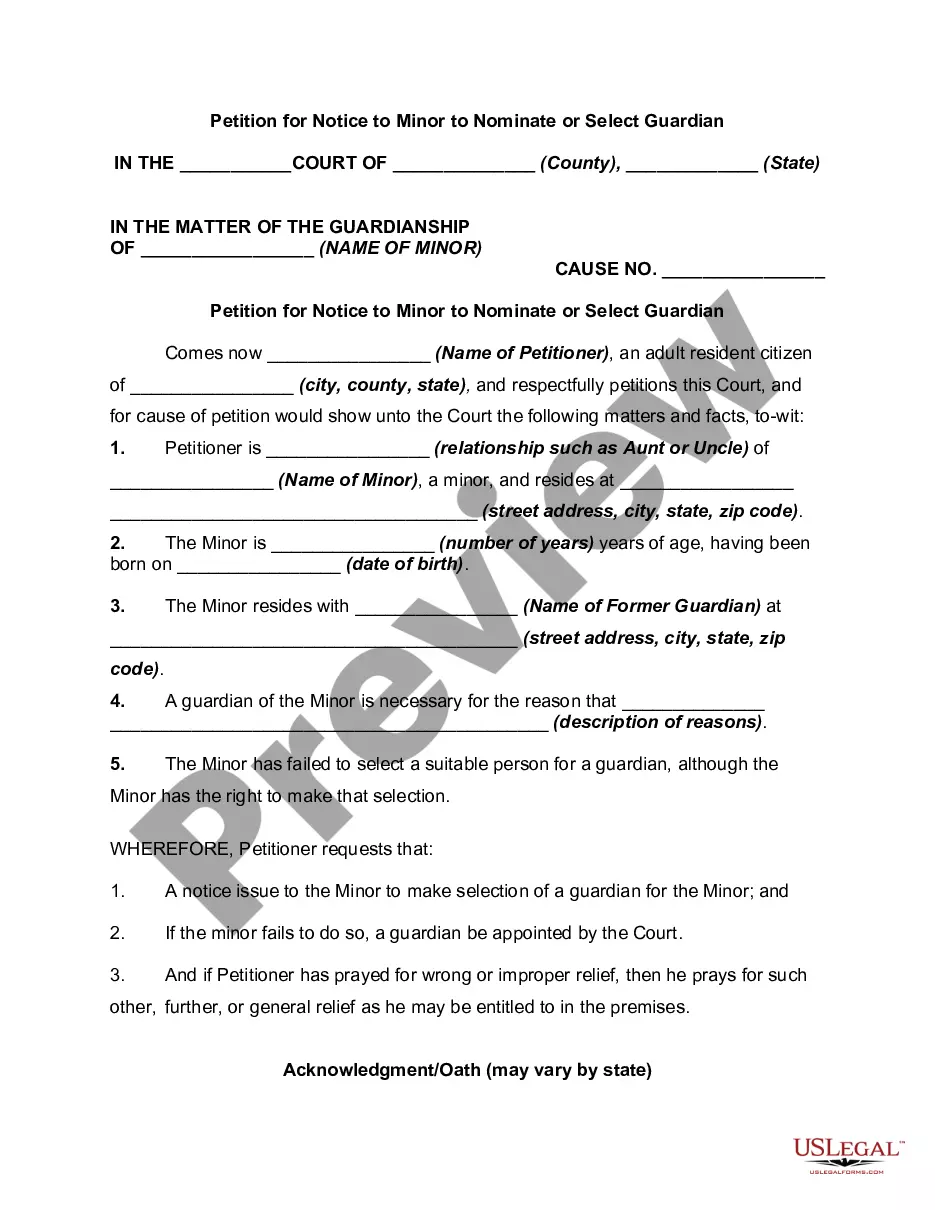
West Virginia Release - Satisfaction - Cancellation Deed of Trust - Individual Lender or Holder
What this document covers
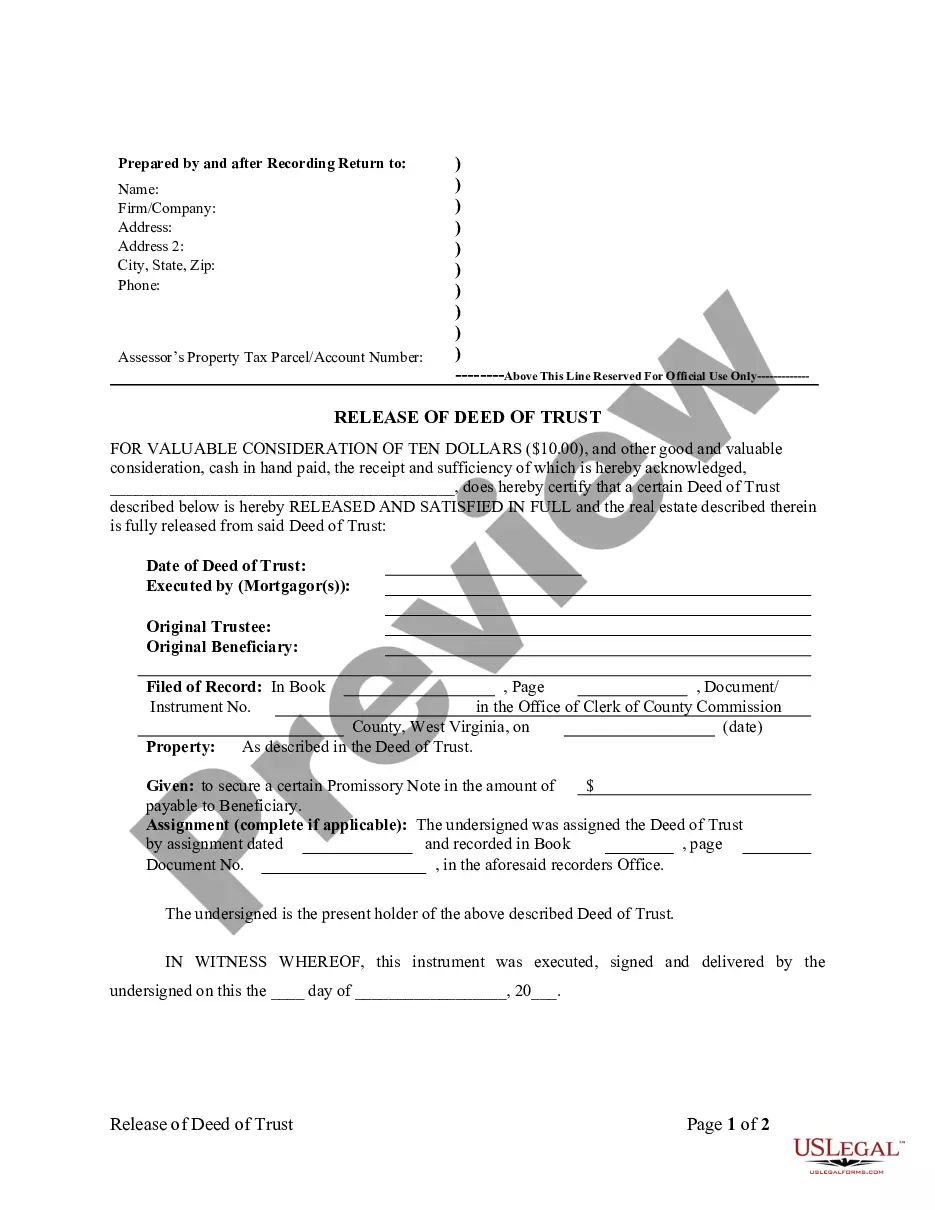
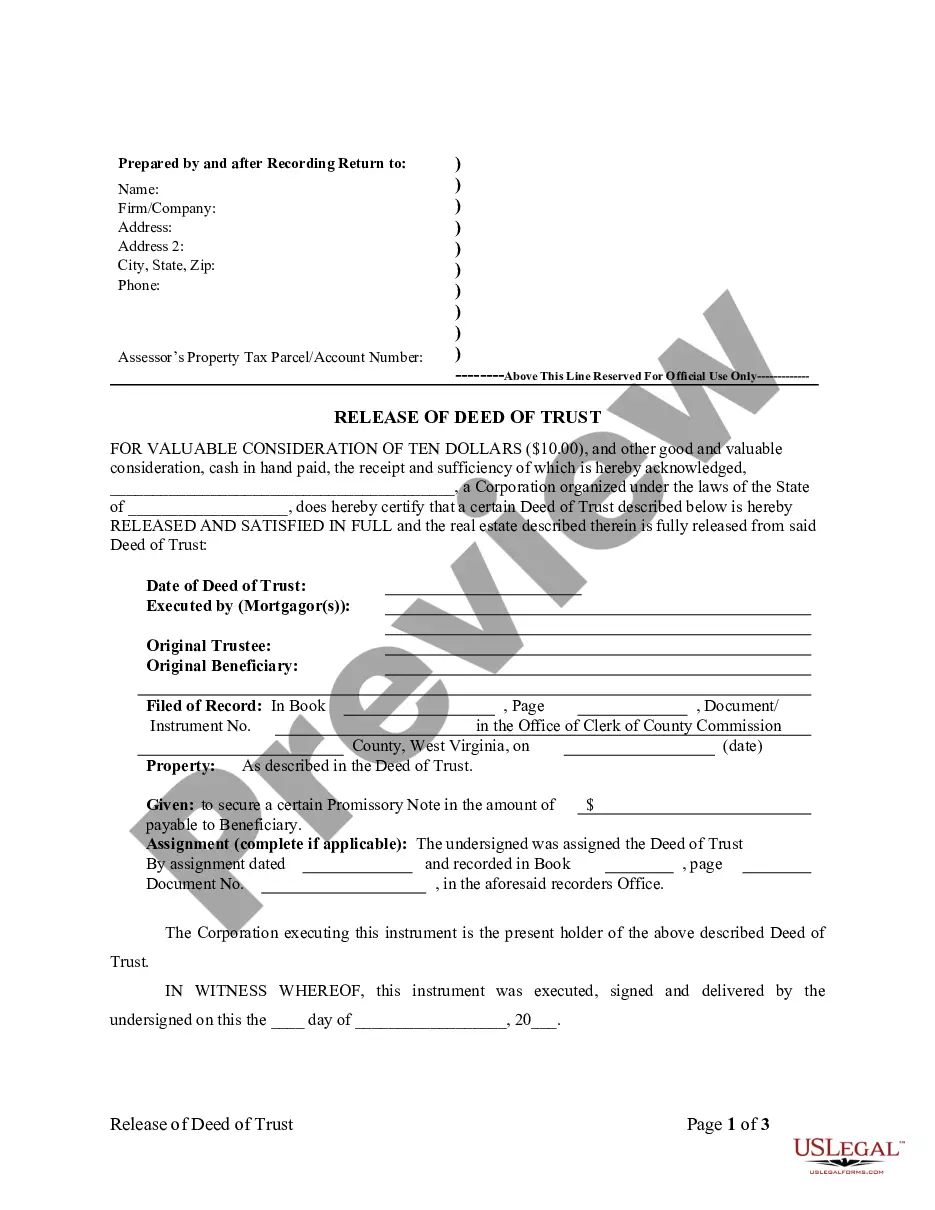
The Release - Satisfaction - Cancellation Deed of Trust is a legal document used to formally release a deed of trust in West Virginia. The primary purpose of this form is to signify the satisfaction of a mortgage, which effectively clears the associated property from the encumbrance of the trust deed. This form is specifically designed for individual lenders or holders, distinguishing it from other forms that may involve multiple parties or institutions.
Main sections of this form
- Date of the deed of trust
- Names of the mortgagor(s), trustee, and beneficiary
- Details of the recorded deed of trust including book and page number
- Property description as outlined in the original deed of trust
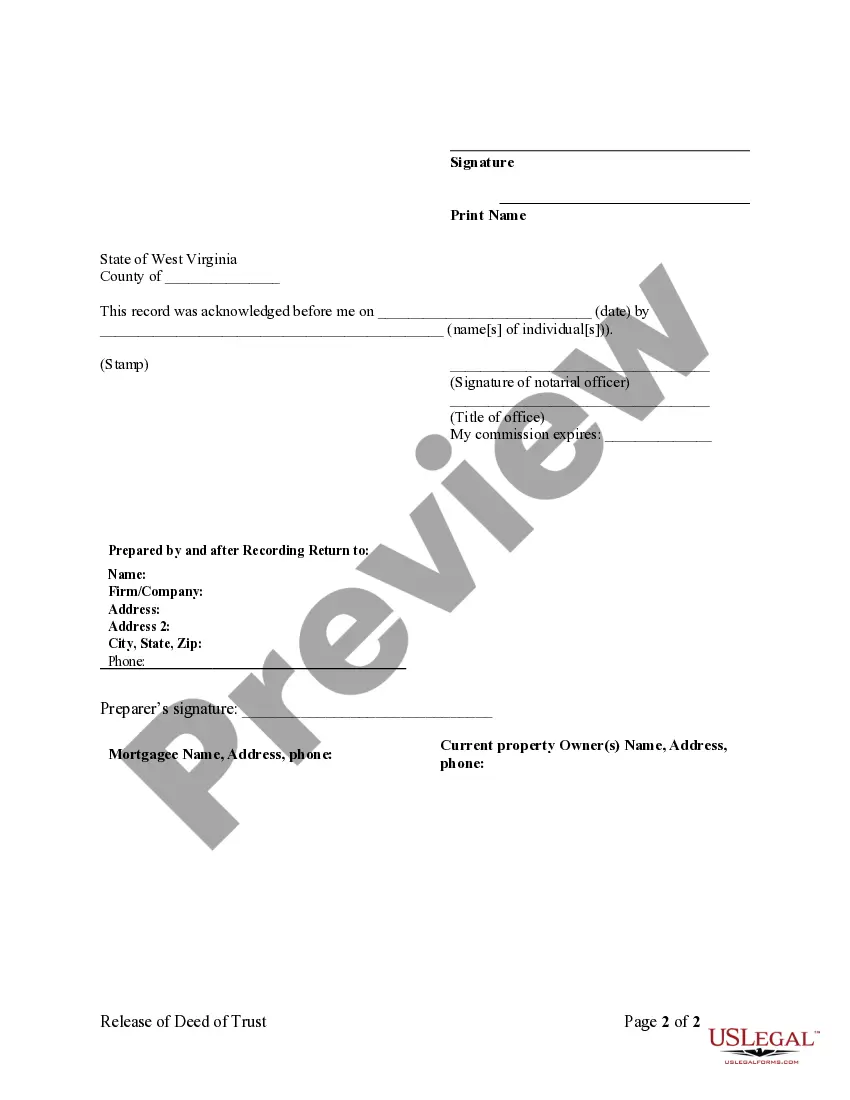
- Acknowledgment before a notary public
- Signatures of the involved parties
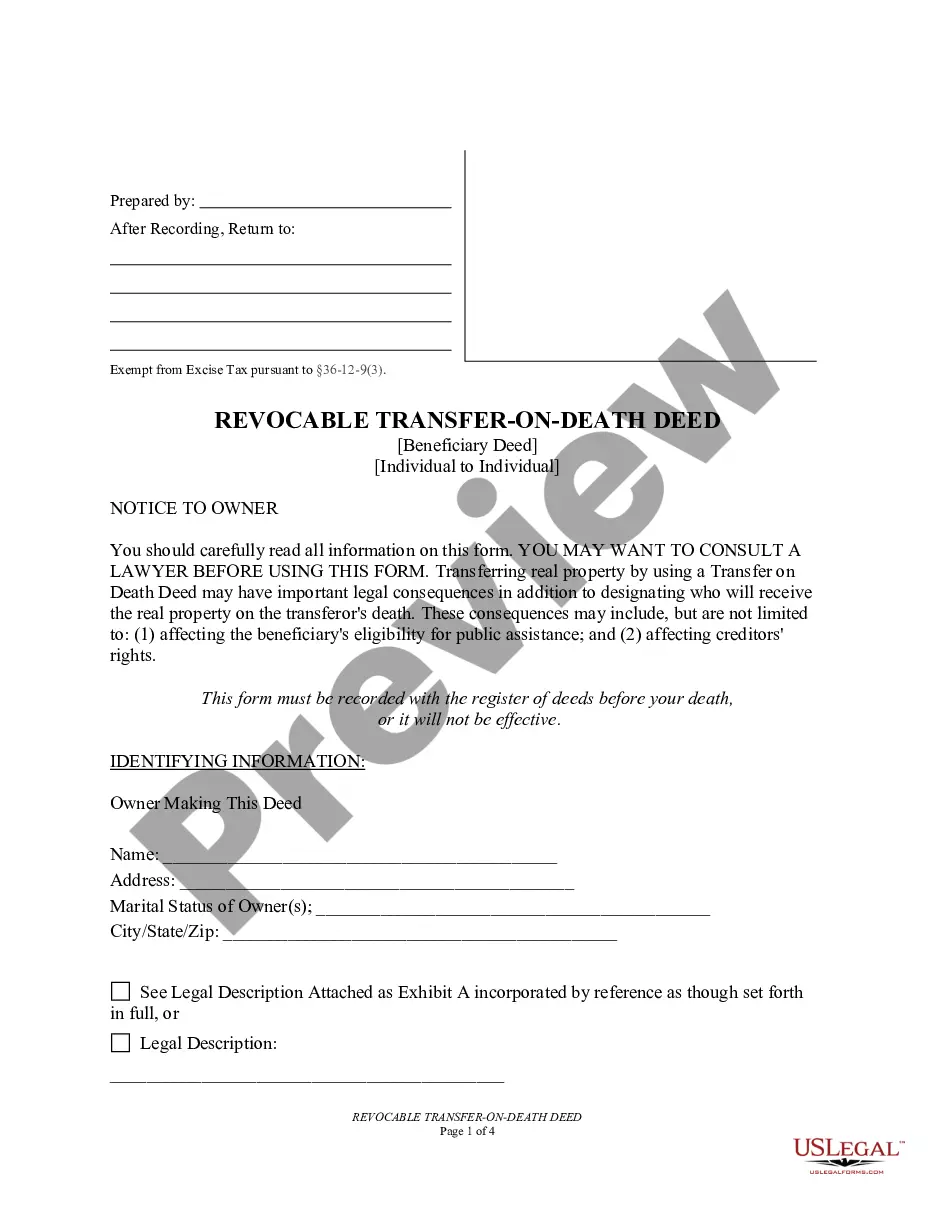
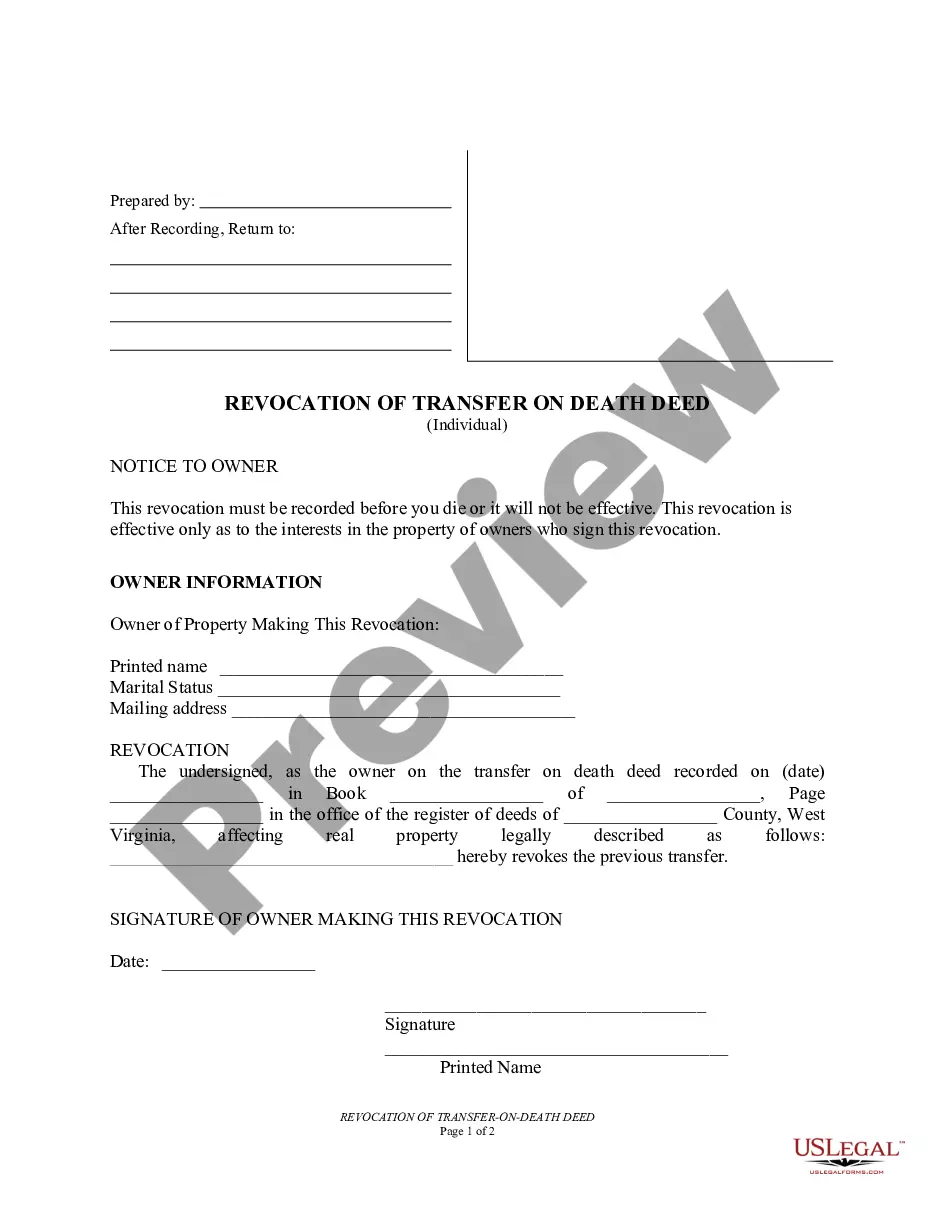
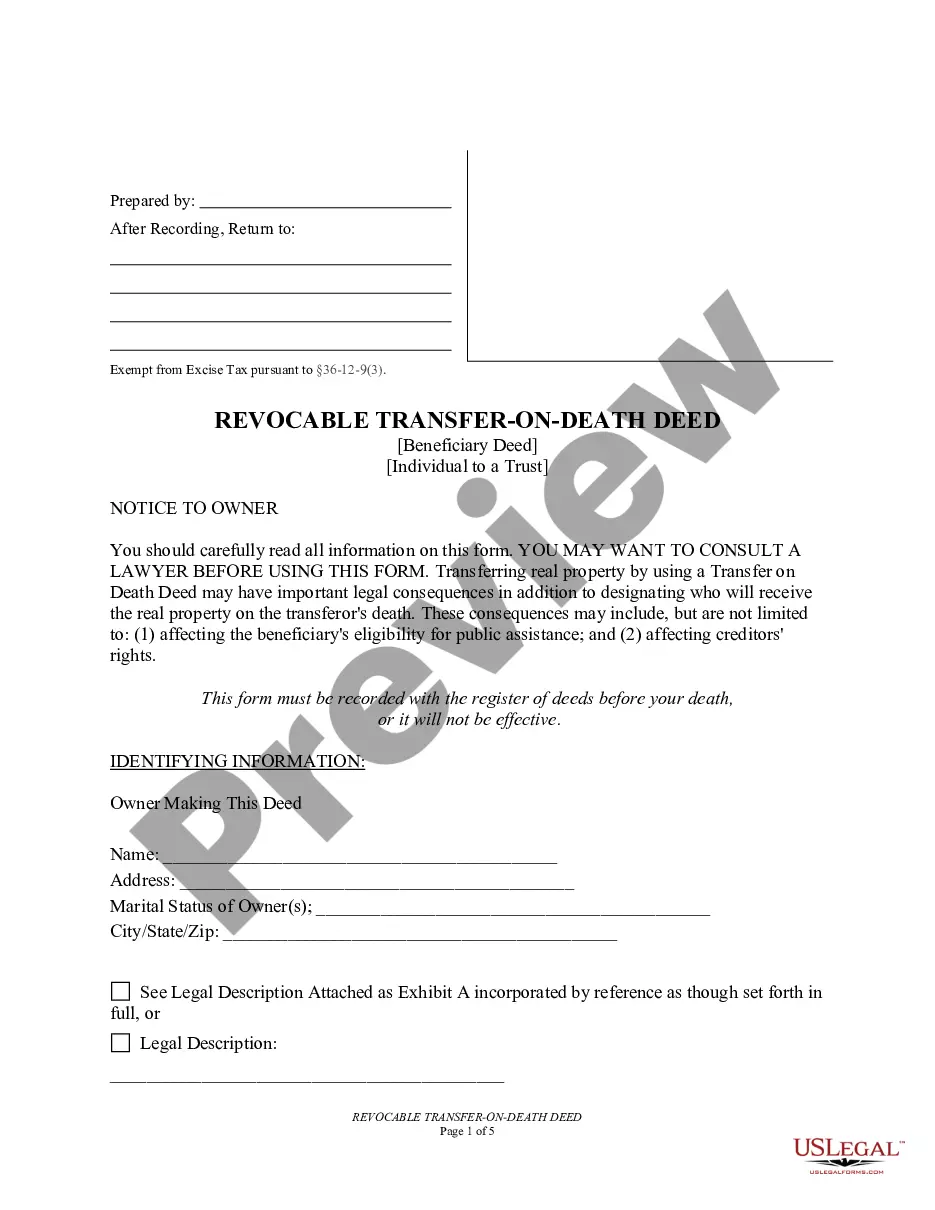
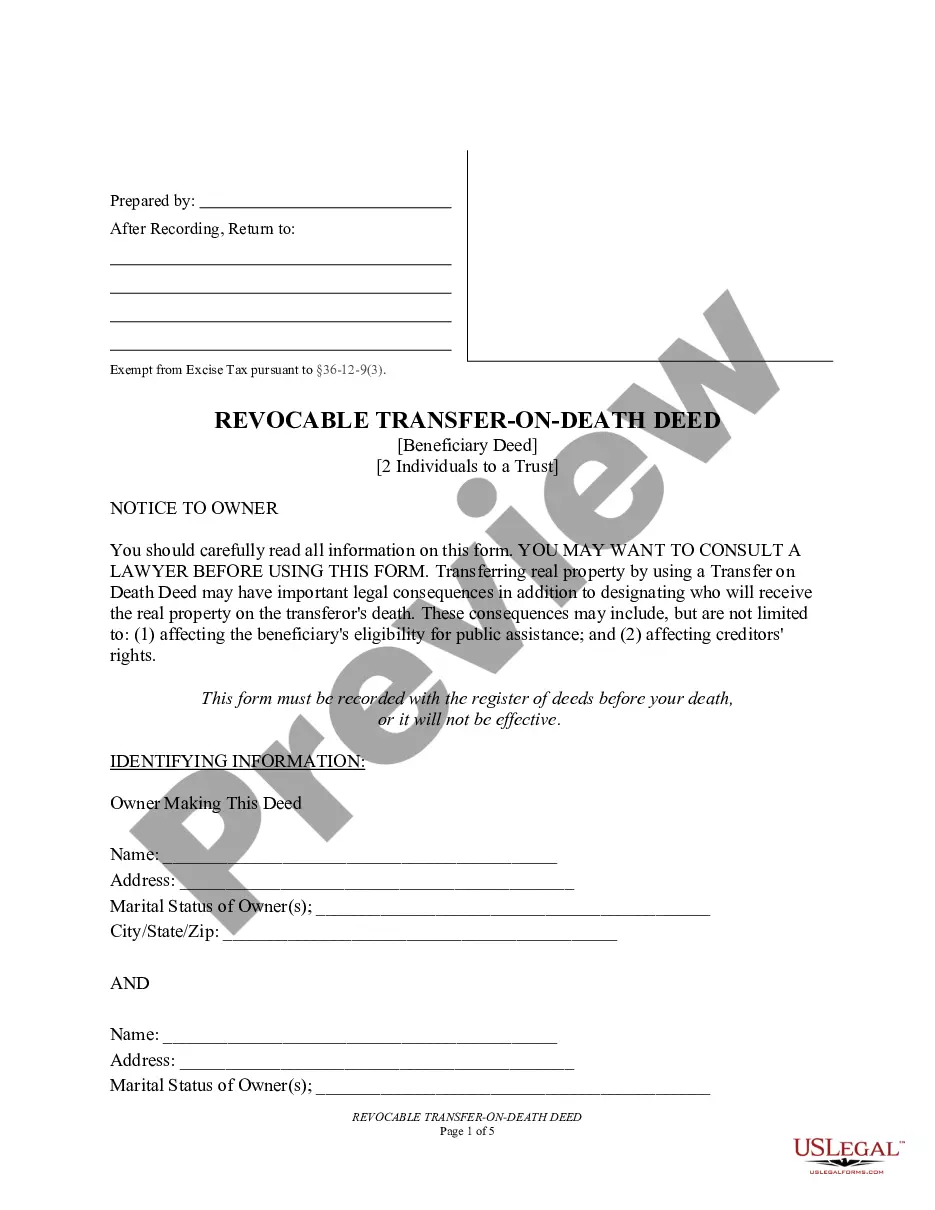
When to use this form
This form should be used when an individual lender has fulfilled all obligations under the deed of trust and wishes to clear the associated property of the mortgage. Scenarios include the repayment of an outstanding loan or the completion of a mortgage agreement, allowing the property owner to obtain a clear title without any lingering financial claims against it.
Who can use this document
This form is intended for:
- Individual lenders or holders of a deed of trust
- Borrowers who wish to have a clear title on their property after satisfying their mortgage obligations
- Real estate professionals assisting clients with mortgage releases
Completing this form step by step
- Enter the date when the deed of trust was executed.
- Fill in the names of the mortgagor(s), original trustee, and original beneficiary.
- Provide the details of the recorded deed of trust, including the book, page number, and document number.
- Describe the property as specified in the deed of trust.
- Have the document acknowledged in front of a notary public.
- Obtain signatures from all relevant parties involved in the deed of trust.
Does this document require notarization?
This form needs to be notarized to ensure legal validity. US Legal Forms provides secure online notarization powered by Notarize, allowing you to complete the process through a verified video call, available anytime.
Get your form ready online
Our built-in tools help you complete, sign, share, and store your documents in one place.
Make edits, fill in missing information, and update formatting in US Legal Forms—just like you would in MS Word.
Download a copy, print it, send it by email, or mail it via USPS—whatever works best for your next step.
Sign and collect signatures with our SignNow integration. Send to multiple recipients, set reminders, and more. Go Premium to unlock E-Sign.
If this form requires notarization, complete it online through a secure video call—no need to meet a notary in person or wait for an appointment.
We protect your documents and personal data by following strict security and privacy standards.

Make edits, fill in missing information, and update formatting in US Legal Forms—just like you would in MS Word.

Download a copy, print it, send it by email, or mail it via USPS—whatever works best for your next step.

Sign and collect signatures with our SignNow integration. Send to multiple recipients, set reminders, and more. Go Premium to unlock E-Sign.

If this form requires notarization, complete it online through a secure video call—no need to meet a notary in person or wait for an appointment.

We protect your documents and personal data by following strict security and privacy standards.
Common mistakes to avoid
- Failing to provide accurate information regarding the property description.
- Not having the document notarized, which is essential for legal validity.
- Omitting the date of execution or signatures of required parties.
Benefits of completing this form online
- Immediate access to the form for download.
- Edit and customize the template to meet your specific needs.
- Reliable and compliant with West Virginia legal standards.
Looking for another form?
Form popularity
FAQ
According to independent rankings, the top states with the best trust laws are South Dakota trust law and Nevada in the US.
The trustee can use trust funds to pay filing fees, registration fees, title fees as necessary when transferring assets into the trust's name. If the trustee is responsible for investments, they can pay for management and trading fees with the trust's money.
Cash. There's no way to transfer actual cash to a living trust. You can, however, transfer ownership of a cash accountsavings account, money market account, or certificate of deposit, for exampleto your living trust. You can then name a beneficiary to receive the contents of the account.
Key Takeaways. Trust funds are designed to allow a person's money to continue to be useful well after they pass away. You can place cash, stock, real estate, or other valuable assets in your trust. A traditional irrevocable trust will likely cost a minimum of a few thousand dollars and could cost much more.
Cash Accounts. Rafe Swan / Getty Images. Non-Retirement Investment and Brokerage Accounts. Non-qualified Annuities. Stocks and Bonds Held in Certificate Form. Tangible Personal Property. Business Interests. Life Insurance. Monies Owed to You.
Putting money in a trust lets you pass property to someone in a structured way, where you can impose rules. For example, you might say that your beneficiary can't use these funds to pay off debt. Or, you might impose rules on how old the beneficiary needs to be before she gains control over the money.
Inheritance AdvantagesPutting your house in an irrevocable trust removes it from your estate. Unlike placing assets in an revocable trust, your house is safe from creditors and from estate tax. If you use an irrevocable bypass trust, it does the same for your spouse.
The process of funding your living trust by transferring your assets to the trustee is an important part of what helps your loved ones avoid probate court in the event of your death or incapacity. Qualified retirement accounts such as 401(k)s, 403(b)s, IRAs, and annuities, should not be put in a living trust.
A trustee has a duty to conform to the terms of the trust. Legally a trustee cannot spend money in a trust on themselves (unless the are also a beneficiary).