West Virginia Notice of Default in Payment of Rent as Warning Prior to Demand to Pay or Terminate for Nonresidential or Commercial Property
Overview of this form
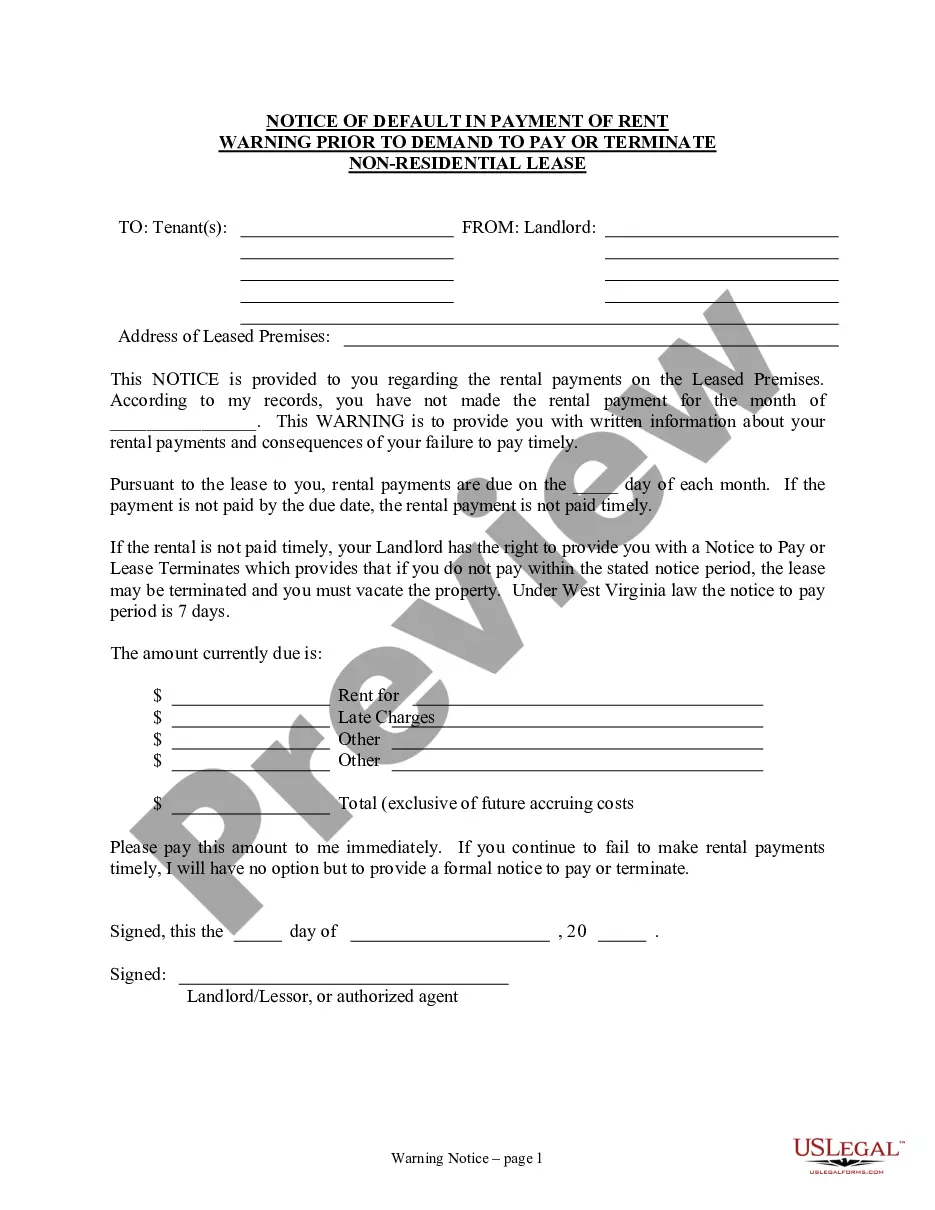
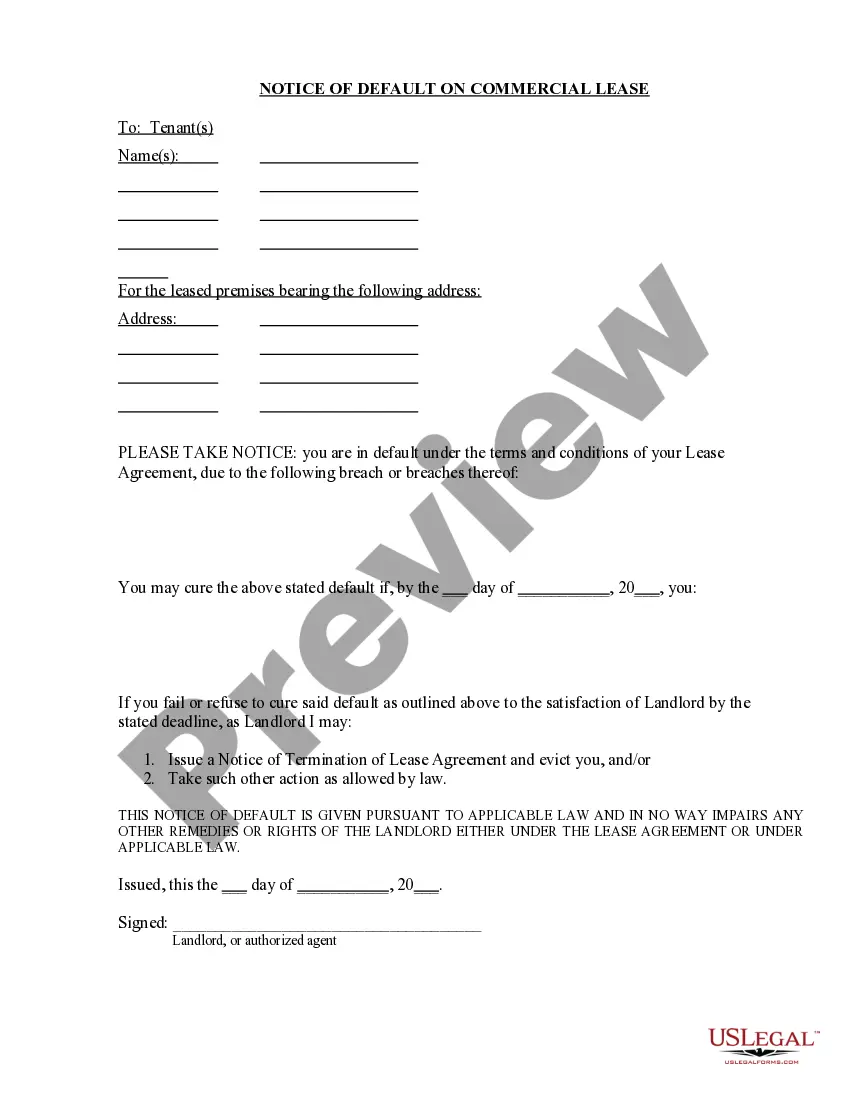
The Notice of Default in Payment of Rent as Warning Prior to Demand to Pay or Terminate for Nonresidential or Commercial Property is a legal document used by landlords to notify tenants of their failure to pay rent on time. This form serves as a preliminary warning before a formal demand or lease termination notice is issued. Unlike eviction notices, this form specifically addresses rent payment defaults and outlines consequences for continued non-payment, making it an essential tool for landlords managing nonresidential properties.
Key components of this form
- Identification of the tenant and landlord.
- Details about the leased premises.
- Statement of the rent due amount and due date.
- Consequences of failing to pay rent on time.
- Notice of the potential lease termination if payment is not made.
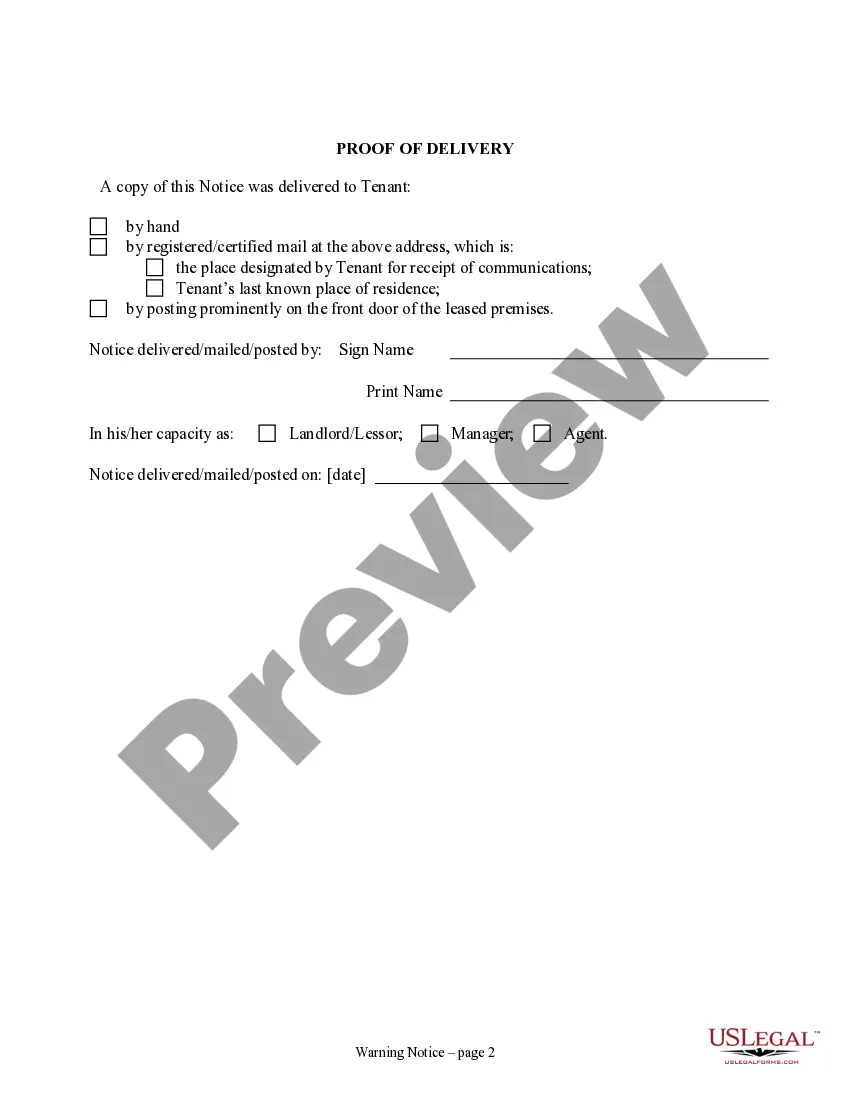
- Proof of delivery options for notifying the tenant.
When to use this document
This form should be used when a landlord needs to inform a tenant that they have failed to make rent payments on time for a nonresidential or commercial lease. It is particularly useful in instances where the landlord wants to formally remind tenants of their obligations and potentially avoid escalation to eviction proceedings. Using this form is a proactive step to communicate with tenants before taking further action.
Who should use this form
- Landlords managing nonresidential or commercial properties.
- Property managers acting on behalf of landlords.
- Real estate professionals involved in commercial leasing.
- Business owners renting nonresidential spaces.
Instructions for completing this form
- Identify the parties involved: the landlord and tenant.
- Specify the address of the leased premises.
- Enter the month for which rent is overdue.
- Detail the amounts due, including rent and any late charges.
- Sign and date the notice to validate it.
- Choose the method of delivery and complete the proof of delivery section.
Is notarization required?
Notarization is not commonly needed for this form. However, certain documents or local rules may make it necessary. Our notarization service, powered by Notarize, allows you to finalize it securely online anytime, day or night.
Get your form ready online
Our built-in tools help you complete, sign, share, and store your documents in one place.
Make edits, fill in missing information, and update formatting in US Legal Forms—just like you would in MS Word.
Download a copy, print it, send it by email, or mail it via USPS—whatever works best for your next step.
Sign and collect signatures with our SignNow integration. Send to multiple recipients, set reminders, and more. Go Premium to unlock E-Sign.
If this form requires notarization, complete it online through a secure video call—no need to meet a notary in person or wait for an appointment.
We protect your documents and personal data by following strict security and privacy standards.

Make edits, fill in missing information, and update formatting in US Legal Forms—just like you would in MS Word.

Download a copy, print it, send it by email, or mail it via USPS—whatever works best for your next step.

Sign and collect signatures with our SignNow integration. Send to multiple recipients, set reminders, and more. Go Premium to unlock E-Sign.

If this form requires notarization, complete it online through a secure video call—no need to meet a notary in person or wait for an appointment.

We protect your documents and personal data by following strict security and privacy standards.
Avoid these common issues
- Failing to specify the correct month of the overdue rent.
- Not signing the notice, which may invalidate it.
- Neglecting to deliver the notice according to legal requirements.
- Overlooking the inclusion of all amounts due, including late fees.
Why use this form online
- Convenient download and edit options tailored to your needs.
- Access to templates drafted by licensed attorneys ensuring legal reliability.
- Time-saving compared to drafting forms from scratch.
- Ease of customization to fit your specific situation.
Looking for another form?
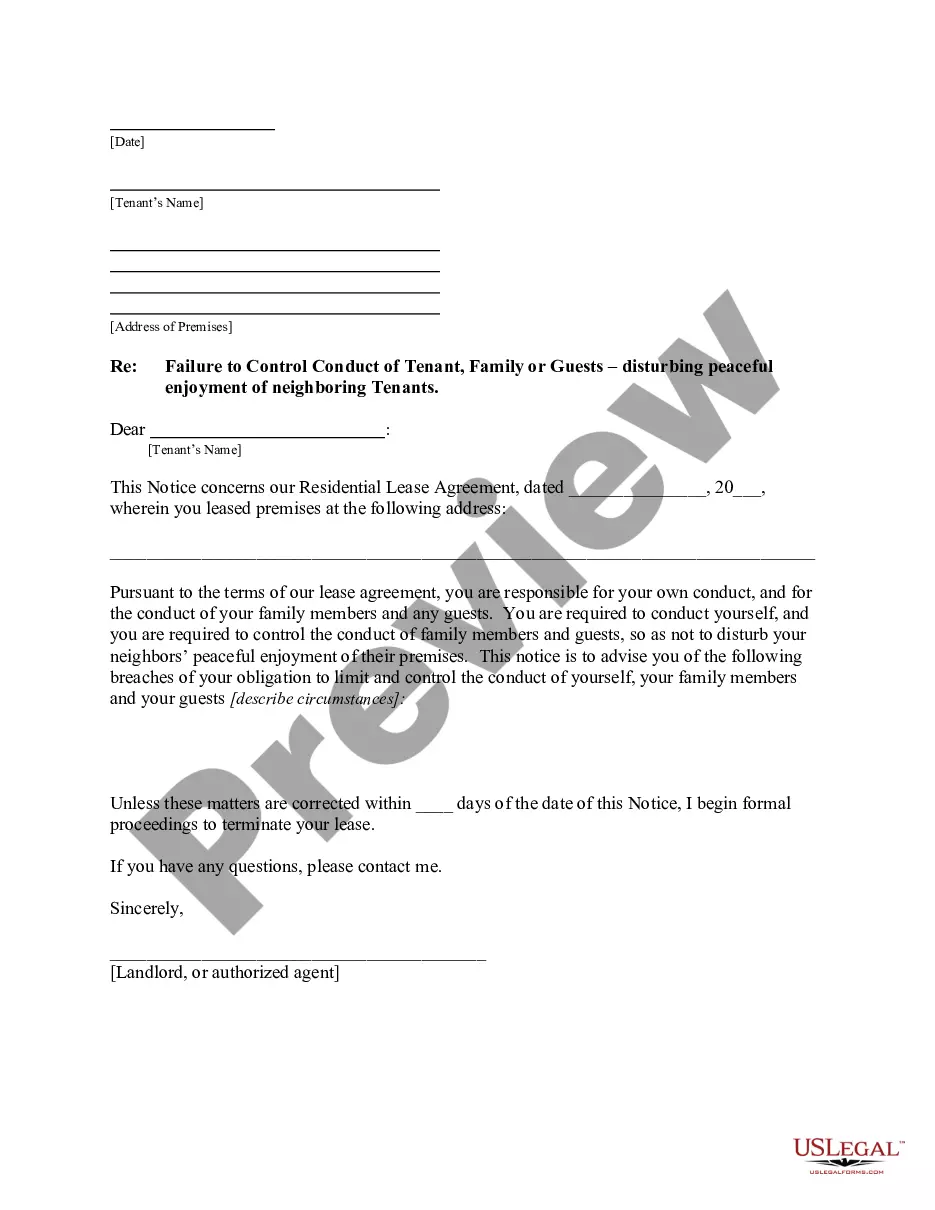
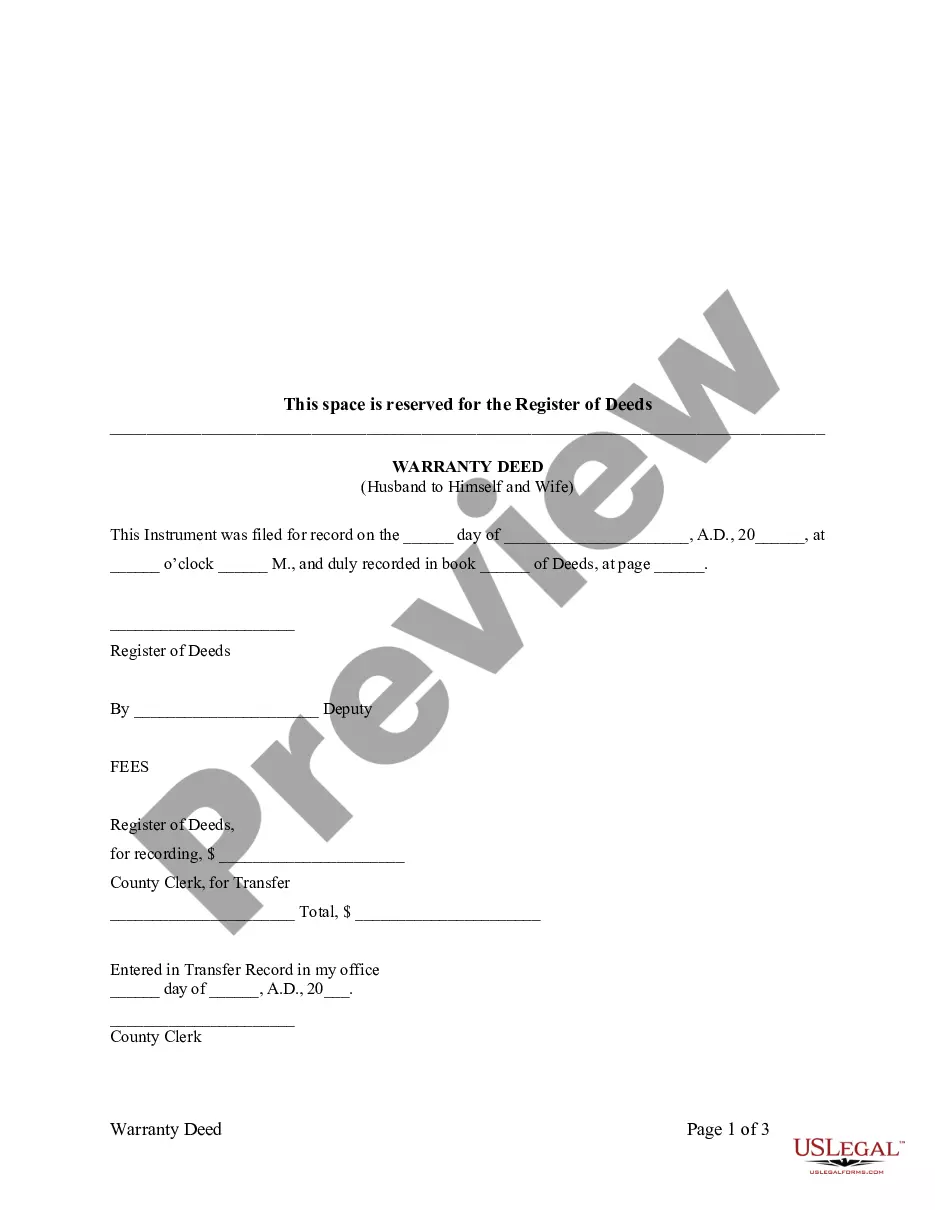
Form popularity
FAQ
A landlord cannot legally evict you without a court order, whether or not you have a lease.) How long does it take for a landlord to evict a tenant? A landlord can evict a tenant only by going through a formal eviction proceeding, which can take a few weeks from start to finish.
State law prohibits landlords from entering rental housing without either the consent of the tenant or providing reasonable notice in advance, unless circumstances require the landlord to perform emergency repairs.
West Virginia Eviction Process Timeline Initial Notice Period 30-90 days, but only required for no lease/end of lease evictions. Issuance/Service of Summons and Complaint Within 10 days before the hearing; but if not served within 120 days, the eviction case may be dismissed.
In some circumstances, a tenant can break a fixed-term agreement early without penalty. A tenant can give 14 days' written notice to end an agreement early without penalty if: they have accepted an offer of social housing (e.g. from DCJ Housing)
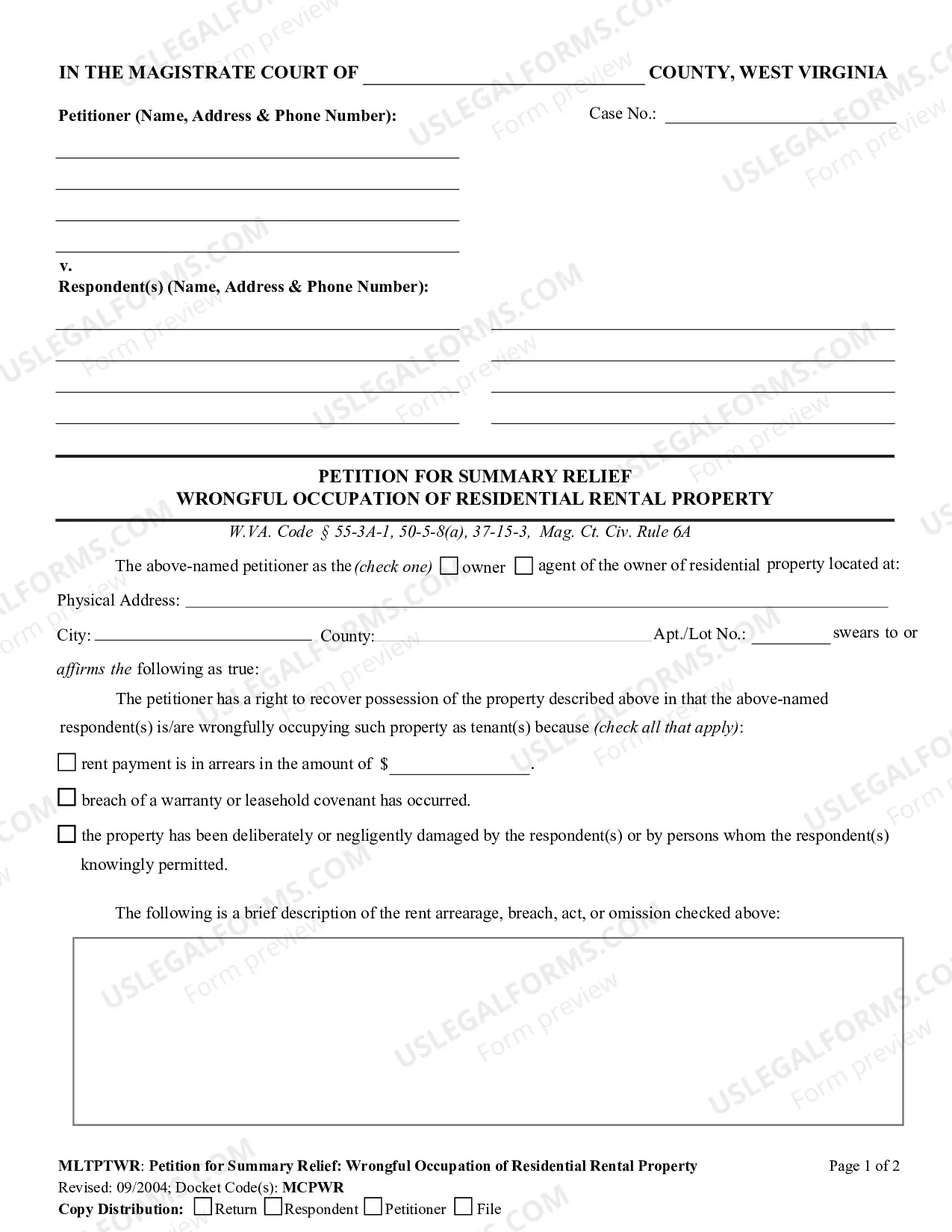
A landlord who wants to evict a tenant must have a good reason (legal cause) to do so. West Virginia defines legal cause as failing to pay rent, violating the lease or rental agreement, or damaging the rental unit. To evict the tenant for one of these reasons, the landlord must first terminate the tenancy.
Give the landlord/agent a written termination notice and vacate move out and return the keys according to your notice, and/or. apply to the NSW Civil & Administrative Tribunal (NCAT) for a termination order.
Notice to Terminate Tenancy Month to Month Lease: For any lease under the term of one year, either party can terminate the lease by providing the other party written notice prior to the end of the lease. For a month to month lease, 30 days must be given. pursuant to §37-6-5.
This notice will inform the tenant that the tenant has 21 days to either remedy the violation or move out of the rental unit. If the tenant does not remedy the violation or move, then the landlord can file an eviction lawsuit against the tenant at the end of the 30 days. (Va. Code Ann.
Tenants may also file a complaint with the Attorney General's Consumer Protection Division if landlords fail to return damage deposits. Complaint forms may be obtained by calling the consumer protection hotline, toll-free, at 1-800-368-8808.