West Virginia Letter from Landlord to Tenant as Notice to tenant to inform landlord of tenant's knowledge of condition causing damage to premises
About this form
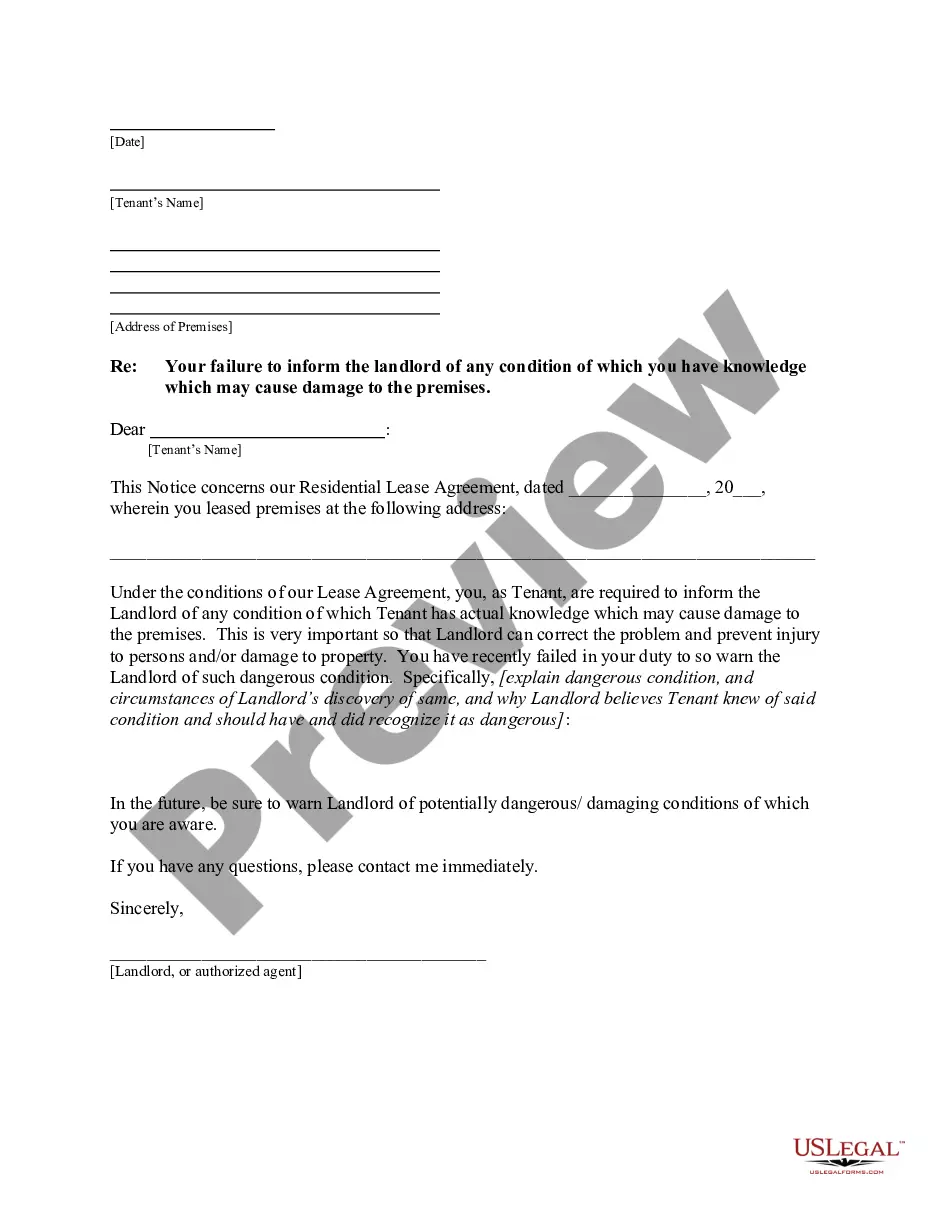
This Letter from Landlord to Tenant as Notice to tenant to inform landlord of tenant's knowledge of condition causing damage to premises is a crucial legal document. It formalizes the tenant's obligation to inform the landlord about any conditions that they are aware of that may cause damage to the property. By sending this letter, the landlord can address issues proactively, thereby preventing further damage or injury. This document is distinct from general lease agreements, as it specifically addresses the tenant's responsibility to report conditions that necessitate attention.
Key parts of this document
- Identification of the landlord and tenant.
- Description of the condition causing potential damage.
- A statement of the tenant's obligation to report conditions.
- Signature section for the landlord or authorized agent.
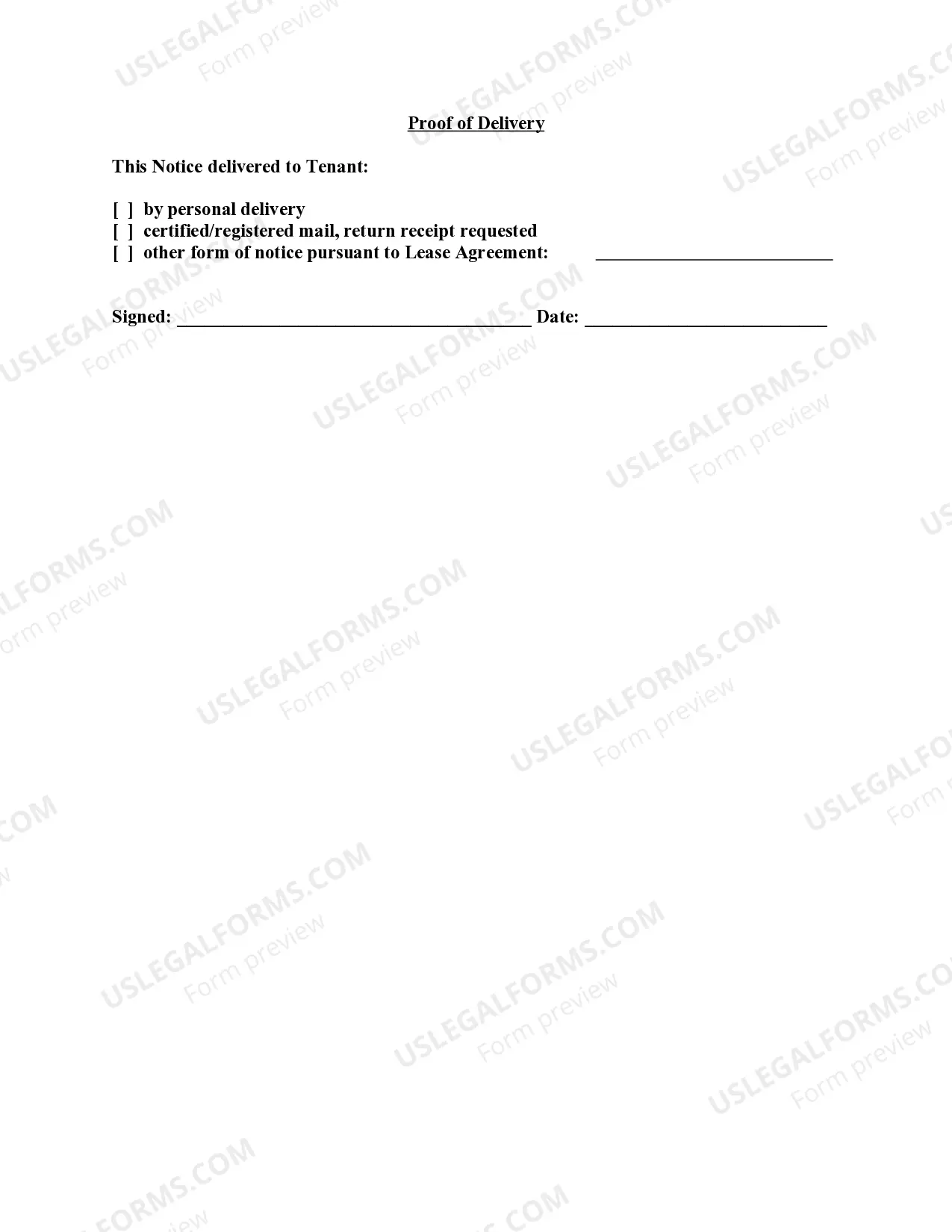
- Proof of delivery options for documenting notice.
When to use this document
This form should be used when a landlord needs to remind or inform a tenant of their duty to notify the landlord of any conditions they know that could potentially harm the property. It is particularly useful in situations where there are observable issues, such as leaks, mold, or structural problems that need attention before they escalate. Using this notice helps maintain a clear line of communication about property conditions and responsibilities.
Who needs this form
- Landlords seeking to ensure compliance with lease agreements.
- Property managers responsible for maintaining rental properties.
- Tenants who are aware of problems that could impact the lease terms.
How to complete this form
- Identify the parties: Clearly state the names of the landlord and tenant.
- Specify the condition: Describe in detail the damage-causing condition known to the tenant.
- Enter the date: Include the date the notice is created.
- Sign the form: The landlord or their authorized agent should sign the letter.
- Document delivery: Choose and indicate the method of delivery for the notice.
Does this document require notarization?
In most cases, this form does not require notarization. However, some jurisdictions or signing circumstances might. US Legal Forms offers online notarization powered by Notarize, accessible 24/7 for a quick, remote process.
Get your form ready online
Our built-in tools help you complete, sign, share, and store your documents in one place.
Make edits, fill in missing information, and update formatting in US Legal Forms—just like you would in MS Word.
Download a copy, print it, send it by email, or mail it via USPS—whatever works best for your next step.
Sign and collect signatures with our SignNow integration. Send to multiple recipients, set reminders, and more. Go Premium to unlock E-Sign.
If this form requires notarization, complete it online through a secure video call—no need to meet a notary in person or wait for an appointment.
We protect your documents and personal data by following strict security and privacy standards.
Make edits, fill in missing information, and update formatting in US Legal Forms—just like you would in MS Word.
Download a copy, print it, send it by email, or mail it via USPS—whatever works best for your next step.
Sign and collect signatures with our SignNow integration. Send to multiple recipients, set reminders, and more. Go Premium to unlock E-Sign.
If this form requires notarization, complete it online through a secure video call—no need to meet a notary in person or wait for an appointment.
We protect your documents and personal data by following strict security and privacy standards.
Mistakes to watch out for
- Failing to provide a clear description of the condition.
- Not including both parties' names and contact information.
- Neglecting to specify the delivery method.
- Not signing the document, which may affect its validity.
Benefits of completing this form online
- Easy access: Download and complete the form at your convenience.
- Editability: Customize the document to fit your specific needs.
- Legally sound: The form is drafted by licensed attorneys, ensuring compliance with legal standards.
What to keep in mind
- Landlords are responsible for maintaining safe premises and need to be notified of issues promptly.
- Tenants have a duty to inform landlords of conditions that may cause damage.
- Using this notice formalizes communication regarding property conditions.
Looking for another form?
Form popularity
FAQ
Dear (Name of landlord or manager), This letter constitutes my written (number of days' notice that you need to give based on your lease agreement)-day notice that I will be moving out of my apartment on (date), the end of my current lease. I am leaving because (new job, rent increase, etc.)
Write the title for your pay or quit notice across the top of the letter. If not included in the title, the number of days for the notice must be specified. Include the names of each of the tenants. Specify the address of the rental property.
Residential tenancy laws require landlords to provide their name and telephone number or other contact details (e.g. an email address) to their tenant. These details must be given to the tenant even if the landlord uses an agent.
Tenants may also file a complaint with the Attorney General's Consumer Protection Division if landlords fail to return damage deposits. Complaint forms may be obtained by calling the consumer protection hotline, toll-free, at 1-800-368-8808.
Step 1: Mention the Reason for Giving a Notice. Step 2: Use Formal Language. Step 3: Mention the Date for Vacating. Step 4: Address the Formalities to Be Taken Care Of. Step 5: Proofread the Letter.
Be in writing, Say the full name of the tenant or tenants, Have the address the notice is about, Say everything that the tenant did to break the lease or deserve a 3 day notice to leave, and include details and dates, Say clearly that the tenant has to move out as soon as the 3 days are up, and.
If you're an assured tenant or a protected tenant Your landlord will have to give you notice if they want you to leave. They have to give the reasons why they want to evict you - for example, if you have rent arrears or you've damaged the property. Your landlord will have to go to court and get a court order.
Injury at Rental Property: You could have a case for a lawsuit against your landlord if you are injured at the rental property due to a landlord's neglect. Filing an Illegal Eviction: You can countersue your landlord if you feel your landlord is trying to evict you illegally.
Dear (Name of landlord or manager), This letter constitutes my written (number of days' notice that you need to give based on your lease agreement)-day notice that I will be moving out of my apartment on (date), the end of my current lease. I am leaving because (new job, rent increase, etc.)