Wisconsin Mutual Wills Package for Married Couple with No Children
Understanding this form
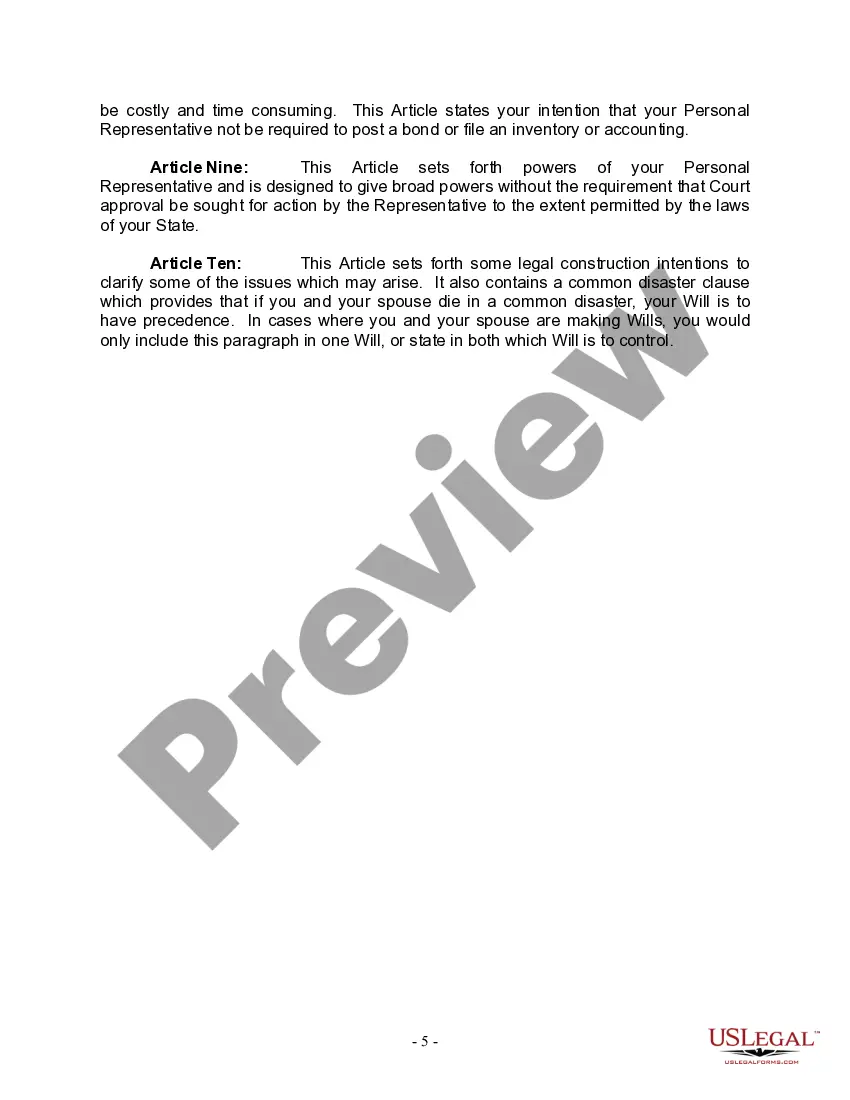
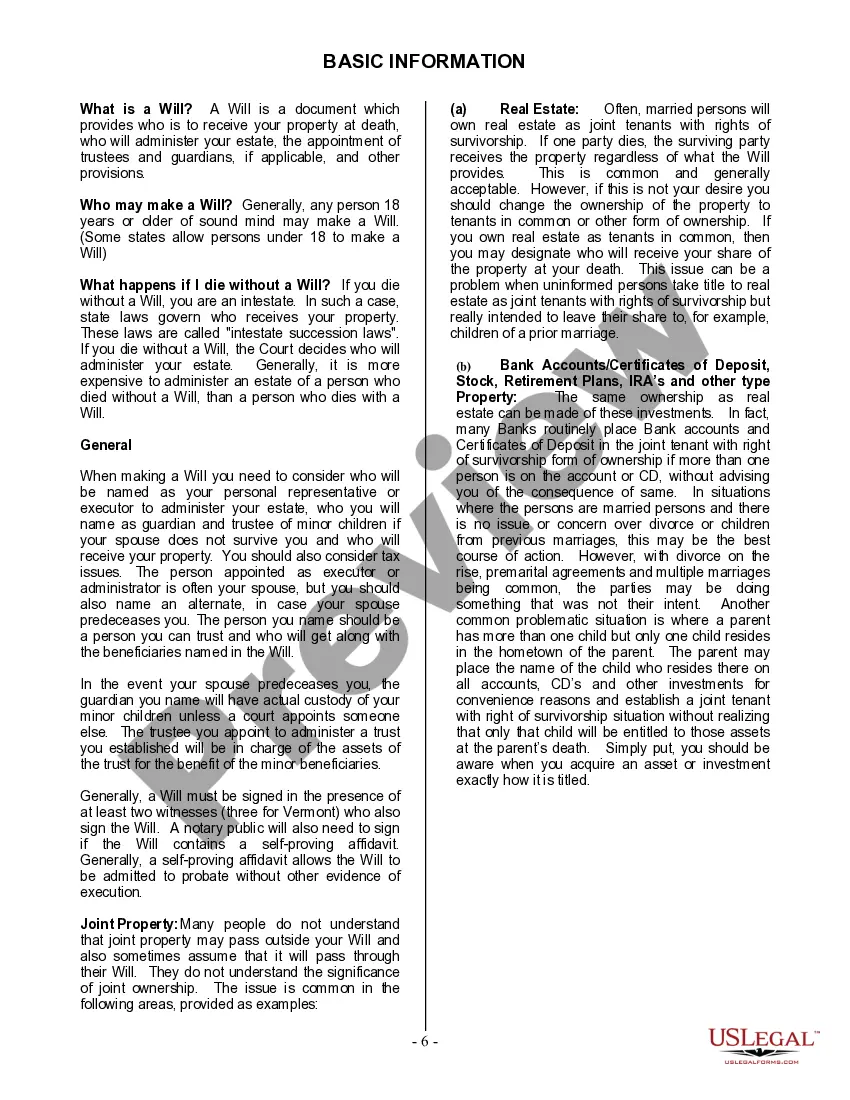
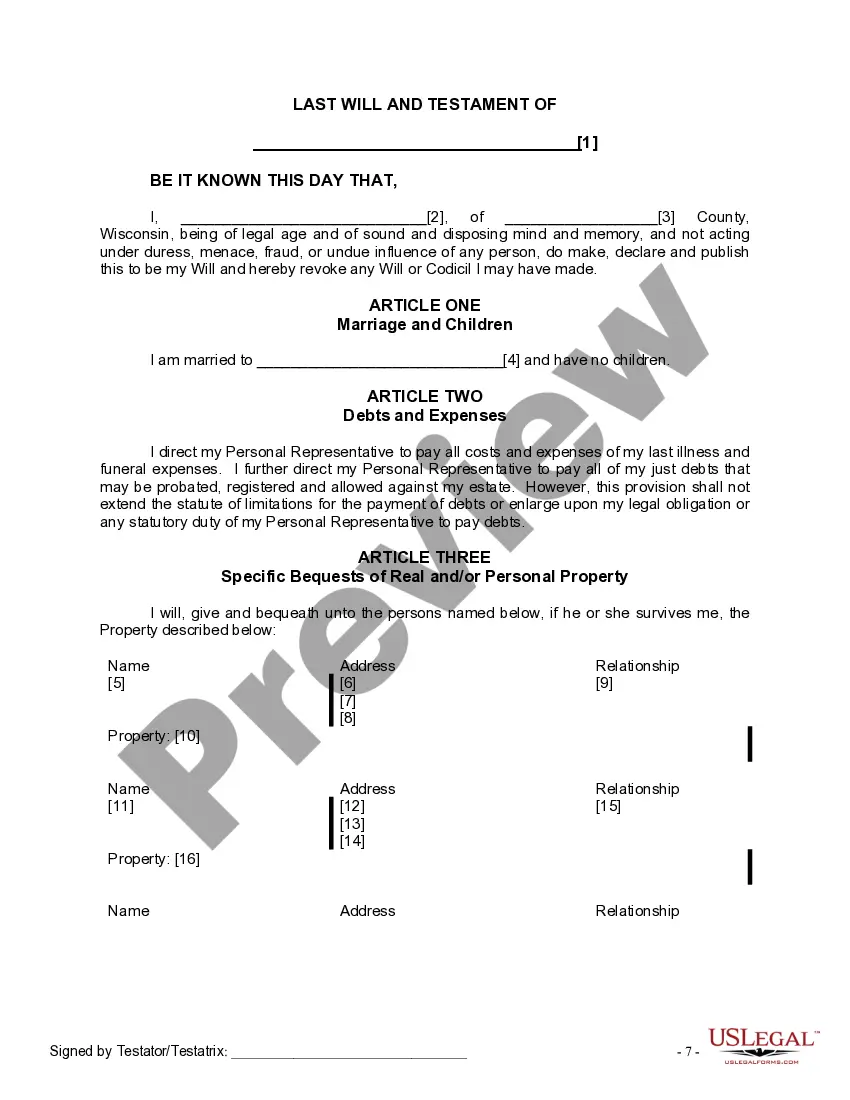
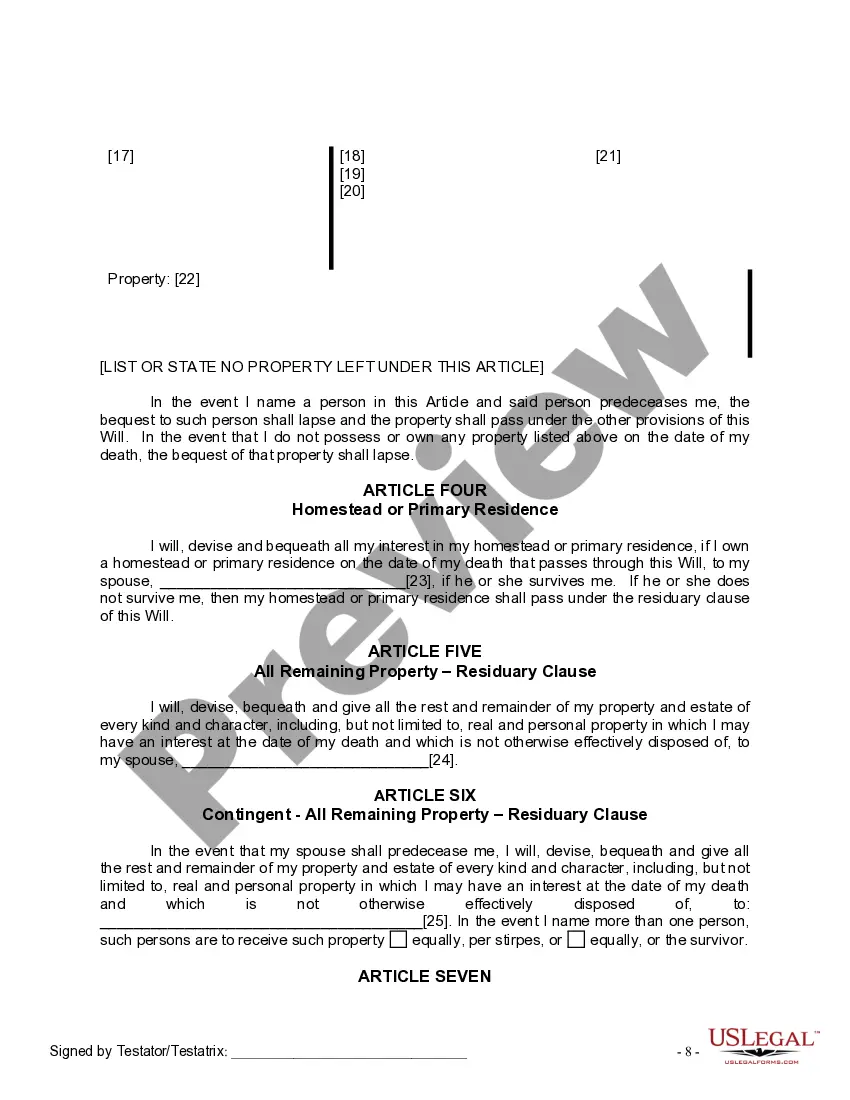
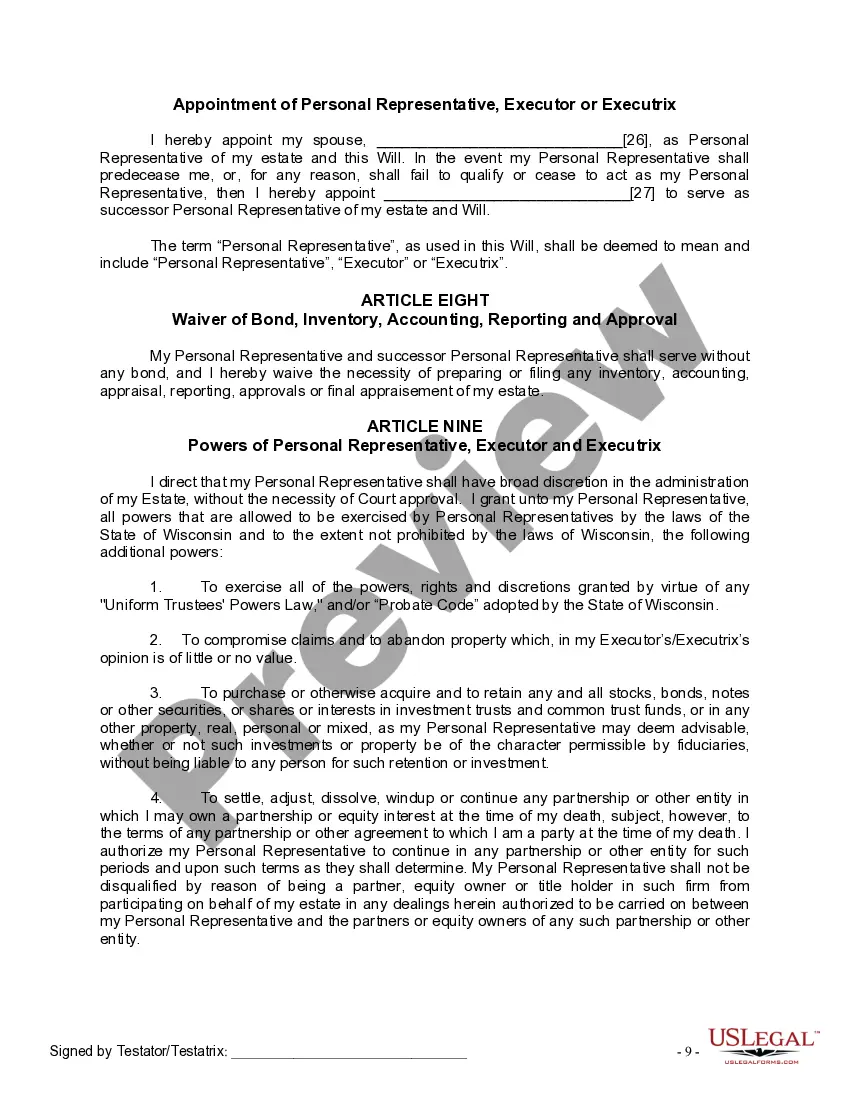
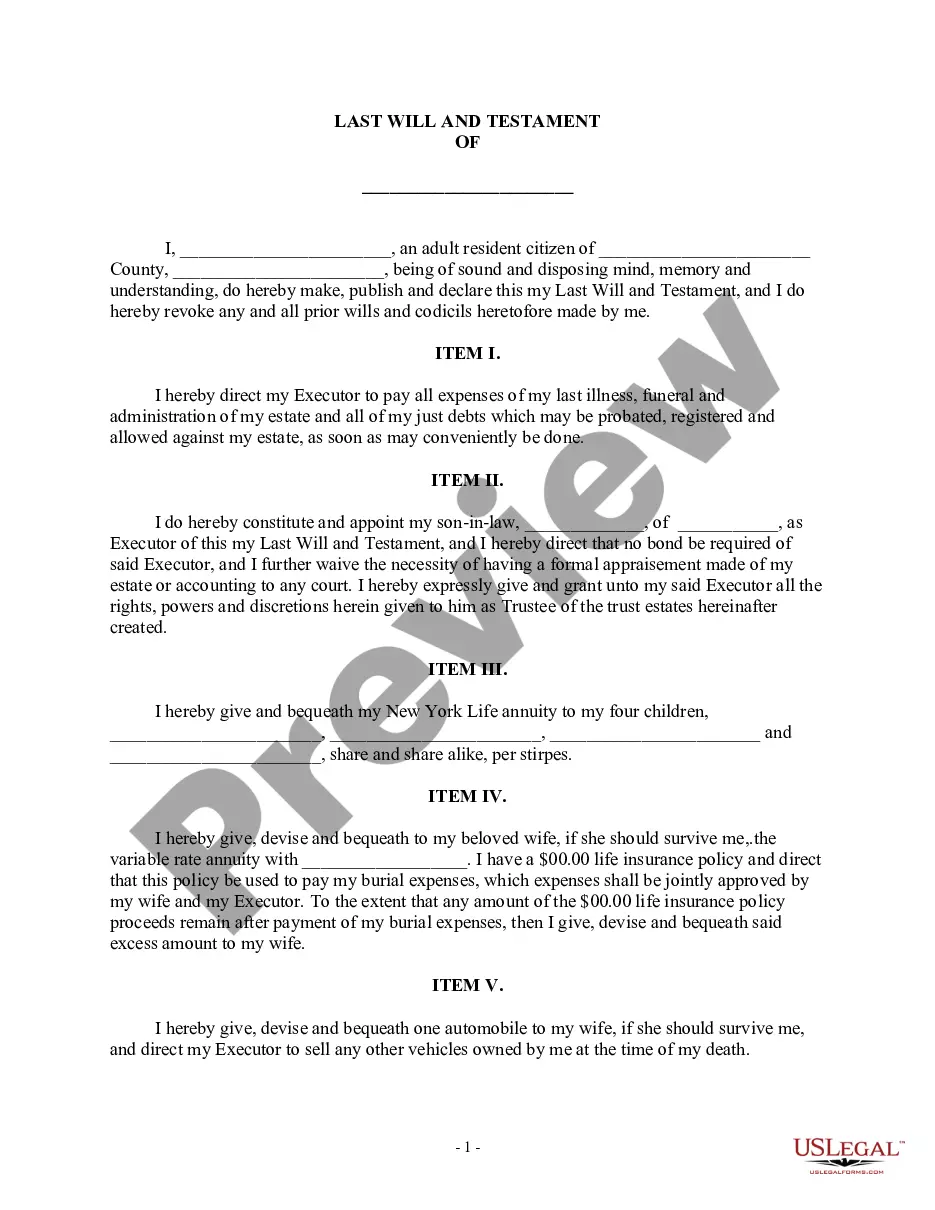
The Mutual Wills Package for a Married Couple with No Children provides comprehensive legal documentation to outline how both spouses' estates will be handled after death. Unlike individual wills, this package ensures that both partners have coordinated their wishes and offers protections that reflect their mutual intent. This form includes two wills, one for each spouse, tailored to ensure equitable distribution of their assets and appointment of a personal representative. It also contains clear instructions for execution.
Key components of this form
- Appointment of personal representatives for estate management.
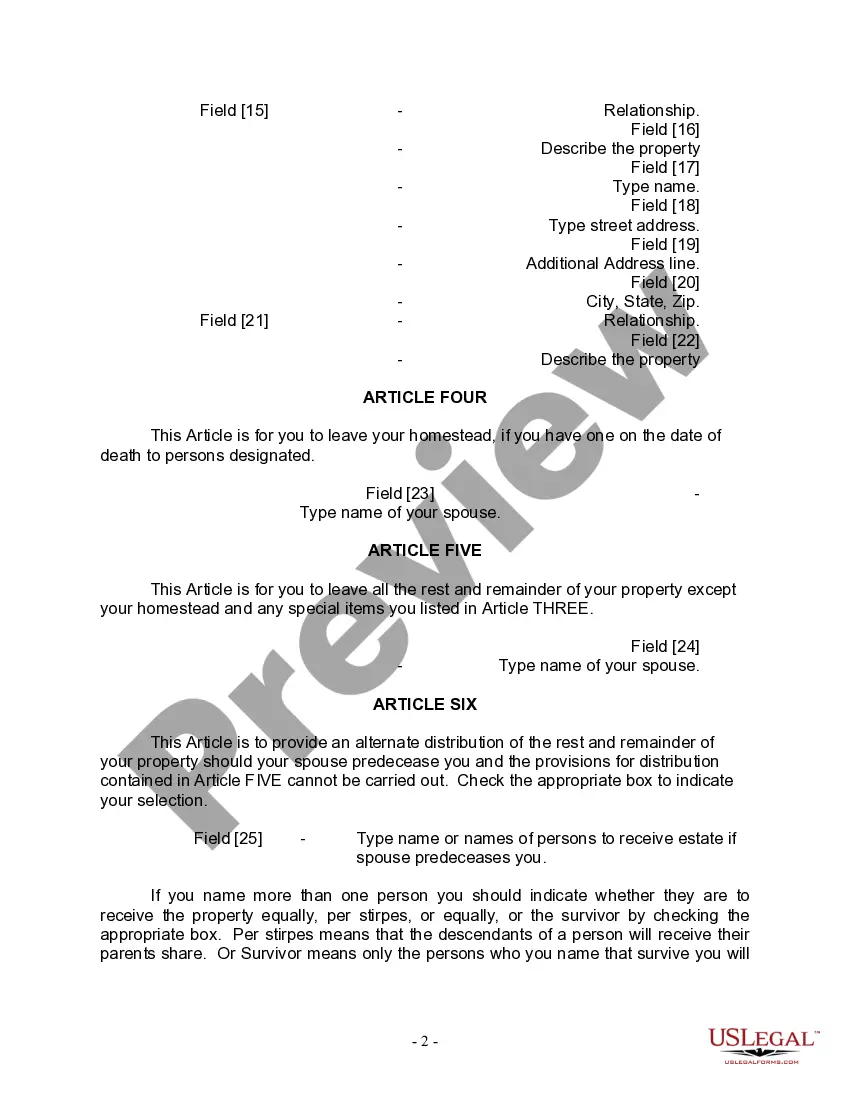
- Specific bequests of property to named individuals.
- Designation of homestead or primary residence to the spouse.
- Residuary clause for distribution of remaining assets.
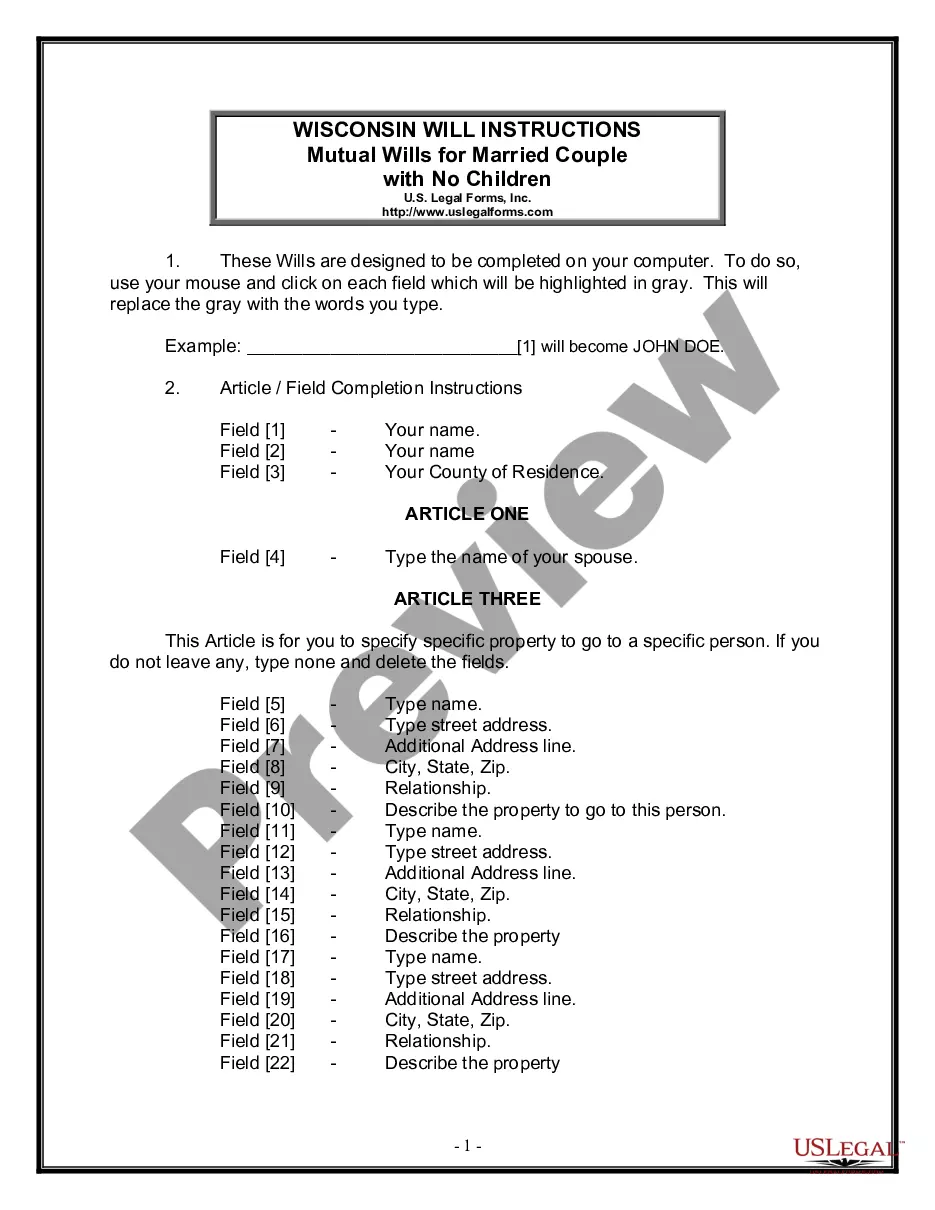
- Instructions for completion and signing requirements.
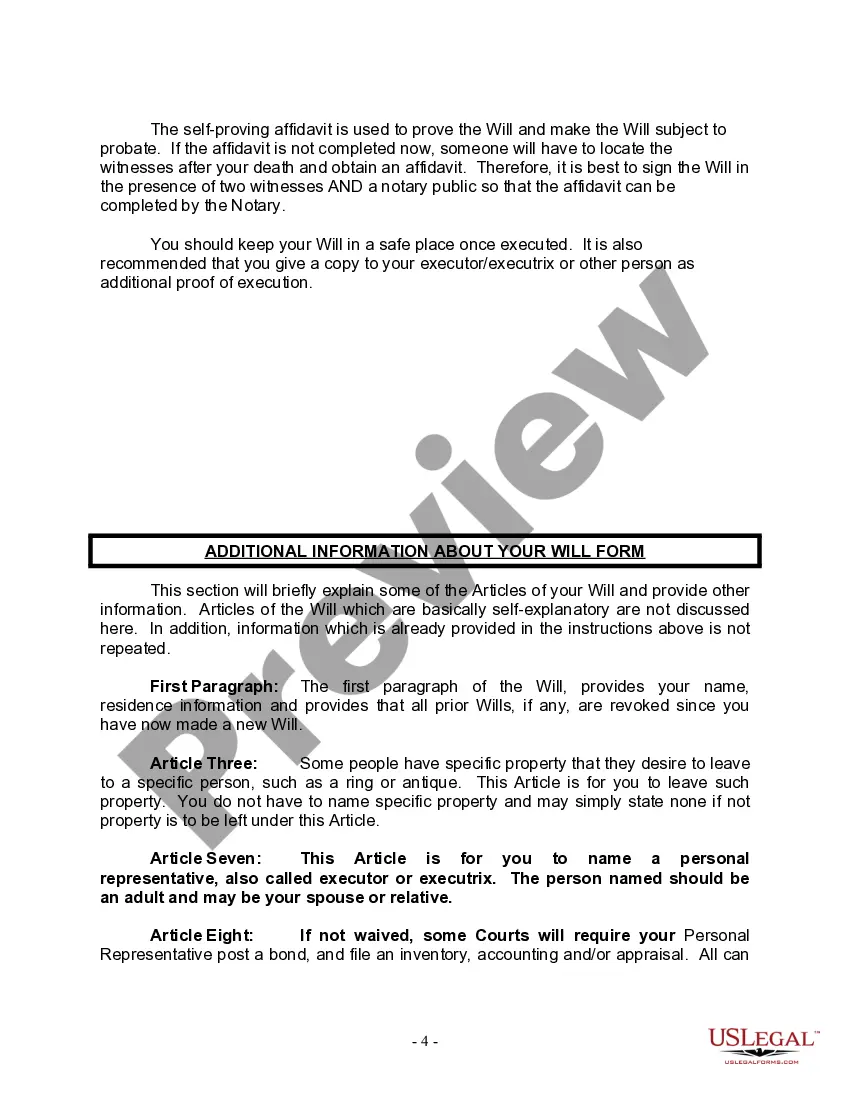
- Self-proving affidavit for simplifying the probate process.



When to use this document
This form should be used when a married couple without children wishes to establish legally valid wills that reflect their shared intentions regarding asset distribution after both pass away. It is also appropriate for couples wanting to ensure mutual care of each other's affairs and provide clear guidance for the management of their estates.
Who should use this form
- Married couples without children who want to create mutual estate planning documents.
- Couples seeking a straightforward and efficient way to manage their assets after death.
- Individuals wanting to ensure their spouse is cared for and their wishes are honored.
Completing this form step by step
- Open the document on your computer and fill in the highlighted fields with the required information.
- Enter your name, spouse's name, and county of residence in the designated areas.
- Specify any specific bequests in the appropriate sections, or note 'none' if there are no such gifts.
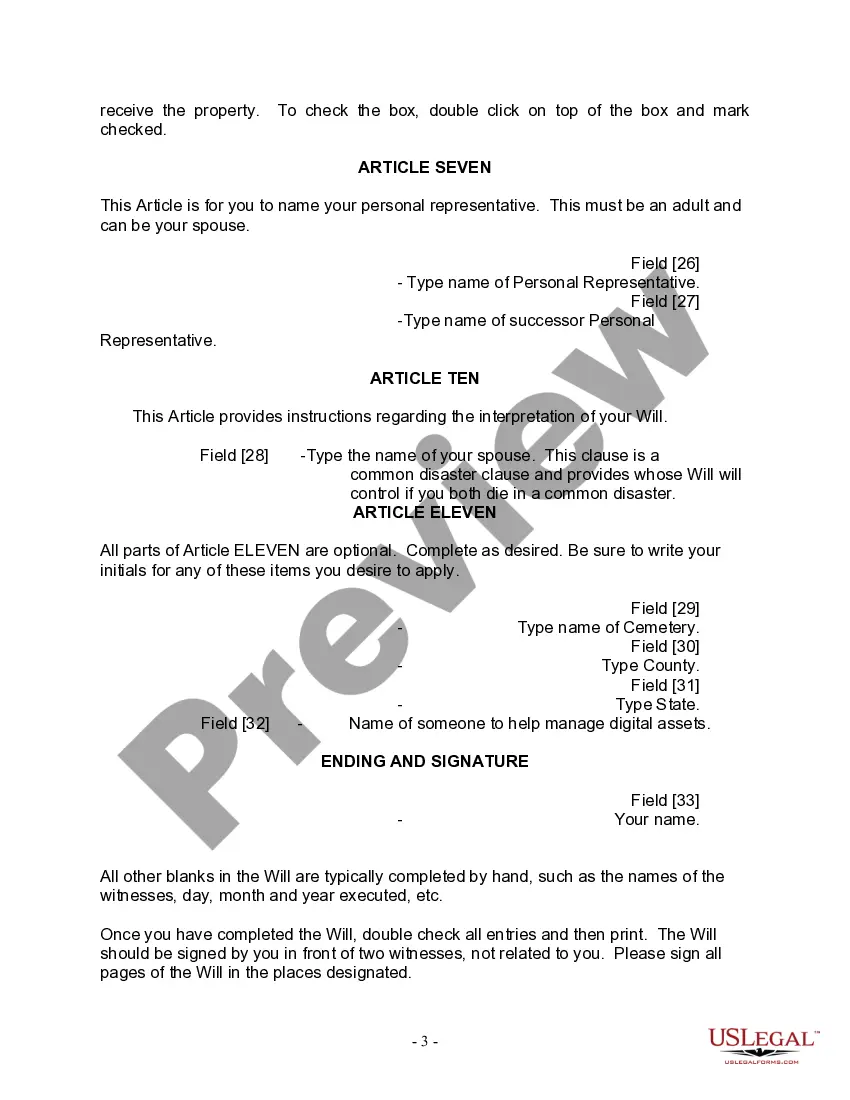
- Choose your personal representative and successor, ensuring both are adults trusted to manage your estate.
- Have the completed wills signed in the presence of two disinterested witnesses and a notary, if required by your state.
- Store the signed documents in a safe place and provide copies to your personal representative.
Does this form need to be notarized?
Notarization is required for this form to take effect. Our online notarization service, powered by Notarize, lets you verify and sign documents remotely through an encrypted video session, available 24/7.
Get your form ready online
Our built-in tools help you complete, sign, share, and store your documents in one place.
Make edits, fill in missing information, and update formatting in US Legal Forms—just like you would in MS Word.
Download a copy, print it, send it by email, or mail it via USPS—whatever works best for your next step.
Sign and collect signatures with our SignNow integration. Send to multiple recipients, set reminders, and more. Go Premium to unlock E-Sign.
If this form requires notarization, complete it online through a secure video call—no need to meet a notary in person or wait for an appointment.
We protect your documents and personal data by following strict security and privacy standards.

Make edits, fill in missing information, and update formatting in US Legal Forms—just like you would in MS Word.

Download a copy, print it, send it by email, or mail it via USPS—whatever works best for your next step.

Sign and collect signatures with our SignNow integration. Send to multiple recipients, set reminders, and more. Go Premium to unlock E-Sign.

If this form requires notarization, complete it online through a secure video call—no need to meet a notary in person or wait for an appointment.

We protect your documents and personal data by following strict security and privacy standards.
Mistakes to watch out for
- Failing to sign the wills in front of the required witnesses.
- Not naming a successor personal representative.
- Omitting important details in bequests, leading to confusion later.
Benefits of using this form online
- Convenient access to legal forms anytime and anywhere.
- Edit and customize forms easily to meet specific needs.
- Reliability of professionally drafted documents to ensure legal compliance.
Legal use & context
- Mutual wills are enforceable as long as they meet the legal requirements of your state.
- The terms in mutual wills are binding, which can prevent one spouse from altering the will without the other's consent.
- These wills can simplify the probate process, reducing time and potential disputes among survivors.
What to keep in mind
- The Mutual Wills Package is specially designed for married couples without children.
- Proper execution with witnesses and notarization is crucial for validity.
- This form promotes clear distribution of assets and reduces the likelihood of future conflicts.
- Utilizing this form online streamlines both access and customization for your estate planning.
Key terms explained
- Personal Representative: An individual appointed to manage an estate and carry out the instructions in the will.
- Self-proving affidavit: A document signed by witnesses and a notary to streamline the probate process by establishing that the will was executed properly.
- Bequest: A specific gift of property or money made through a will.
Looking for another form?
Form popularity
FAQ
Making one will for two people is usually not advisable because it's irrevocable after the first spouse's death.Even though married couples often have the same goals in mind when making their estate plan, most attorneys advise against joint wills.
Married couples often execute wills which are identical in their provisions, frequently giving the estate to the surviving spouse or if the spouse does not survive to the children.However, not every mirror will is a "mutual will", indeed very few mirror wills are mutual wills.
A joint will is one that two people, typically a married couple, sign together. Instead of each spouse having a separate will, they have one document that they've both agreed to. Most joint wills are written such that when one spouse dies, their portion of the estate passes to the other.
A mutual Will is where two (or more) testators make Wills which mirror the contents of the other(s). However, mutual Wills cannot be altered upon the death of one of the testators.
It is a customary estate planning practice for each spouse to have his or her own will. While some practitioners may draft a joint will for a married couple, it is not recommended.
Mutual Wills are Wills drawn up by at least two people and are signed following an agreement between the individuals which it is intended should bind the survivor of them. Each individual agrees with the other not to alter their Will after the other dies.
Making one will for two people is usually not advisable because it's irrevocable after the first spouse's death.Even though married couples often have the same goals in mind when making their estate plan, most attorneys advise against joint wills.
A joint will is a legal document executed by two (or more) people, which merges their individual wills into a single, combined last will and testament. Like most wills, a joint will lets the will-makers name who will get their property and assets after they die. Joint wills are usually created by married couples.
Mirror wills are based on the idea that married or unmarried couples will likely have the same wishes regarding their estate. No matter which spouse dies first, the estates are handled the same way. The basic structure of a mirror will is similar to an individual last will.