Wisconsin Affidavit of Occupancy and Financial Status
About this form
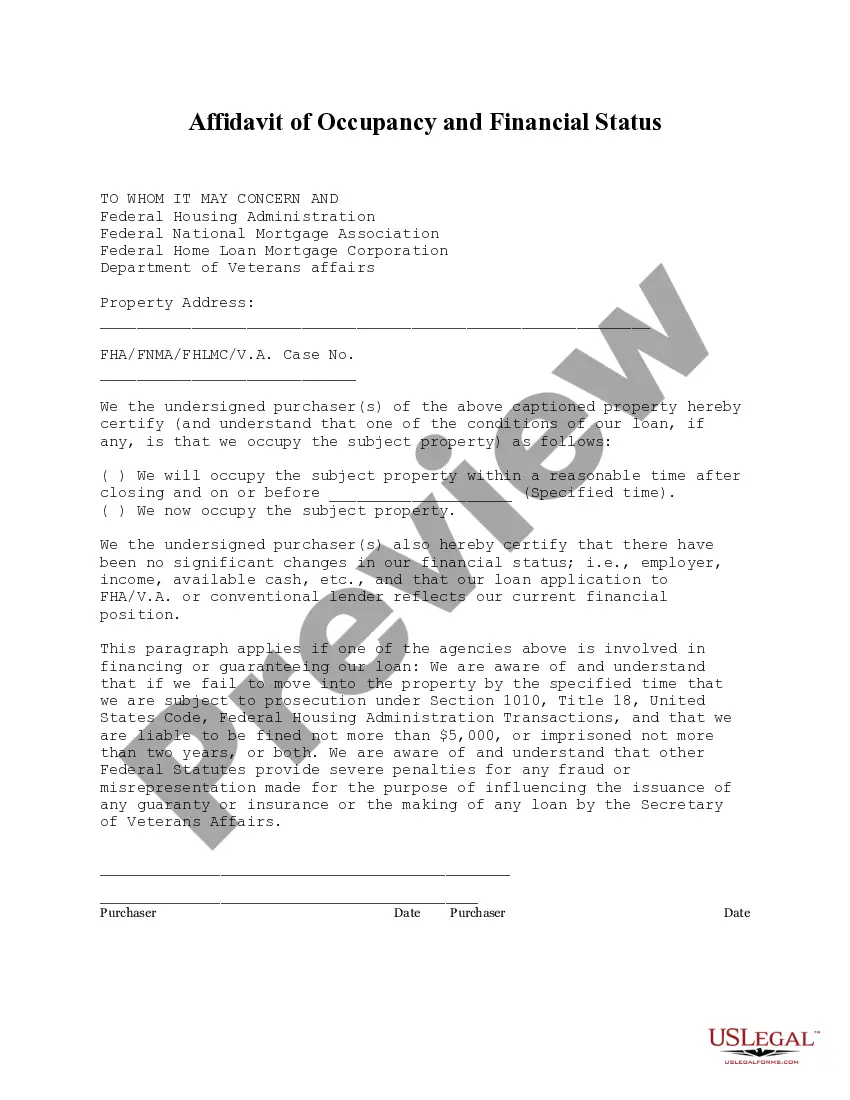
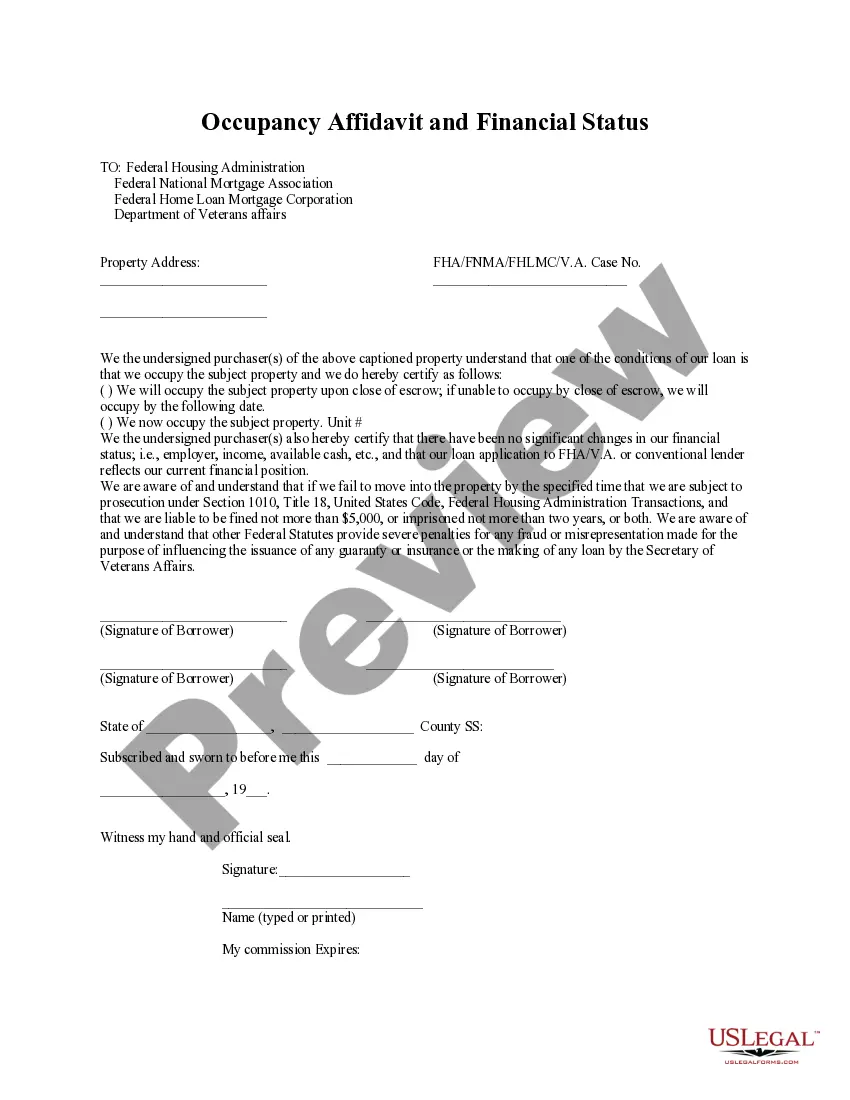
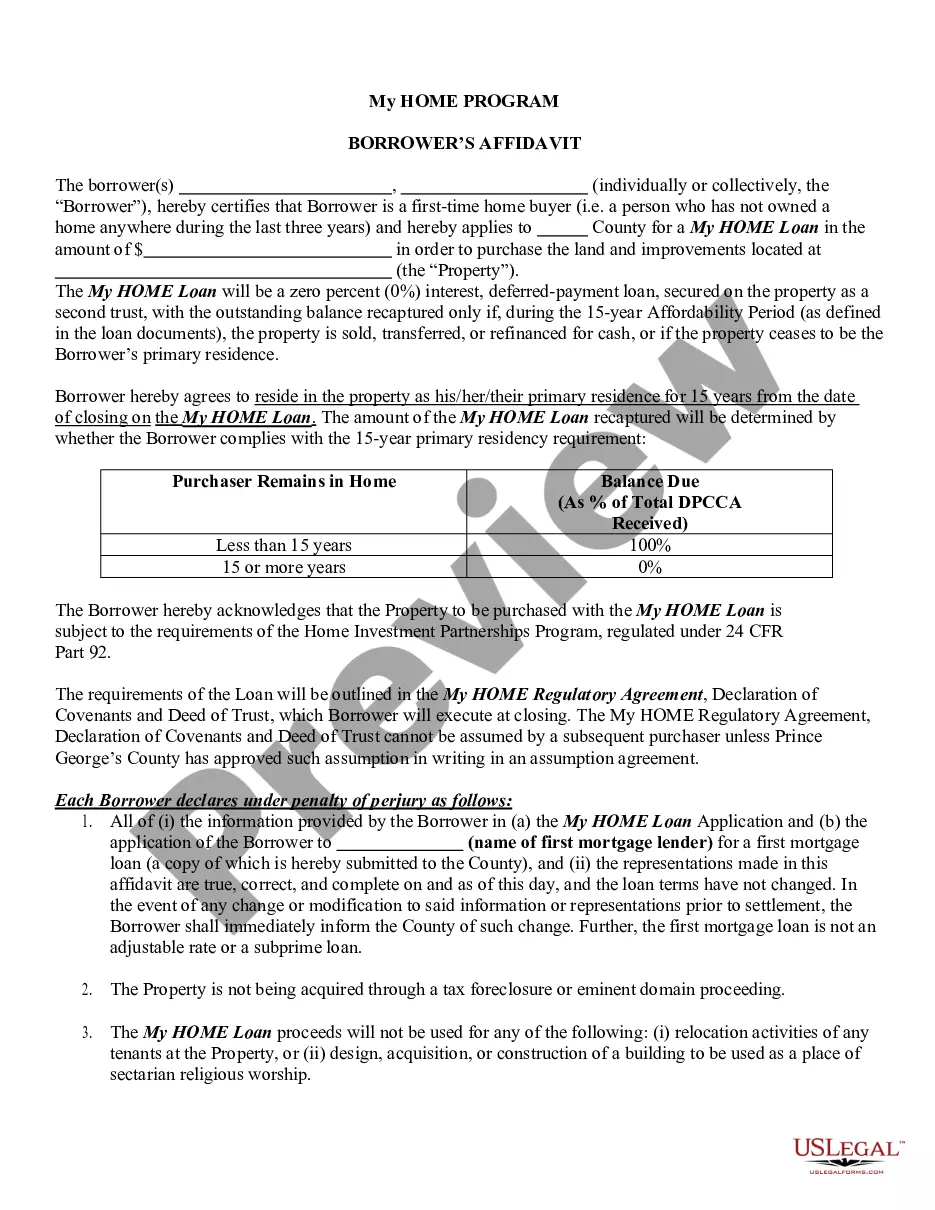
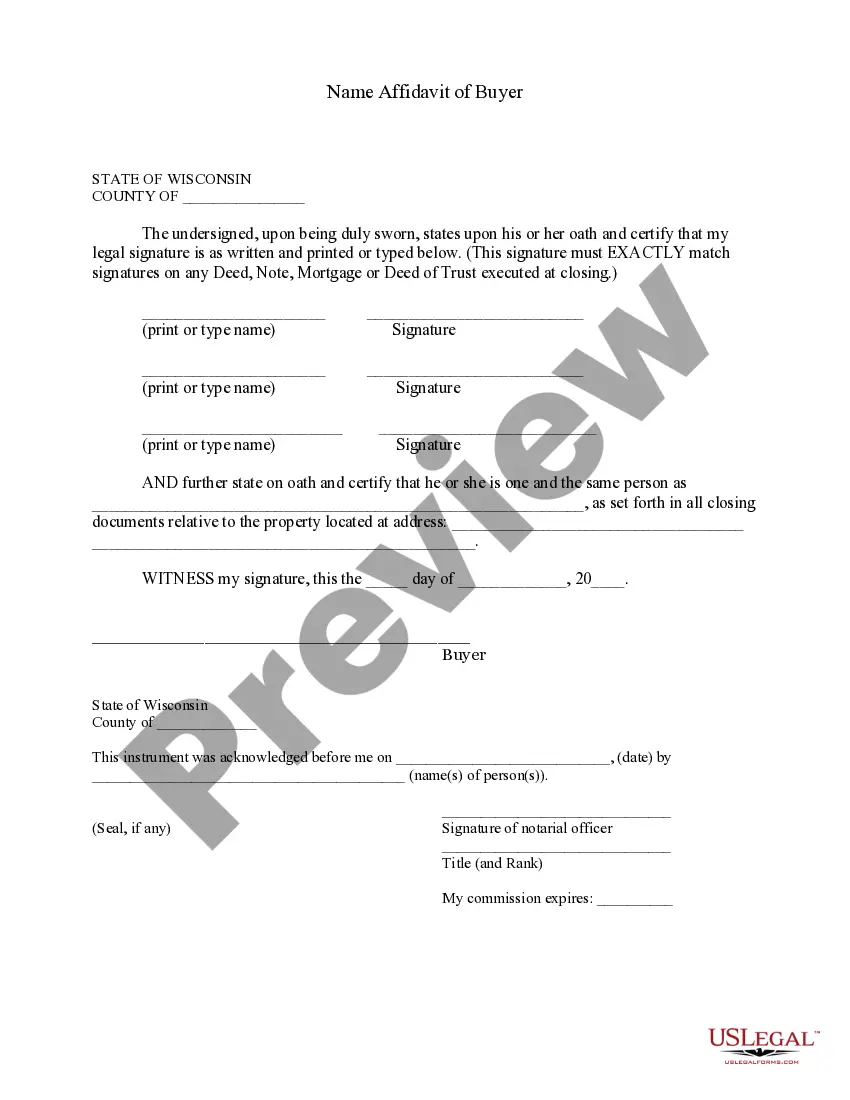
The Affidavit of Occupancy and Financial Status is a legal document used by buyers to certify their intention to occupy a property as their primary residence at the time of closing. This form also confirms that there have been no changes to the buyer's financial status since the loan application was submitted. Unlike other property or loan documents, this affidavit specifically addresses occupancy and financial stability, critical factors in real estate transactions.
Key components of this form
- Property address: Identifies the location of the property in question.
- Occupancy certification: Confirms whether the buyer will occupy the property immediately or by a specified date.
- Financial status declaration: Affirms that there have been no significant changes in the buyer's financial situation since the loan application.
- Legal awareness: Informs the buyer of the legal implications of failing to occupy the property as stated.
- Signature lines: Provides space for all buyers to sign and date the document.
When to use this form
This form is typically used during the closing process of a real estate transaction when a buyer is acquiring a property with the intention of using it as their primary residence. It is essential when financing is involved, particularly with agencies like the Federal Housing Administration (FHA) or Veterans Affairs (VA), to ensure that the buyer meets the occupancy requirements. Use this affidavit if you are purchasing a home and need to certify your intended use and current financial situation.
Who can use this document
- Homebuyers who are financing their purchase through an FHA, VA, or conventional loan.
- Individuals who intend to occupy the purchased home as their primary residence.
- Buyers who need to confirm their financial stability to satisfy lender requirements.
Instructions for completing this form
- Identify the property: Enter the full address of the property being purchased.
- Specify the intended occupancy: Indicate whether you will occupy the property immediately or by a specific date.
- Confirm financial status: Certify that there have been no major changes in your employment or income since applying for the loan.
- Understand legal implications: Review the legal consequences of not moving in by the specified date.
- Sign and date: All buyers must sign and date the form to validate it.
Is notarization required?
This form needs to be notarized to ensure legal validity. US Legal Forms provides secure online notarization powered by Notarize, allowing you to complete the process through a verified video call, available anytime.
Get your form ready online
Our built-in tools help you complete, sign, share, and store your documents in one place.
Make edits, fill in missing information, and update formatting in US Legal Forms—just like you would in MS Word.
Download a copy, print it, send it by email, or mail it via USPS—whatever works best for your next step.
Sign and collect signatures with our SignNow integration. Send to multiple recipients, set reminders, and more. Go Premium to unlock E-Sign.
If this form requires notarization, complete it online through a secure video call—no need to meet a notary in person or wait for an appointment.
We protect your documents and personal data by following strict security and privacy standards.

Make edits, fill in missing information, and update formatting in US Legal Forms—just like you would in MS Word.

Download a copy, print it, send it by email, or mail it via USPS—whatever works best for your next step.

Sign and collect signatures with our SignNow integration. Send to multiple recipients, set reminders, and more. Go Premium to unlock E-Sign.

If this form requires notarization, complete it online through a secure video call—no need to meet a notary in person or wait for an appointment.

We protect your documents and personal data by following strict security and privacy standards.
Typical mistakes to avoid
- Failing to specify the intended occupancy date, which can lead to loan issues.
- Not updating financial information that may have changed after the loan application.
- Omitting signatures, which can invalidate the affidavit.
Why use this form online
- Convenience: Download the form instantly and complete it at your pace.
- Editability: Tailor the document easily to fit your specific situation.
- Reliability: Forms are drafted by licensed attorneys to ensure legal compliance.
Looking for another form?




Form popularity
FAQ
Dying Without a Will in Wisconsin The court will then follow intestate succession laws to determine who inherits your assets, and how much they get. If there isn't a will, the court will appoint someone, usually a relative, financial institution, or trust company to fill the role of executor or personal representative.
What do I have to do when someone dies? If the decedent left a Will, it must be filed with the Probate office within 30 days of death even if no probate proceeding is required.
The transfer by affidavit process can be used to close a person's estate when the deceased has $50,000 or less in assets subject to administration in Wisconsin. It is an alternative to using a court process for smaller estates.
Step 1 At the top, write in the name of the decedent. Step 2 Under Section 1, write in the date of birth, the date of death, the residential address of decedent. Step 3 In Section 2, check the box that describes you as the person filling out the affidavit.
Probate is used to distribute a decedent's assets not only to beneficiaries but also to creditors and taxing authorities. Any Wisconsin estate that exceeds $50,000 in value must go through the probate process unless the property is subject to certain exemptions.
In Wisconsin, you can make a living trust to avoid probate for virtually any asset you own -- real estate, bank accounts, vehicles, and so on. You need to create a trust document (it's similar to a will), naming someone to take over as trustee after your death (called a successor trustee).