Wisconsin Bill of Sale with Warranty by Individual Seller
Understanding this form
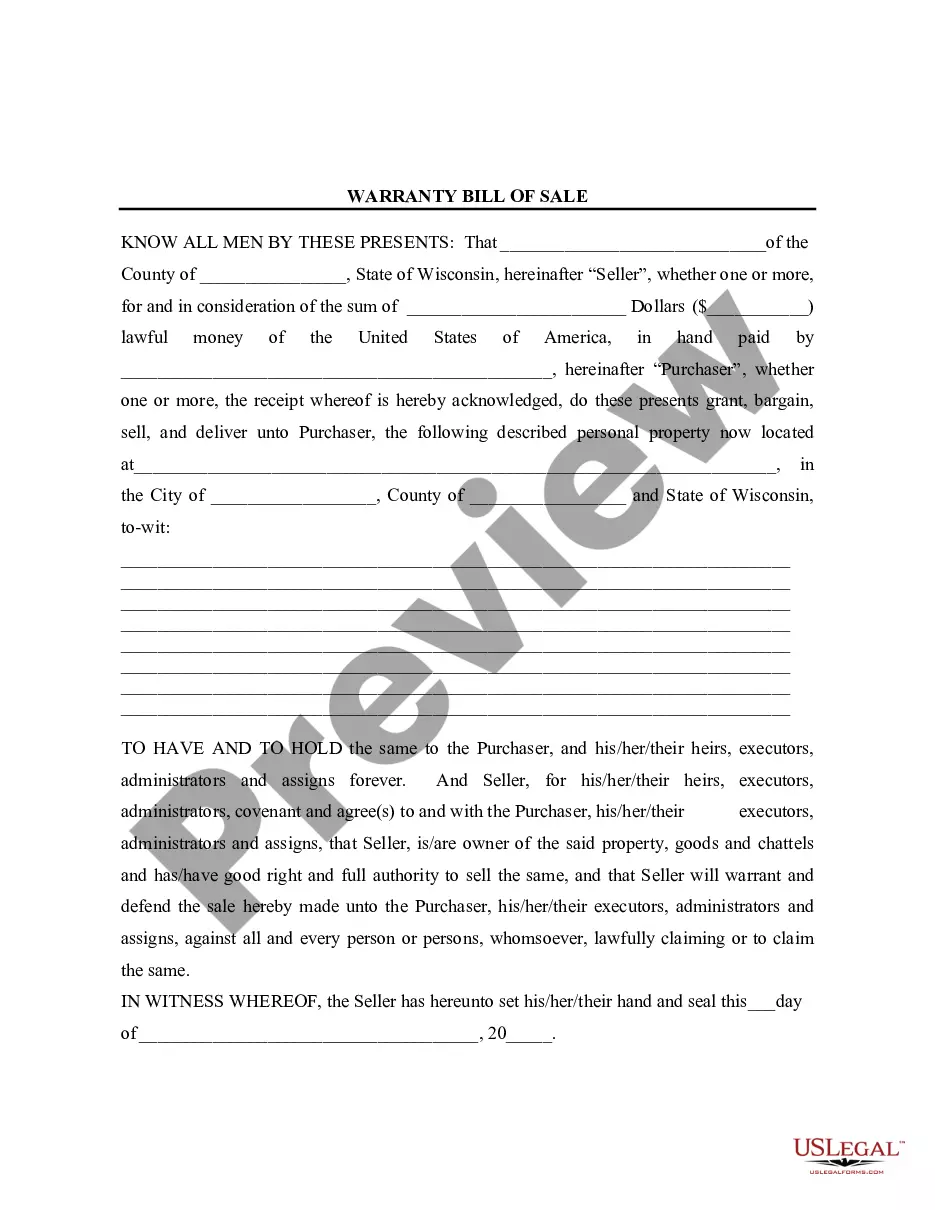
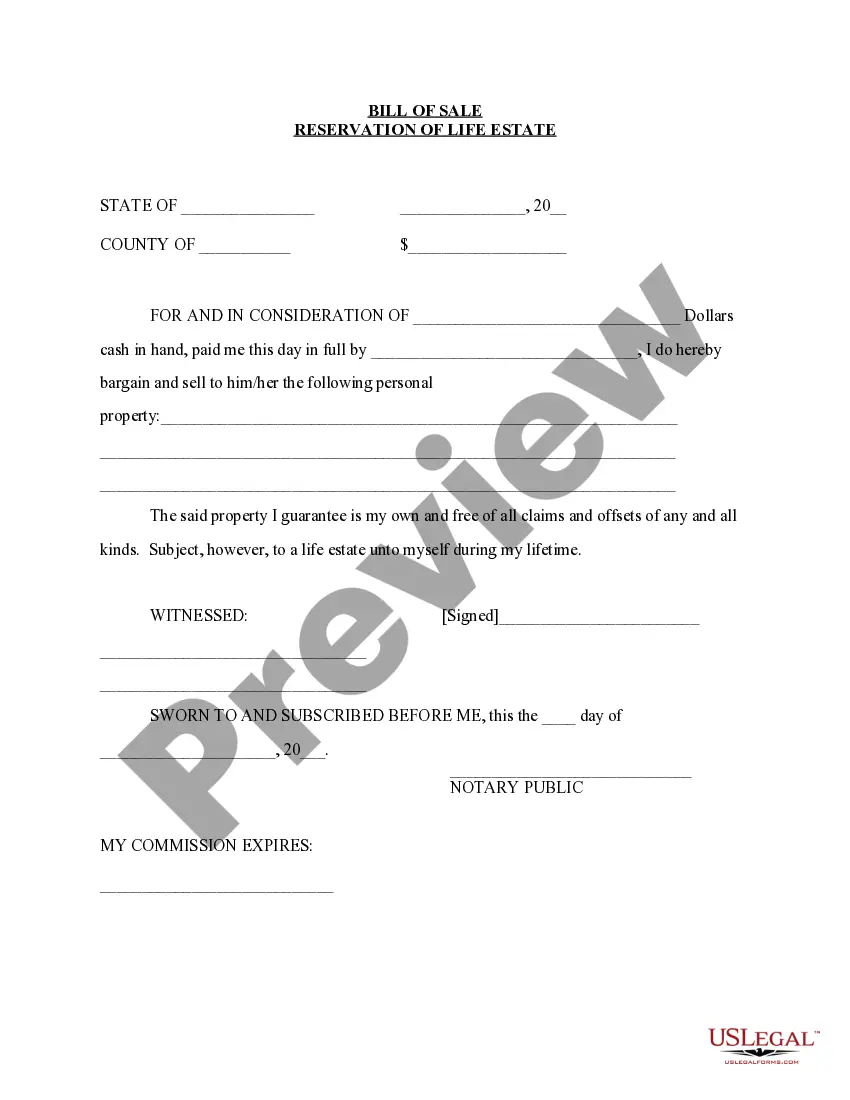
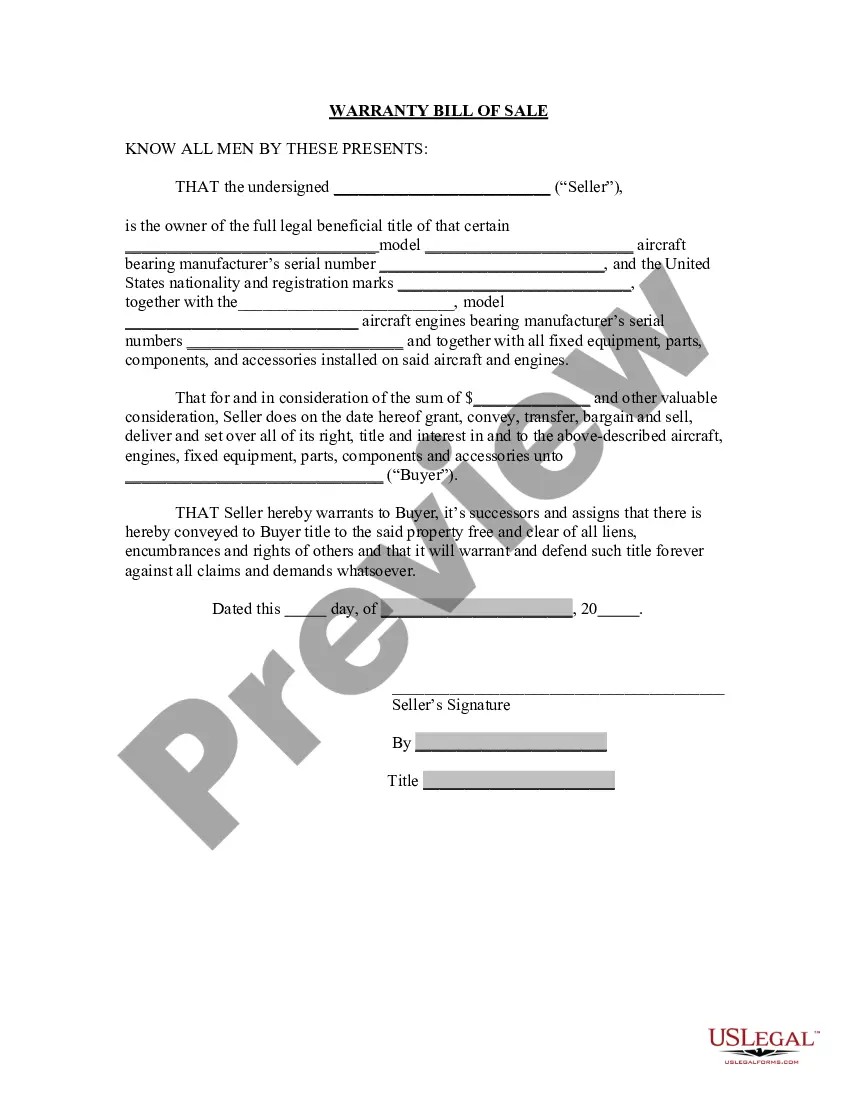
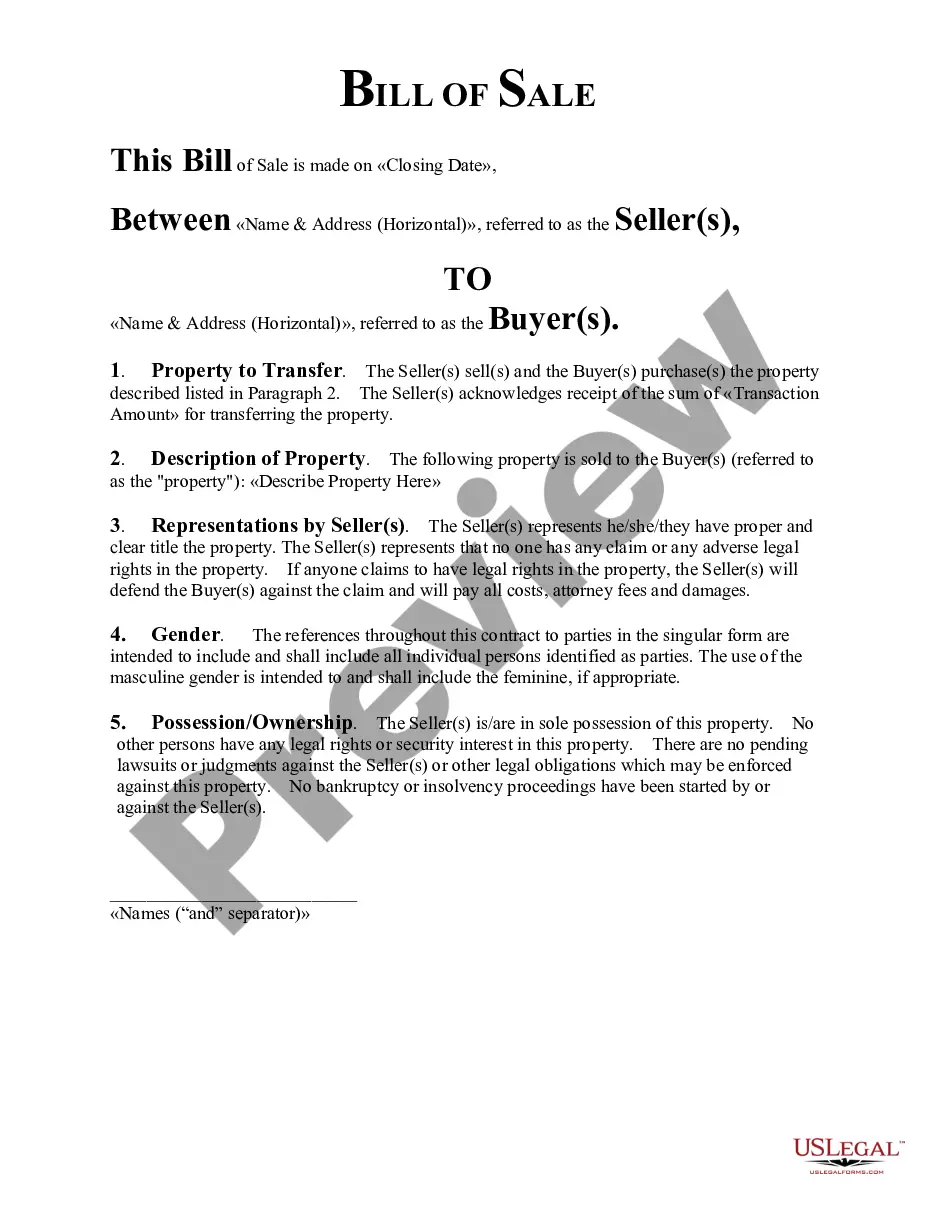
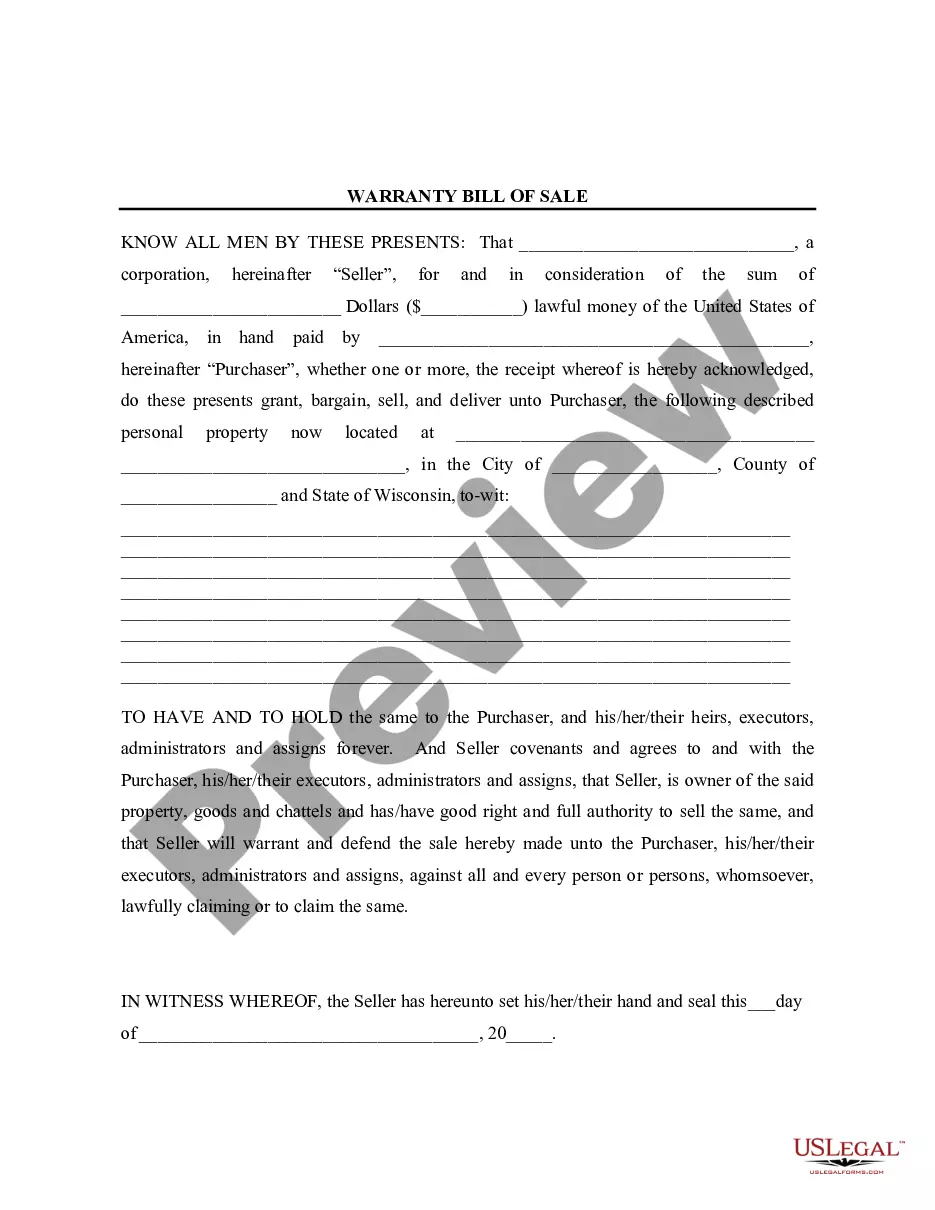
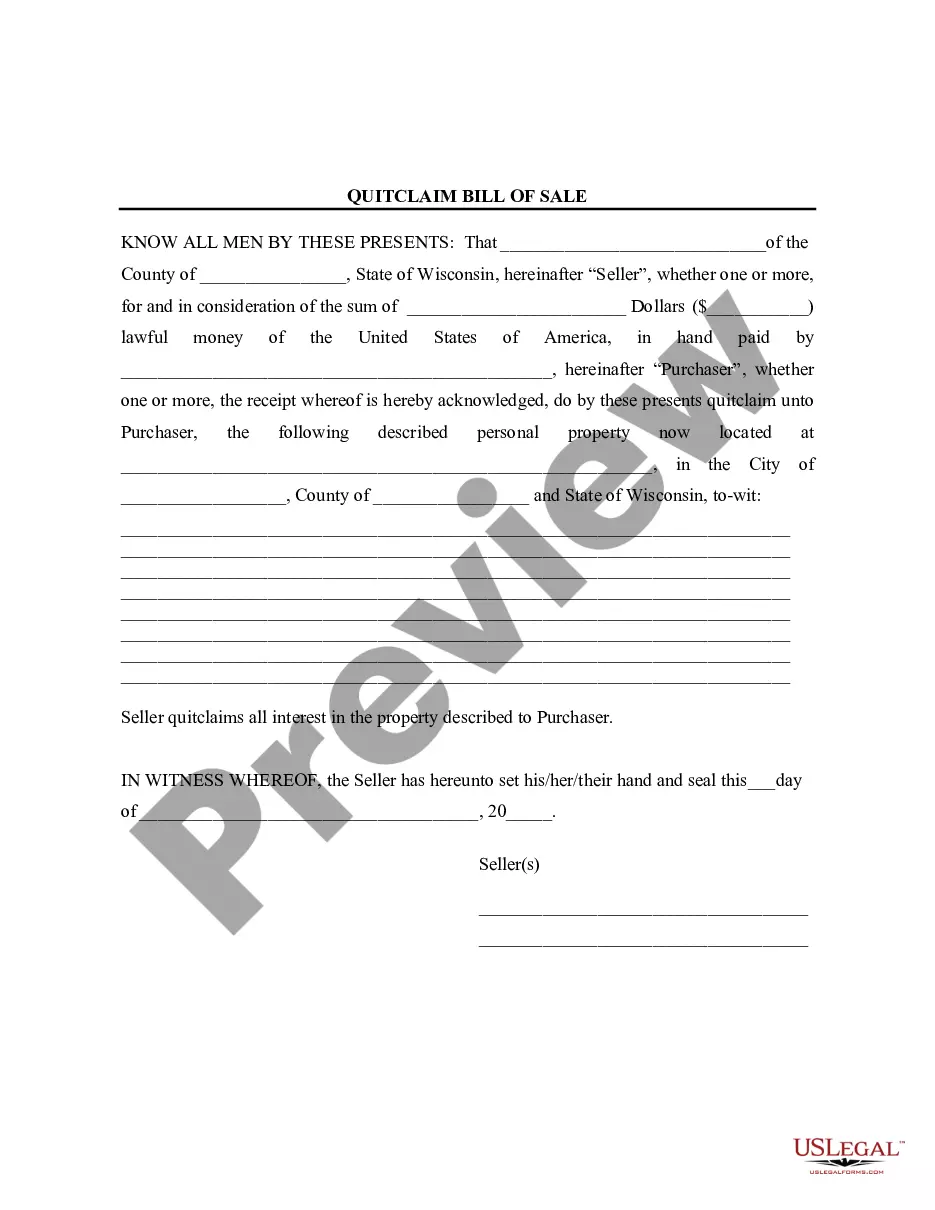
The Bill of Sale with Warranty by Individual Seller is a legal document that transfers ownership of personal property from a seller to a purchaser while providing a warranty. This form ensures that the seller guarantees their authority to sell the property and will defend the purchaser's ownership against any claims. Unlike a quitclaim deed, which offers no guarantees, this bill of sale signifies that the seller stands behind the transaction.
Key parts of this document
- Identification of the seller and purchaser.
- Description of the personal property being sold.
- Purchase price and payment details.
- Warranty statement from the seller regarding ownership and authority to sell.
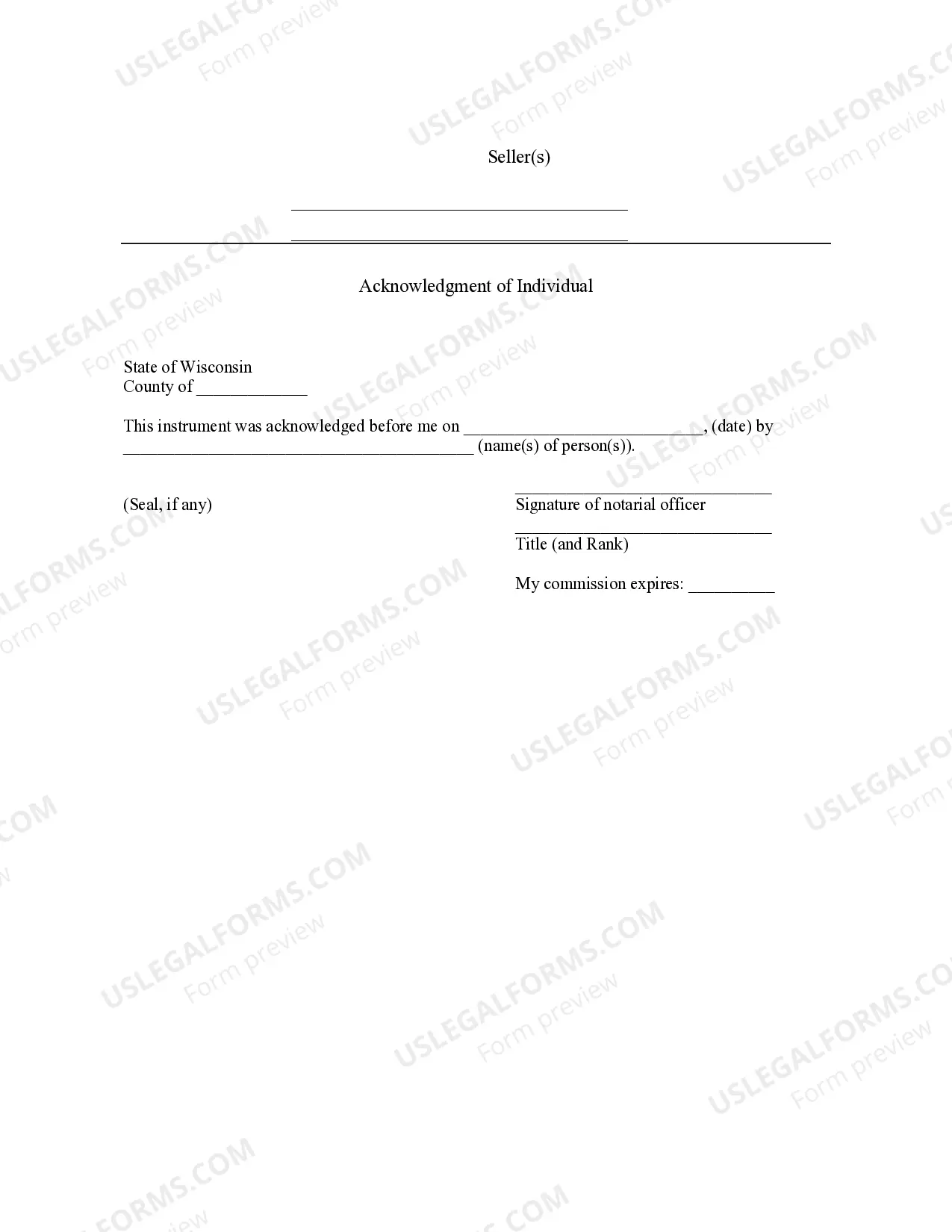
- Signature lines for the seller and acknowledgment for notarization.
Common use cases
This form is typically used when an individual seller wants to sell personal property (such as a vehicle, furniture, or equipment) to another individual and wishes to provide a warranty on the sale. It is important in situations where the buyer requires assurance of ownership and the seller's right to transfer the property.
Who this form is for
This form is suitable for:
- Individual sellers looking to transfer personal property securely.
- Purchasers seeking assurance about the legitimacy of the property transfer.
- Parties involved in a private sale of items requiring a clear record of ownership and warranty.
How to complete this form
- Identify the seller and purchaser by providing their names and addresses.
- Clearly describe the personal property being sold, including any identifying details.
- Enter the purchase price in both numeric and written form.
- Have the seller sign and date the document to validate the sale.
- Arrange for notarization by having the seller appear before a notary public, if required.
Notarization guidance
Yes, this form must be notarized to be legally valid in Wisconsin. Notarization provides an additional layer of verification to the transaction, ensuring that the seller's signature is authentic and that they acknowledged the transfer voluntarily. US Legal Forms offers integrated online notarization services, making it easy to complete this requirement securely and conveniently.
Get your form ready online
Our built-in tools help you complete, sign, share, and store your documents in one place.
Make edits, fill in missing information, and update formatting in US Legal Forms—just like you would in MS Word.
Download a copy, print it, send it by email, or mail it via USPS—whatever works best for your next step.
Sign and collect signatures with our SignNow integration. Send to multiple recipients, set reminders, and more. Go Premium to unlock E-Sign.
If this form requires notarization, complete it online through a secure video call—no need to meet a notary in person or wait for an appointment.
We protect your documents and personal data by following strict security and privacy standards.

Make edits, fill in missing information, and update formatting in US Legal Forms—just like you would in MS Word.

Download a copy, print it, send it by email, or mail it via USPS—whatever works best for your next step.

Sign and collect signatures with our SignNow integration. Send to multiple recipients, set reminders, and more. Go Premium to unlock E-Sign.

If this form requires notarization, complete it online through a secure video call—no need to meet a notary in person or wait for an appointment.

We protect your documents and personal data by following strict security and privacy standards.
Typical mistakes to avoid
- Failing to accurately describe the property being sold.
- Leaving out the purchase price or entering it incorrectly.
- Not obtaining a signature from the seller.
- Neglecting to have the document notarized when required.
Why complete this form online
- Immediate access to a legally drafted document tailored to your needs.
- Easy customization for specific transactions without the need for a lawyer.
- Allows for quick completion and downloading at any time.
Looking for another form?
Form popularity
FAQ
Names of the buyer and seller. Contact details. A description of the item(s) being sold. The price of the item(s). Methods of payment. Warranty details.
Identify the buyer and seller. Indicate the exact amount of and being sold. Indicate if the property on the land is also being sold or not. Identify what types of rights aside from ownership rights are being given.
A warranty bill of sale offers protections for the buyer that a simple receipt does not. This kind of bill of sale clearly details what is being sold and gives a guarantee to the buyer about the seller's ownership rights. The bill of sale promises that the buyer holds full and clear title to the item sold.
The date of the sale. A description of the car, including its: Year, make and model. The selling price of the car. If the car is a gift or partial gift, you should still create a bill of sale. Warranty information. The full names, addresses and signatures of the buyer and seller.
Can a Bill of Sale Be Handwritten? A bill of sale is a legal document that verifies you have sold your car and provides basic information about the vehicle or any other item and the terms of the sale.As, with any legal written document a bill of sale can be handwritten.
Both the buyer and seller should receive copies of the bill of sale form. It's important for the buyer to keep the bill of sale with the title of the vehicle for registration and licensing purposes, if necessary. However, all parties should keep them for their own personal records.
The word receipt should, of course, be at the very top, followed by the seller's information such as name and/or company's name, contact information, and any other relevant details. Similarly, you also need to indicate all of the relevant information about the buyer.
Sign two copies of the bill of sale, one for you and one for the other party. Although not strictly required, consider bringing a third party with you when the bill of sale is signed. If questions arise about the sale, that person can serve as a reporter of the transaction.