Wisconsin Letter from Landlord to Tenant as Notice of Abandoned Personal Property
Overview of this form
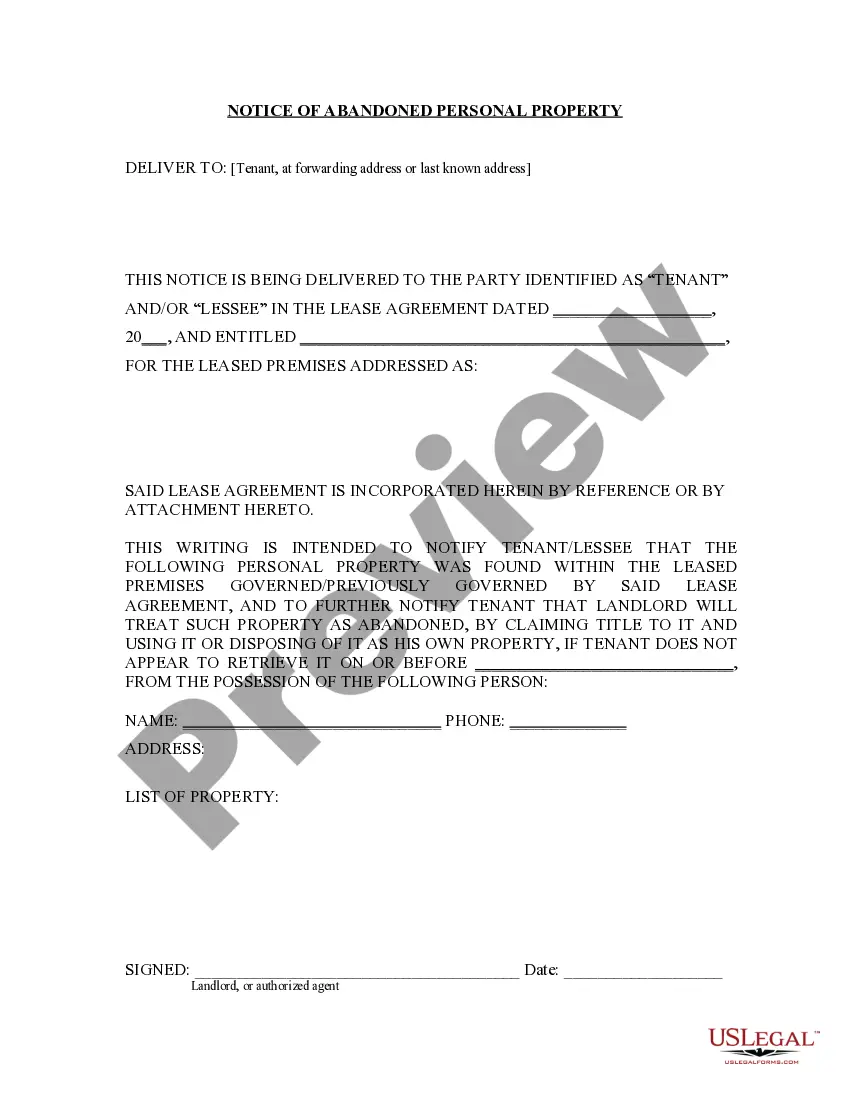
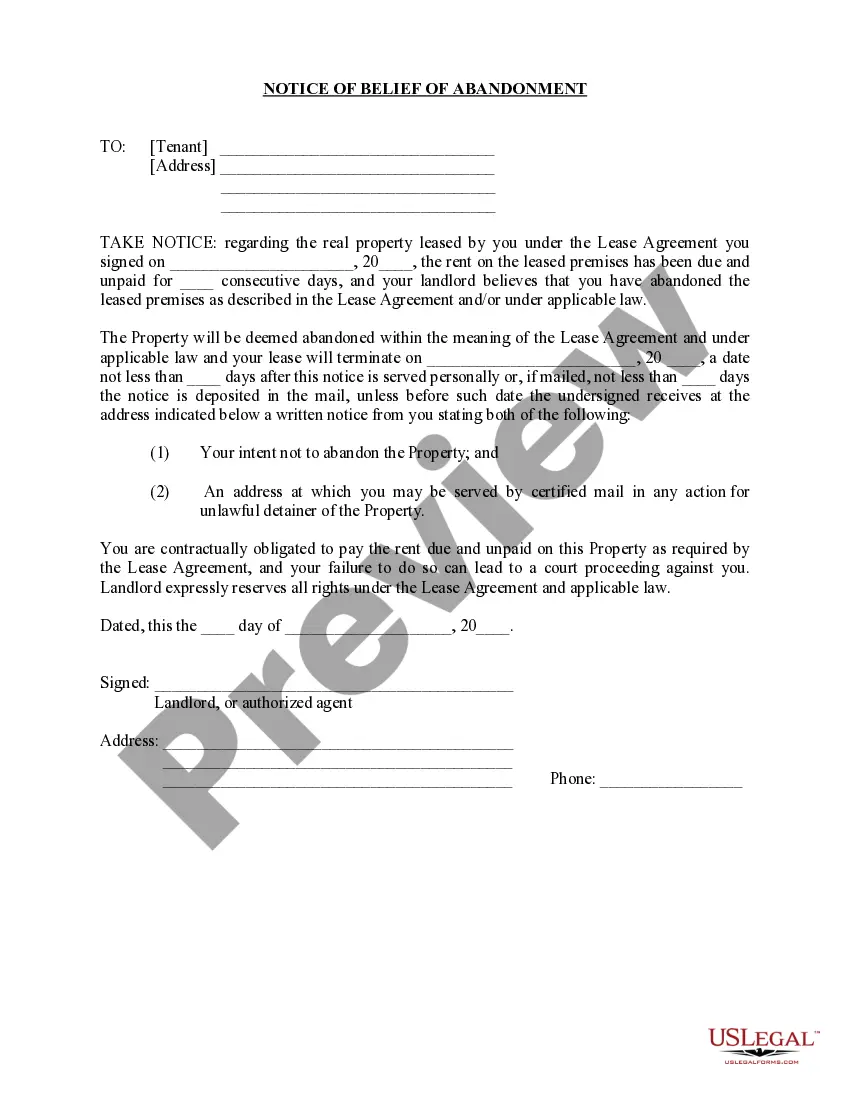
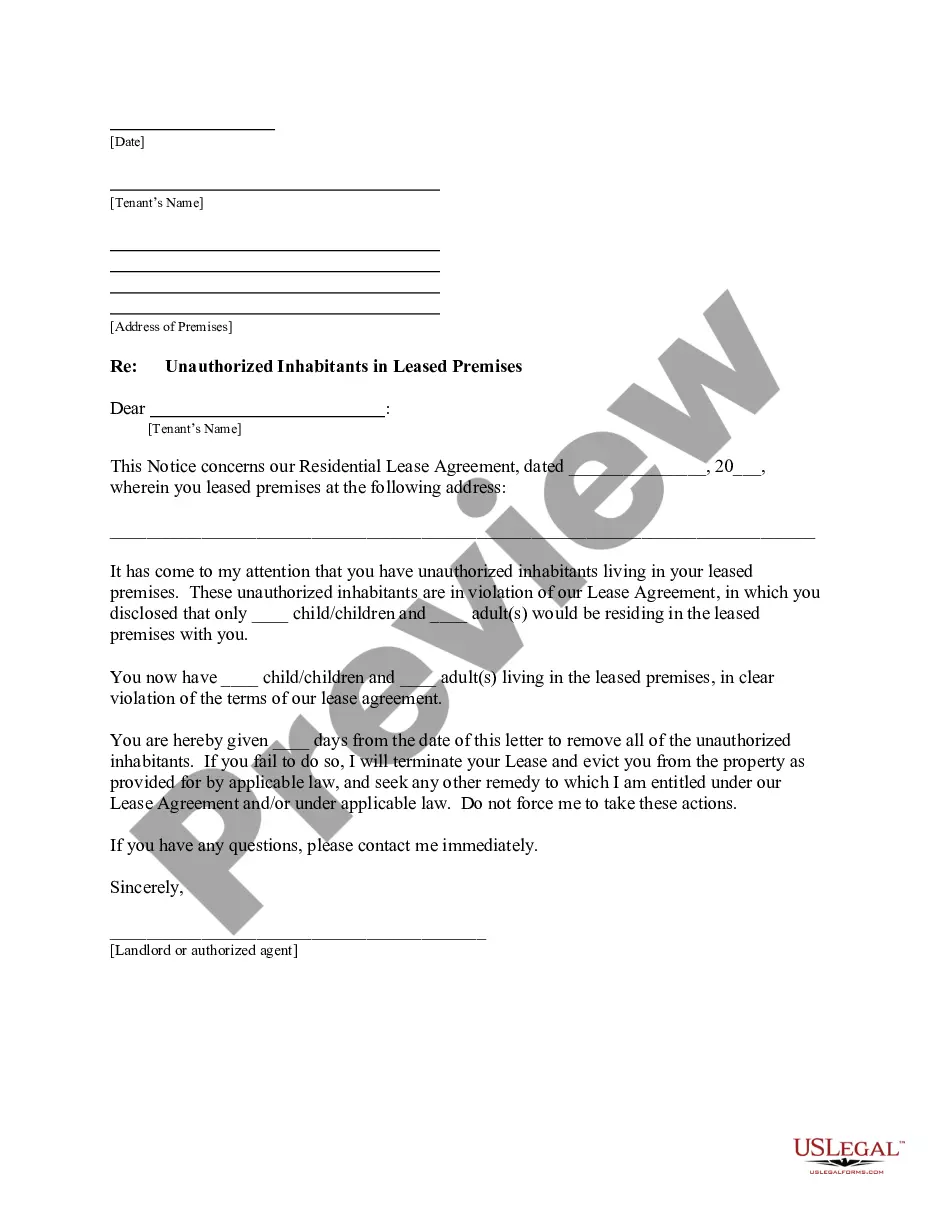
This Letter from Landlord to Tenant as Notice of Abandoned Personal Property is a formal communication from a landlord to a tenant. It serves to inform the tenant that personal items have been left behind in the leased property and outlines the steps the tenant must take to retrieve these items. If the items are not collected by a specified date, the landlord may claim ownership or dispose of the property. This form is designed to comply with relevant state laws regarding abandoned property, distinguishing it from other tenant communication forms.
Main sections of this form
- Identification of the personal property left behind by the tenant.
- A statement notifying the tenant of the abandoned status of the property.
- Instructions on how and when the tenant can retrieve the property.
- A deadline for reclaiming the items before the landlord takes further action.
- A clause indicating the landlord's rights regarding the items after the deadline.

When to use this form
This form should be used when a tenant has vacated the rental premises and left behind personal belongings. It is applicable in situations where the landlord needs to notify the tenant of these items and provide the tenant with the opportunity to retrieve them. This notice helps protect the landlord's interests and ensures compliance with state laws governing abandoned property.
Who should use this form
This form is intended for:
- Landlords who need to manage abandoned property left behind by tenants.
- Property managers responsible for overseeing rental agreements and tenant vacating procedures.
- Tenants who have vacated their rental unit and need to understand the implications of leaving personal property behind.
Instructions for completing this form
- Identify the rental property by including the address and relevant lease details.
- Document the personal items that have been left behind by the tenant.
- Specify the deadline by which the tenant must retrieve the items.
- Include the name and contact information of the person who has possession of the items.
- Ensure both the landlord's and tenant's signatures are included for acknowledgment.
Notarization guidance
In most cases, this form does not require notarization. However, some jurisdictions or signing circumstances might. US Legal Forms offers online notarization powered by Notarize, accessible 24/7 for a quick, remote process.
Get your form ready online
Our built-in tools help you complete, sign, share, and store your documents in one place.
Make edits, fill in missing information, and update formatting in US Legal Forms—just like you would in MS Word.
Download a copy, print it, send it by email, or mail it via USPS—whatever works best for your next step.
Sign and collect signatures with our SignNow integration. Send to multiple recipients, set reminders, and more. Go Premium to unlock E-Sign.
If this form requires notarization, complete it online through a secure video call—no need to meet a notary in person or wait for an appointment.
We protect your documents and personal data by following strict security and privacy standards.

Make edits, fill in missing information, and update formatting in US Legal Forms—just like you would in MS Word.

Download a copy, print it, send it by email, or mail it via USPS—whatever works best for your next step.

Sign and collect signatures with our SignNow integration. Send to multiple recipients, set reminders, and more. Go Premium to unlock E-Sign.

If this form requires notarization, complete it online through a secure video call—no need to meet a notary in person or wait for an appointment.

We protect your documents and personal data by following strict security and privacy standards.
Common mistakes
- Failing to specify a clear deadline for retrieval of the items.
- Not accurately identifying the abandoned property.
- Omitting necessary information, such as contact details for the landlord.
- Not complying with state laws regarding abandoned property notification.
Why use this form online
- Convenience of downloading and printing the form instantly.
- Easy customization to fit specific circumstances and state laws.
- Access to professionally drafted content to ensure legal compliance.
- Reduced time spent researching legal language and requirements.
Looking for another form?
Form popularity
FAQ
Abandonment can only be assumed from the tenant leaving the property, taking their possessions and handing in the keys. However as surrender of the property is implied from the same actions, an Abandonment Notice may be unnecessary.
Property is abandoned when the owner does not make contact with the holder for a period of one to five years depending on the type of property.
Dear (Name of landlord or manager), This letter constitutes my written (number of days' notice that you need to give based on your lease agreement)-day notice that I will be moving out of my apartment on (date), the end of my current lease. I am leaving because (new job, rent increase, etc.)
Job Abandonment: What to Do When Employees Ghost You (Sample Policy)Job abandonment is when an employee is absent from work for consecutive days and hasn't given any prior notice, nor have they given any indication that they will return to work.
If you are unsure about claiming that a tenant has surrendered the property you can place an Abandonment Notice on the door of the property. This Notice needs to advise that the property has been deemed as abandoned and give a time say five days after which the locks will be changed if no contact is received.
Starting to Write State the most recent information you have on file and detail the attempts you have made to contact them. Warn that if there is no response within a specific time frame action will be taken. Post the letter to the last known address of the individual.
Basically, a notice of abandonment is the trustee's way of saying that for one reason or another, the listed property cannot be liquidated for the benefit of your creditors. When a bankruptcy case is filed, real and personal property become part of a "bankruptcy estate" which the trustee is in control of.
Starting to Write State the most recent information you have on file and detail the attempts you have made to contact them. Warn that if there is no response within a specific time frame action will be taken. Post the letter to the last known address of the individual.