Wisconsin Notice to Lessor Exercising Option to Purchase
About this form
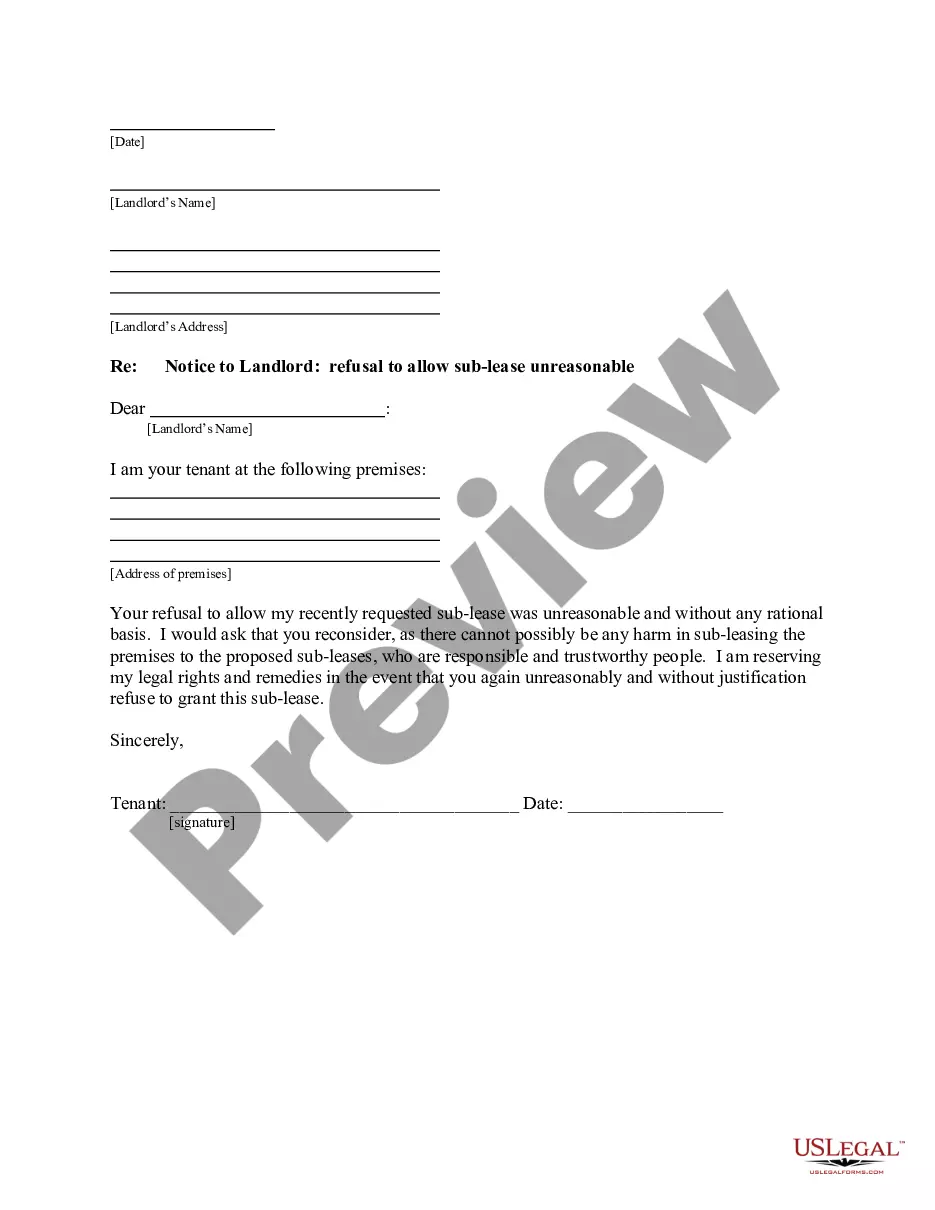
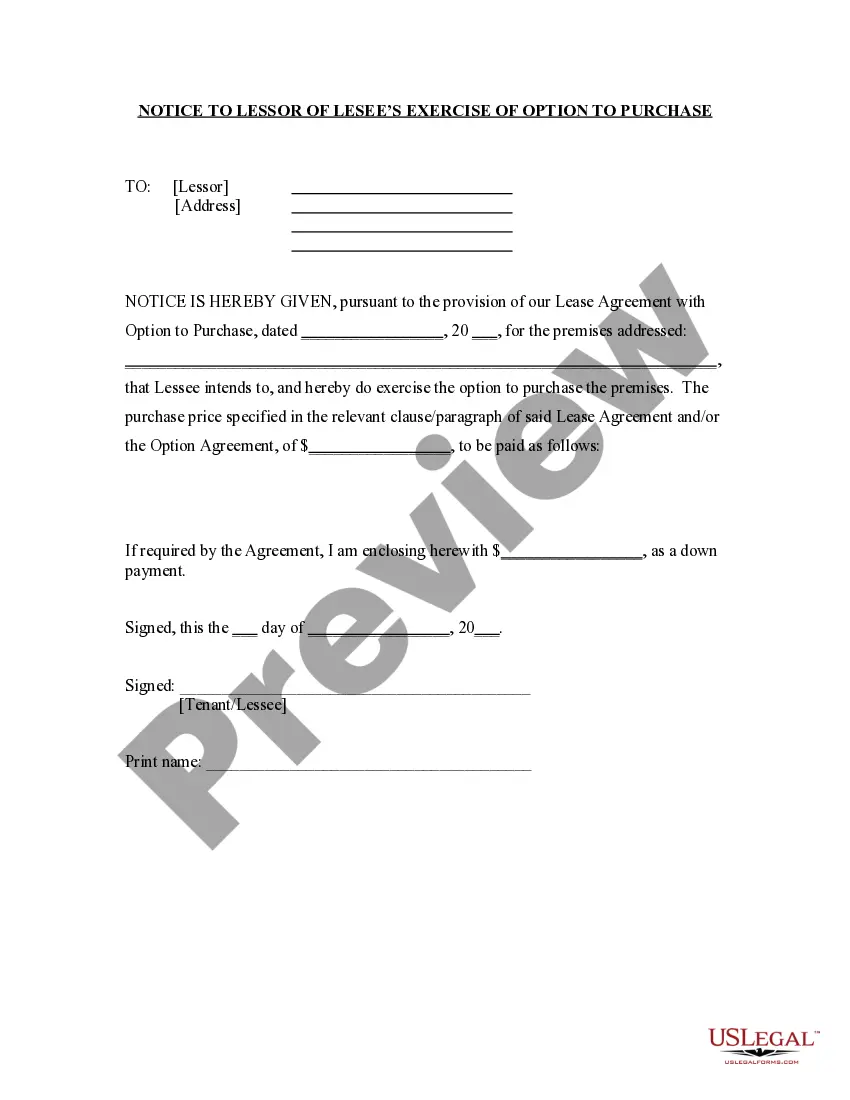
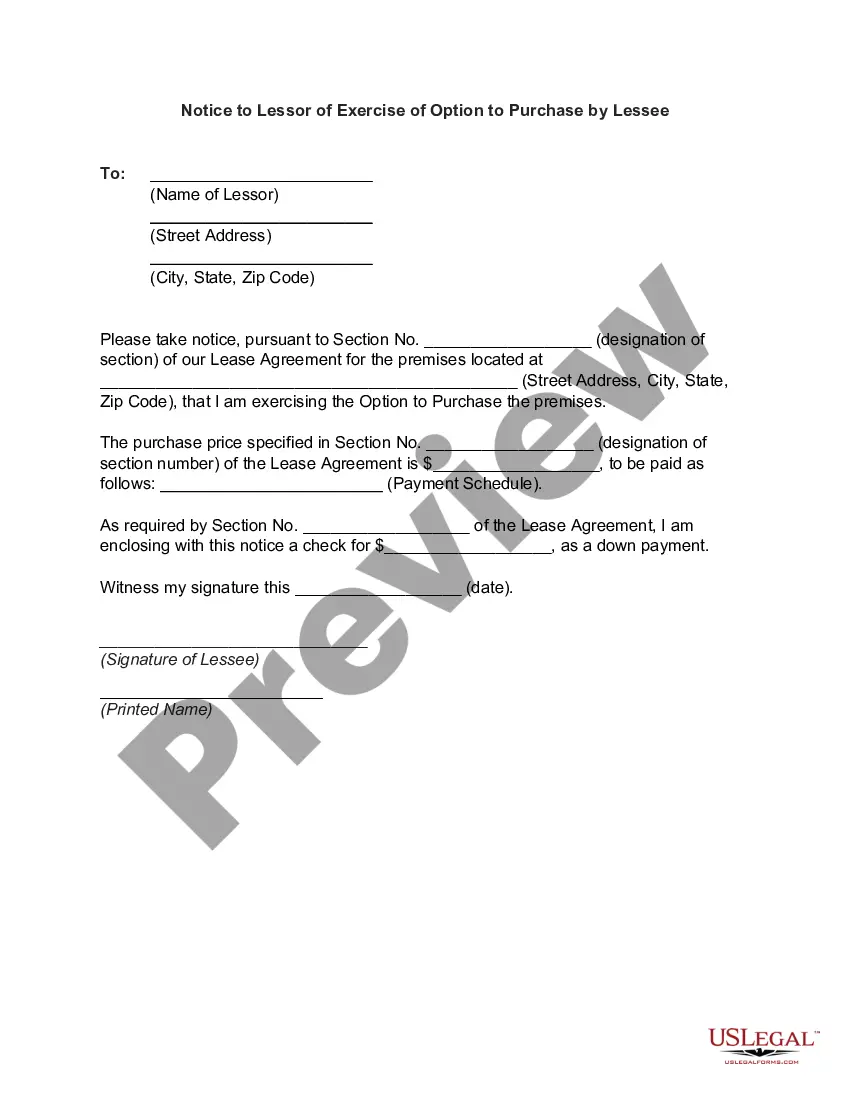
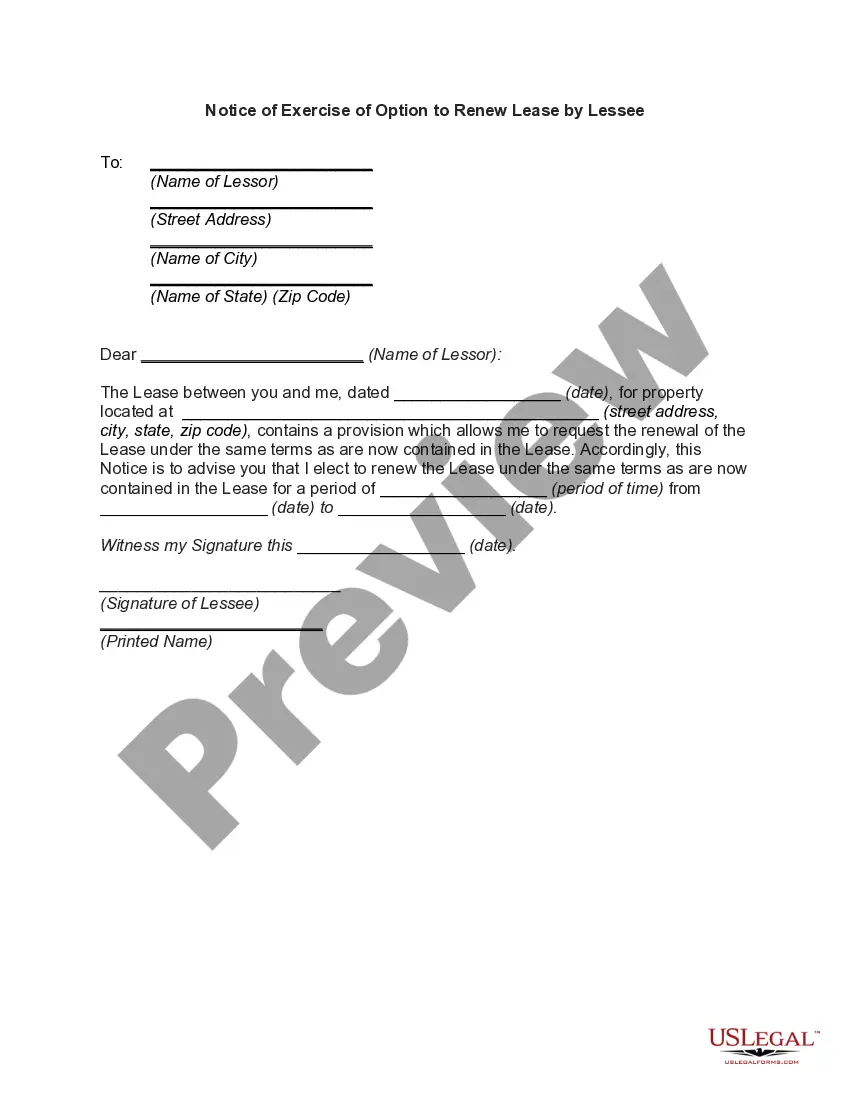
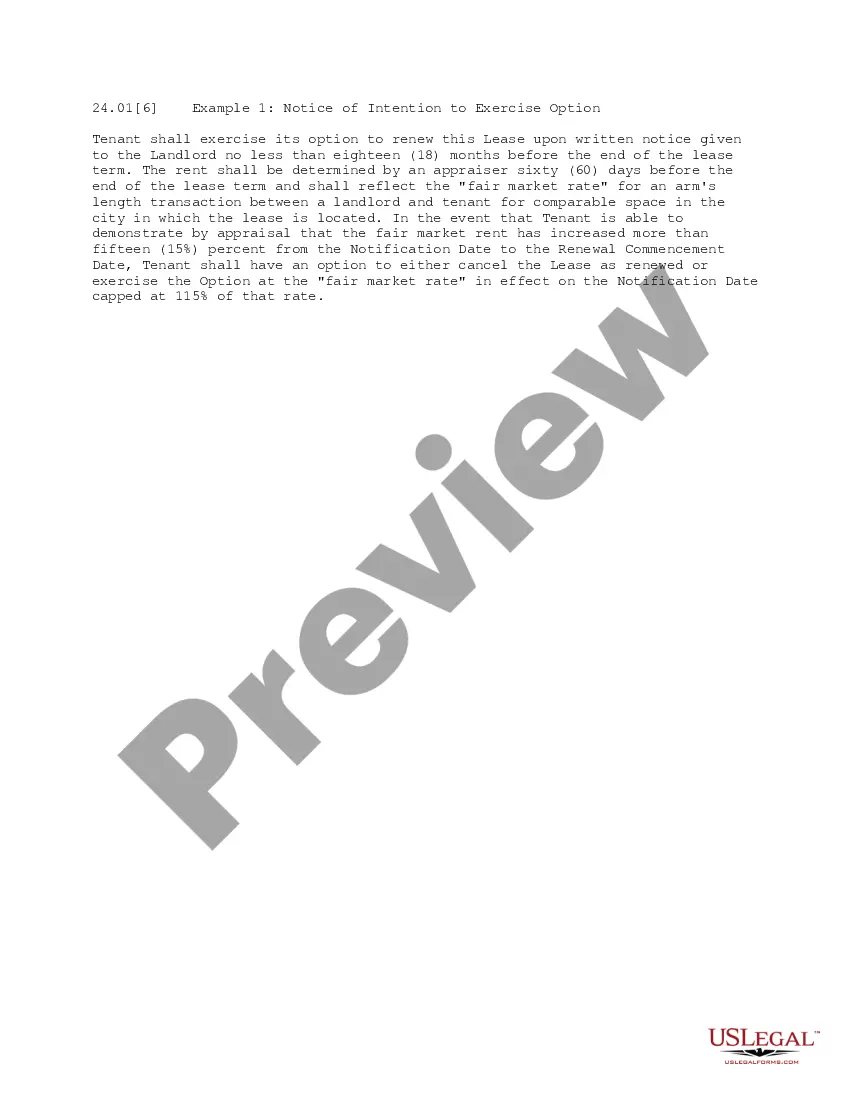
The Notice to Lessor Exercising Option to Purchase is a legal document that notifies the lessor, or landlord, of the tenant's intent to exercise their right to purchase the leased property. This form is essential for tenants who have an option to buy as agreed in their lease agreement, serving as an official declaration to initiate the purchase process. Unlike other notices, this form specifically provides a legal basis for the tenant's option to purchase, ensuring compliance with state laws.
Form components explained
- Purchase declaration: States the tenant's intent to exercise their option to purchase the property.
- Property description: Specifies the premises being purchased.
- Purchase price: Indicates the price agreed upon in the lease or option agreement.
- Payment terms: Outlines how the purchase price will be paid.
- Tenant signature: Requires the tenant to sign and print their name, affirming their intention.
When to use this document
This form should be used when a tenant wishes to notify the landlord that they are exercising their option to purchase the property they are leasing. It is relevant in scenarios where the lease agreement includes a clearly defined option to buy clause, allowing the tenant to purchase the property at a predetermined price. The notice must be sent before the option period expires to ensure the tenant's right to purchase is upheld.
Intended users of this form
- Tenants who have a lease agreement that includes an option to purchase.
- Individuals looking to secure their rights under the terms of their lease.
- Parties involved in real estate transactions who wish to formally execute a purchase option.
Steps to complete this form
- Identify the parties involved: Include the names of the tenant and landlord.
- Specify the property: Clearly describe the property being purchased.
- Enter the purchase price: Input the price agreed upon in the lease or option agreement.
- Detail payment terms: Include how the price will be paid.
- Sign and print your name: Ensure the tenant signs and prints their name for verification.
Notarization requirements for this form
This form must be notarized to be legally valid. US Legal Forms provides secure online notarization powered by Notarize, allowing you to complete the process through a verified video call.
Get your form ready online
Our built-in tools help you complete, sign, share, and store your documents in one place.
Make edits, fill in missing information, and update formatting in US Legal Forms—just like you would in MS Word.
Download a copy, print it, send it by email, or mail it via USPS—whatever works best for your next step.
Sign and collect signatures with our SignNow integration. Send to multiple recipients, set reminders, and more. Go Premium to unlock E-Sign.
If this form requires notarization, complete it online through a secure video call—no need to meet a notary in person or wait for an appointment.
We protect your documents and personal data by following strict security and privacy standards.
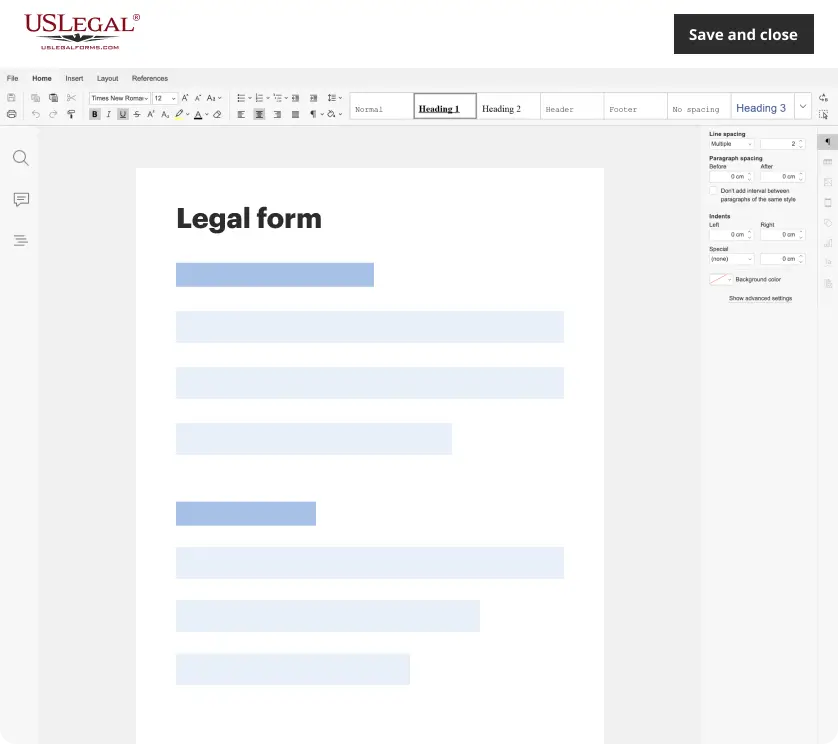
Make edits, fill in missing information, and update formatting in US Legal Forms—just like you would in MS Word.
Download a copy, print it, send it by email, or mail it via USPS—whatever works best for your next step.
Sign and collect signatures with our SignNow integration. Send to multiple recipients, set reminders, and more. Go Premium to unlock E-Sign.
If this form requires notarization, complete it online through a secure video call—no need to meet a notary in person or wait for an appointment.
We protect your documents and personal data by following strict security and privacy standards.
Common mistakes
- Failing to deliver the notice within the specified option period.
- Not including all required details, such as the property description and purchase price.
- Not signing the form, which could invalidate the notice.
Why complete this form online
- Convenience of completing and downloading the form from anywhere.
- Editable format allows personalization to fit individual circumstances.
- Reliability of forms drafted by licensed attorneys ensures legal correctness.
Legal use & context
- The form serves as an essential legal notice to protect the rights of the tenant in relation to the purchase option.
- Enforceability can depend on compliance with the lease agreement terms and state laws.
- It creates a clear record of the tenant's intentions, which may be referenced in future legal situations.
Key takeaways
- The form is critical for tenants wishing to exercise their right to purchase a rented property.
- State laws should always be checked to ensure the form meets local requirements.
- Using the form online offers convenience, customization, and access to reliable legal templates.
Looking for another form?
Form popularity
FAQ
A real estate deal can take a turn for the worst if the contract is not carefully written to include all the legal stipulations for both the buyer and seller.You can write your own real estate purchase agreement without paying any money as long as you include certain specifics about your home.
Earnest Money: Earnest money is money paid by a buyer (held by the broker) to show the seller that the buyer is serious.If the buyer's contingencies cannot be met, for example, the buyer can't get the financing described in the financing contingency, the buyer may be legally entitled to get the earnest money back.
A purchase agreement form may be a legally binding document between a seller and a buyer of an object. It details what is being sold, the price per unit if there is more than one item, and the amount due. It will also explain the terms and conditions of the sale.
Yes! Earnest money is refundable, it just depends on the circumstances. If you tell the seller that you are backing out of the home buying process before certain deadlines, then there should be no issue refunding the earnest money to you. The same applies if you didn't break any contract rules.
Earnest money isn't always a requirement, but it could be a necessity if you're shopping in a competitive real estate market. Sellers tend to favor these good faith deposits because they want to ensure that the sale won't fall through. Earnest money can act as added insurance for both parties in the transaction.
CAUTION: Use a WB-41 Notice if a Party is giving a Notice which does not require the other Party's agreement. Use a WB-40 Amendment if both Parties will be agreeing to modify the terms of the Offer.
Sellers are not required to accept any offer, or even to respond to it even if the price offered is more than the list price.Earnest money can be paid when the offer is submitted to the seller after the offer is accepted by the seller, or both.
The identity of the buyer and seller. A description of the property being purchased. The purchase price. The terms as to how and when payment is to be made. The terms as to how, when, and where the goods will be delivered to the purchaser.
Yes, you can purchase a home without earnest money but your deal may be at a greater risk of falling through.Although it's less likely the seller will agree, they may opt for a waiver of earnest money offer when market conditions aren't in their favor.