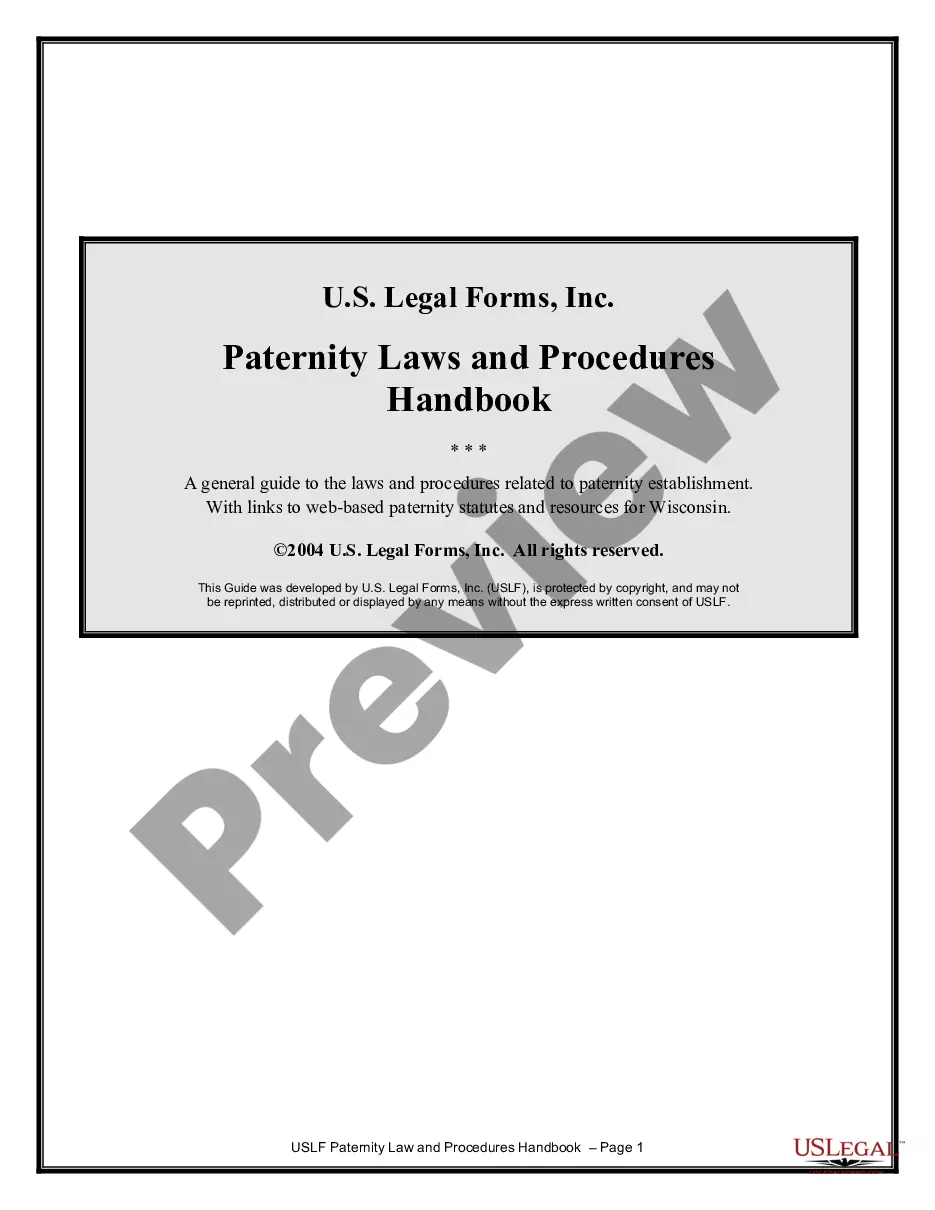
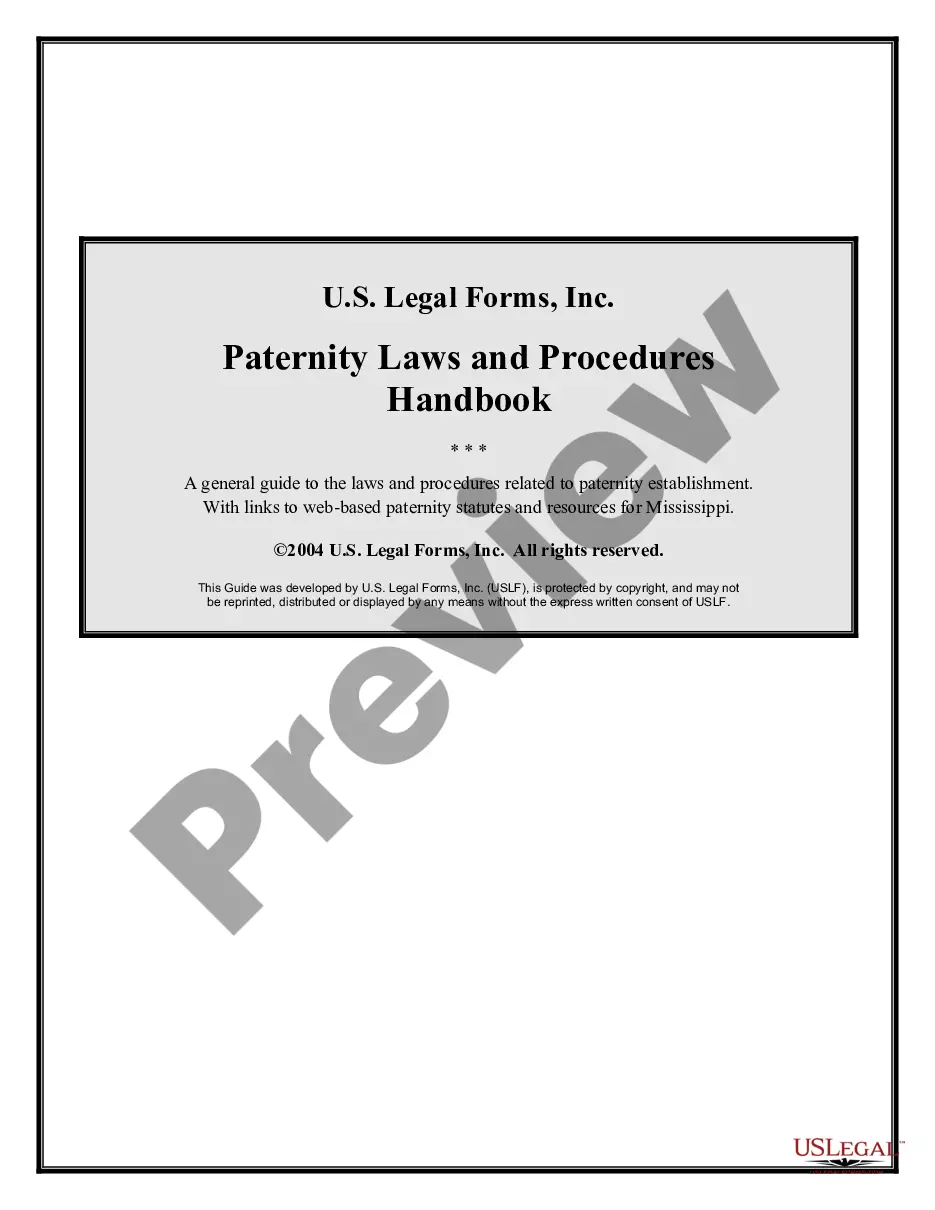
Wisconsin Paternity Law and Procedure Handbook
About this form
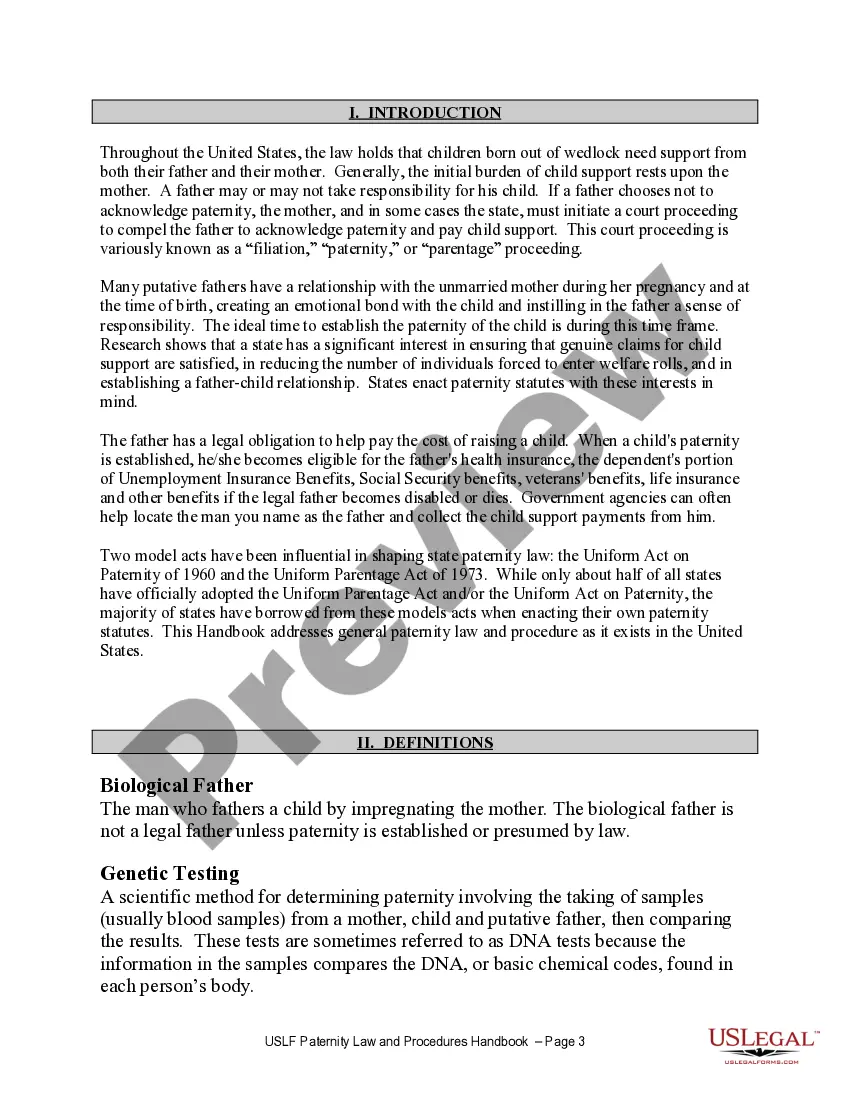
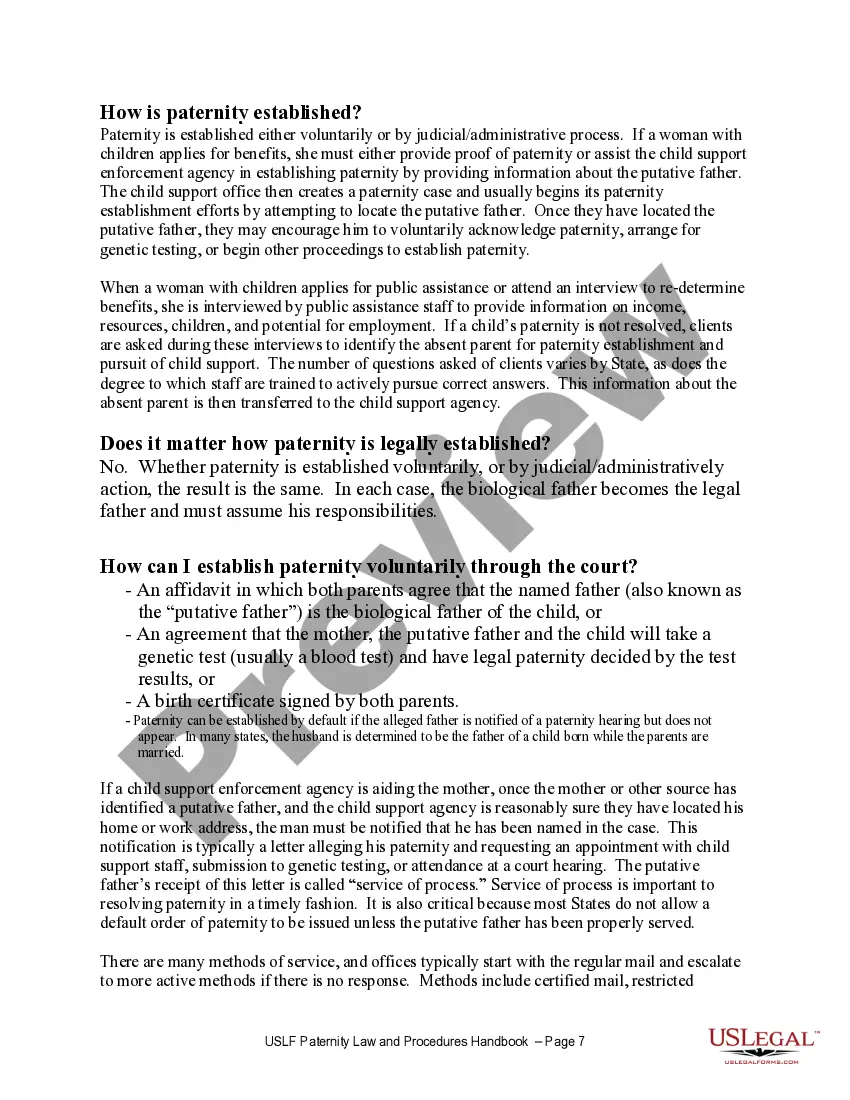
The Paternity Law and Procedure Handbook serves as a comprehensive guide for understanding the laws and procedures related to establishing paternity in the United States. This handbook is particularly relevant for unmarried parents who need to determine the legal father of a child and navigate the complexities of child support and custody issues. Unlike other forms, it provides state-specific resources and legal information tailored to help individuals through the paternity establishment process.
Form components explained
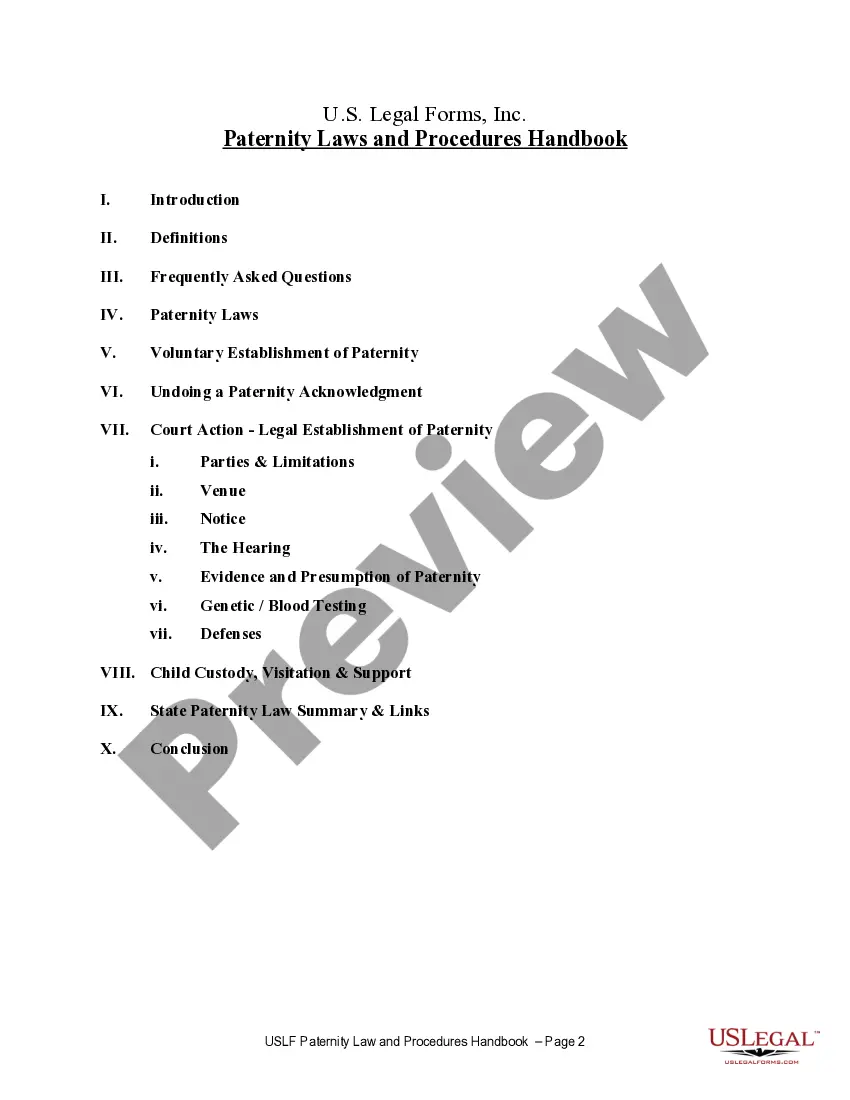
- Introduction to paternity laws and their significance.
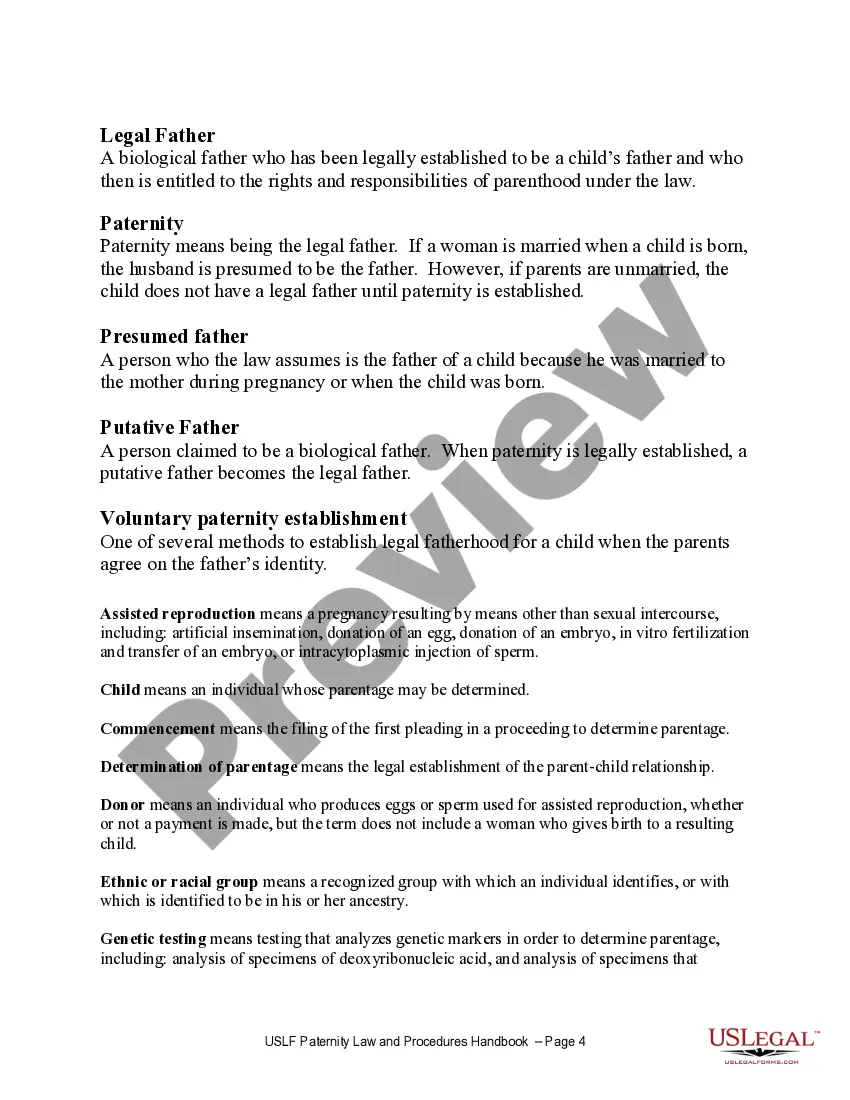
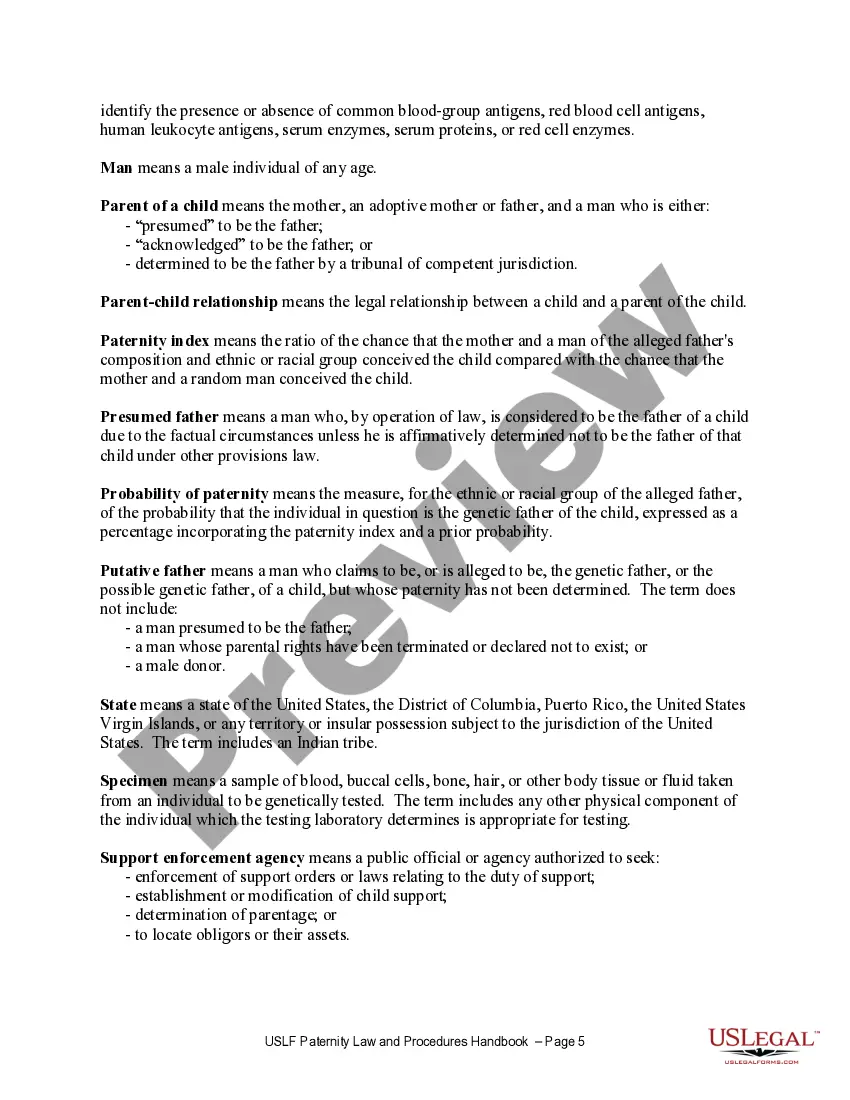
- Definitions related to paternity, including biological father and legal father.
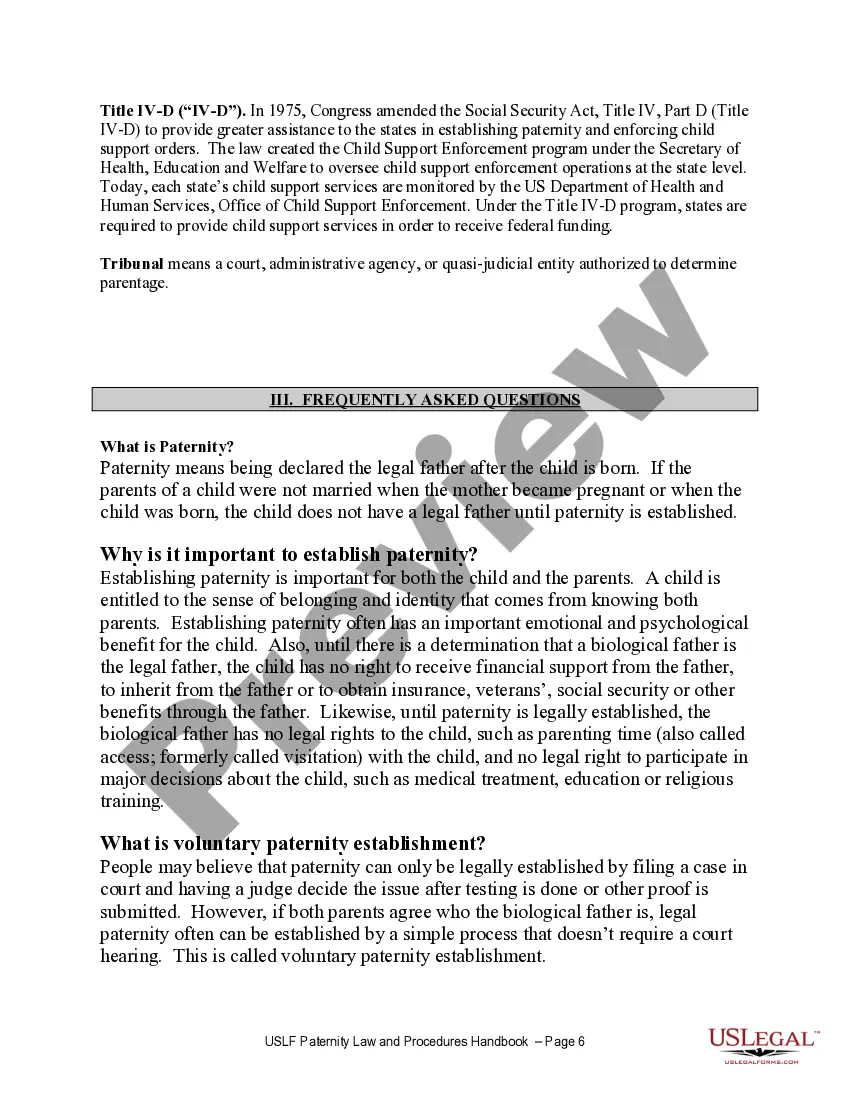
- Frequently asked questions about paternity establishment.
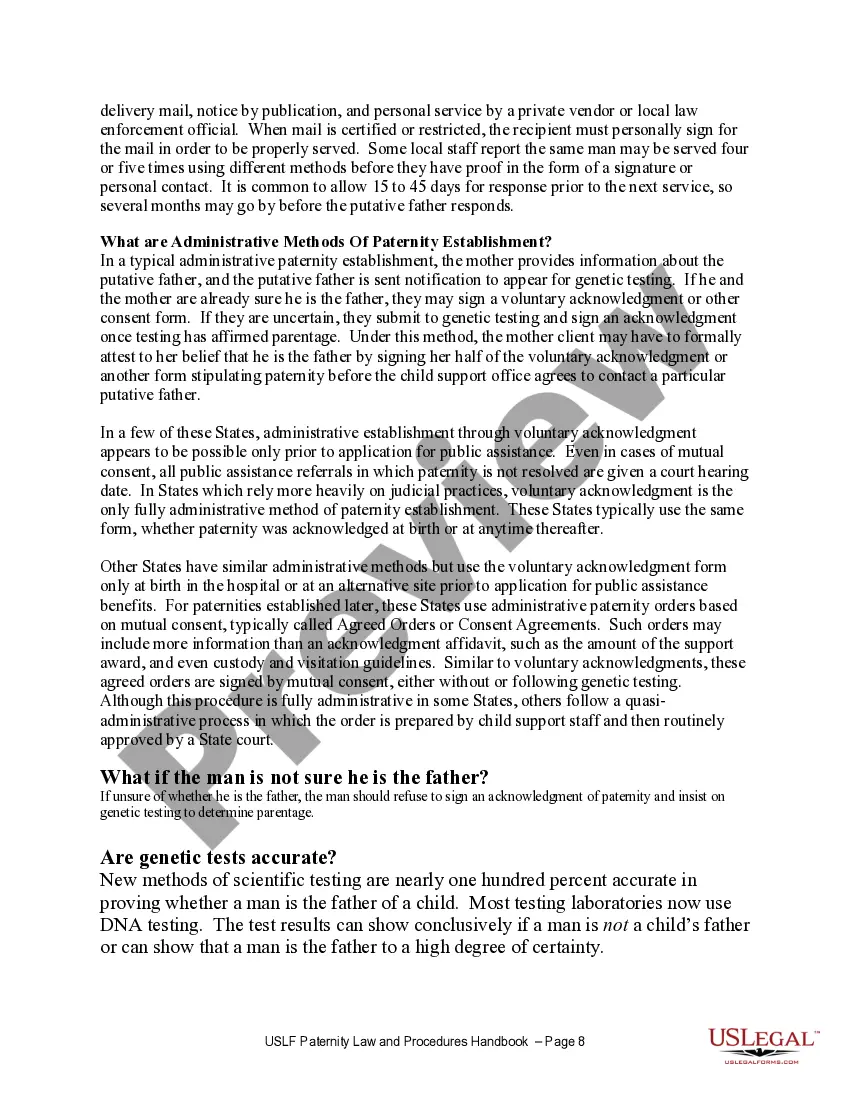
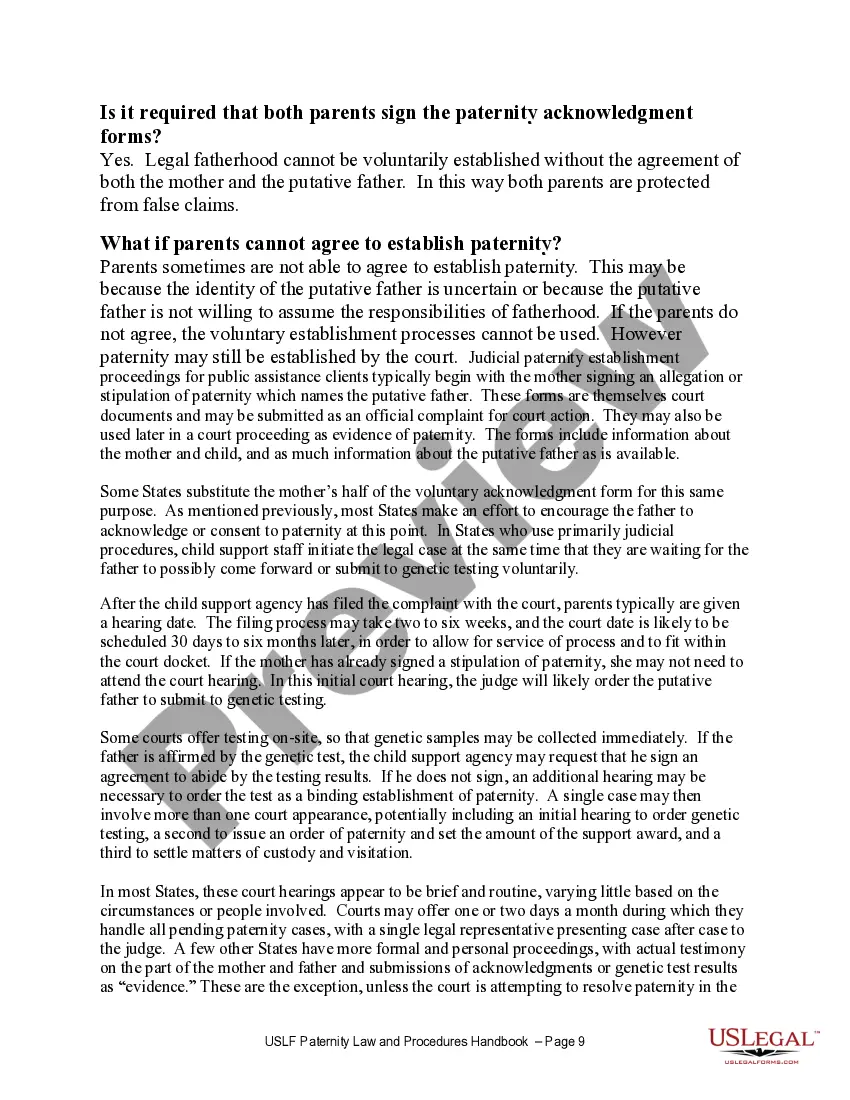
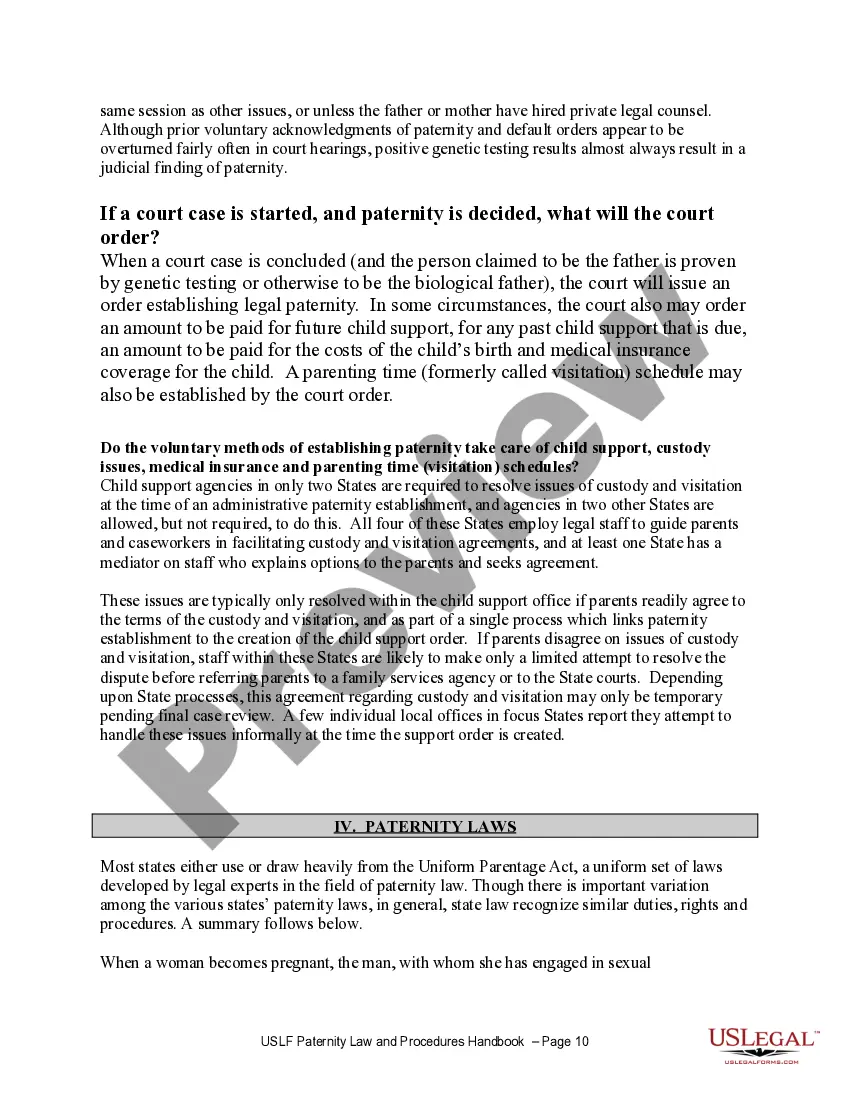
- Procedures for voluntary and court-related establishment of paternity.
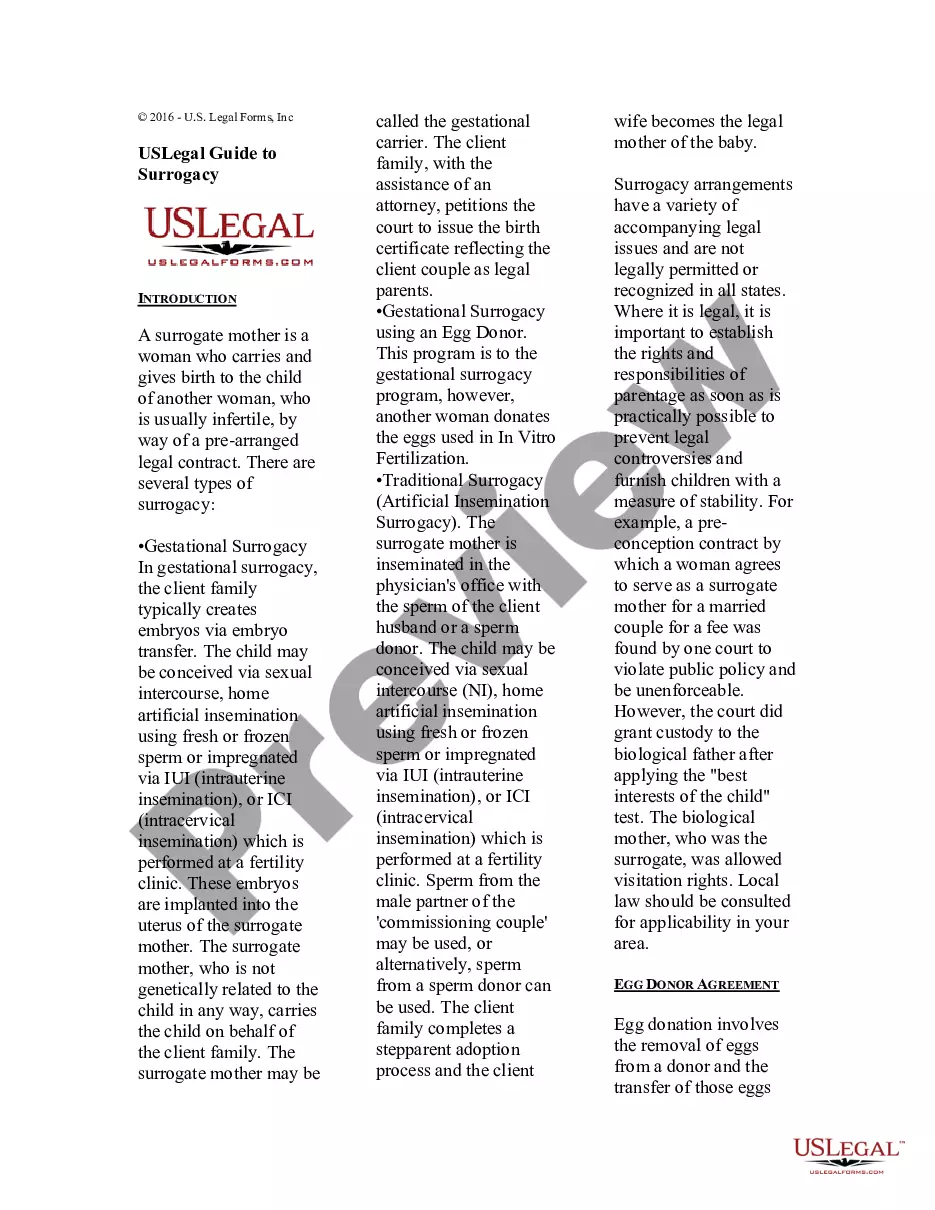
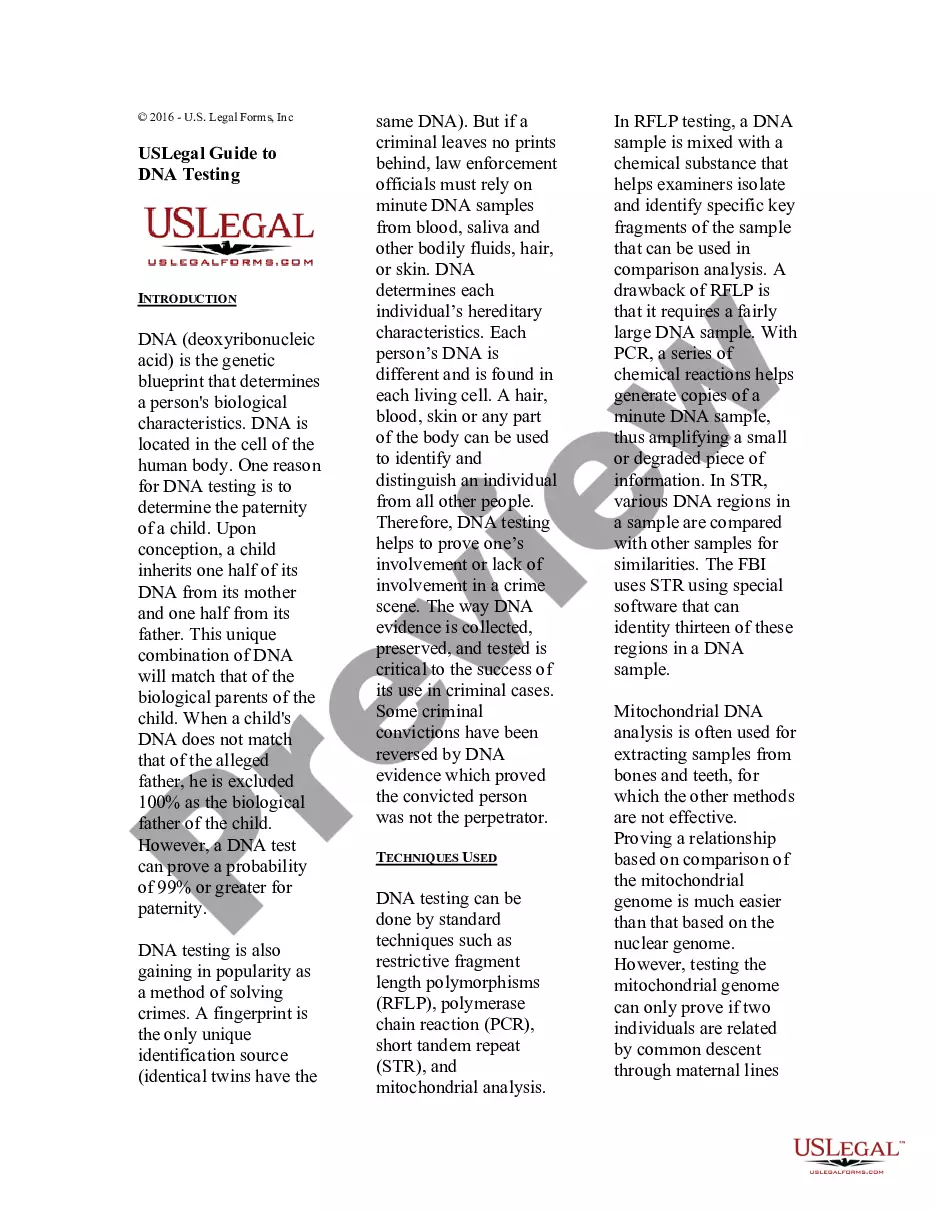
- Information on genetic testing as a means of establishing paternity.
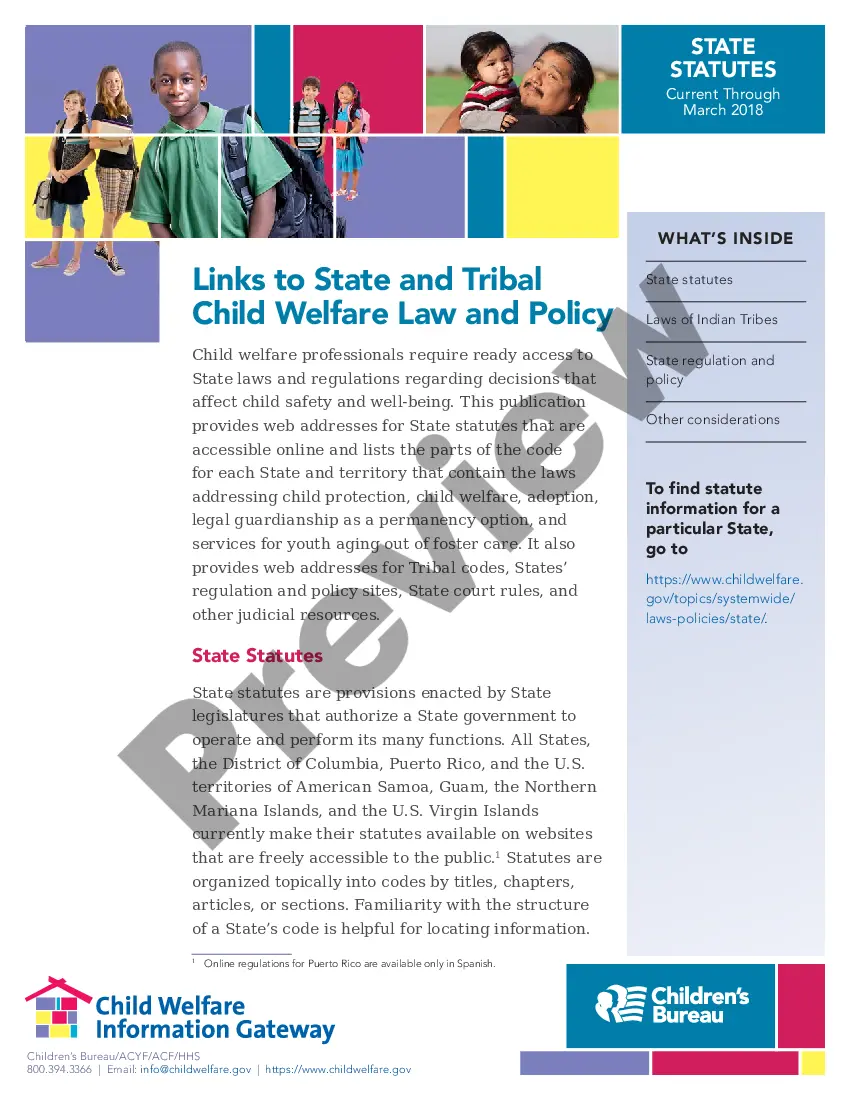
- State-specific paternity law summaries with links to resources.


When to use this form
This handbook is essential for individuals in scenarios such as when an unmarried mother wants to establish the legal father of her child, or when a father wishes to acknowledge his paternity voluntarily. It is also useful in cases where there are disputes concerning paternity, as well as for those seeking to understand their rights and obligations regarding child support, custody, and visitation.
Who should use this form
- Unmarried parents looking to establish paternity legally.
- Fathers who wish to acknowledge their paternity rights and responsibilities.
- Legal representatives and advocates working on family law cases.
- Individuals involved in paternity disputes requiring resolution through family court.
How to complete this form
- Identify the parties involved, including the child and the presumed father.
- Review the definitions and procedures outlined in the handbook.
- Determine if voluntary acknowledgment of paternity is applicable or if court action is necessary.
- Gather necessary documents and evidence, such as birth certificates and genetic test results if needed.
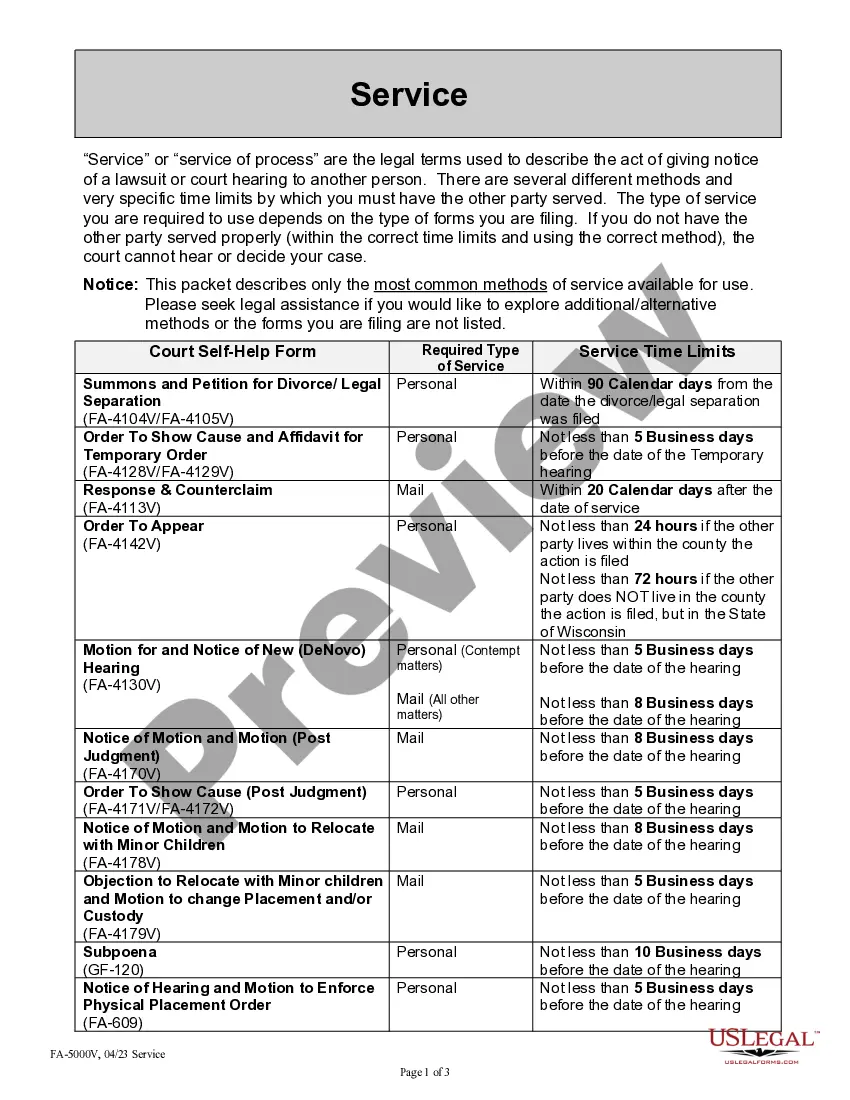
- Follow state-specific guidelines for filing and serving notices in a paternity action if going through the court.
Notarization guidance
Notarization is generally not required for this form. However, certain states or situations might demand it. You can complete notarization online through US Legal Forms, powered by Notarize, using a verified video call available anytime.
Get your form ready online
Our built-in tools help you complete, sign, share, and store your documents in one place.
Make edits, fill in missing information, and update formatting in US Legal Forms—just like you would in MS Word.
Download a copy, print it, send it by email, or mail it via USPS—whatever works best for your next step.
Sign and collect signatures with our SignNow integration. Send to multiple recipients, set reminders, and more. Go Premium to unlock E-Sign.
If this form requires notarization, complete it online through a secure video call—no need to meet a notary in person or wait for an appointment.
We protect your documents and personal data by following strict security and privacy standards.

Make edits, fill in missing information, and update formatting in US Legal Forms—just like you would in MS Word.

Download a copy, print it, send it by email, or mail it via USPS—whatever works best for your next step.

Sign and collect signatures with our SignNow integration. Send to multiple recipients, set reminders, and more. Go Premium to unlock E-Sign.

If this form requires notarization, complete it online through a secure video call—no need to meet a notary in person or wait for an appointment.

We protect your documents and personal data by following strict security and privacy standards.
Typical mistakes to avoid
- Signing paternity acknowledgments without securing genetic testing if there is doubt.
- Failing to file paternity actions within the state-imposed deadlines.
- Not understanding the differences between voluntary acknowledgment and judicial establishment of paternity.
- Ignoring state-specific procedures and requirements.
Why complete this form online
- Convenient access to critical information regarding paternity laws.
- Downloadable resources that are editable for personalized situations.
- Reliable legal content developed and reviewed by licensed attorneys.
- Quick navigation to state-specific resources to ensure compliance with local laws.
Legal use & context
- This handbook serves as a general guide and does not replace legal advice from an attorney.
- Establishing paternity can have significant legal implications for both the father and child regarding support and rights.
- Consulting state-specific laws is crucial as regulations and processes can vary by state.
Summary of main points
- Establishing paternity is essential for securing rights and responsibilities related to child support and custody.
- Voluntary acknowledgment of paternity can circumvent lengthy court proceedings.
- The Paternity Law and Procedure Handbook provides an overview of state laws and procedures.
- Consulting legal resources or professionals is vital for navigating individual cases effectively.
Looking for another form?


Form popularity
FAQ
When legal fatherhood is established, the father has rights. be placed for adoption. about his child) and to have overnight visits with his child (physical placement). The father has the right to submit a parenting plan to the courts.
Wisconsin is not a mother state. A mother state gives preference to mothers in custody cases.
In Wisconsin law, the statute of limitations to establish paternity in Wisconsin is 19 years after the child is born.
One way for a father to accept responsibility for his child is by signing an acknowledgment of paternity (AOP) form after the child is born. The acknowledgment of paternity guarantees a father certain rights. However, other parental rights are not guaranteed by signing an acknowledgment of paternity.
At what age can a child refuse visitation in Wisconsin? In Wisconsin, children cannot dictate where they reside but the courts may take the child's preference into consideration at about age 14 or when the child can articulate a preference and a reason for the preference.
When legal fatherhood is established, the father has rights. be placed for adoption. about his child) and to have overnight visits with his child (physical placement). The father has the right to submit a parenting plan to the courts.
In Wisconsin, children are entitled to two legal parents as this is generally in the best interest of the child. The definition of an unfit parent is one who has been neglectful and/or abusive, failing to properly care for a child.
Custody refers to the legal decision making rights of the parents. Placement refers to the actual physical location of the child and visitation. In a truly 50/50 custody and placement scenario, there is no custodial parent. Each parent has equal decision making rights and neither is considered the custodial parent.
The Wisconsin Voluntary Paternity Acknowledgment form allows parents to establish paternity without having to go to court.The father's name is then added to the birth certificate. Filing the VPA form does not give a father legal custody or physical placement.