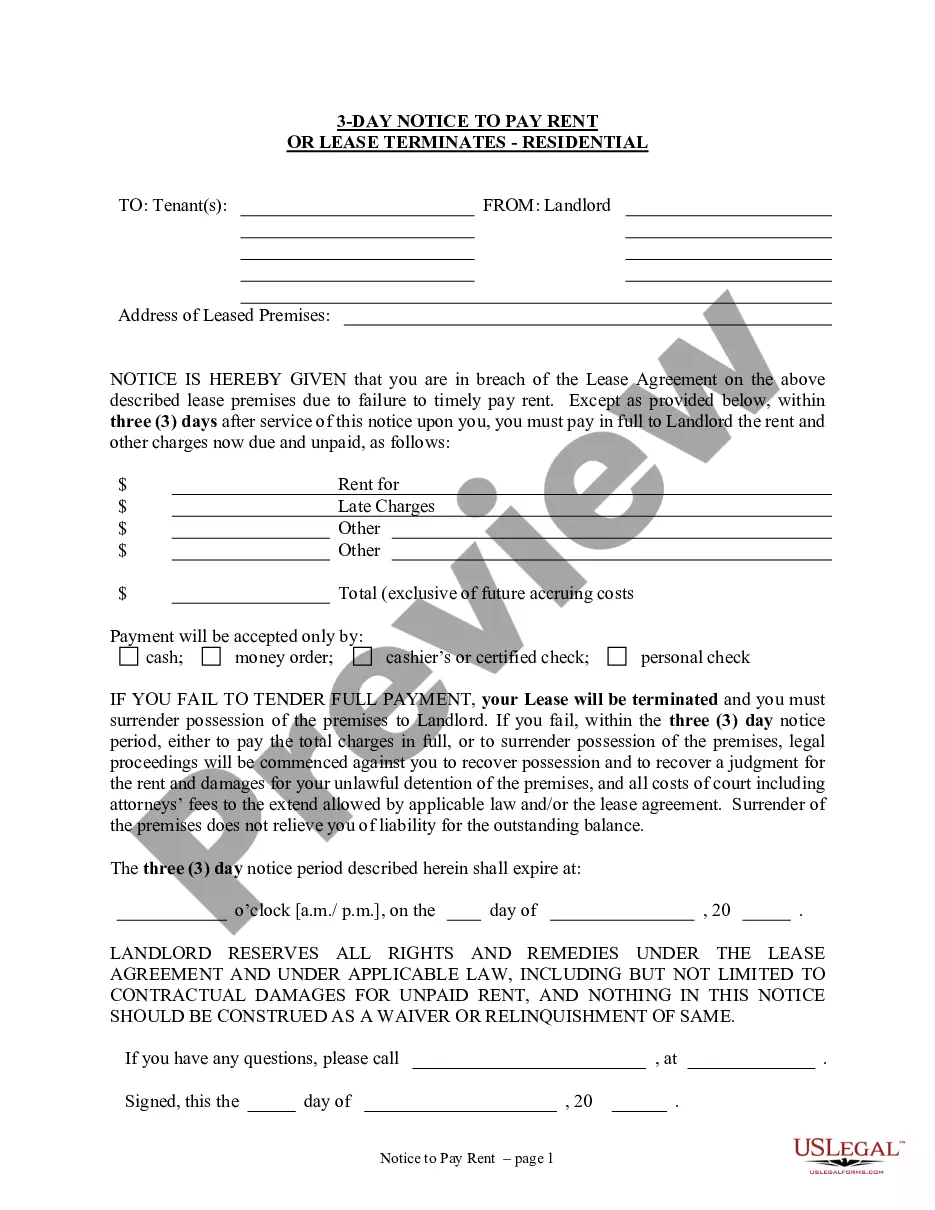
Wisconsin Letter from Tenant to Landlord containing Notice to landlord to withdraw retaliatory rent increase
What this document covers
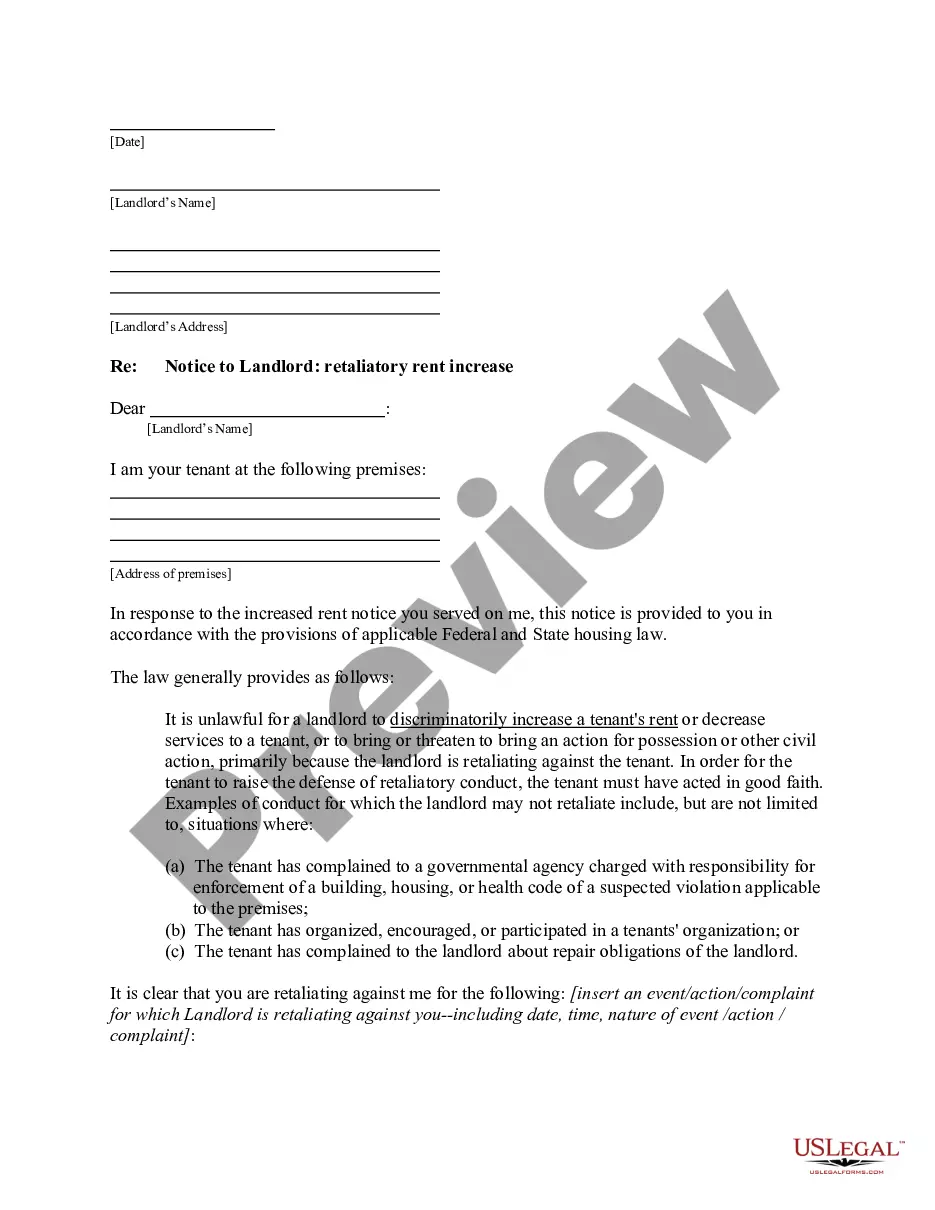
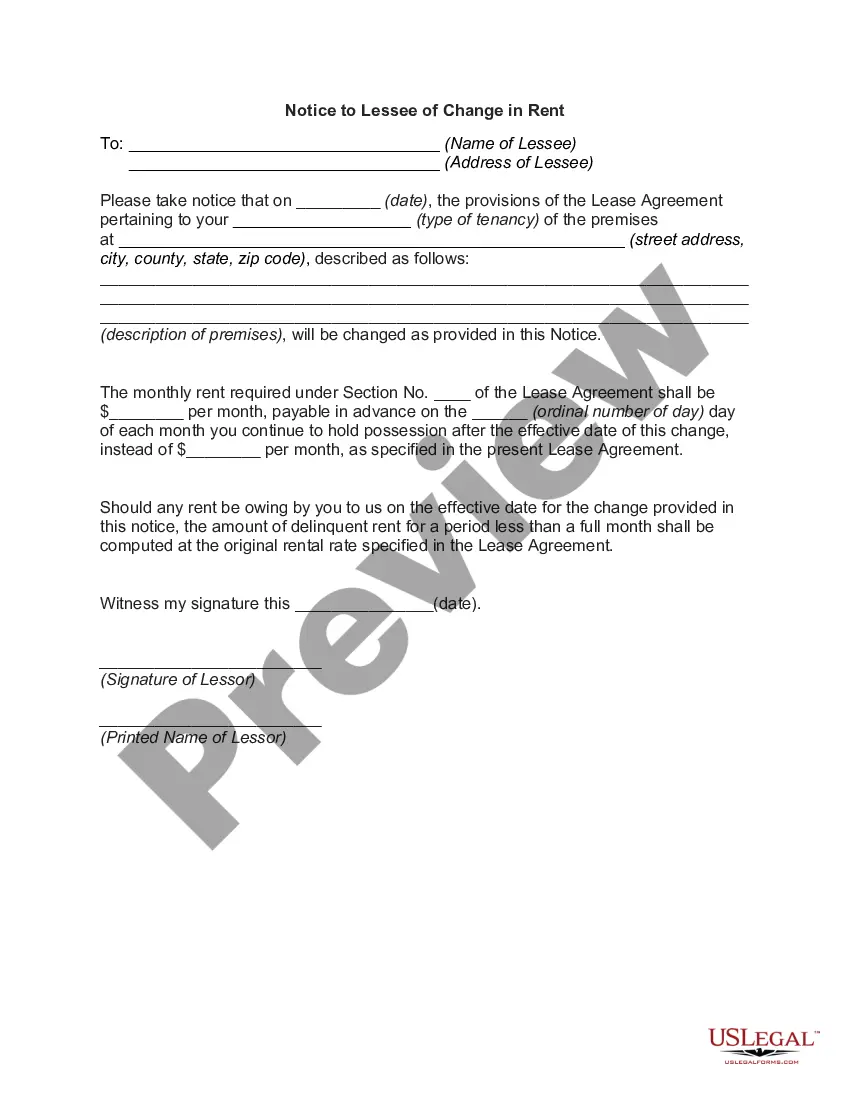
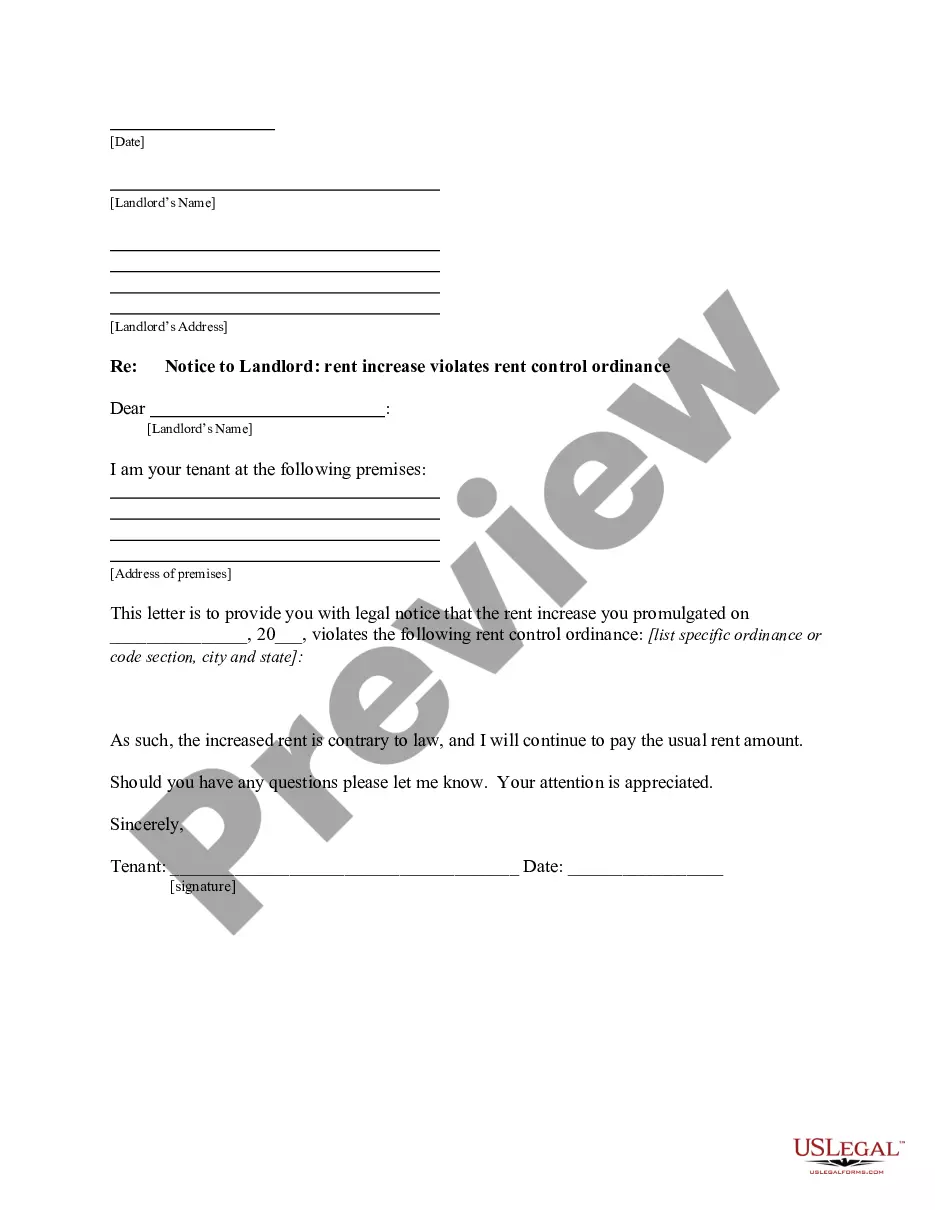
The Letter from Tenant to Landlord containing Notice to landlord to withdraw retaliatory rent increase is a legal document that serves as a formal notice to your landlord regarding an unjust rent increase due to retaliatory reasons. This form is essential in asserting your rights as a tenant under state housing laws. It clearly outlines that it is unlawful for a landlord to increase rent as retaliation for tenant actions, such as reporting code violations or participating in tenant organizations.
Key components of this form
- Tenant's contact information
- Landlord's contact information
- Date of the notice
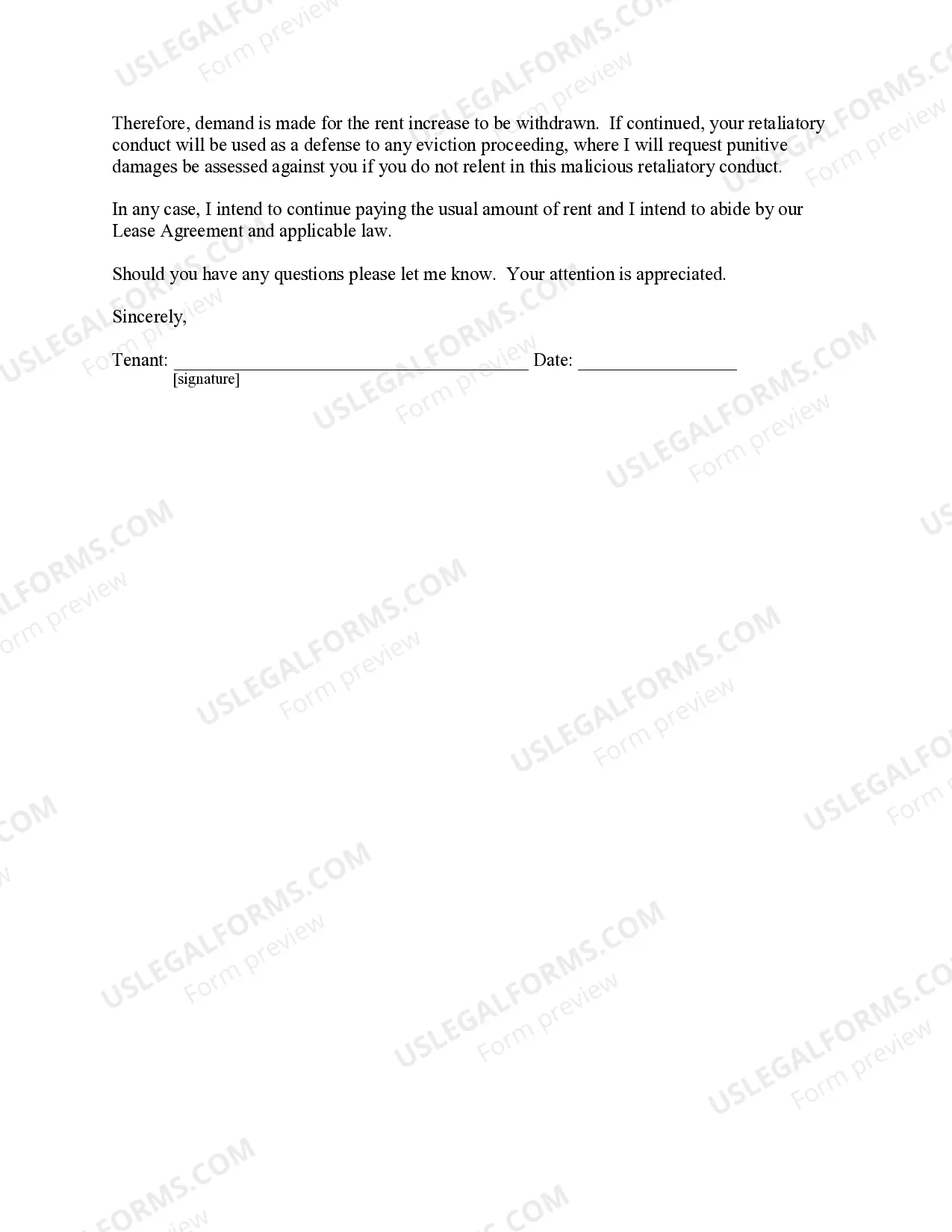
- Statement of intent to continue paying rent
- Explanations of actions that are not grounds for retaliation
- Signature lines for both tenant and landlord


Common use cases
This form should be used when a tenant faces an increase in rent that they believe is retaliatory in nature. Typically, this situation arises after the tenant has made complaints about the property conditions or has engaged in other protected tenant activities. Utilizing this form helps document your concerns and formally request your landlord to reconsider the rent increase.
Who should use this form
- Tenants experiencing a rent increase after making complaints or taking similar actions.
- Individuals participating in tenant organizations who fear retaliatory action.
- Renters looking to assert their rights under local housing regulations.
How to prepare this document
- Identify and enter your name and address at the top of the document.
- Fill in the landlord's name and address in the appropriate section.
- Specify the date when you are completing the notice.
- Clearly state your intention to continue paying the usual rent and summarize the grounds for your notice.
- Sign and date the document, ensuring clarity on both tenant and landlord signatures.
Notarization requirements for this form
This form does not typically require notarization unless specified by local law. Check your stateâs requirements to confirm if notarization is needed for your situation.
Get your form ready online
Our built-in tools help you complete, sign, share, and store your documents in one place.
Make edits, fill in missing information, and update formatting in US Legal Forms—just like you would in MS Word.
Download a copy, print it, send it by email, or mail it via USPS—whatever works best for your next step.
Sign and collect signatures with our SignNow integration. Send to multiple recipients, set reminders, and more. Go Premium to unlock E-Sign.
If this form requires notarization, complete it online through a secure video call—no need to meet a notary in person or wait for an appointment.
We protect your documents and personal data by following strict security and privacy standards.

Make edits, fill in missing information, and update formatting in US Legal Forms—just like you would in MS Word.

Download a copy, print it, send it by email, or mail it via USPS—whatever works best for your next step.

Sign and collect signatures with our SignNow integration. Send to multiple recipients, set reminders, and more. Go Premium to unlock E-Sign.

If this form requires notarization, complete it online through a secure video call—no need to meet a notary in person or wait for an appointment.

We protect your documents and personal data by following strict security and privacy standards.
Typical mistakes to avoid
- Failing to provide clear examples of retaliatory actions.
- Not signing or dating the document before submission.
- Using vague language that does not specify the nature of the rent increase.
Advantages of online completion
- Immediate access to a professionally drafted document.
- Ability to customize the form to fit your specific situation.
- Convenient downloading and printing options for your records.
Legal use & context
- Retaliatory actions by landlords may be unlawful under state housing laws.
- Failure to follow the proper legal process when raising rent can result in penalties for landlords.
Key takeaways
- This form serves as a formal notice to landlords regarding unlawful retaliatory rent increases.
- Filling out this form correctly can help protect tenant rights and prevent unjust fees.
- Tenants should remain informed about their rights and local laws pertaining to landlord-tenant relationships.
Looking for another form?
Form popularity
FAQ
Remember you're a business. Do your research. Raise the rent all at once or incrementally. Don't negotiate or ask tenants what they think a fair rent increase would be. Be courteous and firm. Find a template you like. Send a formal letter by certified mail. Give the tenant notice.
In most states, a landlord must give tenants notice at least 30 days before they'll enforce a rent increase. However, in other states like California, the notice can increase to 60 days' notice if the increase is more than 10% of the current rent rate.
There are no state laws limiting the amount of a rent increase. If you are renting by the month, the landlord may terminate the rental agreement by giving you a written termination notice at least 28 days before the next rent due date.
State who you are and why you need a rental. Mention where you found their ad and how you can afford the rental. Offer to provide references (work/volunteer/housing office) Include some highlighting feature from the original ad so that when you receive a response you can remember which rental you are talking about (ex.
You can send your letter by email if your tenancy agreement says you can. You should say something like: I am giving 1 month's notice to end my tenancy, as required by law. I will be leaving the property on (date xxxxx).
Tenant's name. Property address. Landlord name and contact information. Date the letter is written. Date the rent increase will take effect. Amount of rent increase. Current cost of rent.
Dear (Name of landlord or manager), This letter constitutes my written (number of days' notice that you need to give based on your lease agreement)-day notice that I will be moving out of my apartment on (date), the end of my current lease. I am leaving because (new job, rent increase, etc.)
When writing to your landlord, be specific in describing the problems you are having. Do not exaggerate or under-emphasize the extent of the problem. The landlord may show this letter to a judge if your problem is ever litigated.
Today's Date. Landlord's Name. Property Address and Unit Number. State Your Desire to Move Out of the Apartment. Include Desired Move-Out Date. That You Expect the Return of Your Security Deposit Under State Law. A Forwarding Address Where Your Security Deposit Can Be Sent.