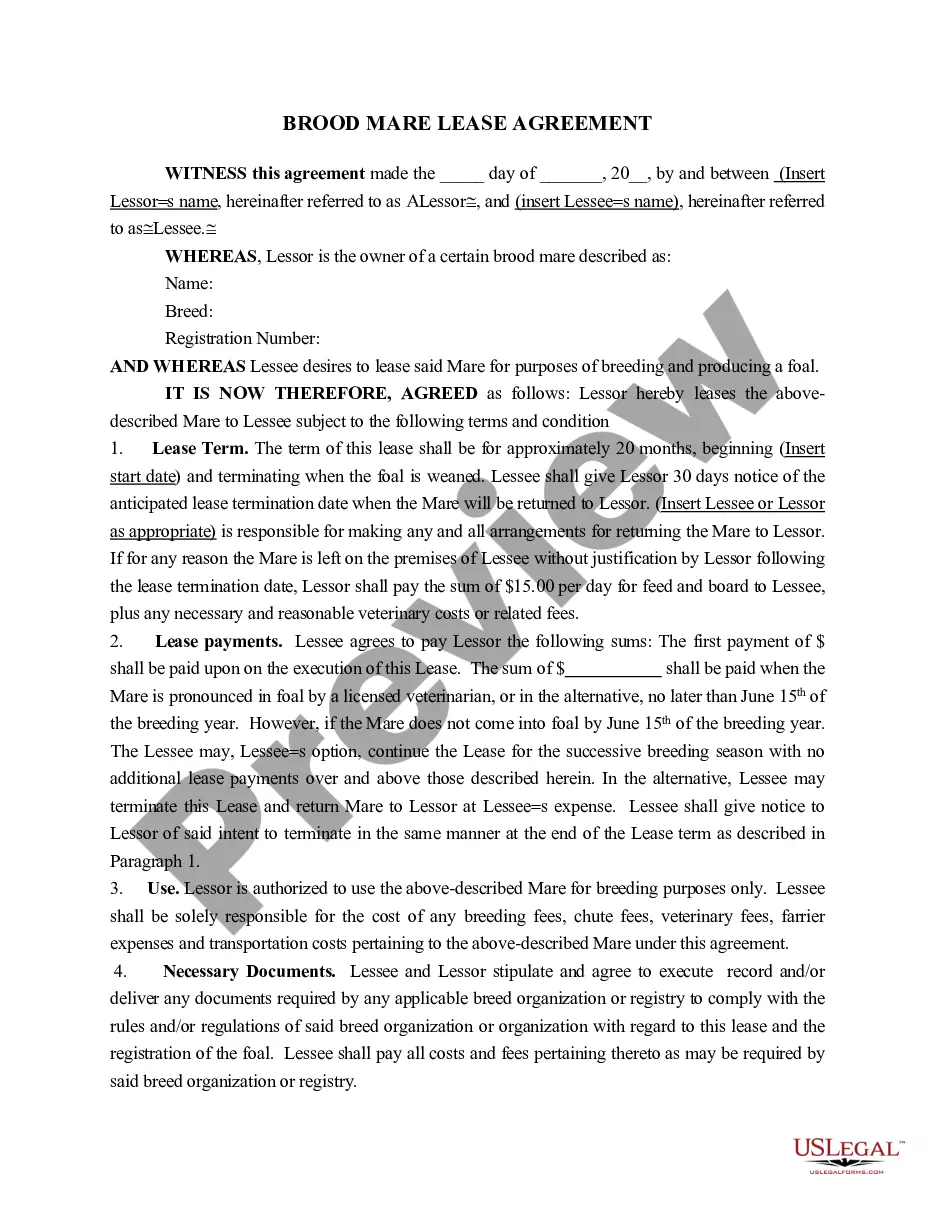
Wisconsin Letter from Landlord to Tenant for Failure of to dispose all ashes, rubbish, garbage or other waste in a clean and safe manner in compliance with community rules
What this document covers
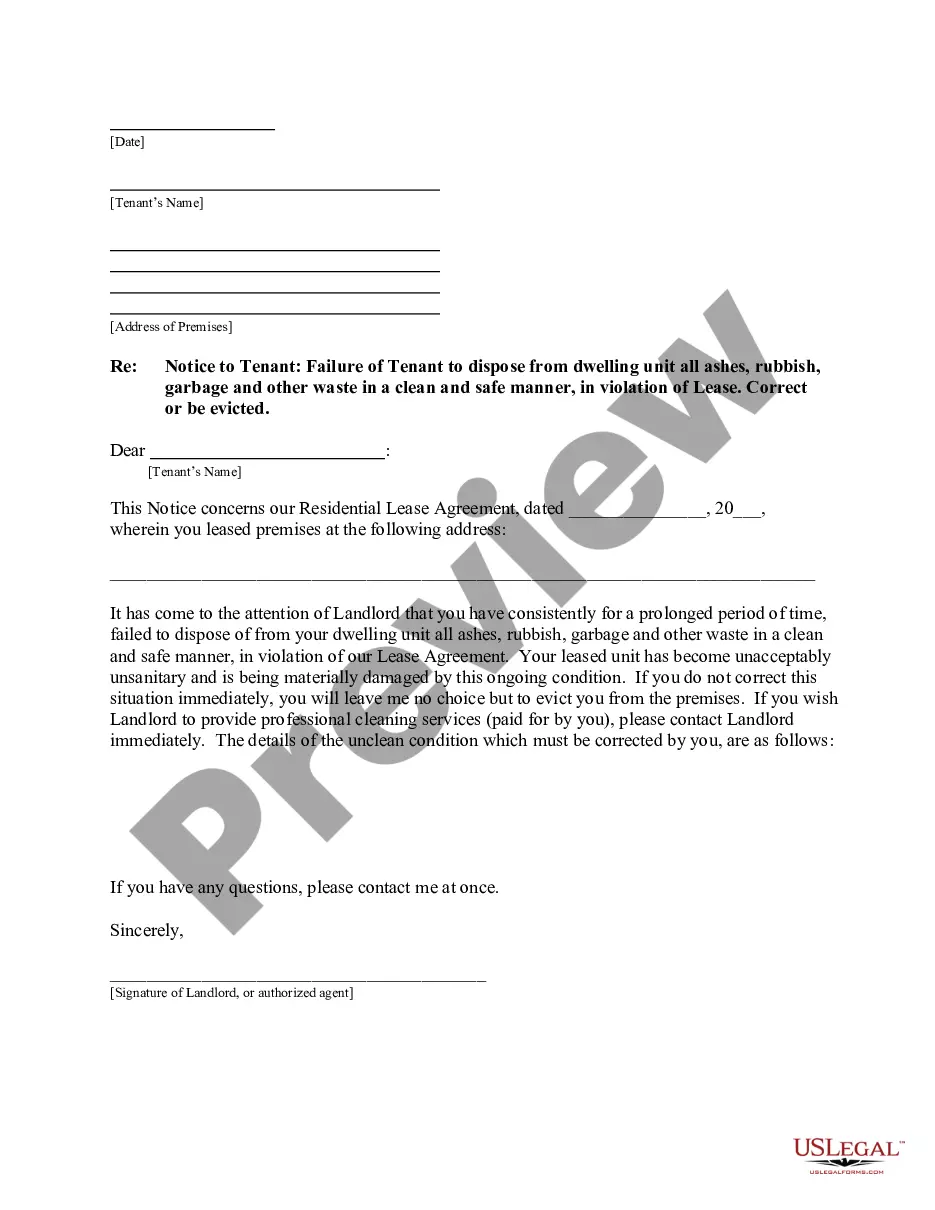
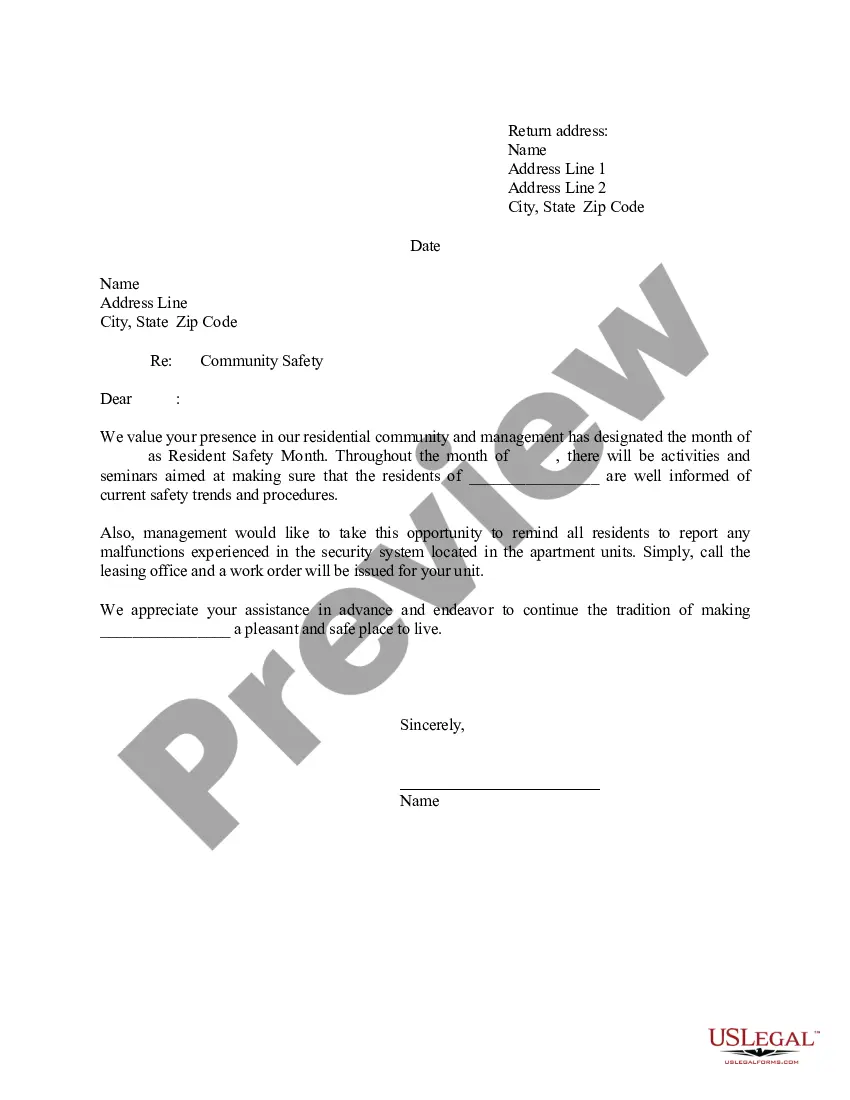
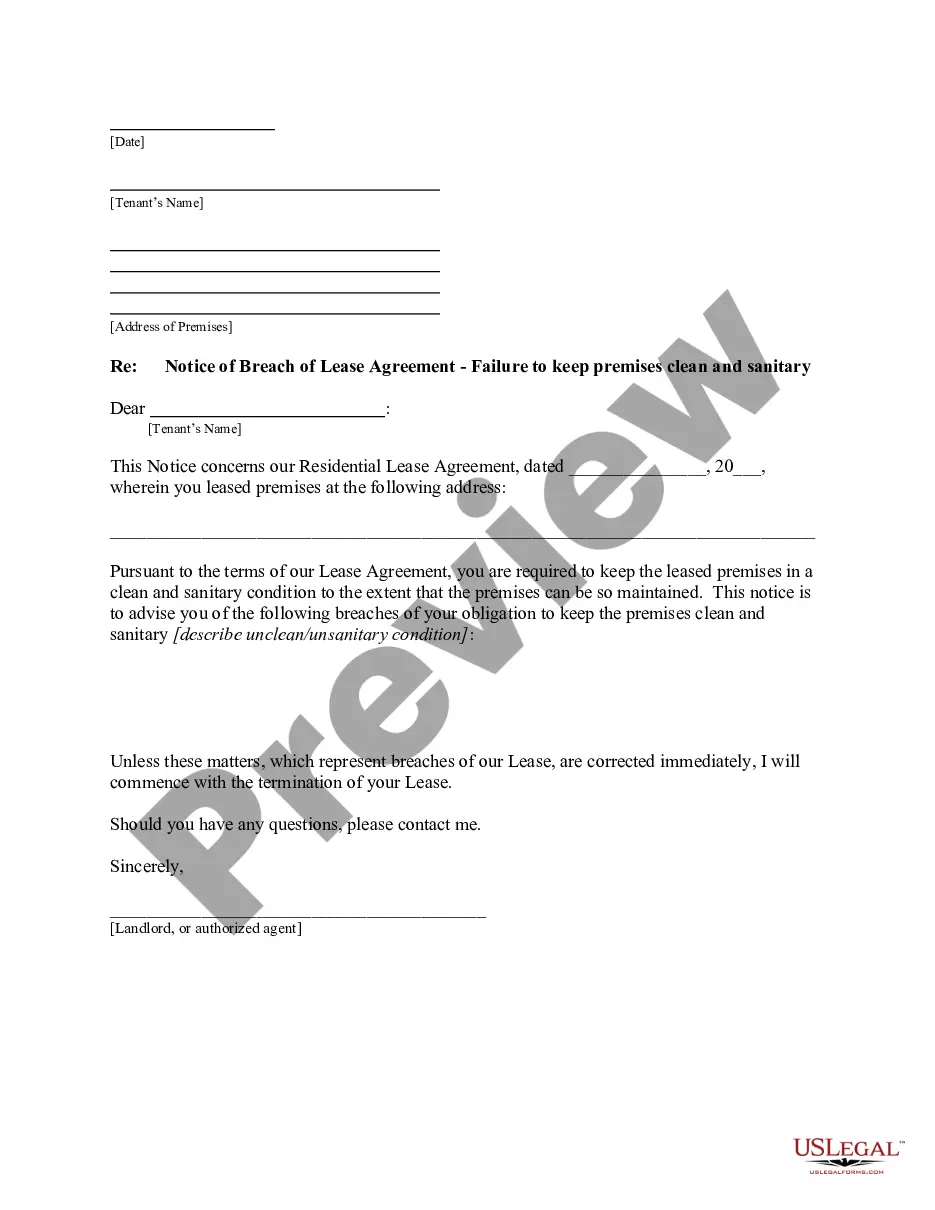
This form is a formal notice from a landlord to a tenant regarding the improper disposal of waste, including ashes and garbage. It serves as a warning that the tenant must comply with community cleanliness standards as outlined in the lease agreement. Unlike a standard eviction notice, this letter provides the tenant with an opportunity to rectify the situation before facing potential eviction for non-compliance.
Main sections of this form
- Identification of the landlord and tenant.
- Description of the violations regarding waste disposal.
- Statement of potential consequences, including eviction.
- Proposal for professional cleaning services, if desired.
- A detailed list of the unclean conditions that need to be addressed.


When to use this form
This form is required when a landlord observes ongoing issues with a tenant's failure to properly dispose of waste, leading to unsanitary living conditions. It enables the landlord to formally communicate the violation and set a deadline for the tenant to correct the behavior, potentially avoiding further legal action.
Who needs this form
- Landlords seeking to address waste disposal issues with tenants.
- Property managers violating lease agreements concerning cleanliness.
- Tenants who have received notice and wish to understand their rights and obligations.
Instructions for completing this form
- Identify the landlord and tenant by entering their full names and contact information.
- Detail the specific issues related to waste disposal that violate the lease agreement.
- State the potential consequences if the tenant does not correct the situation.
- Offer cleaning service options, if applicable, and explain the cost responsibility.
- Sign and date the document before delivering it to the tenant.
Notarization guidance
In most cases, this form does not require notarization. However, some jurisdictions or signing circumstances might. US Legal Forms offers online notarization powered by Notarize, accessible 24/7 for a quick, remote process.
Get your form ready online
Our built-in tools help you complete, sign, share, and store your documents in one place.
Make edits, fill in missing information, and update formatting in US Legal Forms—just like you would in MS Word.
Download a copy, print it, send it by email, or mail it via USPS—whatever works best for your next step.
Sign and collect signatures with our SignNow integration. Send to multiple recipients, set reminders, and more. Go Premium to unlock E-Sign.
If this form requires notarization, complete it online through a secure video call—no need to meet a notary in person or wait for an appointment.
We protect your documents and personal data by following strict security and privacy standards.

Make edits, fill in missing information, and update formatting in US Legal Forms—just like you would in MS Word.

Download a copy, print it, send it by email, or mail it via USPS—whatever works best for your next step.

Sign and collect signatures with our SignNow integration. Send to multiple recipients, set reminders, and more. Go Premium to unlock E-Sign.

If this form requires notarization, complete it online through a secure video call—no need to meet a notary in person or wait for an appointment.

We protect your documents and personal data by following strict security and privacy standards.
Mistakes to watch out for
- Failing to provide specific examples of the waste disposal issues.
- Not including a deadline for the tenant to address the issues.
- Inaccurately identifying the parties involved due to incorrect contact information.
Why complete this form online
- Convenience of accessing a legally vetted template for immediate use.
- Editability allows landlords to personalize the notice efficiently.
- Reliable legal language that meets community and state standards.
Legal use & context
- This form acts as a formal communication that documents the landlord's concerns.
- It serves as evidence in case the landlord must pursue eviction proceedings later.
- Ensures that both parties are aware of their obligations under the lease agreement.
What to keep in mind
- This form is essential for addressing waste disposal issues in rental properties.
- It provides tenants with a notice and opportunity to correct unsanitary conditions.
- Customizing the form to reflect state-specific requirements may be necessary.
- Immediate action is critical to avoid potential eviction proceedings.
Looking for another form?
Form popularity
FAQ
If you think your landlord is violating the Fair Housing Act, you can get that landlord in trouble by filing a complaint at HUD.gov. Your remedy for breach of quiet enjoyment is to terminate the lease and move or sue in small claims court.
The right to collect rent. Simply by the fact that you are renting, your landlord has the right to collect rent and any prearranged late fees for overdue rent payments. The right to raise your rent according to your lease agreement.Your landlord has the right to evict you, especially if you do not pay your rent.
A landlord is the owner of a house, apartment, condominium, land, or real estate which is rented or leased to an individual or business, who is called a tenant (also a lessee or renter). When a juristic person is in this position, the term landlord is used. Other terms include lessor and owner.
It's the tenant's responsibility to clean and leave the property, however as the landlord it's the responsibility to check if the property is clean for the newly moving in tenants. Because the newly moving tenant is only responsible to clean the property when they leave and new moving in must get cleaned property.
The landlord is supposed to make sure that the apartment has proper locks in place. This is a safety concern. Usually, landlords do not get the keys back from the previous tenant.All the maintenance in between tenants also falls under the responsibility of the landlord.
3. General cleanliness. There is no legal obligation specifically to rent out a property which is clean. However just bear in mind that unless you are in a position to prove that a property was clean when it was rented out, you will not be able to insist that tenants leave a property in a clean state when they vacate.
According to the Tenant Fees Act 2019 (introduced on the 1st of June 2019), it is illegal for landlords to charge tenants with professional end of tenancy cleaning services.If the tenancy agreement includes such clause that obliges tenants to pay for a professional tenancy cleaning service, it is not enforceable.
A landlord cannot evict a tenant without an adequately obtained eviction notice and sufficient time. A landlord cannot retaliate against a tenant for a complaint. A landlord cannot forego completing necessary repairs or force a tenant to do their own repairs.A landlord cannot remove a tenant's personal belongings.
Rights of joint tenants You are all equally responsible for paying the rent and keeping to the terms of your agreement. You are responsible for paying another joint tenant's share of the rent if they don't pay their rent. Your landlord is responsible for most repairs.