Wisconsin Release Deed - Life Estate - Individual to Nine Individuals
What is this form?
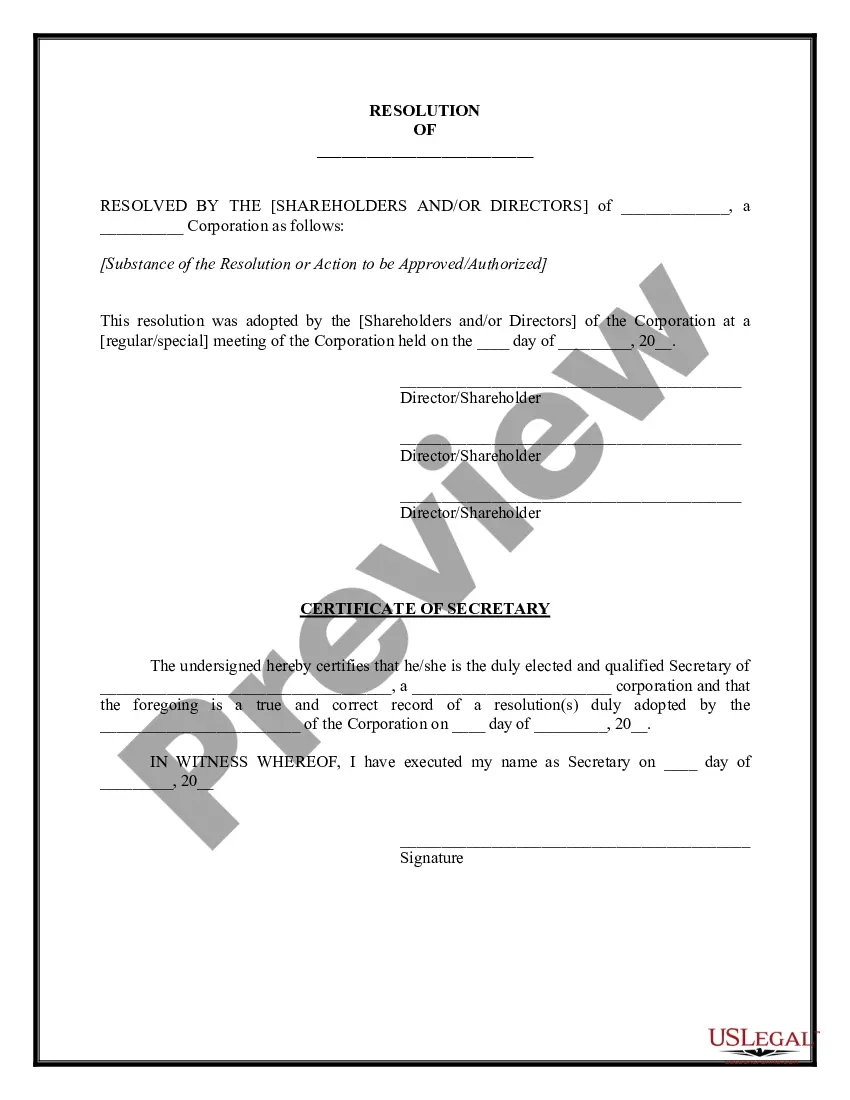
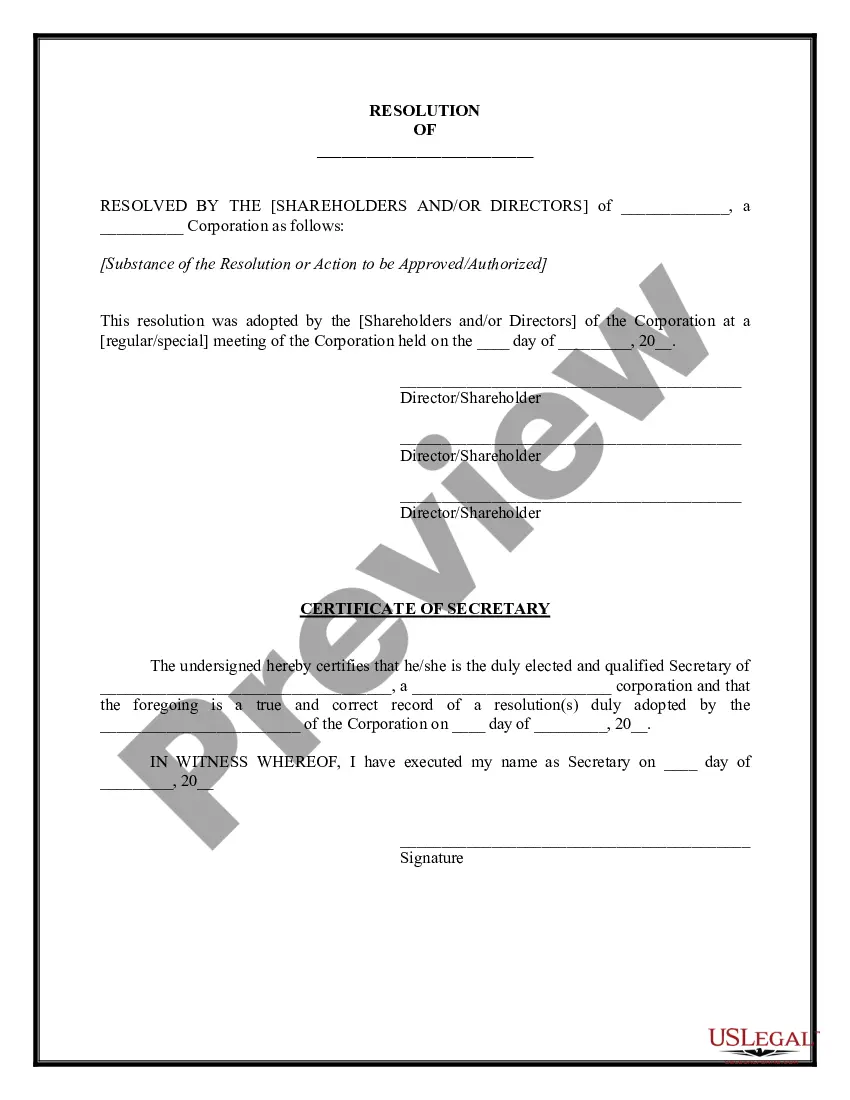
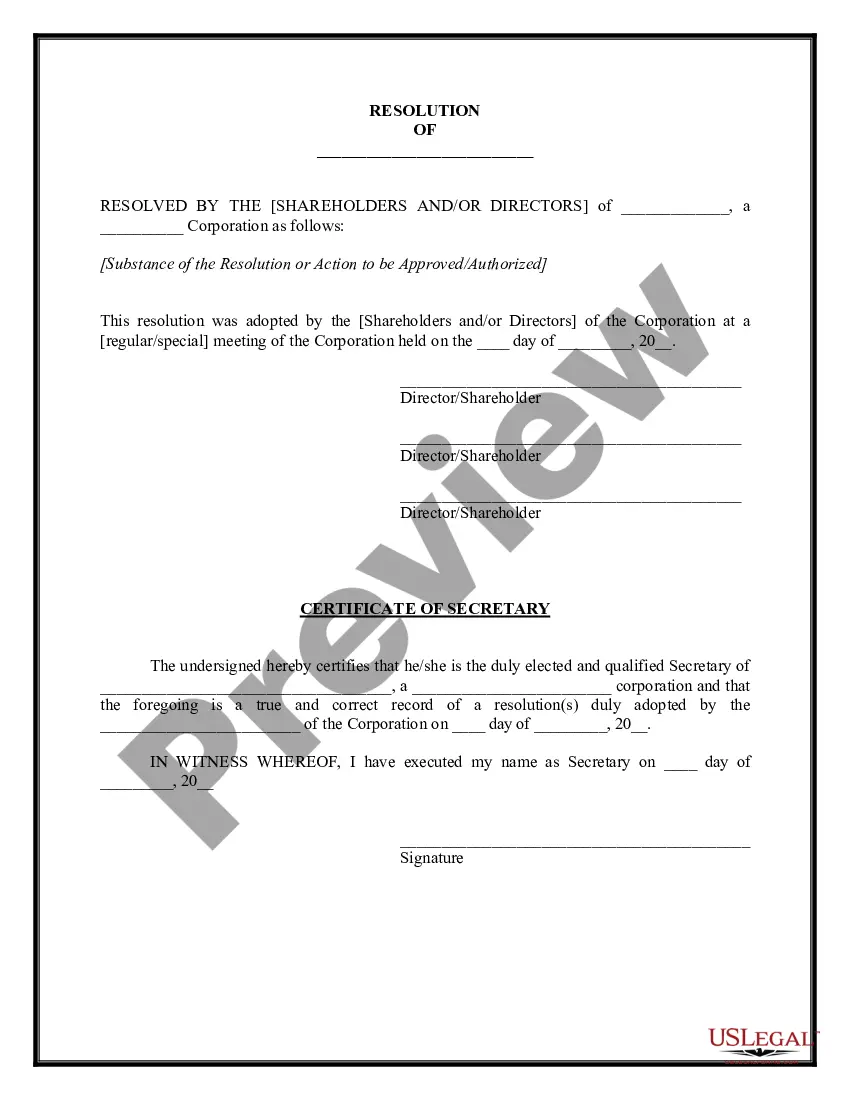
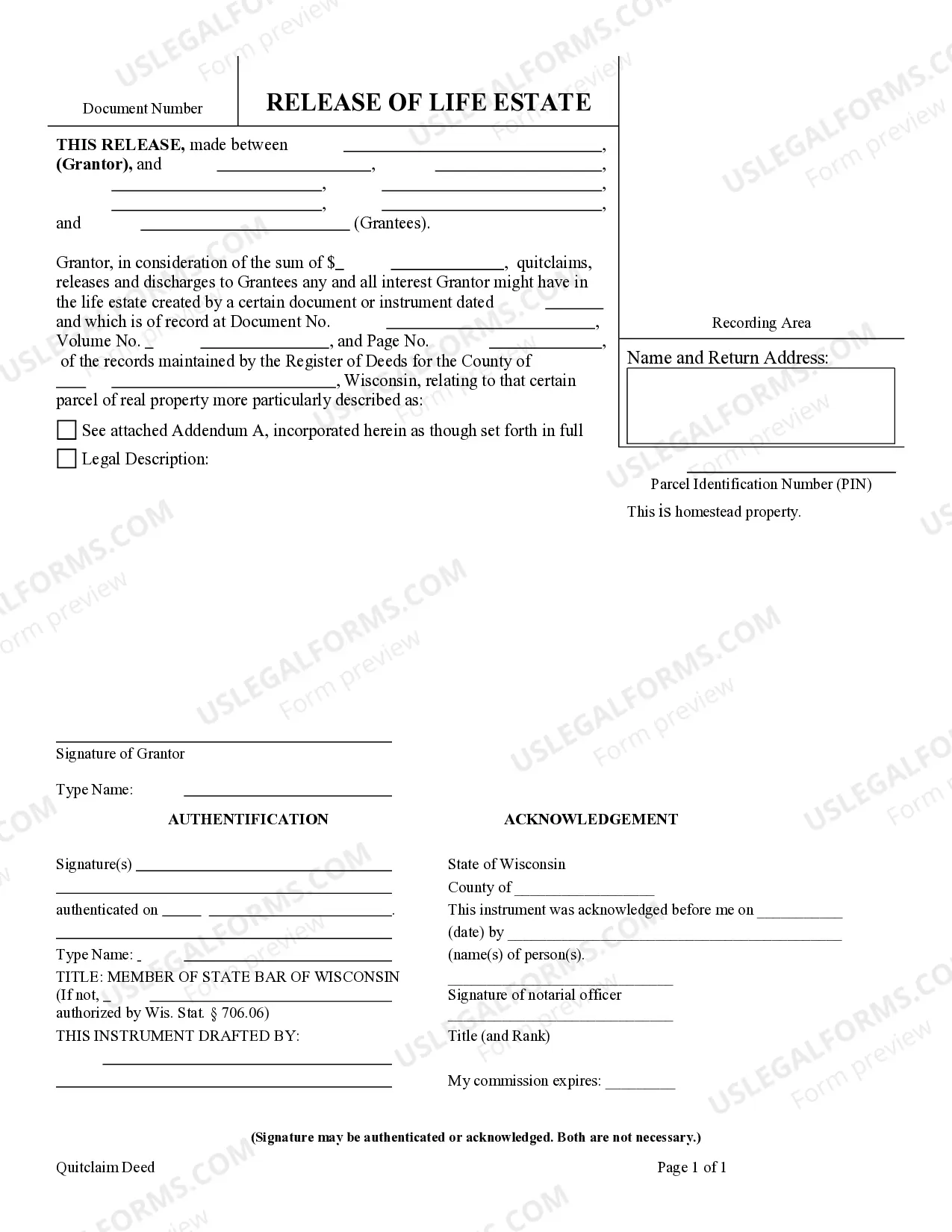
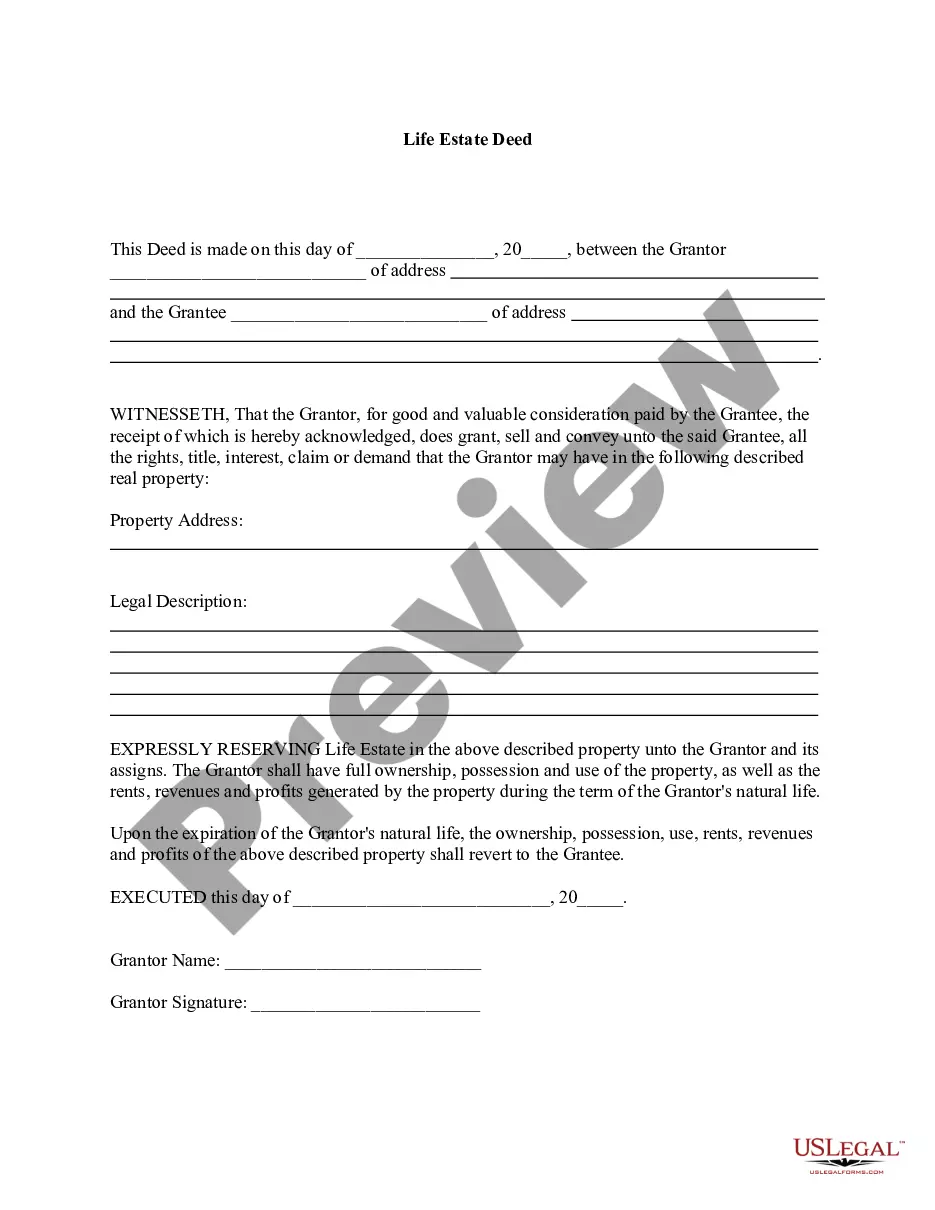
The Release Deed - Life Estate - Individual to Nine Individuals is a legal document that allows an individual (the Grantor) to release their life estate interest in a property to nine other individuals (the Grantees). This form is essential for transferring property ownership interests while ensuring compliance with state statutory laws. It is particularly useful in situations where property needs to be divided among multiple heirs or co-owners, differentiating it from other types of deeds such as warranty or quitclaim deeds.
Key parts of this document
- Identification of the Grantor and Grantees
- Description of the property being released
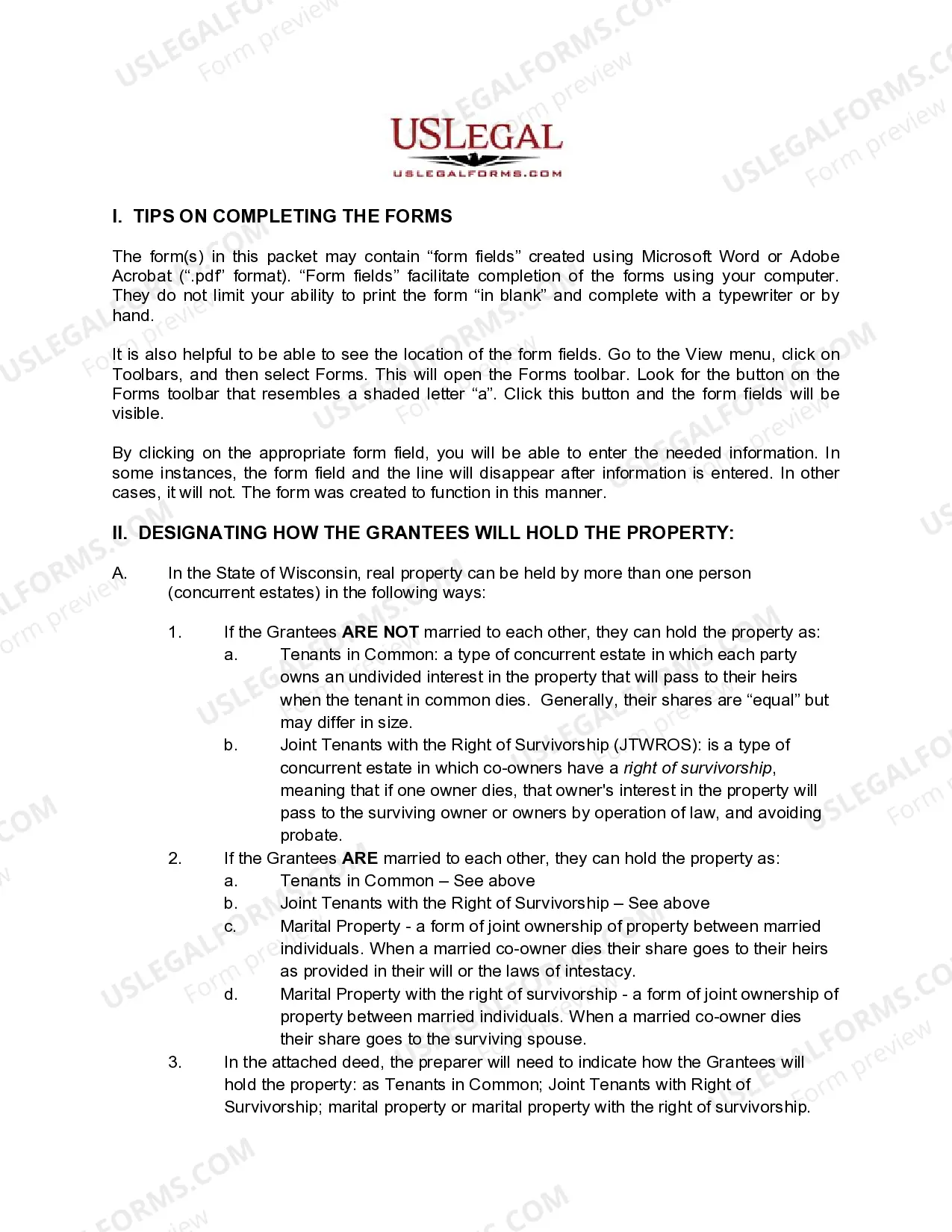
- Specification of how Grantees will hold the property (e.g., Tenants in Common or Joint Tenants with Right of Survivorship)
- Signature and date fields for the Grantor
- Witness or notary section (if applicable)


When to use this document
This form should be used when an individual wants to release a life estate in property to multiple individuals, especially in estate planning or inheritance situations. It is appropriate to utilize this deed when the Grantor wishes to transfer their interest while specifying how the Grantees will hold the property, which may include options like joint tenancy or tenancy in common.
Who needs this form
This form is intended for:
- Individuals who own a life estate in property and wish to release it
- Heirs or beneficiaries preparing for property transfer
- Estate planners assisting clients with property distribution
- Family members coordinating shared ownership of inherited property
How to complete this form
- Identify all parties involved by filling in the names of the Grantor and Grantees.
- Specify the property being released, including legal descriptions or addresses.
- Choose how the Grantees will hold the property (e.g., as Tenants in Common or Joint Tenants with Right of Survivorship).
- Complete the date and ensure the Grantor signs the document.
- If required, have the form notarized or signed by witnesses.
Notarization guidance
To make this form legally binding, it must be notarized. Our online notarization service, powered by Notarize, lets you verify and sign documents remotely through an encrypted video session.
Get your form ready online
Our built-in tools help you complete, sign, share, and store your documents in one place.
Make edits, fill in missing information, and update formatting in US Legal Forms—just like you would in MS Word.
Download a copy, print it, send it by email, or mail it via USPS—whatever works best for your next step.
Sign and collect signatures with our SignNow integration. Send to multiple recipients, set reminders, and more. Go Premium to unlock E-Sign.
If this form requires notarization, complete it online through a secure video call—no need to meet a notary in person or wait for an appointment.
We protect your documents and personal data by following strict security and privacy standards.

Make edits, fill in missing information, and update formatting in US Legal Forms—just like you would in MS Word.

Download a copy, print it, send it by email, or mail it via USPS—whatever works best for your next step.

Sign and collect signatures with our SignNow integration. Send to multiple recipients, set reminders, and more. Go Premium to unlock E-Sign.

If this form requires notarization, complete it online through a secure video call—no need to meet a notary in person or wait for an appointment.

We protect your documents and personal data by following strict security and privacy standards.
Common mistakes to avoid
- Failing to correctly identify all Grantees.
- Not specifying how the property will be held by the Grantees.
- Omitting the necessary signatures or notarization.
- Providing an incomplete or inaccurate property description.
Benefits of completing this form online
- Convenient access to professionally drafted legal forms.
- Edit and customize the form easily using your computer.
- Ensures compliance with state-specific laws and regulations.
- Time-saving download options, allowing immediate use of the document.
Looking for another form?
Form popularity
FAQ
Pursuant to ' 2036(a) of the IRC, the transfer of a residence with a retained life estate permits the transferee of the residence to receive a full step up in his or her cost basis in the premises upon the death of the transferor, to its fair market value on the transferor's date of death.
With a life estate deed, both the Grantor and the Grantee own an interest in the property as soon as the deed is signed.However, a life estate deed is irrevocablethis means that if you convey your property to your children and reserve a life estate to yourself, you can't change your mind and take it back.
A life estate is a form of joint ownership that allows one person to remain in a house until his or her death, when it passes to the other owner. Life estates can be used to avoid probate and to give a house to children without giving up the ability to live in it.
To dissolve a life estate, the life tenant can give their ownership interest to the remainderman. So, if a mother has a life estate and her son has the remainder, she can convey her interest to him, and he will then own the entire interest in the property.
A life estate deed permits the property owner to have full use of their property until their death, at which point the ownership of the property is automatically transferred to the beneficiary.
To determine the value of the resource the client disposed of, use this chart. Find the client's age in the Age column and then go to the column called Life Estate. Take the percentage listed here and multiply it by the TOTAL value of the real property. This will give you the value of the client's life estate interest.
What happens to a life estate after someone dies? Upon the life tenant's death, the property passes to the remainder owner outside of probate.They can sell the property or move into and claim it as their primary residence (homestead). Property taxes will not be reassessed.
A life estate is a form of joint ownership that gives a person (the life tenant) ownership rights in property during their lifetime. But when the life tenant dies, the remainder interest in the property goes to the beneficiary, also known as the remainderman.
A person owns property in a life estate only throughout their lifetime. Beneficiaries cannot sell property in a life estate before the beneficiary's death. One benefit of a life estate is that property can pass when the life tenant dies without being part of the tenant's estate.