Washington Mutual Wills Package for Married Couple with Minor Children
What is this form?
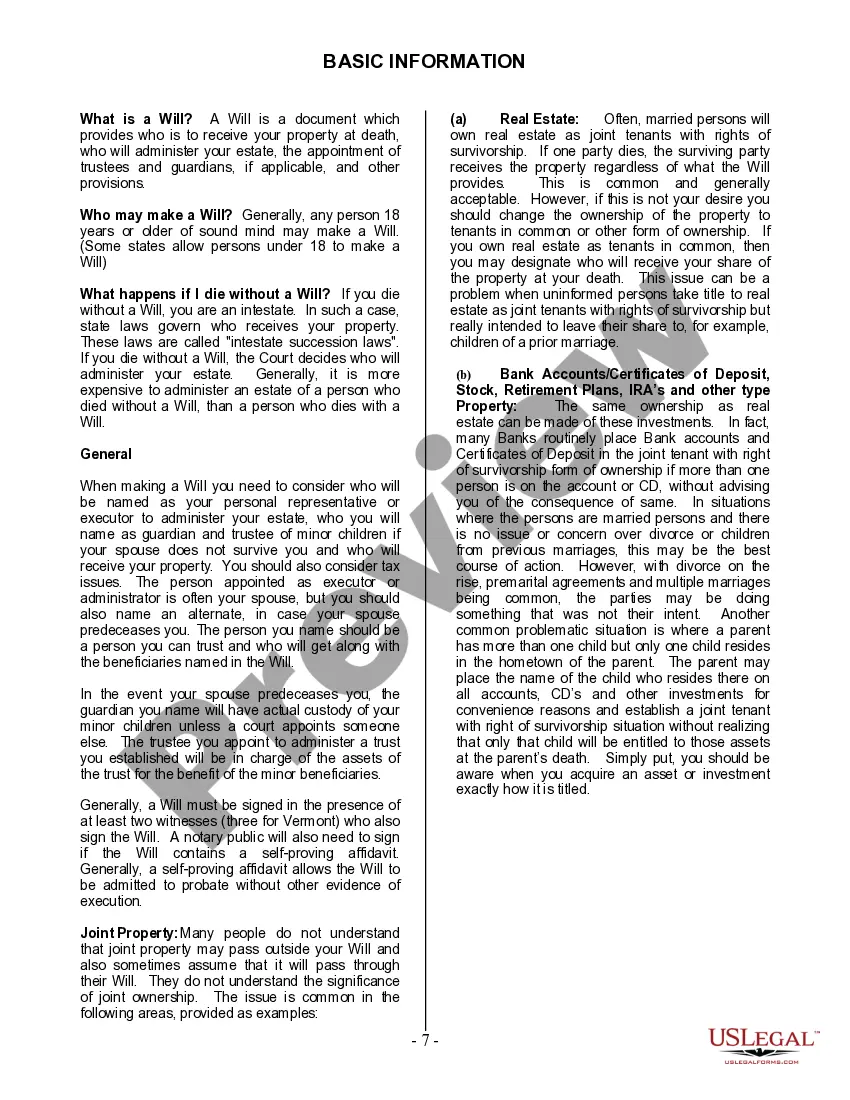
The Mutual Wills Package for Married Couple with Minor Children is a legal document designed for couples who wish to establish a comprehensive plan for the distribution of their assets and care of their minor children upon their passing. This package includes two individual wills, one for each spouse, ensuring that both partners' wishes are addressed in a legally binding manner. It provides essential provisions, such as the appointment of guardians for minor children and designations for property distribution, making it a unique solution compared to standard wills that may not consider both spouses and their children.
Form components explained
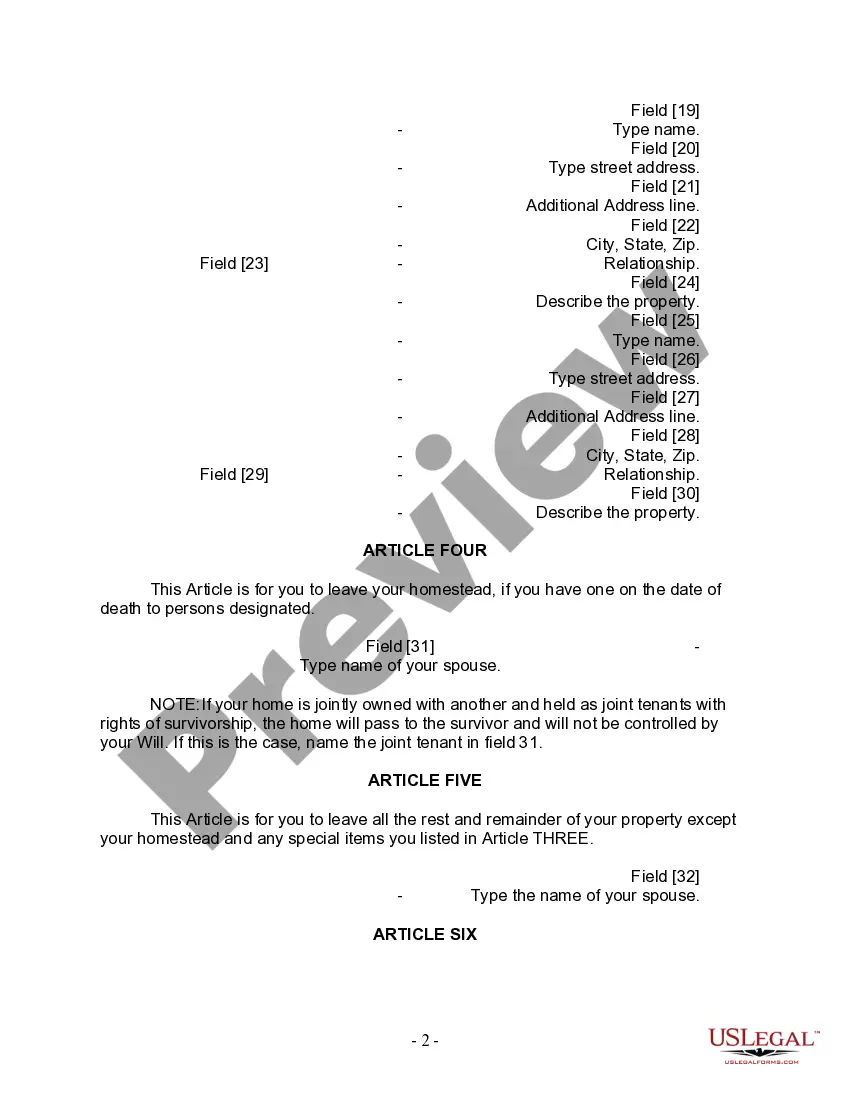
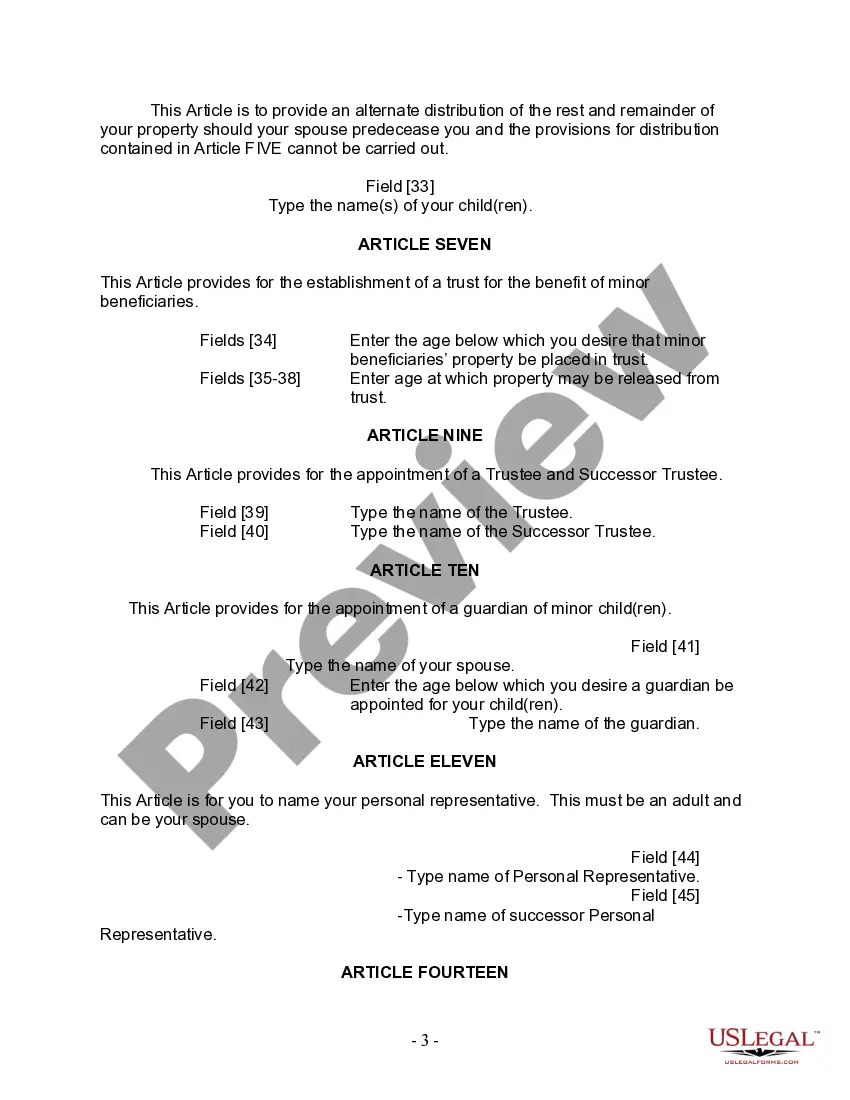
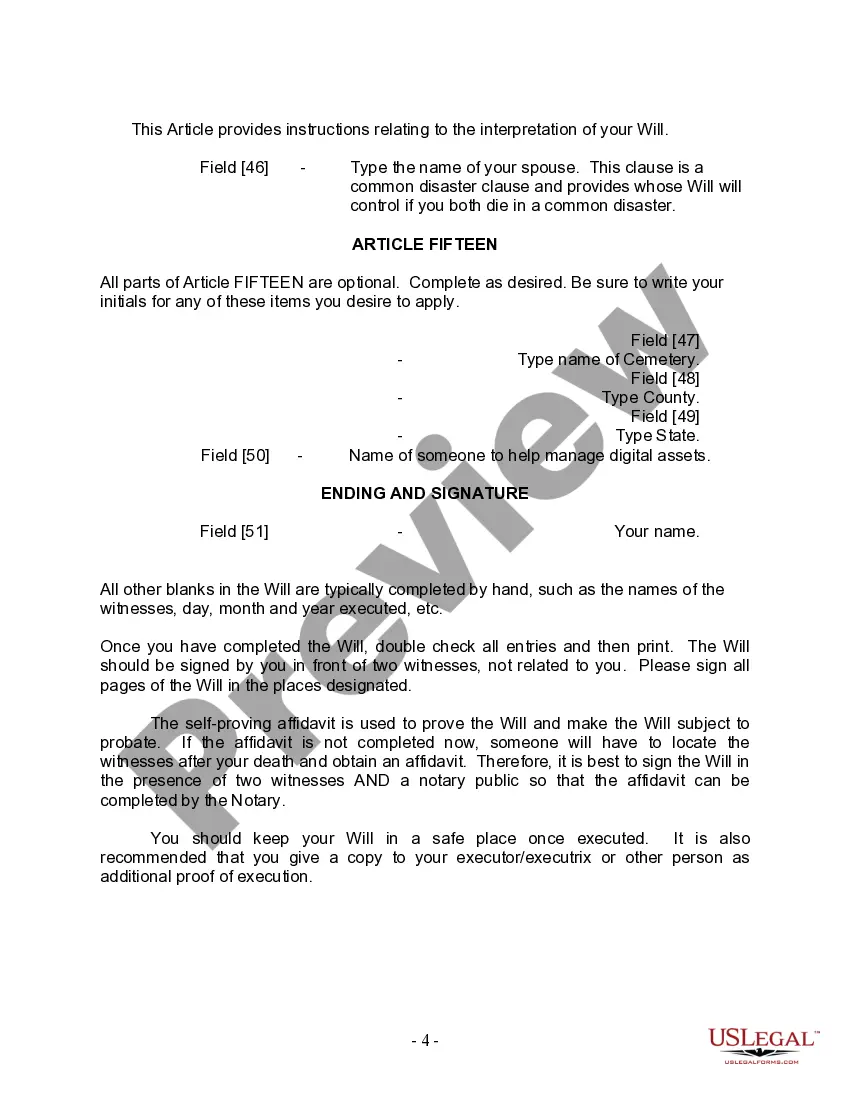
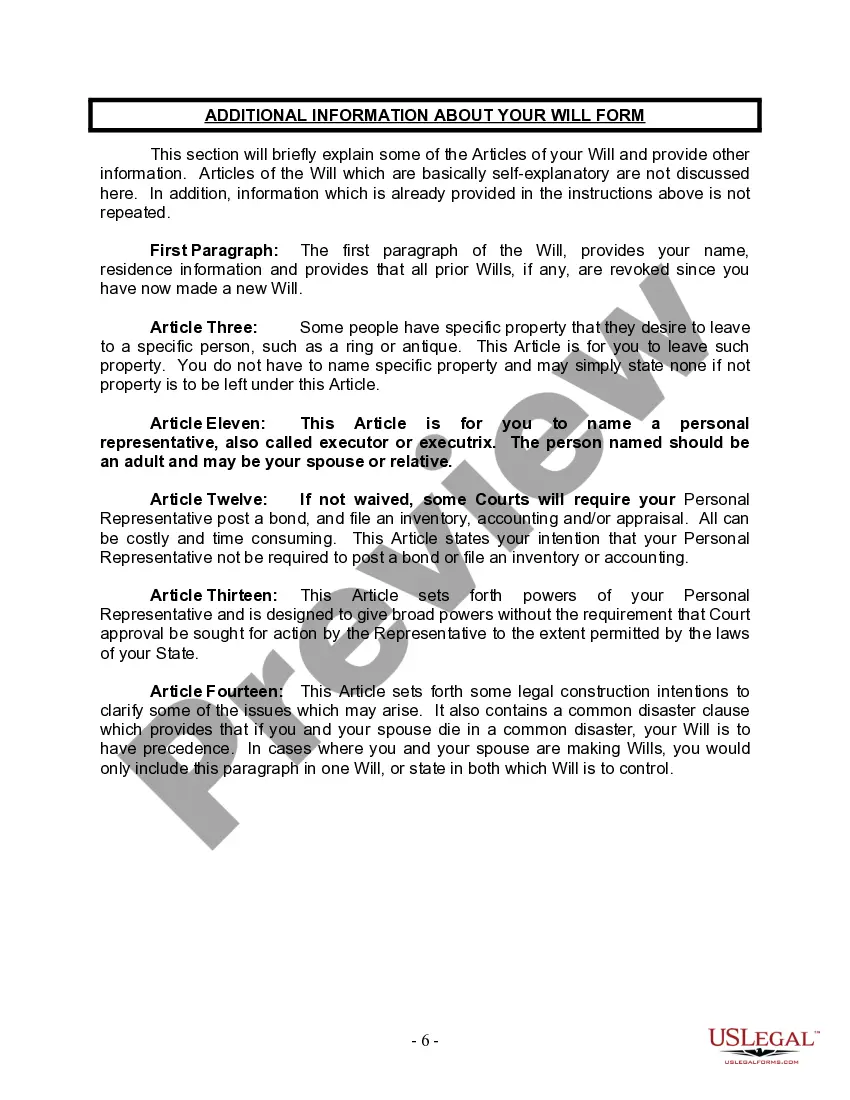
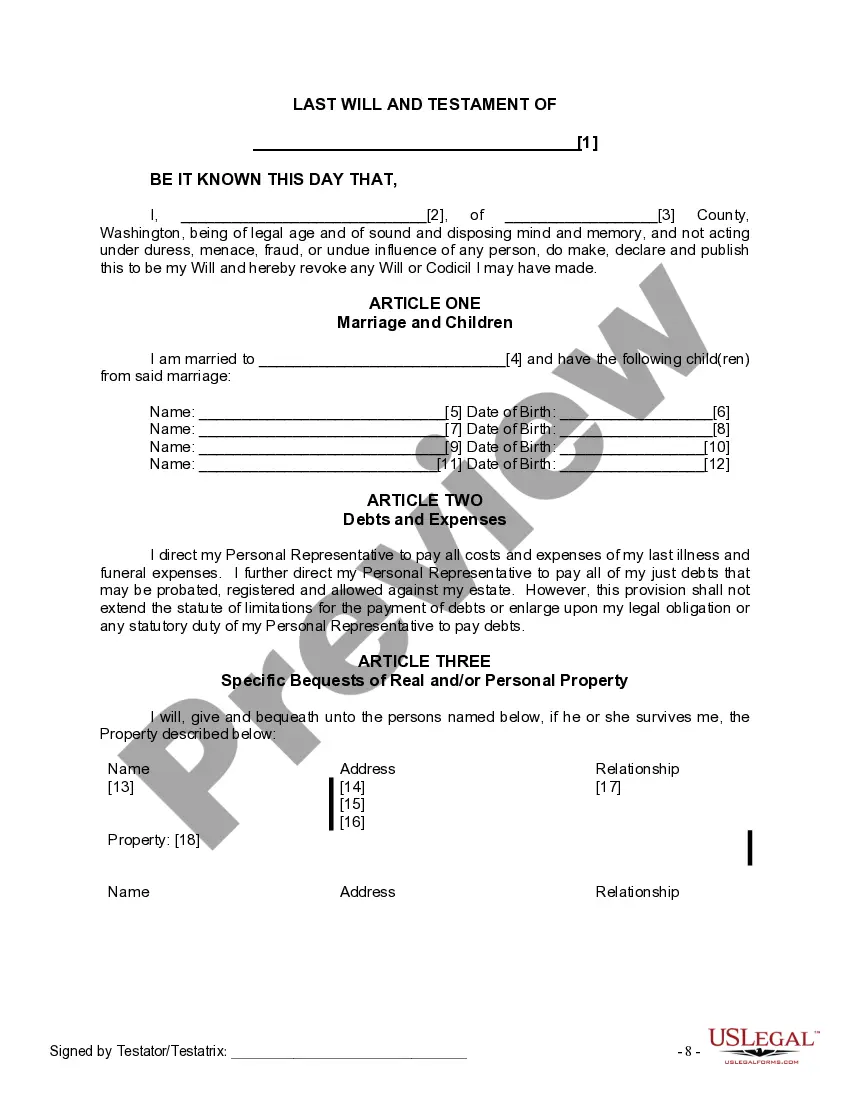
- Personal Representative Appointment: Designate an executor to manage the estate.
- Property Distribution: Clearly outline who receives specific assets and property.
- Trust for Minor Children: Establish a trust to manage assets for children until they reach adulthood.
- Guardian Designation: Specify who will care for minor children in the event both parents pass away.
- Self-Proving Affidavit: Optionally included for easier probate processing.







When to use this form
This form is essential when a married couple with minor children wants to ensure their assets are transferred according to their wishes after their death. It's particularly useful for couples seeking to protect their childrenâs future and ensure they receive care from trusted individuals if neither parent is alive. Additionally, this package is beneficial for planning for unexpected events, ensuring both the couple's and children's needs are fully addressed.
Who this form is for
This form is intended for:
- Married couples who have minor children.
- Couples wanting to ensure their mutual wishes are legally recognized.
- Individuals looking to create an estate plan that protects their children's future.
Completing this form step by step
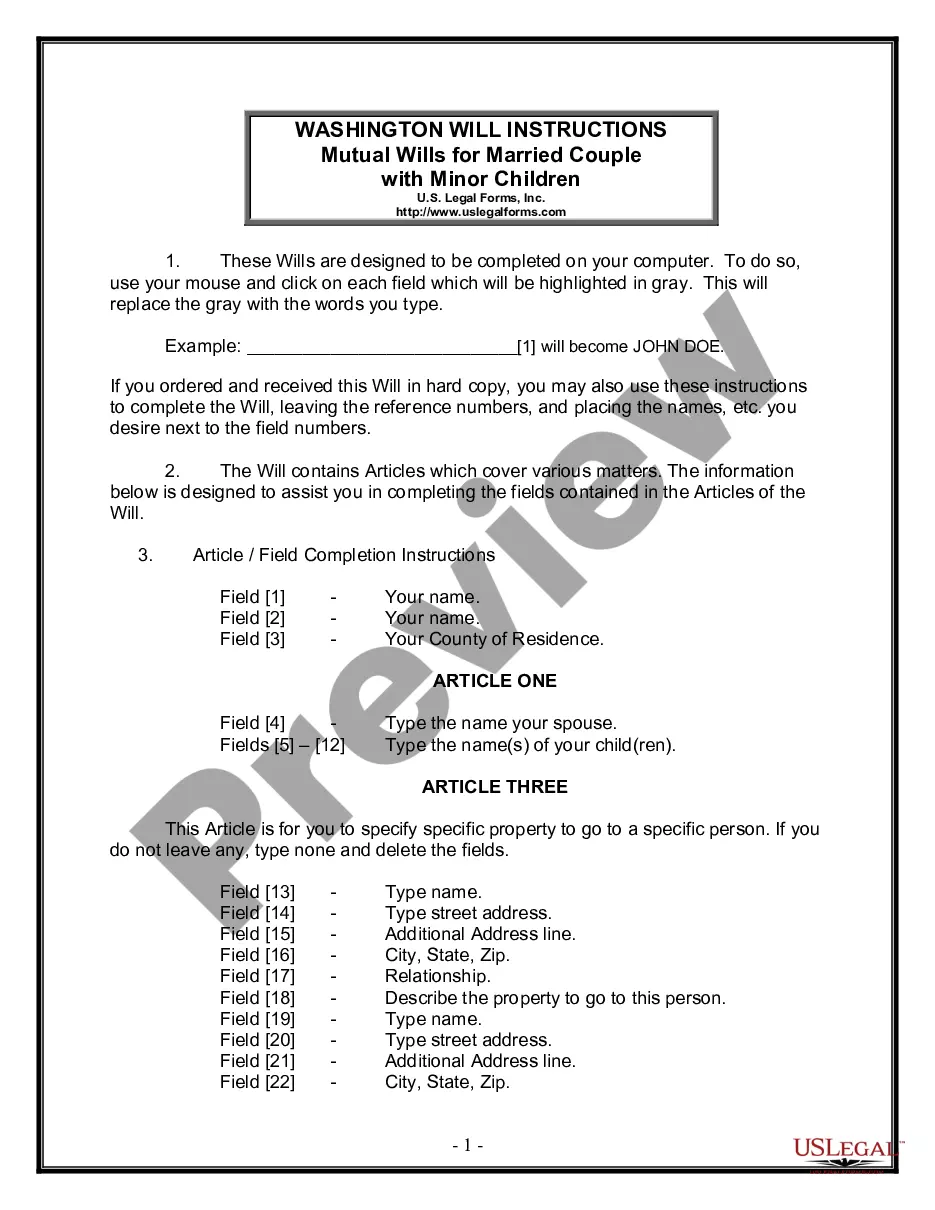
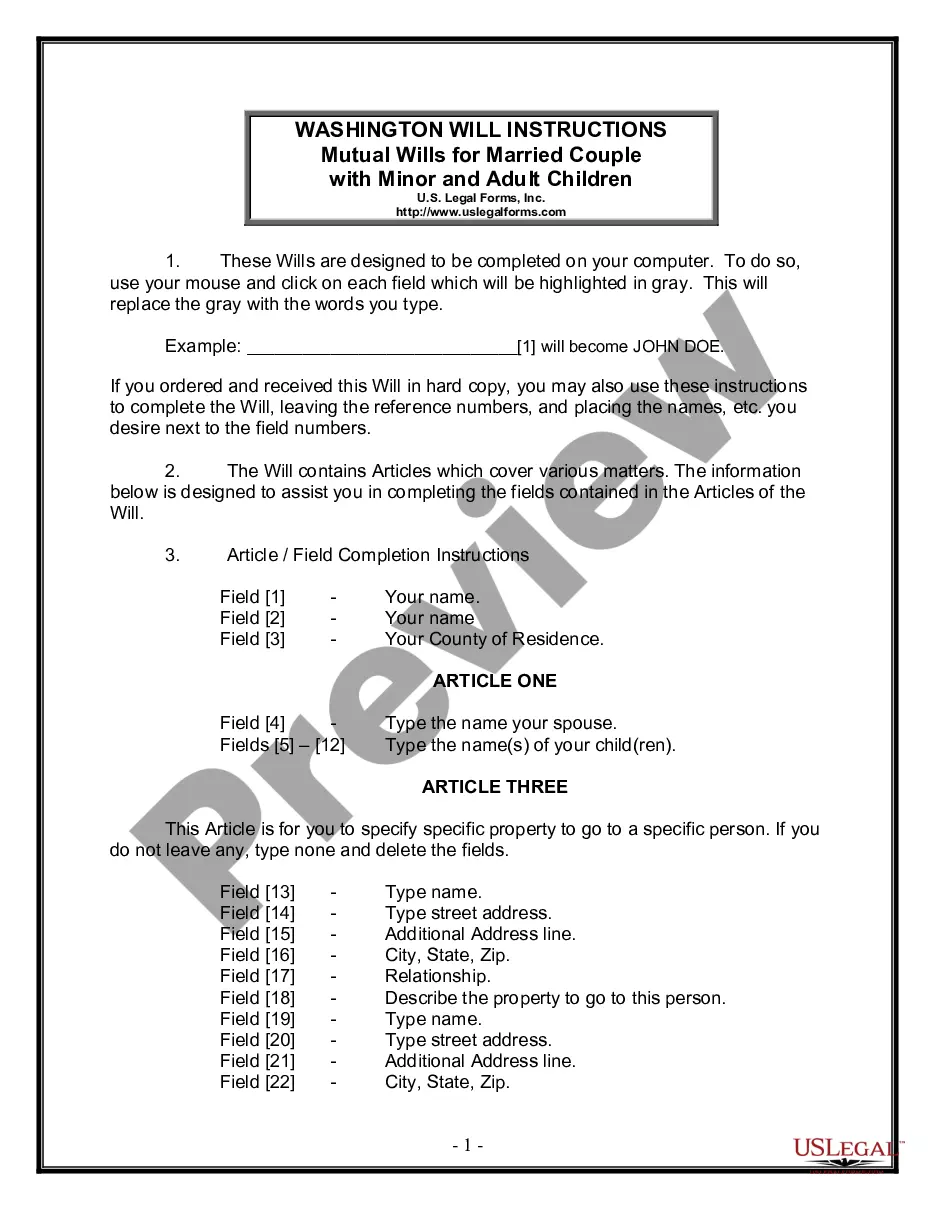
- Identify both spouses and enter their full legal names in the designated fields.
- Specify the distribution of property to named beneficiaries under the appropriate sections.
- Appoint a Personal Representative and list their contact information.
- Include provisions for the guardianship of minor children and specify who will serve in this role.
- Ensure both wills are signed in the presence of two witnesses and notarized, if required by state law.
Notarization requirements for this form
Yes, this form must be notarized to be legally valid. Including a self-proving affidavit makes the process more straightforward, allowing the will to be admitted to probate without further witness testimony. US Legal Forms provides options for integrated online notarization, facilitating a secure and convenient process.
Get your form ready online
Our built-in tools help you complete, sign, share, and store your documents in one place.
Make edits, fill in missing information, and update formatting in US Legal Forms—just like you would in MS Word.
Download a copy, print it, send it by email, or mail it via USPS—whatever works best for your next step.
Sign and collect signatures with our SignNow integration. Send to multiple recipients, set reminders, and more. Go Premium to unlock E-Sign.
If this form requires notarization, complete it online through a secure video call—no need to meet a notary in person or wait for an appointment.
We protect your documents and personal data by following strict security and privacy standards.

Make edits, fill in missing information, and update formatting in US Legal Forms—just like you would in MS Word.

Download a copy, print it, send it by email, or mail it via USPS—whatever works best for your next step.

Sign and collect signatures with our SignNow integration. Send to multiple recipients, set reminders, and more. Go Premium to unlock E-Sign.

If this form requires notarization, complete it online through a secure video call—no need to meet a notary in person or wait for an appointment.

We protect your documents and personal data by following strict security and privacy standards.
Common mistakes to avoid
- Failing to sign the wills in front of required witnesses, which may lead to invalidation.
- Not specifying guardians for minor children, leaving their care to the courtâs discretion.
- Overlooking state-specific notarization requirements that could affect the formâs validity.
Why complete this form online
- Convenient access to professionally drafted legal documents, available anytime.
- Edit and customize the form easily to suit specific needs and circumstances.
- Reliable legal language that adheres to common law standards.
Looking for another form?
Form popularity
FAQ
The mutual wills can be revoked during the lifetimes of both testators, but, on the first death, the survivor is prevented from making a new will in the future.
Mutual wills are a common estate planning tool. Typically, a couple agrees to leave all or most of their estate to the surviving spouse, who then agrees to provide irrevocable gifts over to children.it must include an agreement not to revoke the wills.
As soon as one of the parties to that agreement dies, it becomes impossible for the remaining parties to alter their mutual Wills.
Married couples often execute wills which are identical in their provisions, frequently giving the estate to the surviving spouse or if the spouse does not survive to the children.However, not every mirror will is a "mutual will", indeed very few mirror wills are mutual wills.
Mutual Wills are Wills drawn up by at least two people and are signed following an agreement between the individuals which it is intended should bind the survivor of them. Each individual agrees with the other not to alter their Will after the other dies.
The doctrine of mutual Wills does not theoretically take away the ability to make a new Will revoking the mutual Will.So the practical effect is that a mutual Will is only revocable in accordance with the agreement (if at all).
Perhaps leaving everything to each other on the first death and, if they have any, to their children when the surviving partner dies. If you and your partner have almost identical plans for what happens after each of you has passed away, Mirror Wills can be a very cost effective solution.
The court recognises that all Wills can be revoked but in the case of mutual Wills, equity will protect and enforce the interests created by the agreement for the benefit of the beneficiaries.
The difference between them, however, is that in the case of mirror wills, there is nothing to stop either person changing their Wills, even if they are still with the 'mirror' person.
As mutual wills are binding, the key purpose of such wills is to ensure that property flows to intended, agreed, beneficiaries. They are generally used to ensure that a testator's property can be enjoyed by another during his or her lifetime, but then passes to a third party, the 'ultimate beneficiary.