Washington Mutual Wills Package for Married Couple with No Children
What is this form?
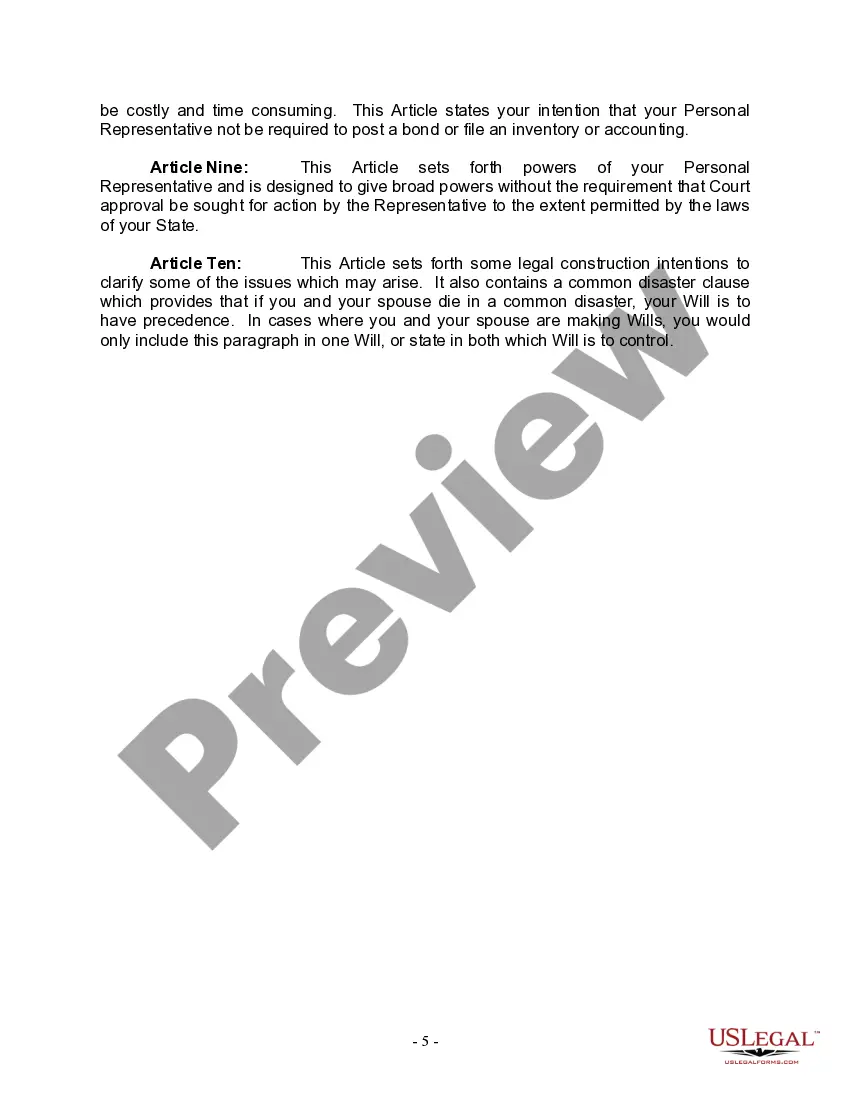
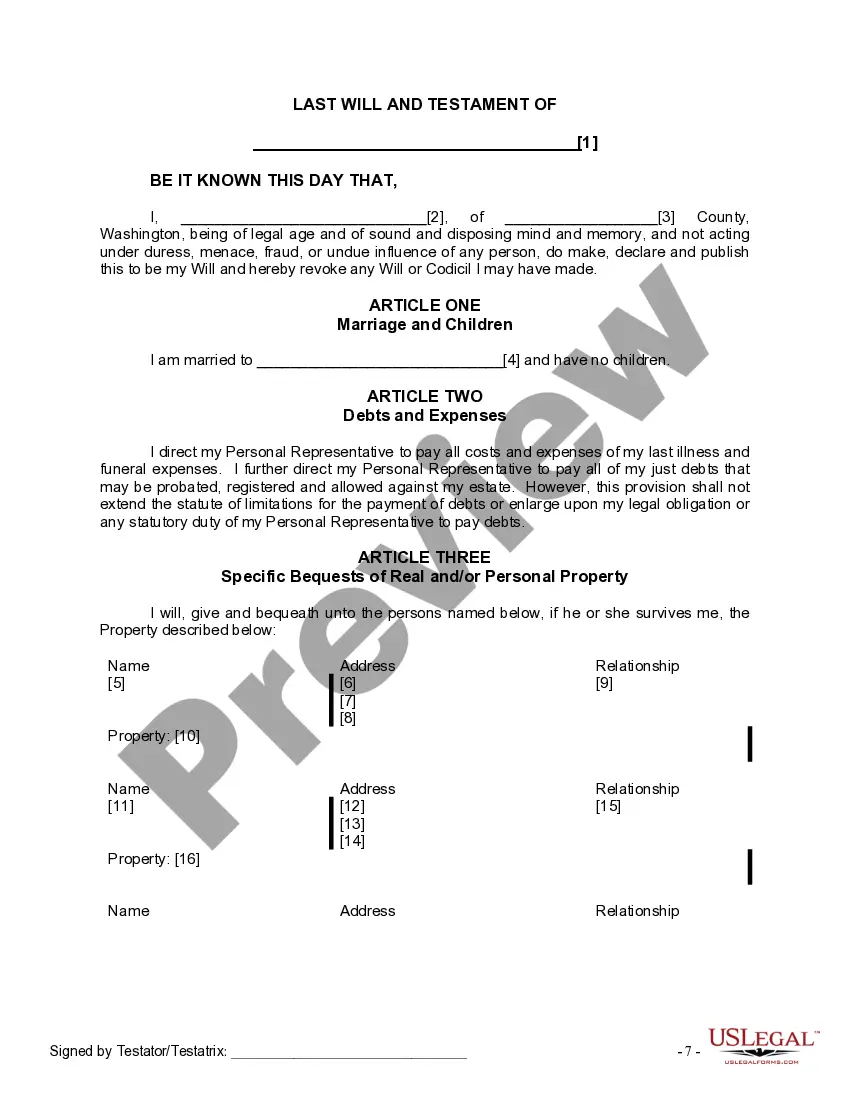
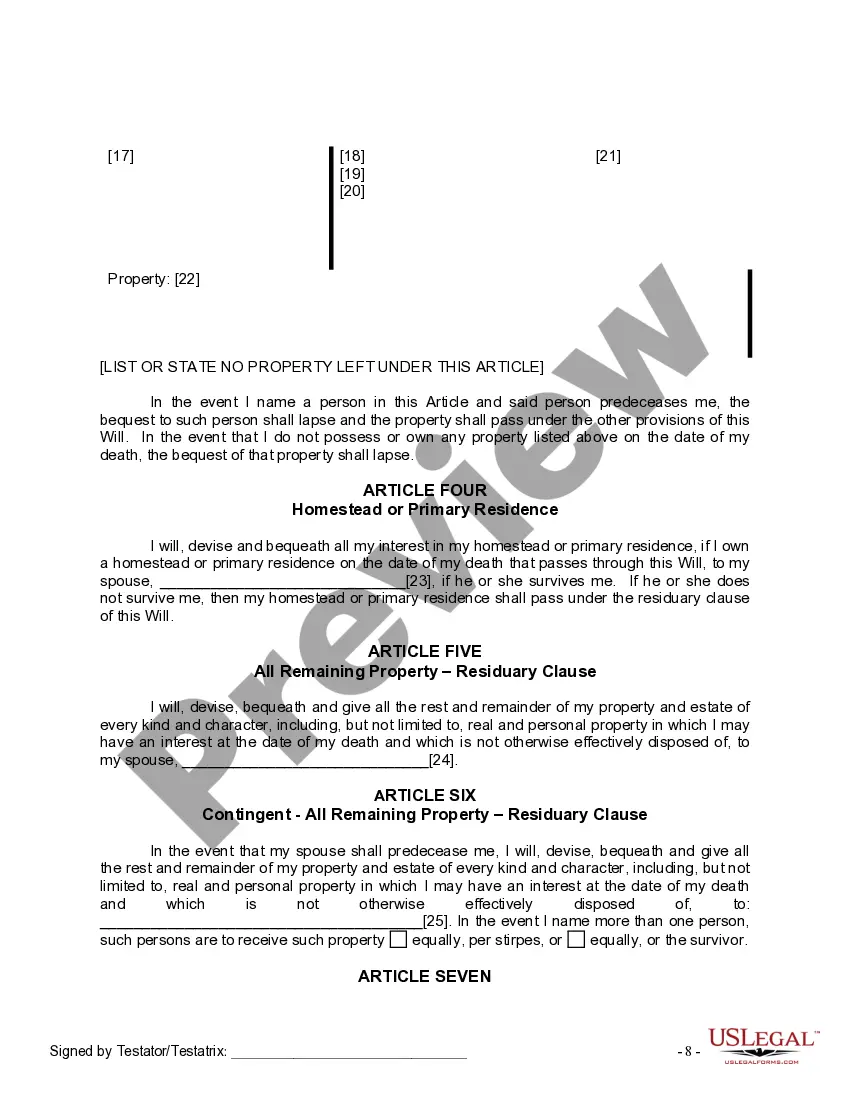
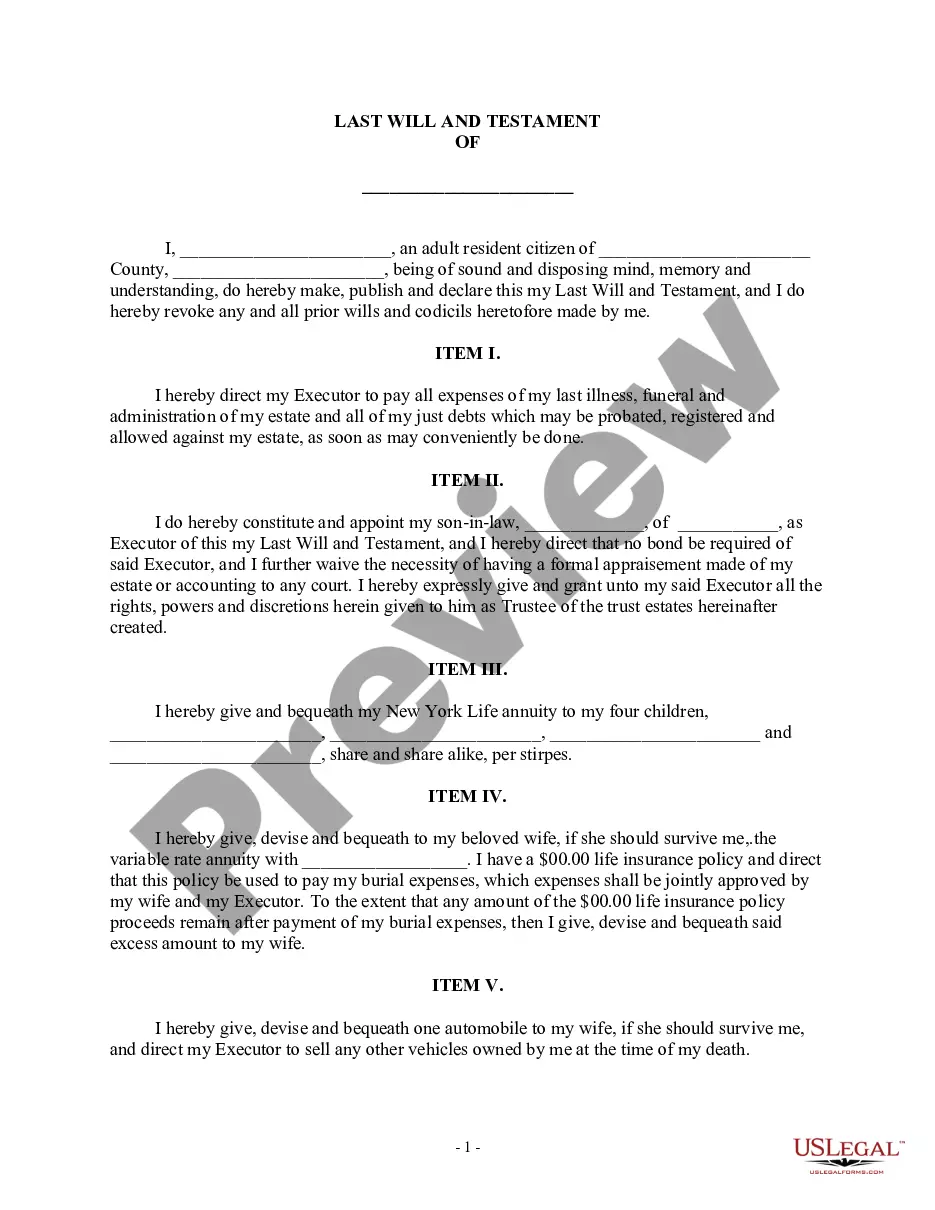
The Mutual Wills Package for Married Couple with No Children is a legal document designed for couples without children who wish to ensure their assets are distributed according to their wishes after their passing. This form includes two separate willsâone for each spouseâallowing both parties to specify their personal representatives and beneficiaries. Unlike standard wills, mutual wills bind both spouses to their agreements with regard to property distribution, creating a stronger legal commitment to the outlined provisions.
Main sections of this form
- Two wills, one for each spouse, ensuring mutual agreements.
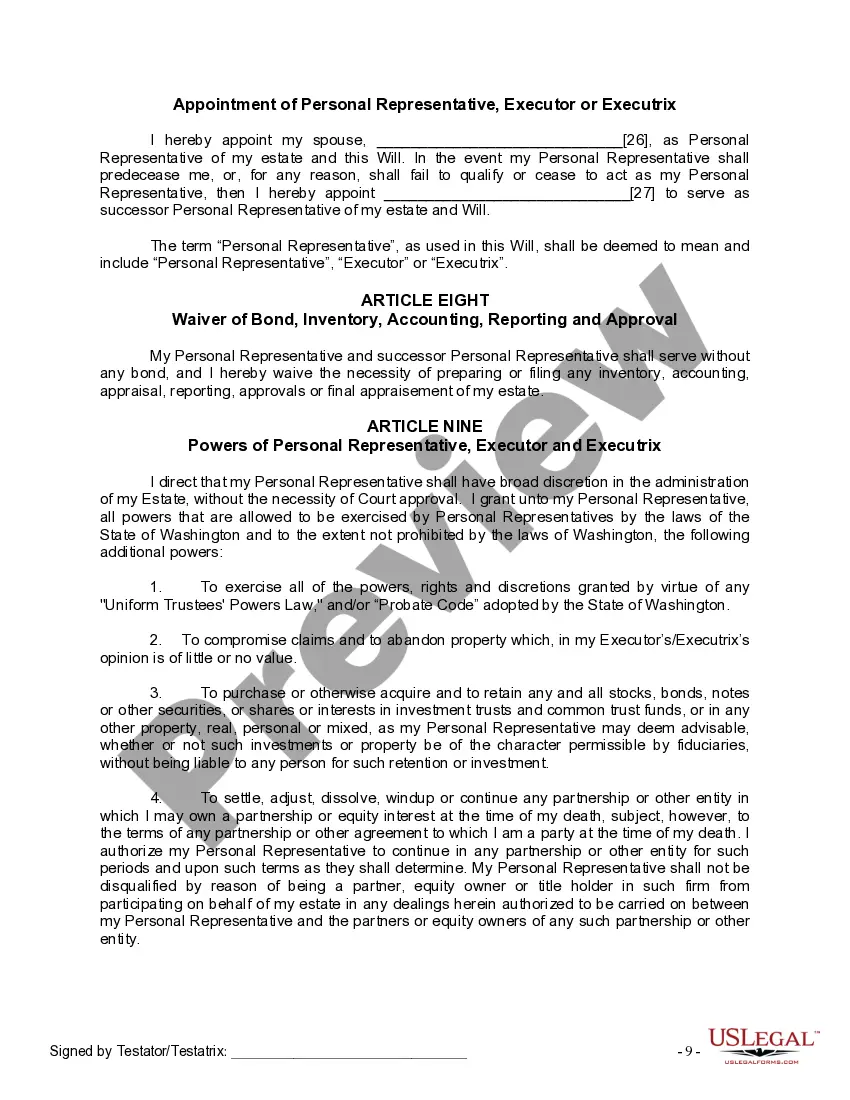
- Appointment of personal representatives to handle estate matters.
- Specification of beneficiaries for property distribution.
- Provisions for homestead or primary residence.
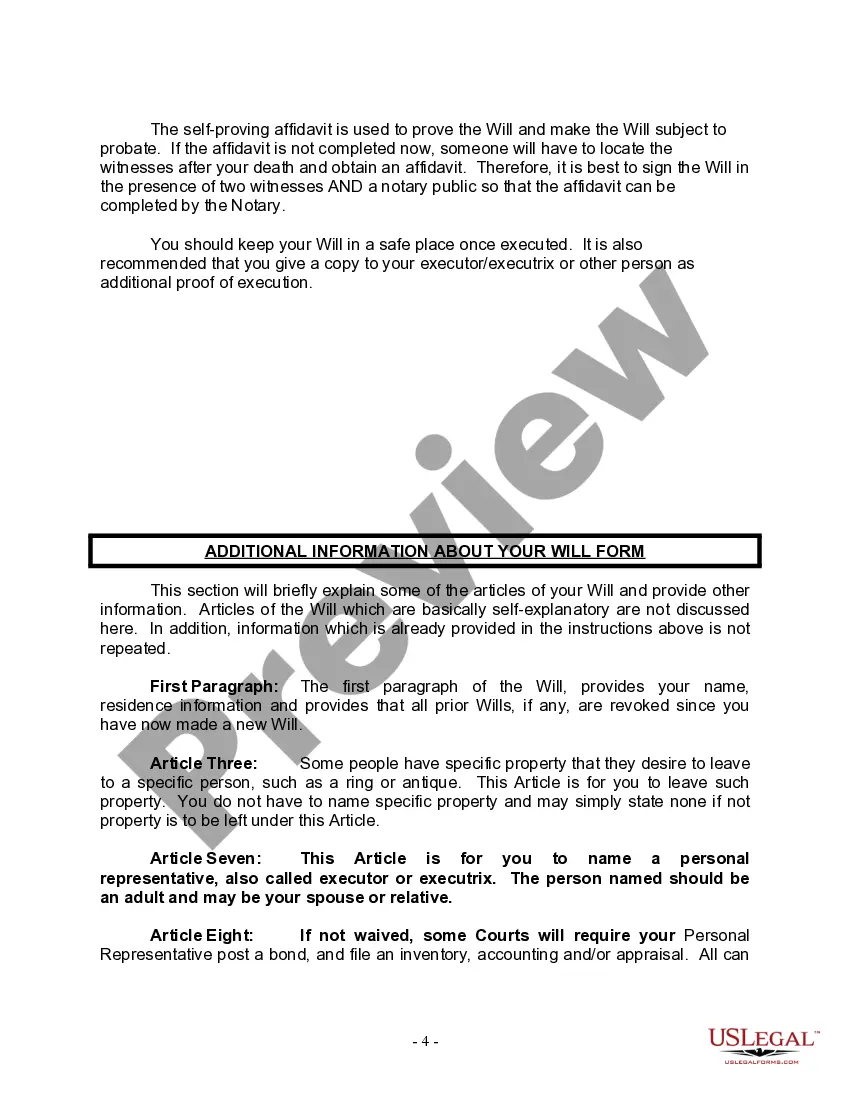
- Instructions for signing and witnessing requirements.
- Self-proving affidavit options if applicable by state law.



When to use this form
This form is ideal when a married couple without children wants to ensure their estate will be handled according to their mutual wishes. It is suitable for couples who want to safeguard their assets for their spouse while preventing any unintended distribution to others in the event of both spouses' deaths.
Intended users of this form
- Married couples without children looking to plan their estate.
- Couples who want to make binding agreements about property distribution.
- Spouses wanting to minimize legal challenges during probate.
How to prepare this document
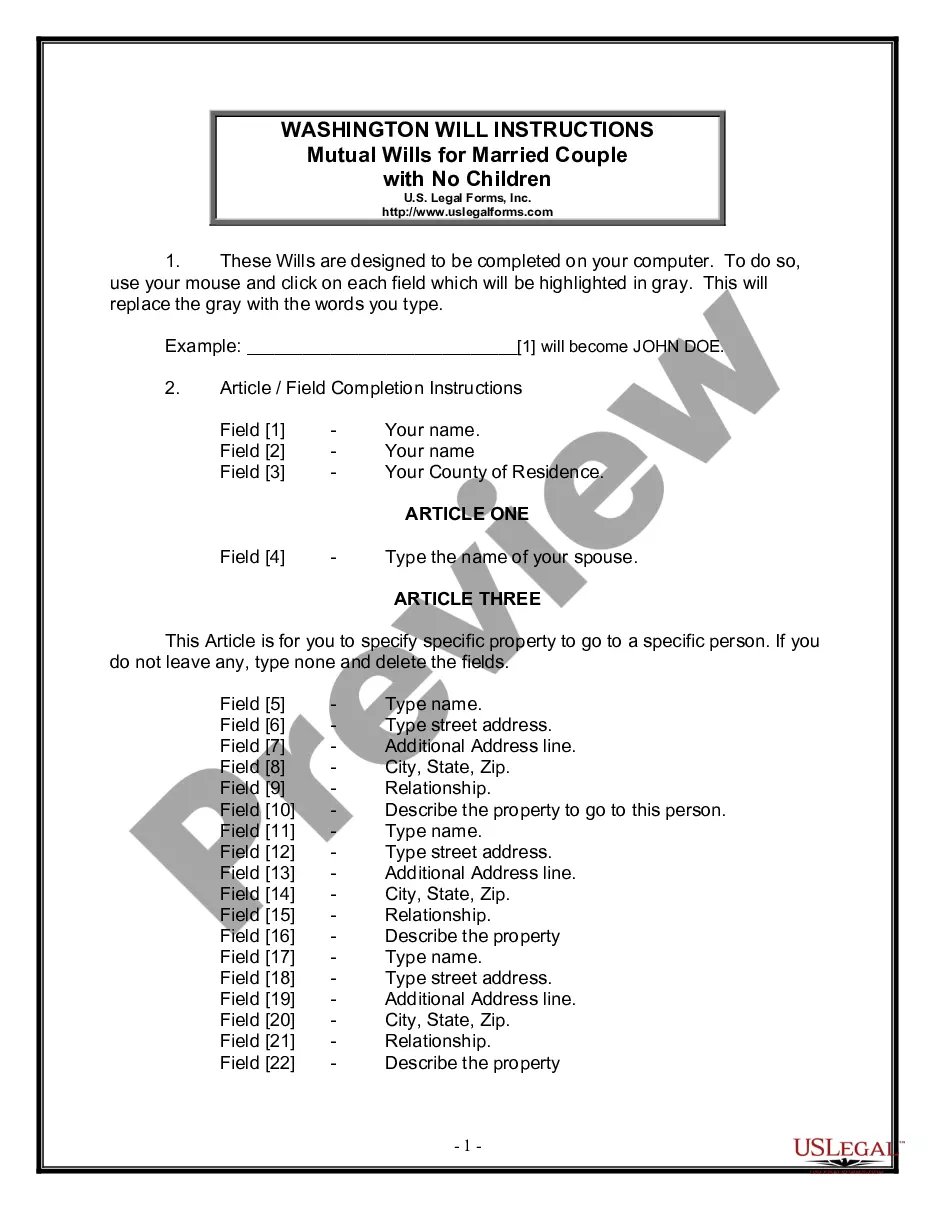
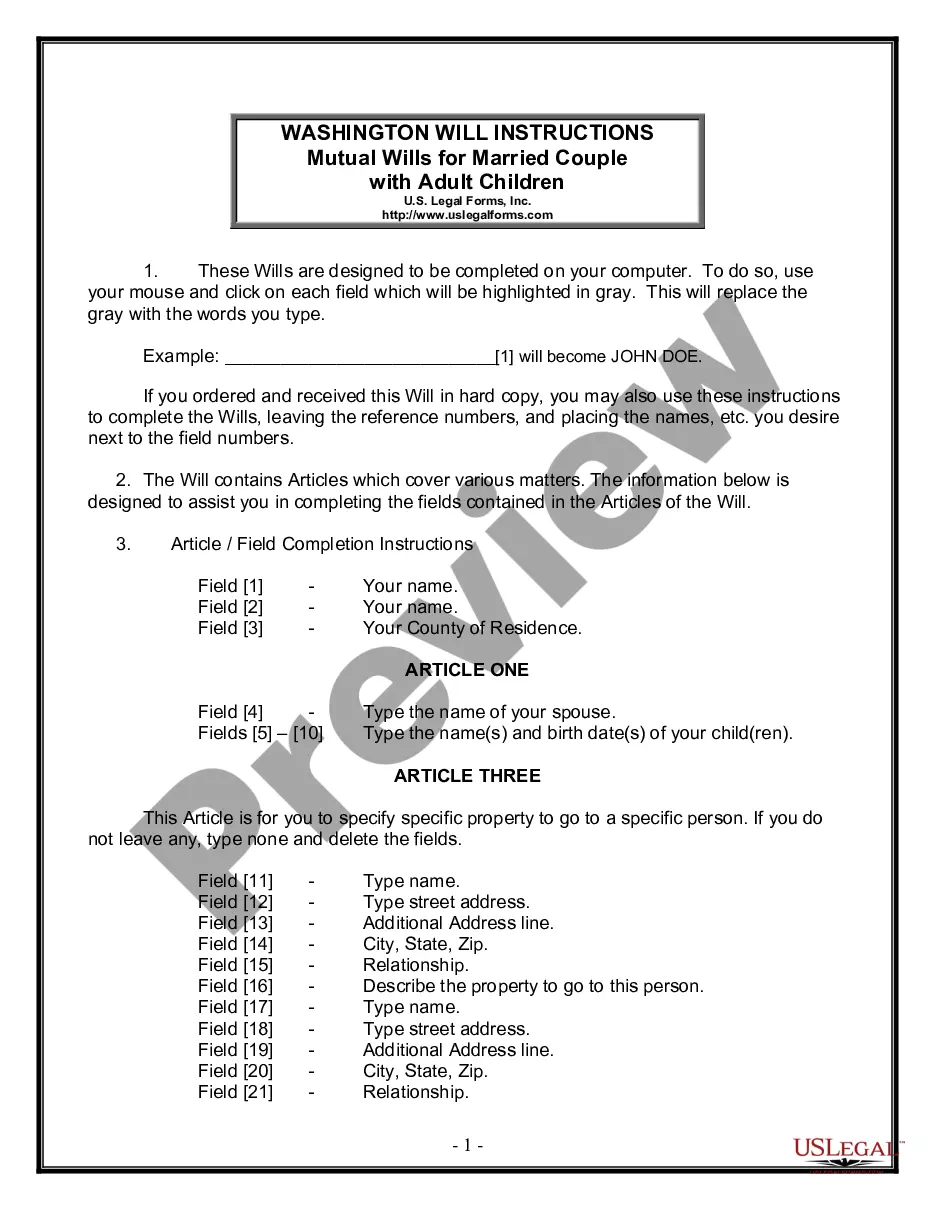
- Enter the full names of both spouses in designated fields.
- Specify the county of residence and details about any specific property bequests.
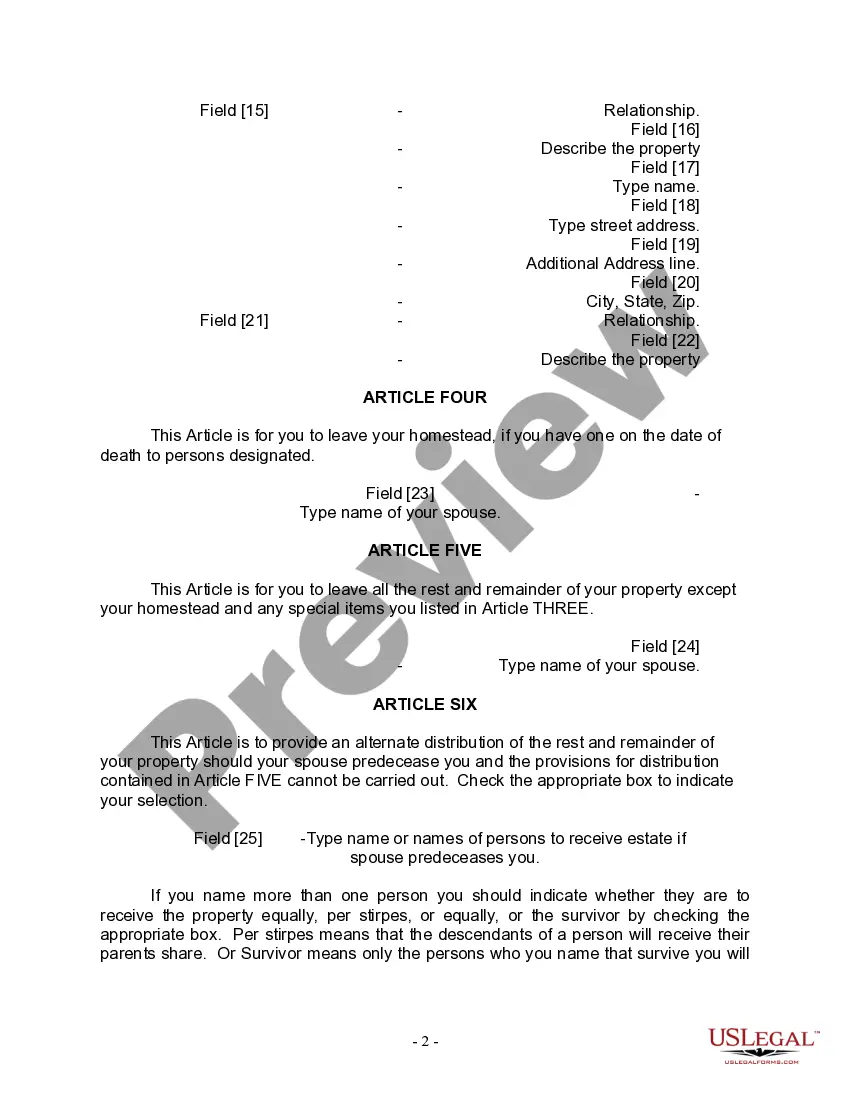
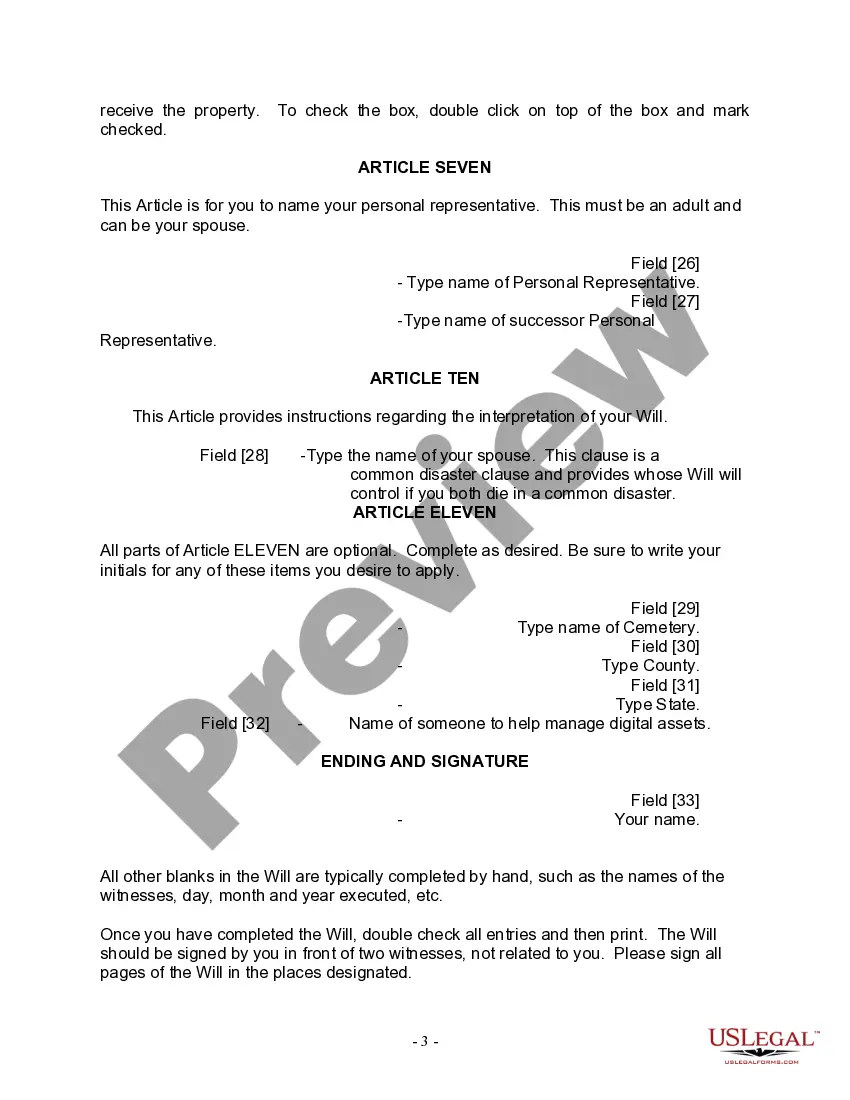
- Decide on a personal representative and successor, entering their names accordingly.
- Review and complete all sections regarding homestead and distribution of remaining assets.
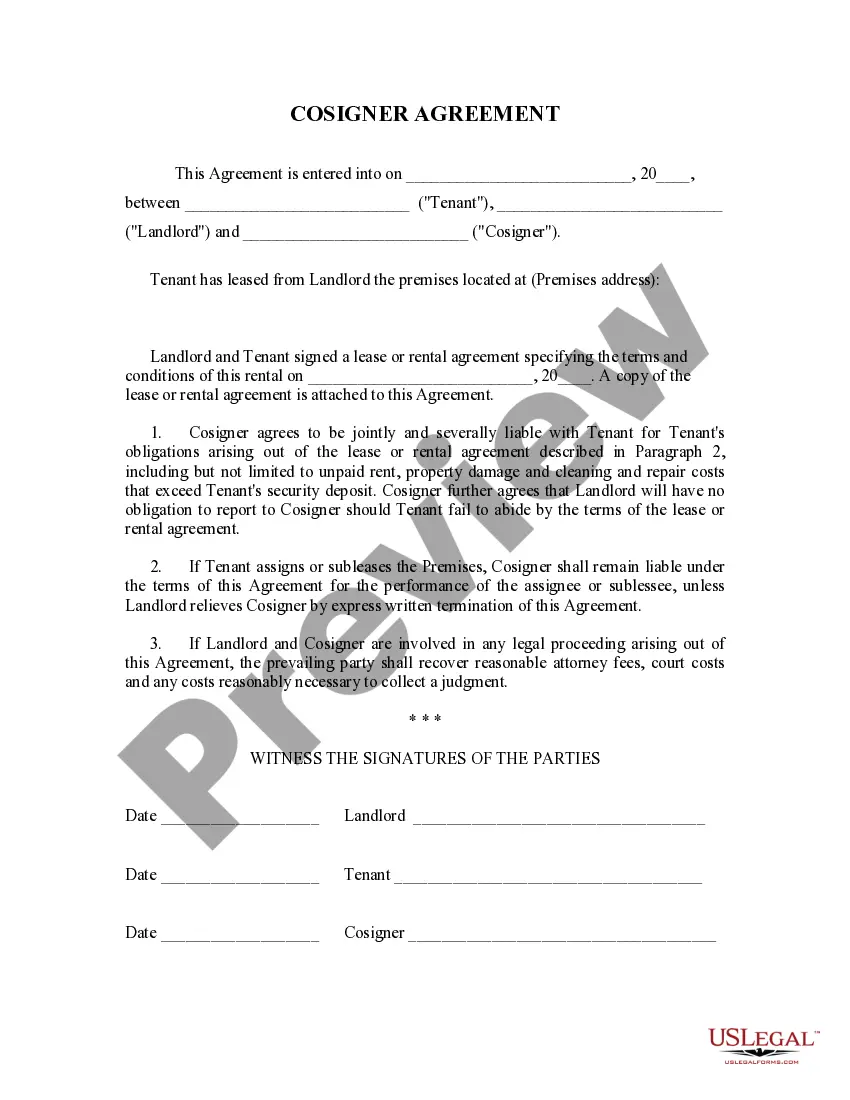
- Sign the wills in the presence of two unrelated witnesses and a notary, if required.
Notarization requirements for this form
Yes, this form must be notarized to be legally valid, especially if it includes a self-proving affidavit. Using US Legal Formsâ integrated online notarization service, you can securely complete the notarization process via a video call at your convenience.
Get your form ready online
Our built-in tools help you complete, sign, share, and store your documents in one place.
Make edits, fill in missing information, and update formatting in US Legal Forms—just like you would in MS Word.
Download a copy, print it, send it by email, or mail it via USPS—whatever works best for your next step.
Sign and collect signatures with our SignNow integration. Send to multiple recipients, set reminders, and more. Go Premium to unlock E-Sign.
If this form requires notarization, complete it online through a secure video call—no need to meet a notary in person or wait for an appointment.
We protect your documents and personal data by following strict security and privacy standards.

Make edits, fill in missing information, and update formatting in US Legal Forms—just like you would in MS Word.

Download a copy, print it, send it by email, or mail it via USPS—whatever works best for your next step.

Sign and collect signatures with our SignNow integration. Send to multiple recipients, set reminders, and more. Go Premium to unlock E-Sign.

If this form requires notarization, complete it online through a secure video call—no need to meet a notary in person or wait for an appointment.

We protect your documents and personal data by following strict security and privacy standards.
Mistakes to watch out for
- Failing to sign the wills in front of required witnesses.
- Not specifying alternative beneficiaries in case of predecease.
- Omitting property details in specific bequests.
- Not discussing the wills with your spouse, leading to misunderstandings.
Benefits of completing this form online
- Convenient access to customizable and state-specific documents.
- Editable on your computer, allowing you to make changes easily.
- Drafted by licensed attorneys to ensure legal compliance.
- Time-saving with immediate downloads without the need for an attorney consultation.
Looking for another form?

Form popularity
FAQ
Choose an online legal services provider or locate a will template. Carefully consider your distribution wishes. Identify a personal representative/executor. Understand the requirements to make your will legal. Make sure someone else knows about your will. Consult a lawyer if you have a more complicated estate.
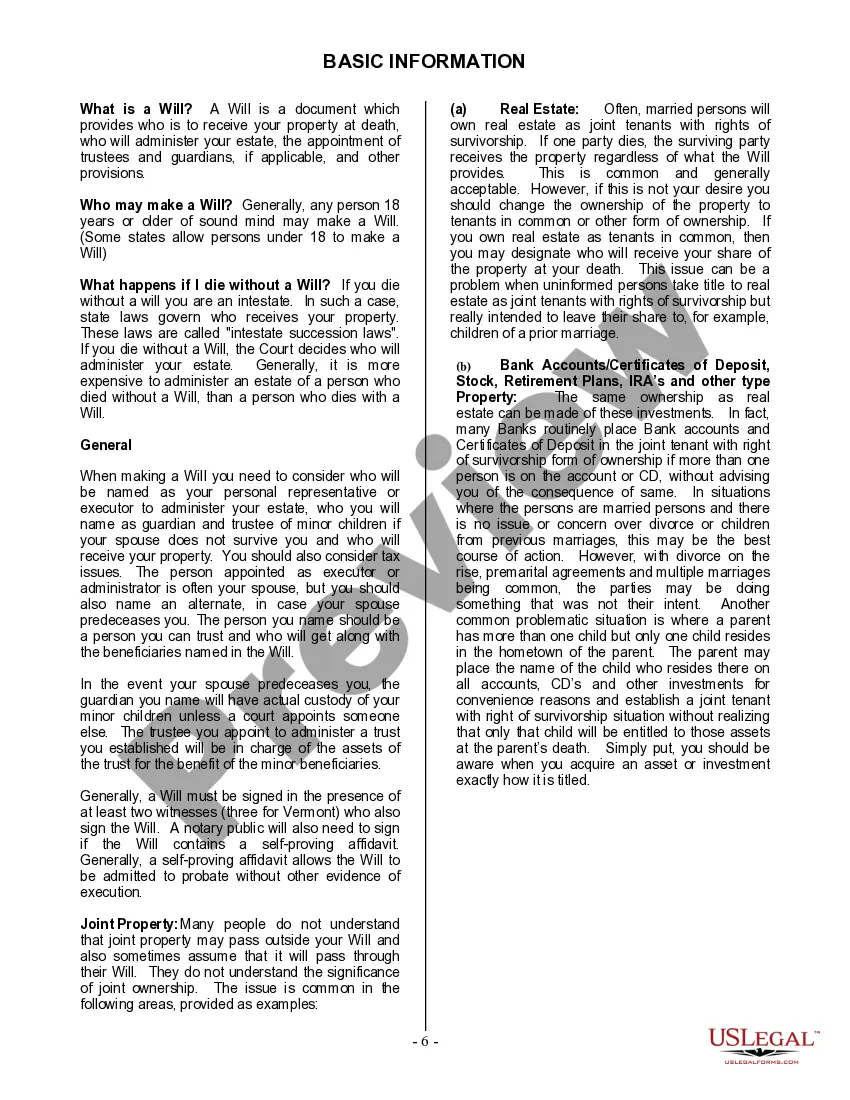
When one spouse dies, the surviving spouse automatically receives complete ownership of the property. This distribution cannot be changed by Will.Because the surviving spouse becomes the outright owner of the property, he or she will need a Will to direct its disposition at his or her subsequent death.
It is a customary estate planning practice for each spouse to have his or her own will. While some practitioners may draft a joint will for a married couple, it is not recommended.
Most married couples own most of their assets jointly. Assets owned jointly between husband and wife pass automatically to the survivor.This requires the will to be probated and an executor to be appointed in order to secure the assets. There are exceptions to the probate requirement for estates of $50,000 or less.
The surviving spouse has the right to Family Exempt Property.The surviving spouse has the right to receive Letters of Administration, which means that ahead of all other family members, he/she has the right to serve as the Administrator when someone dies intestate.
A joint will is a legal document executed by two (or more) people, which merges their individual wills into a single, combined last will and testament. Like most wills, a joint will lets the will-makers name who will get their property and assets after they die. Joint wills are usually created by married couples.
(And that includes youso be sure you get that done right away if you haven't already.) But did you know that if you're married, your spouse needs a will too? That's right. This is a case where one will isn't enoughyou each need your own.
You and your spouse may have one of the most common types of estate plans between married couples, which is a simple will leaving everything to each other. With this type of plan, you leave all of your assets outright to your surviving spouse. The kids or other beneficiaries only get something after you are both gone.