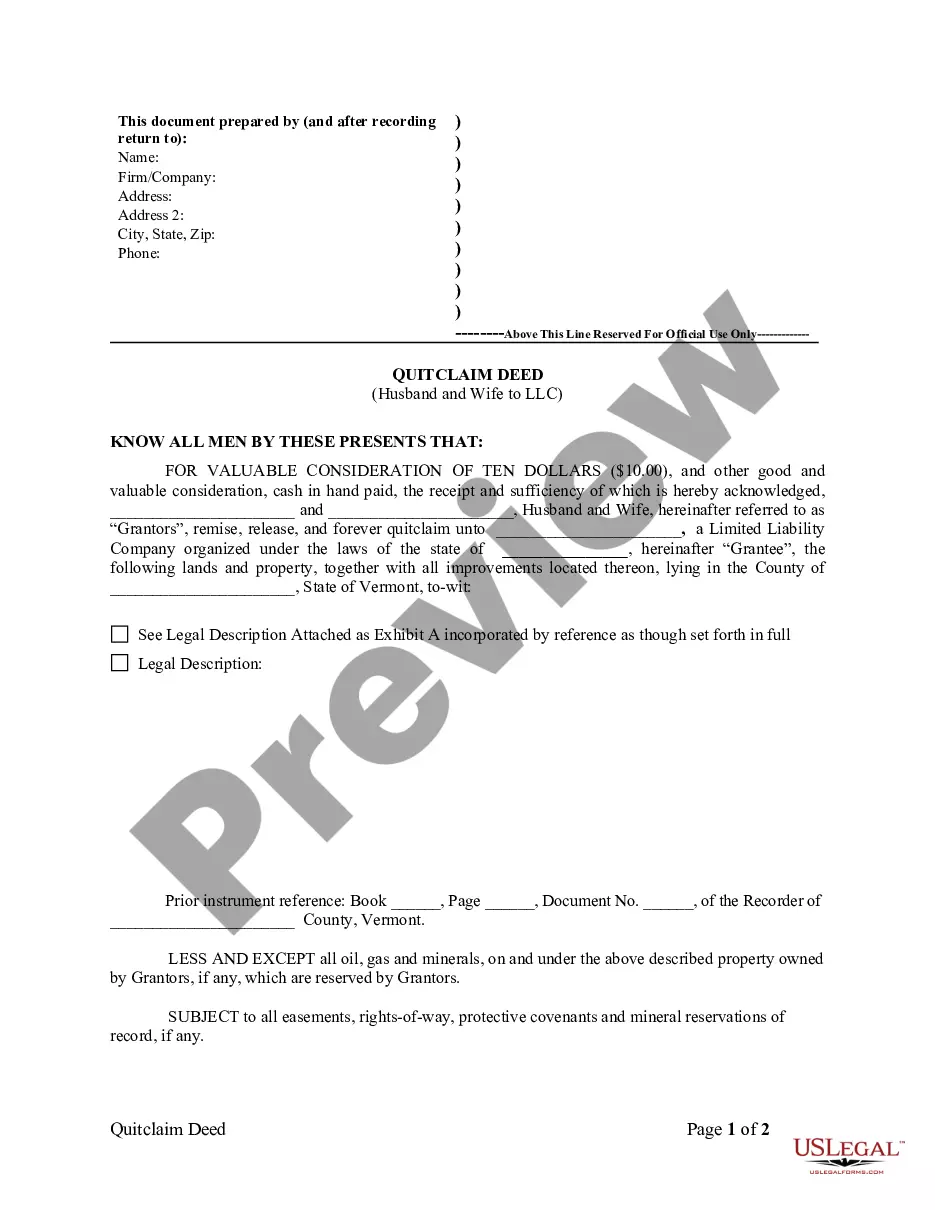
Washington Owner's or Seller's Affidavit of No Liens
What this document covers
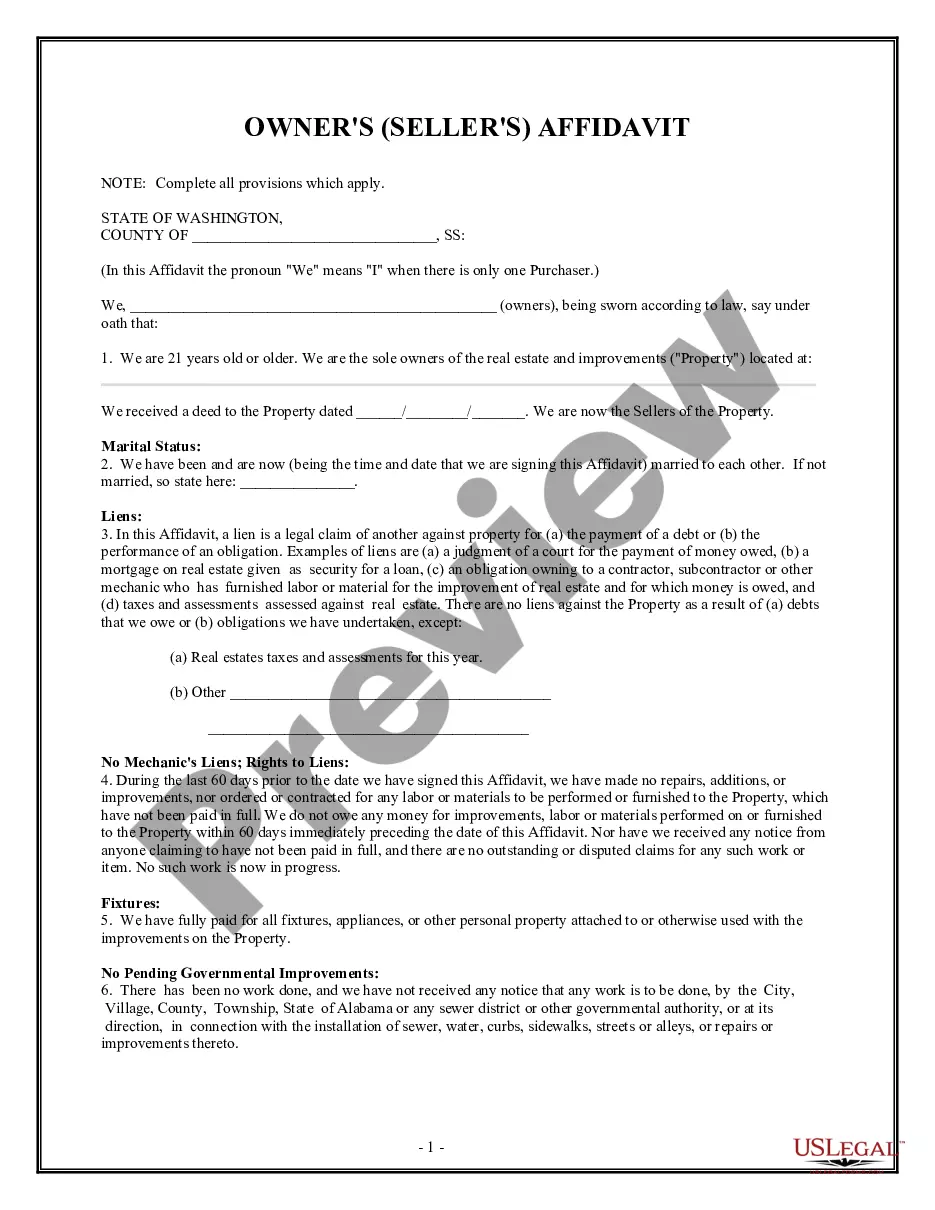
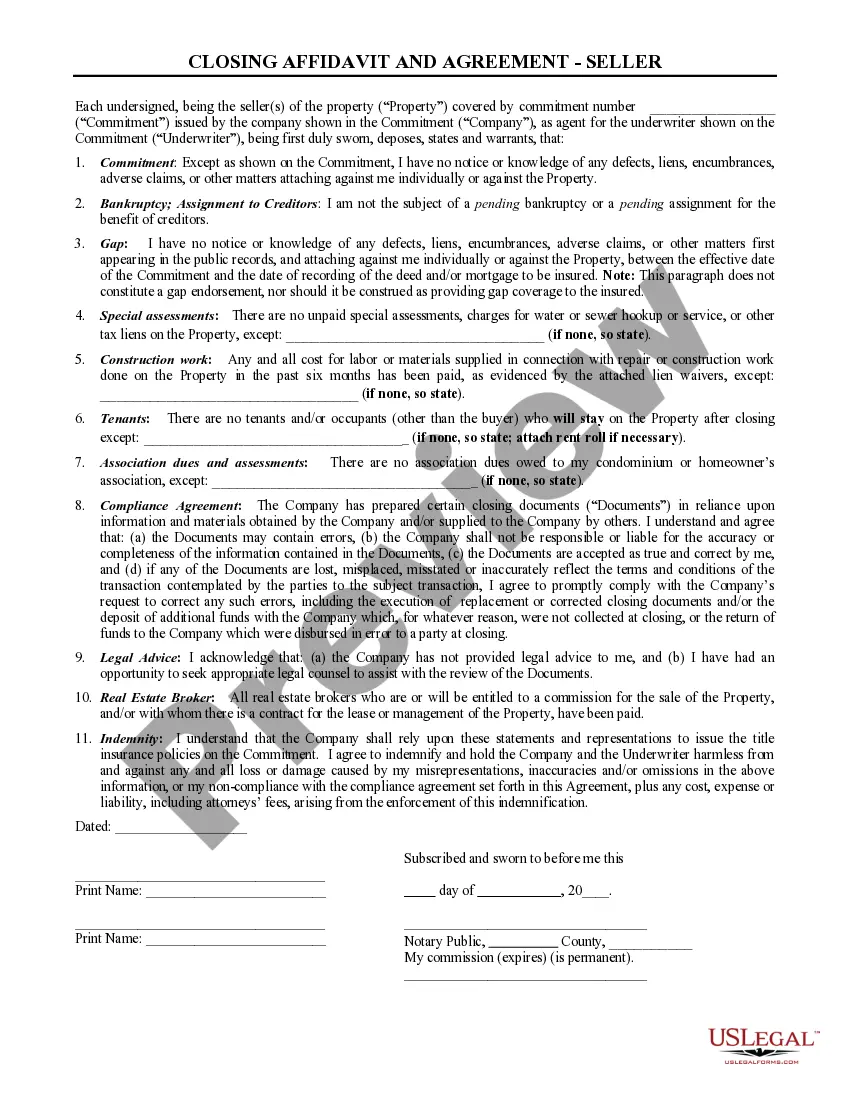
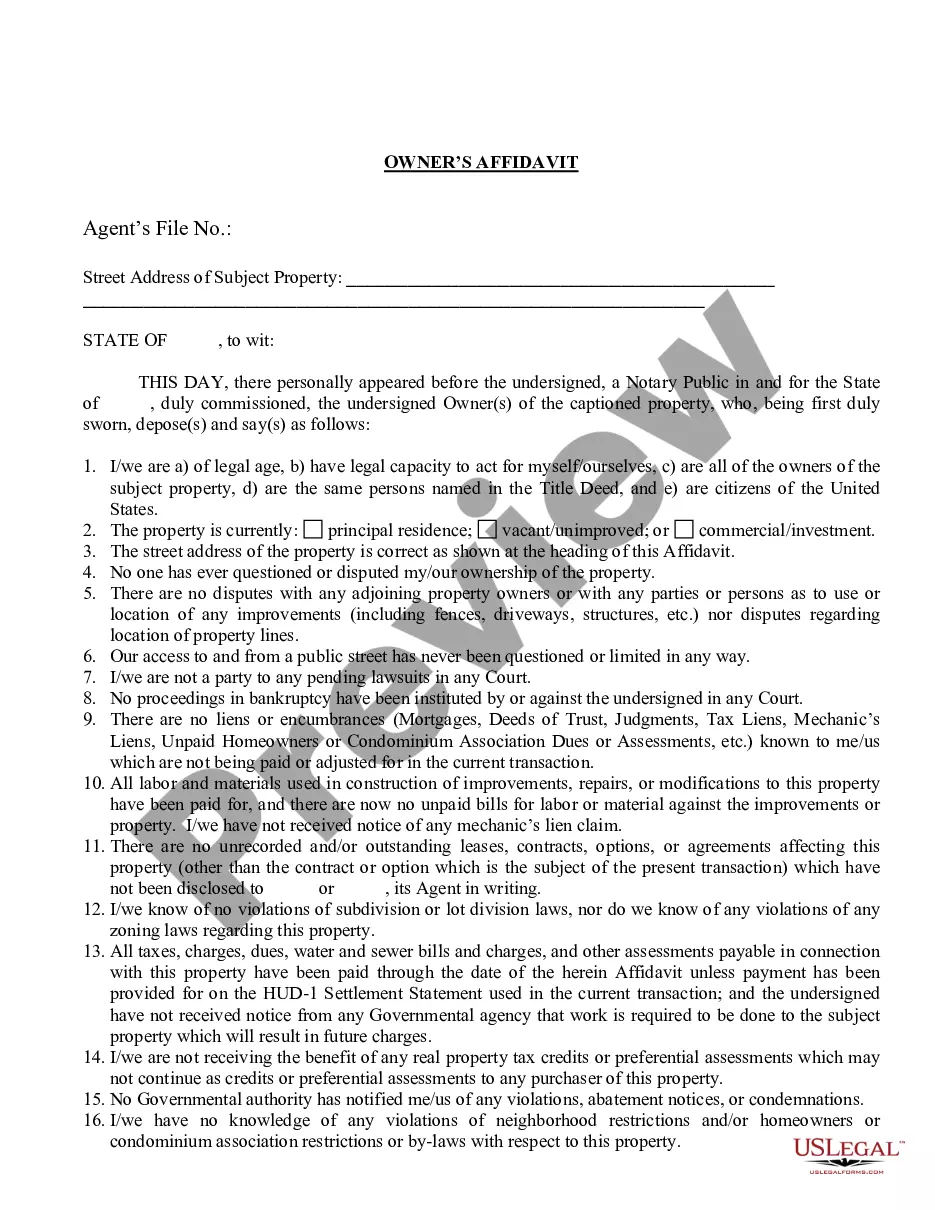
The Owner's or Seller's Affidavit of No Liens is a legal document used by sellers at the time of closing a real estate transaction. This affidavit certifies that the seller is the rightful owner of the property, confirms there are no outstanding liens, debts, or claims against it, and provides assurance that the property is free from any mechanic liens. It is essential for protecting both the seller and the buyer during the property transfer process and ensuring a clear title to the property.
Key parts of this document
- Identification of the property and owners.
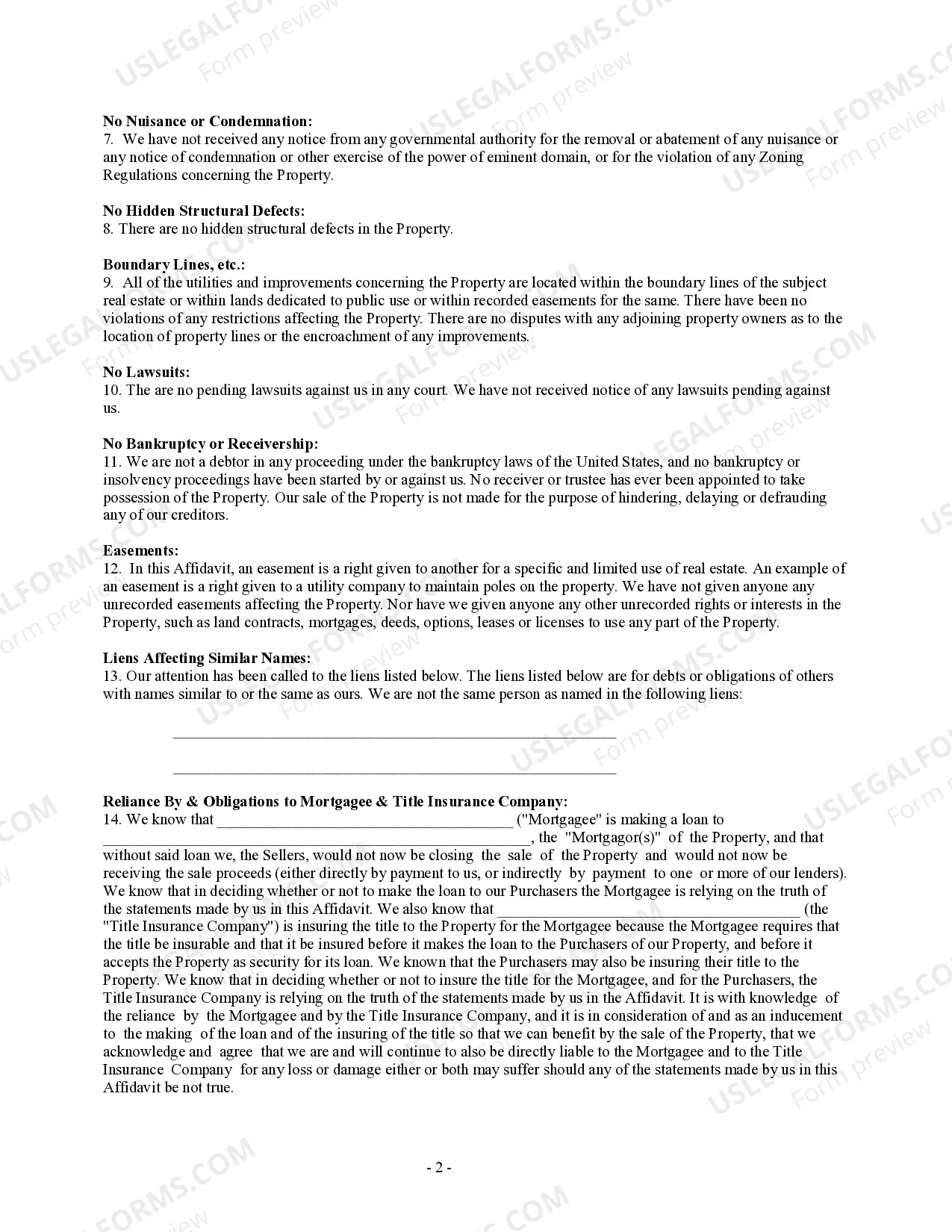
- Declarations regarding the absence of liens and debts.
- Certification of no mechanical liens within the last 60 days.
- Confirmation of unpaid improvements or maintenance.
- Notices of any governmental actions or nuisances related to the property.
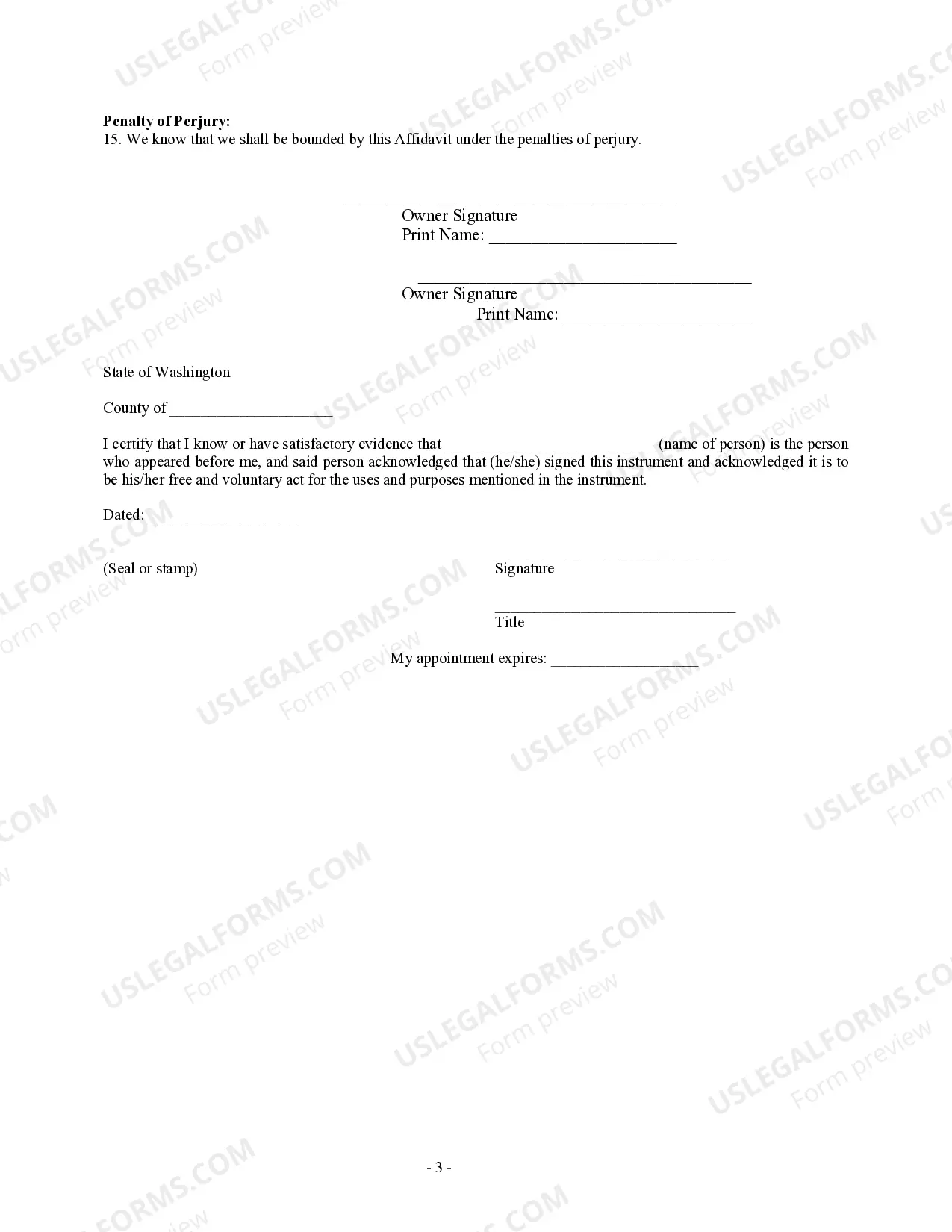
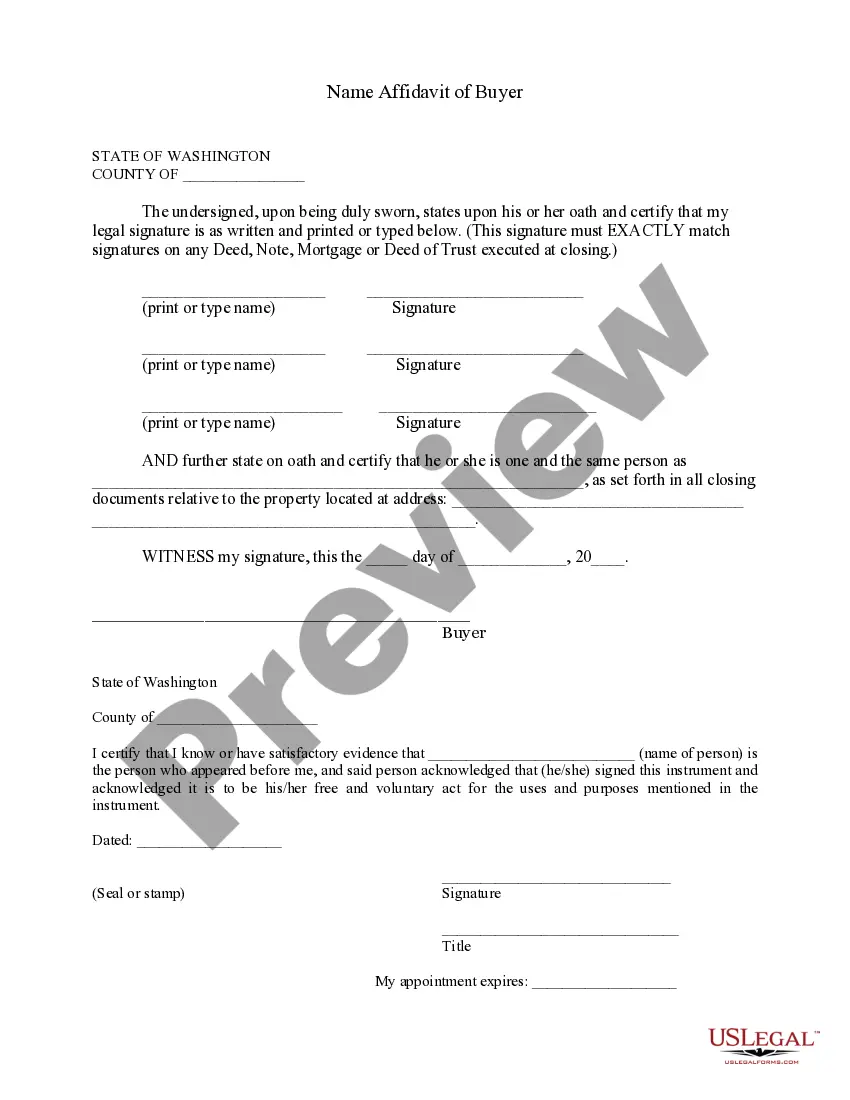
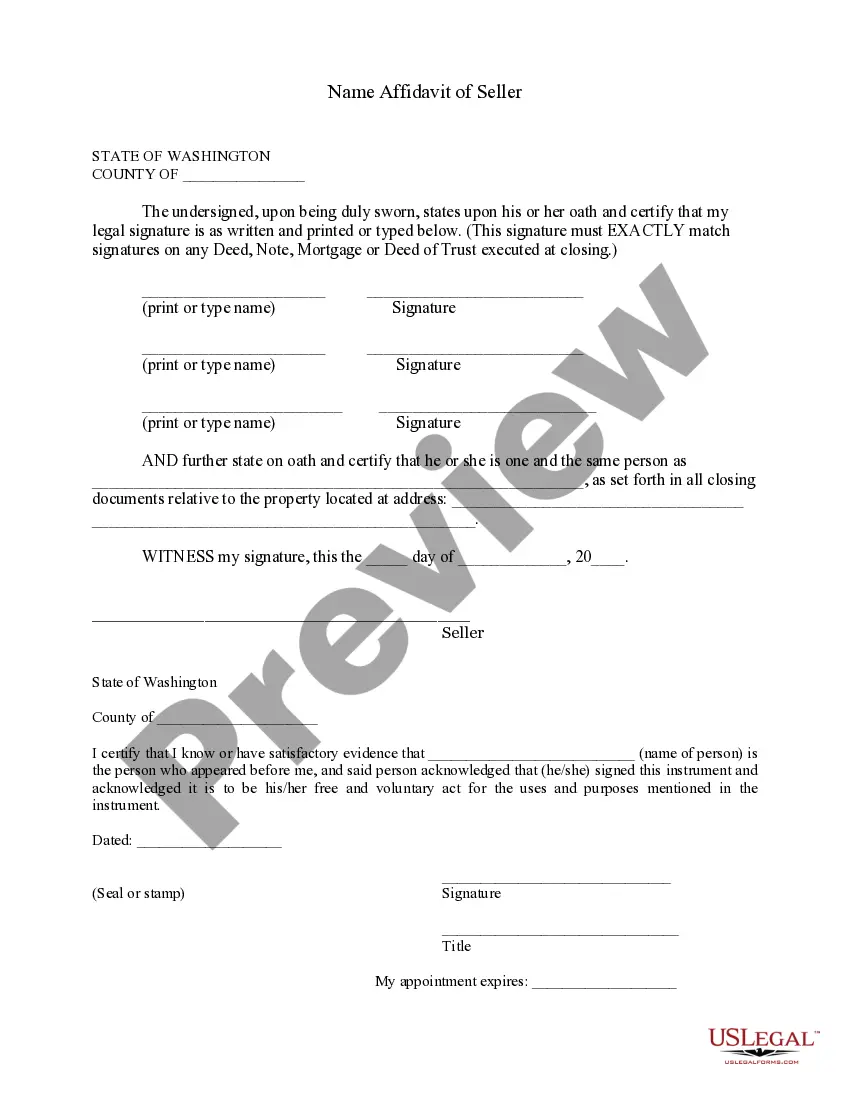
- Signatures of the owners and notary acknowledgment.

Situations where this form applies
This affidavit is typically used when selling real estate properties. Sellers should complete this form at the closing of the transaction to confirm that the property is free from liens and any other claims. It provides assurance to the buyer and any lending institutions involved that there are no hidden liabilities associated with the property.
Who needs this form
This form is intended for:
- Individual or joint property owners selling real estate.
- Real estate agents representing sellers.
- Buyers who require assurance from sellers regarding property title.
How to prepare this document
- Fill in the names of all property owners and specify the property location.
- Confirm marital status of the owners if applicable.
- Provide details regarding any existing liens, debts, or obligations related to the property.
- Include acknowledgments regarding the condition of the property and repairs made within the last 60 days.
- Sign the affidavit in the presence of a notary public.
Notarization requirements for this form
This form must be notarized to be legally valid. US Legal Forms provides secure online notarization powered by Notarize, allowing you to complete the process through a verified video call.
Get your form ready online
Our built-in tools help you complete, sign, share, and store your documents in one place.
Make edits, fill in missing information, and update formatting in US Legal Forms—just like you would in MS Word.
Download a copy, print it, send it by email, or mail it via USPS—whatever works best for your next step.
Sign and collect signatures with our SignNow integration. Send to multiple recipients, set reminders, and more. Go Premium to unlock E-Sign.
If this form requires notarization, complete it online through a secure video call—no need to meet a notary in person or wait for an appointment.
We protect your documents and personal data by following strict security and privacy standards.
Make edits, fill in missing information, and update formatting in US Legal Forms—just like you would in MS Word.
Download a copy, print it, send it by email, or mail it via USPS—whatever works best for your next step.
Sign and collect signatures with our SignNow integration. Send to multiple recipients, set reminders, and more. Go Premium to unlock E-Sign.

If this form requires notarization, complete it online through a secure video call—no need to meet a notary in person or wait for an appointment.
We protect your documents and personal data by following strict security and privacy standards.
Common mistakes
- Failing to fully disclose any existing liens or debts.
- Not having the affidavit notarized before submission.
- Leaving sections incomplete or unclear.
- Not confirming the property boundaries or easements properly.
Benefits of completing this form online
- Easy access to customizable templates drafted by licensed attorneys.
- Immediate download for quick use during real estate transactions.
- Ability to fill out the form at your convenience, ensuring accuracy and completeness.
- Secure storage of documents for future reference.
Legal use & context
- This affidavit serves to assure buyers and lenders that the property title is clear.
- It is legally binding and may be used in court to assert claims about the propertyâs condition and ownership.
- Inaccuracies in the affidavit can lead to legal repercussions, including potential liability for damages incurred by misrepresentation.
What to keep in mind
- The Owner's or Seller's Affidavit of No Liens is crucial for property sales.
- Complete and accurate information ensures a smooth transaction.
- All sellers should understand the implications of any claims made in the affidavit.
Looking for another form?
Form popularity
FAQ
An Owner Affidavit is a document used by title and closing agencies to ensure that the current owner of a property is in ownership of the property free and clear of any encumbrances.The Owner Affidavit places the seller on the hook for any claims that may arise that are not covered by the title insurance policy.
Who you are. The services or materials you provided. The last date you provided the services or materials. How much payment should be. The date on which you will file a lien if you do not receive payment. How the debtor should pay.
A property lien is a legal claim to specific assets that have been granted by the courts. A creditor must file and receive approval for a property lien through a county records office or state agency. Each jurisdiction has its own rules and regulations governing property liens.
Unpaid taxes: If you fail to pay your income or property taxes, the IRS or county may issue a tax lien against the house. Owed child support: Unpaid child or spousal support, if ruled necessary by a court, can result in a property lien.
A judicial lien is created when a court grants a creditor an interest in the debtor's property, after a court judgment.The lien is the first step by the judgment creditor in a process that will culminate in a sale of the attached property, to satisfy the judgment debt.
A mortgage creates a lien on your property that gives the lender the right to foreclose and sell the home to satisfy the debt. A deed of trust (sometimes called a trust deed) is also a document that gives the lender the right to sell the property to satisfy the debt should you fail to pay back the loan.
The Indian Contract Act, 1872 classifies the Right of Lien into two types: Particular Lien and General Lien. Section 170 of the aforesaid Act gives the exact definition of Particular Lien which states that the Bailee is free to hold control of a precise property with position to the charge which is due.
The subcontractor would file a lien waiver before a lien is filed. By doing so, the subcontractor is giving up his or her right to a lien against the property. In comparison, a lien release (also known as release of lien, cancellation of lien, or a lien cancellation) would come into play after the filing of a lien.
Voluntary and Involuntary Liens. Creditors, such as a mortgage or car lender, can ask borrowers to put up the purchased property as collateral as part of the condition of the loan. Creditors With Involuntary Liens. Judgment Liens. Other Types of Involuntary Liens.