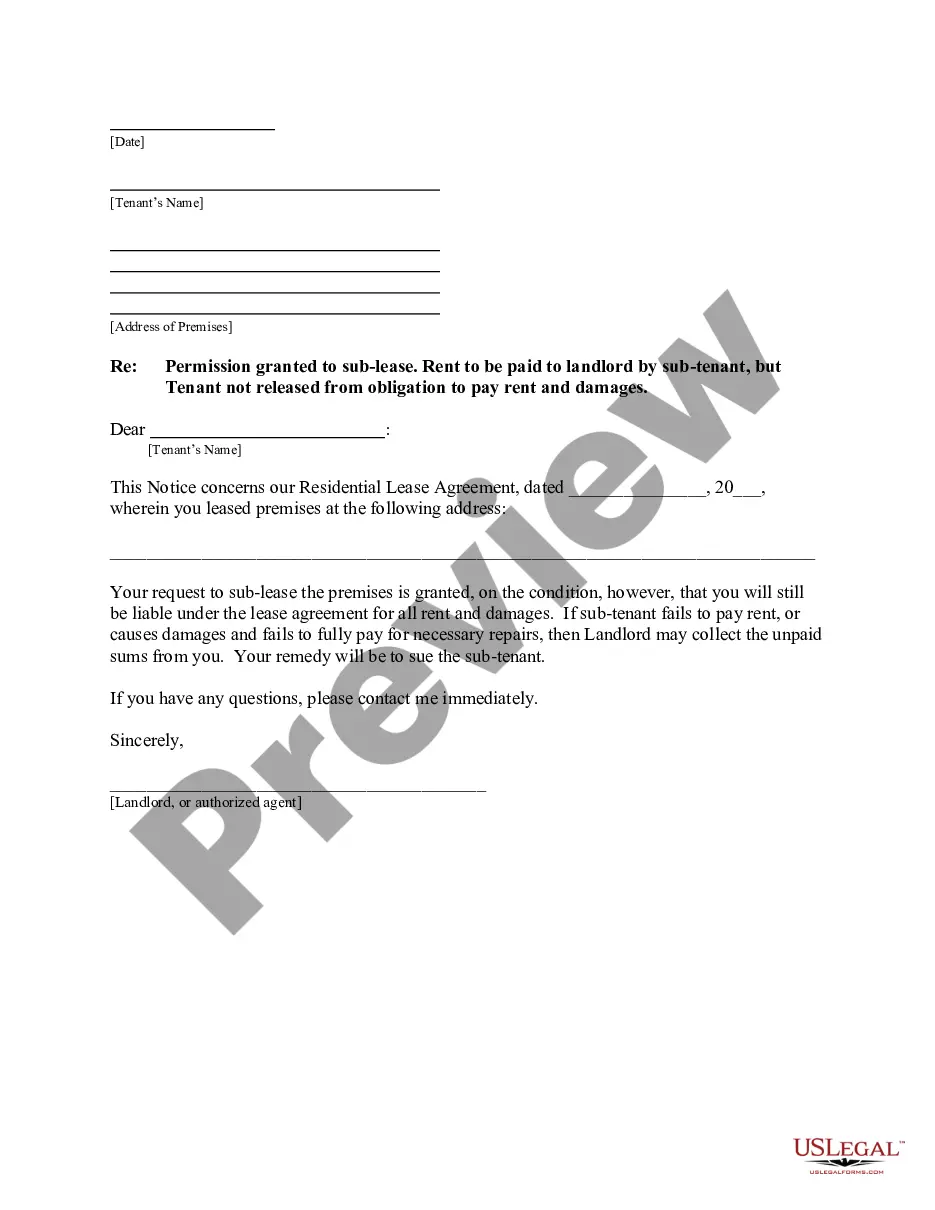
Washington Letter from Landlord to Tenant that Sublease granted - Rent Paid by Subtenant, but Tenant Still Liable for Rent and Damages
Overview of this form
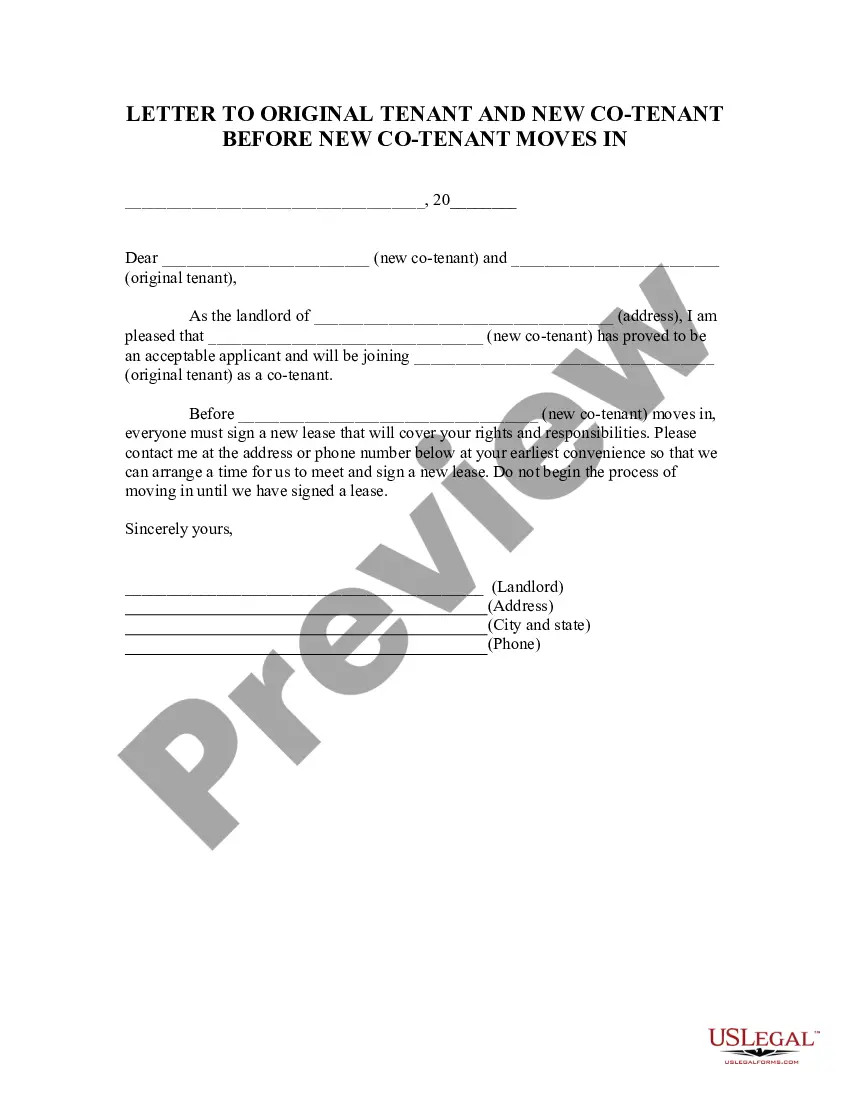
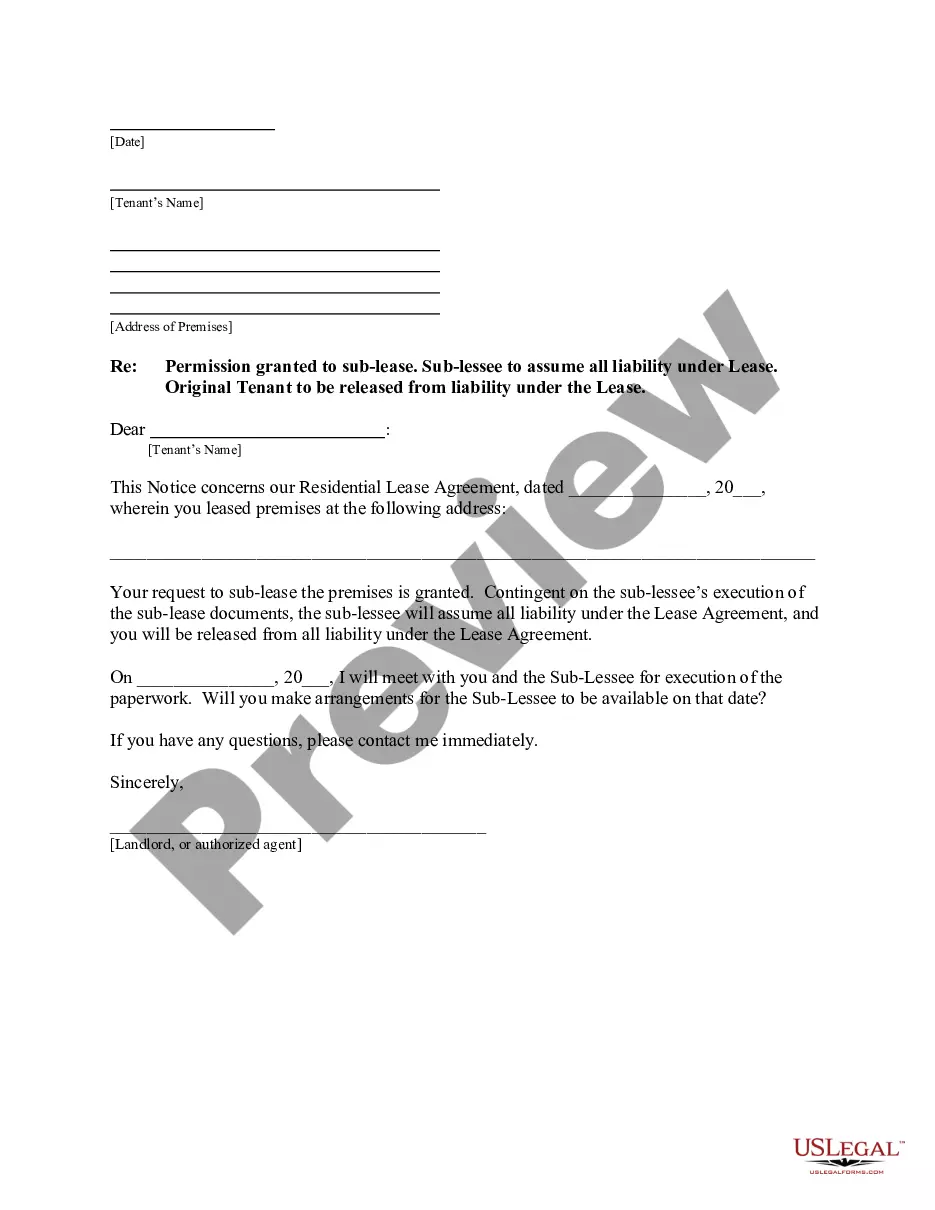
This form is a Letter from Landlord to Tenant that Sublease granted, confirming that a sublease has been approved. While the sub-tenant is responsible for paying rent, the original tenant remains liable for all payments and damages. This document ensures both parties understand their responsibilities and the potential consequences if the sub-tenant fails to meet their obligations.
Key components of this form
- Notification of sublease approval.
- Confirmation of tenantâs continued liability for rent and damages.
- Instructions for tenant to address payment failures by the sub-tenant.
- Contact information for the landlord or authorized agent.


Situations where this form applies
This letter should be used when a tenant has requested to sublease their rented property and has received approval from the landlord. It serves to clarify that while the sub-tenant is responsible for rent payments, the original tenant is still liable. This is particularly important in situations where the original tenant may need to take legal action if the sub-tenant fails to comply.
Who needs this form
This form is intended for:
- Landlords who need to document the approval of a sublease.
- Tenants who are subleasing their rented property.
- Sub-tenants who need to understand their financial obligations under the sublease.
Steps to complete this form
- Enter the date of the letter.
- Fill in the names and addresses of the landlord and tenant.
- Clearly state the approval of the sublease.
- Specify that the tenant remains liable for rent and damages.
- Include a statement for the tenant to contact the landlord with questions.
- Sign the letter as the landlord or authorized agent.
Notarization guidance
This form does not typically require notarization unless specified by local law. It is advisable to check local regulations to ensure compliance and validity.
Get your form ready online
Our built-in tools help you complete, sign, share, and store your documents in one place.
Make edits, fill in missing information, and update formatting in US Legal Forms—just like you would in MS Word.
Download a copy, print it, send it by email, or mail it via USPS—whatever works best for your next step.
Sign and collect signatures with our SignNow integration. Send to multiple recipients, set reminders, and more. Go Premium to unlock E-Sign.
If this form requires notarization, complete it online through a secure video call—no need to meet a notary in person or wait for an appointment.
We protect your documents and personal data by following strict security and privacy standards.

Make edits, fill in missing information, and update formatting in US Legal Forms—just like you would in MS Word.

Download a copy, print it, send it by email, or mail it via USPS—whatever works best for your next step.

Sign and collect signatures with our SignNow integration. Send to multiple recipients, set reminders, and more. Go Premium to unlock E-Sign.

If this form requires notarization, complete it online through a secure video call—no need to meet a notary in person or wait for an appointment.

We protect your documents and personal data by following strict security and privacy standards.
Avoid these common issues
- Failing to include the date of the letter.
- Not specifying the consequences if sub-tenant fails to pay.
- Omitting the contact information for the landlord.
- Not having the landlord or agent sign the document.
Why use this form online
- Convenient access to reliable legal templates.
- Editable forms that allow customization to suit specific needs.
- Fast and easy downloads for immediate use.
- Drafted by licensed attorneys to ensure legal compliance.
Key takeaways
- The letter confirms a sublease arrangement while maintaining the tenant's responsibilities.
- It protects the landlordâs rights regarding unpaid rent and damages.
- Using this form aids in clear communication and documentation between parties involved.
Looking for another form?
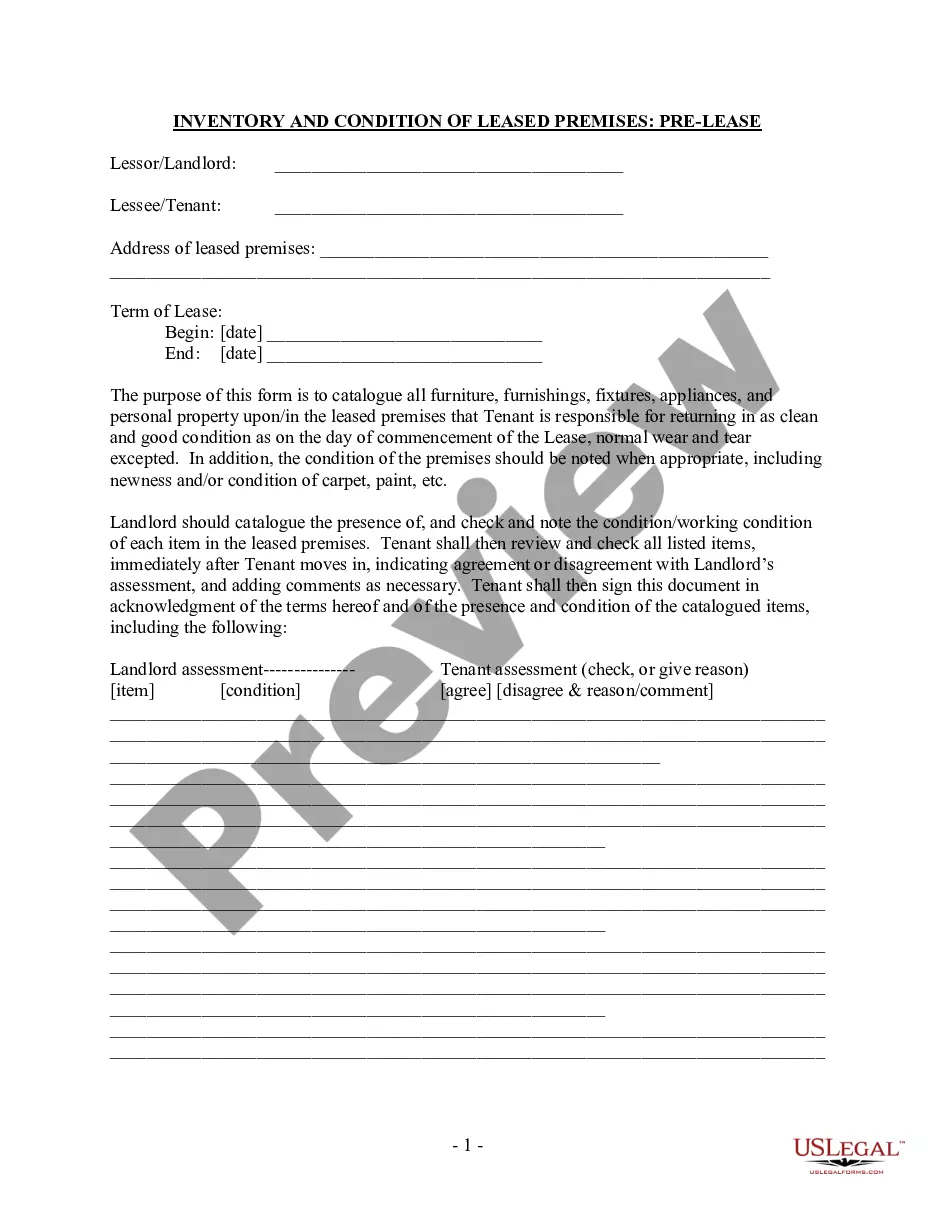

Form popularity
FAQ
A subtenant is someone who has the right to use and occupy rental property leased by a tenant from a landlord. A subtenant has responsibilities to both the landlord and the tenant.The tenant still remains responsible for the payment of rent to the landlord and any damages to the property caused by the subtenant.
If a tenant is subletting without consent, it's likely they will have broken terms in their tenancy agreement. This breach of contract means that the landlord can take action to evict them from their home. Possession proceedings can be started quickly, but it's important to follow the correct legal process.
If a court finds you guilty of the first offence of unlawful subletting, you can be fined in the magistrates' court.At the magistrates' court, you can get up to six months in prison or a fine, or both. At the Crown Court the maximum penalty is imprisonment for two years or a fine, or both.
A landlord cannot evict a subtenant.If the landlord really wants the subtenant gone, he would have to terminate your right to sublet the property. This means, he would have to evict you to get rid of the subtenant. If you want to evict a subtenant, and don't want to get your landlord involved.
A sublease is a legally binding contract made between a tenant and a new tenant (also known as a subtenant or a sublessee).Usually, the first tenant must get consent from the landlord before he/she is allowed to sublease the premises.
A subtenant is not a cotenant and does not have a direct relationship with your landlord. As their landlord, you can (and should) require them to pay rent directly to you and evict them if they fail to follow through. This differs from a cotenant, who can be evicted only by your landlord.
Subletting a rental is permitted in California if the landlord doesn't expressly prohibit it in the lease agreement.Tenants can legally sublease their unit unless the landlord specifically says they can't in the leaseand even then, depending on where they live, they may have some leeway.