Washington Statutory Warranty Deed from Husband, Wife and Individual to Two Trusts
Understanding this form
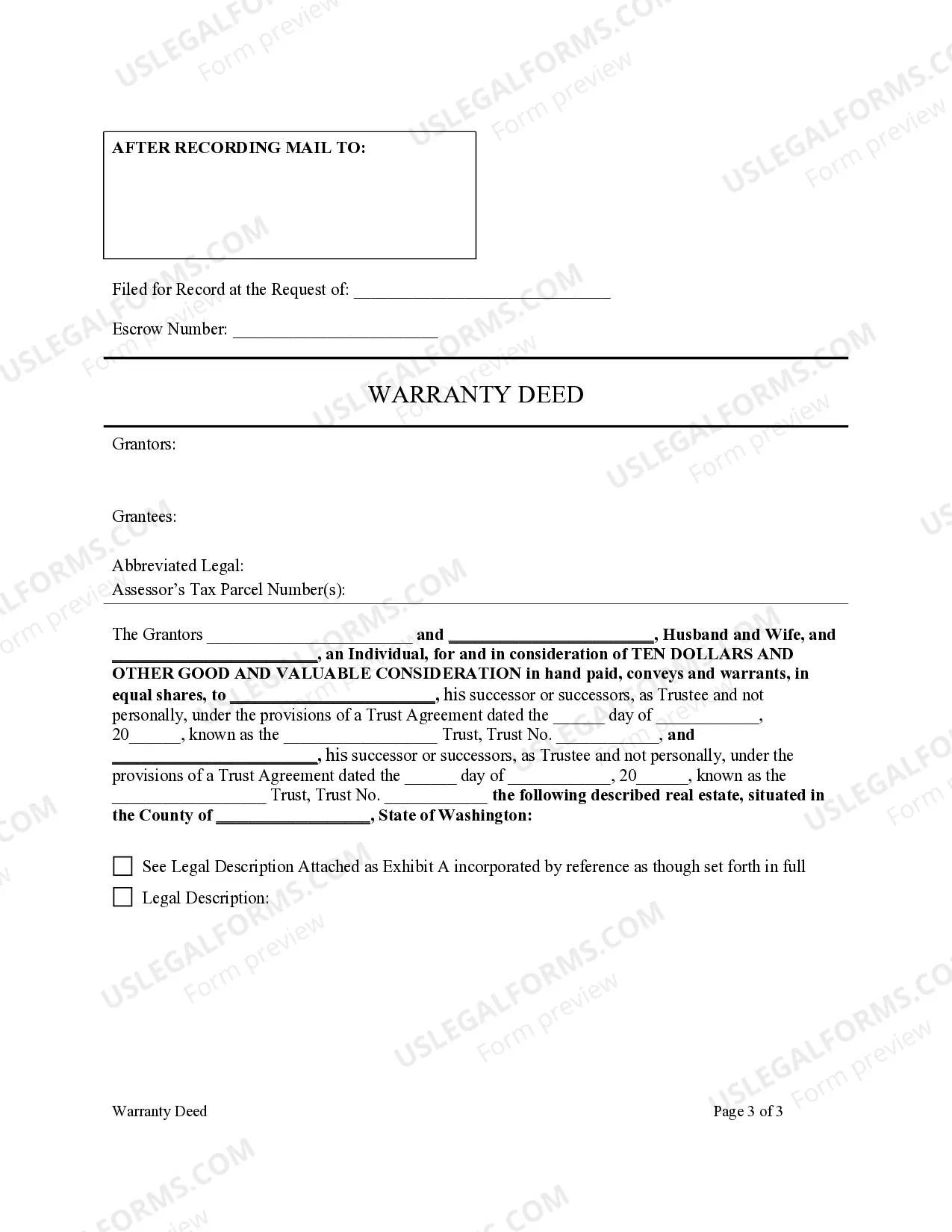
This form is a Statutory Warranty Deed designed for the transfer of property from grantors consisting of a husband, wife, and an individual to two trusts taking equal shares. The purpose of this deed is to convey and warrant the described property to the grantees, ensuring that the grantors hold clear title and can affirm their ownership. This form complies with state statutory laws and is distinct from other deeds such as quitclaim deeds, which do not offer warranties regarding the title.
Key parts of this document
- Identification of grantors and grantees.
- Detailed description of the property being transferred.
- Warranties provided by the grantors regarding the title of the property.
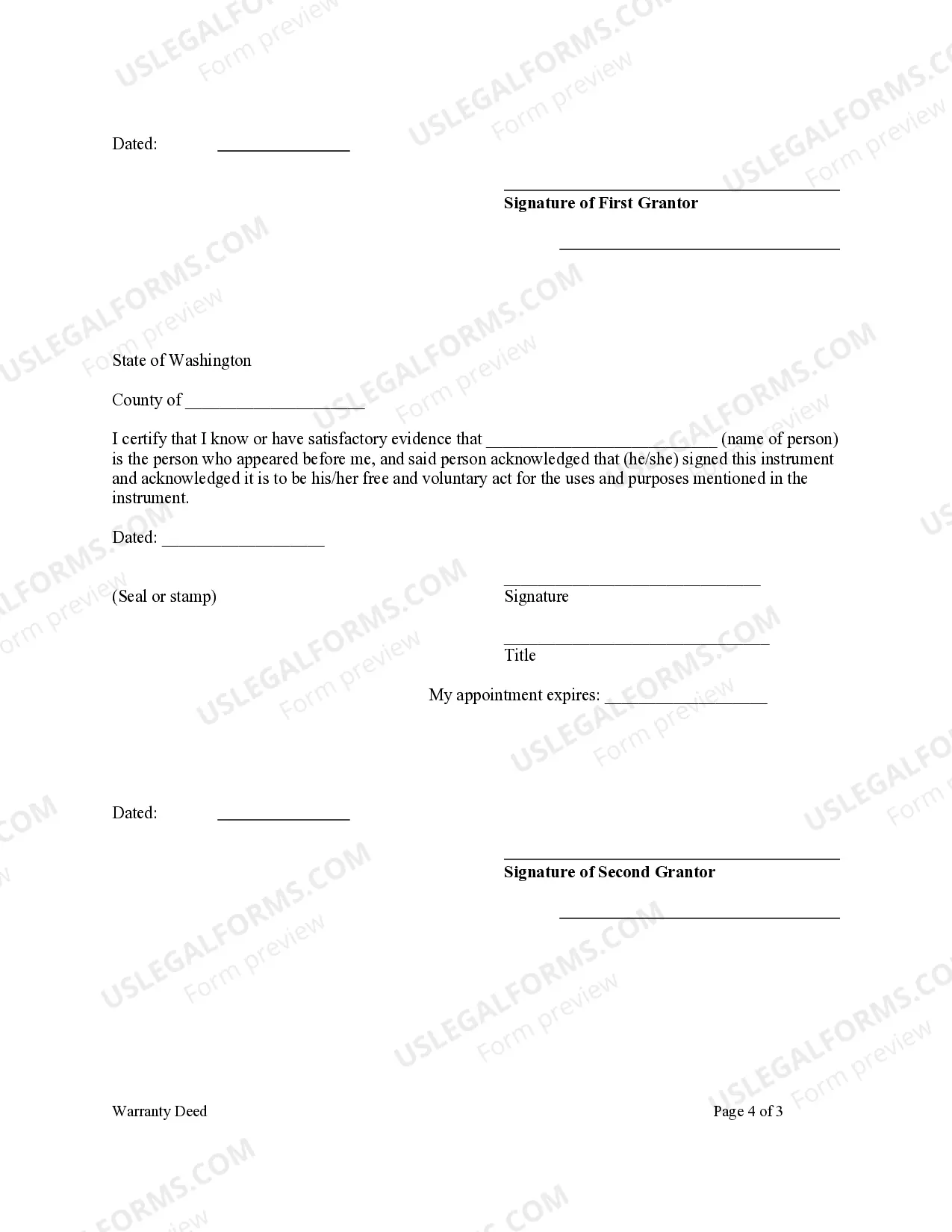
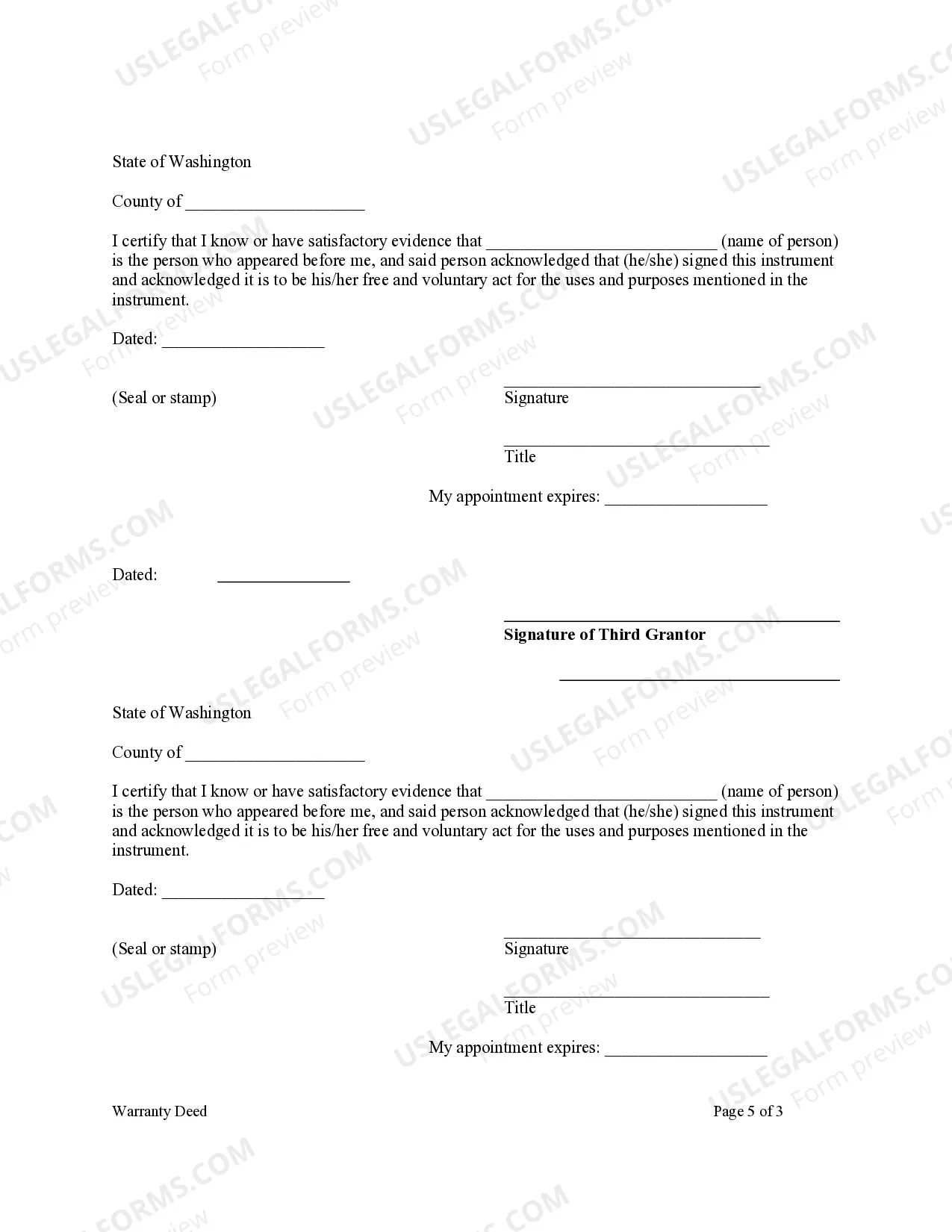
- Signature lines for all grantors and a notary block.
- Specific date of execution of the deed.





Situations where this form applies
This Statutory Warranty Deed should be used when a married couple and an individual wish to jointly transfer property to two separate trusts. It is commonly utilized in estate planning and asset protection strategies, ensuring that the property is transferred securely and without claims against the title. Additionally, it is appropriate when clear and enforceable ownership rights need to be established for trust beneficiaries.
Who this form is for
- Married couples looking to transfer property to trusts.
- Individuals who wish to ensure their property is conveyed with a warranty of clear title.
- Trustees managing the affairs of the trusts receiving the property.
Steps to complete this form
- Identify and list all parties involved as grantors and grantees.
- Provide a clear description of the property, including its address and legal description.
- Fill out the date of execution in the specified field.
- Ensure all grantors sign in the designated areas provided.
- Arrange for notarization, if required for your jurisdiction.
Notarization requirements for this form
This document requires notarization to meet legal standards. US Legal Forms provides secure online notarization powered by Notarize, allowing you to complete the process through a verified video call, available 24/7.
Get your form ready online
Our built-in tools help you complete, sign, share, and store your documents in one place.
Make edits, fill in missing information, and update formatting in US Legal Forms—just like you would in MS Word.
Download a copy, print it, send it by email, or mail it via USPS—whatever works best for your next step.
Sign and collect signatures with our SignNow integration. Send to multiple recipients, set reminders, and more. Go Premium to unlock E-Sign.
If this form requires notarization, complete it online through a secure video call—no need to meet a notary in person or wait for an appointment.
We protect your documents and personal data by following strict security and privacy standards.

Make edits, fill in missing information, and update formatting in US Legal Forms—just like you would in MS Word.

Download a copy, print it, send it by email, or mail it via USPS—whatever works best for your next step.

Sign and collect signatures with our SignNow integration. Send to multiple recipients, set reminders, and more. Go Premium to unlock E-Sign.

If this form requires notarization, complete it online through a secure video call—no need to meet a notary in person or wait for an appointment.

We protect your documents and personal data by following strict security and privacy standards.
Mistakes to watch out for
- Failing to include a complete property description.
- Not obtaining signatures from all required grantors.
- Omitting the date of execution, which can impact the legality of the deed.
- Neglecting to notarize the form if required by state law.
Why use this form online
- Convenient access to legal documents that are easy to download and complete.
- Editable fields allow for quick adjustments according to specific circumstances.
- Guidance provided ensures that users comply with legal standards.
Looking for another form?
Form popularity
FAQ
California Property TaxesTransferring real property to yourself as trustee of your own revocable living trust -- or back to yourself -- does not trigger a reassessment for property tax purposes. (Cal. Rev. & Tax Code § 62(d).)
In the context of a California mortgage transaction, a trust deed also transfer ownership. Only this time, the title is being placed in the hands of a third-party trustee, who holds the property on behalf of the lender and the homeowner-borrower until the mortgage is paid.
Contact all owners of the property. All vested owners currently on the title must sign a quitclaim deed. In order to share ownership with another person, you must get all other vested owners to consent and sign. Hire a Washington notary public.
When you're ready to transfer trust real estate to the beneficiary who is named in the trust document to receive it, you'll need to prepare, sign, and record a deed. That's the document that transfers title to the property from you, the trustee, to the new owner.
When you're ready to transfer trust real estate to the beneficiary who is named in the trust document to receive it, you'll need to prepare, sign, and record a deed. That's the document that transfers title to the property from you, the trustee, to the new owner.
Locate the deed that's in trust. Use the proper deed. Check with your title insurance company and lender. Prepare a new deed. Sign in the presence of a notary. Record the deed in the county clerk's office.
If you've recently married and already own a home or other real estate, you may want to add your new spouse to the deed for your property so the two of you own it jointly. To add a spouse to a deed, all you have to do is literally fill out, sign and record a new deed in your county recorder's office.
Transferring property out of a trust can be simple or nearly impossible, depending on which kind of trust you formed. Typically, you act as the trustee if you form a revocable trust. You retain control of the property you place into it. You can sell it or move it back out of the trust as you see fit.
A quitclaim deed can be used to transfer property from a trust, but a Special Warranty Deed seems to be a more common way to do this.