Vermont Legal Documents for the Guardian of a Minor Package
What this form package covers
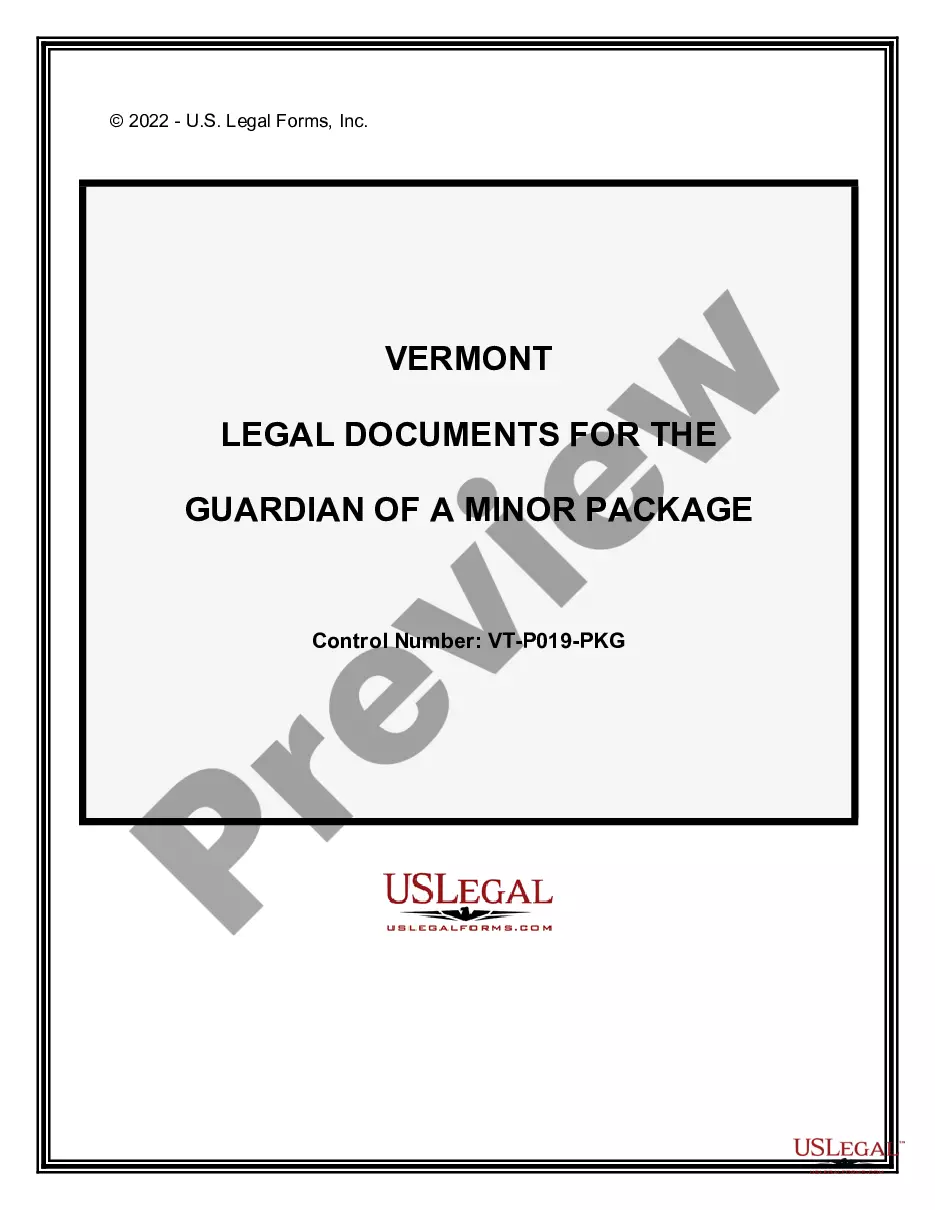
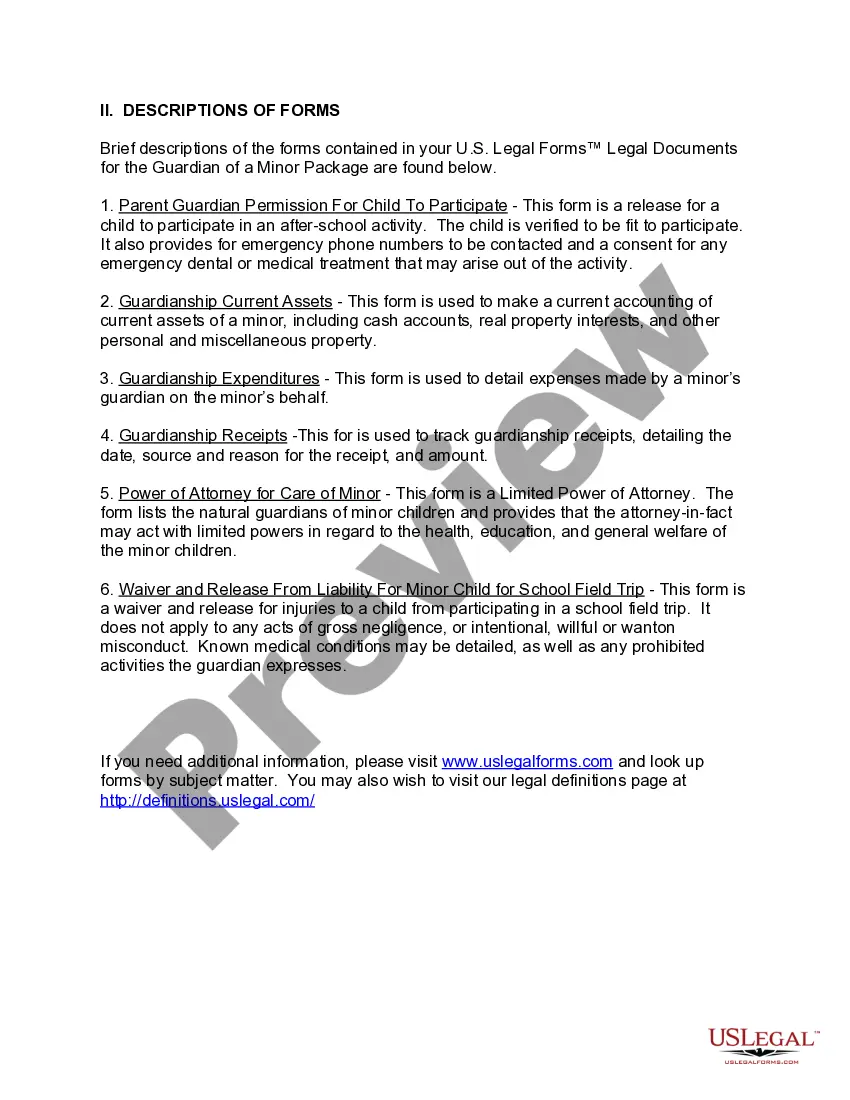
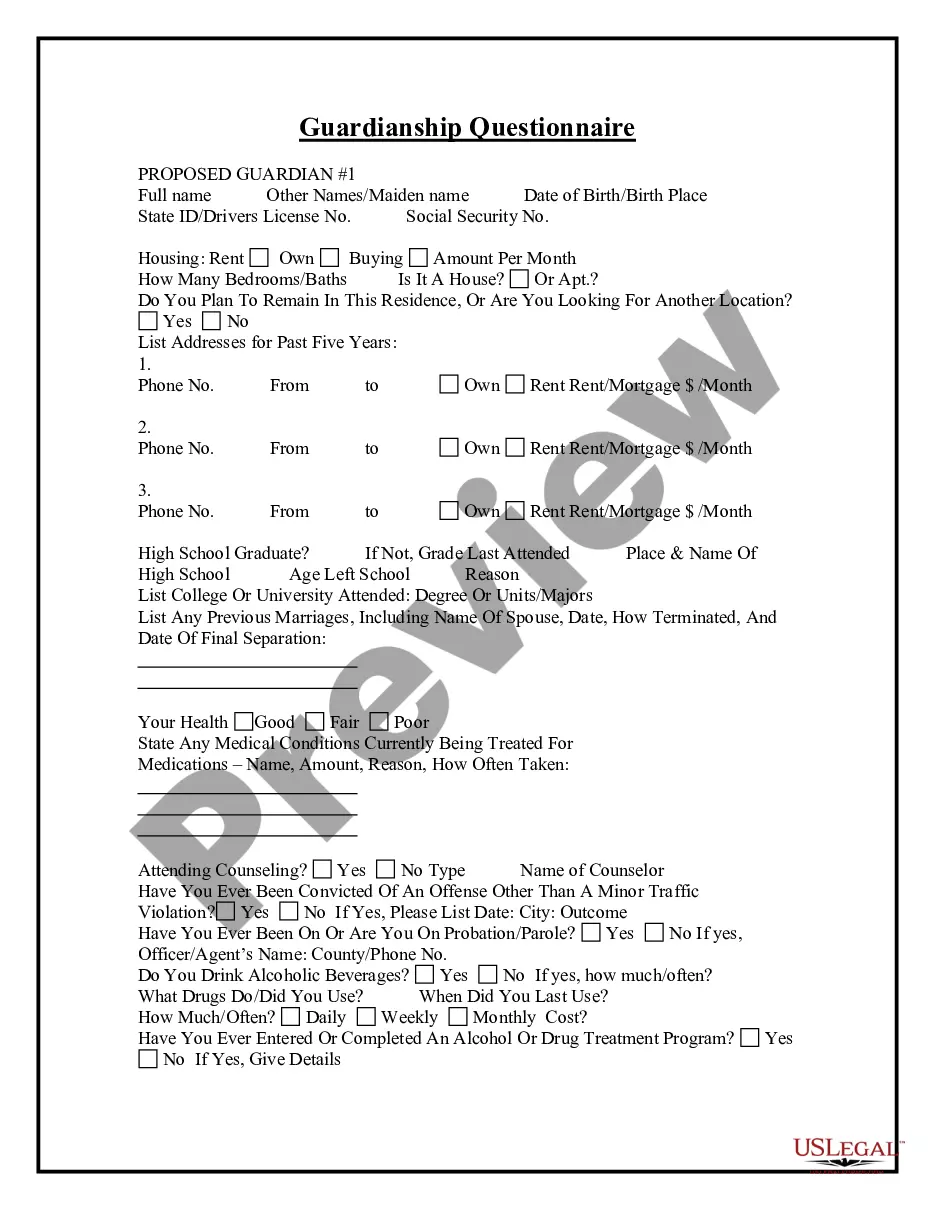
The Vermont Legal Documents for the Guardian of a Minor Package provides essential forms for individuals entrusted with guardianship duties. This comprehensive package is designed to help guardians manage the legal needs related to the care and welfare of a minor child. Unlike other legal form packages, this one contains specific documents tailored to the intricate responsibilities of a guardian, making it an invaluable resource in ensuring compliance with Vermont laws.
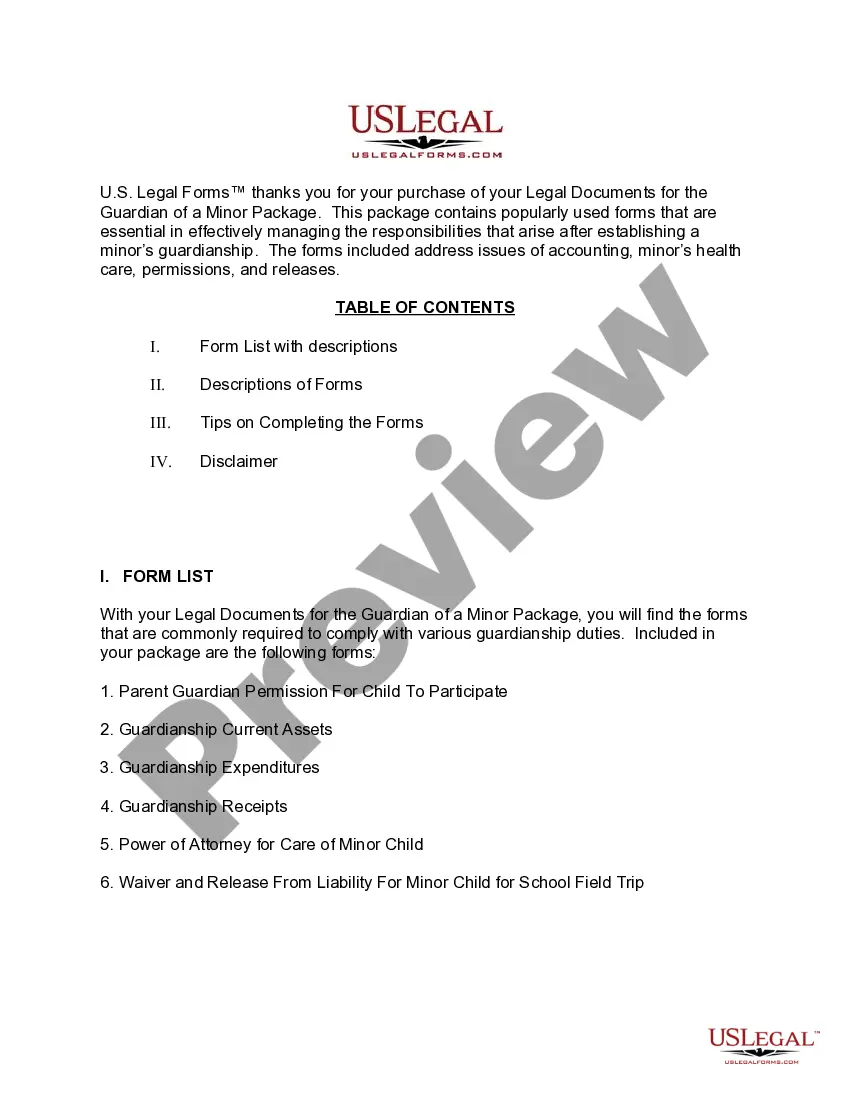
Forms included in this package
- Guardianship Current Assets
- Power of Attorney for Care of Minor Child or Children
- Vermont Legal Documents for the Guardian of a Minor Package
- Guardianship Expenditures
- Waiver and Release From Liability For Minor Child for School Field Trip
- Parent Guardian Permission For Child To Participate
- Guardianship Receipts


Common use cases
This package is useful in various scenarios, including:
- When a parent is unable to care for their child and a guardian is appointed.
- When a guardian needs formal permission for a child to participate in activities.
- When managing financial matters, such as current assets or expenditures on behalf of the minor.
- When preparing for school field trips that require liability waivers and permissions.
Intended users of this form package
- Individuals appointed as guardians for minors.
- Parents in need of temporary guardianship arrangement forms.
- Guardians managing the health and welfare of a child.
- Anyone responsible for the financial dealings of a minor.
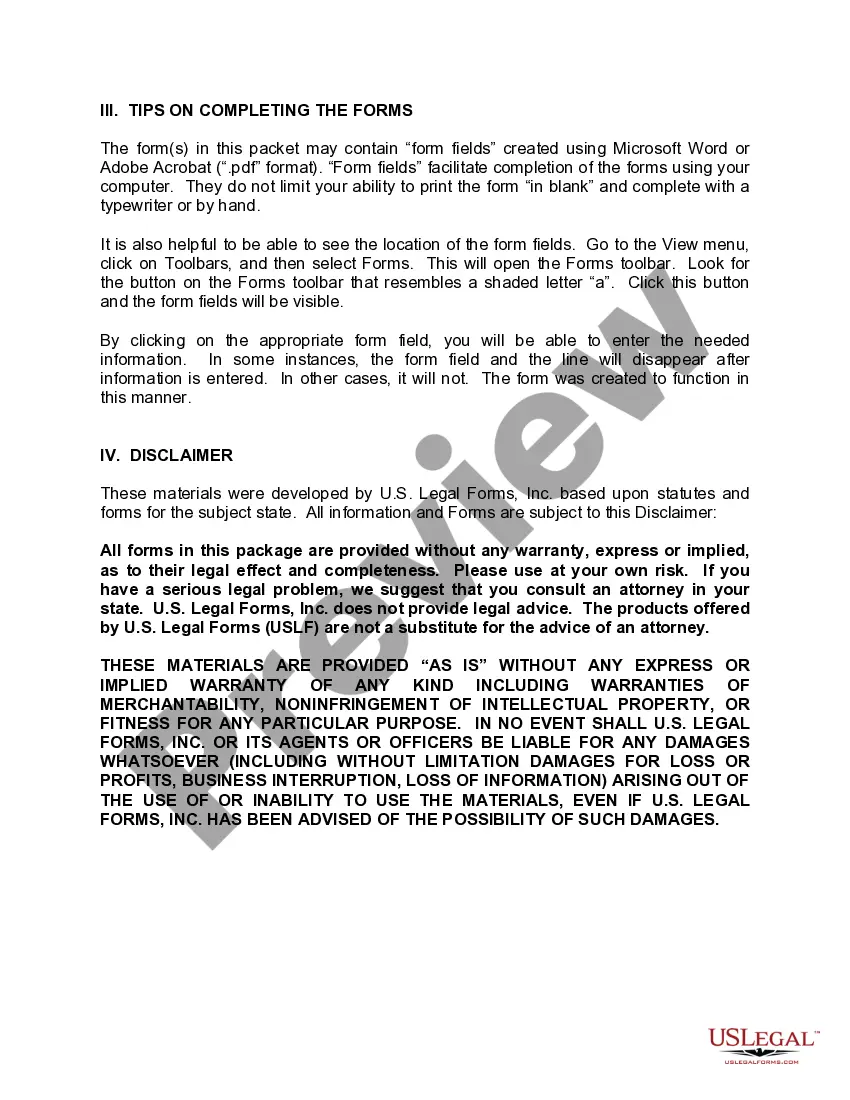
How to complete these forms
- Review the included forms carefully to understand their purpose.
- Identify the necessary information, such as the names of the guardian and minor.
- Enter the appropriate details in each form field, using a computer for easy completion.
- Sign and date the forms where required, ensuring all signatures are valid.
- Store completed forms securely and provide copies to relevant parties, if needed.
Notarization requirements for forms in this package
Forms in this package typically do not require notarization unless required by local law. However, it's always wise to verify specific needs based on individual circumstances.
Get your form ready online
Our built-in tools help you complete, sign, share, and store your documents in one place.
Make edits, fill in missing information, and update formatting in US Legal Forms—just like you would in MS Word.
Download a copy, print it, send it by email, or mail it via USPS—whatever works best for your next step.
Sign and collect signatures with our SignNow integration. Send to multiple recipients, set reminders, and more. Go Premium to unlock E-Sign.
If this form requires notarization, complete it online through a secure video call—no need to meet a notary in person or wait for an appointment.
We protect your documents and personal data by following strict security and privacy standards.

Make edits, fill in missing information, and update formatting in US Legal Forms—just like you would in MS Word.

Download a copy, print it, send it by email, or mail it via USPS—whatever works best for your next step.

Sign and collect signatures with our SignNow integration. Send to multiple recipients, set reminders, and more. Go Premium to unlock E-Sign.

If this form requires notarization, complete it online through a secure video call—no need to meet a notary in person or wait for an appointment.

We protect your documents and personal data by following strict security and privacy standards.
Avoid these common issues
- Failing to sign or date forms, which can render them invalid.
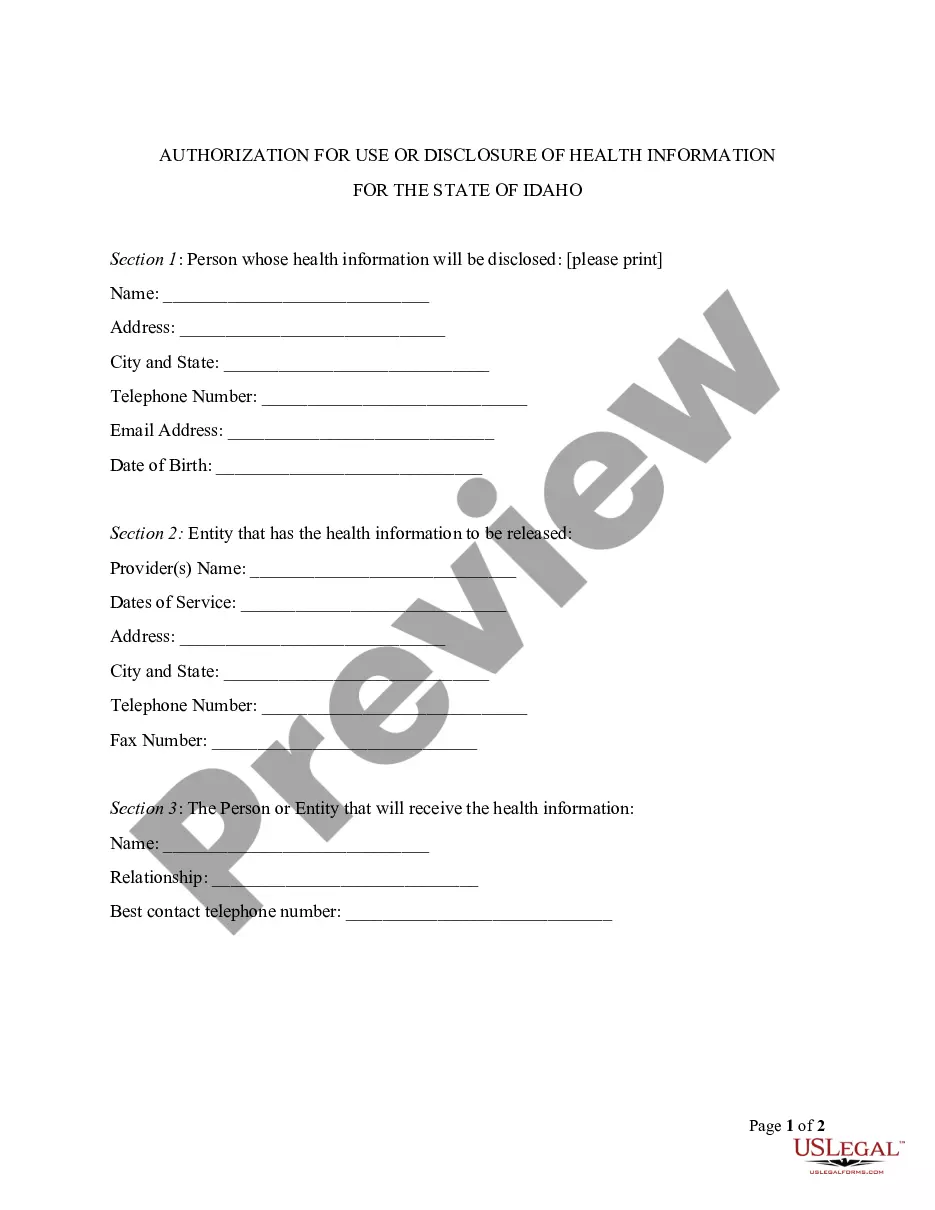
- Omitting necessary information, such as the minor's medical conditions on waivers.
- Using outdated forms that do not comply with current Vermont laws.
- Not keeping accurate records of guardianship receipts and expenditures.
Benefits of using this package online
- Convenient access to all necessary forms in one package.
- Easily editable documents that can be completed digitally.
- Reliable, attorney-drafted forms designed for clarity and compliance.
Legal use & context
- This package helps ensure that guardians fulfill their legal obligations.
- Understanding the limitations and conditions tied to guardianship is crucial.
- Filing the appropriate forms can protect the minor's well-being and financial assets.
Quick recap
- The Vermont Legal Documents for the Guardian of a Minor Package includes essential forms tailored for guardianship duties.
- This package is crucial for ensuring compliance with relevant state laws.
- Proper completion and management of these forms can significantly impact the welfare of a minor child.
Looking for another form?


Form popularity
FAQ
A legal guardian is a person who has been appointed by a court or otherwise has the legal authority (and the corresponding duty) to care for the personal and property interests of another person, called a ward.A parent of a child is normally not considered a guardian, though the responsibilities may be similar.
The legal guardianship document is a formal declaration to the court system that another party is responsible for the well-being of the minors. No one can predict when an accident or other disaster may occur. Some include a legal guardianship document in their wills to determine who will raise their children.
These types of decisions may include giving consent to medical care or treatment; purchasing or arranging for purchase of such necessities as food, clothes, cars, household items, and other personal items; arranging for education; and managing finances and bank accounts, making investments, hiring professionals, etc.
A legal guardian is a person who has been appointed by a court or otherwise has the legal authority (and the corresponding duty) to care for the personal and property interests of another person, called a ward.A parent of a child is normally not considered a guardian, though the responsibilities may be similar.
The names of the forms are usually: Petition for Appointment of Guardian (or Petition for Appointment of Guardian of Minor) Petition for Conservatorship (when dealing with an incompetent adult) Order Appointing Guardian.
You can establish guardianship of a child by filing papers in court. Initially, file a petition stating your interest in obtaining guardianship along with a filing fee. You'll also want to file a letter of consent from the child's parents.
Fill out the forms. Adult's Statement - Guardianship of Child (0.01 MB) Claim - Family Law Act (0.1 MB) File your order. Do this at the same court, in the same location, where you've either: already been to court with the other party. started any court action that hasn't gone to court.
A Guardian usually signs legal documents on behalf of the Ward, chooses an appropriate living situation for the Ward, and grants, withholds, and withdraws consent to medical treatment. In most situations, it is necessary to disclose the Guardian/Ward relationship.
A guardian is also prohibited from making gifts from the ward's estate. Generally, a guardian cannot tie up the ward's money by purchasing real estate, but can lend the money to someone else buying real estate if the property is sufficient security for the loan.