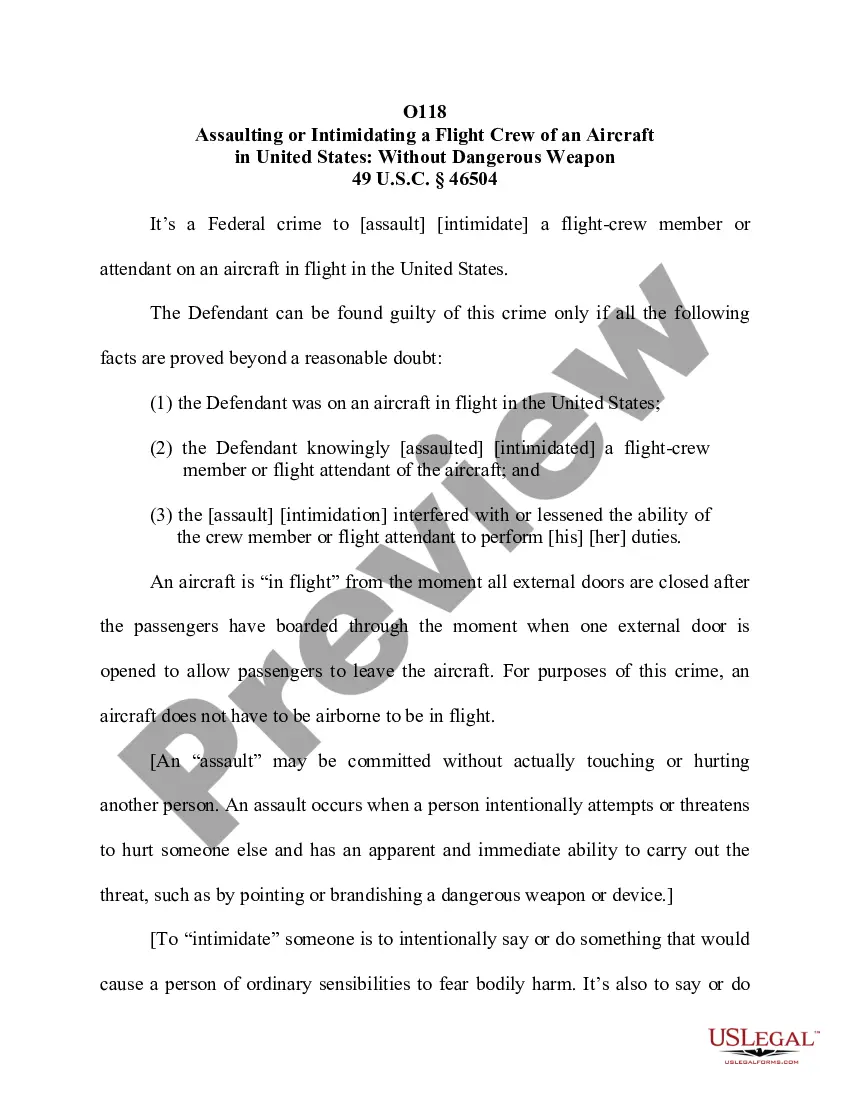
Vermont Owner's or Seller's Affidavit of No Liens
Overview of this form
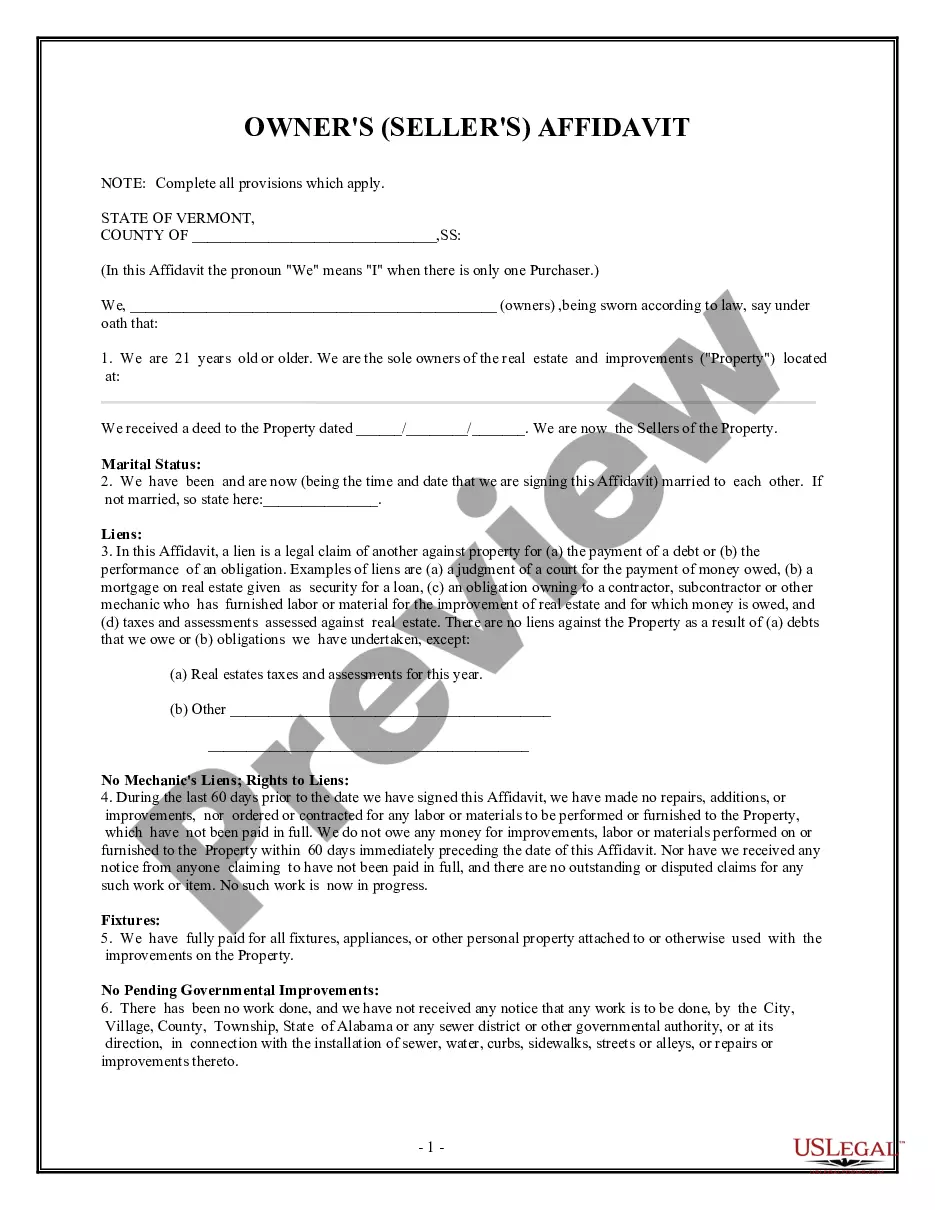
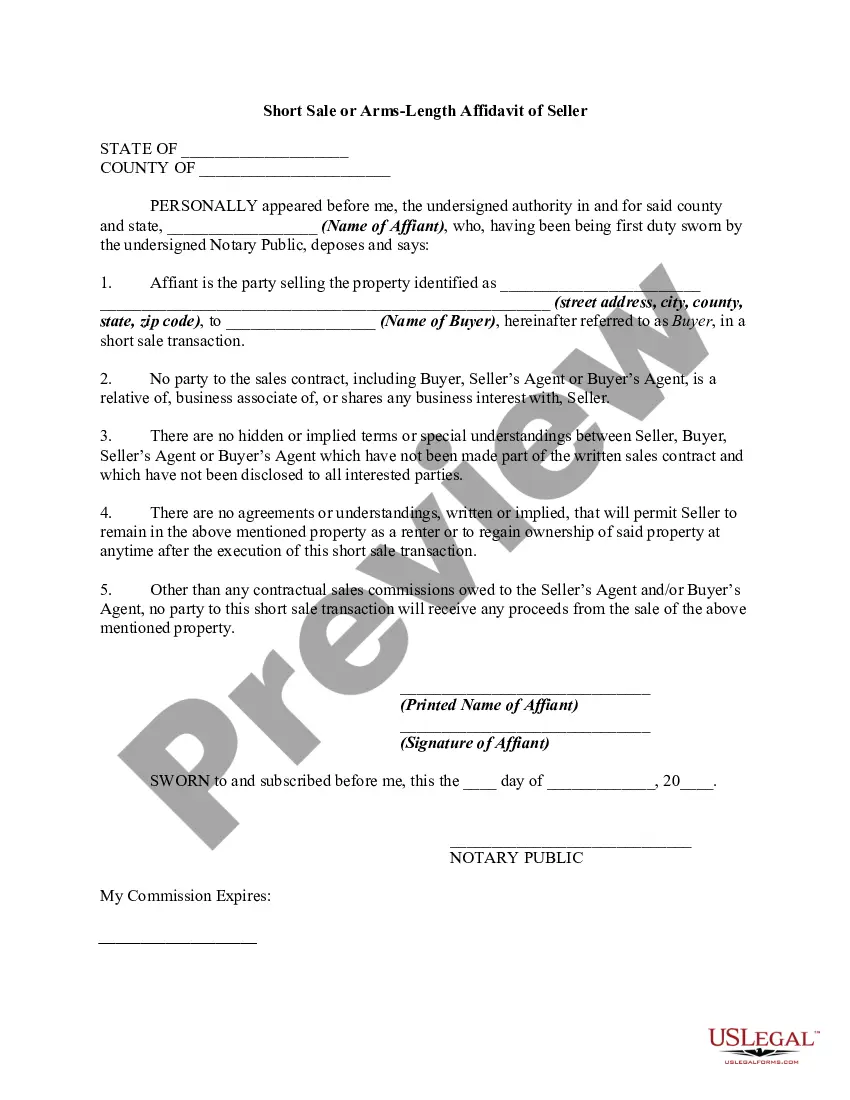
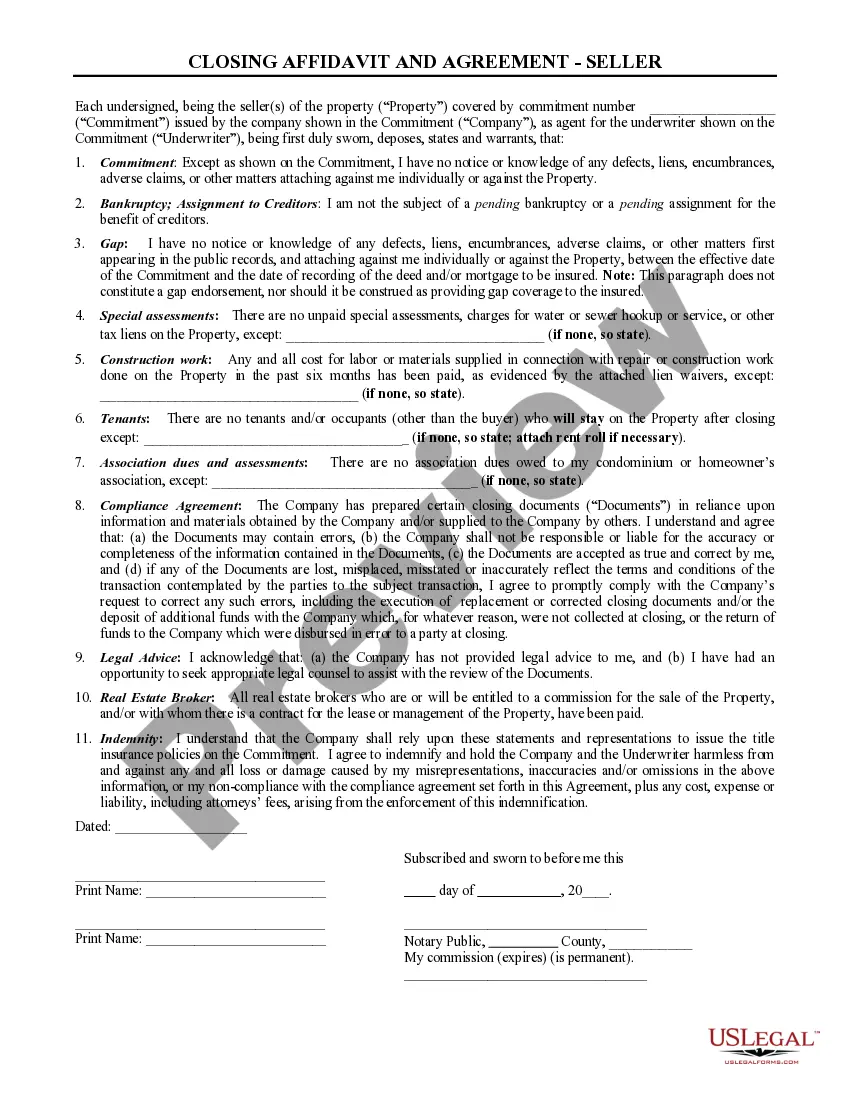
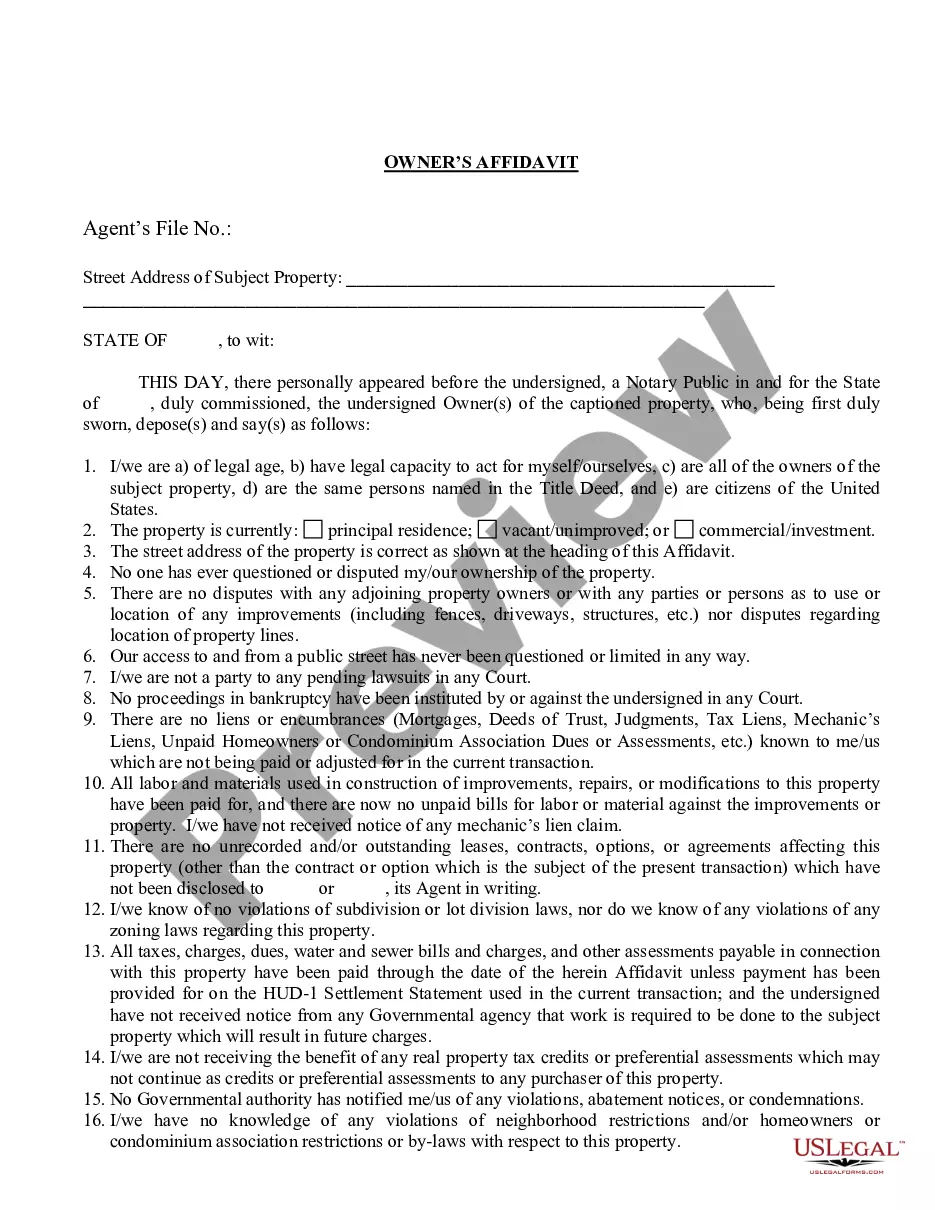
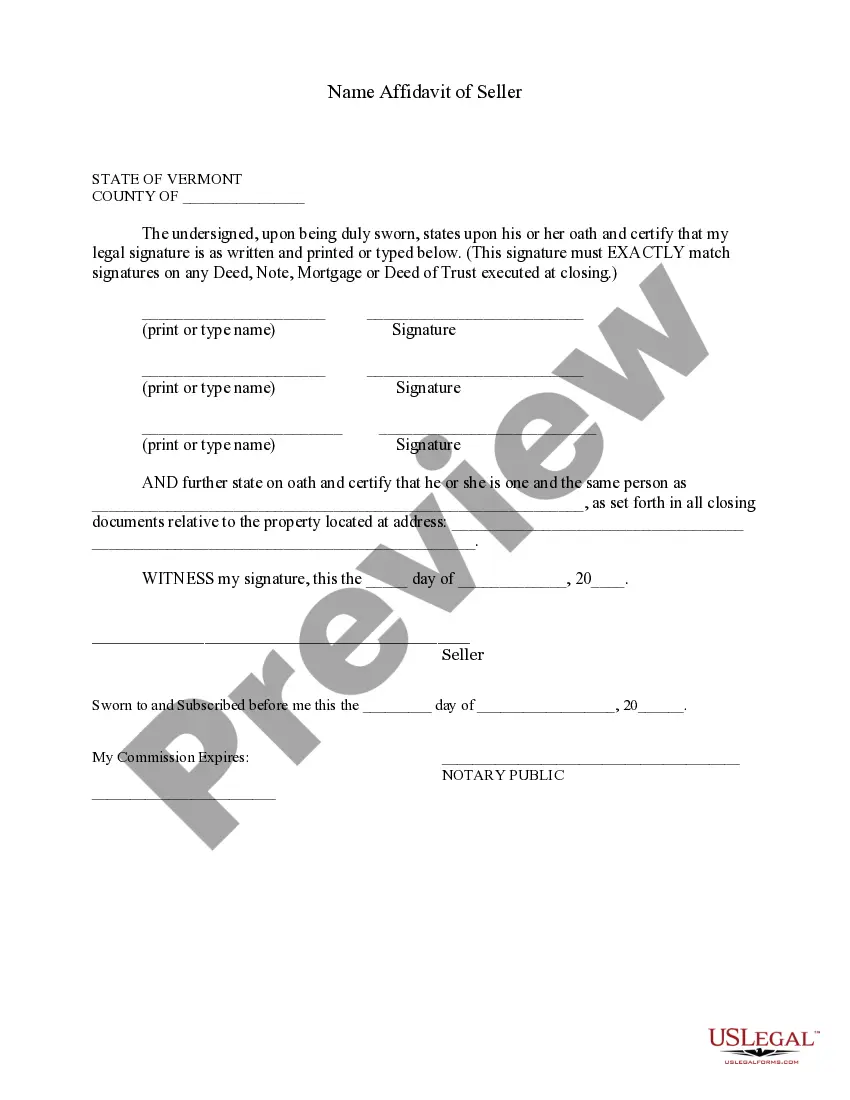
The Owner's or Seller's Affidavit of No Liens is a legal document used by sellers during the closing process of a property sale. This affidavit certifies that there are no existing liens against the property, affirming the seller's ownership and confirming that all financial obligations related to improvements and repairs have been settled. This form is crucial for ensuring a smooth transaction and differs from other legal forms by specifically addressing lien status, thereby protecting the buyer from unexpected claims against the property.
Key parts of this document
- Affirmation of ownership and age.
- Disclosure of marital status when applicable.
- Statement regarding any existing liens on the property.
- Confirmation of no pending repairs or improvements within the last 60 days.
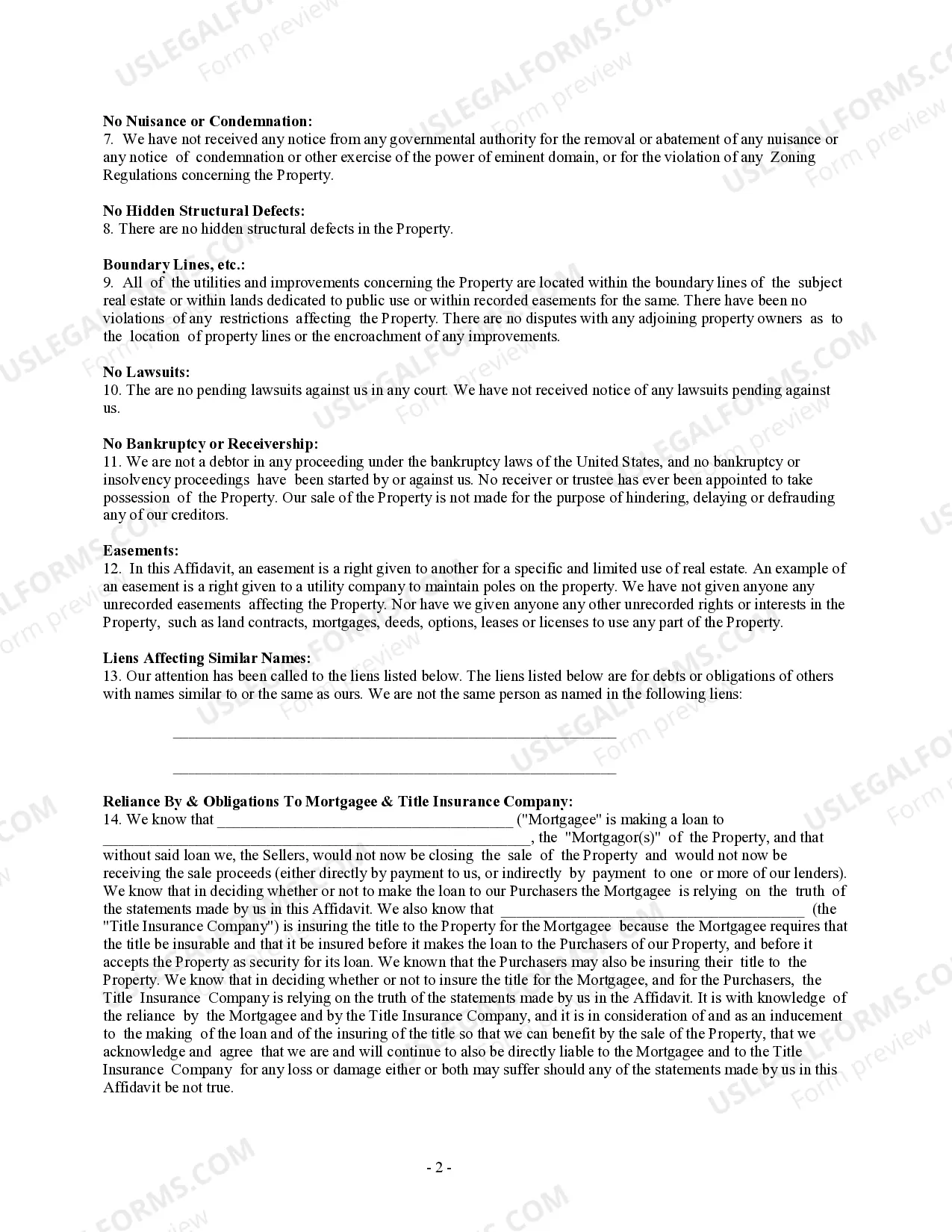
- Declaration of no structural defects and absence of governmental liens or notices.
- Details about any easements or other unrecorded interests in the property.

Situations where this form applies
This form should be used when selling real estate to ensure that the buyer receives clear title to the property. It is necessary to complete this affidavit at the closing of the sale to confirm that there are no liens or claims against the property that could affect ownership. It's particularly important in any sale involving financing, as lenders typically require this document to assess the viability of the transaction.
Intended users of this form
- Property sellers who are completing a real estate sale.
- Individuals needing to verify their ownership and lien status on a property.
- Married couples selling jointly owned property.
Instructions for completing this form
- Identify the parties involved: List the seller's names and property address.
- Specify ownership details: Confirm that you are the sole owner of the property and your age.
- Declare marital status: Note whether you are married or provide any relevant information if not.
- Disclose any liens: Decline claims of existing liens unless applicable, and specify obligations or exceptions like real estate taxes.
- Ensure no recent repairs or improvements: Certify that no payments for repairs are outstanding and that no structural defects exist.
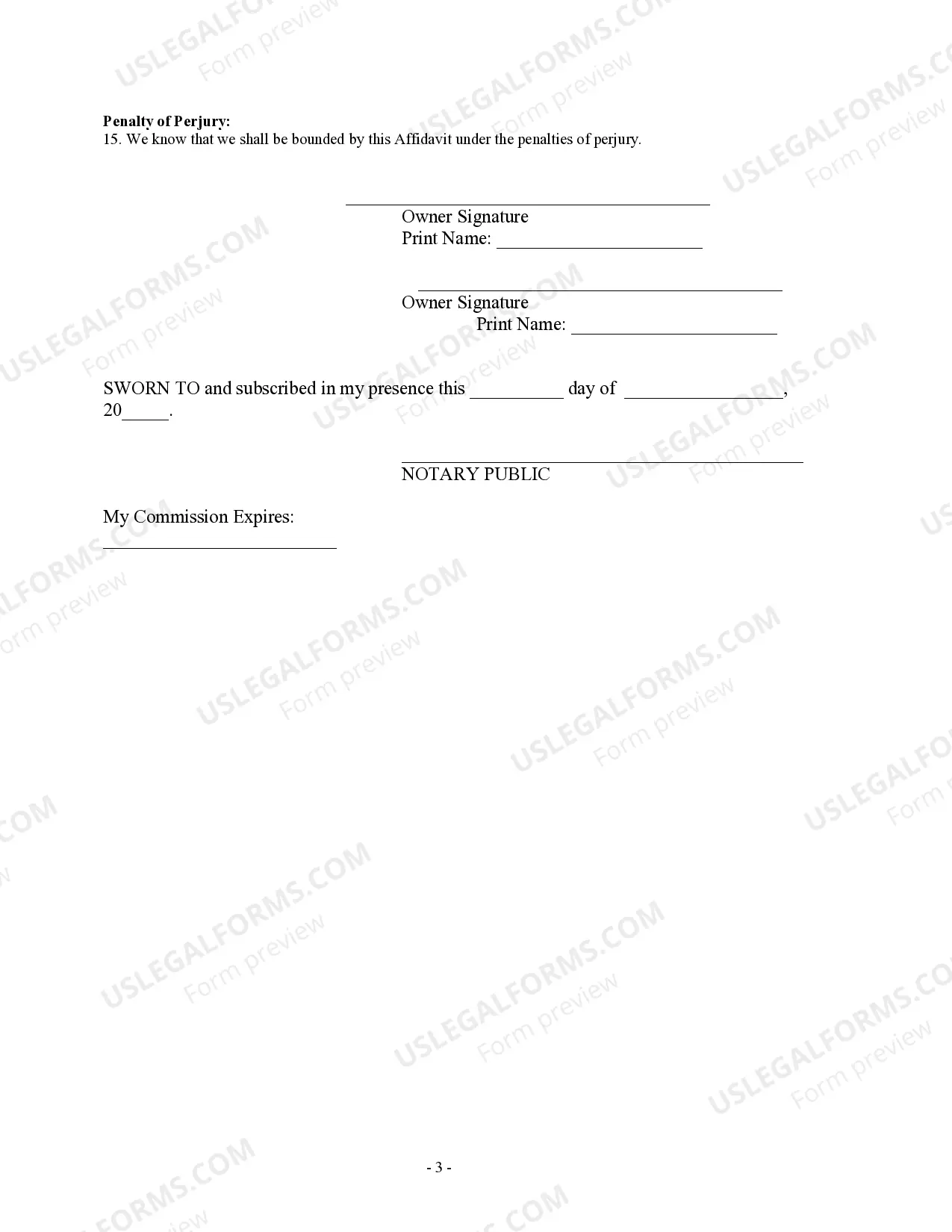
- Sign the affidavit in the presence of a notary public.
Does this document require notarization?
Notarization is required for this form to take effect. Our online notarization service, powered by Notarize, lets you verify and sign documents remotely through an encrypted video session, available 24/7.
Get your form ready online
Our built-in tools help you complete, sign, share, and store your documents in one place.
Make edits, fill in missing information, and update formatting in US Legal Forms—just like you would in MS Word.
Download a copy, print it, send it by email, or mail it via USPS—whatever works best for your next step.
Sign and collect signatures with our SignNow integration. Send to multiple recipients, set reminders, and more. Go Premium to unlock E-Sign.
If this form requires notarization, complete it online through a secure video call—no need to meet a notary in person or wait for an appointment.
We protect your documents and personal data by following strict security and privacy standards.
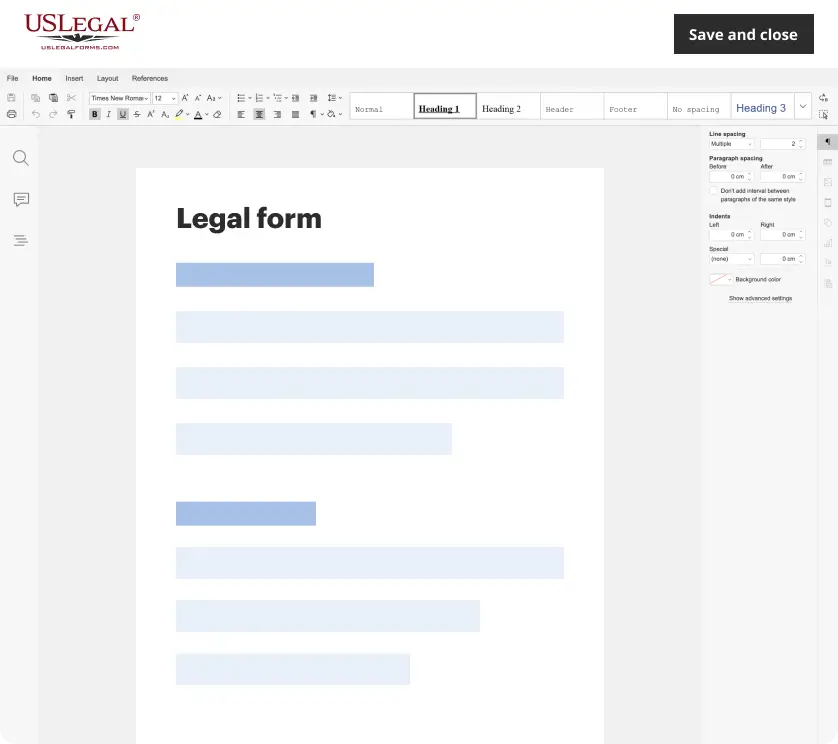
Make edits, fill in missing information, and update formatting in US Legal Forms—just like you would in MS Word.
Download a copy, print it, send it by email, or mail it via USPS—whatever works best for your next step.
Sign and collect signatures with our SignNow integration. Send to multiple recipients, set reminders, and more. Go Premium to unlock E-Sign.

If this form requires notarization, complete it online through a secure video call—no need to meet a notary in person or wait for an appointment.
We protect your documents and personal data by following strict security and privacy standards.
Common mistakes to avoid
- Failing to disclose outstanding liens or obligations.
- Not having the affidavit notarized when required.
- Overlooking the need to specify marital status accurately.
- Neglecting to check for recent work done on the property.
Advantages of online completion
- Easy access to downloadable templates drafted by licensed attorneys.
- Time-saving: complete and print forms from the comfort of your home.
- Editable digital formats allow for quick adjustments as needed.
Quick recap
- This affidavit certifies that no liens exist on the property being sold.
- It must be signed by the seller(s) and notarized for legal validity.
- The form helps ensure a smooth transaction and protects the interests of all parties involved.
Looking for another form?
Form popularity
FAQ
Therefore, liens are not officially recorded, and personal property could be sold off to a third party who is unaware of the lien's existence. In most states, judgment liens must be filed by the creditor through the county or state.
A lien does not convey ownership, with one exception A lienor generally has an equitable interest in the property, but not legal ownership.
The title search performed in the prelim title discovers whether or not there are any liens against the title, which would typically be placed by a lender on the property. They also may have you sign a document stating that there are no liens that are not recorded. If there are not, just sign it. Bingo.
Creating a voluntary lien on real estate usually means granting a mortgage to a lender.In either instance, you'll need a mortgage document prepared, and the mortgage will need to be recorded with the county.
In most states, you can typically search by address with the county recorder, clerk, or assessor's office online. The search for liens is free, though you may have to pay a small fee for a copy of the report, which will vary by county.
Preliminary Title Report- California case law is clear that a preliminary title report cannot be relied upon as a true and reliable condition of title to real property.No duties or liabilities arise with a preliminary title report. Therefore, there is no liability to a title company if any recorded document is missed.
Does title insurance protect against unrecorded property liens? A homeowner's title insurance policy doesn't usually cover any unrecorded debt. A Municipal Lien Search will find any unrecorded debt or issues that a traditional title search could miss.
For instance, in California, most mechanic's liens will expire after 90 days from the date it was recorded, but in Florida, the lien will be in effect for a year.