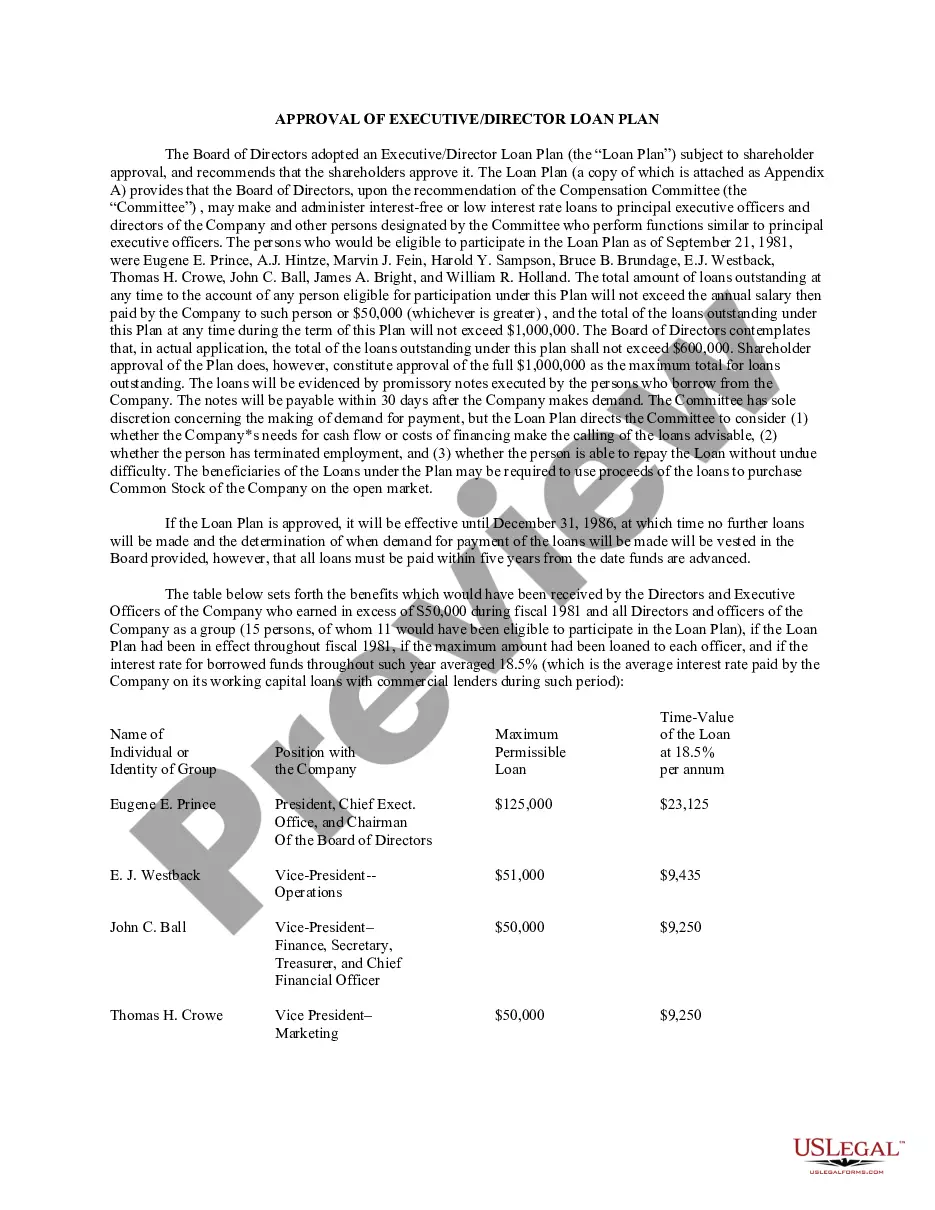
Vermont Contract for Deed Seller's Annual Accounting Statement
Overview of this form
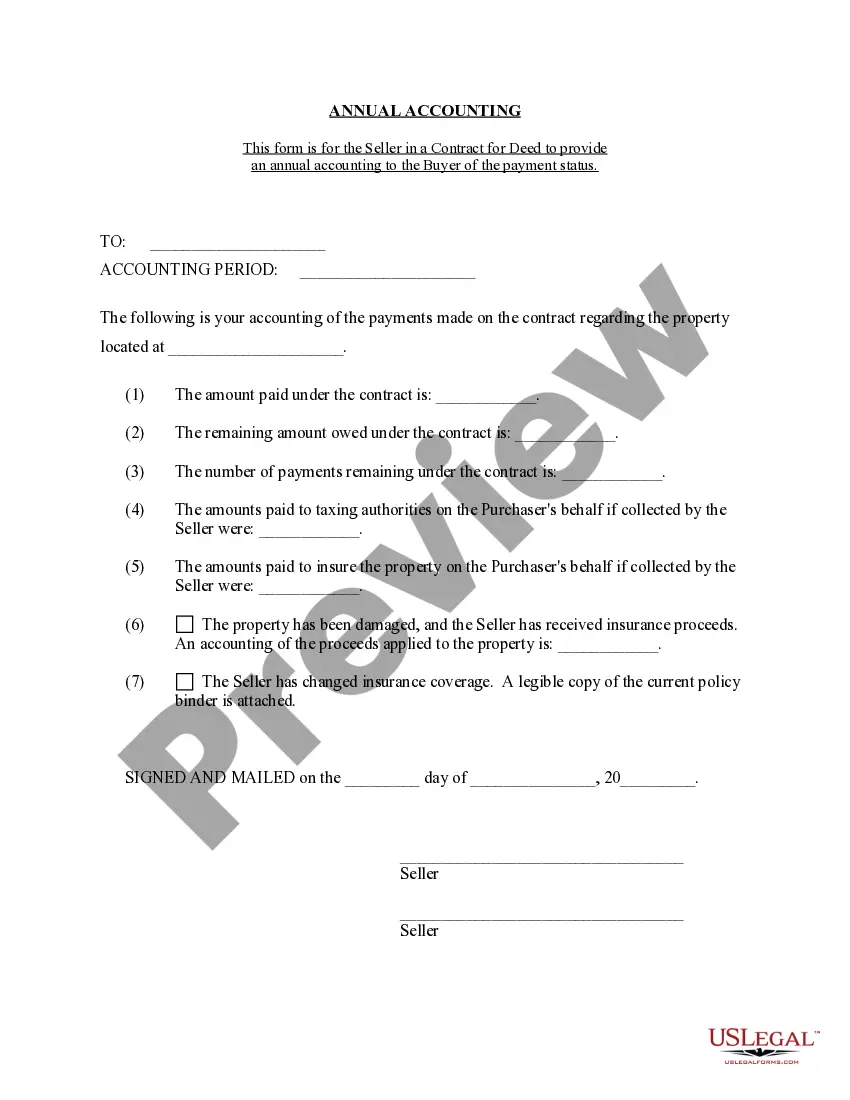
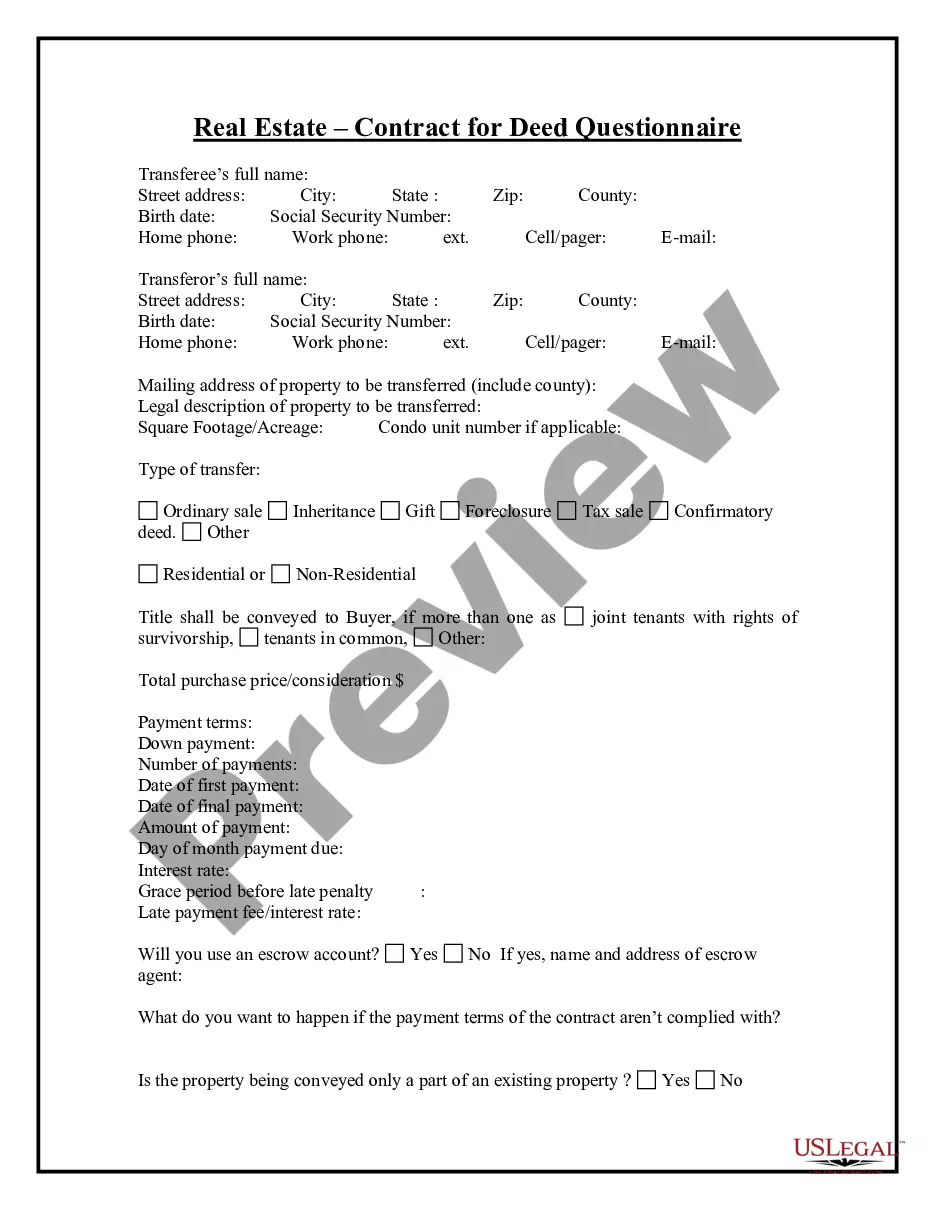
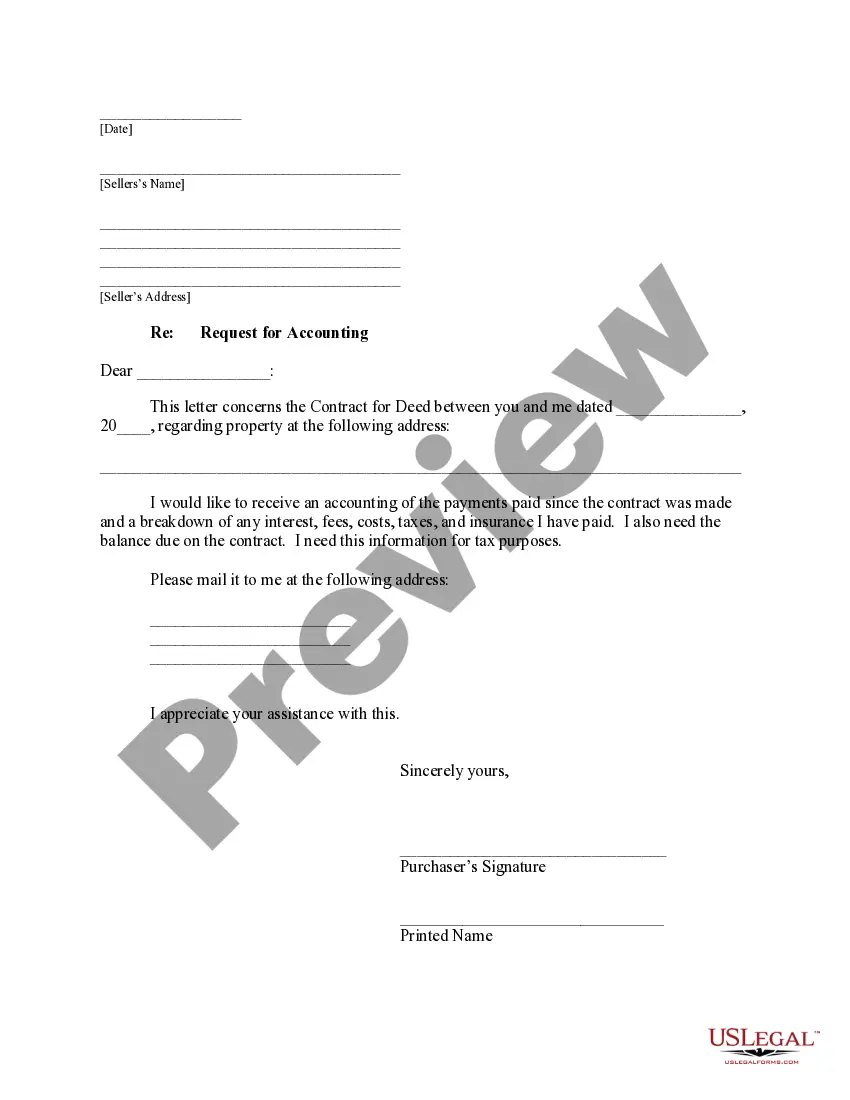
The Contract for Deed Seller's Annual Accounting Statement is a formal document that informs the Purchaser of the total payments received by the Seller towards the property's purchase price and interest over the past year. This form is crucial for maintaining transparency in a contract for deed transaction, providing the Purchaser with a clear financial overview and ensuring compliance with any applicable obligations. Unlike other financial statements, this document is specifically catered to contract for deed arrangements, making it essential for both parties.
Key parts of this document
- Identification of the Seller and Purchaser
- Detailed account of payments received, including dates and amounts
- Calculation of any interest accrued on the total purchase price
- Annual summary providing a snapshot of the transaction history
- Signature and date sections for both Seller and Purchaser

When this form is needed
This form should be used annually by the Seller in a contract for deed agreement. It is essential when the Seller needs to provide a record of payments made by the Purchaser to keep them informed of their progress in fulfilling the purchase agreement. It can be particularly important during tax season or if the Purchaser requests a financial overview of their obligations and payment history.
Who needs this form
- Individuals acting as Sellers in a contract for deed agreement
- Purchasers who wish to receive annual updates on their payment status
- Real estate professionals managing contracts for deed transactions
Steps to complete this form
- Identify and fill in the names and addresses of the Seller and Purchaser.
- Document the total number of payments received from the Purchaser throughout the year.
- Calculate the total amounts received and any interest accrued during that period.
- Provide a summary stating the payment history for the year.
- Ensure both parties sign and date the document to acknowledge its accuracy.
Is notarization required?
Notarization is generally not required for this form. However, certain states or situations might demand it. You can complete notarization online through US Legal Forms, powered by Notarize, using a verified video call available anytime.
Get your form ready online
Our built-in tools help you complete, sign, share, and store your documents in one place.
Make edits, fill in missing information, and update formatting in US Legal Forms—just like you would in MS Word.
Download a copy, print it, send it by email, or mail it via USPS—whatever works best for your next step.
Sign and collect signatures with our SignNow integration. Send to multiple recipients, set reminders, and more. Go Premium to unlock E-Sign.
If this form requires notarization, complete it online through a secure video call—no need to meet a notary in person or wait for an appointment.
We protect your documents and personal data by following strict security and privacy standards.
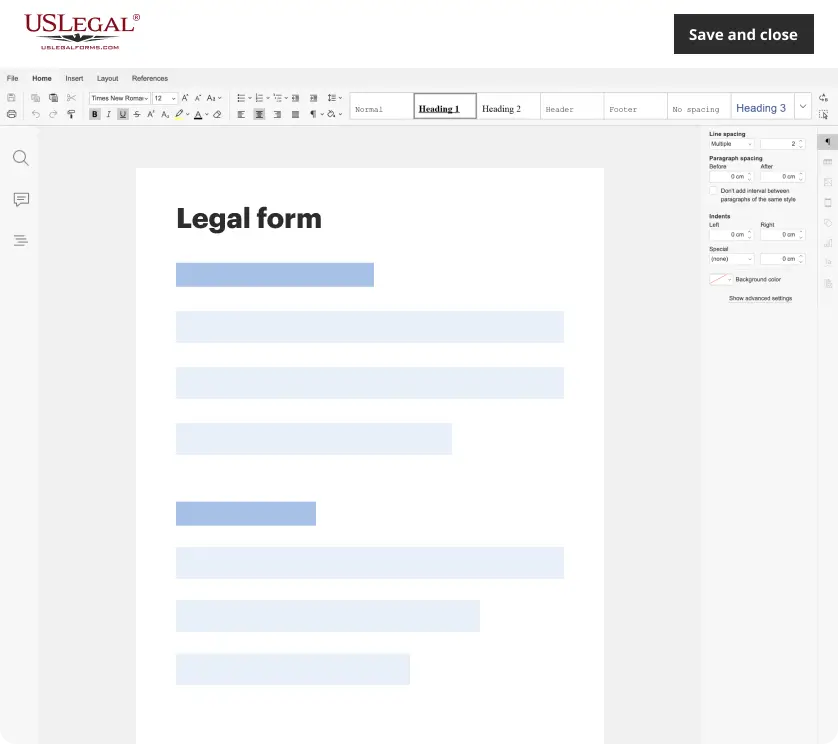
Make edits, fill in missing information, and update formatting in US Legal Forms—just like you would in MS Word.
Download a copy, print it, send it by email, or mail it via USPS—whatever works best for your next step.
Sign and collect signatures with our SignNow integration. Send to multiple recipients, set reminders, and more. Go Premium to unlock E-Sign.

If this form requires notarization, complete it online through a secure video call—no need to meet a notary in person or wait for an appointment.
We protect your documents and personal data by following strict security and privacy standards.
Common mistakes
- Failing to include all payments received or miscalculating totals.
- Not signing or dating the document, which may invalidate the statement.
- Omitting necessary contact information for either party.
Why use this form online
- Convenience of accessing and completing the form from anywhere at any time.
- Editable templates that allow customization to fit specific transaction details.
- Instant access to professionally drafted documents created by licensed attorneys.
Quick recap
- The Contract for Deed Seller's Annual Accounting Statement is crucial for tracking financial transactions between seller and purchaser.
- Accurate and timely completion can prevent misunderstandings and disputes.
- Regular use of this form helps maintain clear records for both parties involved in contract for deed agreements.
Looking for another form?
Form popularity
FAQ
A contract for deed is an agreement for buying property without going to a mortgage lender. The buyer agrees to pay the seller monthly payments, and the deed is turned over to the buyer when all payments have been made.
Loss of Service Control. A major disadvantage of contract management is that the organization gives up a considerable amount of control over the services that will be provided to customers. Potential Time Delays. Loss of Business Flexibility. Loss of Product Quality. Compliance and Legal Issues.
A disadvantage to the seller is that a contract for deed is frequently characterized by a low down payment and the purchase price is paid in installments instead of one lump sum. If a seller needs funds from the sale to buy another property, this would not be a beneficial method of selling real estate.
'Contract by deed' is a deed of formal legal evidence that is signed, witnessed and delivered to create a legal obligation and for 'Simple contract' is a contract that are not deeds. They are informal contract that can make in many ways such as orally, writing, and conduct.
The Difference Between Renting to Own and a Contract for Deed. Renting to own usually means renting now, with an option to buy later.A contract for deed is very different. As soon as you sign the contract, you are the homeowner in every way, except you don't have the title yet.
A disadvantage to the seller is that a contract for deed is frequently characterized by a low down payment and the purchase price is paid in installments instead of one lump sum.The legal fees and time frame for this process will be more extensive than a standard Power of Sale foreclosure.
One of the biggest negatives that can occur with a land contract is when a buyer purchases a property on which the seller is still making mortgage payments.
A seller using a contract for deed doesn?t have that option, unless you agree to include that clause in your contract. Other benefits include: no loan qualifying, low or flexible down payment, favorable interest rates and flexible terms, and a quicker settlement.
One disadvantage of a contract for deed to the seller is that clearing the title may take time and money if the buyer defaults on the contract, according to Real Town. In addition, the seller can immediately foreclose on the property if the buyer defaults, and the buyer has no recourse against the seller.