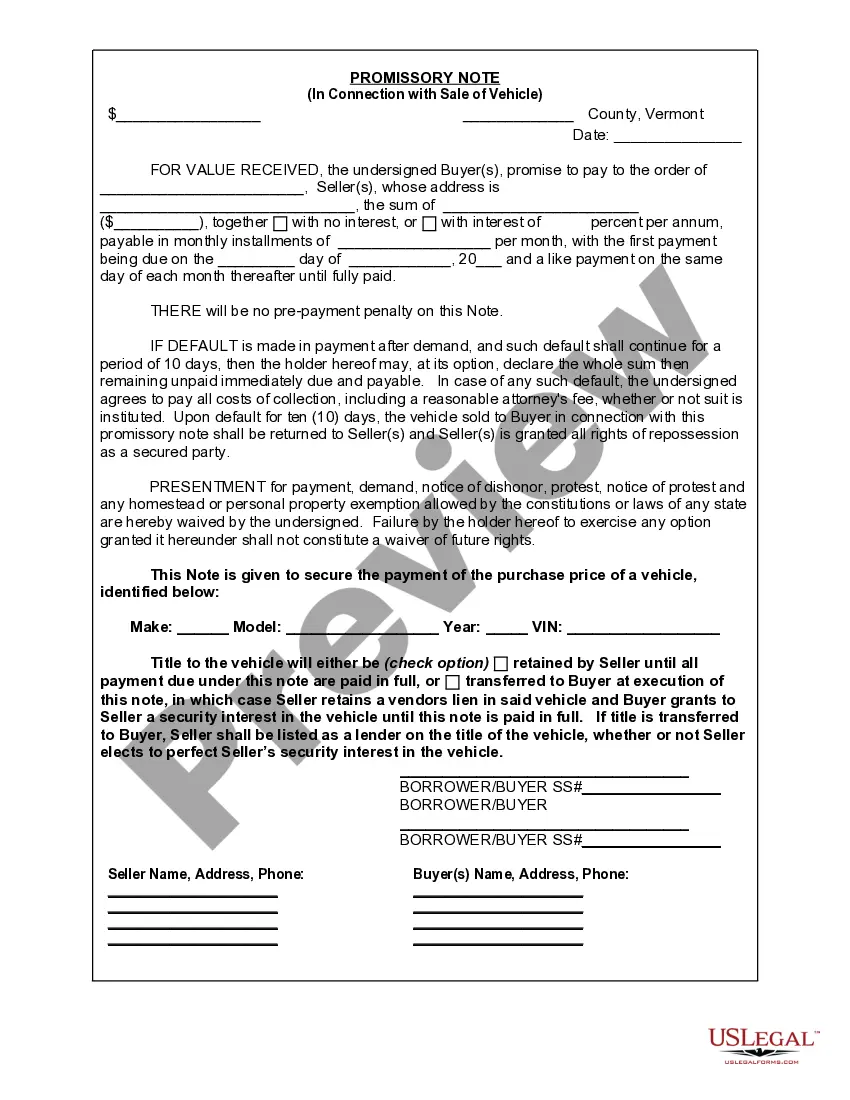
Vermont Promissory Note in Connection with Sale of Vehicle or Automobile
What this document covers
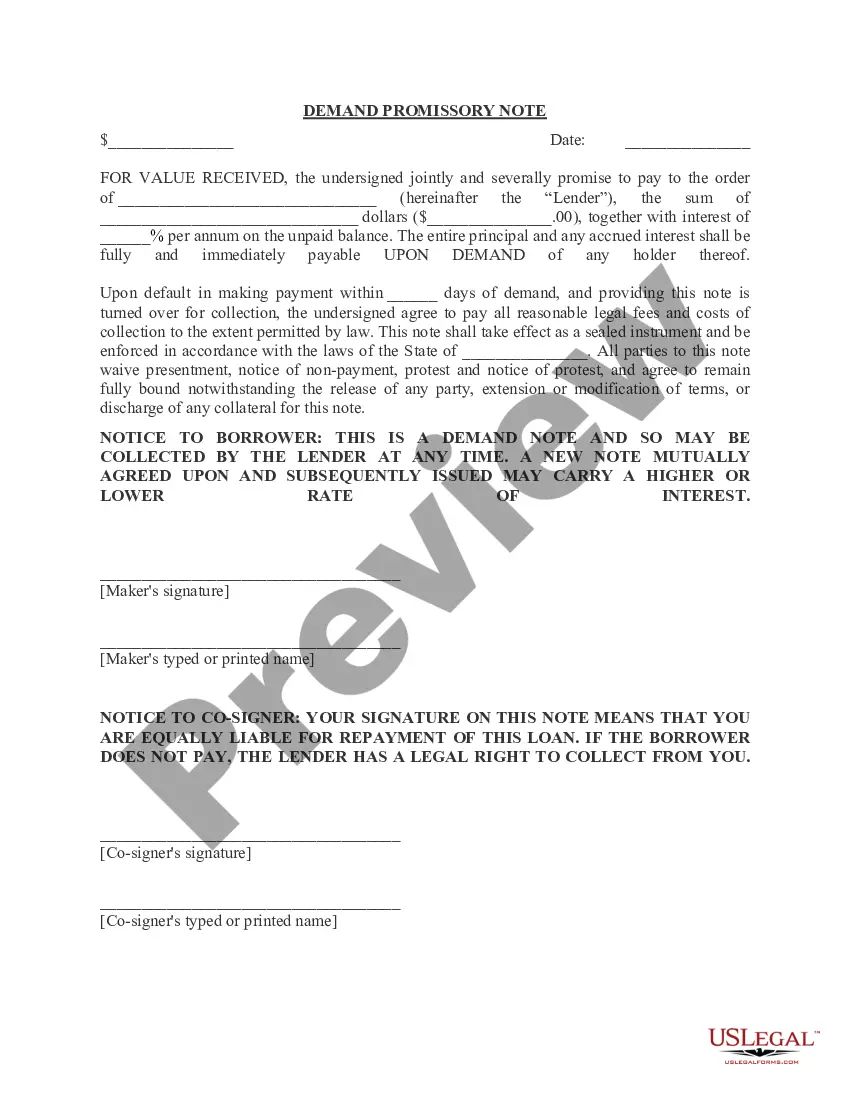
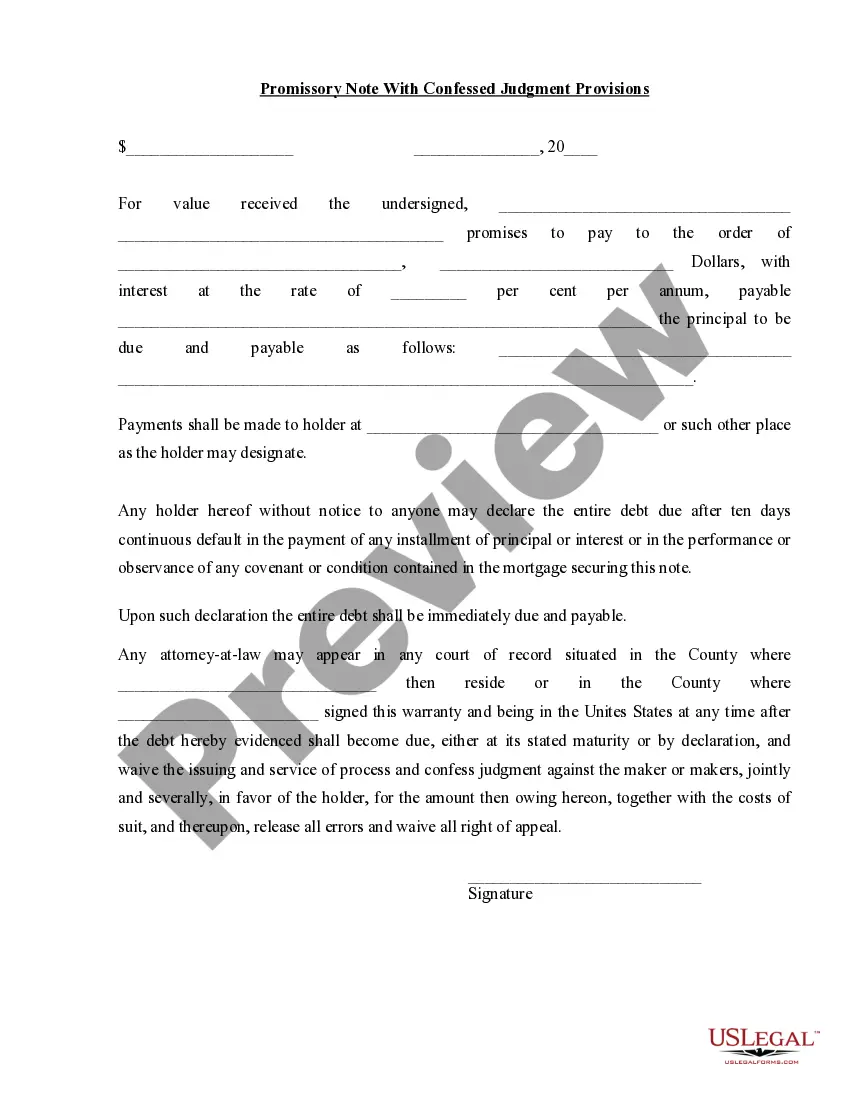
This Promissory Note is a legal document that outlines the payment terms for a vehicle sale. It is used when the buyer agrees to pay a portion of the vehicle's purchase price over time. This documentation is crucial in formalizing the transaction and protecting both the buyer and seller by detailing the obligations and rights associated with the sale.
Key components of this form
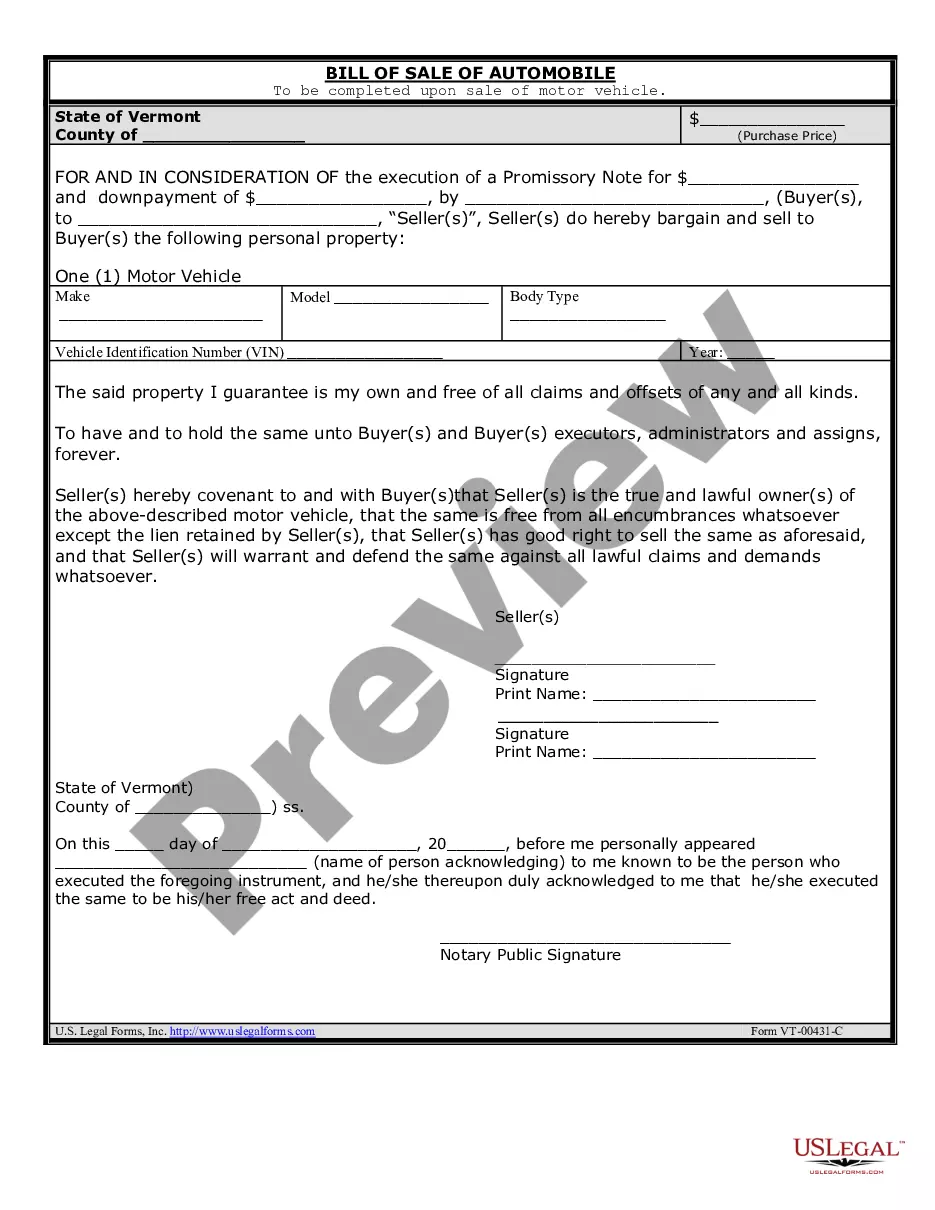
- Date of the agreement.
- Identification of the vehicle, including make, model, year, and VIN.
- Details on payment terms and default conditions.
- Options for retaining or transferring the title of the vehicle.
- Signatures of the buyer(s) and seller(s).
When to use this document
This form should be utilized when selling a vehicle where the buyer cannot pay the full purchase price upfront. It is needed to record the owed amount and the payment schedule, protecting both parties in case of default.
Who needs this form
This form is suitable for:
- Individuals selling a vehicle to another party.
- Buyers purchasing a vehicle with a payment plan.
- Anyone looking to establish clear terms of repayment related to a vehicle sale.
Completing this form step by step
- Identify the parties involved: buyer(s) and seller(s).
- Fill in the date of the agreement.
- Enter the vehicle details, including make, model, year, and VIN.
- Specify payment terms, including amounts and due dates.
- Indicate whether the title will be retained by the seller or transferred to the buyer.
- All parties should sign and date the agreement.
Notarization requirements for this form
This form does not typically require notarization unless specified by local law, making it easier to complete the sale without additional steps. However, checking local regulations is advised to ensure compliance.
Get your form ready online
Our built-in tools help you complete, sign, share, and store your documents in one place.
Make edits, fill in missing information, and update formatting in US Legal Forms—just like you would in MS Word.
Download a copy, print it, send it by email, or mail it via USPS—whatever works best for your next step.
Sign and collect signatures with our SignNow integration. Send to multiple recipients, set reminders, and more. Go Premium to unlock E-Sign.
If this form requires notarization, complete it online through a secure video call—no need to meet a notary in person or wait for an appointment.
We protect your documents and personal data by following strict security and privacy standards.

Make edits, fill in missing information, and update formatting in US Legal Forms—just like you would in MS Word.

Download a copy, print it, send it by email, or mail it via USPS—whatever works best for your next step.

Sign and collect signatures with our SignNow integration. Send to multiple recipients, set reminders, and more. Go Premium to unlock E-Sign.

If this form requires notarization, complete it online through a secure video call—no need to meet a notary in person or wait for an appointment.

We protect your documents and personal data by following strict security and privacy standards.
Common mistakes
- Failing to include complete vehicle details, such as VIN.
- Not specifying the payment schedule or amounts clearly.
- Leaving out signatures from all parties.
- Not understanding the implications of default and repossession rights.
Benefits of completing this form online
- Convenience of immediate access and download.
- Editable templates allow you to customize the agreement to fit your needs.
- Drafted by licensed attorneys to ensure legal accuracy and reliability.
Looking for another form?
Form popularity
FAQ
A promissory note is often included in a mortgage, student loan, car loan, business loan, or personal loan agreement. If you're loaning someone a large sum of money, you'll likely want a legal record of it. Therefore, promissory notes can be used in personal transactions as well.
So, The Vermont Loophole is totally real. Totally do-able. As long as you aren't in a rush.
Selling your car privately can be a hassle. It take a time and energy to sell your car. You will need to take pictures of it, write down the specs and other details, list it online or in the classified ads, and be ready to answer numerous phone calls and questions.
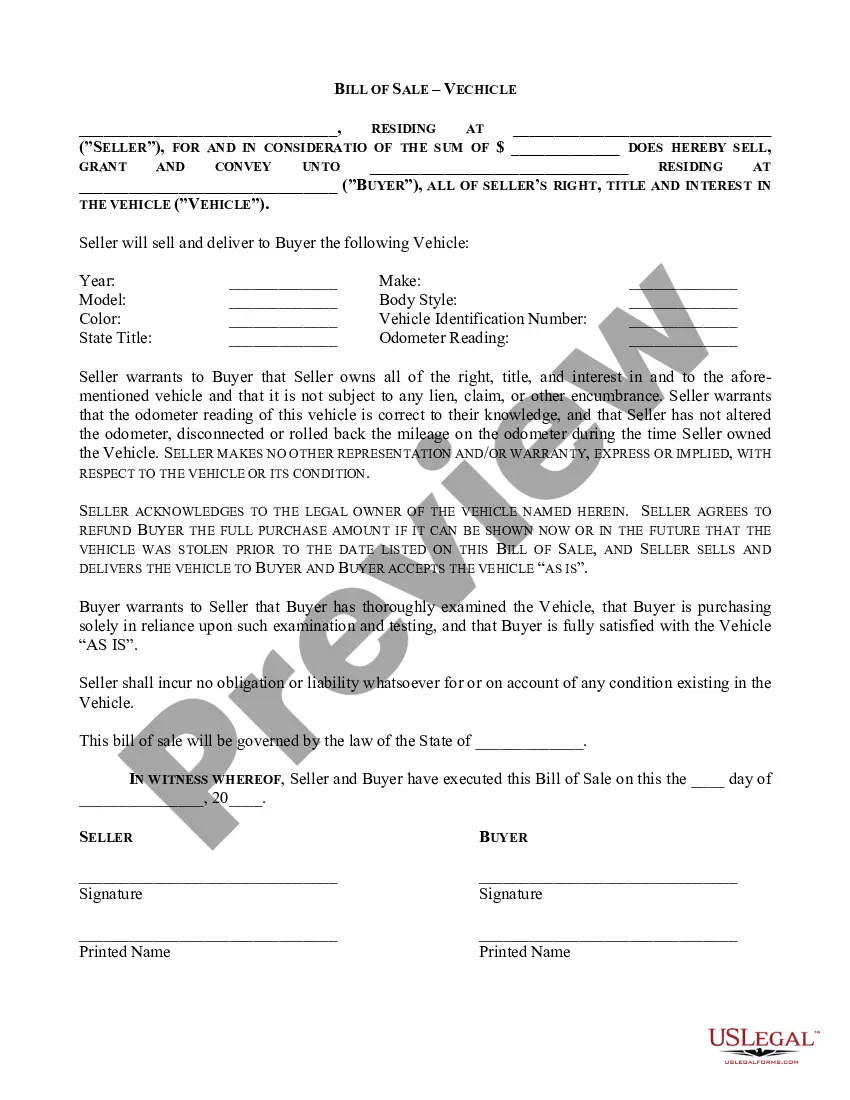
The date of the sale. A description of the car, including its: Year, make and model. The selling price of the car. If the car is a gift or partial gift, you should still create a bill of sale. Warranty information. The full names, addresses and signatures of the buyer and seller.
Complete the entire Vermont Motor Vehicle Registration, Tax and Title Application (form #VD-119). Be sure to enter the Plate number that you are transferring. You must complete Section 7 of the Vermont Registration Application, or incude your current Vermont Registration with the "Transfer Section" completed.
Keep a friend or family member informed of the process. Don't give personal information to potential buyers. Screen potential buyers thoroughly. Be a trustworthy seller. Meet potential buyers in a public place. Bring a friend or family member with you to meet potential buyers. Stay safe during the test drive.
So, The Vermont Loophole is totally real. Totally do-able. As long as you aren't in a rush.
Sign the title over to the buyer. Make sure to help complete the Bill of Sale and Odometer Disclosure Statement with the buyer. Give the buyer a lien release. Remember you cannot sell a vehicle if it has a lien on it.
An original copy of a sales contract, or proof of purchase, which could be a letter, bill of sale, receipt, or tax invoice, showing the seller's details, the buyer's details, the date of the sale, the selling price or market value of the car, whichever is higher, and the car's registration and VIN numbers.