Virginia Satisfaction, Release or Cancellation of Deed of Trust by Individual
What this document covers
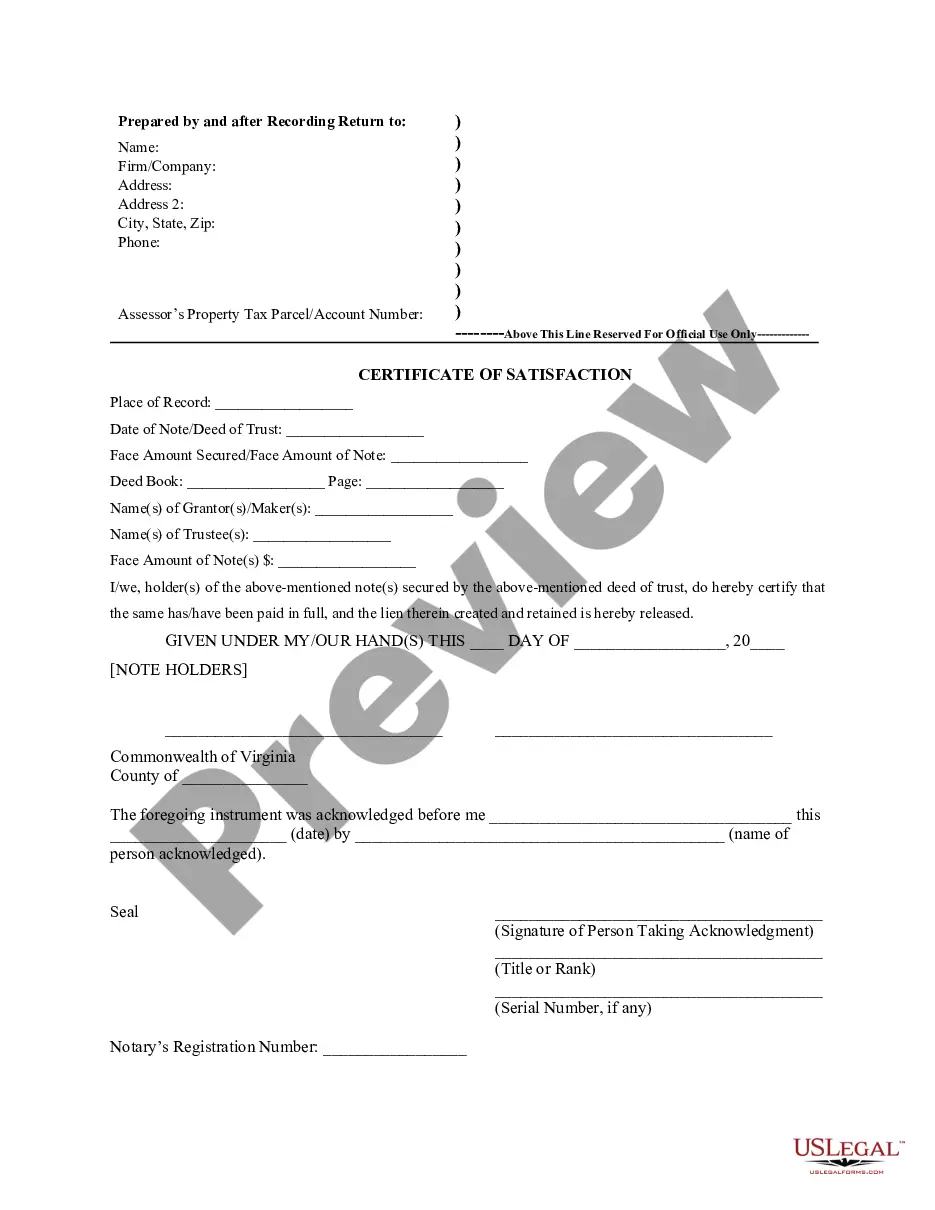
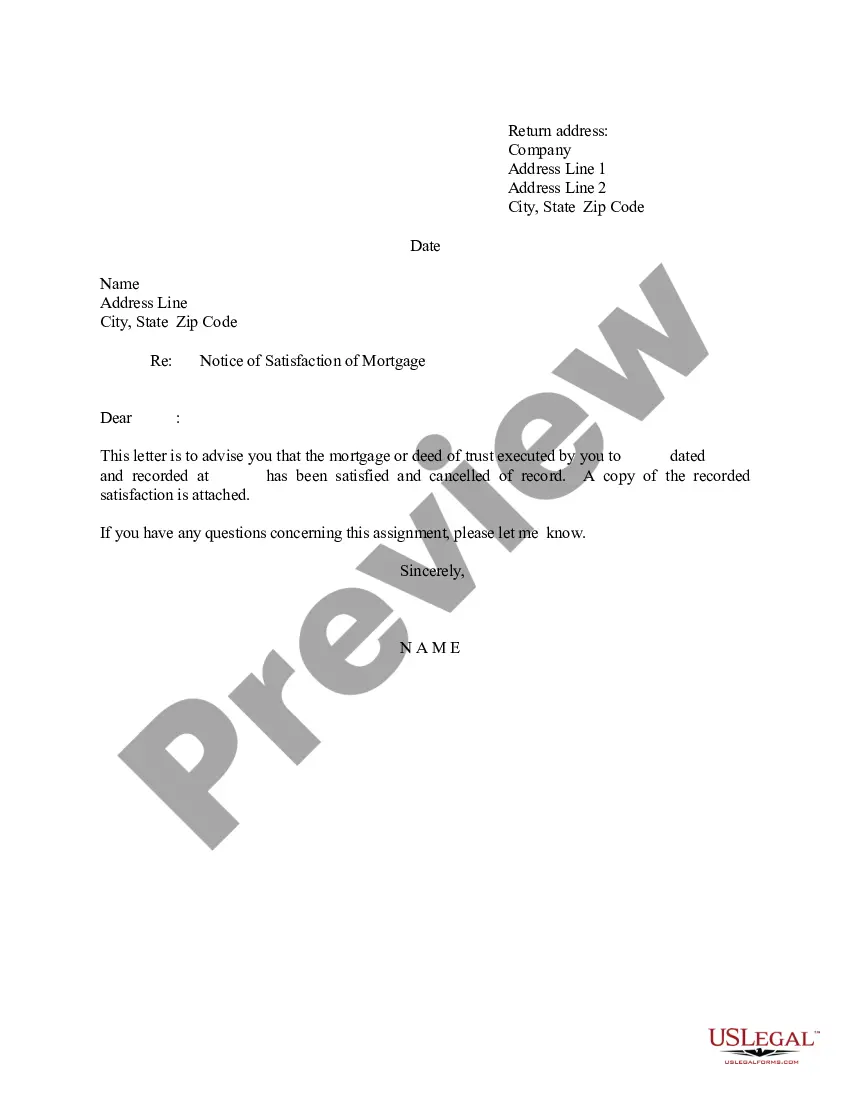
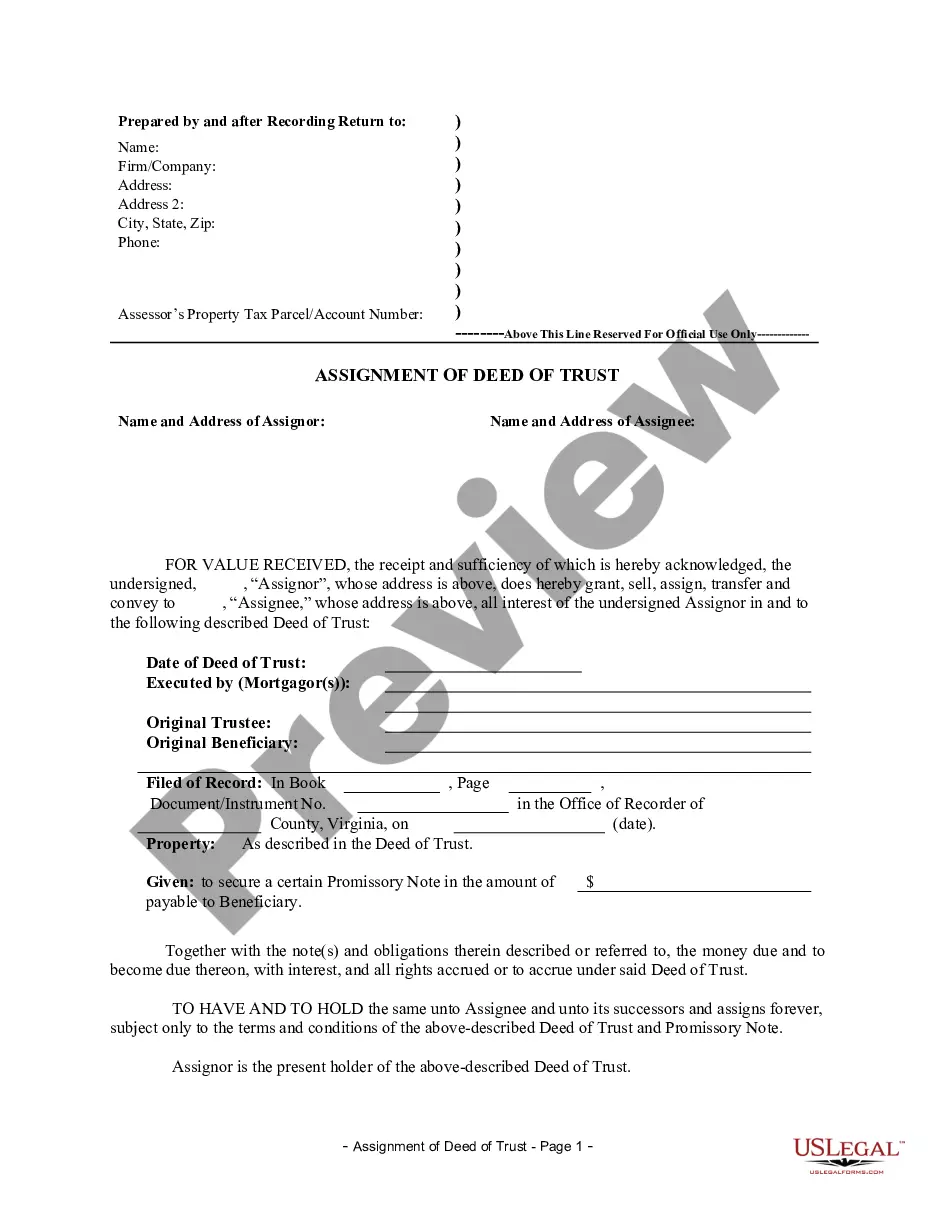
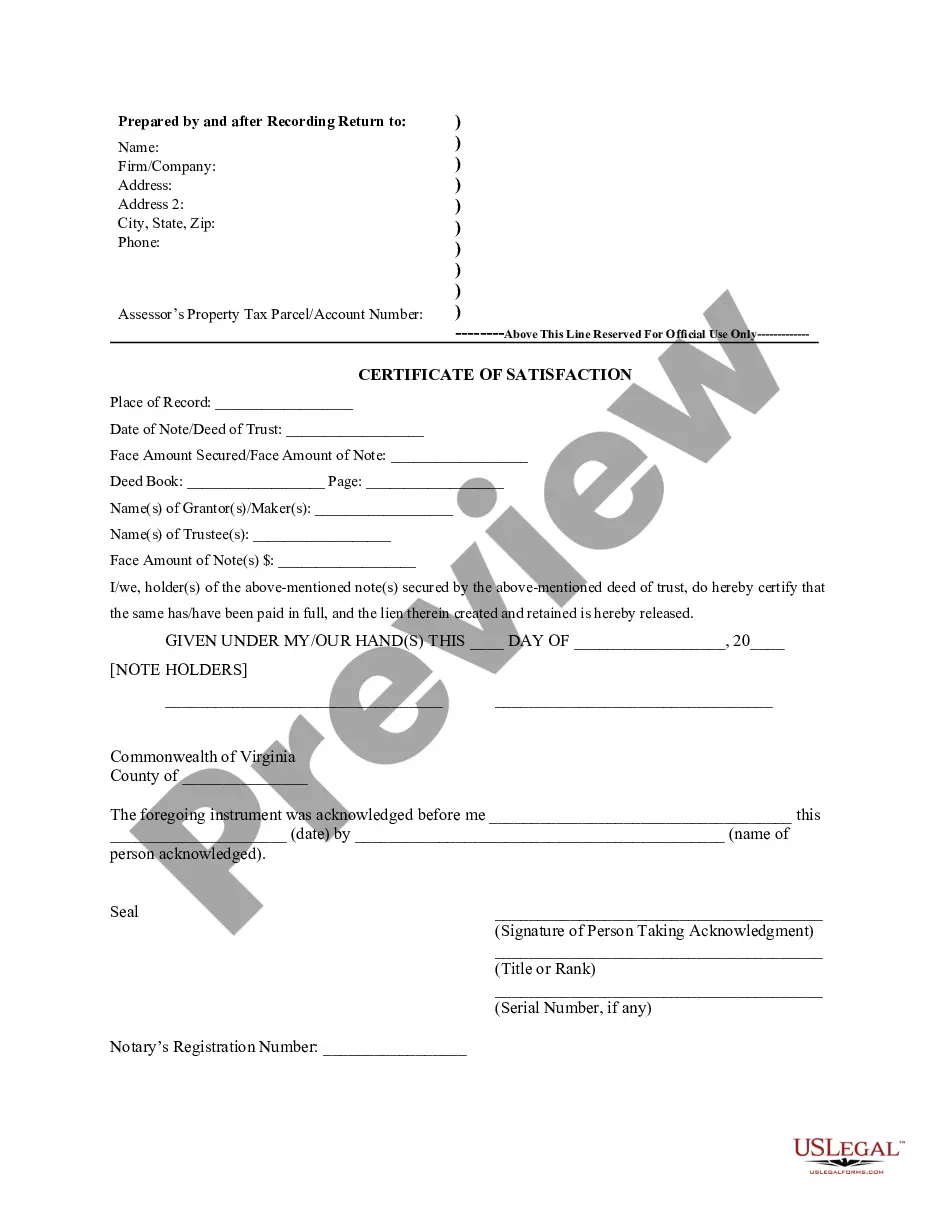
The Satisfaction, Release or Cancellation of Deed of Trust by Individual is a legal document used to formally acknowledge that a deed of trust has been paid in full. This form is specific to the state of Virginia and serves to release the lien on the described property, differentiating it from other forms that may not provide such a specific release or satisfaction. Completing this form is essential when a borrower has fulfilled their mortgage obligations and wishes to clear the title of their property.
What’s included in this form
- Face amount secured and face amount of note
- Deed book and page number references
- Name(s) of the grantor(s) or maker(s)
- Name(s) of the trustee(s)
- Certification statement confirming full payment
- Signature lines for note holders
- Notary acknowledgment section and commission expiration date

Common use cases
This form is useful in scenarios where a borrower has repaid their mortgage in full and needs to document the release of the deed of trust. It is typically used at the closure of the loan process, when a property owner seeks to eliminate any liens recorded against their property. This ensures clear ownership and the ability to sell or transfer the property without encumbrance.
Intended users of this form
This form is intended for:
- Property owners who have fully paid their mortgage
- Individuals acting on behalf of the grantor or borrower
- Trustees involved in the deed of trust
- Legal representatives handling real estate transactions
Completing this form step by step
- Identify the face amount secured and the face amount of the note.
- Fill in the deed book and page number where the deed of trust is recorded.
- Enter the names of the grantors and trustees involved in the transaction.
- Check the certification statement confirming that the note(s) have been paid in full.
- Have the note holders sign the form in front of a notary public.
- Ensure that the notary public completes the acknowledgment and records the certificate appropriately.
Notarization guidance
This form needs to be notarized to ensure legal validity. US Legal Forms provides secure online notarization powered by Notarize, allowing you to complete the process through a verified video call, available anytime.
Get your form ready online
Our built-in tools help you complete, sign, share, and store your documents in one place.
Make edits, fill in missing information, and update formatting in US Legal Forms—just like you would in MS Word.
Download a copy, print it, send it by email, or mail it via USPS—whatever works best for your next step.
Sign and collect signatures with our SignNow integration. Send to multiple recipients, set reminders, and more. Go Premium to unlock E-Sign.
If this form requires notarization, complete it online through a secure video call—no need to meet a notary in person or wait for an appointment.
We protect your documents and personal data by following strict security and privacy standards.

Make edits, fill in missing information, and update formatting in US Legal Forms—just like you would in MS Word.

Download a copy, print it, send it by email, or mail it via USPS—whatever works best for your next step.

Sign and collect signatures with our SignNow integration. Send to multiple recipients, set reminders, and more. Go Premium to unlock E-Sign.

If this form requires notarization, complete it online through a secure video call—no need to meet a notary in person or wait for an appointment.

We protect your documents and personal data by following strict security and privacy standards.
Avoid these common issues
- Failing to sign the form before a notary public.
- Not properly identifying the deed book and page number.
- Leaving out the face amount secured or face amount of note.
- Incorrectly filling out the names of the grantors or trustees.
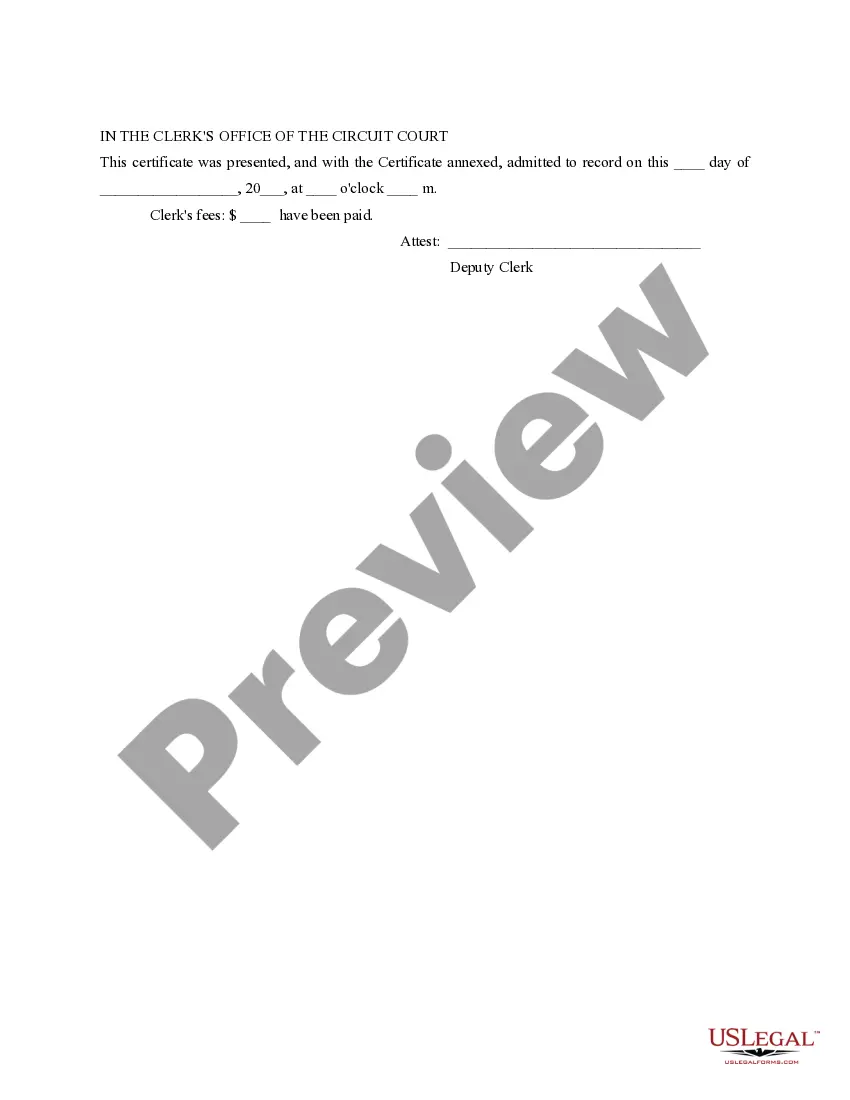
- Not filing the form with the appropriate clerk's office after completion.
Advantages of online completion
- Convenient access to a legally compliant form anytime, anywhere.
- Editable templates allow for easy customization to fit individual needs.
- Reliable source of attorney-drafted documents, ensuring legal validity.
Quick recap
- This form documents the payment and release of a deed of trust in Virginia.
- Proper notarization is required for legal validity.
- Completing this form is crucial for property owners to clear their titles.
Looking for another form?
Form popularity
FAQ
A mortgage holder issues a deed of reconveyance to indicate that the borrower has been released from the mortgage debt. The deed transfers the property title from the lender, also called the beneficiary, to the borrower. This document is most commonly used when a mortgage has been paid in full.
The property's title remains in the trust until the loan is paid off, or satisfied, then it is released from the trust. To complete the release, the lender prepares a deed of reconveyance. This document states that the conditions of the loan have been met and you have no further financial obligations to the lender.
Is completed and signed by the trustee, whose signature must be notarized. Full Reconveyance form can be purchased at most office supply or stationery stores. Usually the trustee named on your Deed of Trust will also have forms available and will issue the Full Reconveyance.
If you have cleared a debt, a mortgage satisfaction document will give you clear title to real property. In other words, mortgage satisfaction is a document that results in release or discharge of a mortgage lien, and indicates that a borrower has cleared his/her debt.
The deed must be signed by the party or parties making the conveyance or grant; and 7.
In order to reconvey a deed of trust, the full reconveyance must be recorded within 21 days of receipt of the documents from the Beneficiary. The deed of reconveyance must be recorded in the county where the property is located. Locate the name of the Trustee in the recorded Deed of Trust.
Only until the debt is paid off by the borrower can a deed of reconveyance then be used to clear the deed of trust from the title to the property. The document is signed by the trustee, whose signature must be notarized.
Step 1 Identify the parties. The appropriate parties should be documented on the Satisfaction of Mortgage. Step 2 Fill and Sign. The Satisfaction of Mortgage should be signed by the mortgagee, after it has been issued. Step 3 File and Record the Form.
1Discuss property ownership interests.2Access a copy of your title deed.3Complete, review and sign the quitclaim or warranty form.4Submit the quitclaim or warranty form.5Request a certified copy of your quitclaim or warranty deed.