Virginia Owner's or Seller's Affidavit of No Liens
Overview of this form
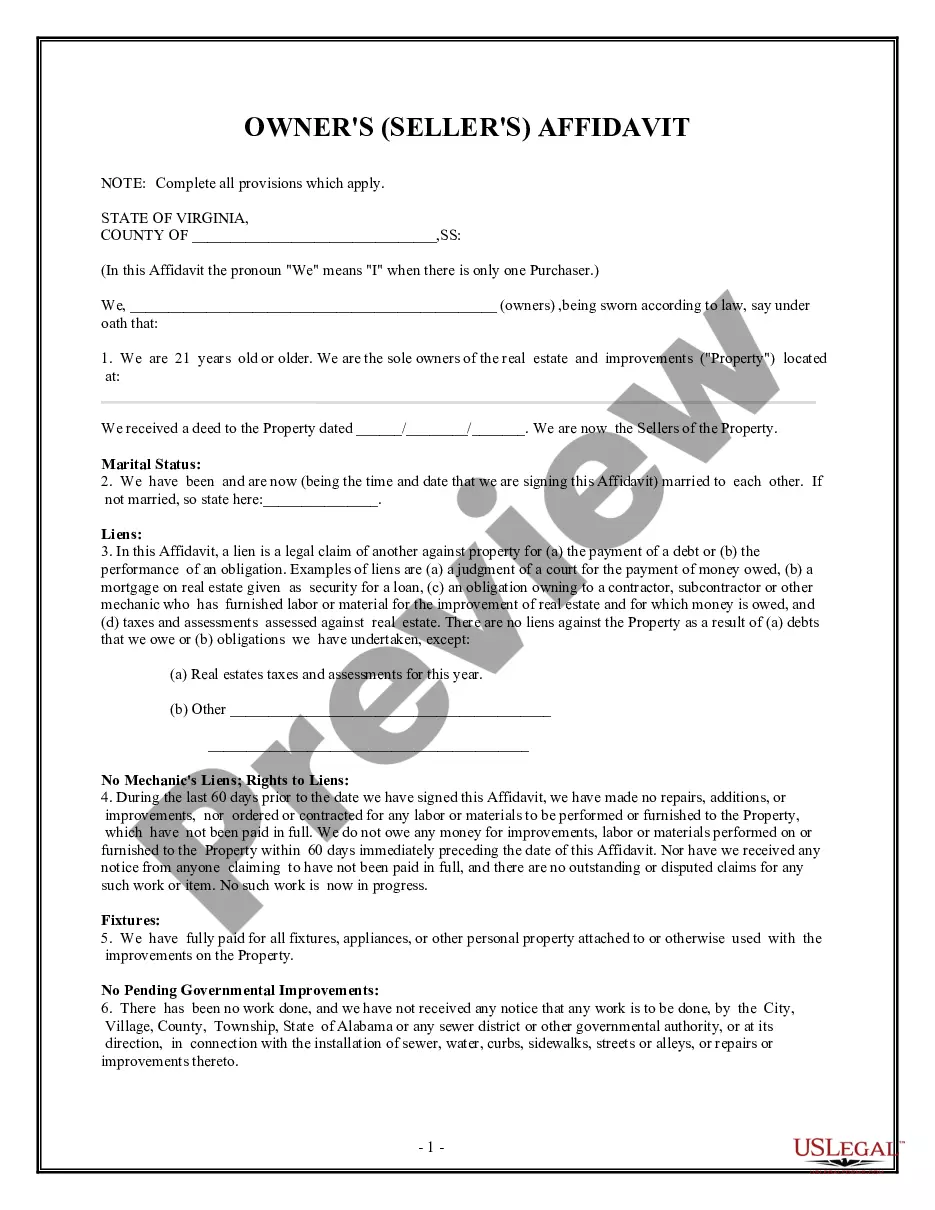
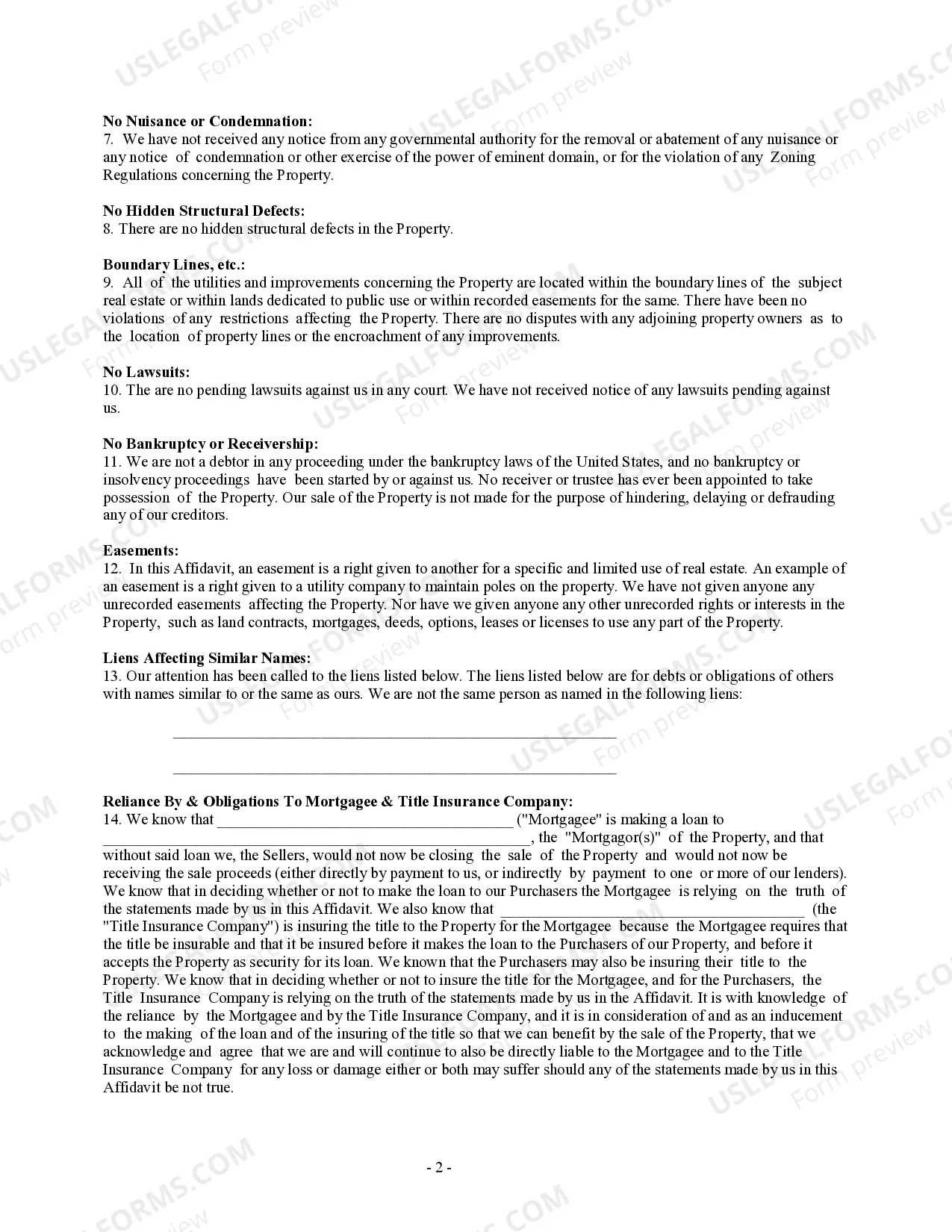
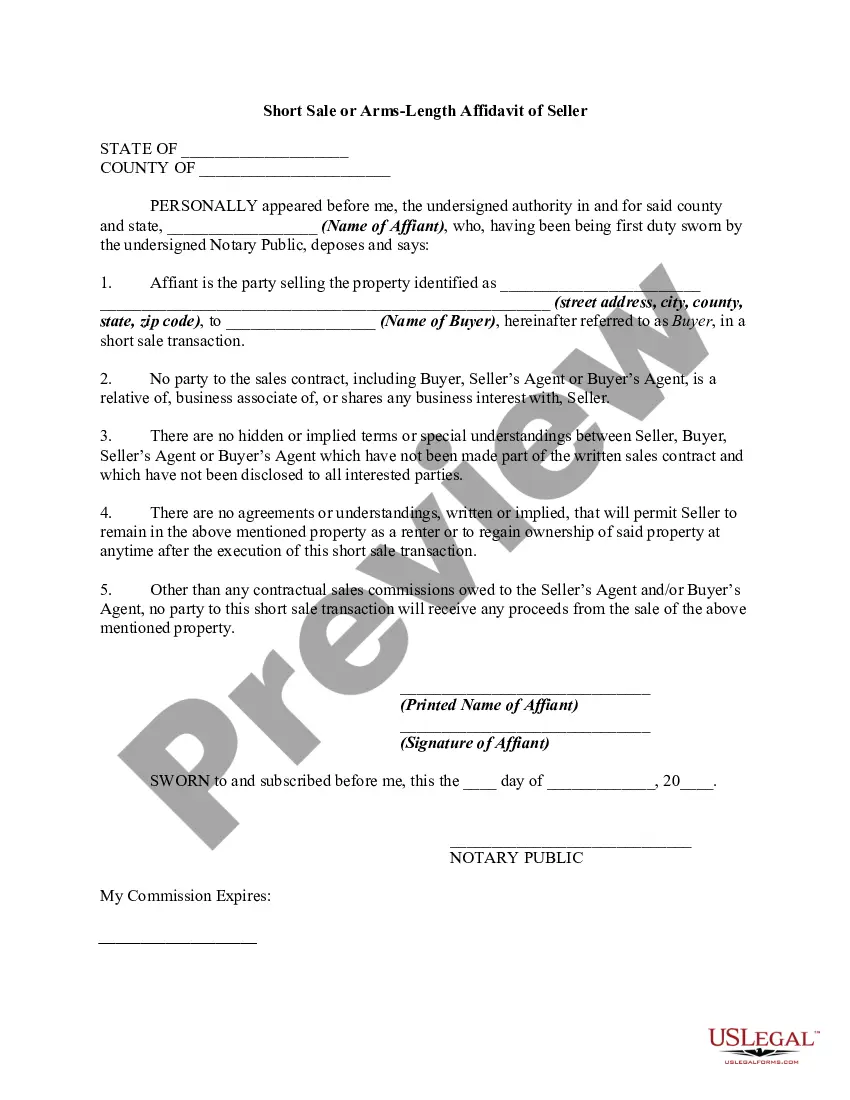
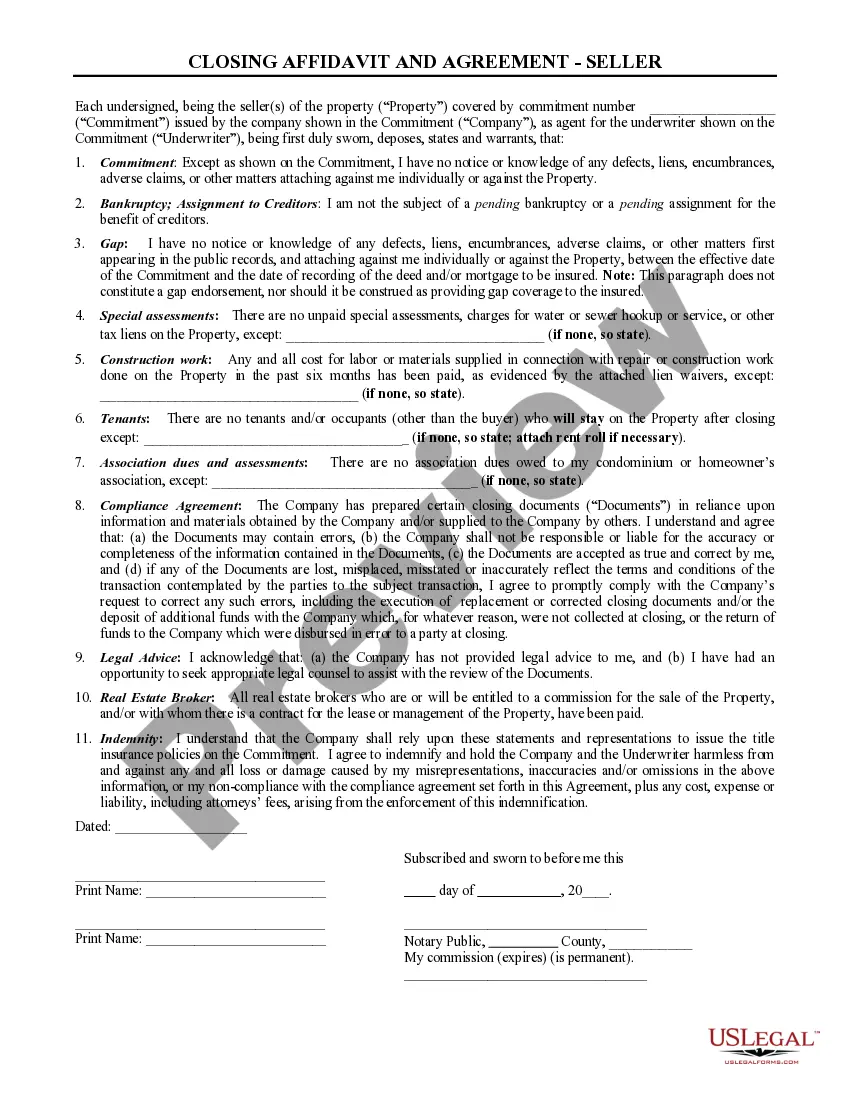
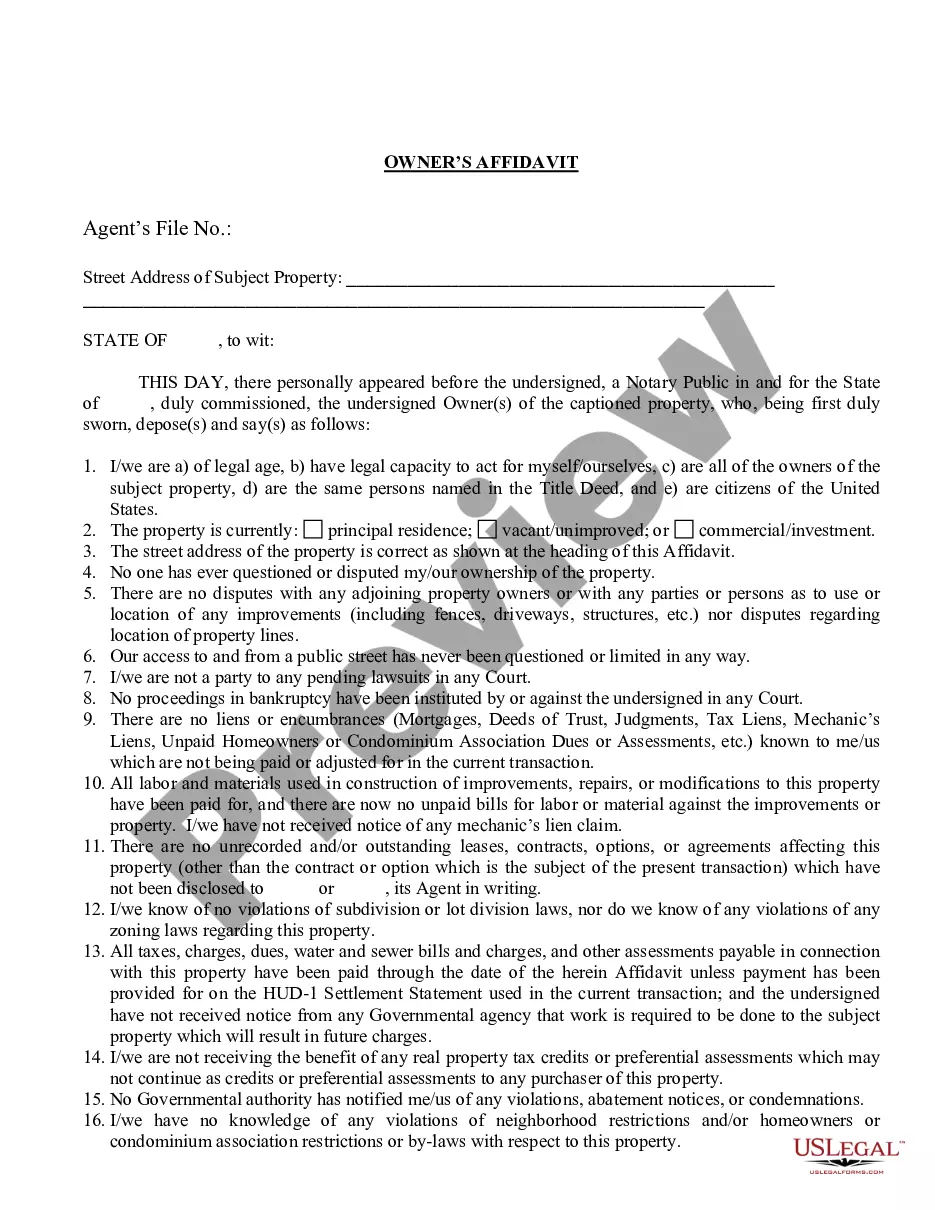
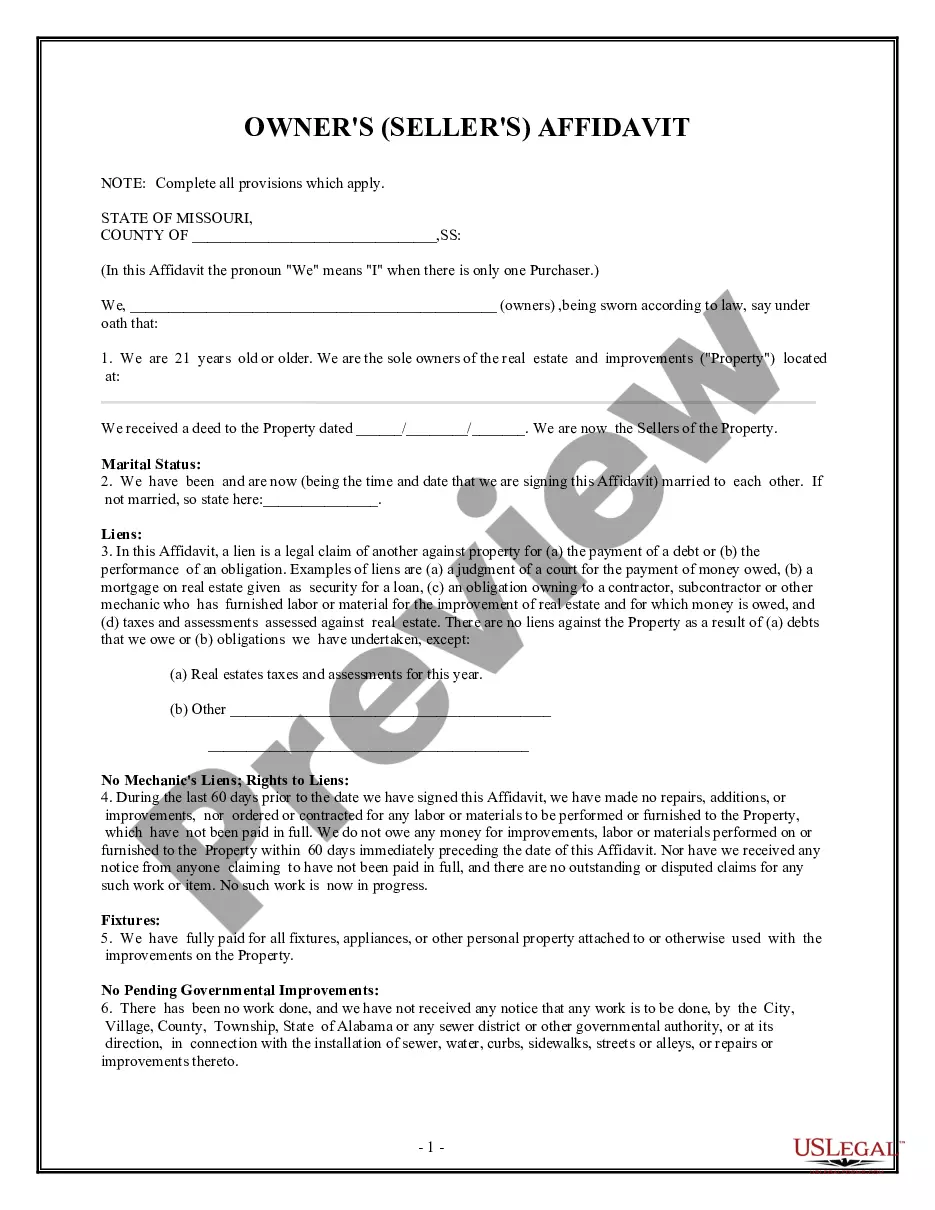
The Owner's or Seller's Affidavit of No Liens is a legal document used by sellers during the closing process of a property sale. This affidavit serves to affirm that the seller owns the property free of any liens or claims against it, which can include debts or obligations related to the property. By completing this form, sellers provide assurances to the buyer and lending institutions that there are no outstanding debts, making the transaction smoother and more secure.
Form components explained
- Declaration of ownership and personal details of the seller.
- Certifications regarding the absence of liens on the property.
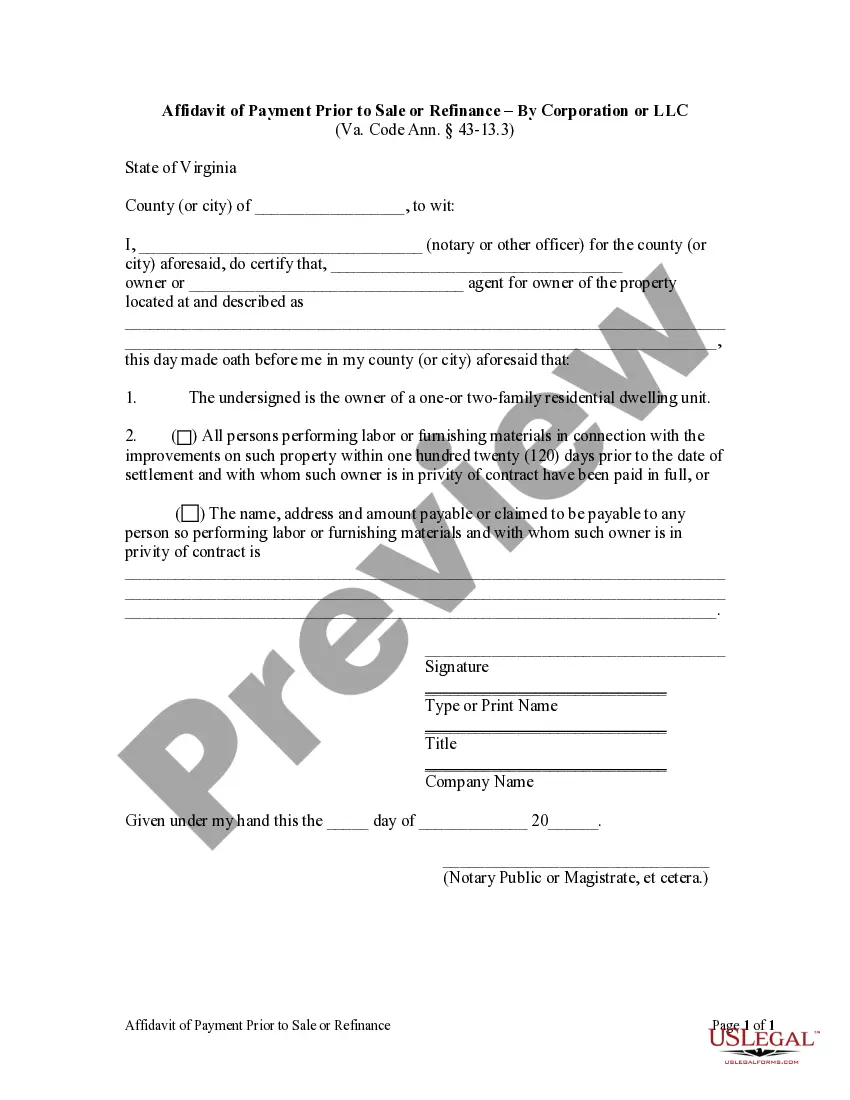
- Disclosure of any potential mechanicâs liens within the last 60 days.
- Confirmation of the status of fixtures and any unrecorded easements.
- Assurances regarding pending lawsuits and bankruptcy disclosures.
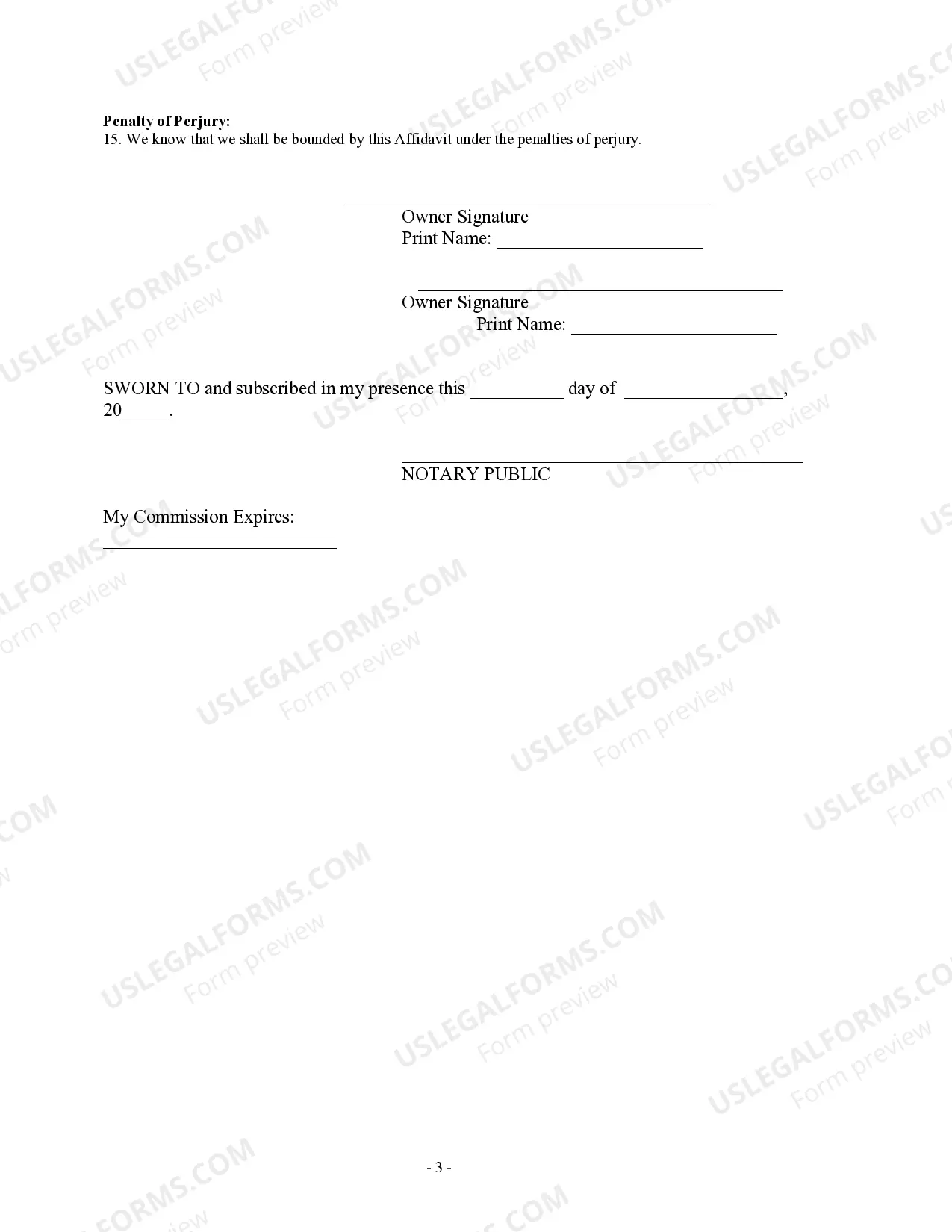
- Notarization section to validate the affidavit.

Common use cases
You should use the Owner's or Seller's Affidavit of No Liens when you are finalizing the sale of a property. This affidavit is typically signed at the closing meeting to ensure that the buyer is purchasing the property without any hidden claims or debts. It protects both the seller and the buyer by confirming the property's lien-free status, aiding in a smoother transaction process.
Who this form is for
- Sellers who are completing the sale of a property.
- Real estate agents assisting in the transfer of property ownership.
- Lenders requiring proof of ownership and lien status before approving a mortgage for the buyer.
- Buyers wanting assurance that the property is free from claims prior to finalizing the transaction.
How to complete this form
- Identify the seller(s) and provide their personal details, including age and marital status.
- Include the property's address, deed date, and your ownership confirmation.
- State any known liens or confirm the absence of them.
- Certify that no repairs or improvements have been made that would affect the lien status.
- Sign the document in the presence of a notary public to ensure its legal validity.
Notarization requirements for this form
Notarization is required for this form to take effect. Our online notarization service, powered by Notarize, lets you verify and sign documents remotely through an encrypted video session, available 24/7.
Get your form ready online
Our built-in tools help you complete, sign, share, and store your documents in one place.
Make edits, fill in missing information, and update formatting in US Legal Forms—just like you would in MS Word.
Download a copy, print it, send it by email, or mail it via USPS—whatever works best for your next step.
Sign and collect signatures with our SignNow integration. Send to multiple recipients, set reminders, and more. Go Premium to unlock E-Sign.
If this form requires notarization, complete it online through a secure video call—no need to meet a notary in person or wait for an appointment.
We protect your documents and personal data by following strict security and privacy standards.
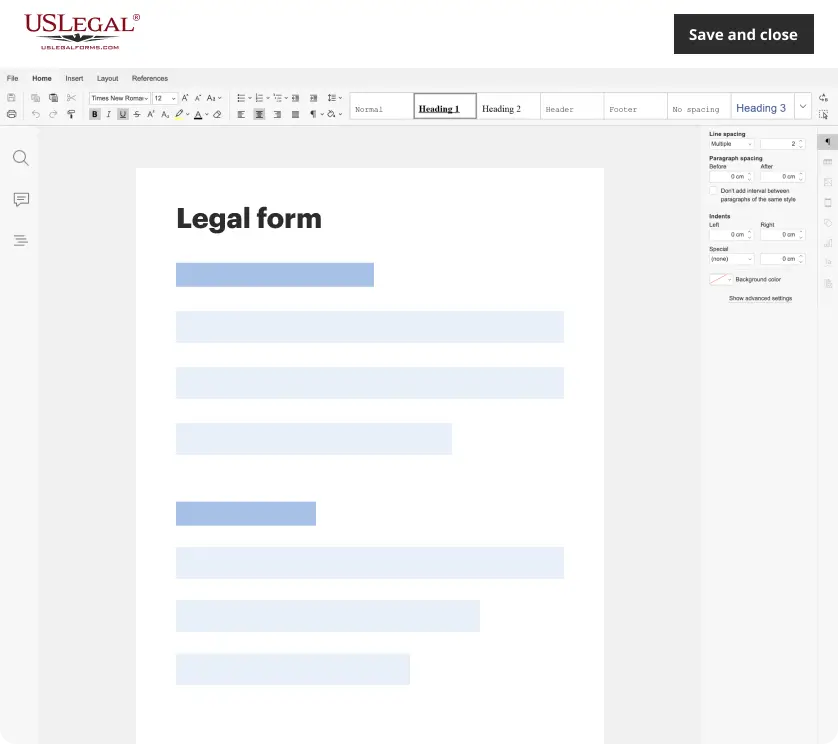
Make edits, fill in missing information, and update formatting in US Legal Forms—just like you would in MS Word.
Download a copy, print it, send it by email, or mail it via USPS—whatever works best for your next step.
Sign and collect signatures with our SignNow integration. Send to multiple recipients, set reminders, and more. Go Premium to unlock E-Sign.

If this form requires notarization, complete it online through a secure video call—no need to meet a notary in person or wait for an appointment.
We protect your documents and personal data by following strict security and privacy standards.
Mistakes to watch out for
- Failing to disclose any known liens, which can lead to legal issues after the sale.
- Not completing all required fields, causing delays during the closing process.
- Signing the affidavit without notarization, which may render it invalid.
- Forgetting to check the absence of claims regarding recent repairs or renovations.
Benefits of completing this form online
- Immediate access to professionally drafted forms tailored to your needs.
- Editable fields allowing easy customization specific to your property and situation.
- Secure storage and retrieval of your legal documents for future reference.
- Convenient tracking of the completion and submission process.
Looking for another form?
Form popularity
FAQ
An affidavit is a written statement that is notarized.The information in an affidavit must be first-hand information. It cannot be second-hand information or speculation. Affidavits can be written in your own handwriting or typed.
Full name of the deponent and their signature. Statement indicating whether the affidavit has been sworn or not. Date and place where the affidavit is being signed. Designation and full name of the Notary or Magistrate (person attesting the affidavit)
An affidavit is a sworn statement, made in front of a notary or other officer authorized to administer oaths. An affidavit of deed confirms delivery and acceptance of a deed by the grantee, and thereby its validity.If the grantor is protected by an affidavit of deed, these issues are generally easier to resolve.
Address of the property; Full names of the owner and the transferee, who will receive the property; Personal details of both parties; All costs the new proprietor assumes.
Affidavits are mainly used in Court proceedings. They are a written alternative to a person attending Court to give oral evidence in the witness box. Affidavits can be used to evidence, or prove, a number of things. For example, they are often used for people to tell their 'story' to the Court.
The general warranty deed is the standard instrument for home sales. Your notarized warranty deed is proof of ownership, and that the grantor transferred complete and clear title to you. A quitclaim deed also proves full land ownershipif the person who conveyed the interest to you had full ownership.
The affidavit is a sworn statement of fact that specifies the seller of a property holds the title to it. In other words, it's proof that the seller owns the property. It also attests that certain other facts about the property are correctas sworn to by the seller and duly notarized.
In the sentence, the person writing the statement must state that he or she is stating that the information is accurate. (Example: I, Jane Doe, solemnly swear that the contents of this document are true and correct, and that I agree to abide by the terms in this affidavit.)
Why Would I Need an Affidavit? Affidavits can be used for many purposes. They are most often filed with the court to show that specific information is true. In some cases, an attorney can use your affidavit so that you do not have to appear in court or at another official legal proceeding.