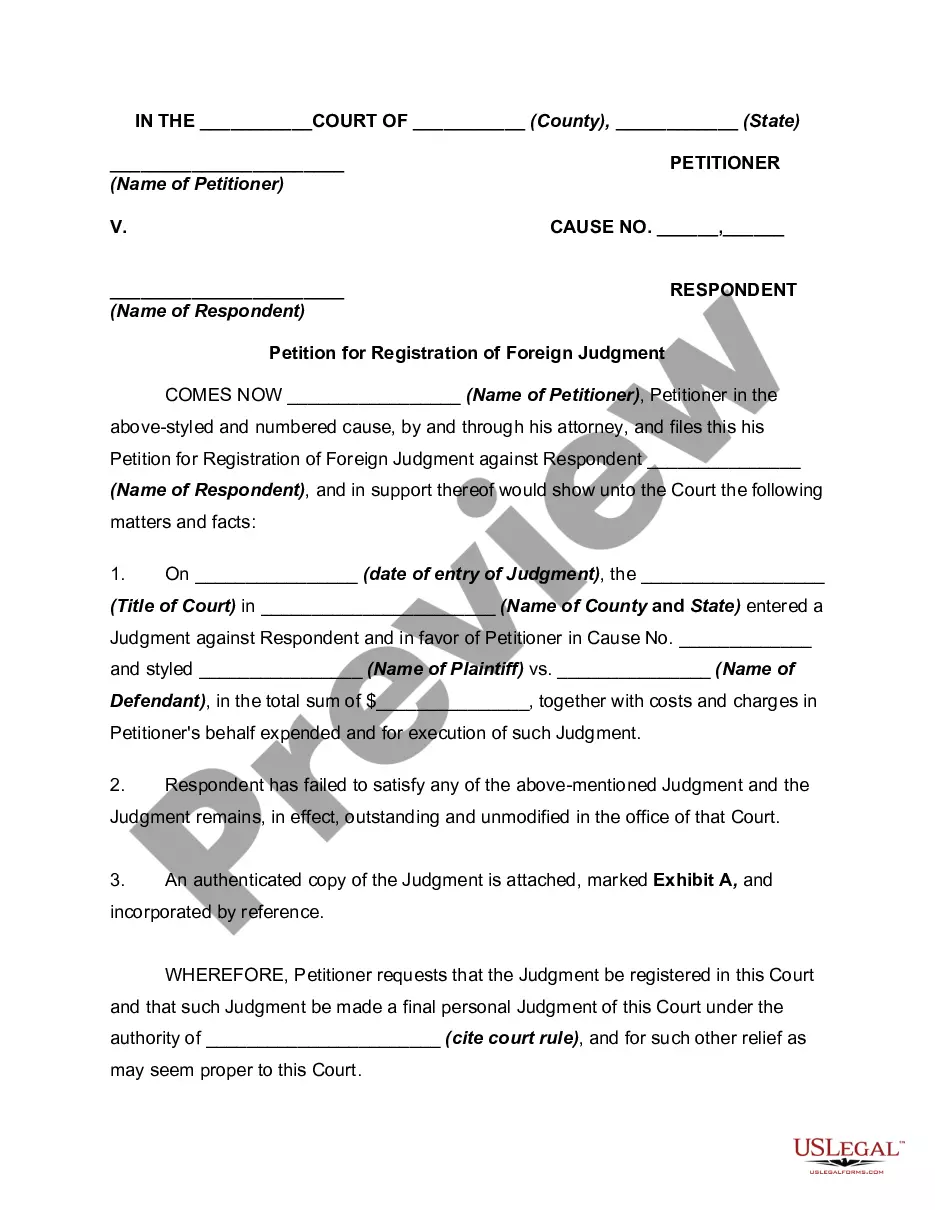
Virginia Commercial Contract for Contractor
What is this form?
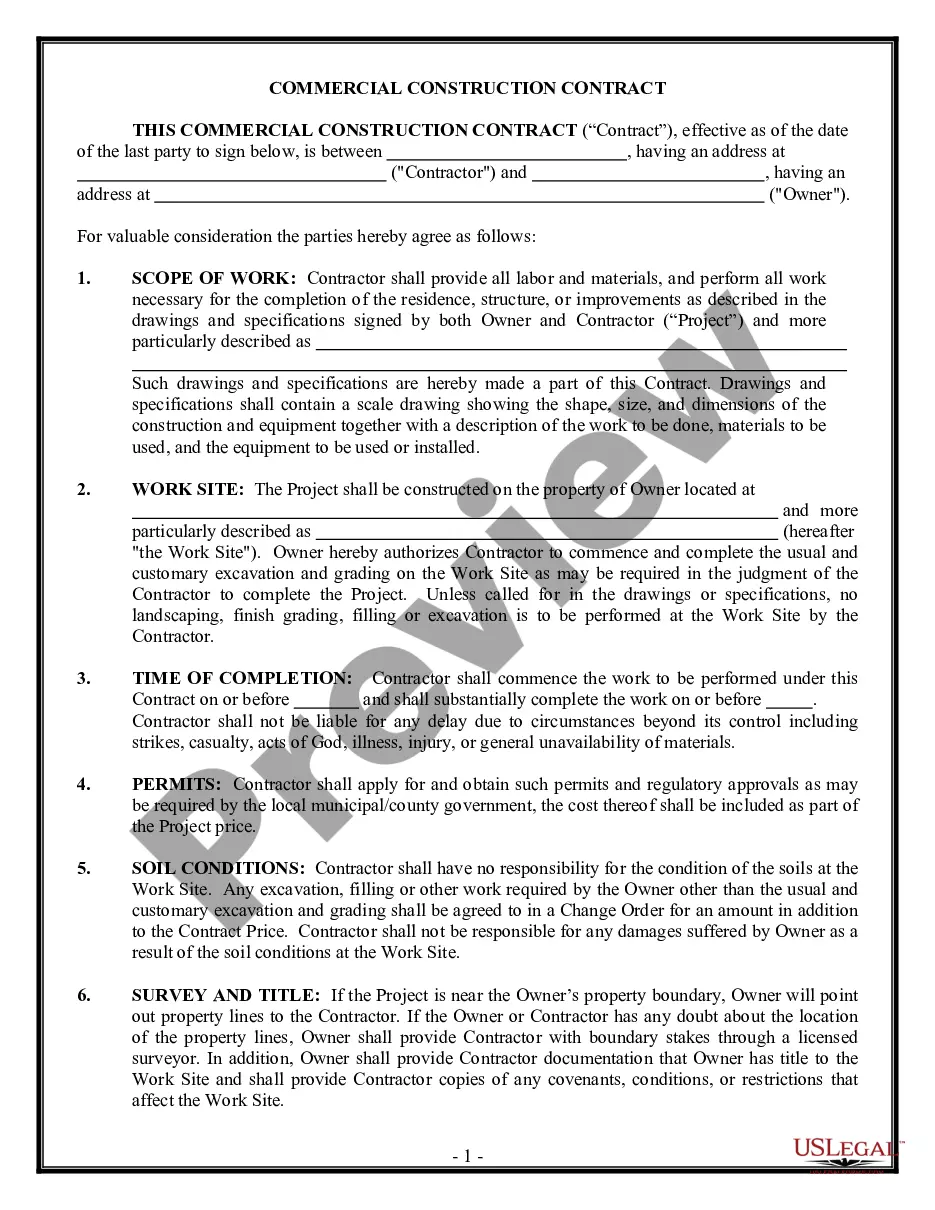
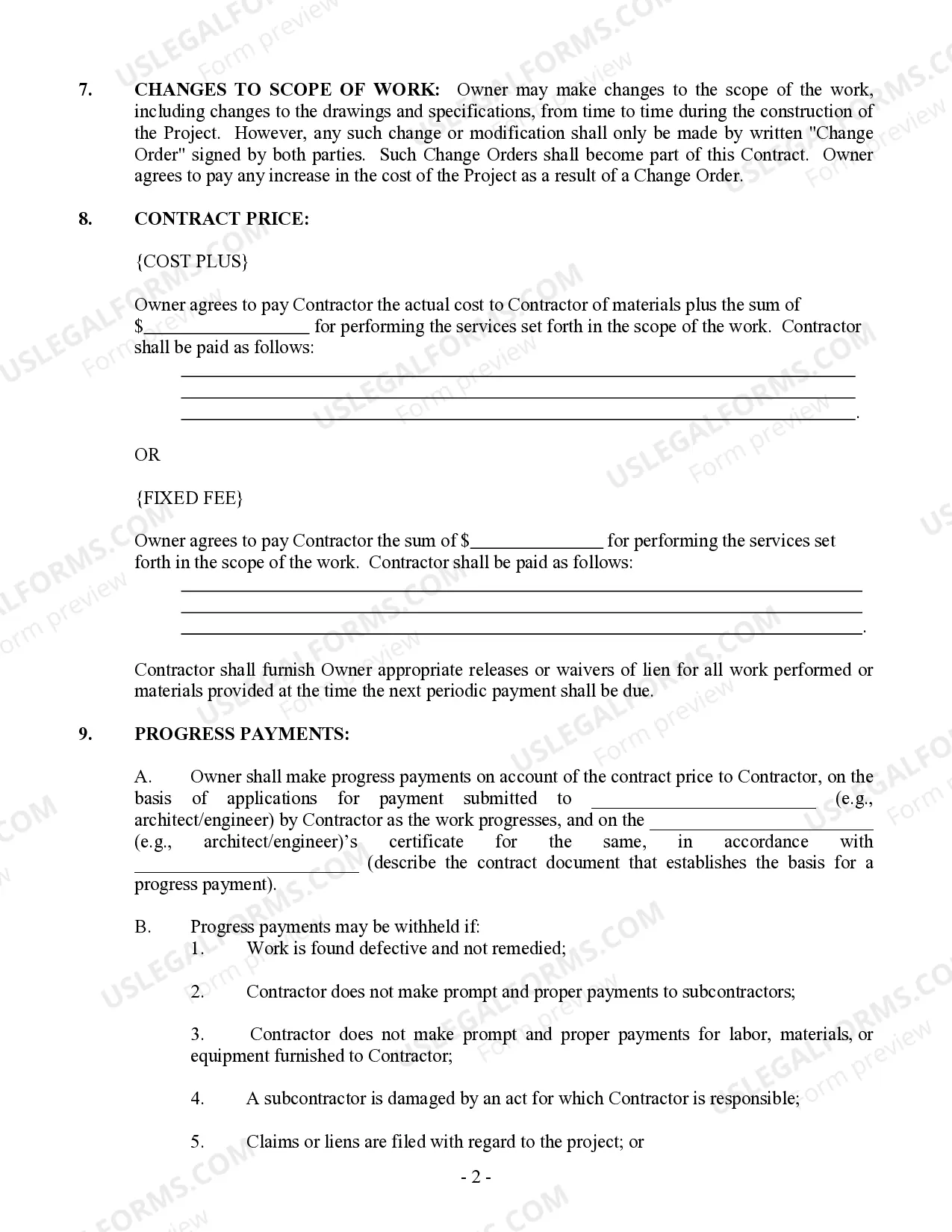
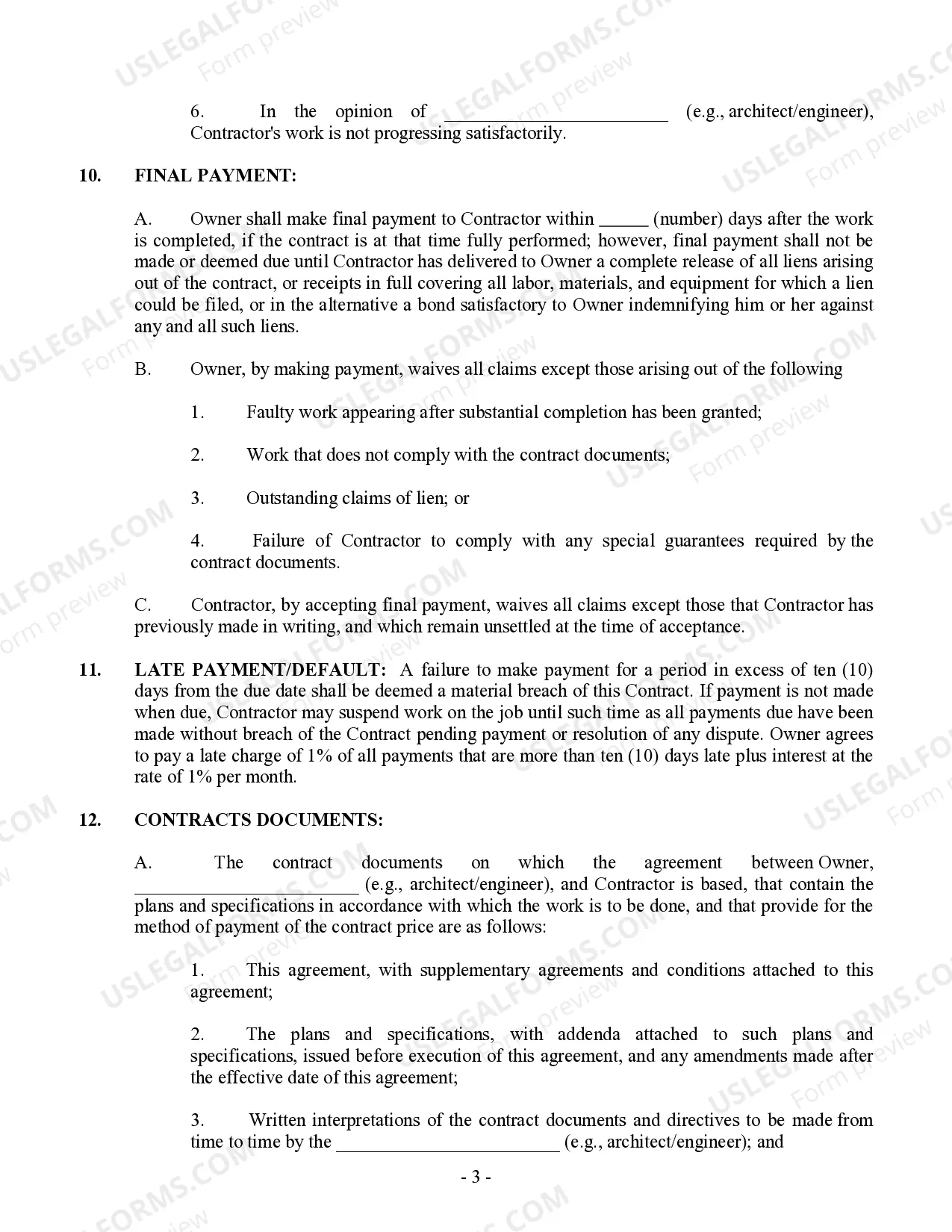
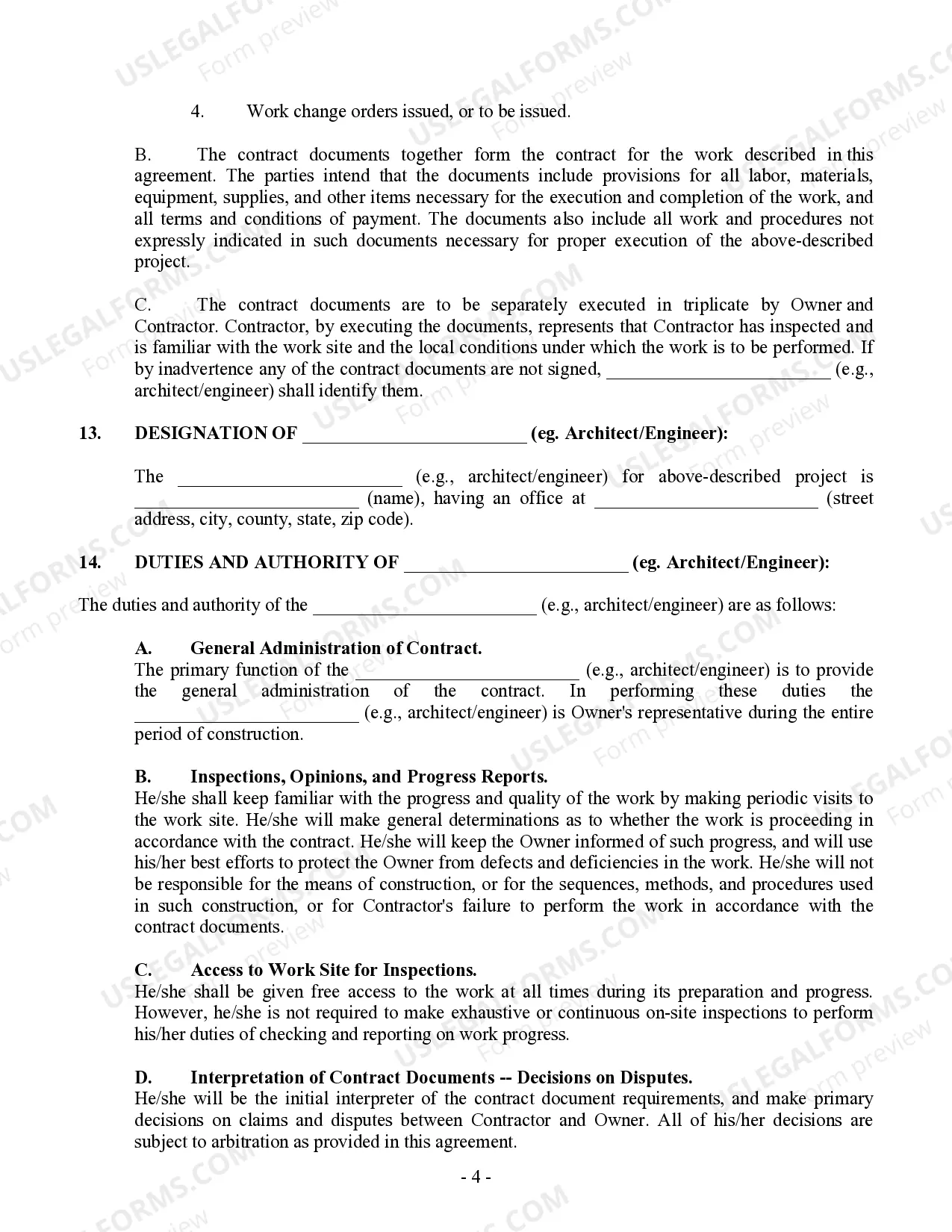
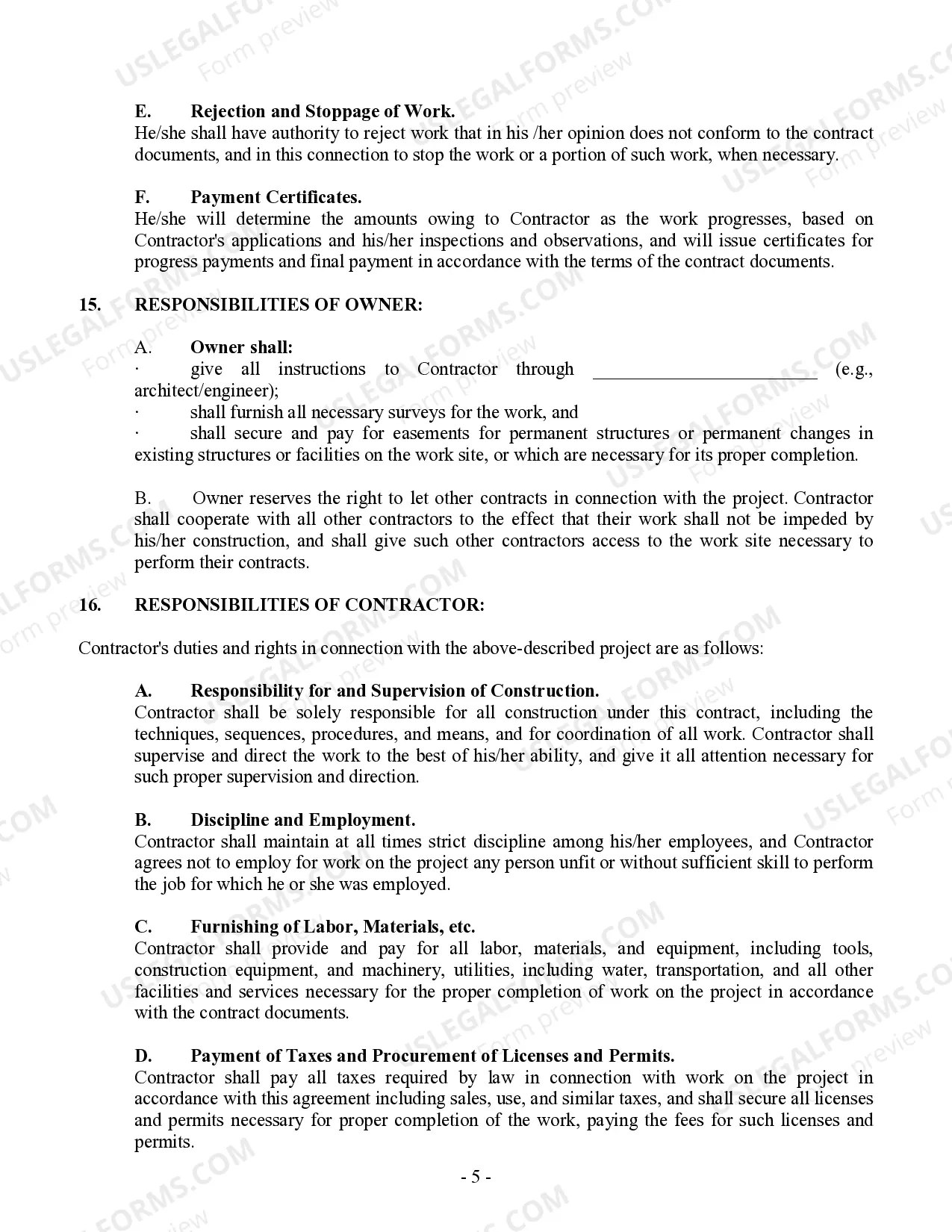
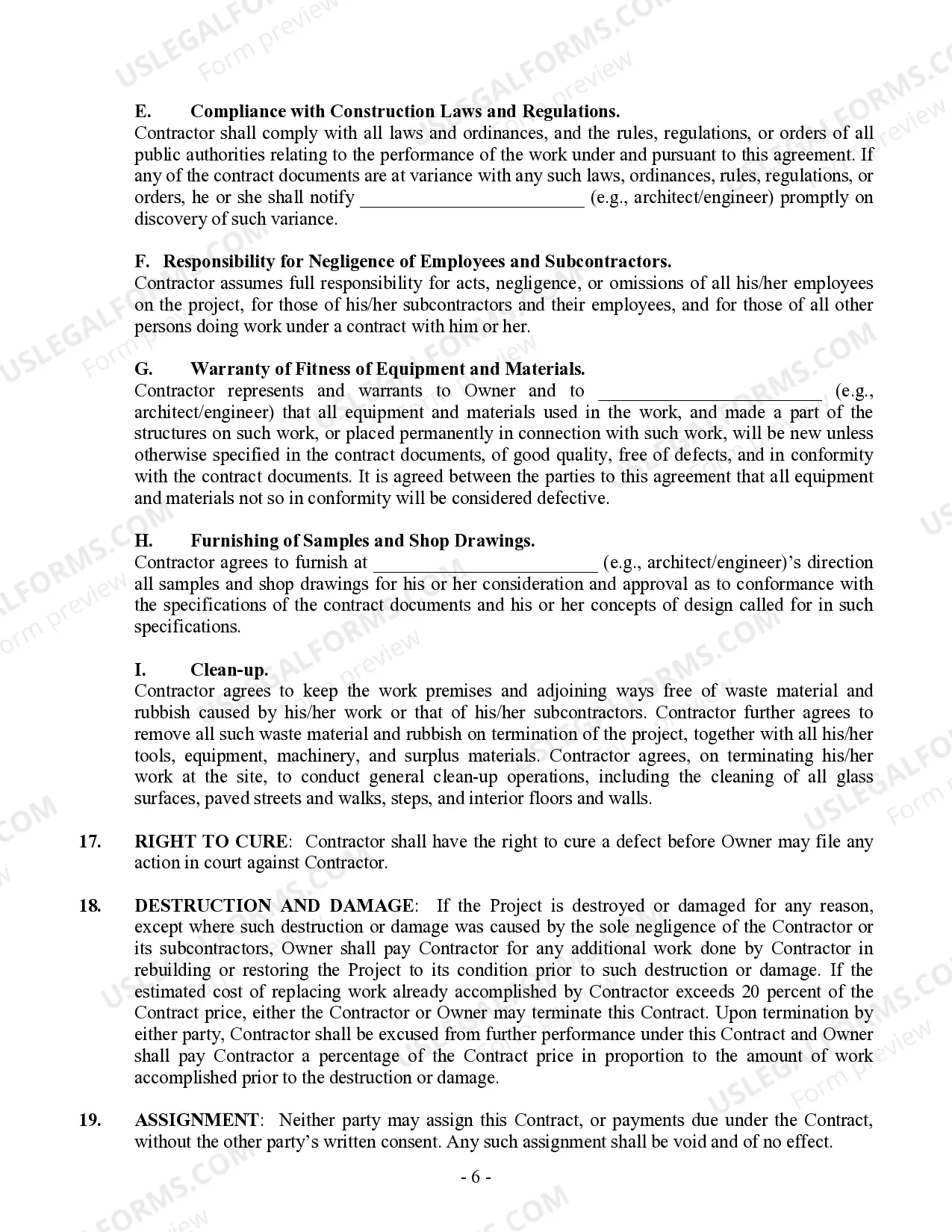
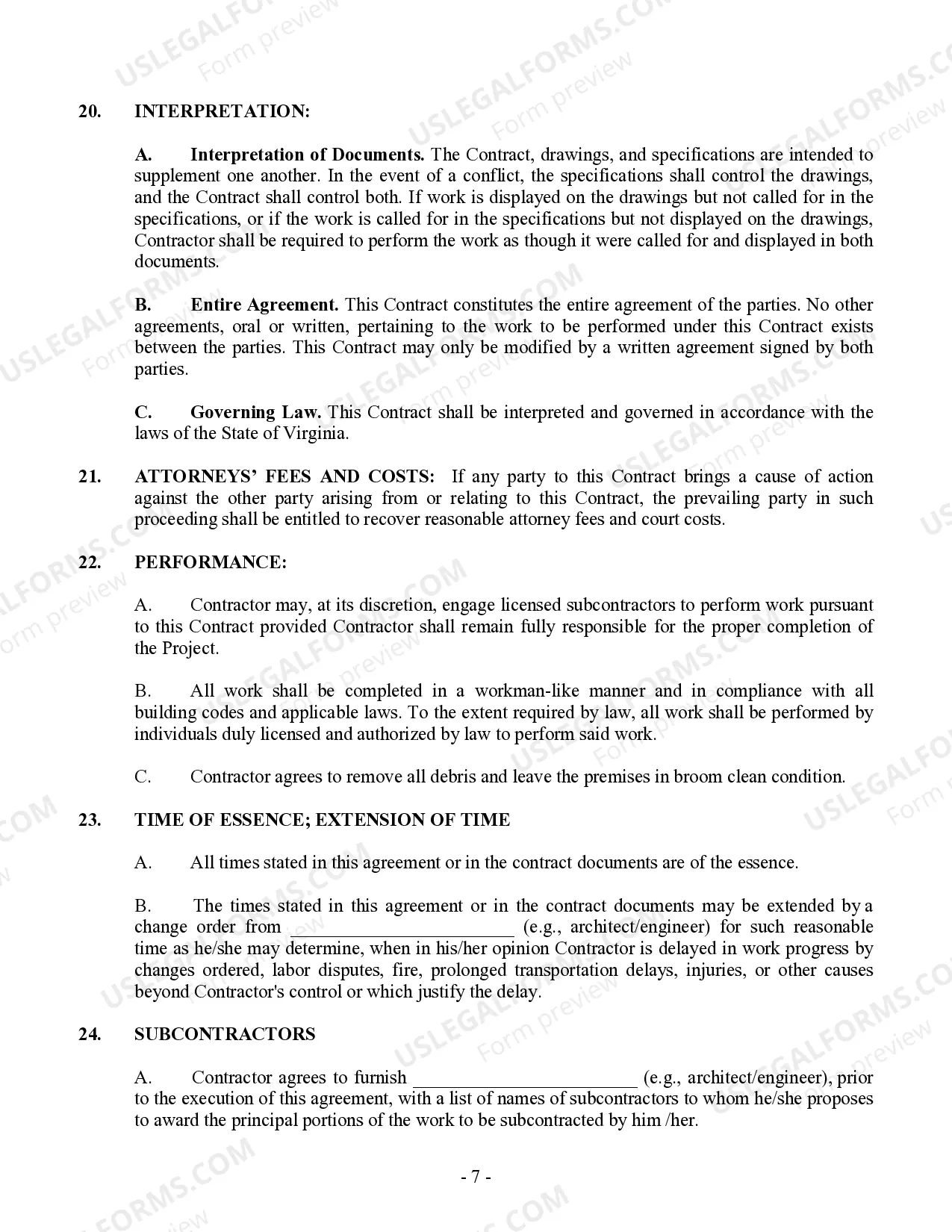
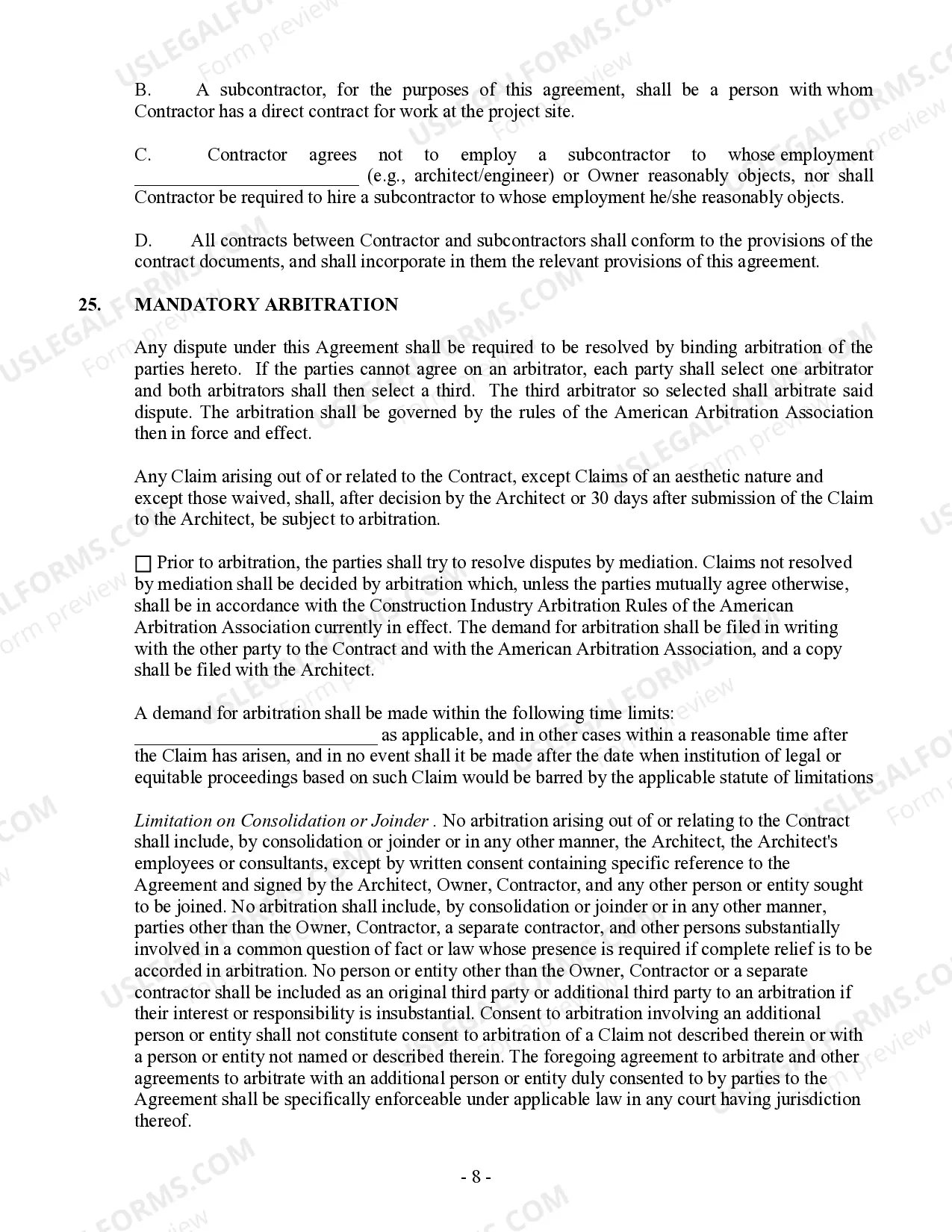
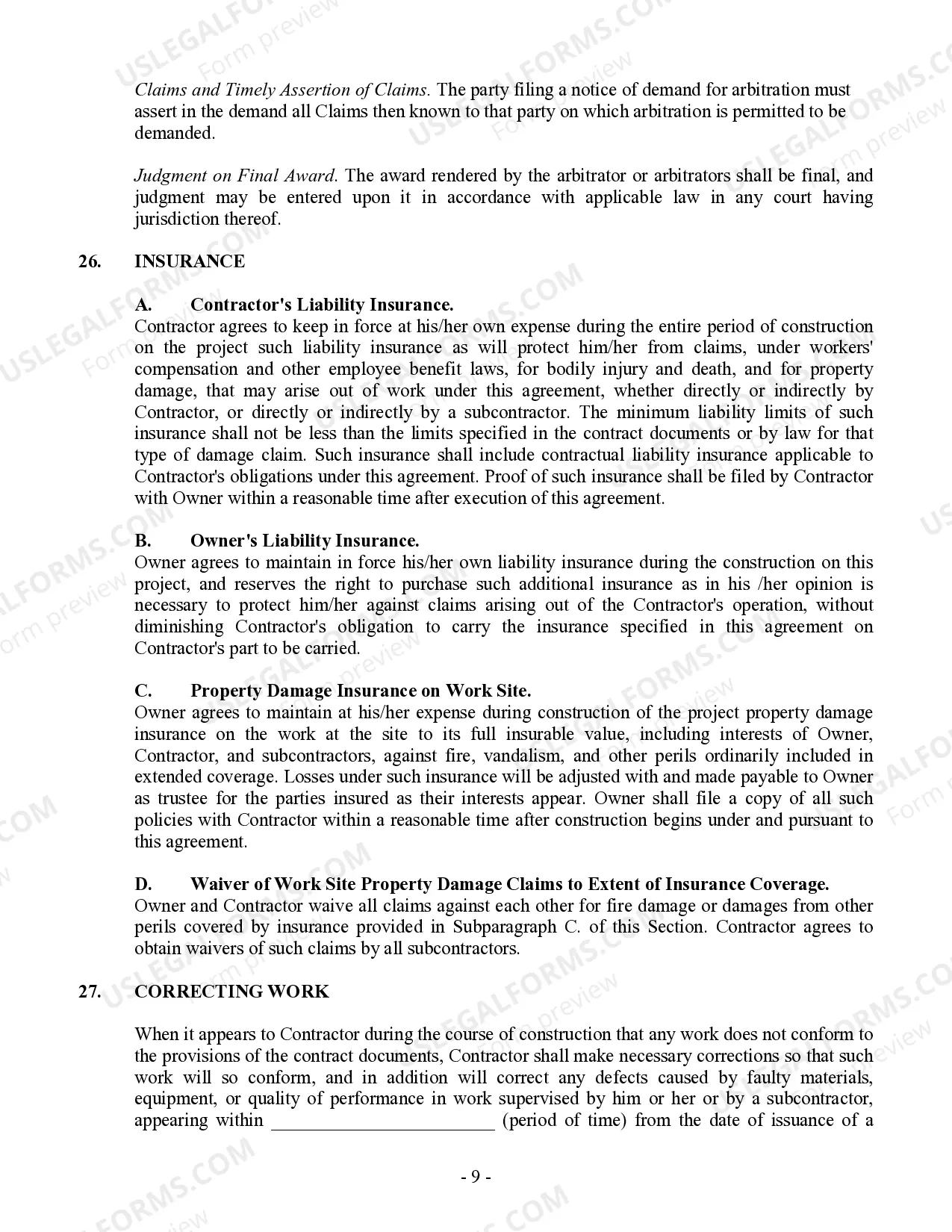
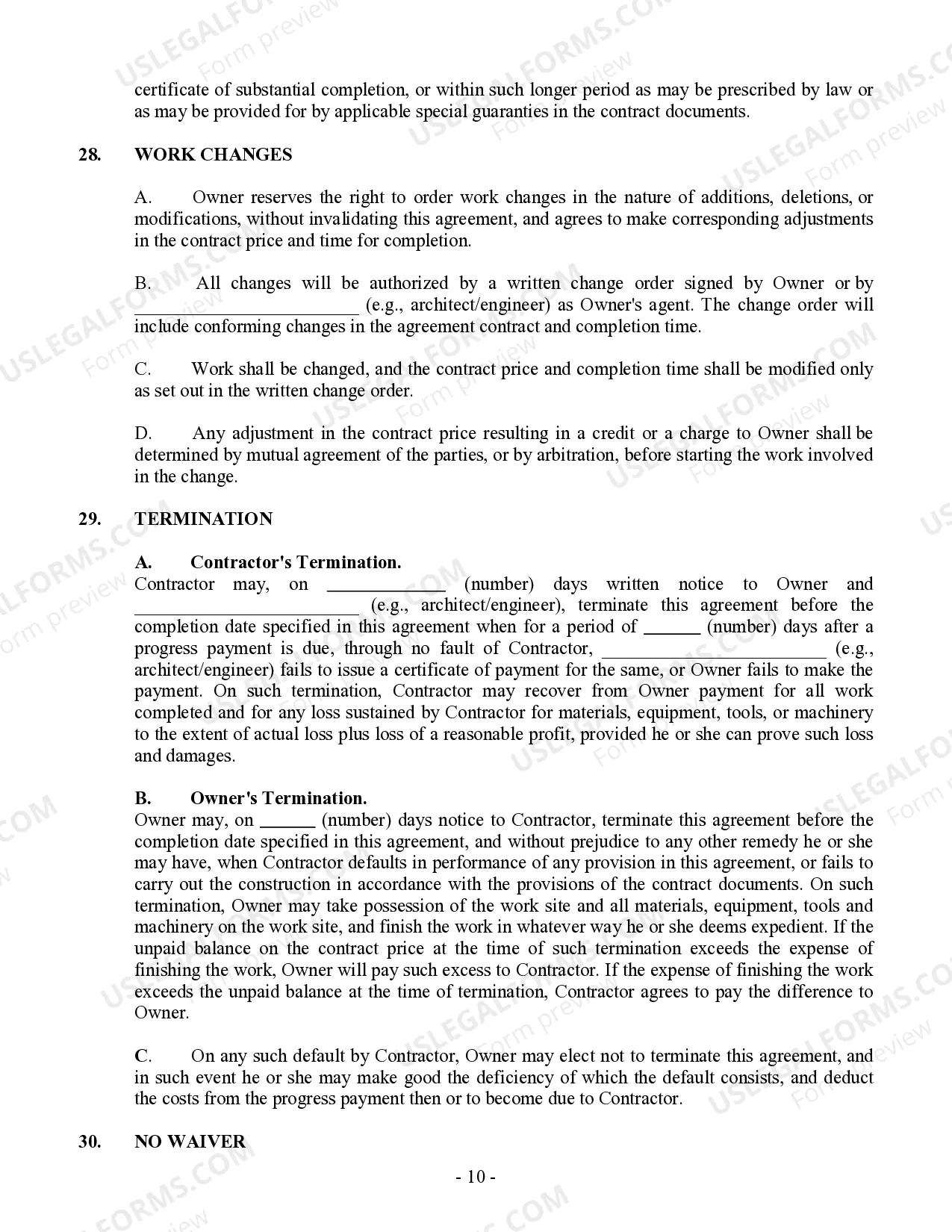
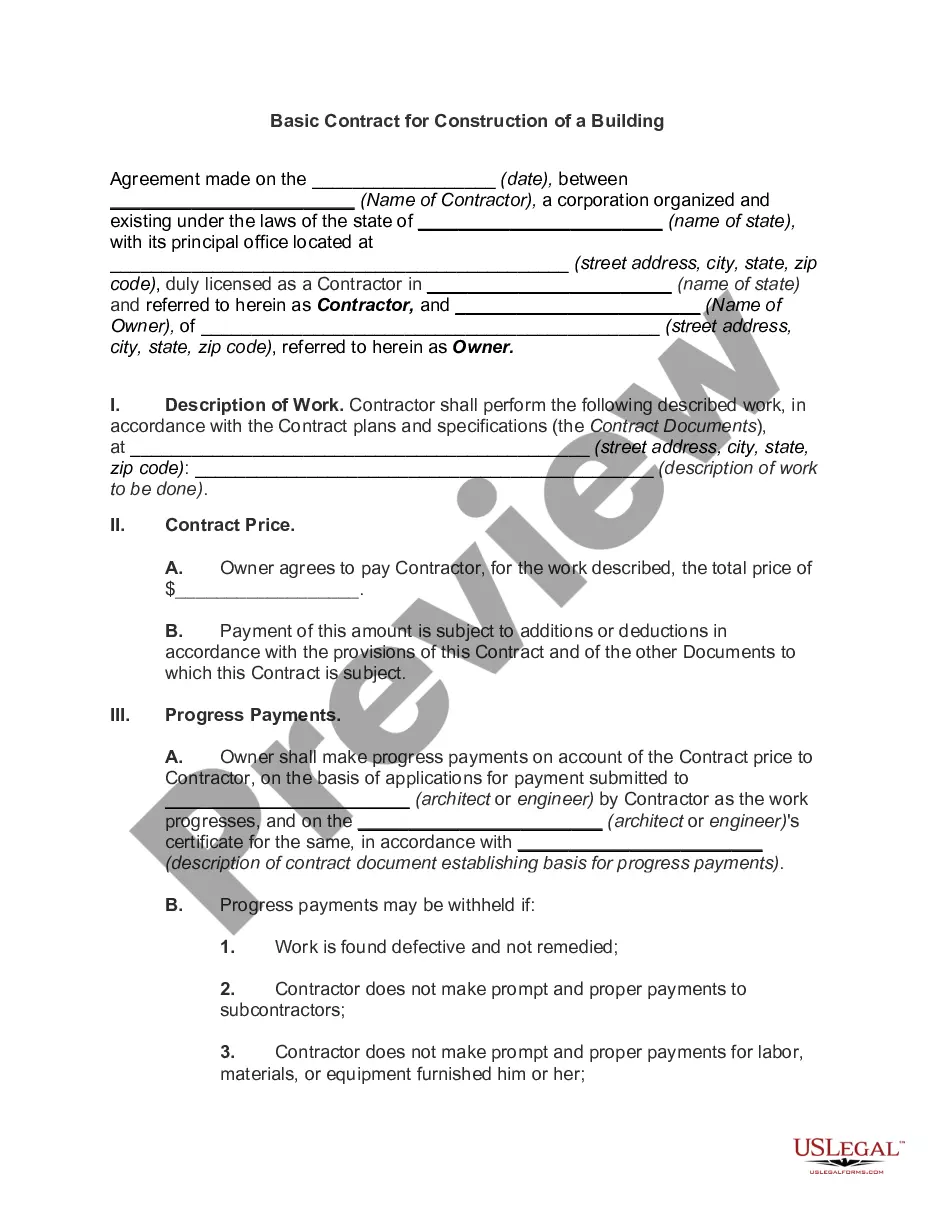
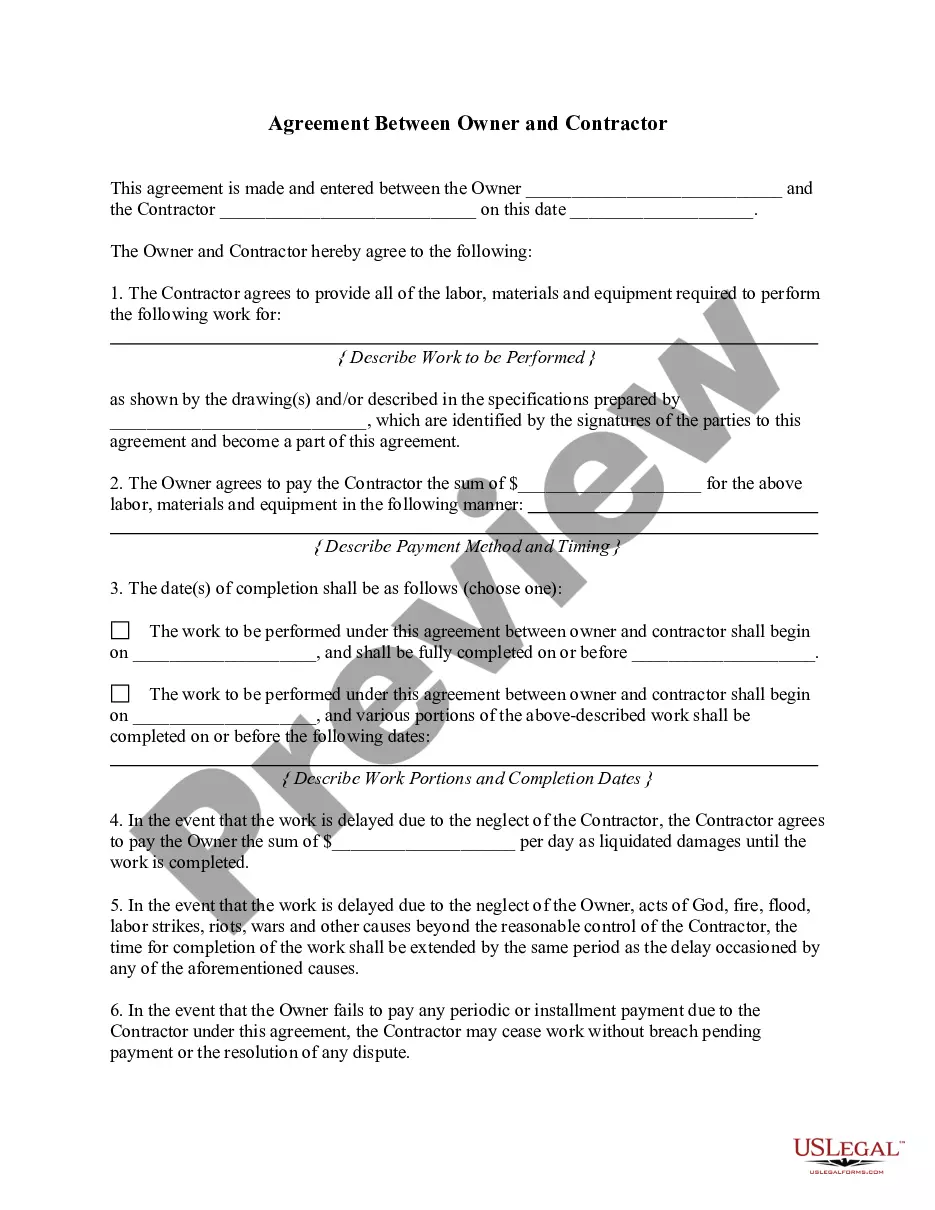
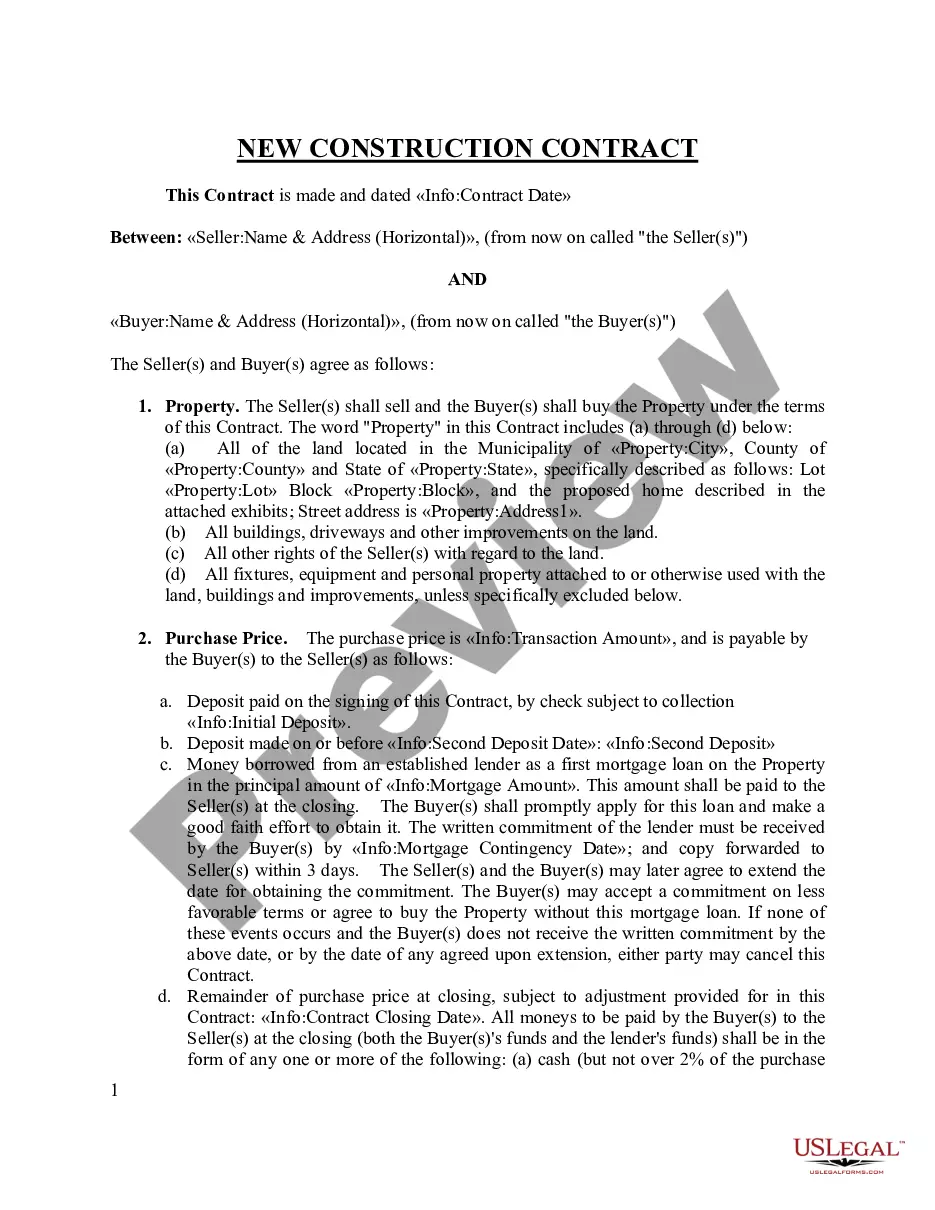
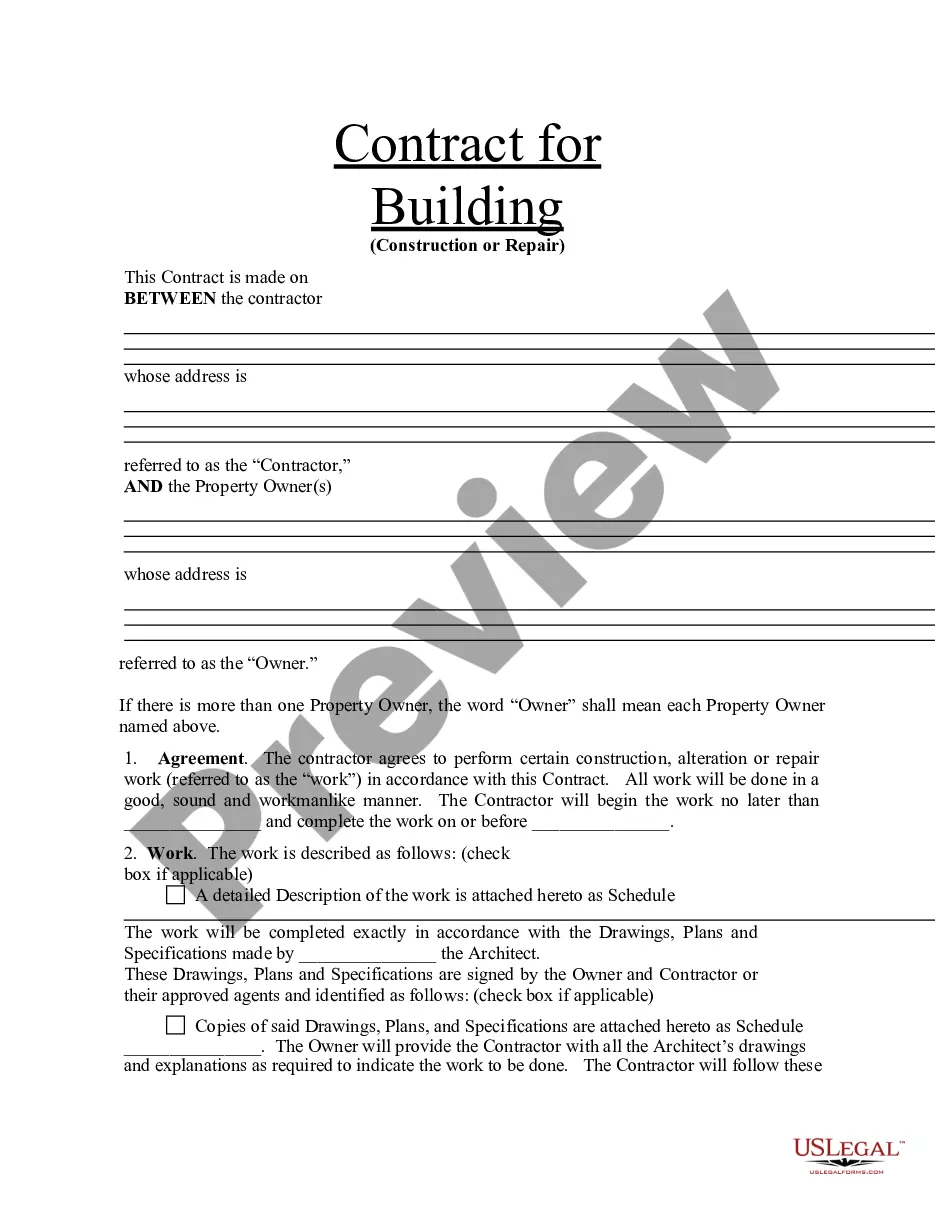
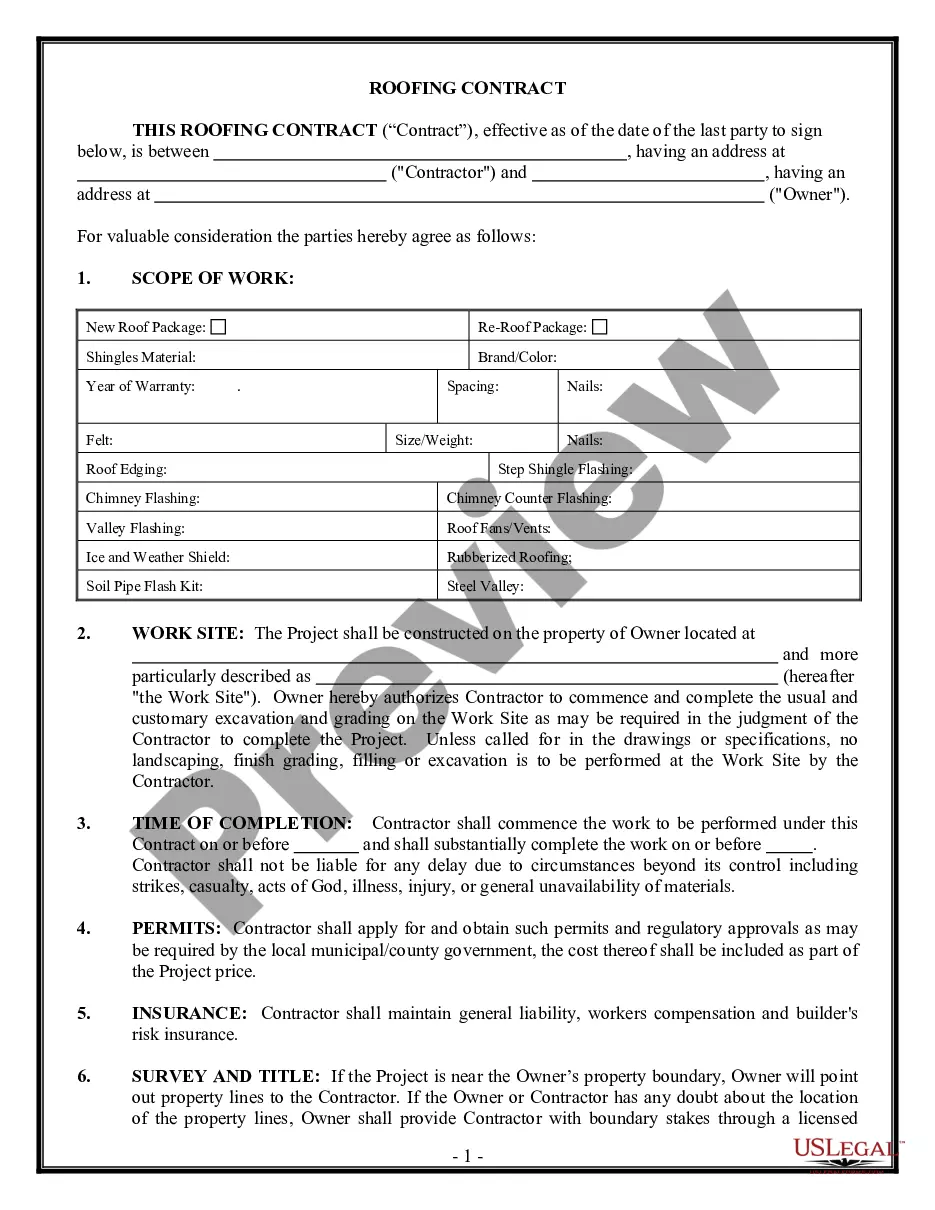
The Commercial Contract for Contractor is a legal agreement used between commercial contractors and property owners for construction projects. This contract can accommodate both cost-plus and fixed fee payment structures and includes provisions for crucial elements such as change orders, site specifications, warranties, and insurance. Specifically drafted to comply with Virginia law, this form ensures that all necessary terms are understood and agreed upon before the commencement of work, distinguishing it from standard residential contracts and other simpler agreements.
Form components explained
- Work site details: Specifies the location and any necessary surveys to determine property boundaries.
- Permits: Outlines the contractor's responsibility to obtain local permits and regulatory approvals.
- Payment terms: Details about progress payments, including conditions under which payments may be withheld.
- Responsibilities of parties: Defines obligations of both the contractor and the owner in project execution.
- Change orders: Procedures for modifications to the original contract, including for additional work and related costs.

When to use this form
This form is necessary when a property owner engages a commercial contractor for construction or renovation projects. It is especially useful for defining the scope of work, payment arrangements, and other essential terms to prevent misunderstandings and disputes while protecting the rights and responsibilities of both parties before work begins.
Who can use this document
Eligibility and intended audience:
- Property owners looking to engage commercial contractors for construction work.
- Contractors seeking to establish clear terms and expectations with property owners.
- Real estate developers and construction managers involved in commercial projects.
Steps to complete this form
To complete the Commercial Contract for Contractor, follow these steps:
- Identify the parties involved by entering the names and addresses of the contractor and the owner.
- Specify the work site address and ensure it corresponds with any necessary survey documentation.
- Outline the payment structure, including whether itâs cost-plus or fixed fee, and fill in the details for progress payments.
- Include any specific terms related to permits, warranties, and insurance requirements as applicable to the project.
- Ensure both parties review and sign the contract, acknowledging their agreement to the terms outlined.
Notarization requirements for this form
This form does not typically require notarization unless specified by local law.
Get your form ready online
Our built-in tools help you complete, sign, share, and store your documents in one place.
Make edits, fill in missing information, and update formatting in US Legal Forms—just like you would in MS Word.
Download a copy, print it, send it by email, or mail it via USPS—whatever works best for your next step.
Sign and collect signatures with our SignNow integration. Send to multiple recipients, set reminders, and more. Go Premium to unlock E-Sign.
If this form requires notarization, complete it online through a secure video call—no need to meet a notary in person or wait for an appointment.
We protect your documents and personal data by following strict security and privacy standards.

Make edits, fill in missing information, and update formatting in US Legal Forms—just like you would in MS Word.

Download a copy, print it, send it by email, or mail it via USPS—whatever works best for your next step.

Sign and collect signatures with our SignNow integration. Send to multiple recipients, set reminders, and more. Go Premium to unlock E-Sign.

If this form requires notarization, complete it online through a secure video call—no need to meet a notary in person or wait for an appointment.

We protect your documents and personal data by following strict security and privacy standards.
Common mistakes
- Failing to specify the scope of work clearly, which can lead to disputes later.
- Not including all necessary permits and approvals required for the project.
- Overlooking details about payment structures or conditions under which payments can be withheld.
- Neglecting to define the responsibilities of both the contractor and the owner clearly.
Advantages of online completion
- Convenient online access allows users to download and fill out the form at their own pace.
- Editable templates ensure that users can tailor the contract to their specific project and needs.
- Reliability comes from forms drafted by licensed attorneys familiar with Virginia law.
- Provides clear guidance and protections for both parties, minimizing the risk of disputes.
Summary of main points
- The Commercial Contract for Contractor is crucial for formalizing the relationship between property owners and commercial contractors.
- This form helps prevent misunderstandings by clearly stating the terms, obligations, and expectations of both parties.
- Proper completion of the contract can ensure compliance with Virginia law and create a solid foundation for executing construction projects.
Looking for another form?

Form popularity
FAQ
A construction project entails 5 important stages: initiation, planning, implementation, performance and monitoring, and closing. Here is an in-depth review of the construction life cycle.
Buildings can be categorized into five different types of construction: fire-resistive, non-combustible, ordinary, heavy timber, and wood-framed.
In every construction project, there are three types of construction specifications. The three types of construction specifications are prescriptive, performance, and proprietary.
Residential Building. Institutional and Commercial Building. Specialized Industrial Construction. Infrastructure and Heavy Construction.